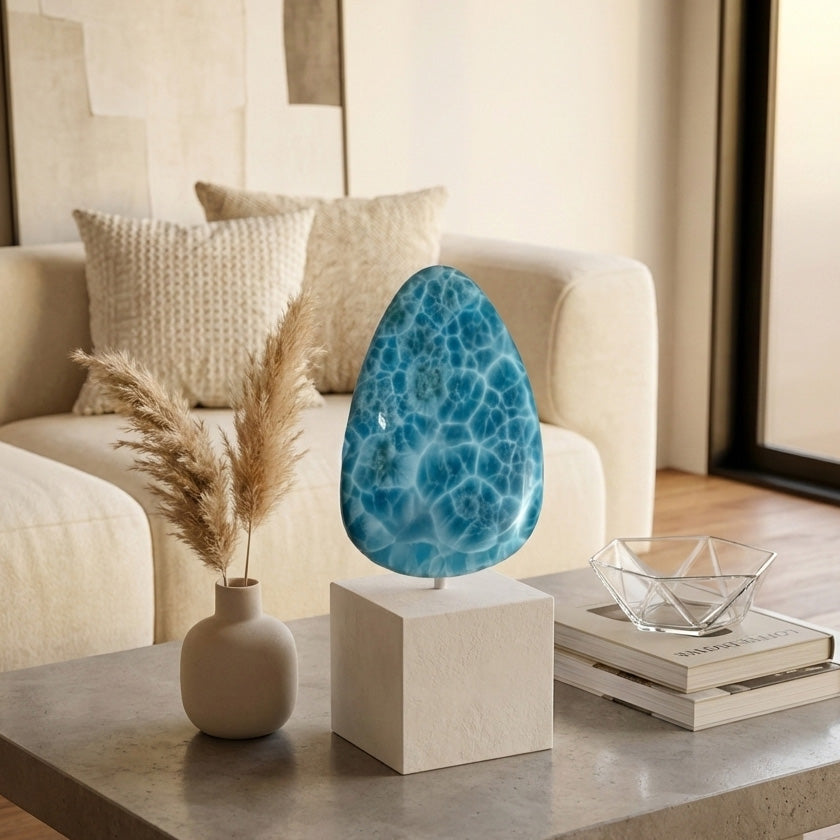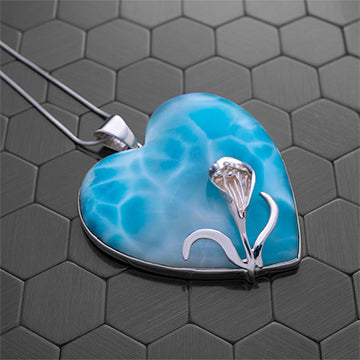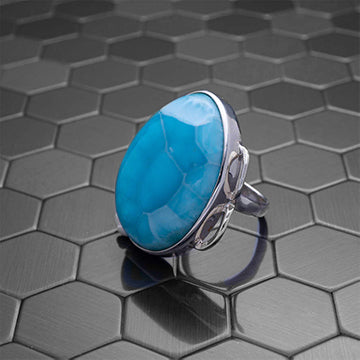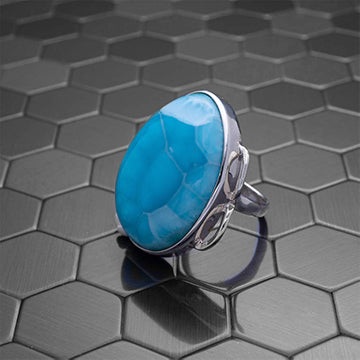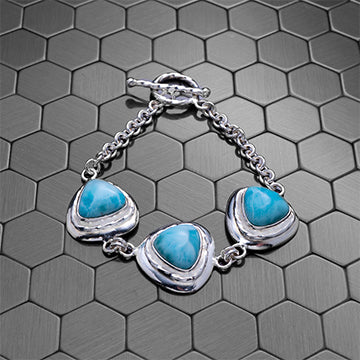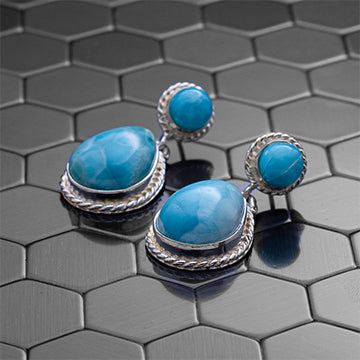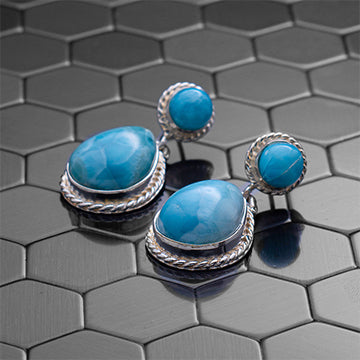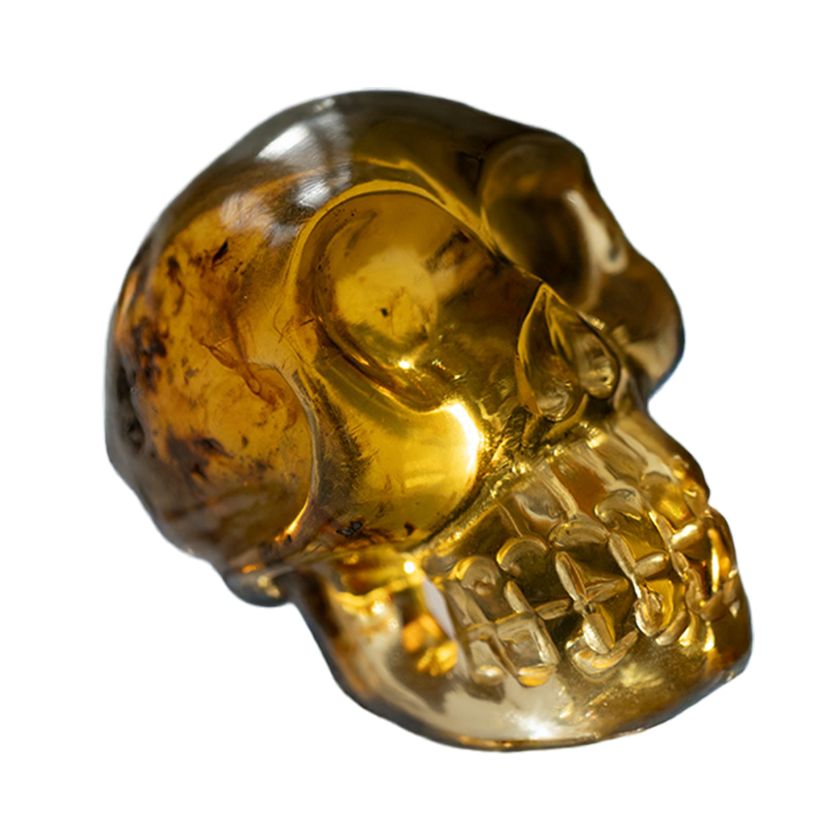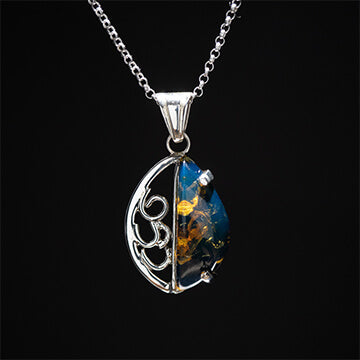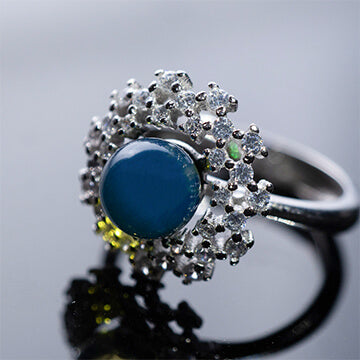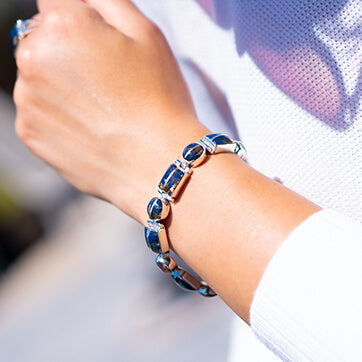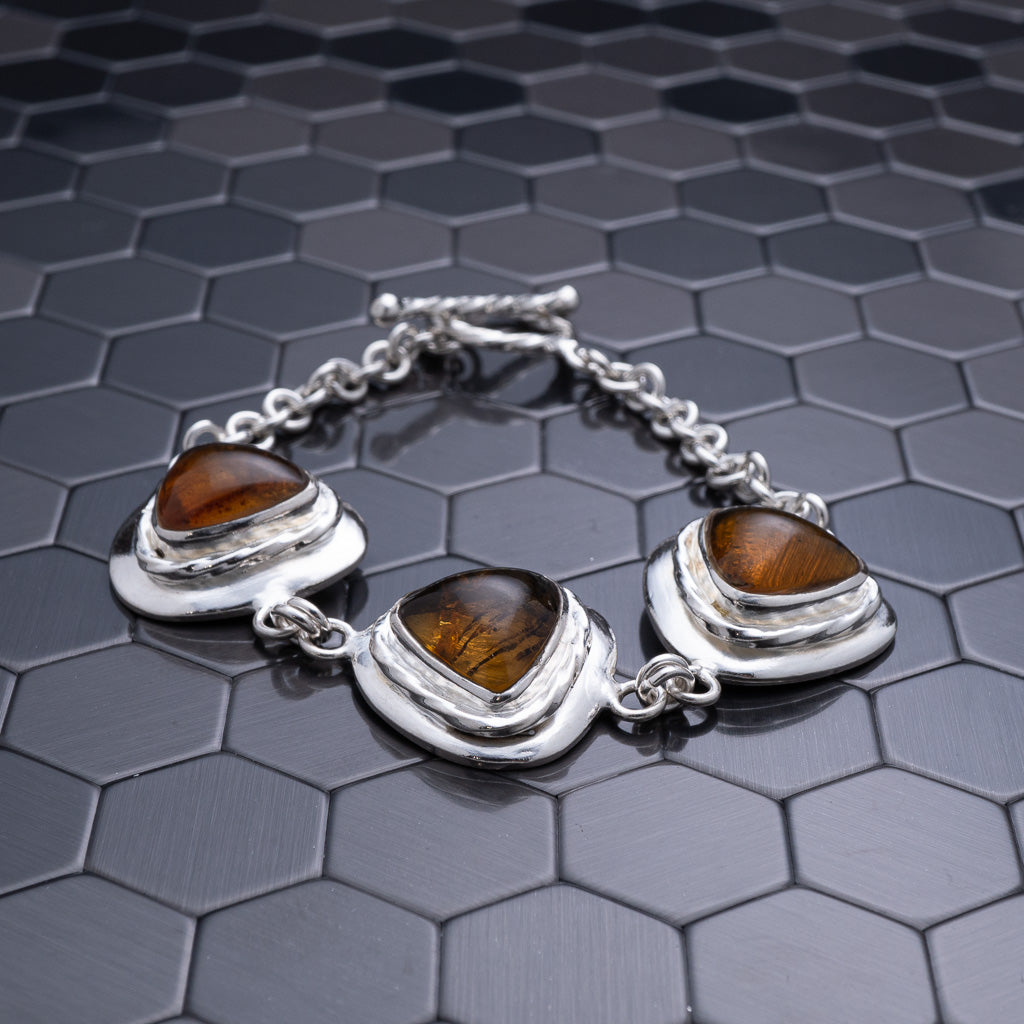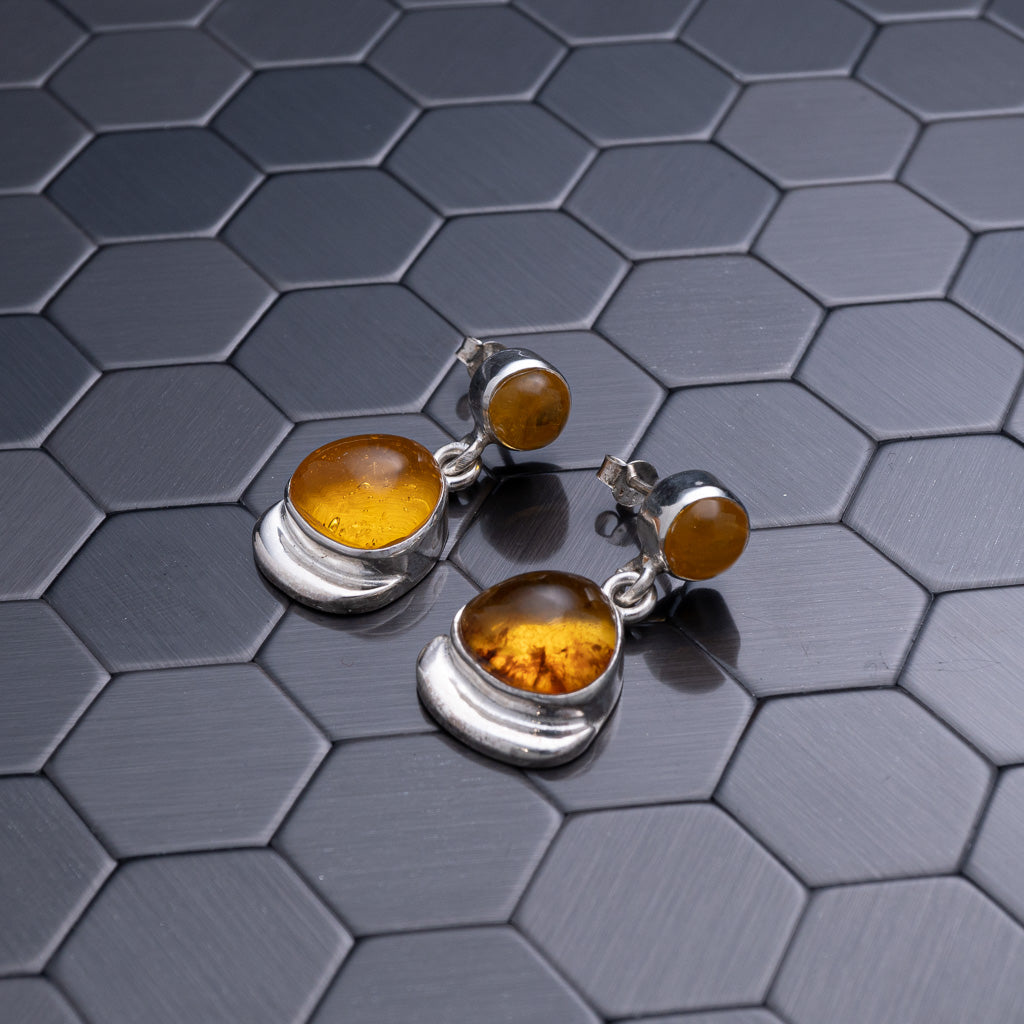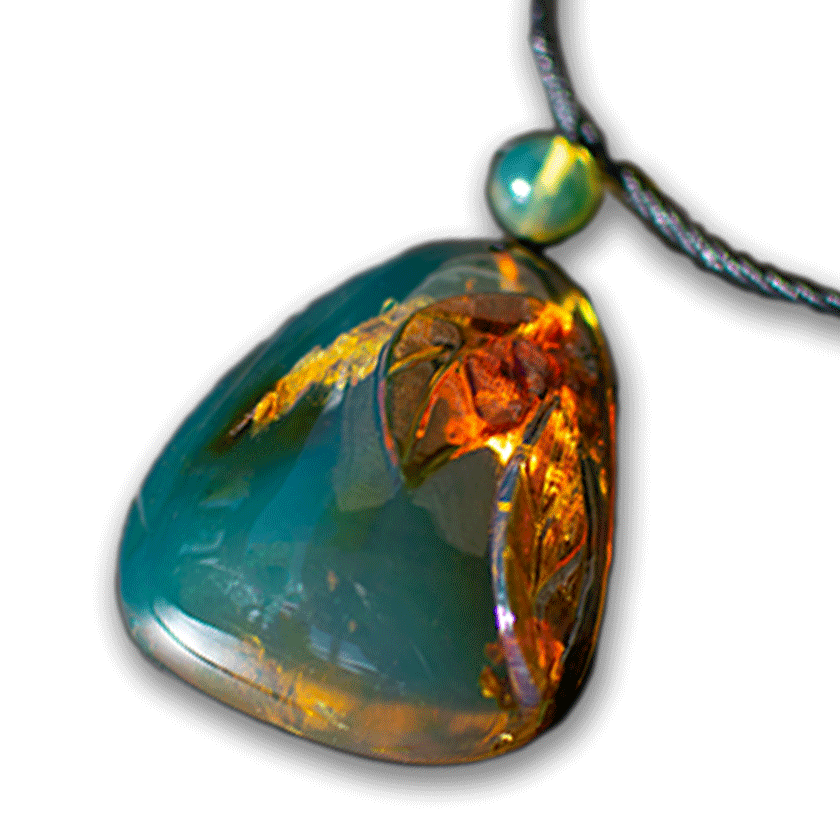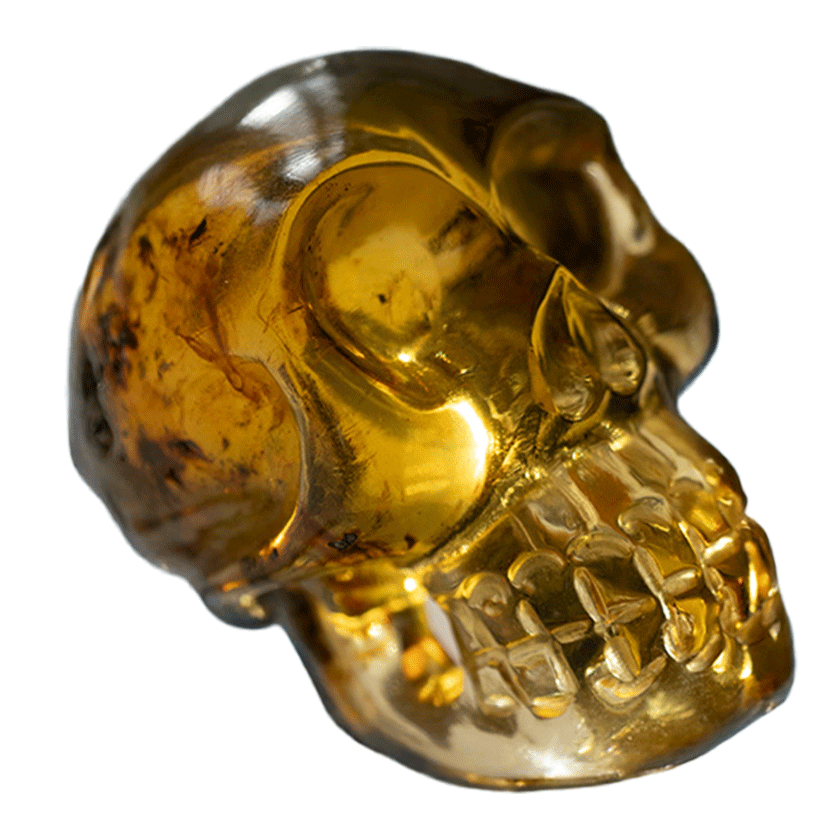

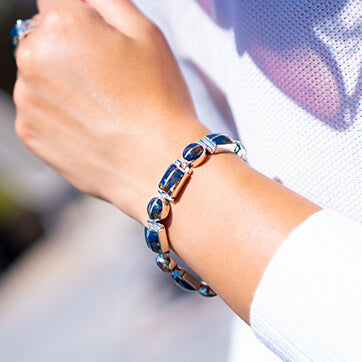
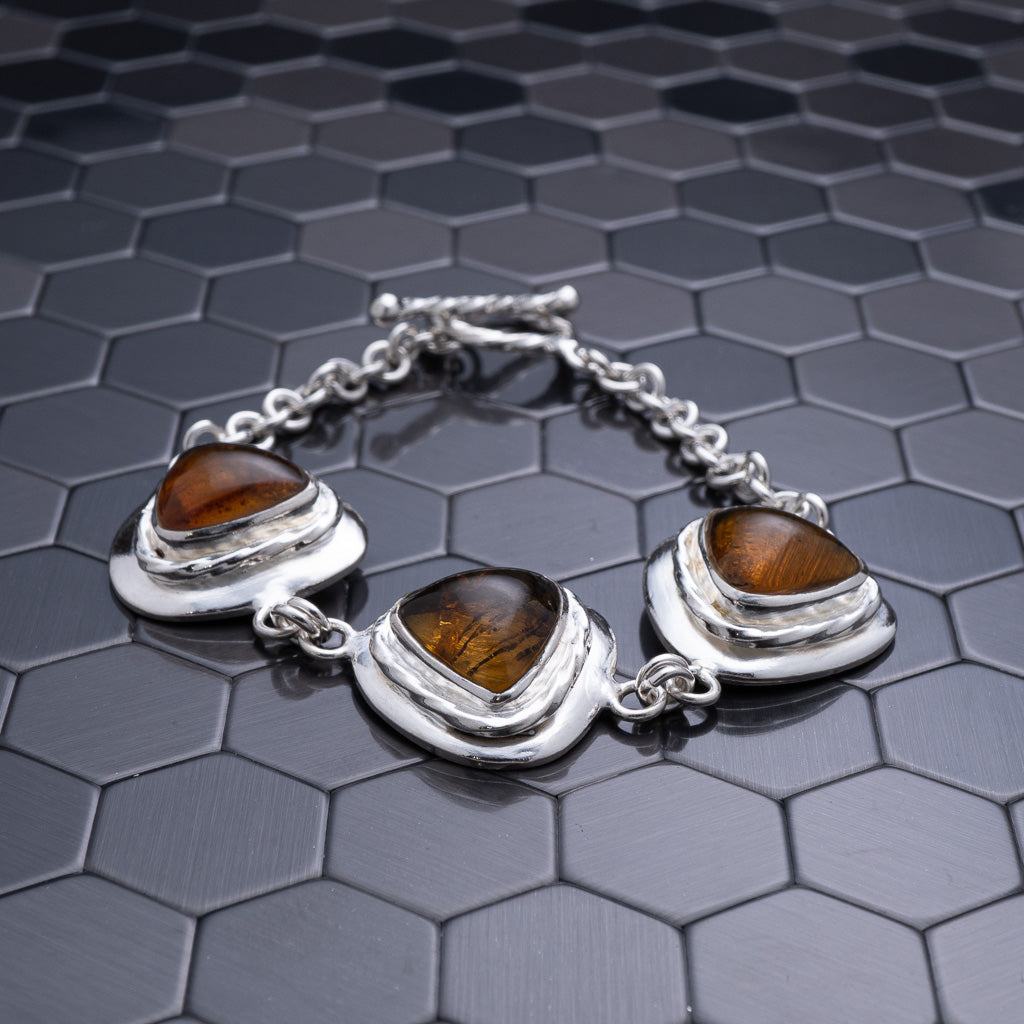
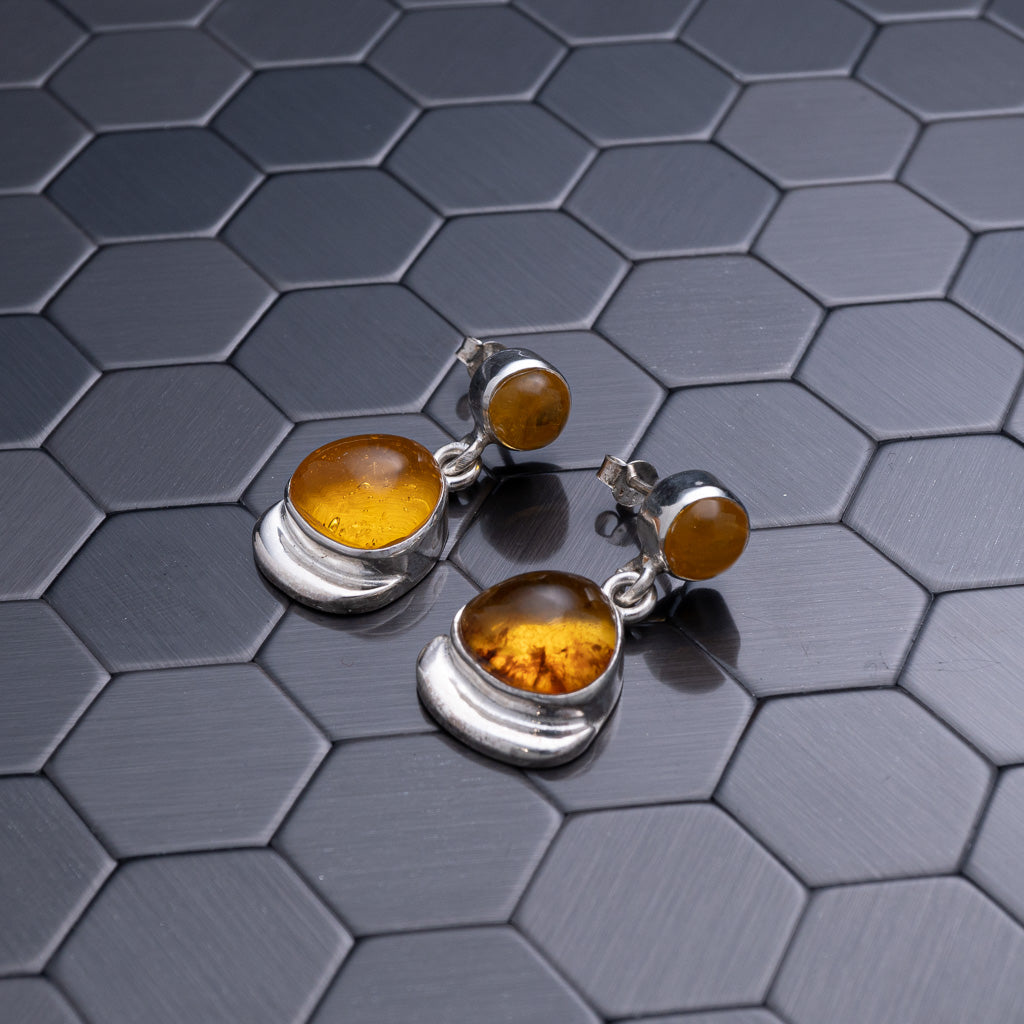
Blue amber rarely announces itself under ordinary room light. That is part of its allure and part of the reason so many buyers ask how to verify blue amber before investing in a pendant, cabochon, bead, or collector stone. Genuine blue amber is prized for its rarity, especially when it comes from the Dominican Republic, but rarity also attracts imitation, mislabeling, and overconfident sales claims.
If you are shopping for blue amber jewelry or evaluating a loose gemstone, the goal is not to rely on one dramatic trick. Authenticity is usually confirmed through a combination of visual behavior, origin knowledge, simple screening methods, and seller credibility. The most reliable approach is calm, methodical, and informed.
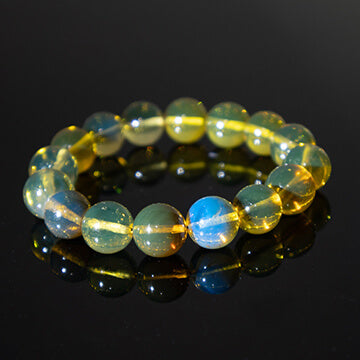
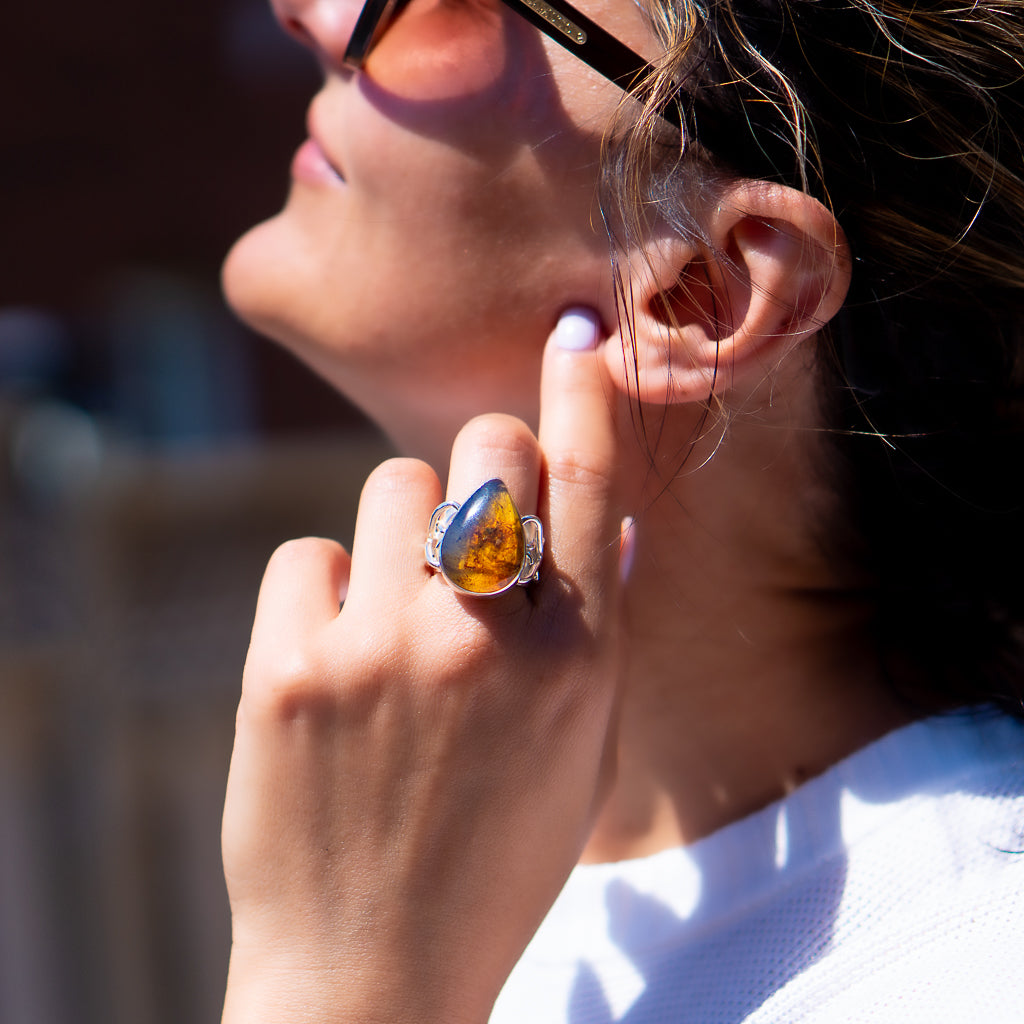
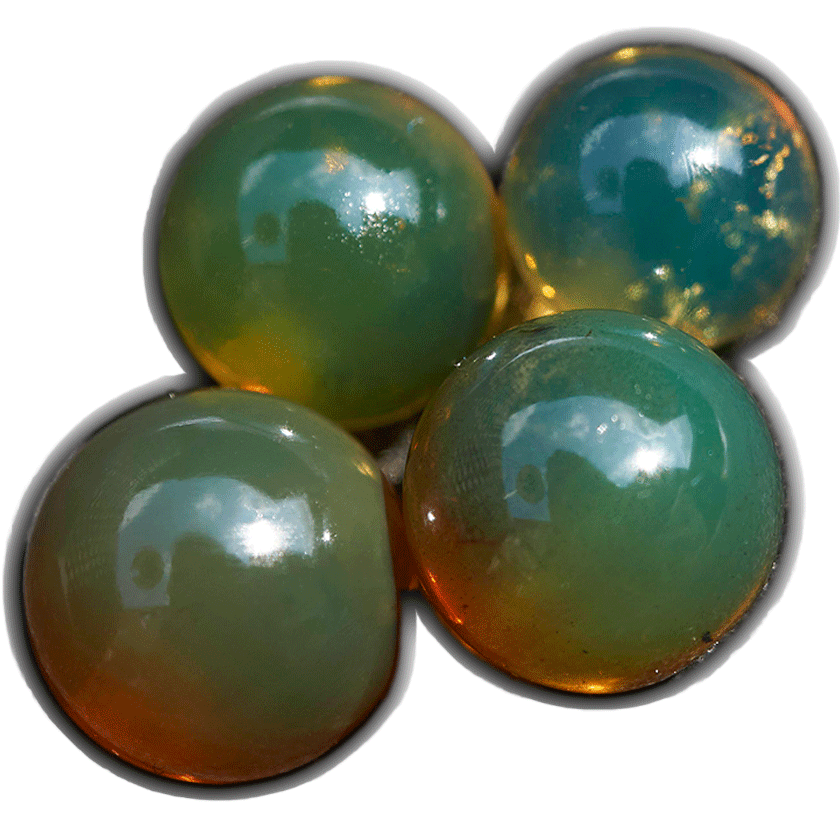
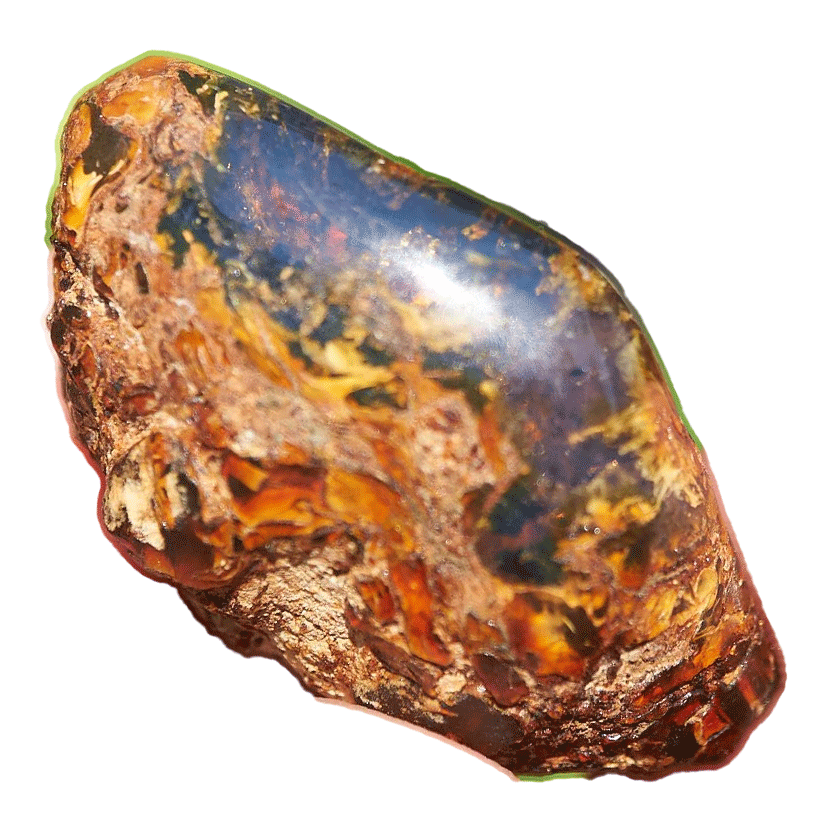
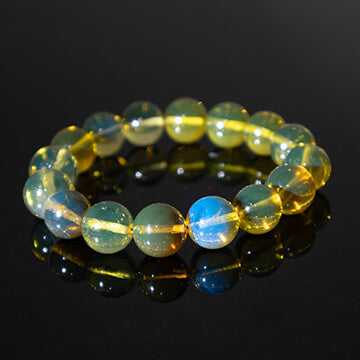
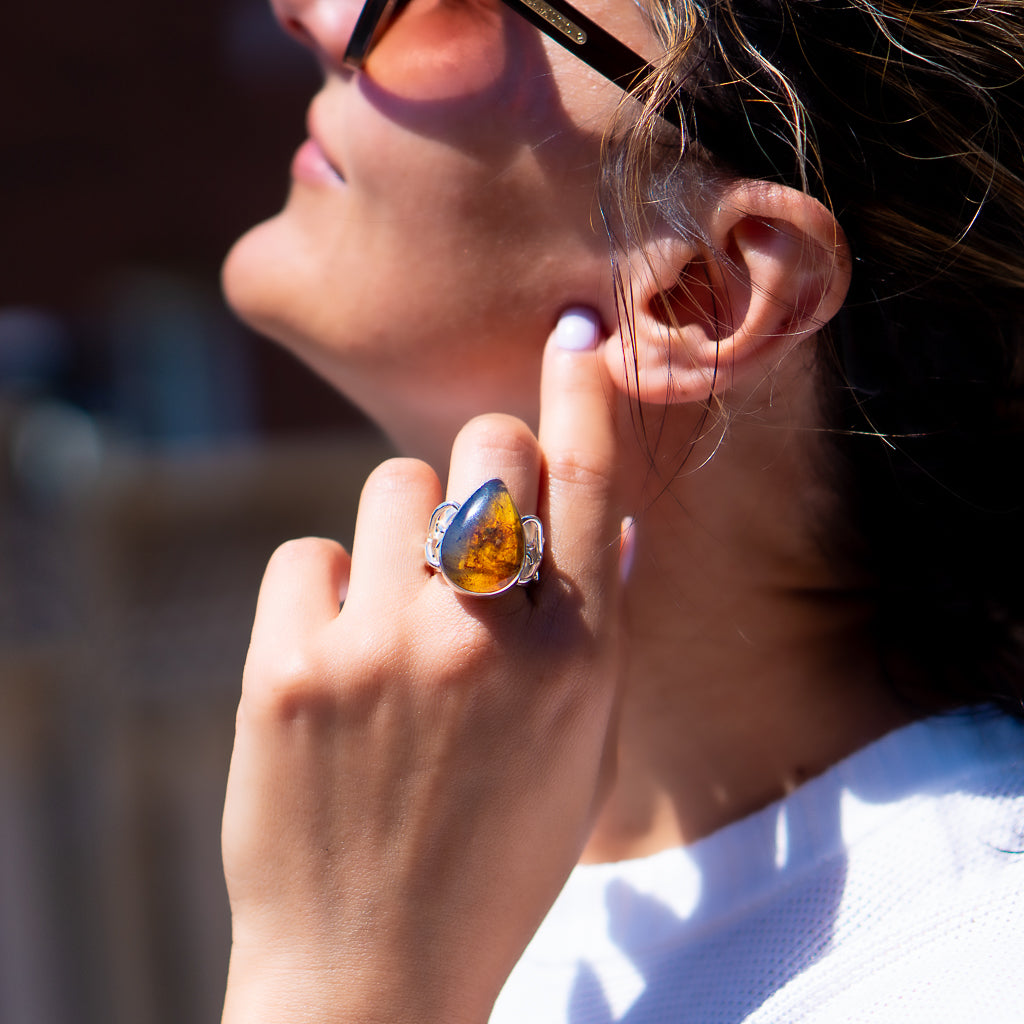
Blue amber is natural amber that can show a blue appearance under certain lighting conditions because of the way it fluoresces and interacts with light. This does not mean the stone is dyed blue through and through like glass or resin. In many cases, genuine Dominican blue amber looks honey, golden, or even slightly brownish in direct indoor light, then reveals a striking blue glow in sunlight, shade, or under ultraviolet light.
That shift matters. Buyers sometimes expect a stone that looks vivid blue at all times, and that expectation can make fake material seem more convincing than the real thing. True blue amber often feels more nuanced and more alive than imitation because its color display changes with the environment.
Before any test, start with observation. Natural blue amber has optical behavior that usually cannot be copied perfectly.
Look at the stone in several settings: direct daylight, open shade, indoor warm light, and if possible, UV light. Genuine blue amber may appear yellow to cognac in one condition and show blue fluorescence or a bluish surface glow in another. If the piece stays a flat, identical electric blue in every environment, caution is warranted.
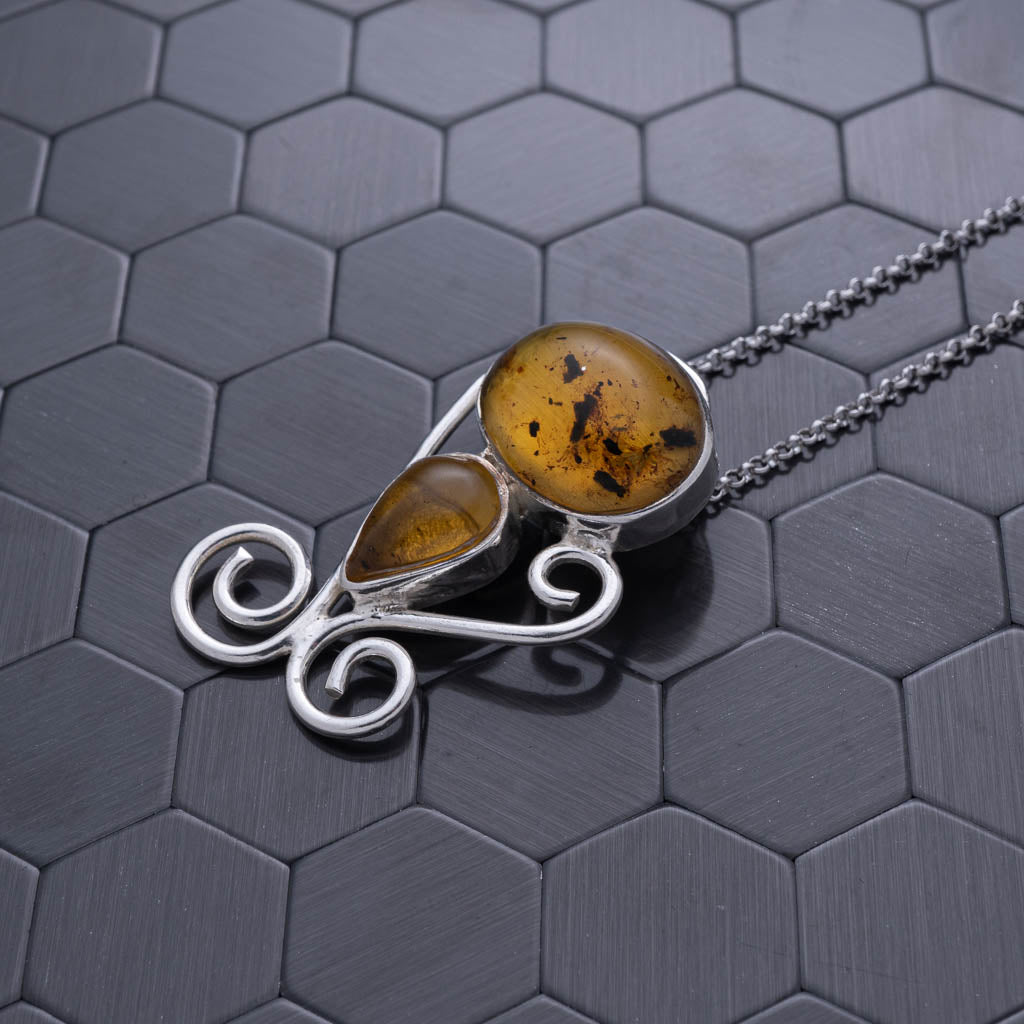
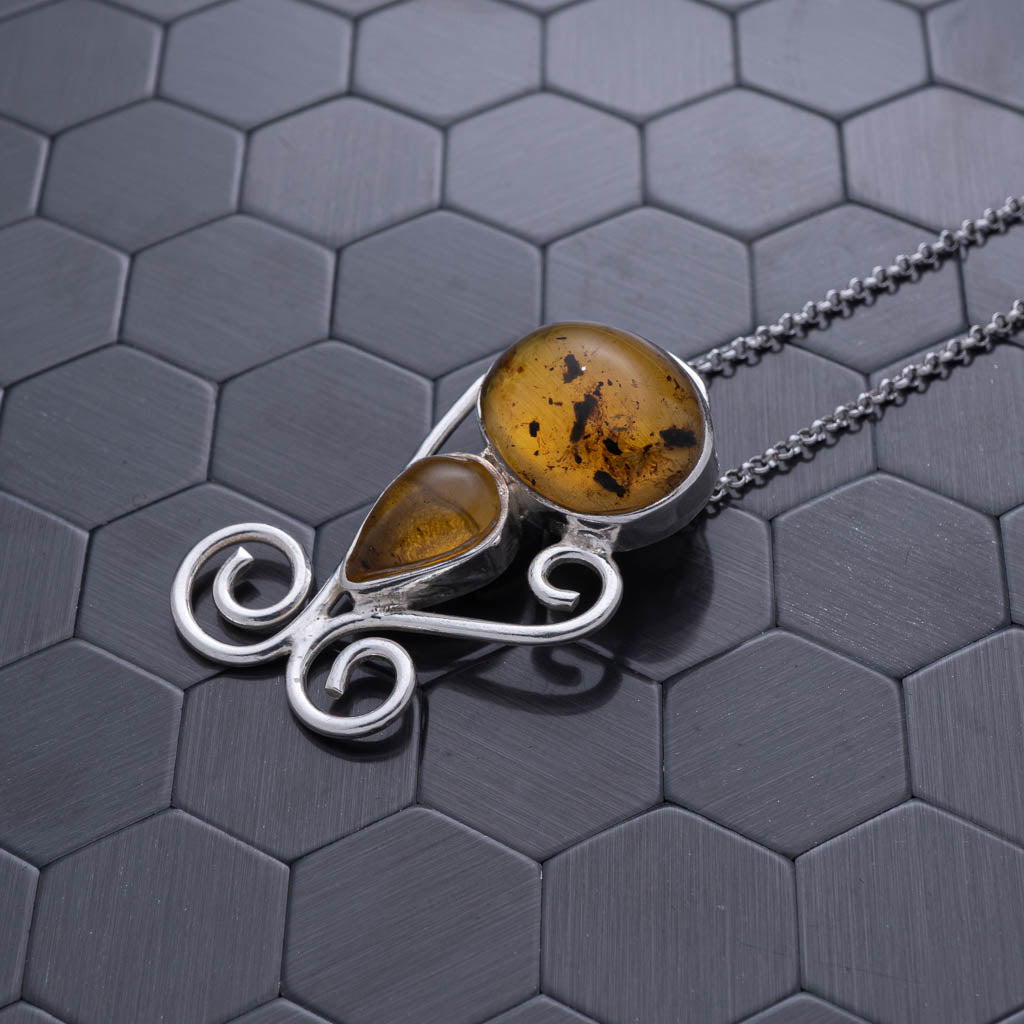
Clarity also tells a story. Natural amber can be beautifully transparent, but it often contains tiny internal features such as wispy veils, natural stress lines, plant traces, or uneven inclusions. A piece that looks excessively uniform, bubble-filled like molded plastic, or chemically perfect may not be natural amber at all. That said, very clean high-grade stones do exist, so this is not a standalone verdict.
Surface feel is another clue. Amber usually has a warm, organic visual softness rather than the sharp, glassy hardness of synthetic imitations. Polished genuine amber can be lustrous, but it still tends to look gentler than glass.
One of the best ways to understand how to verify blue amber is to study its behavior in light rather than chase a single color label. Dominican blue amber is especially valued because of its fluorescence. Under sunlight or UV light, it can display a remarkable blue effect that seems to float from within.
A small UV flashlight can be useful for preliminary screening. Genuine amber often fluoresces, while many plastics behave differently or show a duller, less natural reaction. Blue amber may produce a bluish glow, but the exact response varies by piece, cut, thickness, and background. If someone promises that every authentic stone must react in one exact way, that is too simplistic.
The best practice is comparison. If you can view multiple known authentic pieces side by side, patterns become easier to recognize. The blue effect in natural amber tends to feel dimensional, not painted on.
When buyers ask how to verify blue amber, they are often really asking two separate questions: is it real amber, and is it genuinely blue amber? Start with the amber question first.
Amber is fossilized tree resin, so it is lightweight compared with many gemstones. If a large stone feels surprisingly heavy for its size, that may signal glass or another substitute. Amber also tends to feel warmer to the touch than stone or glass.
A saltwater float test is often mentioned because amber can float in saturated saltwater while many plastics and glass behave differently. Still, this test has limits. Some imitations may also float, and it is not ideal for mounted jewelry. It can help with loose rough or loose polished material, but it should never be treated as final proof.
The hot needle test is another commonly repeated method, but it is a poor choice for jewelry and valuable stones. Pressing a heated needle into the material can damage the surface, release odor, and reduce the value of the piece. While amber and plastic may smell different when heated, destructive testing makes little sense when professional evaluation and noninvasive methods are available.
Under magnification, natural amber may reveal internal flow patterns and organic inclusions that look random rather than manufactured. Plastic imitations can show round gas bubbles or mold-like regularity. Again, this is useful, but only in context.
Not all amber marketed as blue amber carries the same rarity or value. Dominican blue amber holds a special place in the gemstone world because the Dominican Republic is the most famous source of true blue amber with this sought-after visual effect.
That is why origin matters. A reputable seller should be able to state where the amber comes from and do so with confidence. If a listing is vague, evasive, or overloaded with poetic language but light on facts, pay attention. Serious blue amber sellers usually discuss Dominican origin, natural variation, and the conditions under which the blue effect is visible.
For collectors and fine jewelry buyers, origin is not a marketing detail. It is part of verification. When a rare stone is tied to a specific geographic source, documentation becomes more meaningful.
The strongest answer to how to verify blue amber is often paperwork paired with reputation. A trustworthy seller should be transparent about whether the piece is natural, treated or untreated, and where it was sourced. For premium jewelry and collector material, certification or gemological documentation adds important confidence.
Certification does not replace your own observation, but it reduces guesswork. It is especially valuable when purchasing higher-ticket items such as statement pendants, carved pieces, or collector cabochons. Ask whether the amber has been tested, what the certificate covers, and whether the seller stands behind authenticity in writing.
Just as important, study how the seller presents the stone. Clear product photography in multiple lighting conditions, honest descriptions of tone and fluorescence, and a consistent focus on authenticity are all positive signs. Brands that specialize in Dominican amber usually communicate with more precision than broad fashion retailers that happen to stock an amber item.
The biggest mistake is assuming blue amber should look neon blue at all times. Real blue amber is more sophisticated than that. Its beauty often appears through interaction with light, not as a permanent flat body color.
Another mistake is trusting only one test. A floating result, a UV reaction, or a seller's verbal assurance may be useful, but none should stand alone. The more expensive the piece, the more important it is to layer evidence.
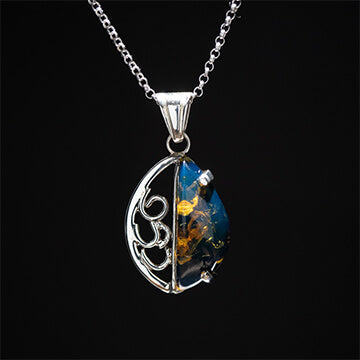
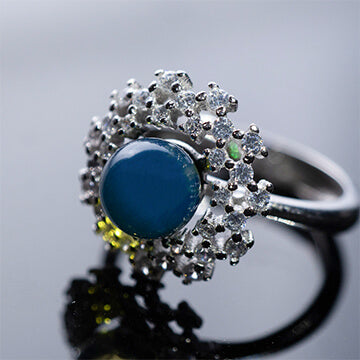
Buyers also sometimes overlook craftsmanship. Fine blue amber jewelry should not only feature authentic material but also careful setting, thoughtful cutting, and presentation that respects the rarity of the stone. Premium amber deserves premium handling.
If you are ready to purchase, use a standard that reflects the value of the gem. First, examine how the stone behaves in different lighting. Then consider weight, internal features, and overall visual character. After that, verify origin and ask for documentation. Finally, evaluate the seller with the same care you give the stone.
For many buyers, the safest route is to choose specialists who focus on authentic Caribbean gemstones rather than general jewelry marketplaces. A niche expert is more likely to understand the distinctions between genuine Dominican blue amber, standard amber, treated material, and synthetic substitutes. That depth matters.
At Larimar Creations, this is exactly why authenticity, sourcing, and craftsmanship remain central to the experience of discovering rare gemstone jewelry. Blue amber is not a trend piece. It is a collector's gem with a story, a place of origin, and a visual magic that deserves to be represented honestly.
When a blue amber piece is real, you can feel it in more than the certificate. You see it in the shifting light, the organic depth, and the quiet confidence of a stone that does not need exaggeration to be extraordinary.