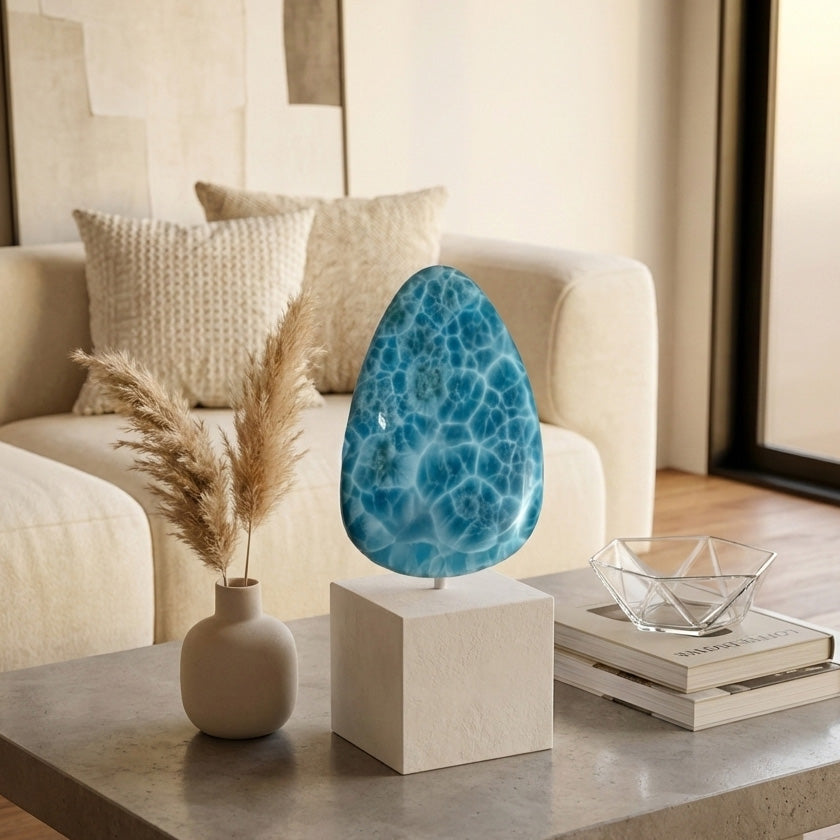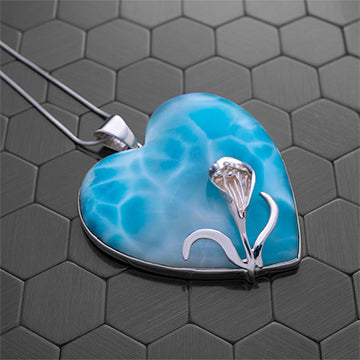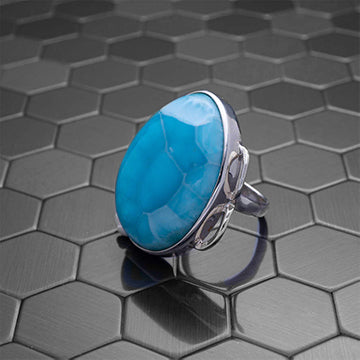


Handcrafted in DR.

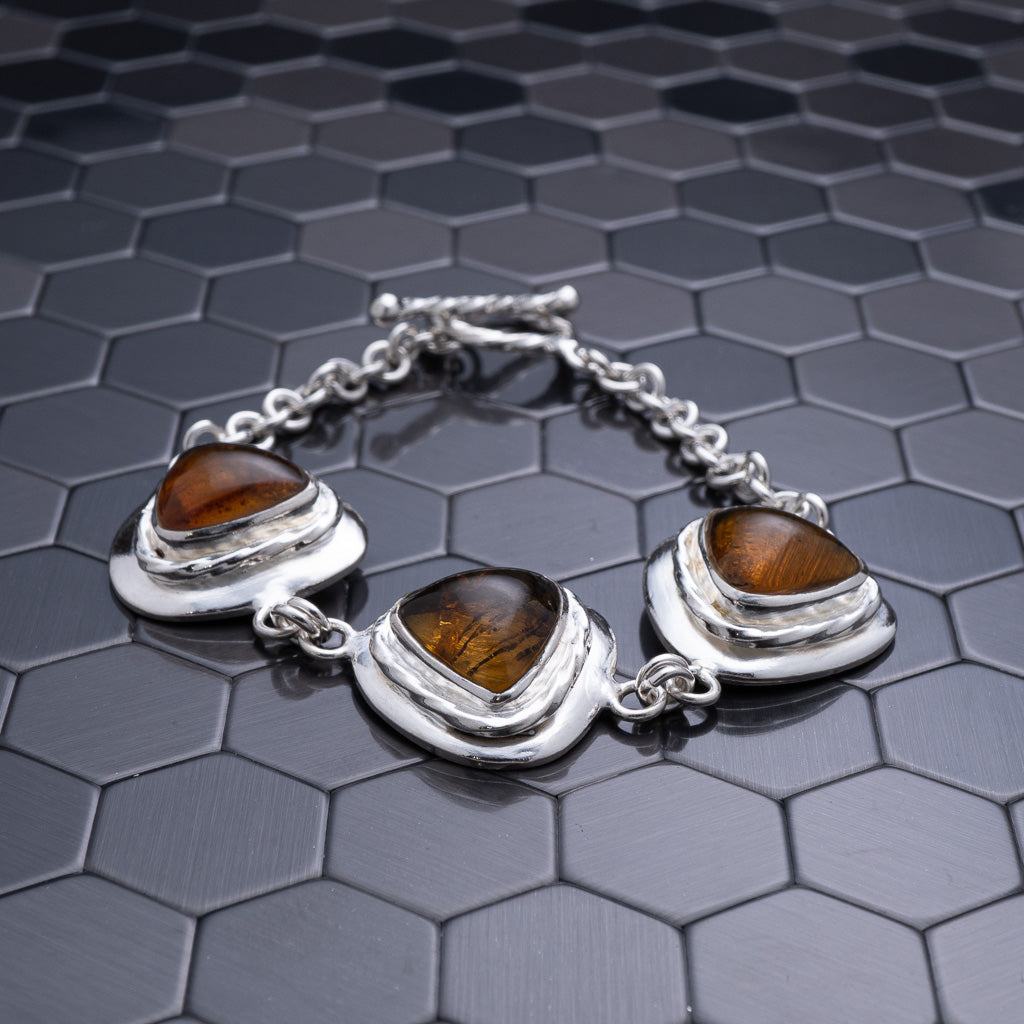
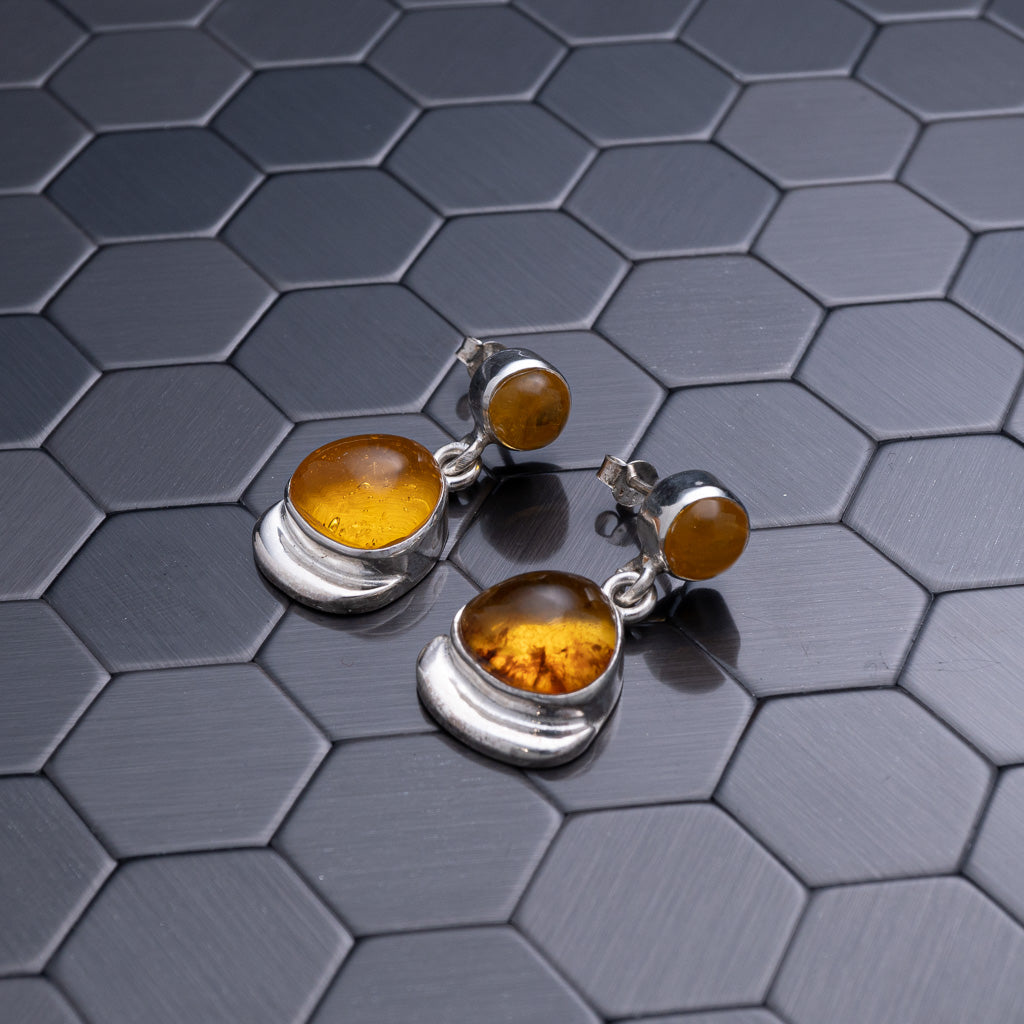


100% Handcrafted in DR.

The Ultimate Guide to Blue Amber: Origins, Types, and Jewelry
Blue amber is one of those rare gems that feels like it was plucked straight out of a fantasy novel. Imagine holding a piece of the Caribbean sun, fossilized over millions of years, with a surreal blue glow that makes it look like it’s lit from within. It’s no wonder **blue amber jewelry** has become a favorite among collectors and fashion enthusiasts alike. But what exactly is blue amber, where does it come from, and why does it cost as much as a decent used car sometimes? Let’s break it down.
## What Is Blue Amber?
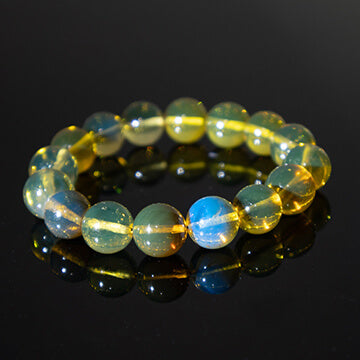
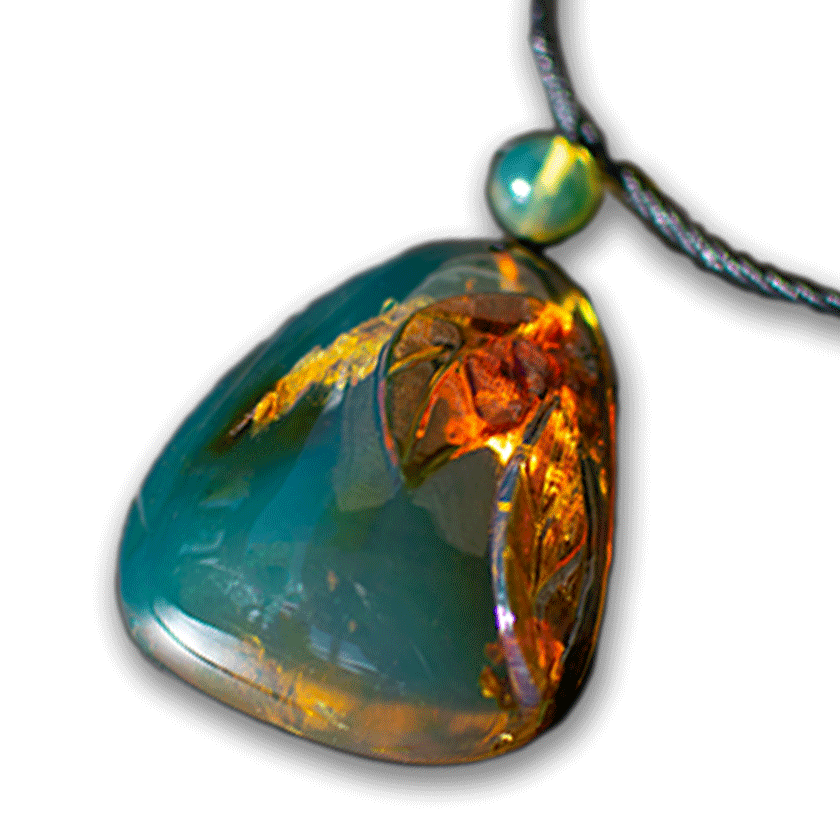
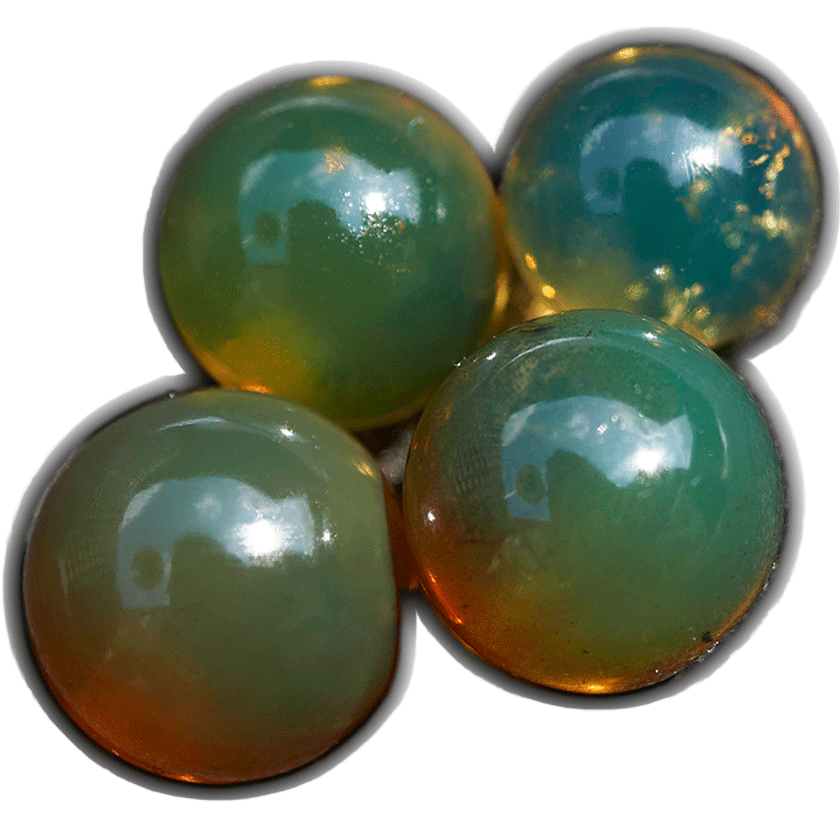
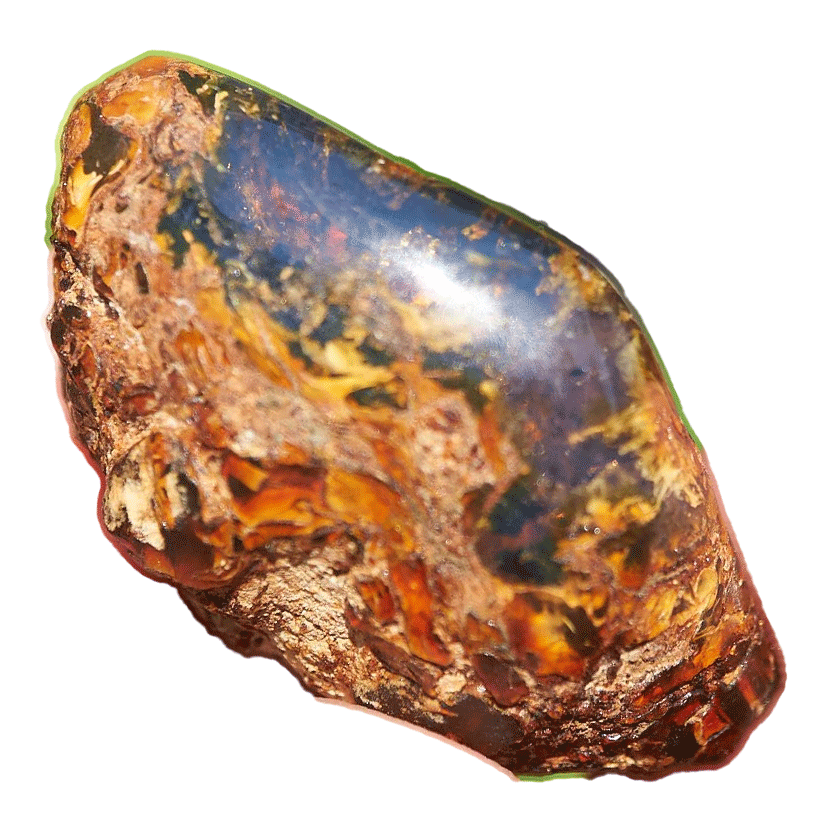
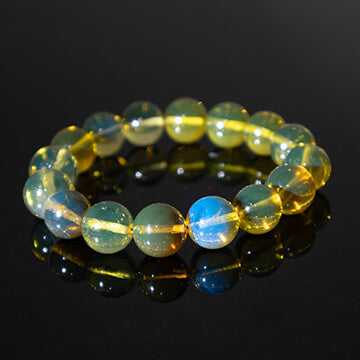
Amber is fossilized tree resin, but not all amber is created equal. Most people picture the classic honey-gold variety, but **blue amber** is the rock star of the amber world. Unlike regular amber, which gets its color from organic compounds, blue amber has a unique trick up its sleeve—it fluoresces under UV light (including sunlight). This means that in certain lighting, it shifts from a deep, earthy brown to an ethereal blue or even greenish hue.
### How Does It Get Its Color?
The exact science is still debated, but the leading theory suggests that **Dominican blue amber** contains high levels of aromatic hydrocarbons (fancy term for organic molecules) that absorb UV light and re-emit it as that mesmerizing blue glow. It’s like nature’s own blacklight poster.
## Where Does Blue Amber Come From?
If amber had a VIP section, the Dominican Republic would be the bouncer letting only the rarest pieces in. While amber is found in other places like the Baltic region, **Dominican blue amber** is the most sought-after. The mines in Santiago and Puerto Plata are the primary sources, and the stuff doesn’t come easy—miners often have to dig deep into mountainsides or sift through riverbeds to find it.
### Why Is Dominican Blue Amber Special?
- **Rarity**: Only about 1% of all Dominican amber is blue.
- **Quality**: The clarity and intensity of the blue hue are unmatched.
- **Age**: Dominican amber is younger (around 25-40 million years old) compared to Baltic amber, which means it’s less likely to have cracks or imperfections.
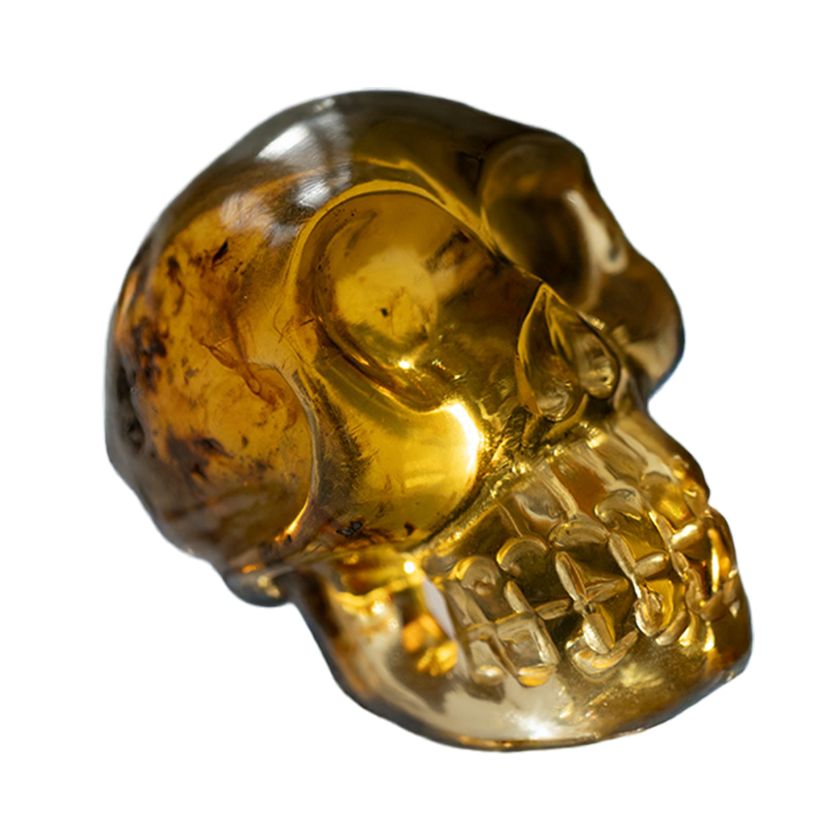
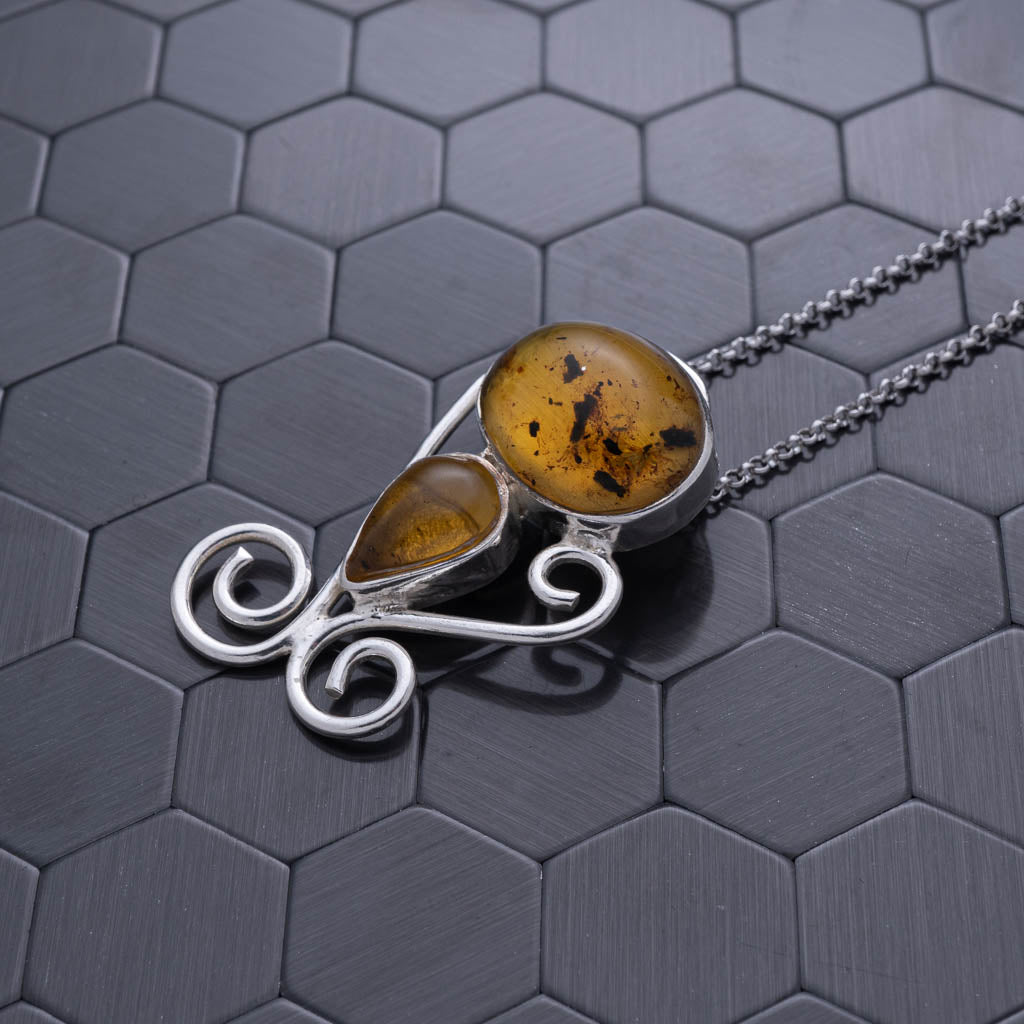
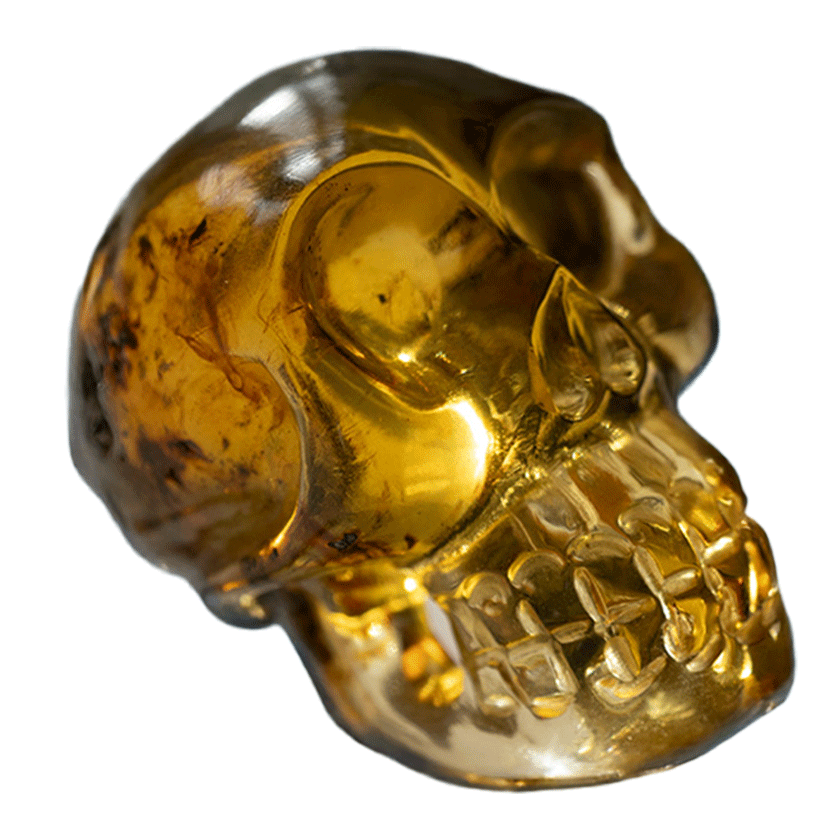
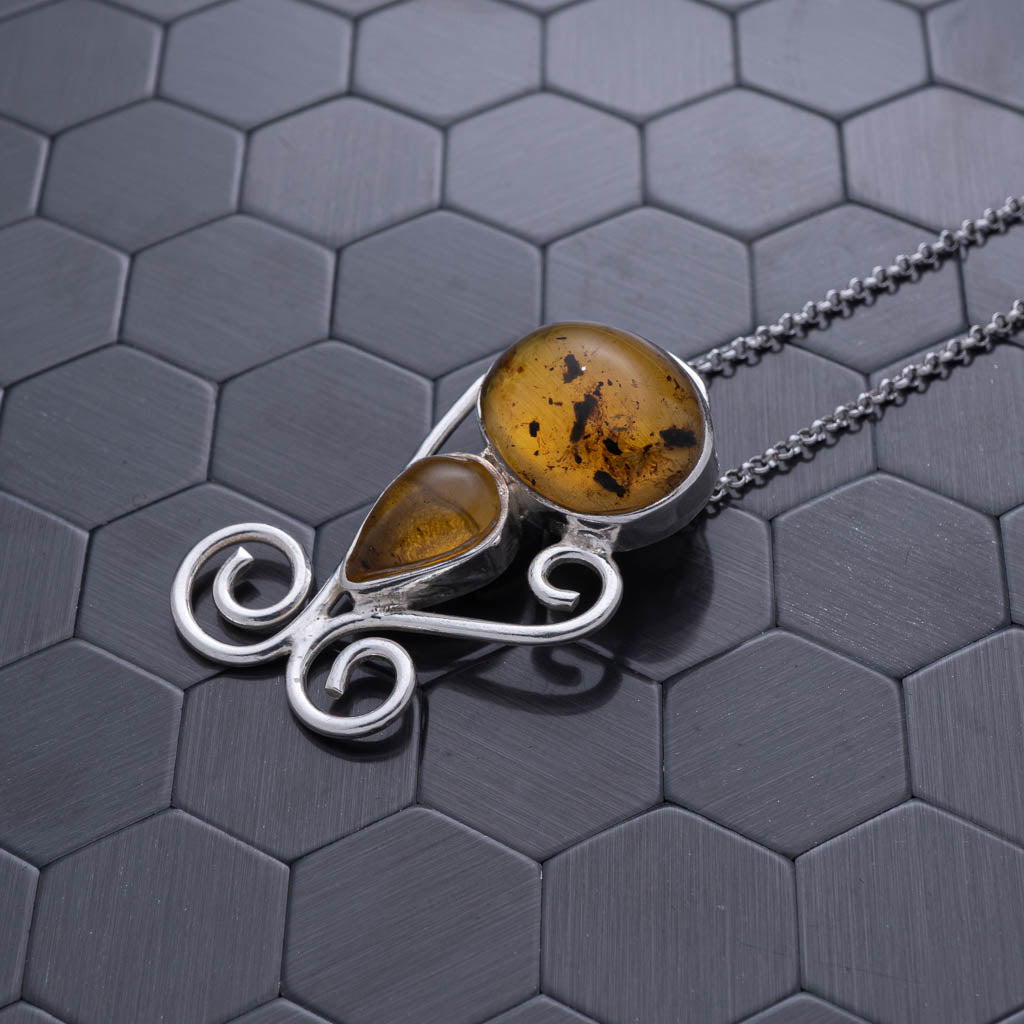
Fun fact: Some pieces still have prehistoric insects trapped inside. Jurassic Park vibes, anyone?
## Types of Blue Amber
Not all blue amber looks the same. Depending on lighting, impurities, and where it’s mined, you’ll find a few variations:
1. **Classic Blue**: The most common type, with a strong blue fluorescence under sunlight or UV light.
2. **Greenish-Blue**: A rarer variant that leans more toward teal or aqua.
3. **Multi-Chromatic**: Some pieces shift between blue, green, and even purple depending on the angle.

Pro tip: If you’re buying **blue amber jewelry**, check it under different light sources to see the full effect.


## Blue Amber Jewelry: What You Need to Know
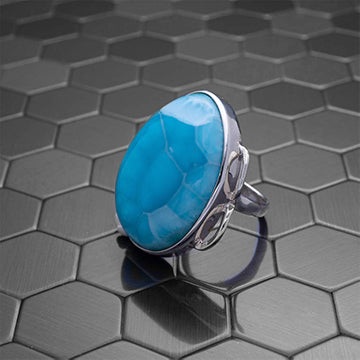
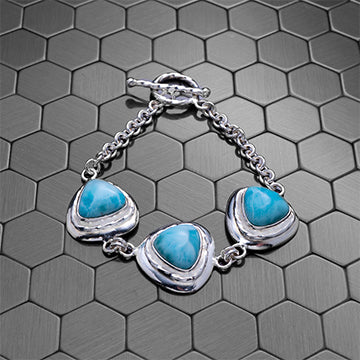
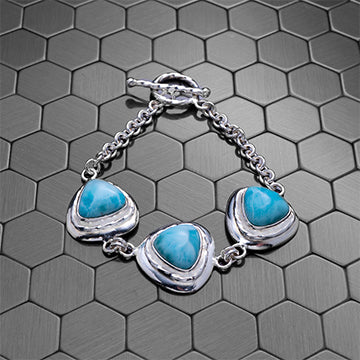
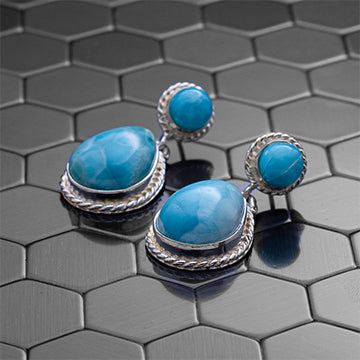
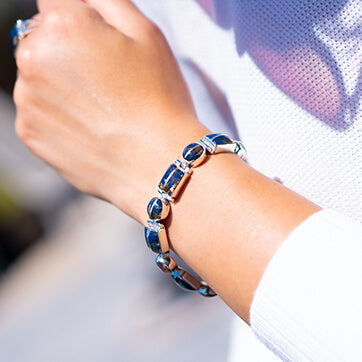
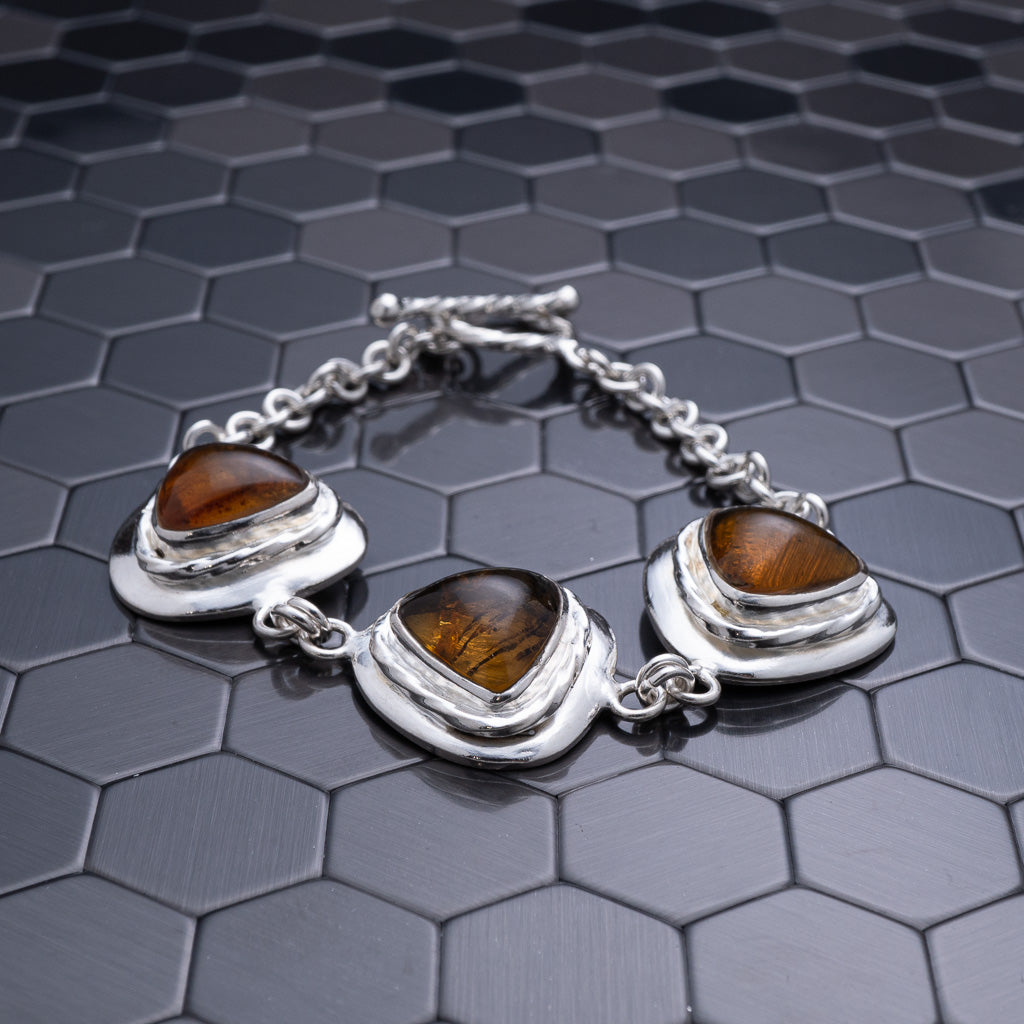
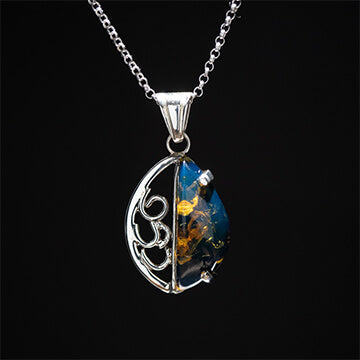
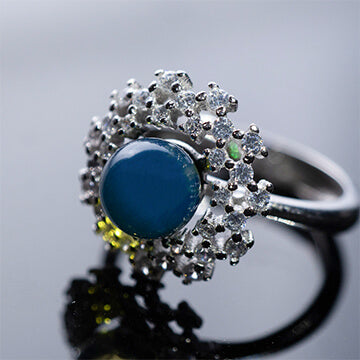
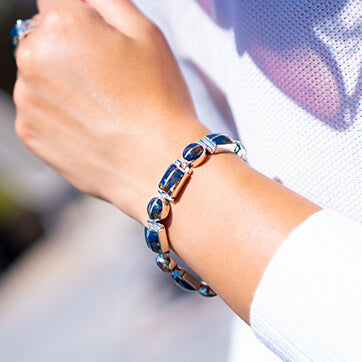
From statement necklaces to delicate rings, **blue amber jewelry** is having a moment. But before you drop serious cash on a piece, here’s what to consider:
### Popular Styles
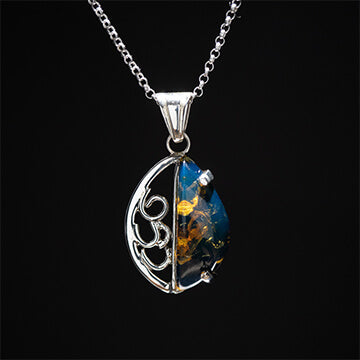
- **Pendants and Necklaces**: The larger the stone, the more dramatic the color play.
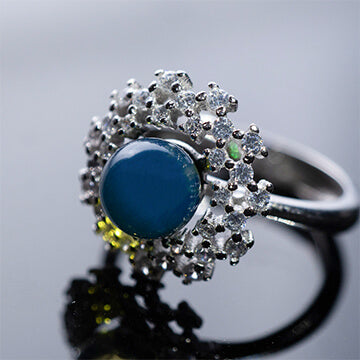
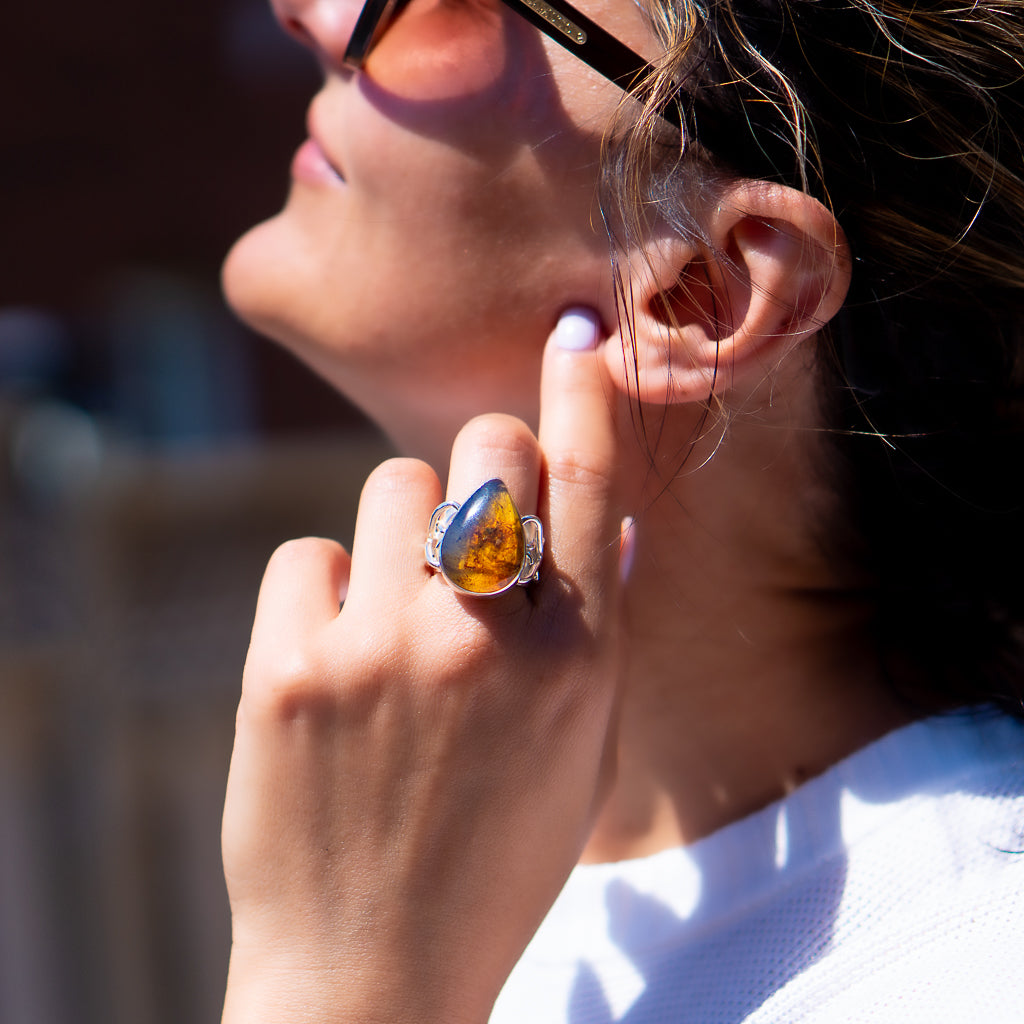
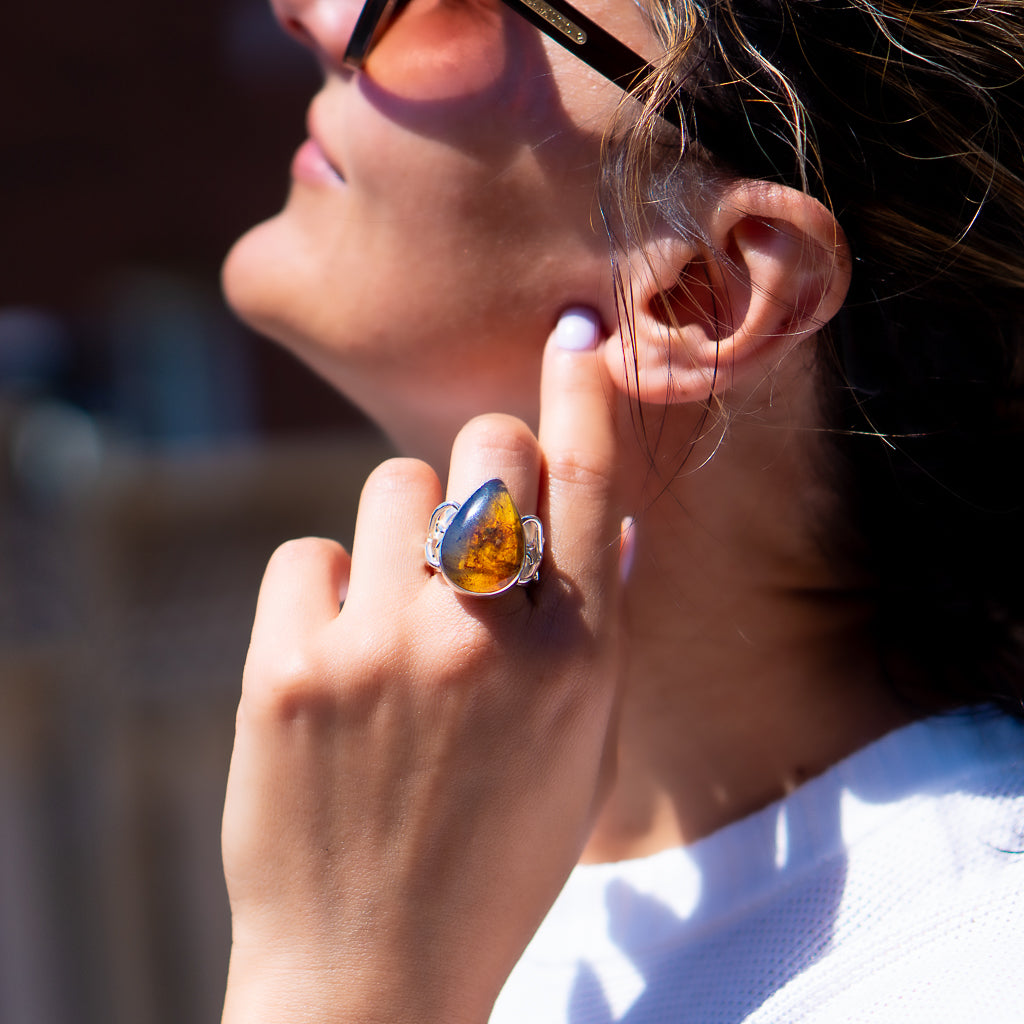
- **Rings**: Usually set in silver or gold to let the amber take center stage.
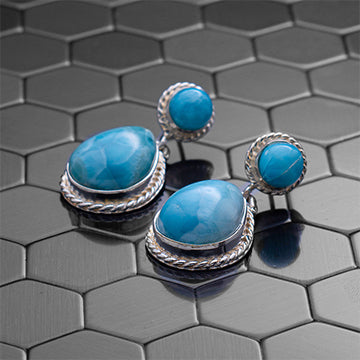
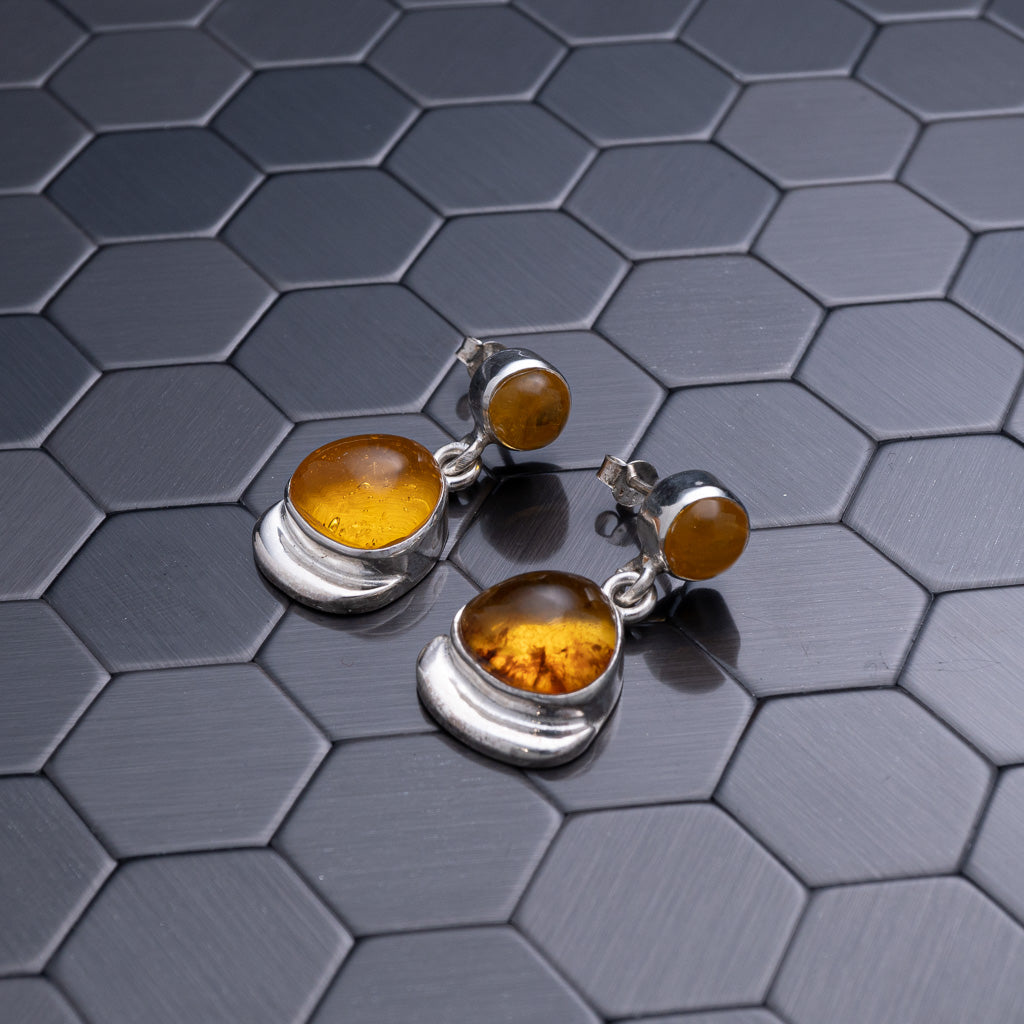
- **Earrings**: Smaller pieces but still eye-catching.
### How to Spot Fake Blue Amber
With great rarity comes great scams. Here’s how to avoid getting duped:
- **UV Test**: Real blue amber fluoresces under UV light. No glow? Probably fake.
- **Saltwater Test**: Real amber floats in saltwater; many fakes sink.
- **Heat Test**: Rub it gently—real amber smells piney, while plastic smells… well, like burning plastic.
## Blue Amber Price: Why Is It So Expensive?
If you’ve ever looked up **blue amber price**, you might’ve choked on your coffee. High-quality pieces can go for hundreds—even thousands—per gram. Here’s why:
- **Scarcity**: Only a tiny fraction of mined amber is blue.
- **Labor-Intensive Mining**: Digging it up is backbreaking work.
- **Demand**: Celebrities and collectors drive prices up.
- **Rough Stones**: $50-$200 per gram (depending on size and quality).
- **Polished Cabochons**: $100-$500 per gram.
- **Finished Jewelry**: $300-$5,000+ (designer pieces can go even higher).
Is it worth it? If you’re into unique, conversation-starting gems, absolutely. But if you’re just looking for a pretty rock, maybe stick to citrine.
## Caring for Blue Amber
Amber is softer than most gemstones, so treat it like your grandma’s fine china:
- **Avoid Chemicals**: Perfume, hairspray, and cleaning products can damage it.
- **Store Separately**: Keep it away from harder gems to prevent scratches.
- **Clean Gently**: A soft cloth and lukewarm water are all you need.
## Final Thoughts
Blue amber is one of those rare gems that feels almost magical. Whether you’re a collector, a jewelry lover, or just someone who appreciates nature’s weirdest creations, there’s no denying its appeal. Sure, the **blue amber price** might make your wallet weep, but hey—how often do you get to wear a piece of prehistoric sunshine that glows like a neon sign?
Now, if you’ll excuse me, I’m off to convince my bank account that I *need* a **Dominican blue amber** ring. Wish me luck.
**FAQ**
1. **What is blue amber and how is it formed?**
Blue amber is a rare variety of amber that exhibits a unique blue hue under certain lighting conditions. It forms from fossilized tree resin, with its distinctive color resulting from natural fluorescence caused by organic compounds within the resin.
2. **What are the different types of blue amber?**
The main types of blue amber include Dominican blue amber, which is the most well-known, and Mexican blue amber. These varieties differ in color intensity, transparency, and the specific conditions under which they fluoresce.
3. **How can I identify genuine blue amber?**
Genuine blue amber will fluoresce a bright blue under UV light and may appear honey-colored in natural light. It should also feel warm to the touch and exhibit natural inclusions, unlike synthetic imitations.
4. **What are the best ways to care for blue amber jewelry?**
To preserve blue amber jewelry, avoid prolonged exposure to sunlight, harsh chemicals, or extreme temperatures. Clean it gently with a soft cloth and mild soapy water, and store it separately to prevent scratches.
Youtube Channel Dominican Blue Amber