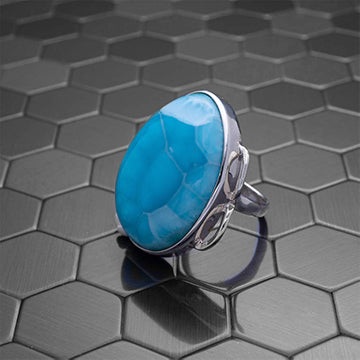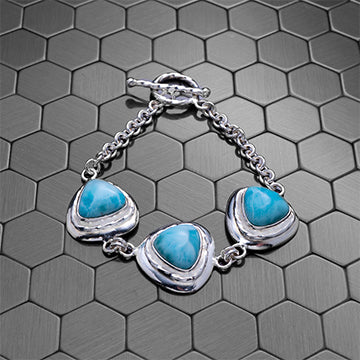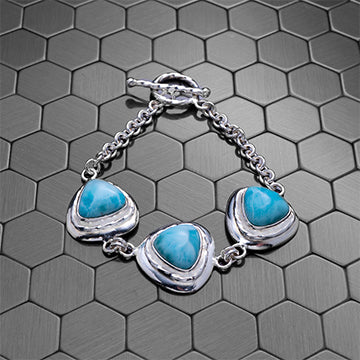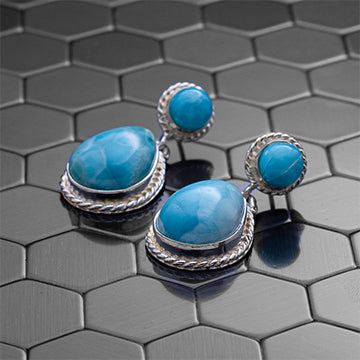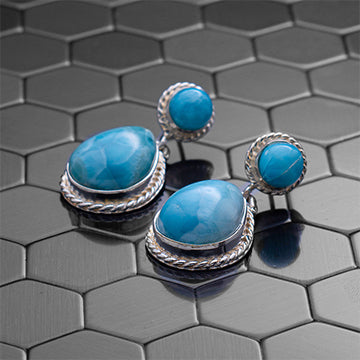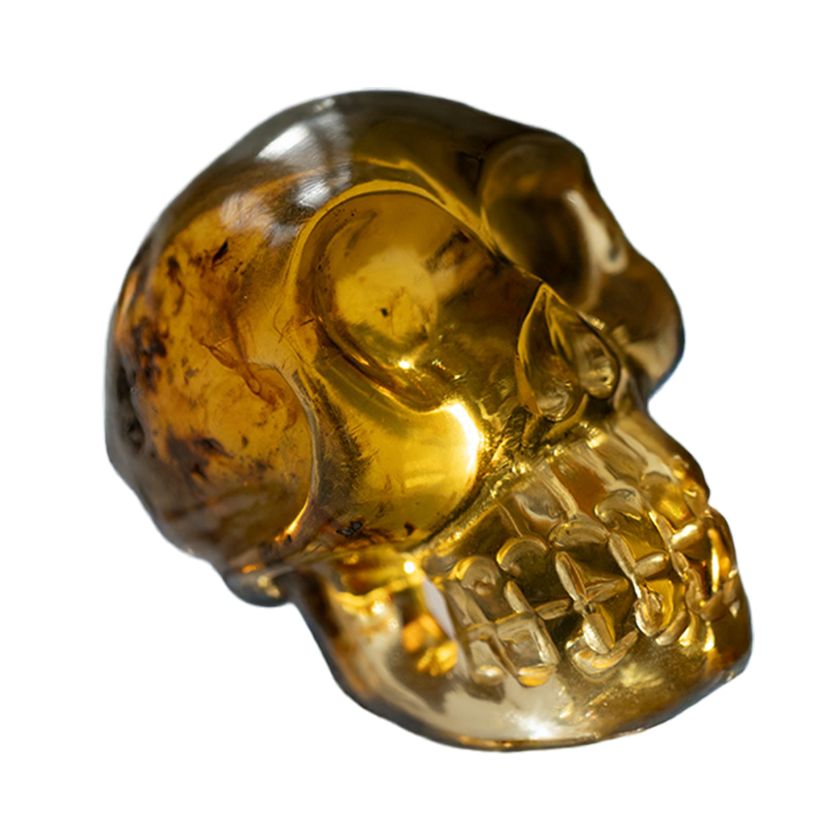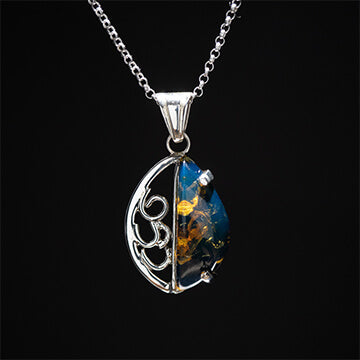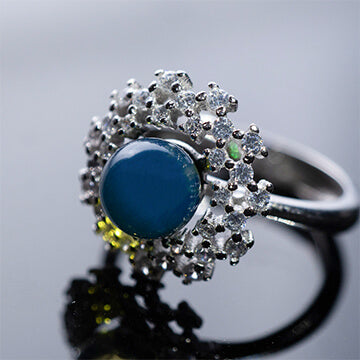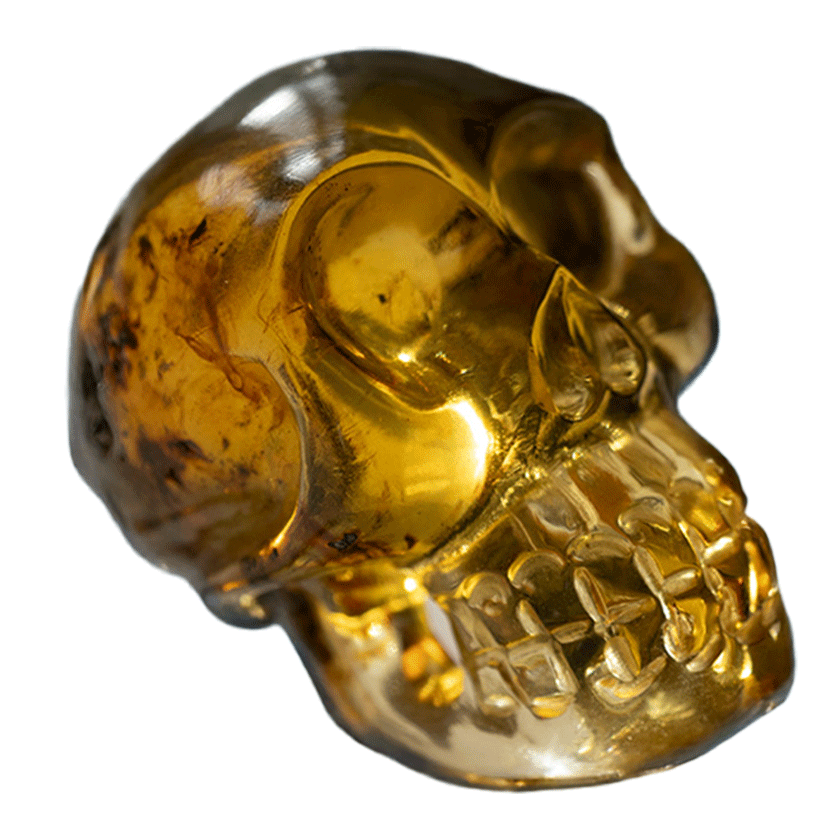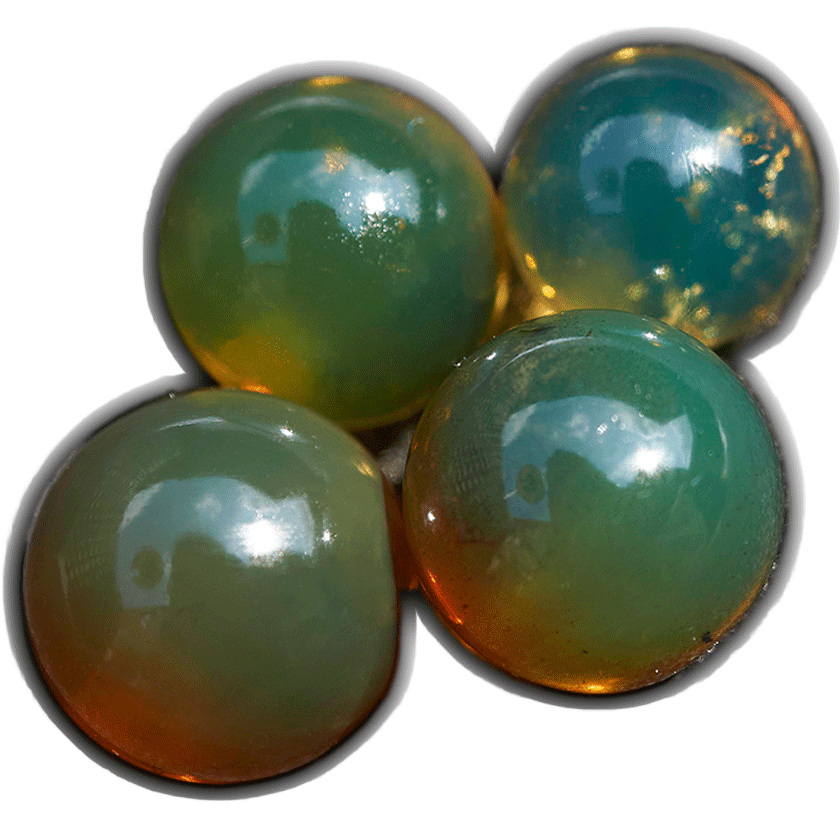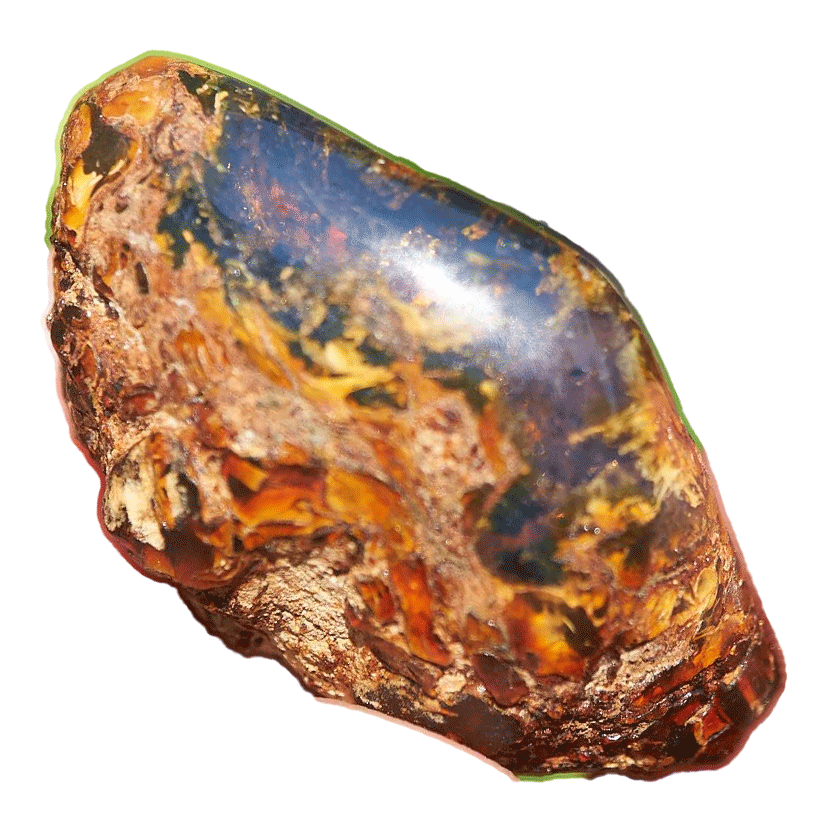


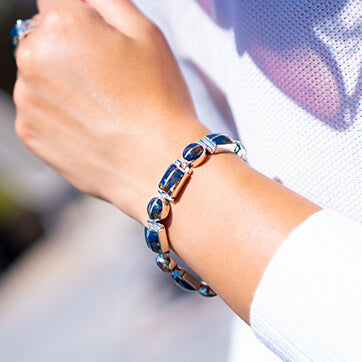
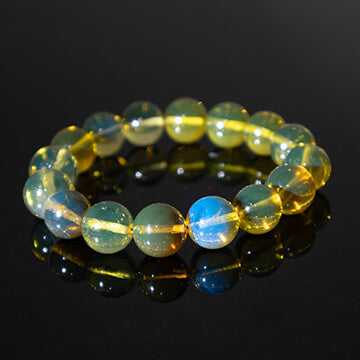
Handcrafted in DR.

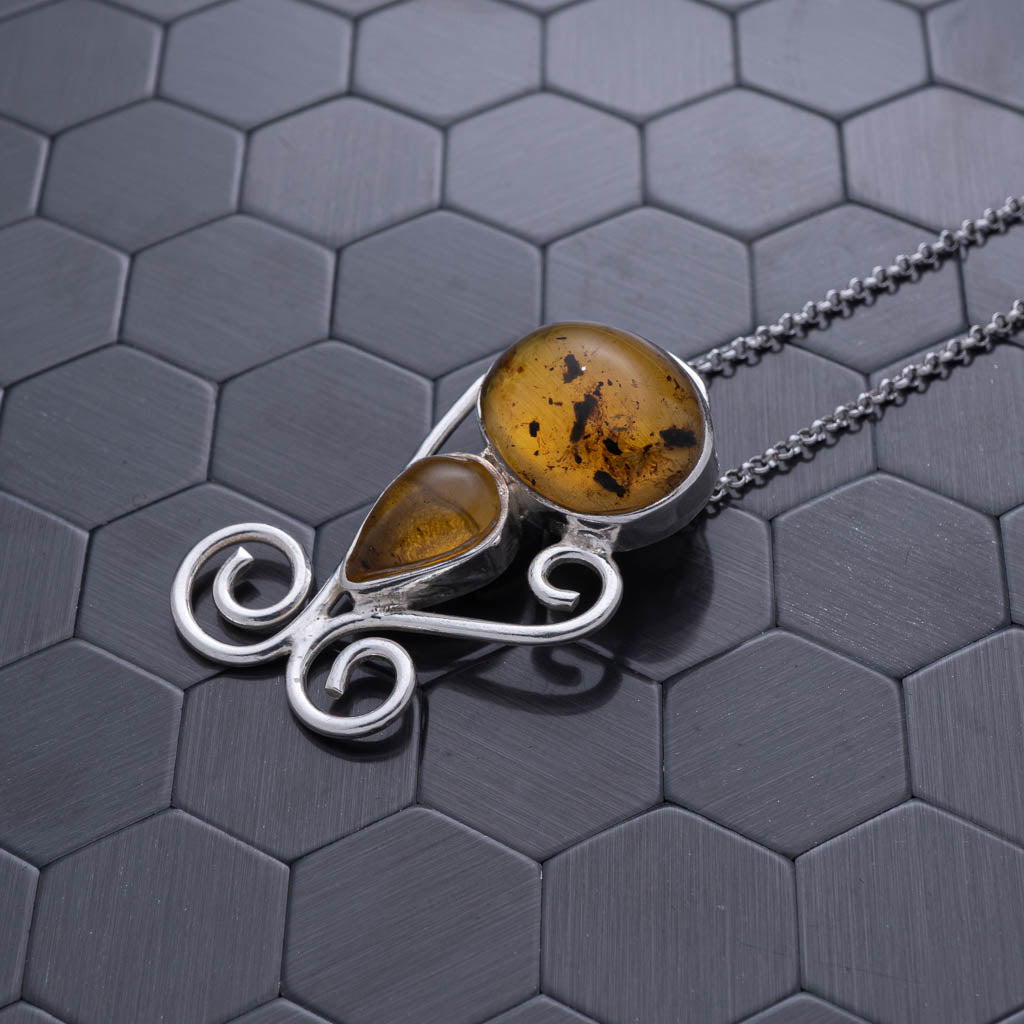
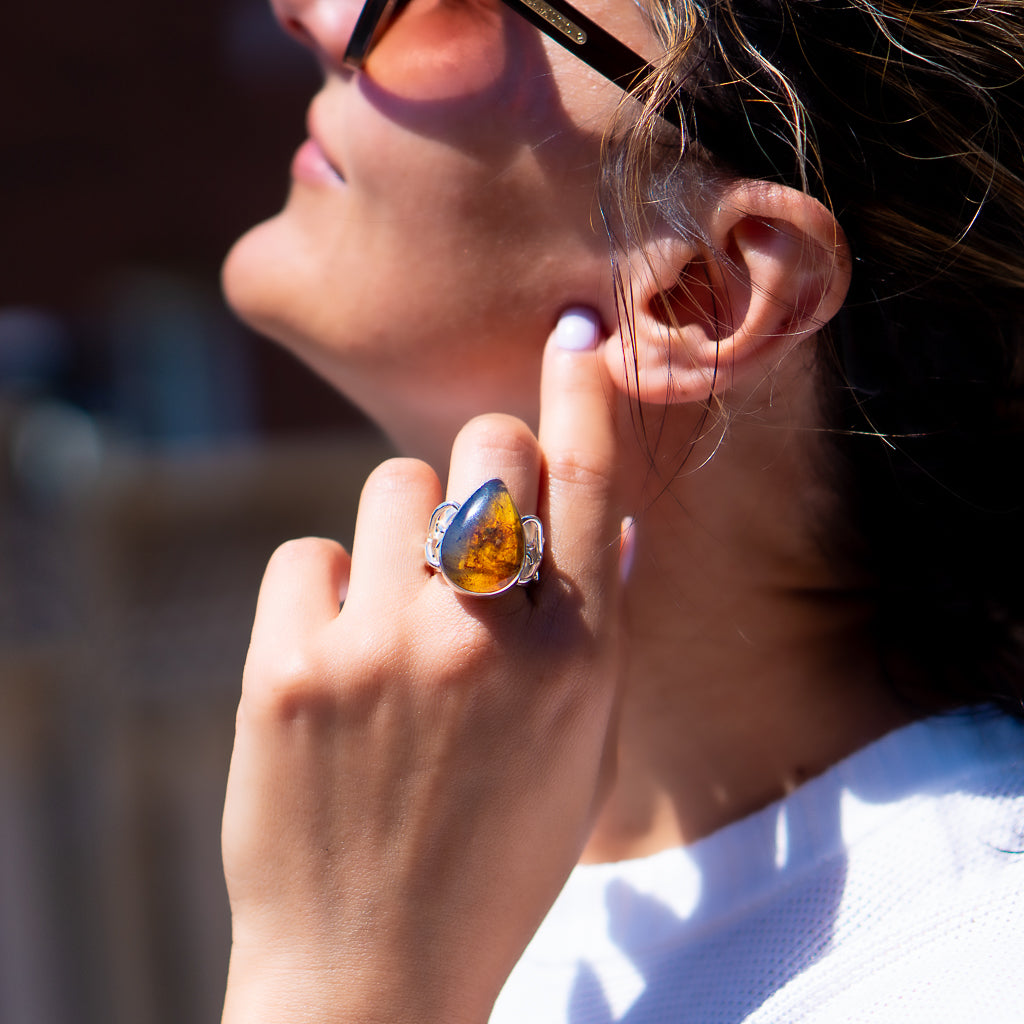
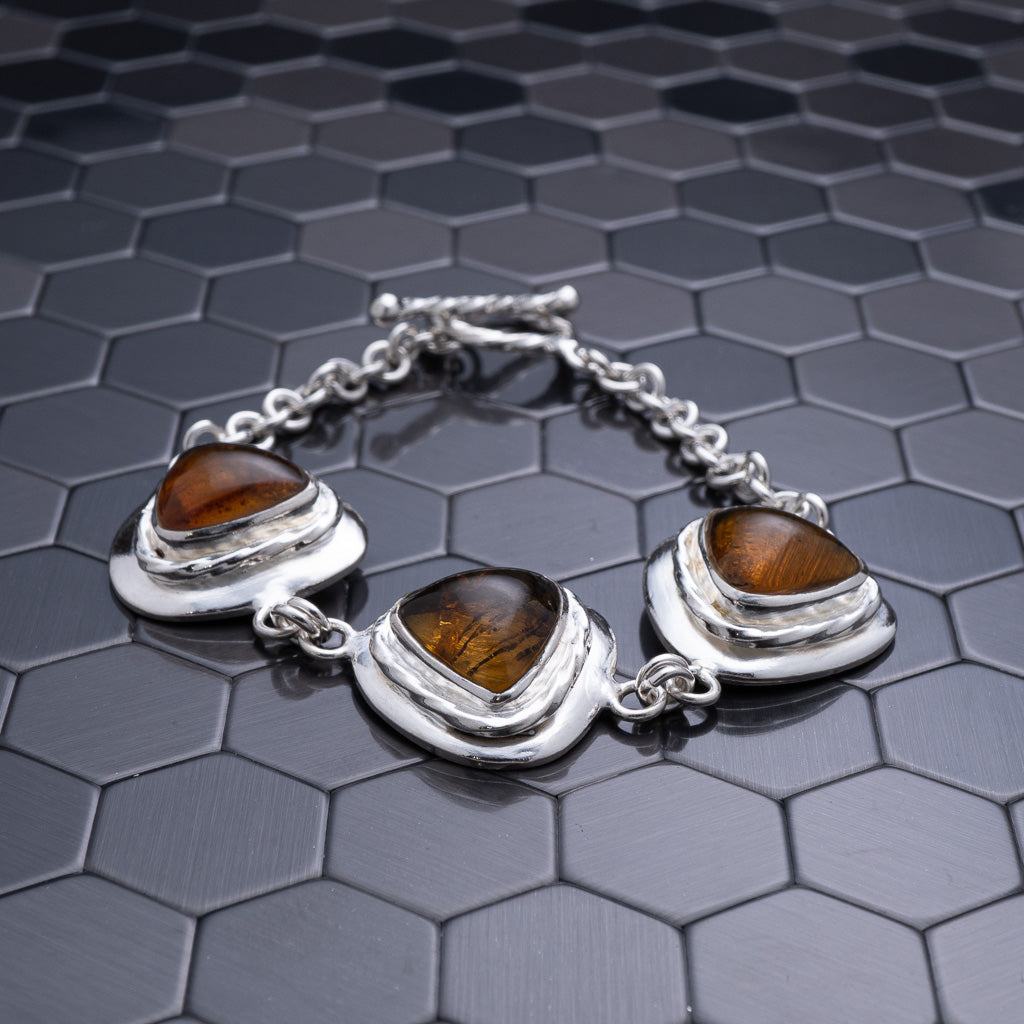
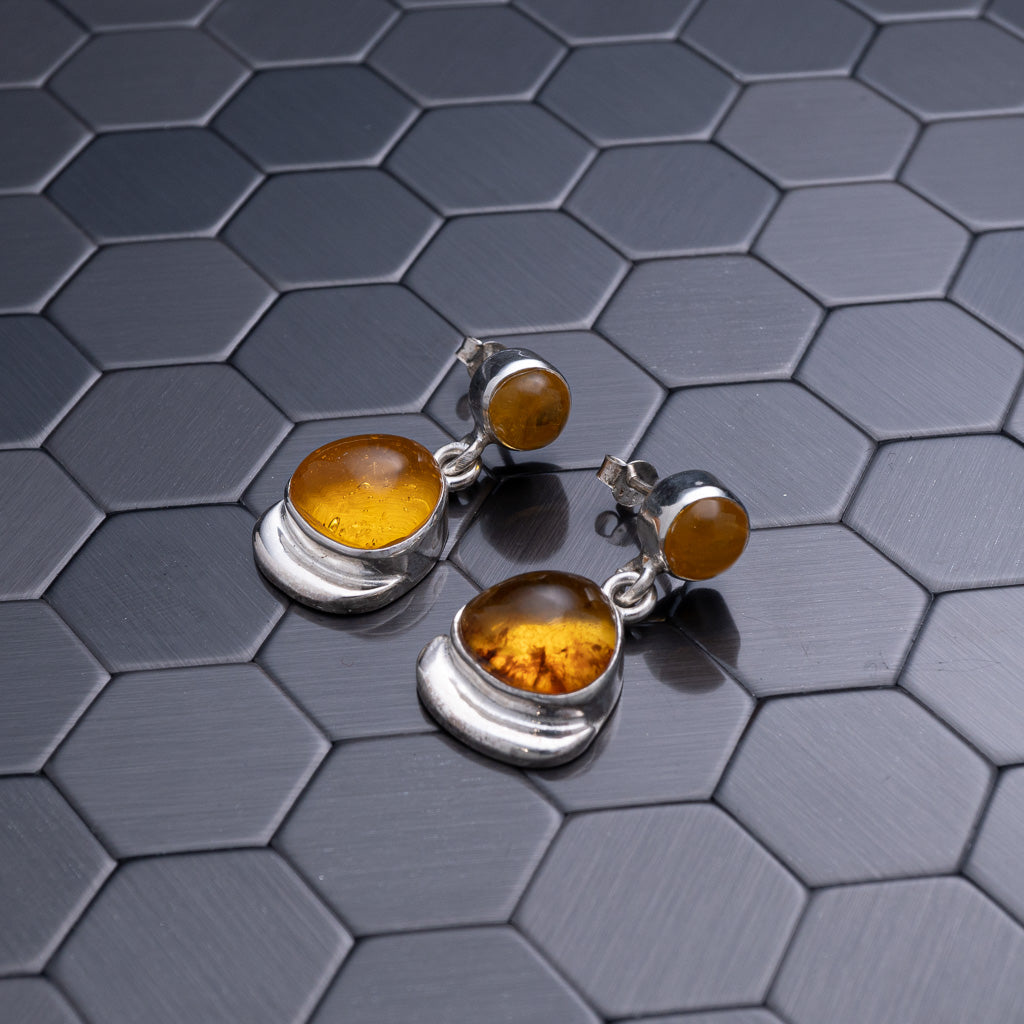


100% Handcrafted in DR.

When comparing blue gemstones for jewelry, the larimar-vs-turquoise debate often arises among collectors and enthusiasts. Both stones captivate with their oceanic hues, yet they differ dramatically in origin, composition, rarity, and value. Understanding these distinctions helps jewelry buyers make informed decisions whether seeking a unique collector's piece or a meaningful accessory. This comprehensive guide explores every aspect of these two beloved gemstones, from their geological formation to their metaphysical properties and market value.
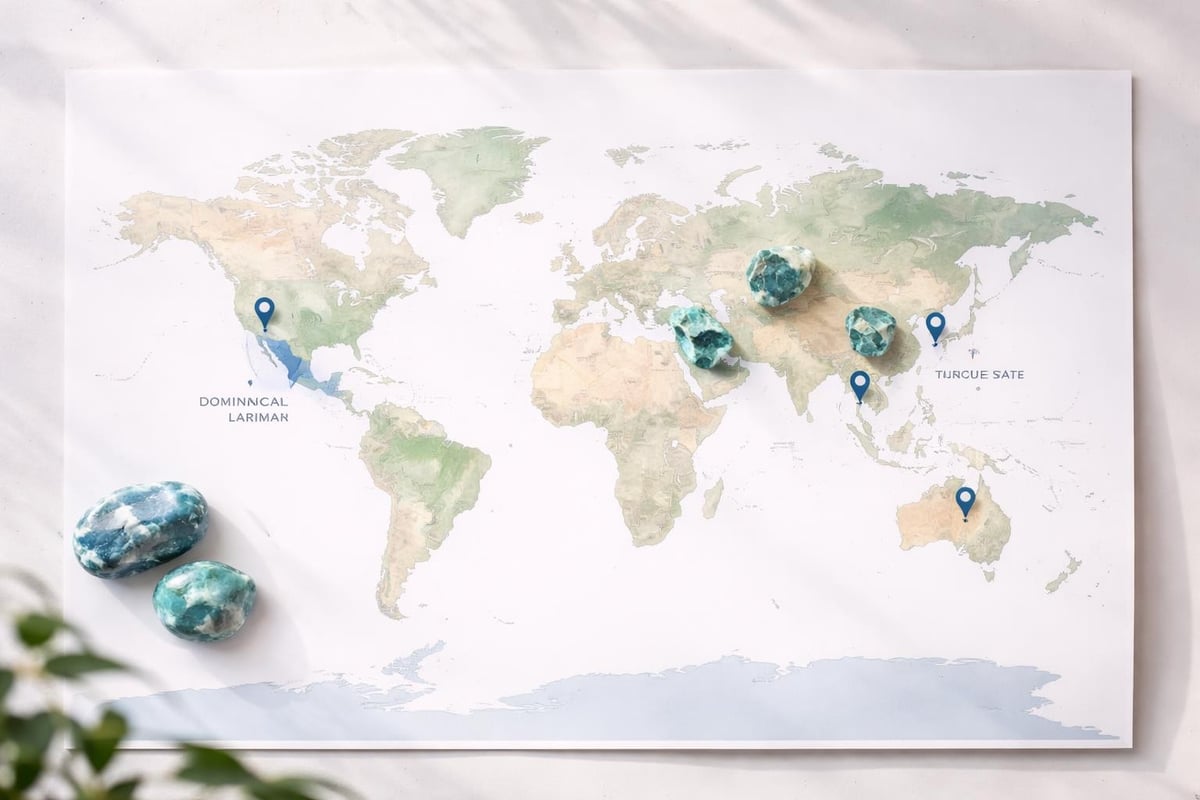
The most striking difference in the larimar-vs-turquoise comparison begins with geography. Larimar exists in only one location on Earth: the Bahoruco mountain range in the Dominican Republic. This extreme geographic limitation makes it one of the world's rarest gemstones. The discovery of larimar occurred in 1974 when Miguel Méndez and Peace Corps volunteer Norman Rilling found the stone in a remote mountainous region.
Turquoise, by contrast, appears in multiple locations worldwide. Major deposits exist in:
This widespread availability significantly impacts rarity and pricing structures. While both stones face depletion concerns, larimar's single-source origin creates inherent scarcity that turquoise cannot match.
The larimar-vs-turquoise distinction extends deep into geological processes. Larimar forms through volcanic activity, specifically as a variety of pectolite. When copper oxidizes within volcanic rocks under specific temperature and pressure conditions, it creates larimar's characteristic blue coloration. The geological properties of larimar reveal a complex formation requiring precise volcanic conditions.
Turquoise develops through entirely different processes. It forms as a secondary mineral in weathered, copper-rich rocks when groundwater percolates through aluminum and phosphorus-bearing minerals. The chemical formula CuAl₆(PO₄)₄(OH)₈·4H₂O reflects this complex interaction.
| Property | Larimar | Turquoise |
|---|---|---|
| Mineral Type | Pectolite (silicate) | Hydrous phosphate |
| Formation | Volcanic hydrothermal | Sedimentary weathering |
| Hardness (Mohs) | 4.5-5 | 5-6 |
| Crystal System | Triclinic | Triclinic |
| Primary Element | Copper (color agent) | Copper (color agent) |
Both stones owe their blue coloration to copper, yet their structural differences create distinct appearances and durability characteristics.
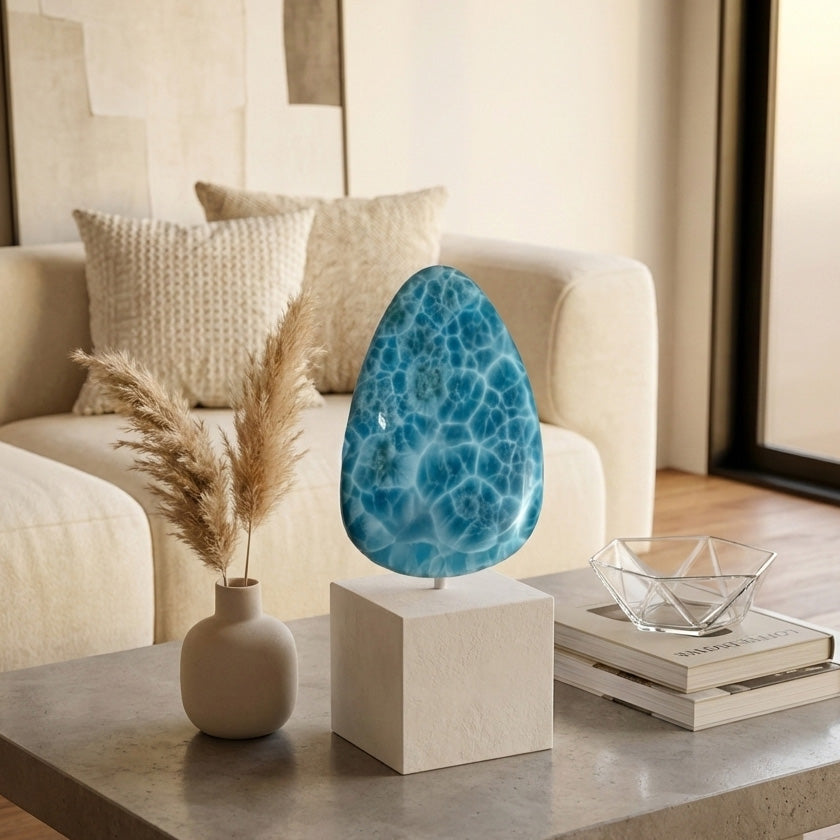
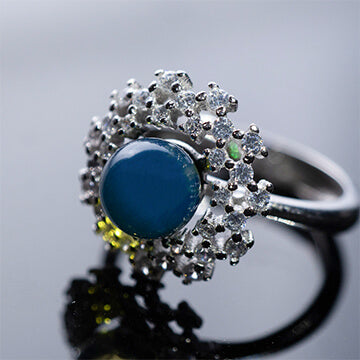
Color presents perhaps the most nuanced aspect of the larimar-vs-turquoise comparison. Larimar displays a range from pale sky blue to deep volcanic blue, often with white marbling that resembles sunlight dancing on Caribbean waters. The color energy of larimar influences both its aesthetic appeal and metaphysical associations. The finest specimens exhibit a saturated blue without excessive white streaking, though the natural patterns contribute to each stone's uniqueness.
Premium larimar grades include:
Turquoise offers an equally diverse color spectrum, though trending toward green-blue rather than pure blue. The famous Persian turquoise displays robin's-egg blue, considered the gold standard. American turquoise often contains distinctive matrix patterns in black, brown, or gold, created by surrounding rock materials.
The matrix itself differentiates specimens. Turquoise frequently features spiderweb patterns, while larimar's unique characteristics include flowing white patterns resembling ocean foam or cloud formations.
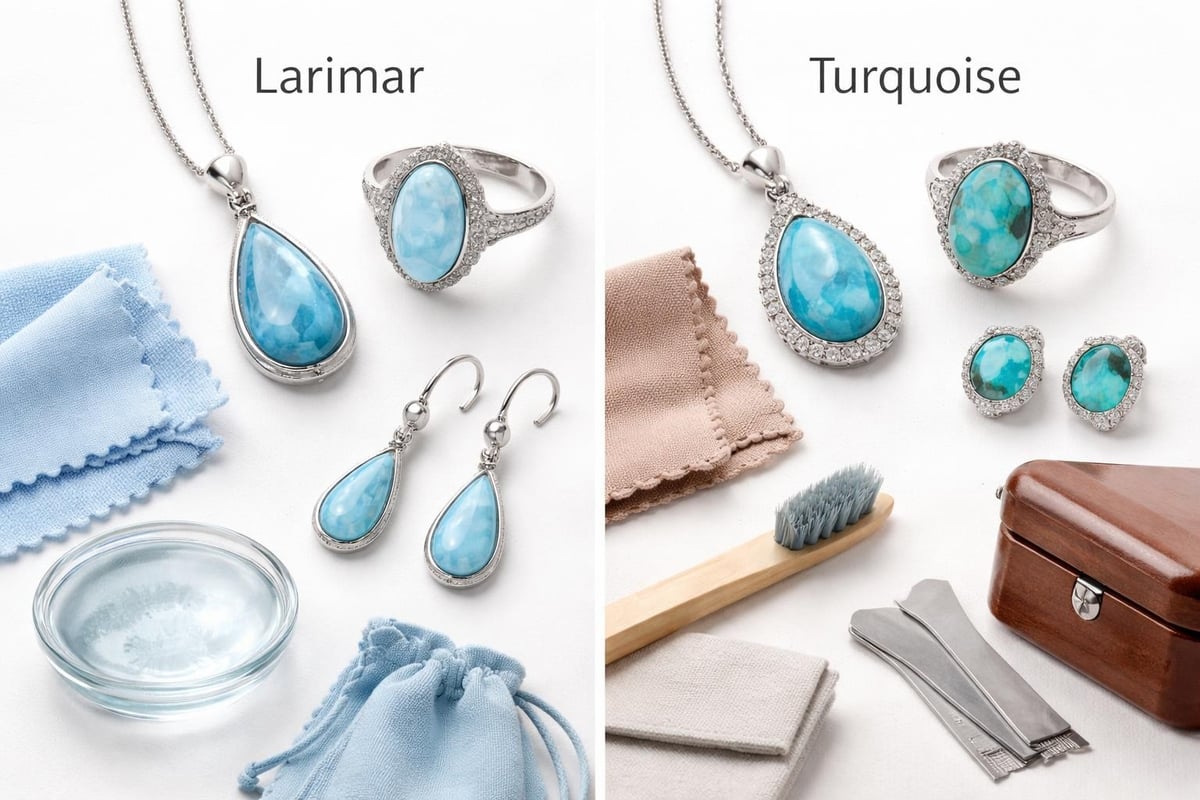
When selecting between these gemstones for jewelry, durability factors heavily into the larimar-vs-turquoise decision. Both stones fall into the relatively soft category, requiring careful treatment.
Larimar's Mohs hardness of 4.5-5 makes it suitable for occasional-wear jewelry like pendants and earrings. Daily-wear rings face increased risk of scratching and surface damage. The stone remains stable under normal conditions but should avoid prolonged exposure to:
Turquoise rates slightly harder at 5-6 on the Mohs scale, offering marginally better scratch resistance. However, it presents unique vulnerabilities. Turquoise porosity means it absorbs oils, lotions, and chemicals readily, potentially causing permanent discoloration. Many turquoise stones receive stabilization treatments to improve durability.
Beyond physical characteristics, the larimar-vs-turquoise comparison extends into metaphysical realms. Both stones carry rich spiritual traditions, though from different cultural contexts.
Larimar connects strongly with water element energy, associated with:
Many practitioners value larimar for meditation, believing it facilitates deeper spiritual awareness. Understanding larimar's healing properties provides insight into why collectors seek this stone beyond aesthetic appeal.
Turquoise holds perhaps the longest spiritual history of any gemstone, revered across cultures:
Both stones share protective qualities, though turquoise emphasizes shielding from negative energy while larimar focuses on releasing it through gentle transformation.
Market dynamics reveal significant differences in the larimar-vs-turquoise comparison. Pricing structures reflect rarity, quality, and market demand.
Larimar Pricing Factors:
High-quality larimar commands premium prices due to single-source rarity. Per-carat prices for top-grade volcanic blue larimar can rival or exceed fine turquoise. Rare larimar colors and their investment value examines how color intensity affects market pricing. Factors influencing value include:
Turquoise Pricing Considerations:
| Turquoise Type | Price Range (per carat) | Key Factors |
|---|---|---|
| Persian (natural) | $20-$300+ | Rarity, robin's-egg blue, no matrix |
| American (natural) | $10-$150+ | Mine origin, matrix patterns, color |
| Chinese (stabilized) | $1-$20 | Treatment level, quality |
| Sleeping Beauty | $15-$100+ | Pure blue, mine closure (rare) |
Natural, untreated turquoise from renowned sources commands highest prices. However, the prevalence of treatments and synthetics complicates the market. Stabilization, dyeing, and reconstituted materials flood markets, making authentication essential.
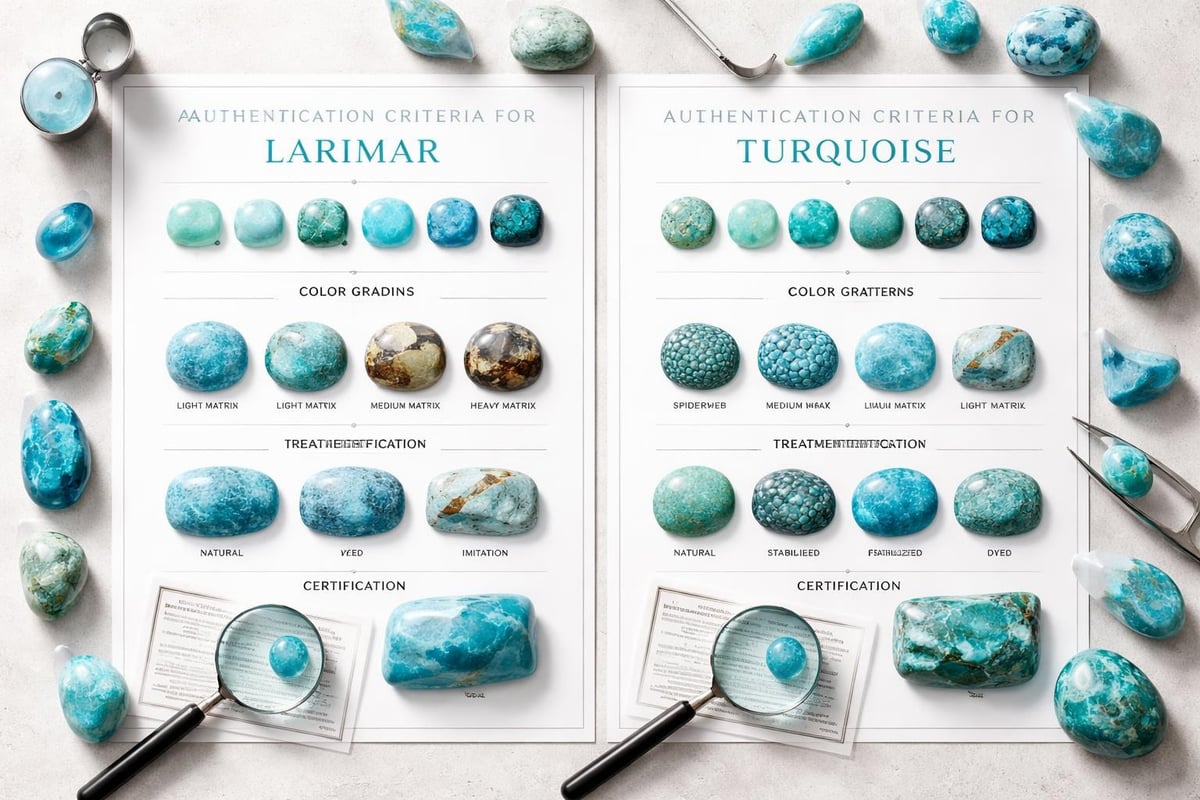
Distinguishing genuine stones presents challenges in both categories, making the larimar-vs-turquoise comparison extend to verification methods.
Genuine larimar displays specific characteristics:
Common larimar imitations include dyed howlite, ceramic, and glass. Comprehensive authenticity guides help buyers recognize genuine specimens versus sophisticated fakes.
Turquoise authentication involves additional complexity due to widespread treatments:
Testing methods include acetone tests for dye, hot needle tests for plastic content, and professional gemological examination. Reputable sellers disclose treatment levels transparently.
The larimar-vs-turquoise decision often depends on intended jewelry use. Both stones create stunning pieces, though design approaches differ.
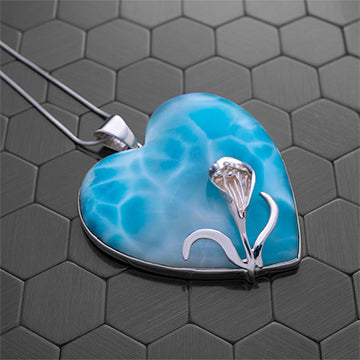
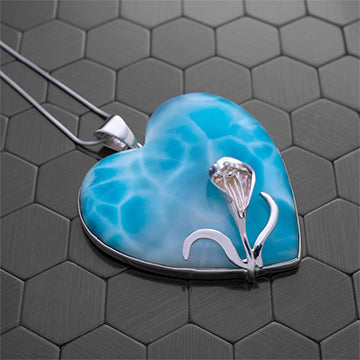
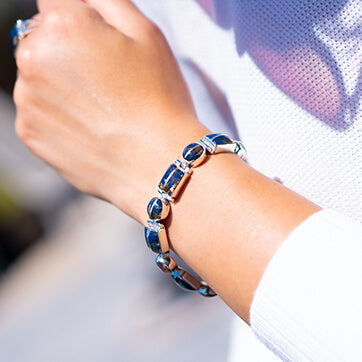
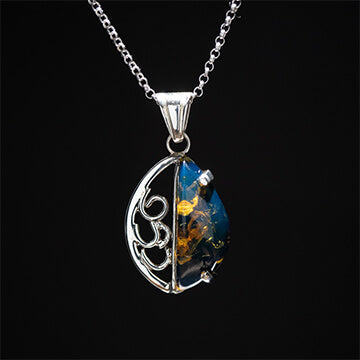
Larimar's flowing patterns suit organic, ocean-inspired designs. Its relative softness makes it ideal for larimar pendants, which face less abrasion than rings or bracelets. Settings should protect stone edges, with bezel or partial bezel designs offering optimal security. The stone's natural variations mean each piece becomes truly one-of-a-kind.
Turquoise's versatility spans traditional to contemporary styles. Its cultural significance makes it perfect for:
Both stones pair beautifully with silver, which complements their blue tones without competing. Gold creates warmer contrasts, particularly effective with greenish-blue turquoise varieties.
Historical perspectives add depth to the larimar-vs-turquoise comparison. Turquoise boasts millennia of human appreciation, appearing in Egyptian tombs, Persian crowns, and Native American ceremonial objects. Its name derives from "Turkish stone," referencing trade routes rather than origin.
Larimar's history spans only decades since commercial discovery, yet local Dominican legends suggest earlier awareness. Miguel Méndez named it combining his daughter's name "Larissa" with "mar" (Spanish for sea). Despite its recent formal recognition, understanding larimar's story reveals how quickly it captured global attention.
The contrast between turquoise's ancient legacy and larimar's modern discovery creates interesting market dynamics. Collectors appreciate turquoise's historical weight while valuing larimar's pristine newness and untapped potential.
Practical acquisition differs significantly in the larimar-vs-turquoise landscape. Turquoise's widespread availability means buyers find options from local gem shows to international dealers. However, this accessibility comes with authentication challenges and variable quality.
Larimar's limited sourcing requires more careful purchasing approaches:
Supply chain transparency matters increasingly. Ethical sourcing, environmental impact, and mining community support influence conscientious buyers. Exploring the world of larimar jewelry provides context for responsible purchasing decisions.
Long-term enjoyment requires proper care for both stones, with the larimar-vs-turquoise comparison revealing similar yet distinct needs.
Daily handling:
Cleaning methods:
Storage:
Turquoise requires additional precautions due to porosity:
Both stones benefit from regular professional inspection, ensuring settings remain secure and surfaces stay protected.
The ultimate larimar-vs-turquoise decision depends on individual preferences and priorities. Consider these factors:
Choose Larimar if you value:
Choose Turquoise if you prefer:
Neither choice proves objectively superior. Both stones offer remarkable beauty, meaningful properties, and jewelry potential. The comprehensive guide to larimar gemstones helps buyers understand whether this rare stone aligns with their aesthetic and values.
Some collectors choose both, appreciating how each stone brings distinct energy and appearance to their jewelry collection. The stones complement rather than compete, each offering irreplaceable qualities.
Whether you choose larimar's Caribbean rarity or turquoise's ancient heritage, both gemstones deliver exceptional beauty and meaning. Understanding the key differences in origin, composition, and characteristics ensures your selection matches your aesthetic preferences and practical needs. Larimar Creations specializes in authentic Dominican larimar jewelry, offering expertly crafted pieces that showcase this rare gemstone's unique oceanic beauty with worldwide shipping and guaranteed authenticity.