Your Cart is Empty

Some stones simply look blue. Others feel like the sea itself - shifting, luminous, and impossible to mistake once you have seen the real thing. For buyers drawn to coastal color, natural rarity, and jewelry with a sense of place, the top gemstones for ocean lovers are not just pretty choices. They carry mood, origin, and character in a way mass-market stones rarely do.
That distinction matters. Ocean-inspired jewelry can range from generic aqua tones to truly exceptional gems formed in places with a real connection to water, sunlight, and earth. If you are choosing a pendant, ring, bracelet, or collector stone, the best option depends on what you want most: vivid tropical color, soft seafoam movement, unusual provenance, or a more classic marine palette.
The strongest ocean stones do more than match the color blue. They evoke the experience of the shoreline - clear shallows, foaming surf, deep water, and sunlight moving across the surface. That can show up as cloud-like patterns, translucent glow, green-blue flashes, or a saturated blue that feels almost tidal.
Authenticity also changes the experience. A genuine gemstone with a known origin and natural variation will always have more depth than a perfectly uniform imitation. For many collectors and gift buyers, that is the real appeal. You are not only wearing a color story. You are wearing a natural material with its own geography, structure, and history.
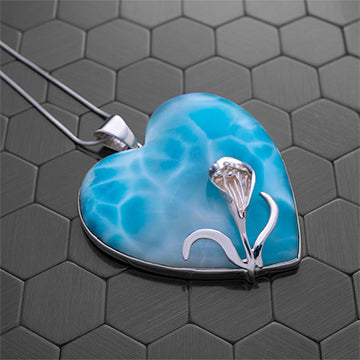
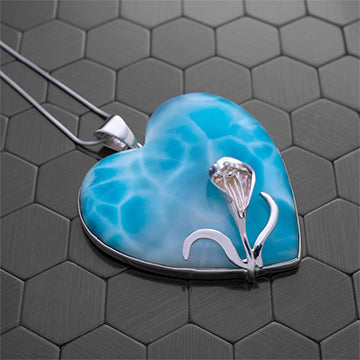
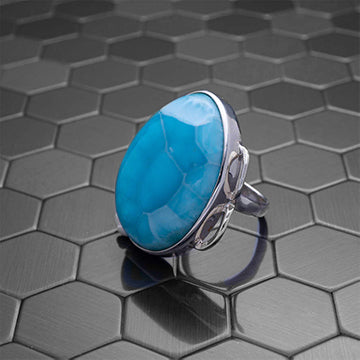
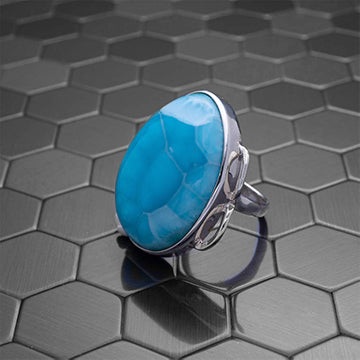
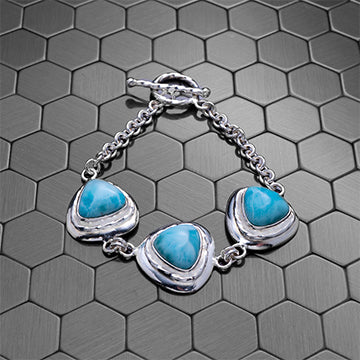
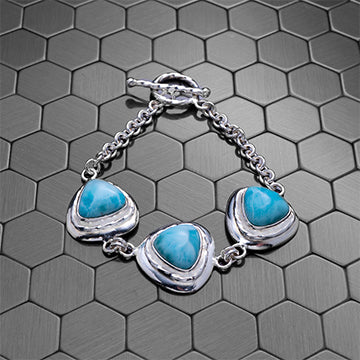
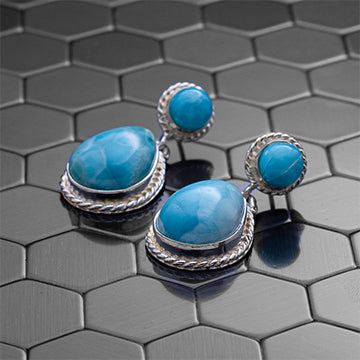
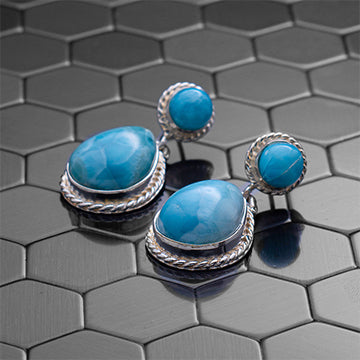
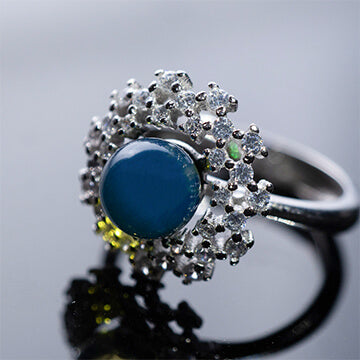
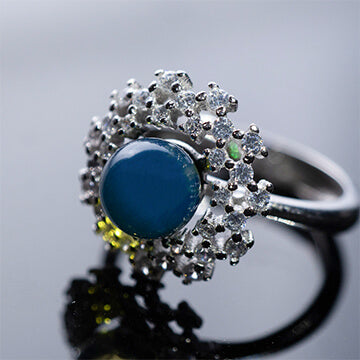
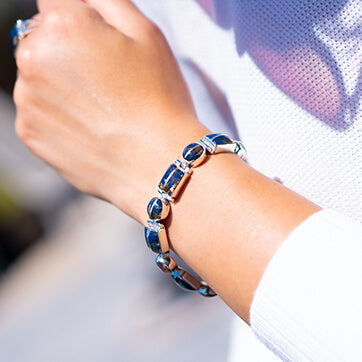
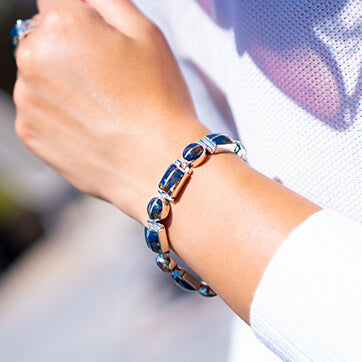
If one gemstone belongs at the center of any conversation about ocean jewelry, it is Larimar. Found only in the Dominican Republic, this rare blue variety of pectolite is one of the few stones that genuinely resembles Caribbean water. Its patterns can look like white surf, pale turquoise bays, or deeper blue currents moving through the stone.
Larimar has a softness and visual openness that suits both fine jewelry and artisan settings. In pendants and heart-shaped pieces especially, it has an unmistakable calm presence. No two stones are identical, which is part of its value. Some buyers prefer high-blue material with strong saturation, while others are drawn to pieces with more white marbling because they resemble waves and foam.
There is a trade-off to understand. Larimar is not the hardest gemstone, so it deserves thoughtful wear, especially in rings that see frequent contact. In earrings, pendants, and carefully designed bracelets, it performs beautifully while allowing the stone's natural pattern to remain the focus. For ocean lovers who want rarity, authenticity, and an immediate Caribbean connection, Larimar is often the first and best answer.
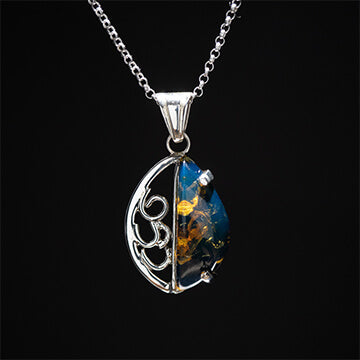
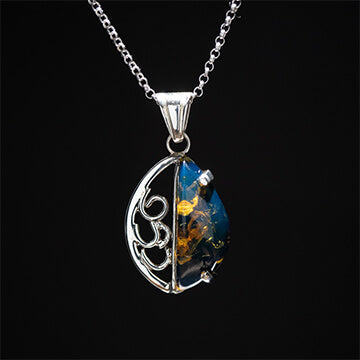
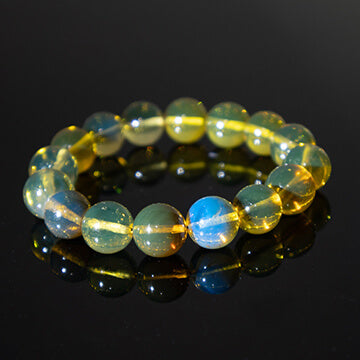
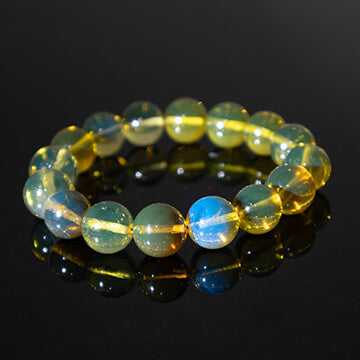
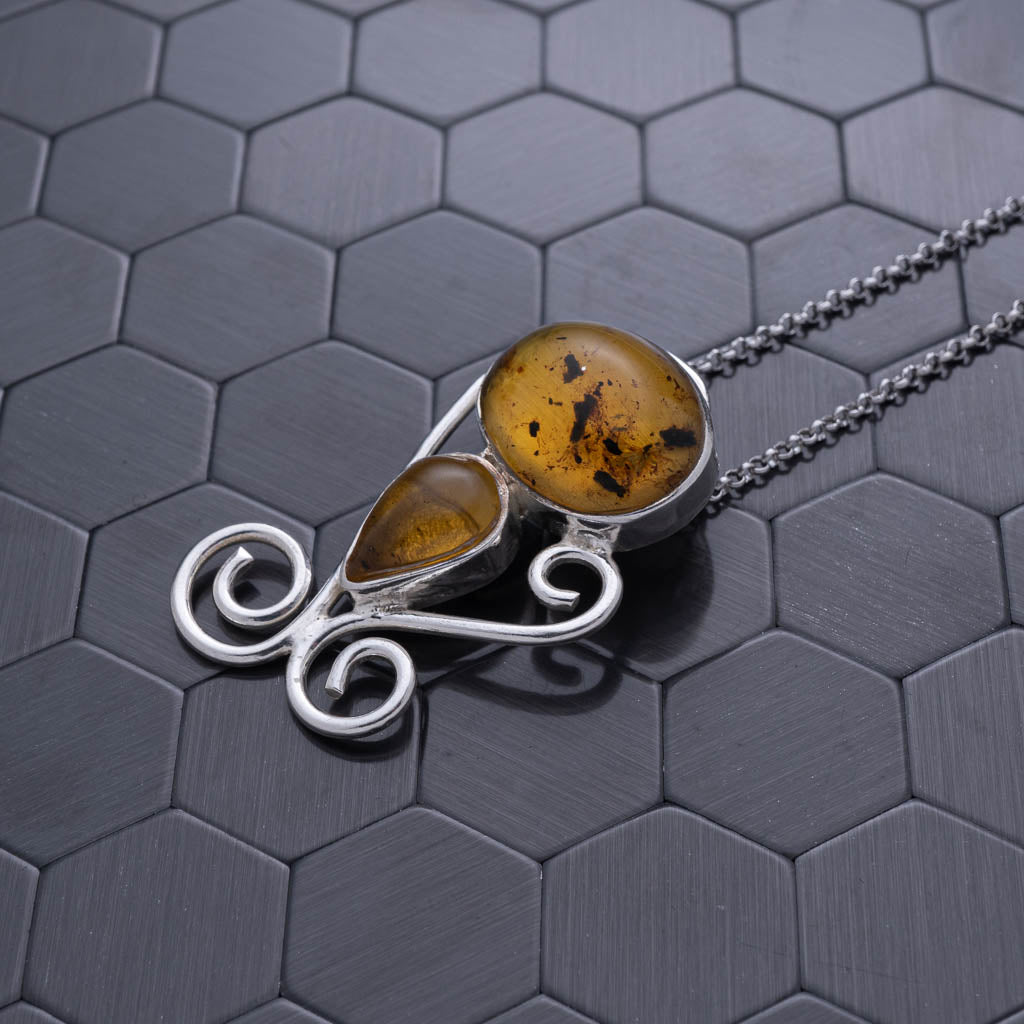
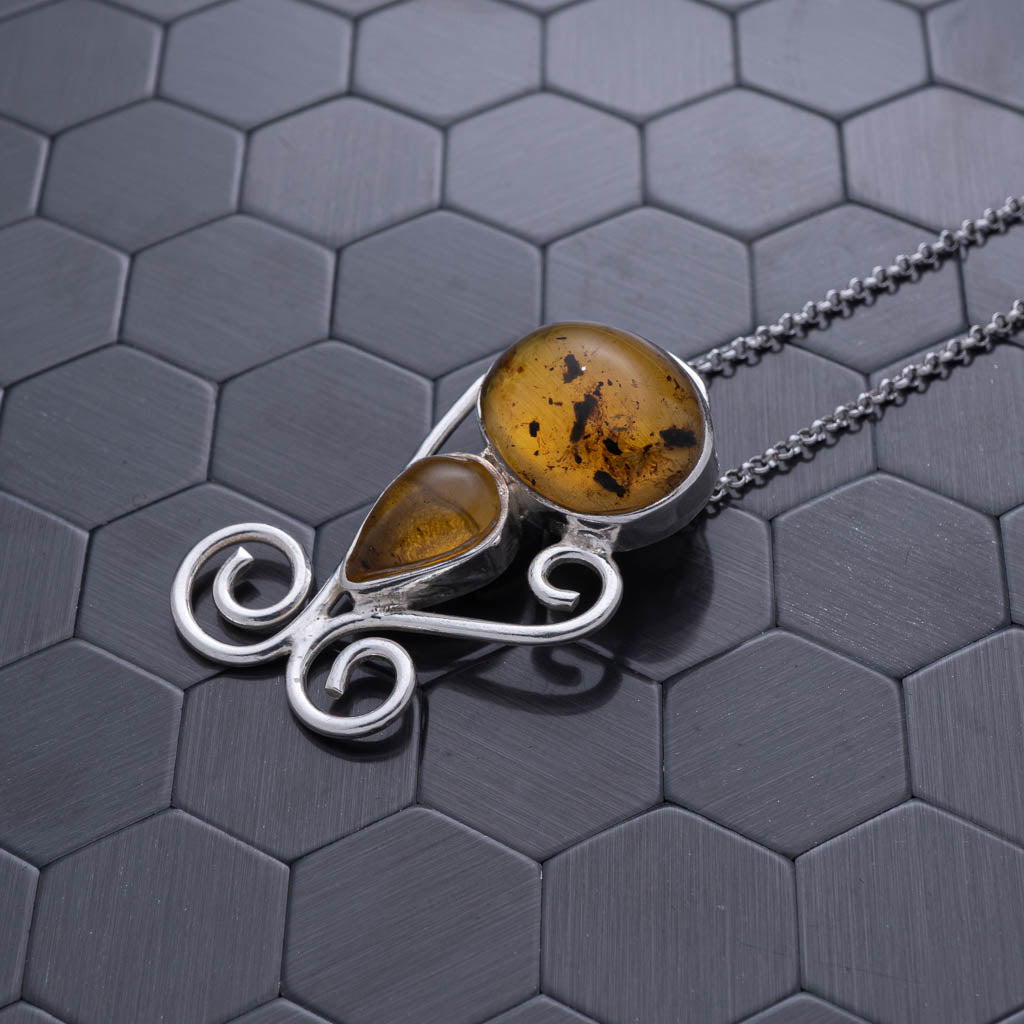
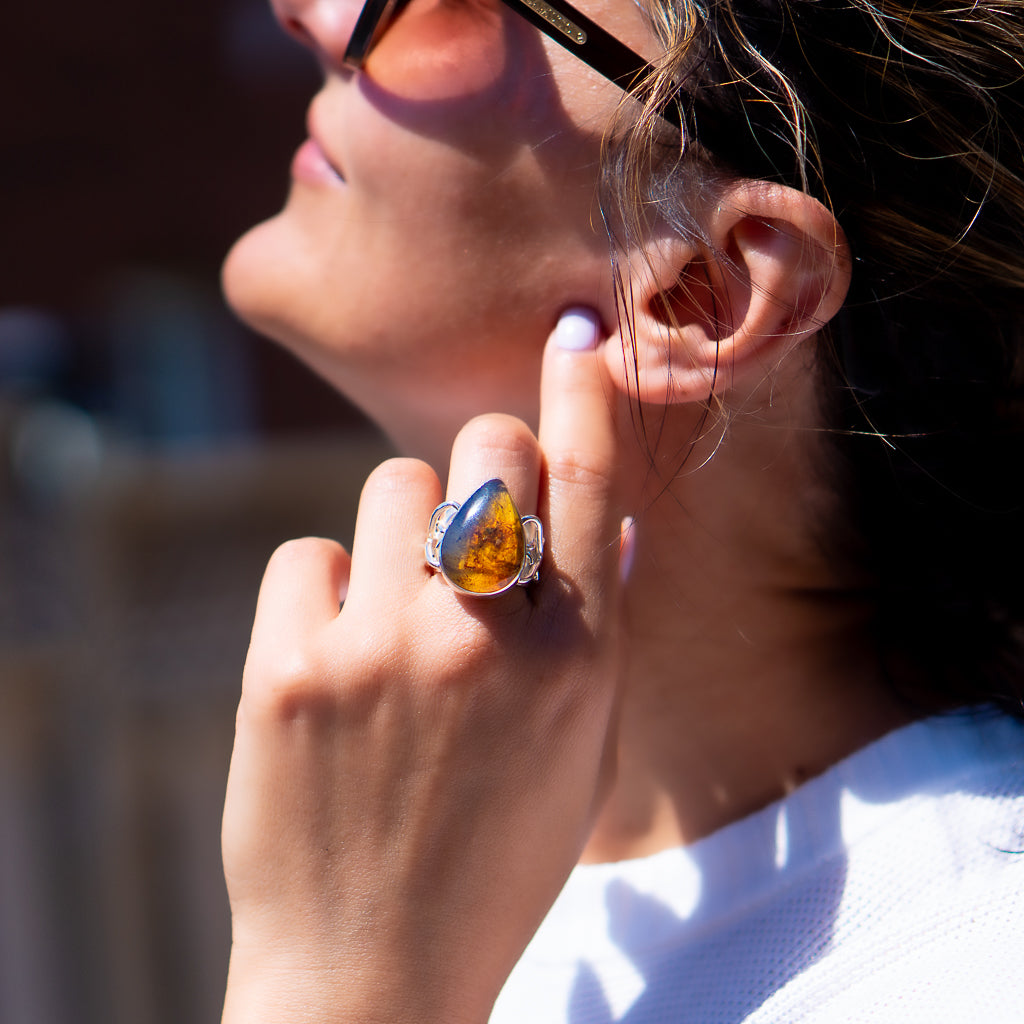
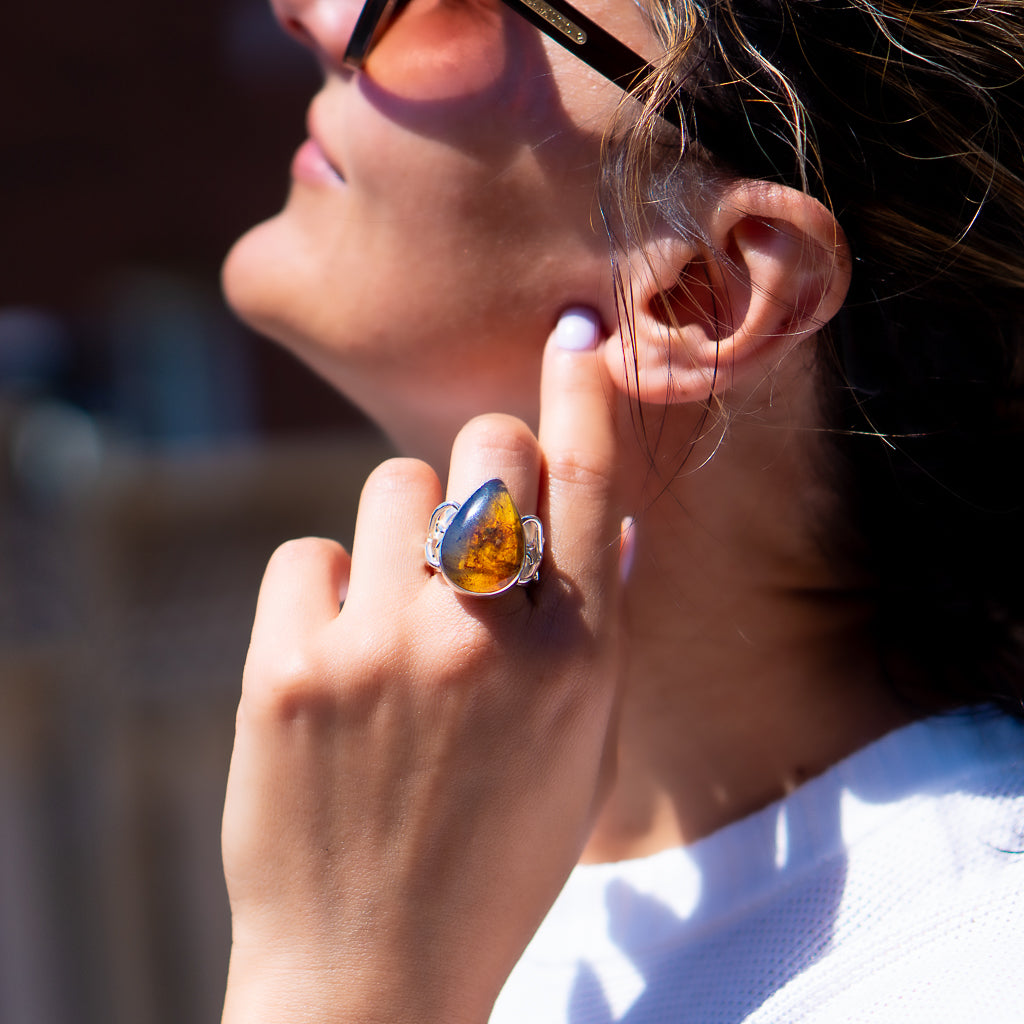
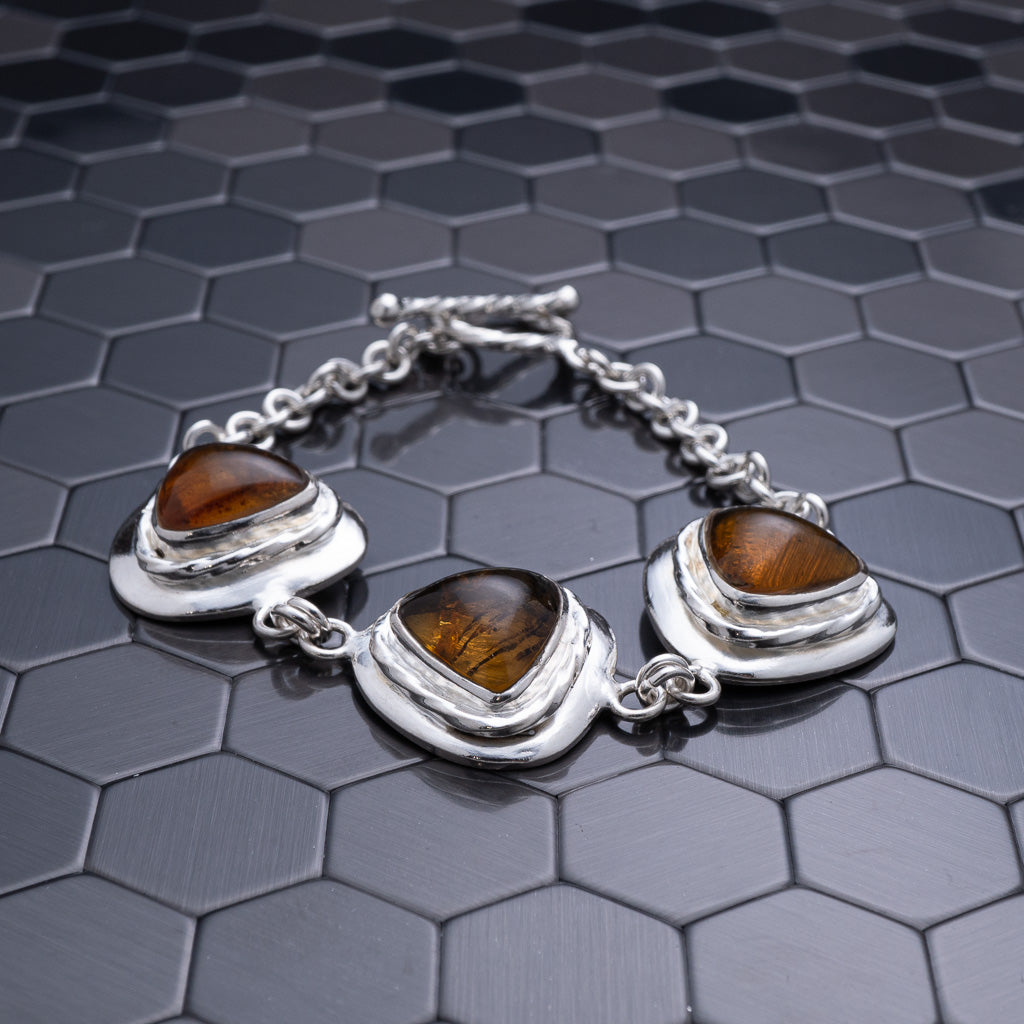
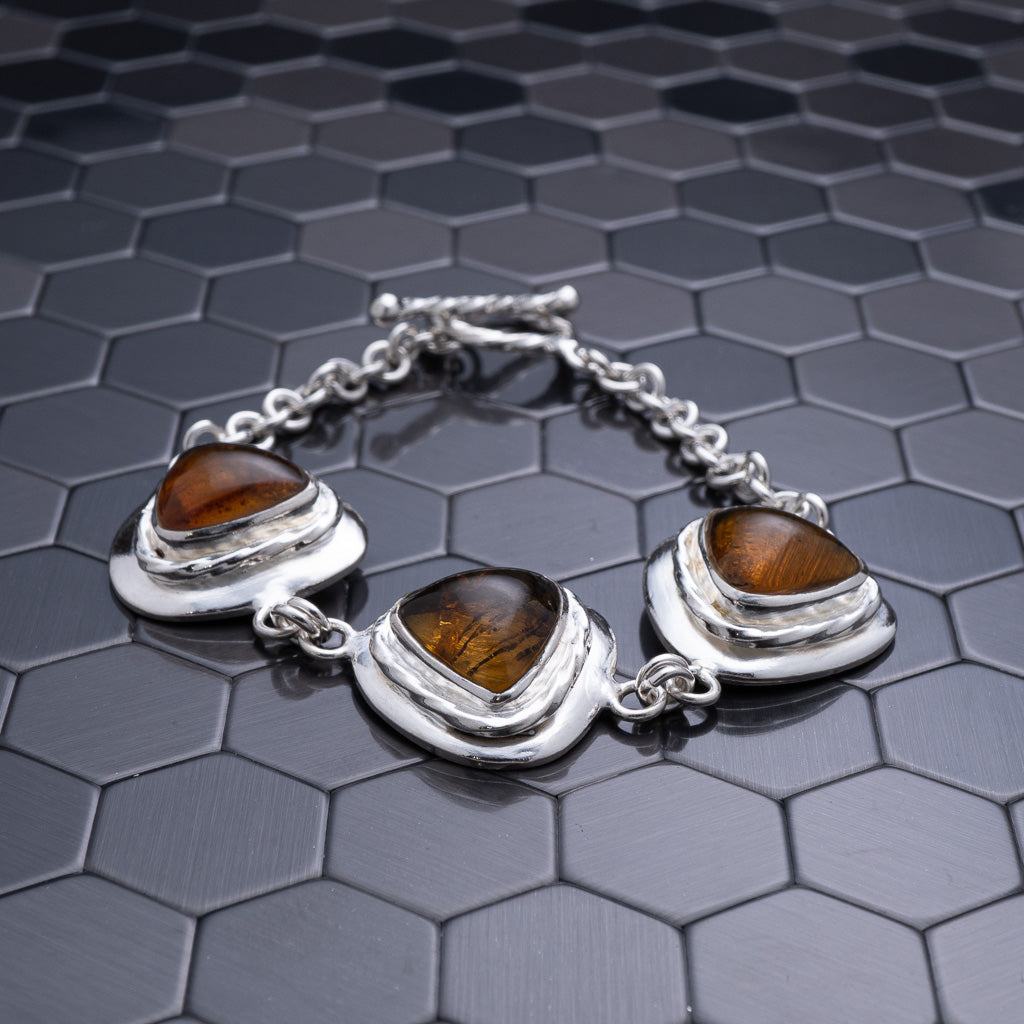
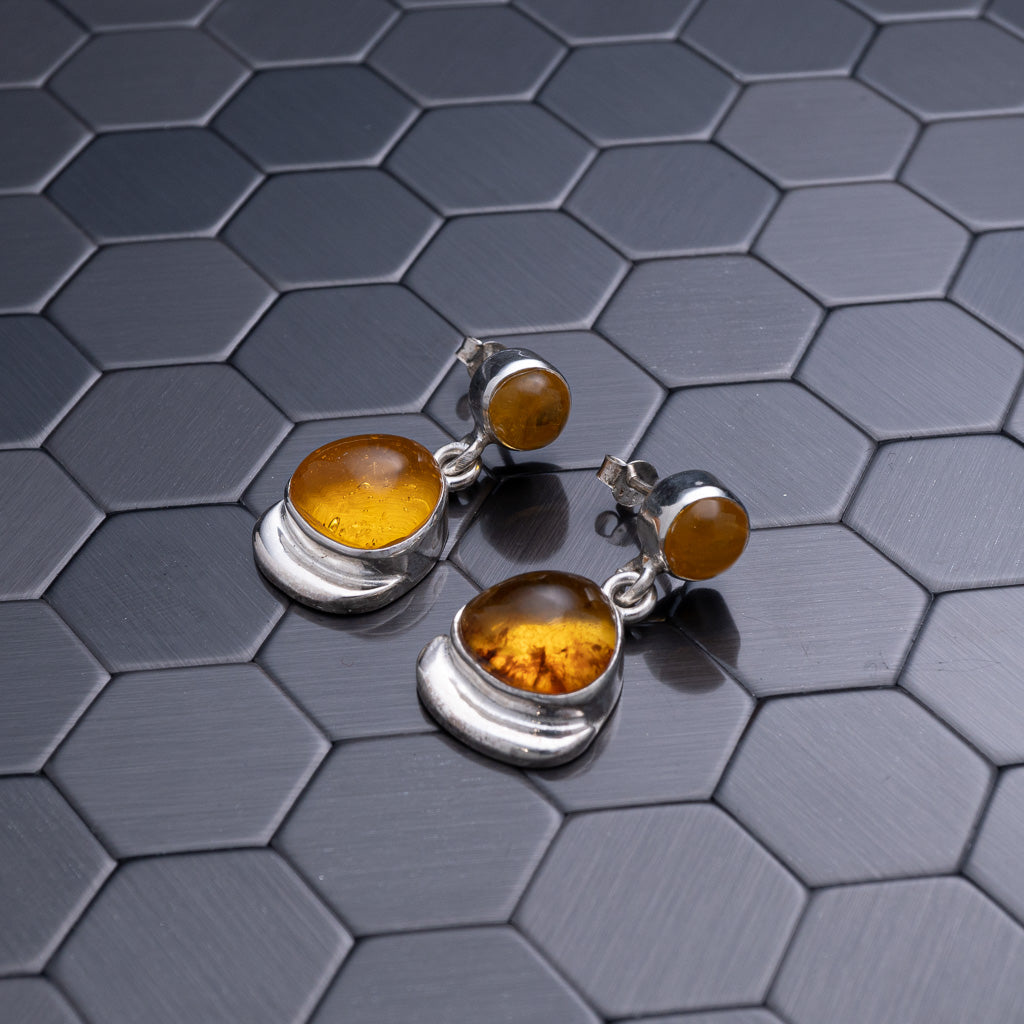
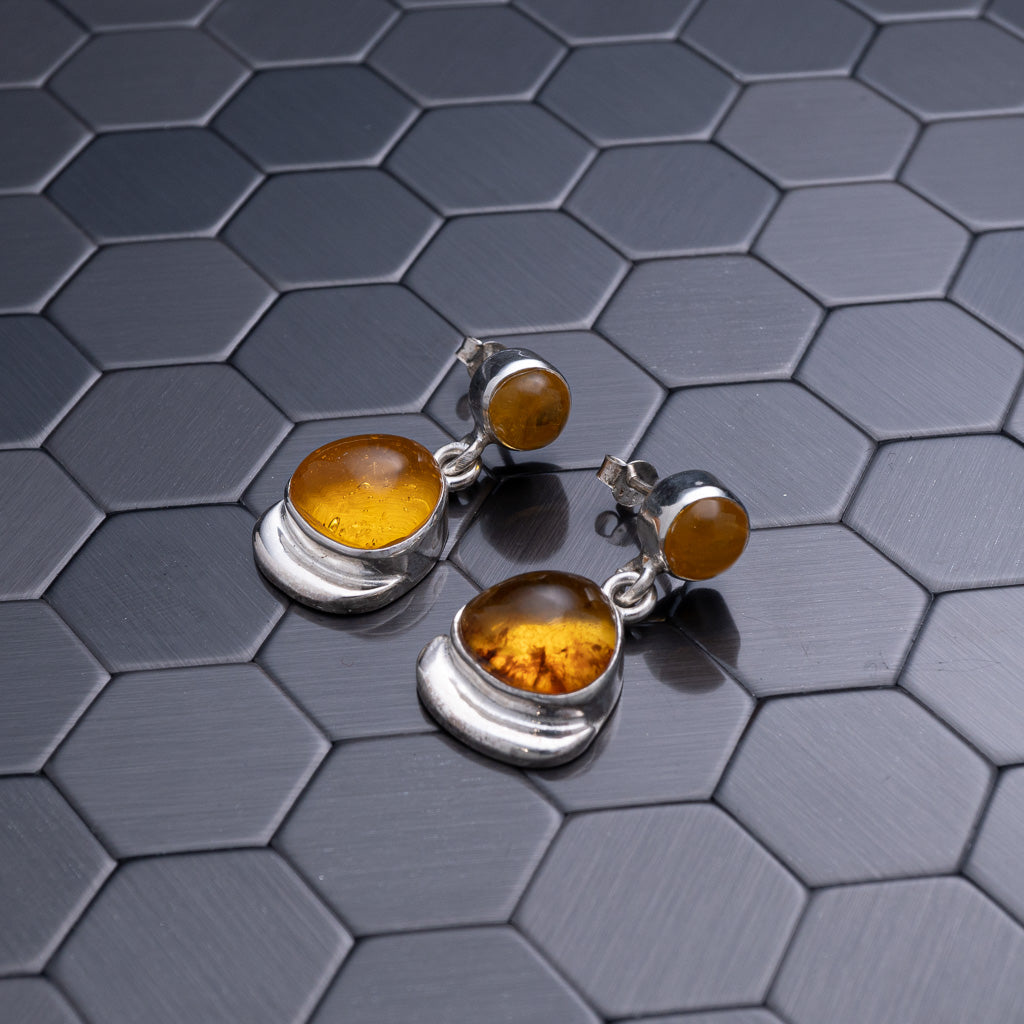
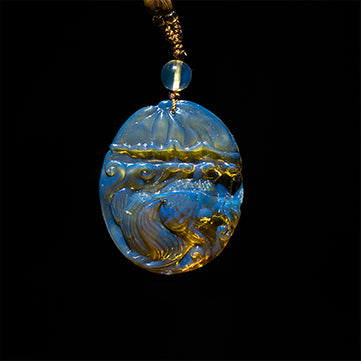
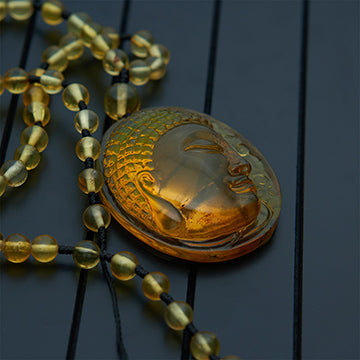
Blue amber has a different kind of magic. Rather than showing ocean pattern, it captures ocean light. Dominican Blue Amber can appear honey, golden, or even subtle in ordinary lighting, then reveal a striking blue glow under sunlight or UV exposure. That optical effect gives it a depth that feels almost atmospheric, like the sea at dusk.
For buyers who appreciate unusual collector stones, this gem stands apart from more familiar blue jewelry materials. It is organic rather than mineral, formed from fossilized tree resin, and its rarity gives it strong appeal among those who want something genuinely uncommon. In jewelry, blue amber can feel refined, warm, and mysterious all at once.
It is worth noting that amber requires care. It is lighter and softer than many faceted stones, so it is best suited to wearers who appreciate natural materials and treat them accordingly. Still, if your idea of ocean beauty is less about surf and more about glow, transparency, and light moving through color, Dominican Blue Amber is a remarkable choice. Larimar Creations has strong authority here because few brands specialize so deeply in certified Dominican material.
Aquamarine is one of the most recognized sea-toned gemstones, and for good reason. Its clear blue to blue-green color has long been associated with water, travel, and calm. Compared with Larimar, aquamarine tends to be more transparent and more polished in mood. It gives you a cleaner, more classic marine look.
This makes aquamarine a smart choice for buyers who want ocean color in a more traditional fine jewelry format. It works especially well in faceted rings and earrings where brilliance matters. The tone can range from barely-there sea mist to a more saturated blue, so the right piece depends on personal preference.
What aquamarine offers is versatility. What it may lack, for some collectors, is the one-of-a-kind visual identity that patterned stones provide. If you want crisp elegance with an ocean reference, it is excellent. If you want a stone that instantly reads as tropical and rare, Larimar may feel more distinctive.
Turquoise brings a stronger earth-meets-sea energy. Its color can resemble shallow tropical water, but its matrix often adds warm brown, gold, or black veining that introduces a more rugged natural character. That gives turquoise broad appeal, especially for buyers who love statement jewelry with visible texture.
Not all turquoise is equal, and this is where expertise matters. The market includes stabilized, treated, and imitation material, so authenticity should be part of the buying decision. Fine natural turquoise has a richness that feels substantial and alive, not flat or overly uniform.
For ocean lovers, turquoise works best when you want vivid color with a little more drama. It is less serene than Larimar and less luminous than blue amber, but it can be bold, expressive, and highly wearable.
Blue chalcedony has a soft, dreamy quality that suits buyers who prefer understatement. Its color often sits in the range of pale sky blue, misty aqua, or watery gray-blue. Rather than sparkling, it glows gently, which gives it a quiet elegance.
In ocean-inspired jewelry, blue chalcedony suggests morning light over calm water. It is especially beautiful in smooth cabochons and minimalist settings where the color can speak for itself. If your taste leans refined and subtle rather than high-contrast, this stone has a lot to offer.
The trade-off is presence. Blue chalcedony does not command attention the way Larimar or turquoise can. It is a softer statement, ideal for someone who wants ocean influence without a highly dramatic look.
Certain opals belong on this list because their color play can resemble sunlight flickering across moving water. Blue and green flashes, especially in lighter body tones, create an effect that feels alive. The stone changes with movement, which makes it especially compelling in pendants and earrings.
Opal is a more expressive choice than aquamarine or chalcedony. It suits buyers who love jewelry with personality and visible light performance. The visual reward can be extraordinary.
But opal comes with clear considerations. It is more delicate than many people expect and can be sensitive to impact and environmental conditions. For occasional wear or carefully chosen pieces, it is wonderful. For everyday durability, it may not be the easiest ocean stone to live with.
Moonstone is not a blue gemstone in the usual sense, yet blue-sheen moonstone earns its place because of the way it reflects light. That floating inner glow can feel like moonlight on open water. It is romantic, elegant, and especially suited to buyers who want an ocean-adjacent stone with a more ethereal character.
Moonstone pairs well with silver and gold alike, and it can shift from bohemian to elevated depending on the setting. For gift buyers, it often carries emotional appeal because it feels soft, feminine, and meaningful.
As with Larimar and opal, care matters. Moonstone is best chosen by wearers who value beauty enough to be gentle with it. If your vision of the ocean is tied to evening light, reflection, and mood rather than bright tropical blue, moonstone is a graceful option.
The best choice depends on what kind of ocean feeling you want to wear. If you want the Caribbean in gemstone form, Larimar is unmatched. If you want rarity with a glowing optical effect, Dominican Blue Amber is exceptional. If you prefer a more classic and transparent blue, aquamarine is the natural fit.
Style also matters. Statement pendants and artisan cabochons allow stones like Larimar, turquoise, and chalcedony to show their full surface beauty. Rings often favor harder or more protected stones, though many softer gems can still work beautifully with mindful design. Gift buyers may want to focus on emotional impression first, while collectors may care more about origin, certification, and material quality.
Above all, choose the stone that feels believable to you. The finest ocean-inspired jewelry does not rely on trend language or artificial color. It comes from genuine material, thoughtful craftsmanship, and a stone whose beauty holds your attention long after the first glance.
The sea never repeats itself, and the best gemstones do not either. When you find one that carries that same sense of movement, light, and rarity, you are not just selecting jewelry. You are choosing a piece of the ocean's gift to keep close.