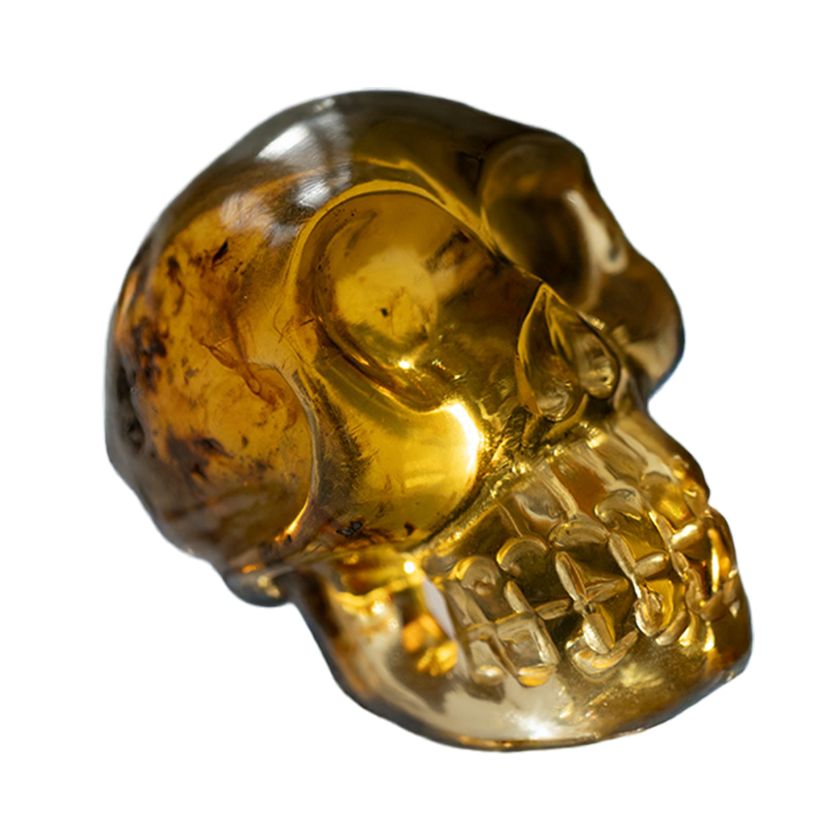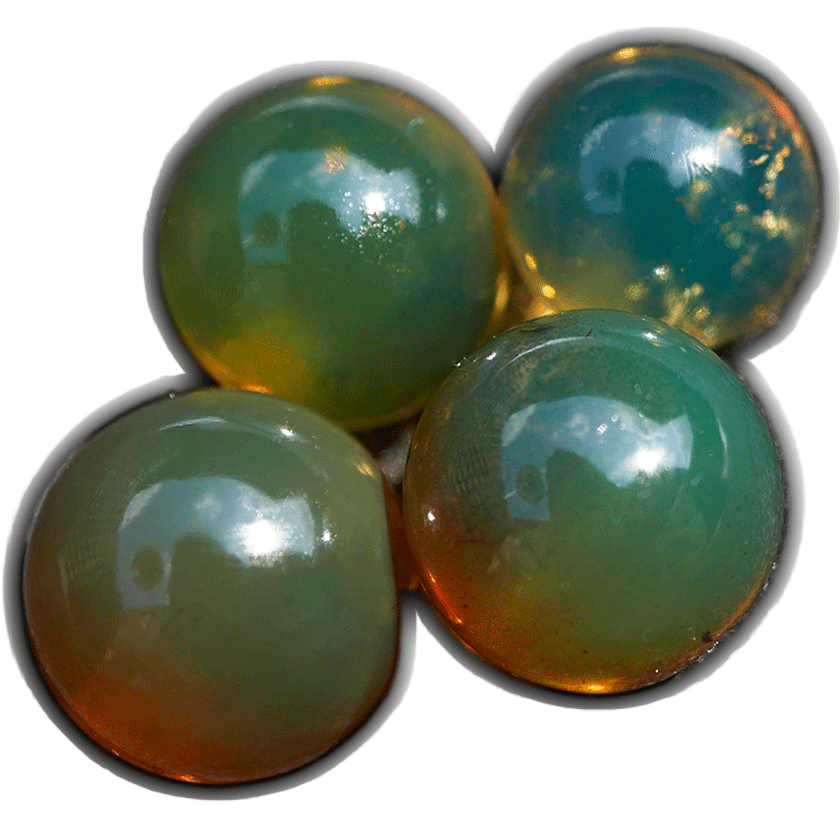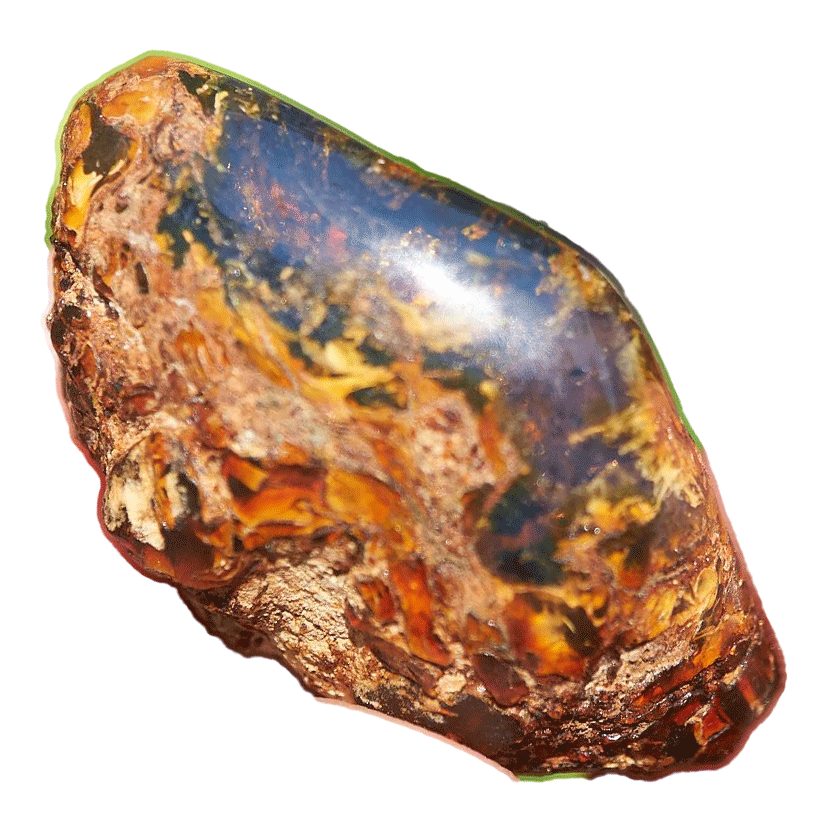

A piece of Dominican amber can look warm and honeyed in one light, then suddenly flash an electric blue under another. That dramatic shift is exactly why collectors, jewelry buyers, and gem enthusiasts keep asking: why is Dominican amber fluorescent?
The short answer is that certain Dominican amber contains organic compounds that absorb ultraviolet light and re-emit it as visible light. The longer answer is where the rarity, beauty, and value begin. Fluorescence in amber is not just a visual trick. It is part of what makes Dominican amber, especially blue amber, one of the most captivating gemstone materials in the world.
Dominican amber is fossilized tree resin, formed over millions of years and shaped by heat, pressure, and time. Its fluorescence comes from its chemical composition, especially the presence of aromatic hydrocarbons and other organic molecules that react to ultraviolet light.
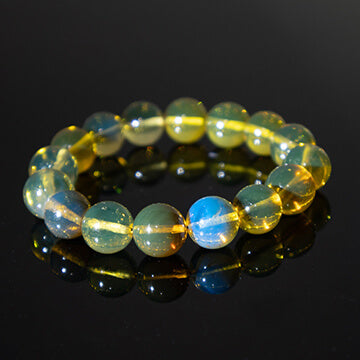
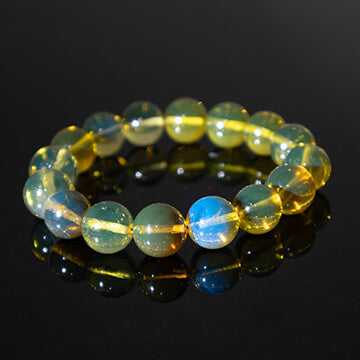
When UV light strikes the amber, those molecules absorb energy. Instead of holding that energy, they release part of it as visible light, often in shades of blue, blue-green, or milky white. That visible glow is fluorescence.
Not all amber fluoresces the same way, and not all Dominican amber shows the same strength of reaction. Some pieces glow vividly even in natural sunlight. Others only show under UV lamps. Some fluoresce blue, while others appear greenish, whitish, or only faintly reactive. The variation depends on chemistry, clarity, thickness, and the conditions under which the resin originally formed.
Amber exists in several regions around the world, including the Baltic, Mexico, and Myanmar. Many amber types can fluoresce to some degree, but Dominican amber is especially prized because its fluorescence can be unusually strong and visually striking.
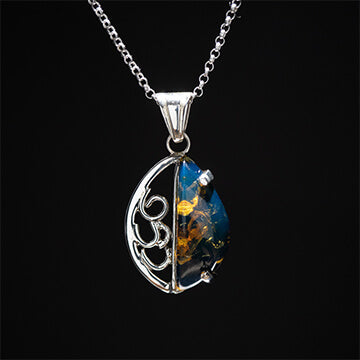
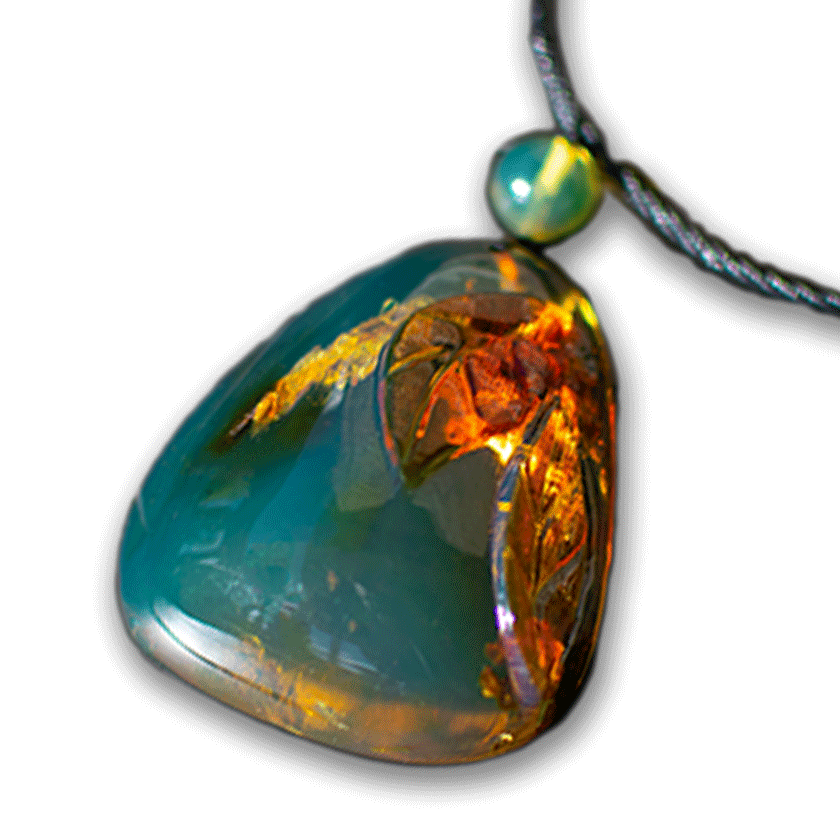
This is one reason Dominican blue amber holds such prestige. In the finest material, the body color may appear pale yellow to nearly clear indoors, yet reveal a luminous blue effect in sunlight or under UV exposure. That optical performance feels almost unreal when seen for the first time, but it is a genuine natural phenomenon.
The distinction matters for buyers. Fluorescence is not the same as body color. A piece may not look blue in every setting. In fact, many authentic blue amber pieces look quite modest until the right light reveals their character. That subtlety is part of their charm, and part of why true Dominican blue amber remains a collector favorite.
Scientists have studied Dominican amber for decades, and while the exact chemistry can be complex, the basic principle is clear. The resin-producing trees that created this amber had a chemical makeup that left behind fluorescent compounds after fossilization.
These compounds are believed to include polycyclic aromatic hydrocarbons and related molecules. Their molecular structure allows them to interact with ultraviolet radiation in a way that produces visible emission. In simple terms, the amber stores UV energy for a fraction of a second and gives it back as glow.
This is also why the same piece can look different depending on the light source. Sunlight contains ultraviolet radiation, so fluorescent amber may show its blue effect outdoors. Standard indoor lighting often has much less UV content, so the same stone may appear golden, cognac, or nearly transparent instead.
That difference can confuse first-time buyers, but it is not a flaw. It is one of the signatures of natural fluorescent amber.
Not all fluorescent Dominican amber is blue amber, and not all blue amber is equally vivid. The rarest pieces combine good transparency, strong fluorescence, and a clean appearance that allows the blue effect to show clearly.
In lower-grade or more included material, fluorescence may still be present, but the visual impact can be softer. In highly transparent material, especially when cut well, the blue effect can appear far more dramatic. This is why cut, polish, and overall craftsmanship matter in jewelry as much as the raw material itself.
Rarity also comes from supply. Dominican amber is already a specialized origin gemstone. Within that category, true blue amber represents a smaller portion, and fine jewelry-grade material is smaller still. For buyers who want authenticity, origin and certification become especially important.
Fluorescence can be a useful sign, but it should not be treated as the only test. Many buyers assume that if amber glows under UV light, it must be genuine Dominican amber. That is too simple.
Some genuine ambers from other sources can fluoresce. Some plastics, resins, and treated materials can also react under UV light in misleading ways. On the other hand, a natural amber piece may show weaker fluorescence because of its cut, color, oxidation, or lighting conditions.
So while fluorescence is an important clue, authenticity is best judged through a combination of factors: origin, visual structure, inclusions, surface feel, expert testing, and trusted sourcing. For high-value blue amber jewelry or collector pieces, certification carries real weight because it helps separate true Dominican material from imitations and overstated claims.
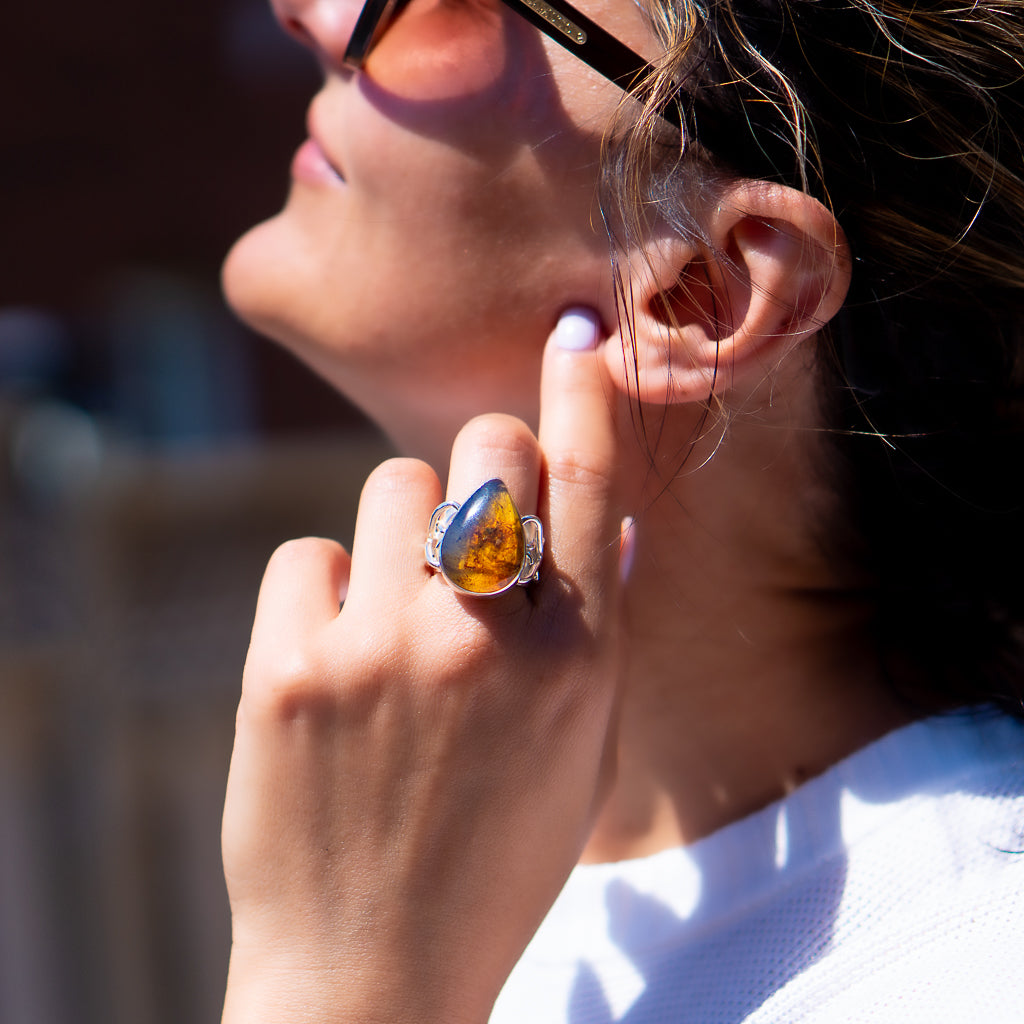
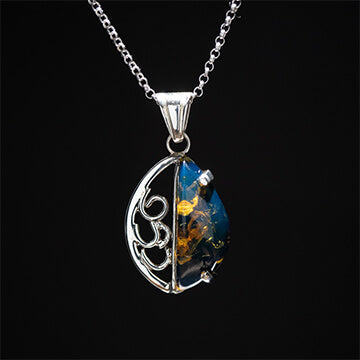
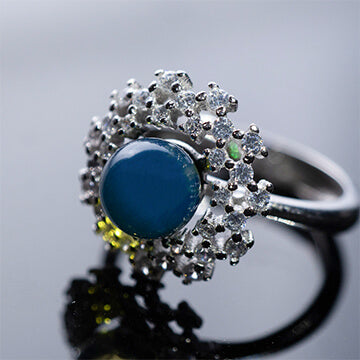
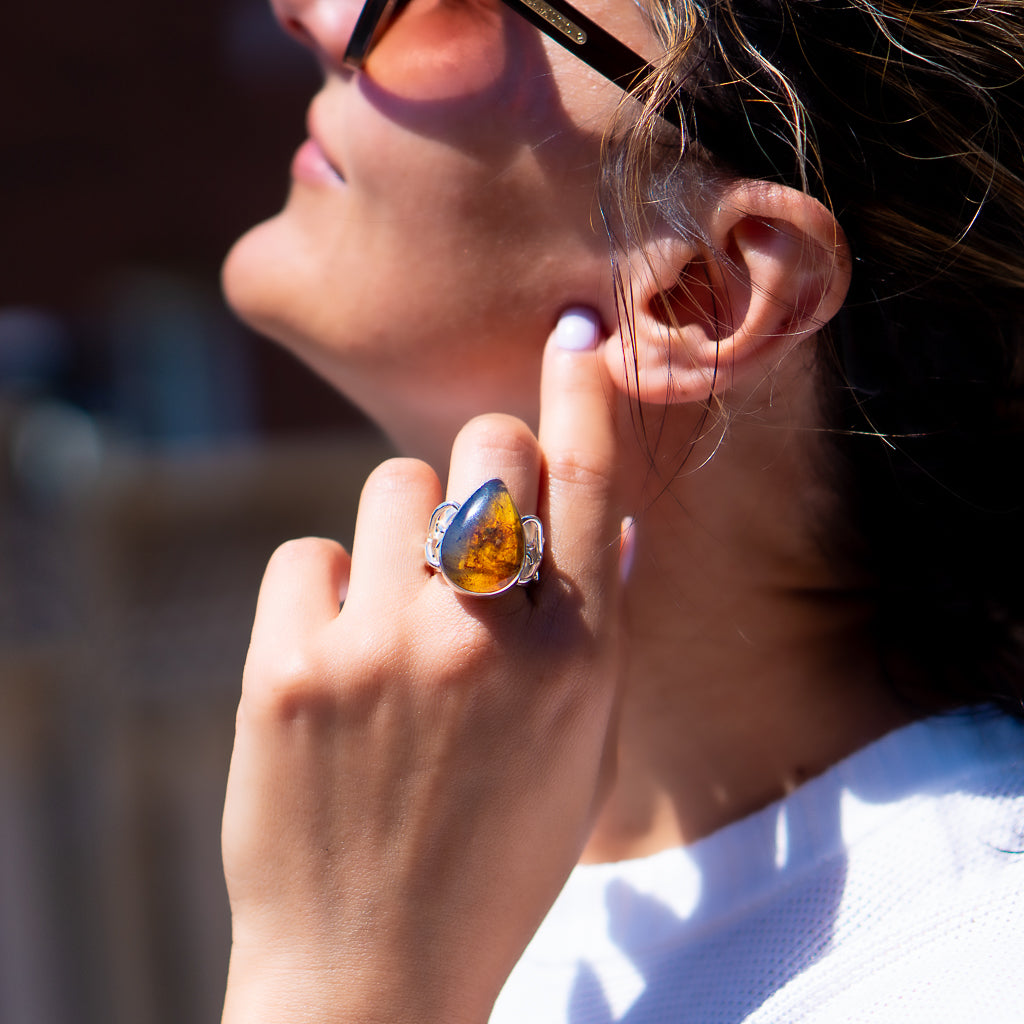
For jewelry lovers, fluorescence is not just a technical detail. It changes how a gemstone lives on the body. A Dominican amber pendant can appear soft and golden in a candlelit dinner setting, then show flashes of blue in daylight by the ocean or near a window. That movement makes the stone feel deeply personal and alive.
This is especially appealing to buyers looking for jewelry with a sense of rarity rather than standard sparkle. Diamonds reflect. Dominican amber can glow. It offers a different kind of luxury - one rooted in origin, natural chemistry, and the quiet surprise of changing light.
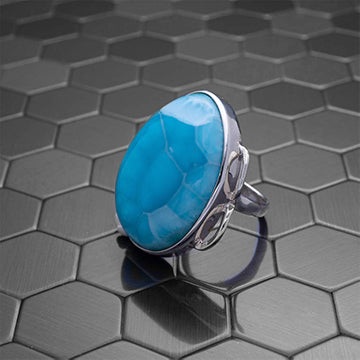
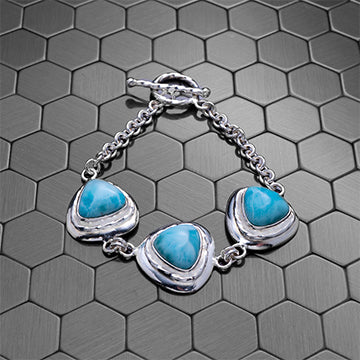
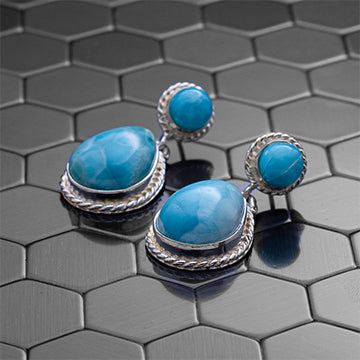
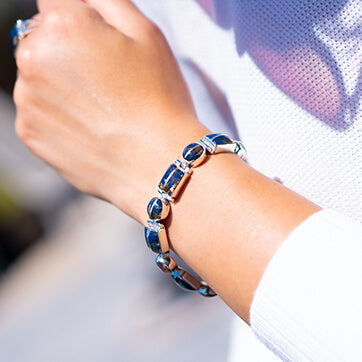
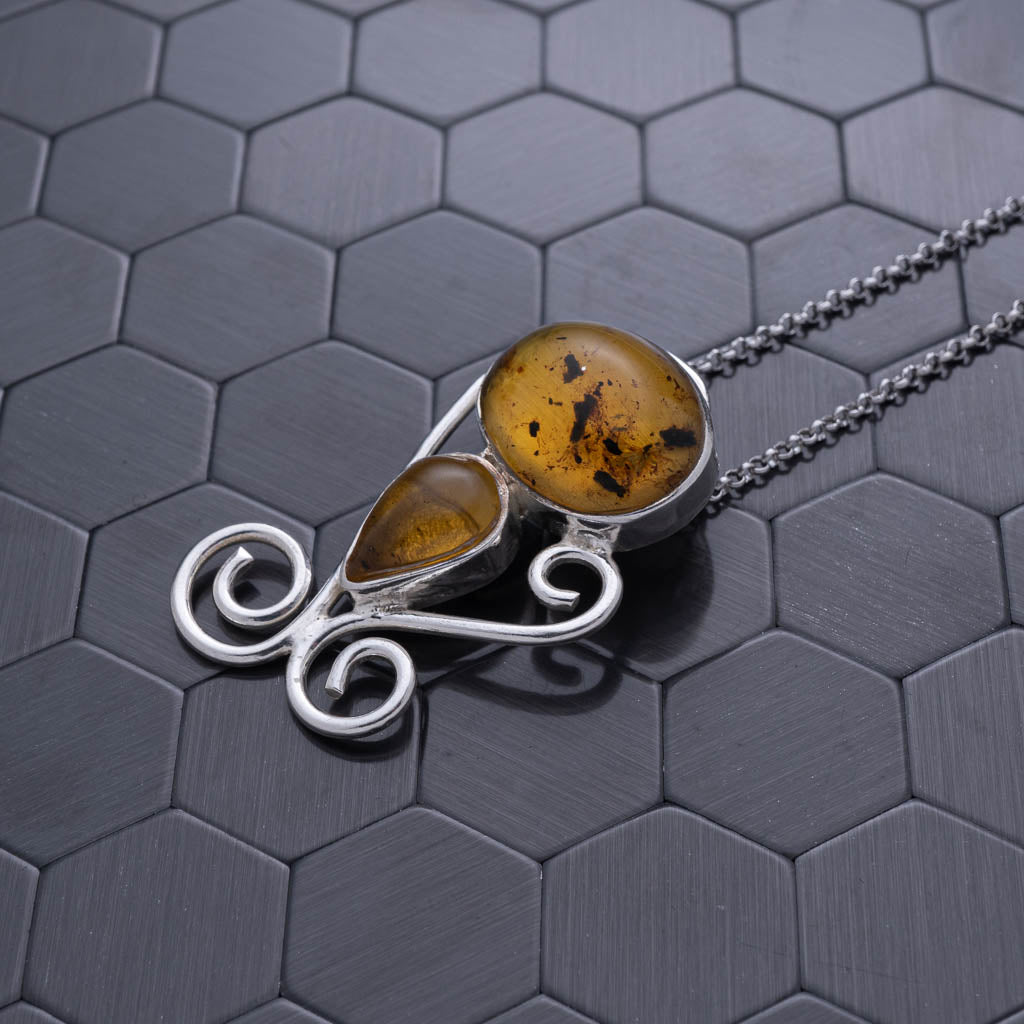
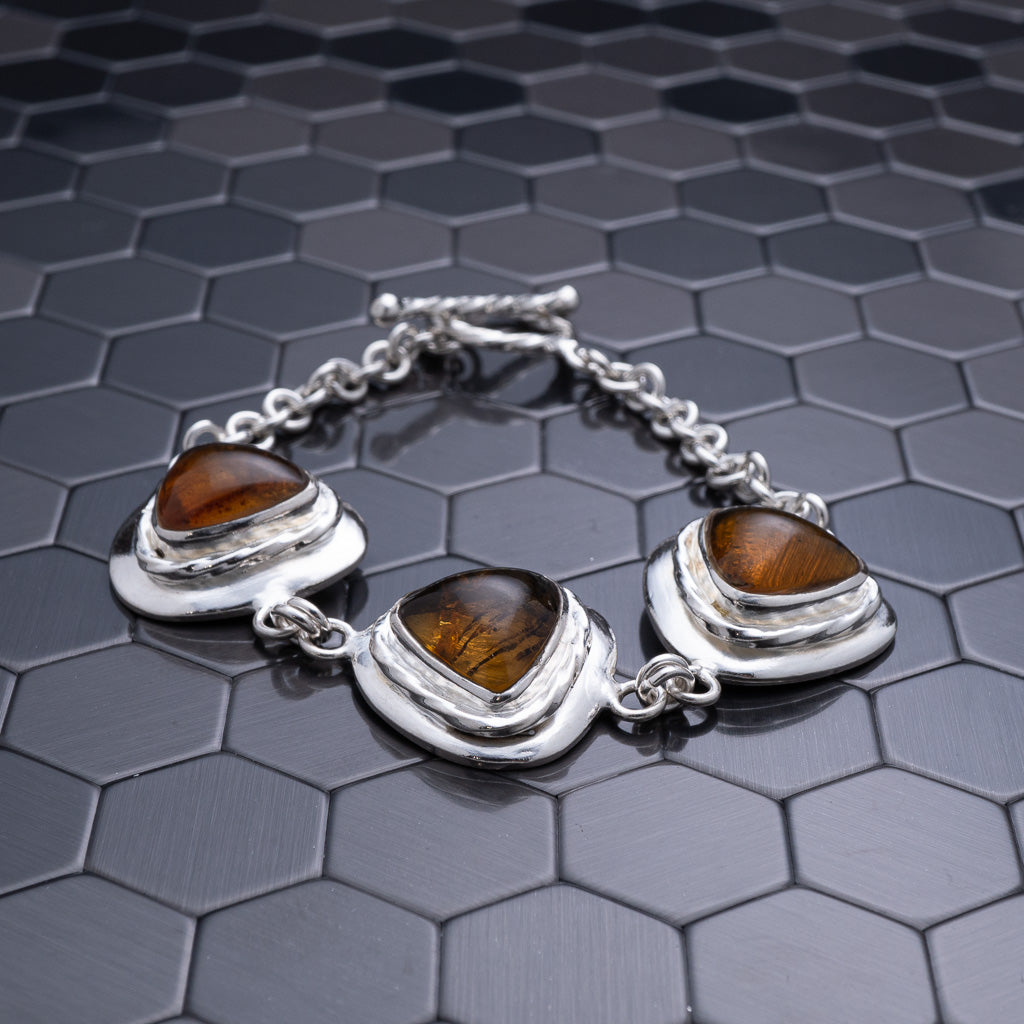
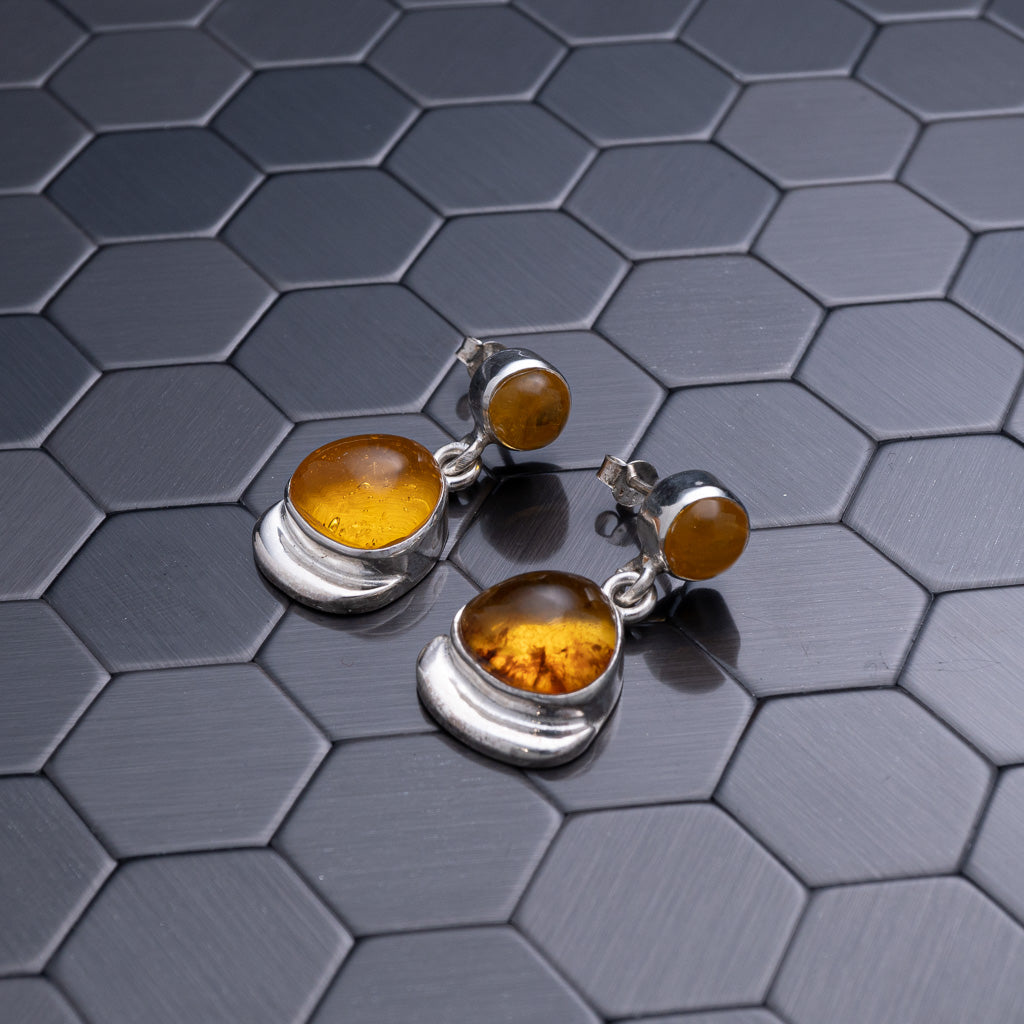
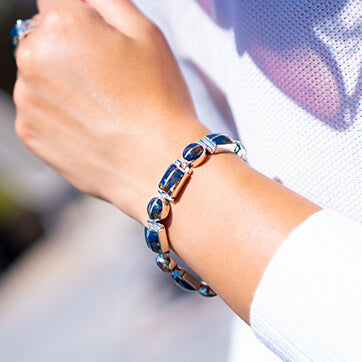
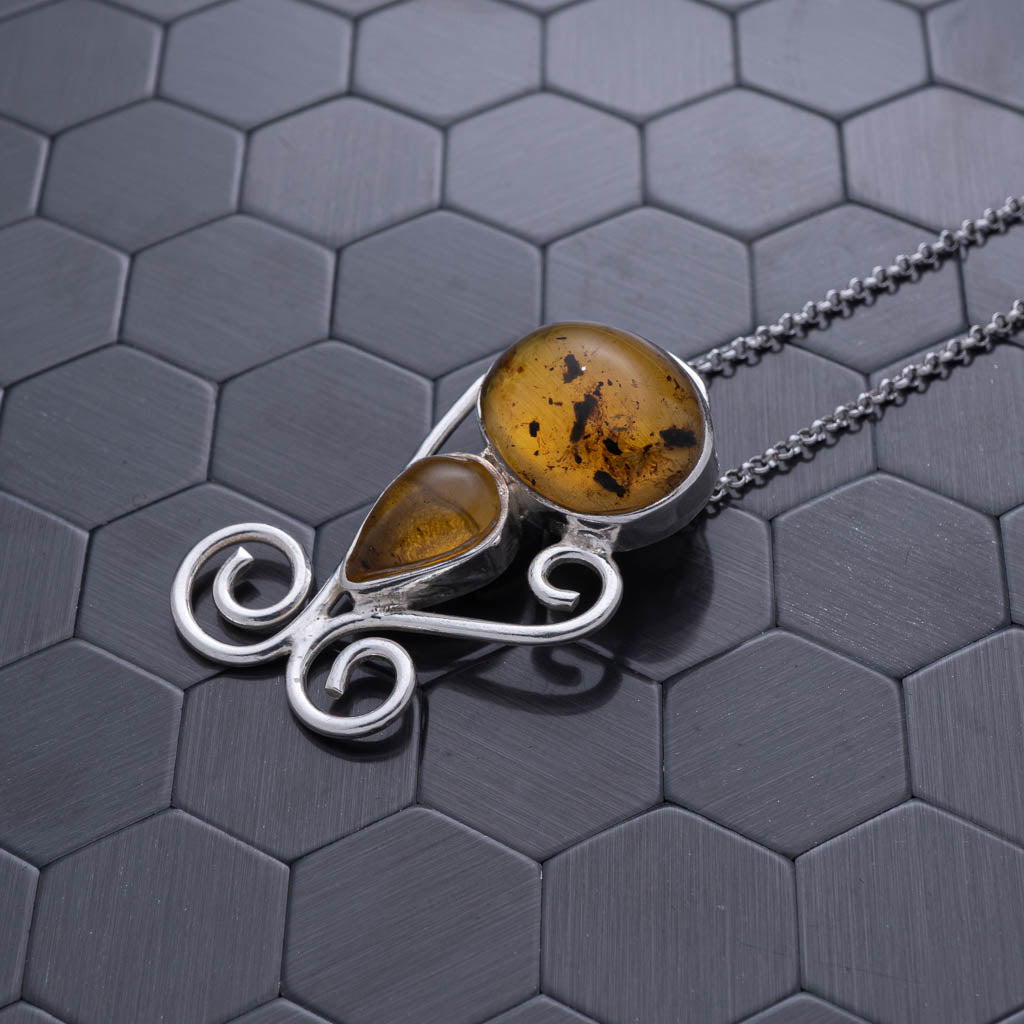
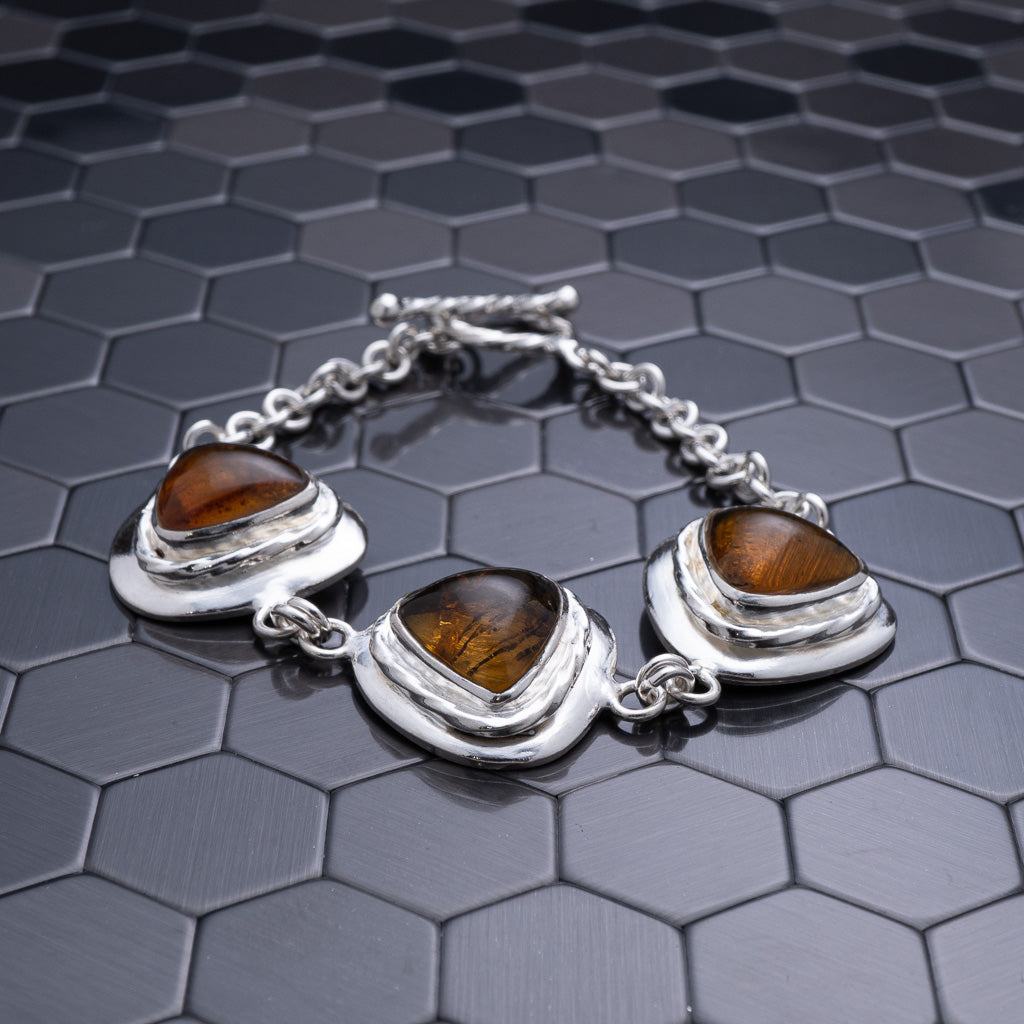
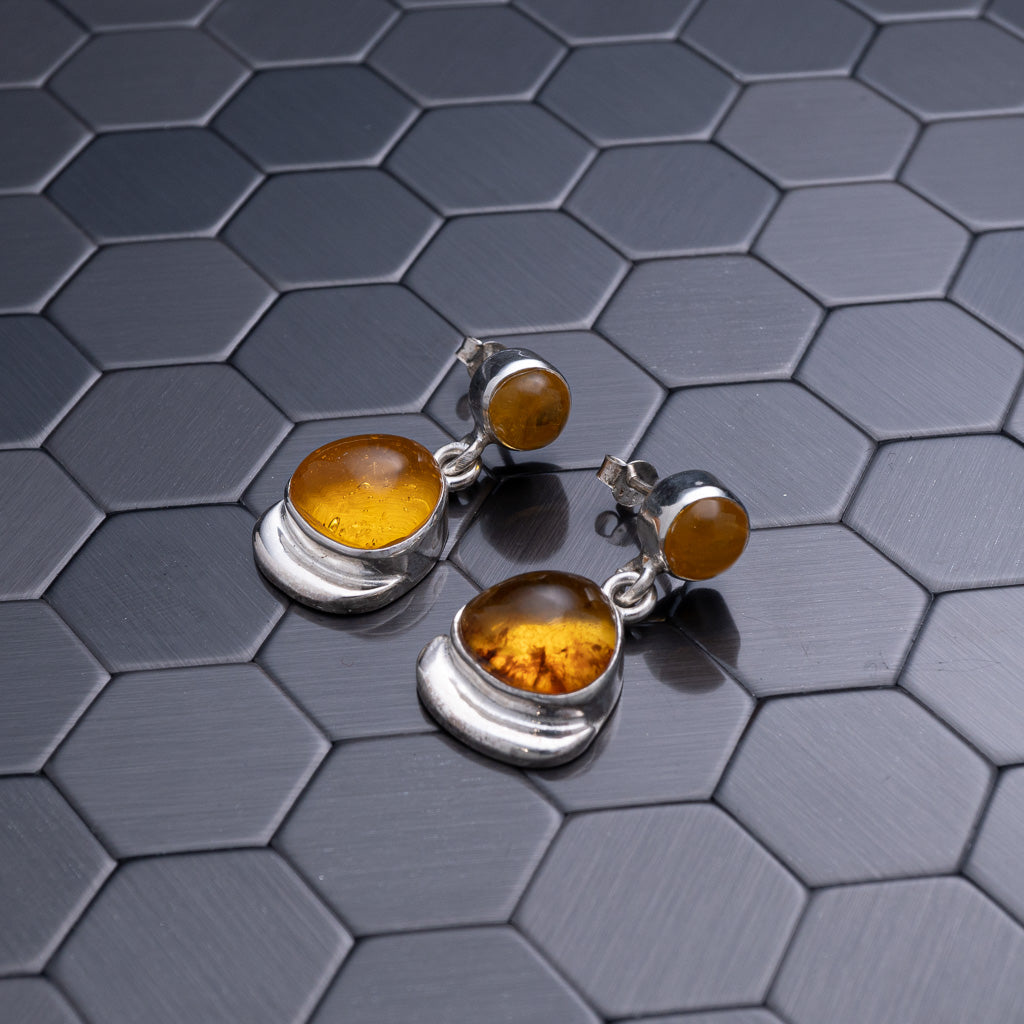
Fluorescent amber also pairs beautifully with artisan craftsmanship. In thoughtfully designed rings, earrings, pendants, and bracelets, the setting can frame the stone to maximize light exposure and allow its character to emerge naturally. The best pieces do not overpower the amber. They let the material speak.
If you are evaluating Dominican amber, lighting is everything. Direct sunlight often reveals fluorescence more clearly than warm indoor bulbs. UV lamps can make the effect stronger, but they can also exaggerate what daily wear will look like.
That means expectations should be realistic. A vivid product photo taken under ideal conditions may not match the stone's appearance in every room. Authentic amber is dynamic, not static. Its beauty changes with environment.
For many collectors, that is a benefit rather than a drawback. The stone rewards attention. It asks to be observed in motion, in daylight, and from multiple angles. Fine Dominican amber is not about a single fixed look. It is about optical character.
When people ask why is Dominican amber fluorescent, they are often really asking a second question: what makes this amber more special than other amber? The answer is origin.
Dominican amber carries a reputation for exceptional transparency, remarkable inclusions, and in its rarest form, blue fluorescence that has become iconic in the gem world. That origin story matters because amber is not a manufactured gemstone. It is a fossilized record of an ancient tropical forest.
For buyers who want more than decoration, origin adds meaning. Wearing authentic Dominican amber is not only about color and glow. It is about wearing a piece of the Caribbean, shaped by geology and finished by skilled hands. That is part of the reason brands such as Larimar Creations place such emphasis on certified authenticity and handcrafted presentation.
The best answer to why is Dominican amber fluorescent is both scientific and emotional. Scientifically, it glows because natural organic compounds within the fossilized resin respond to ultraviolet light. Emotionally, it matters because that glow creates a gemstone experience few materials can match.
If you are choosing Dominican amber for jewelry or collecting, look beyond a single flash of blue. Pay attention to origin, transparency, craftsmanship, and trust. The most extraordinary stones are not just bright under a lamp. They carry the quiet confidence of something rare, natural, and undeniably real.