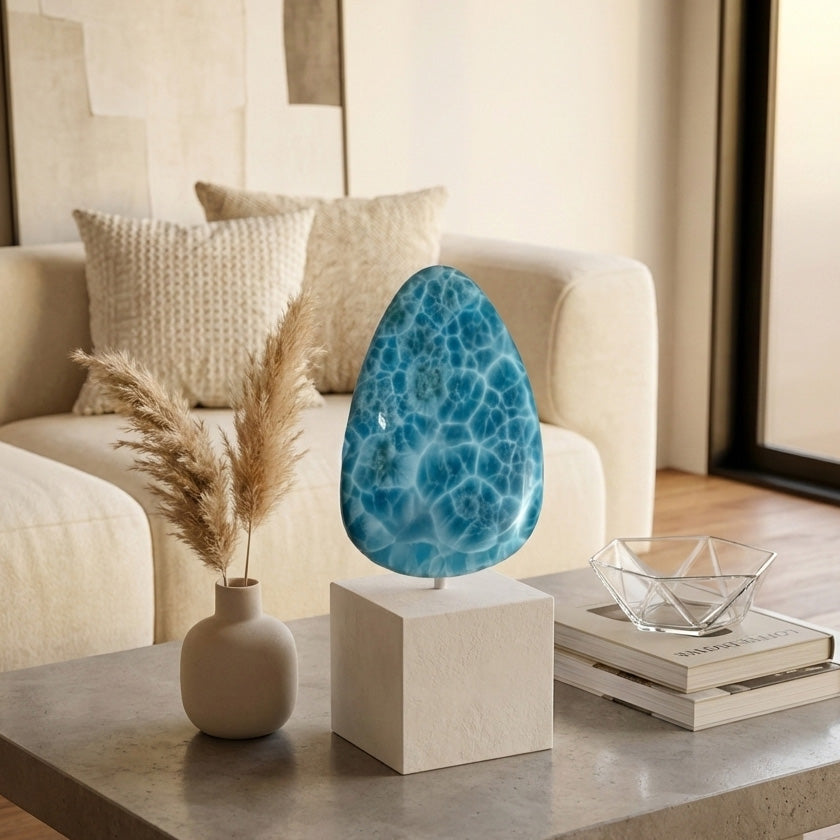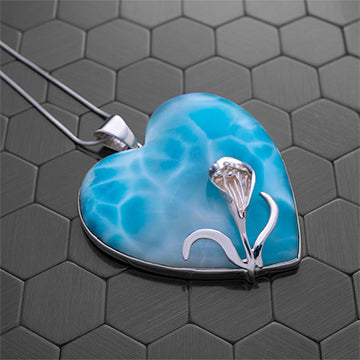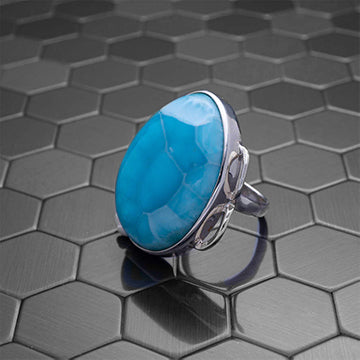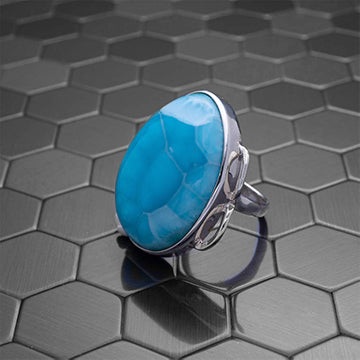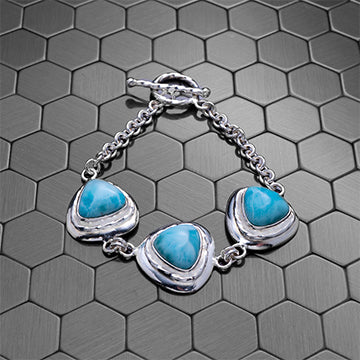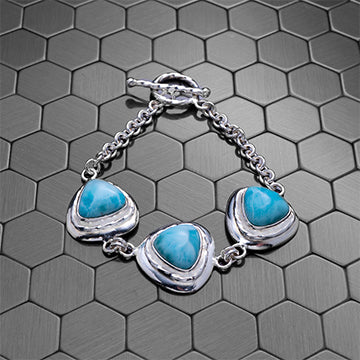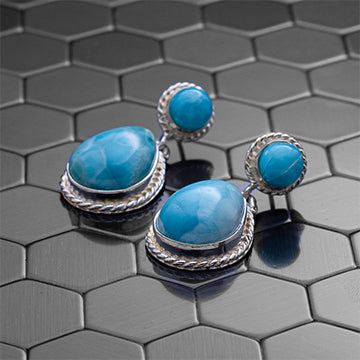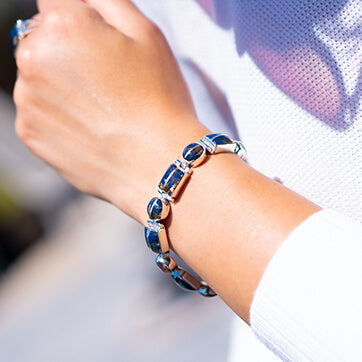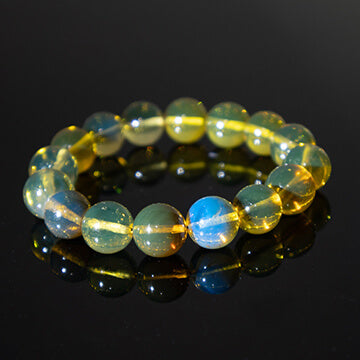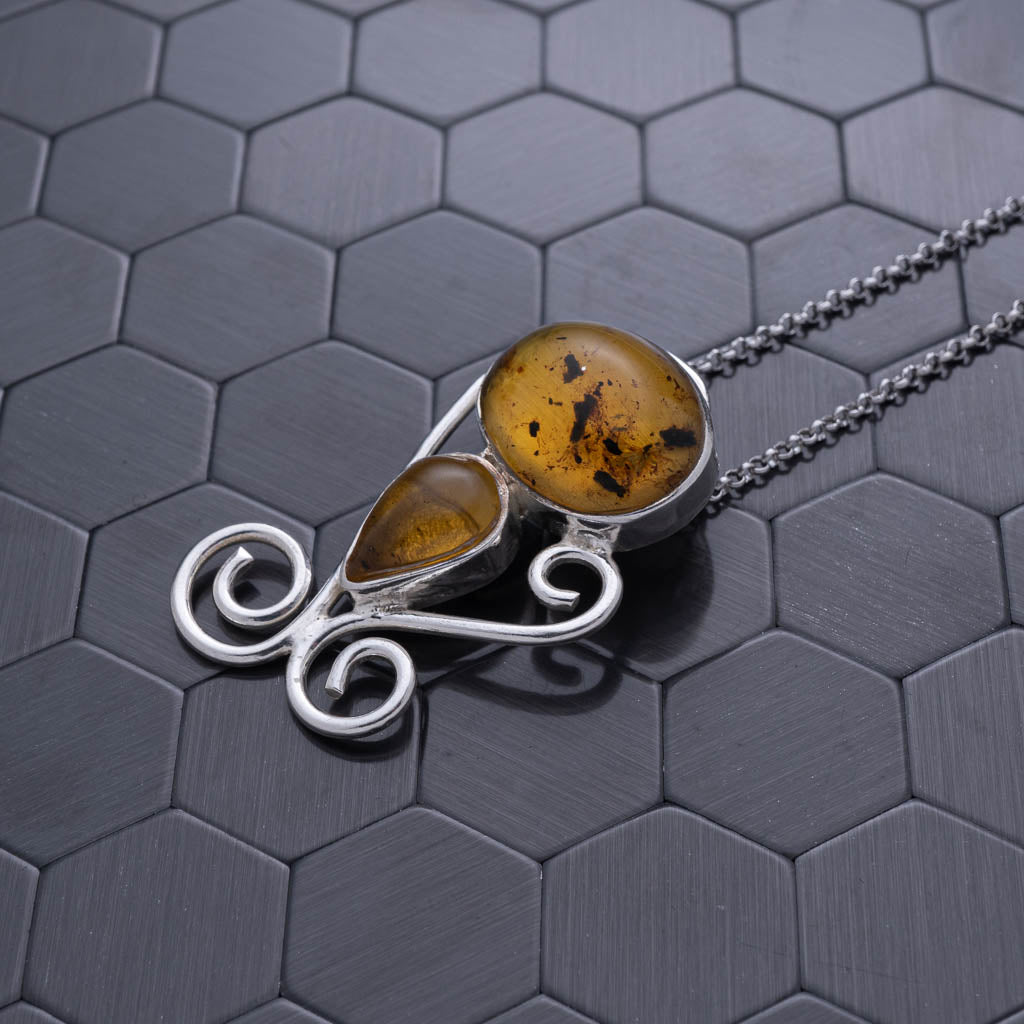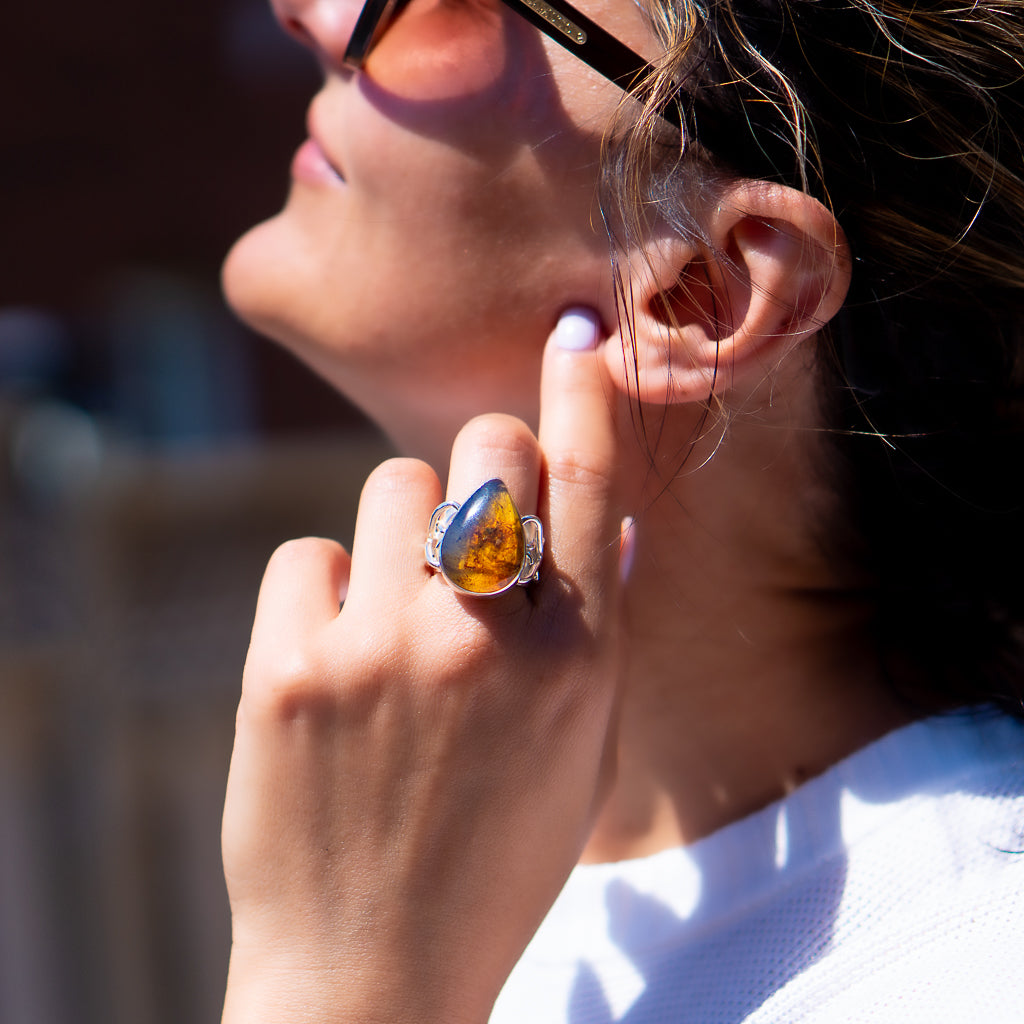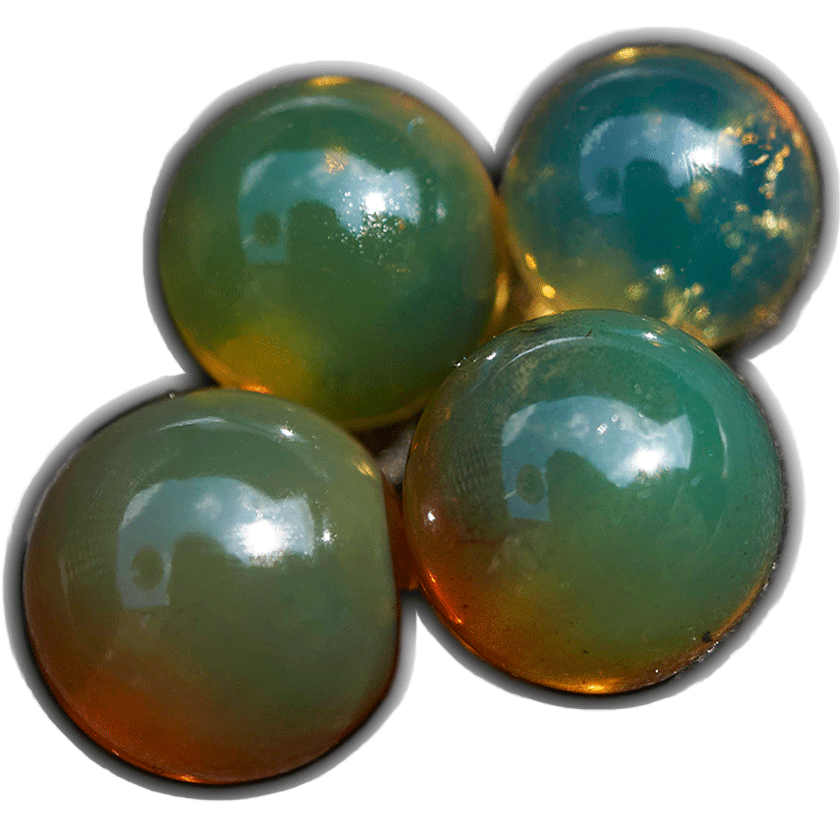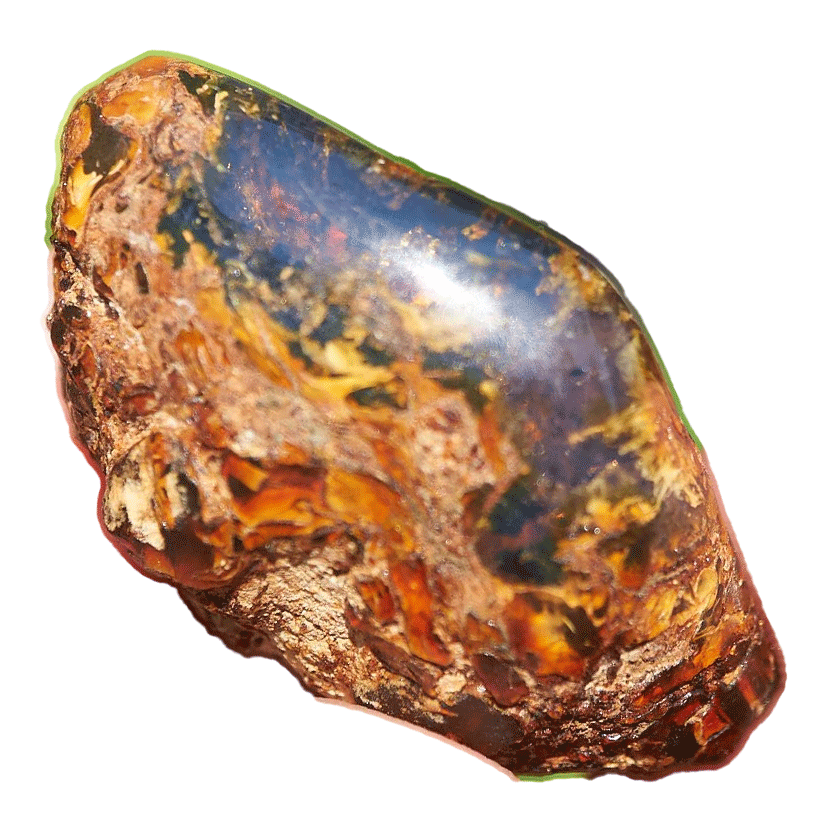

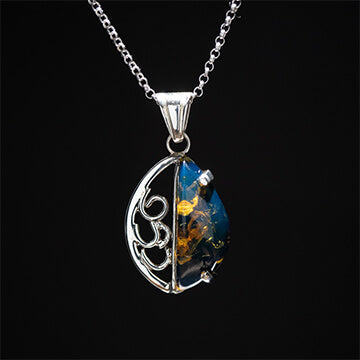
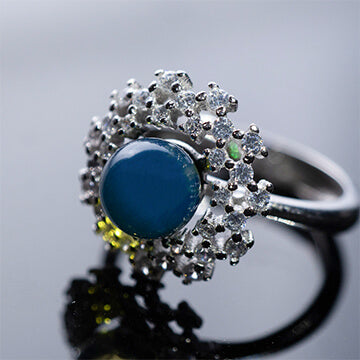
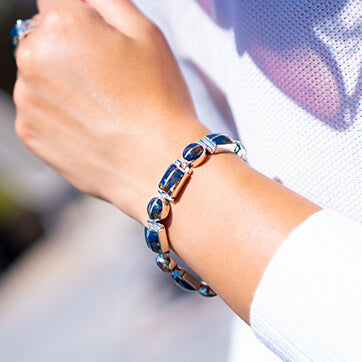
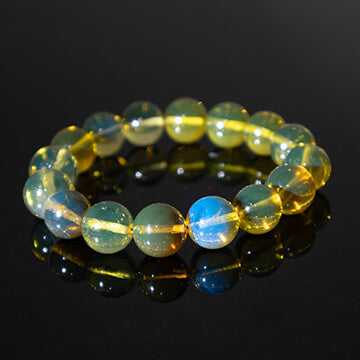
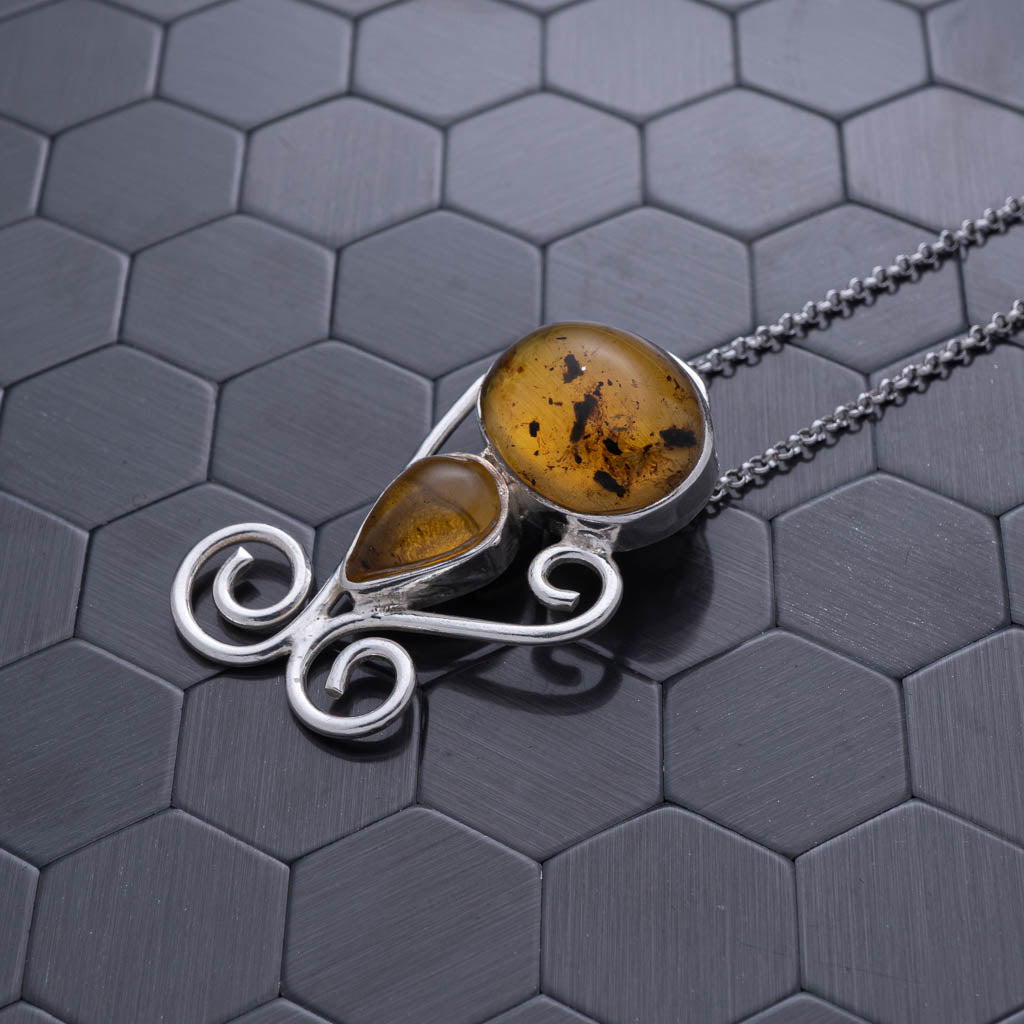
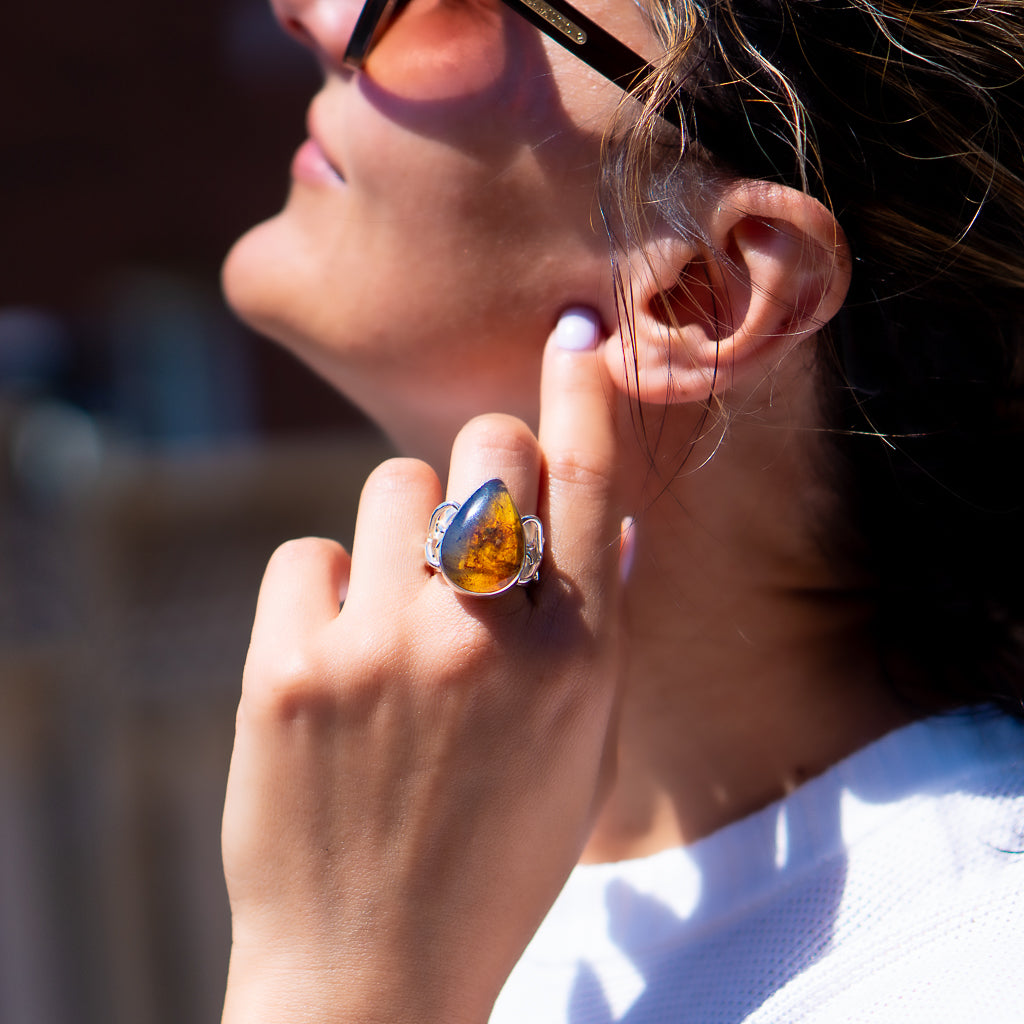
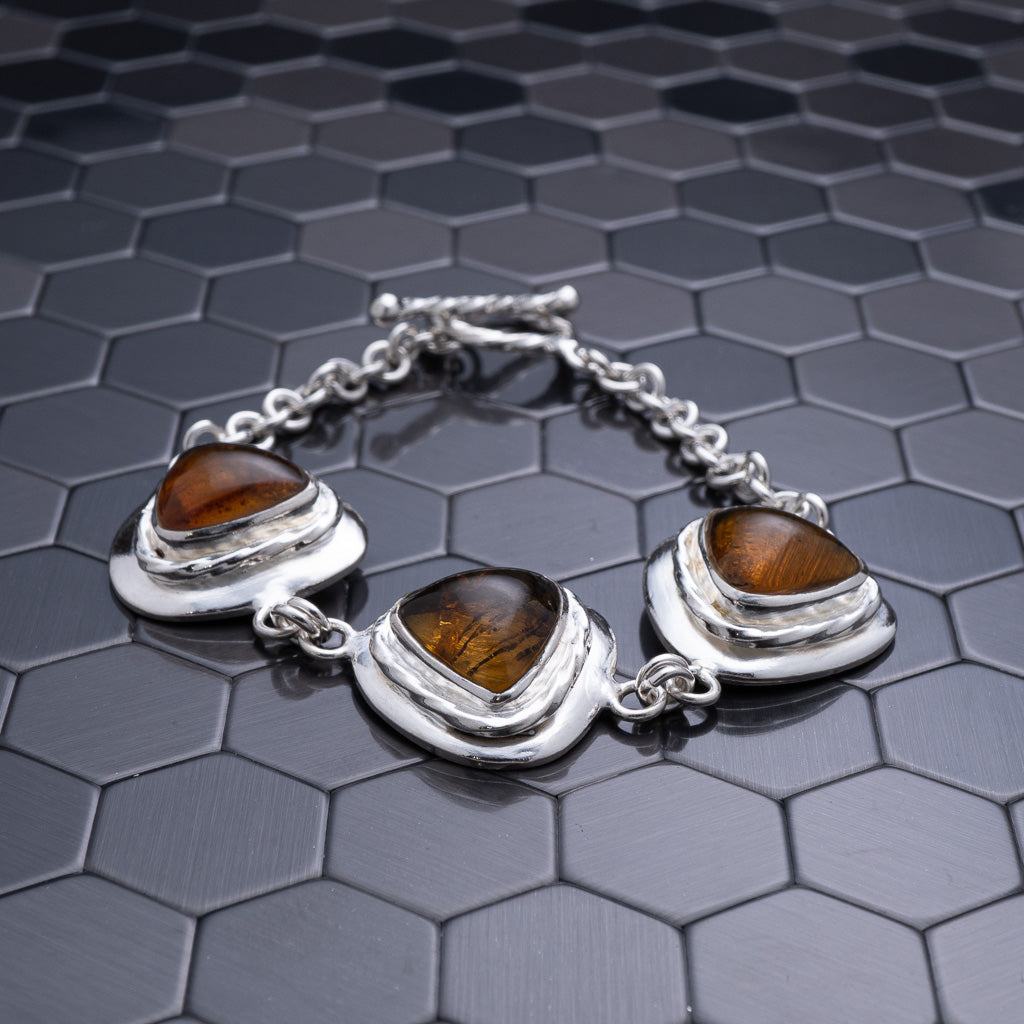
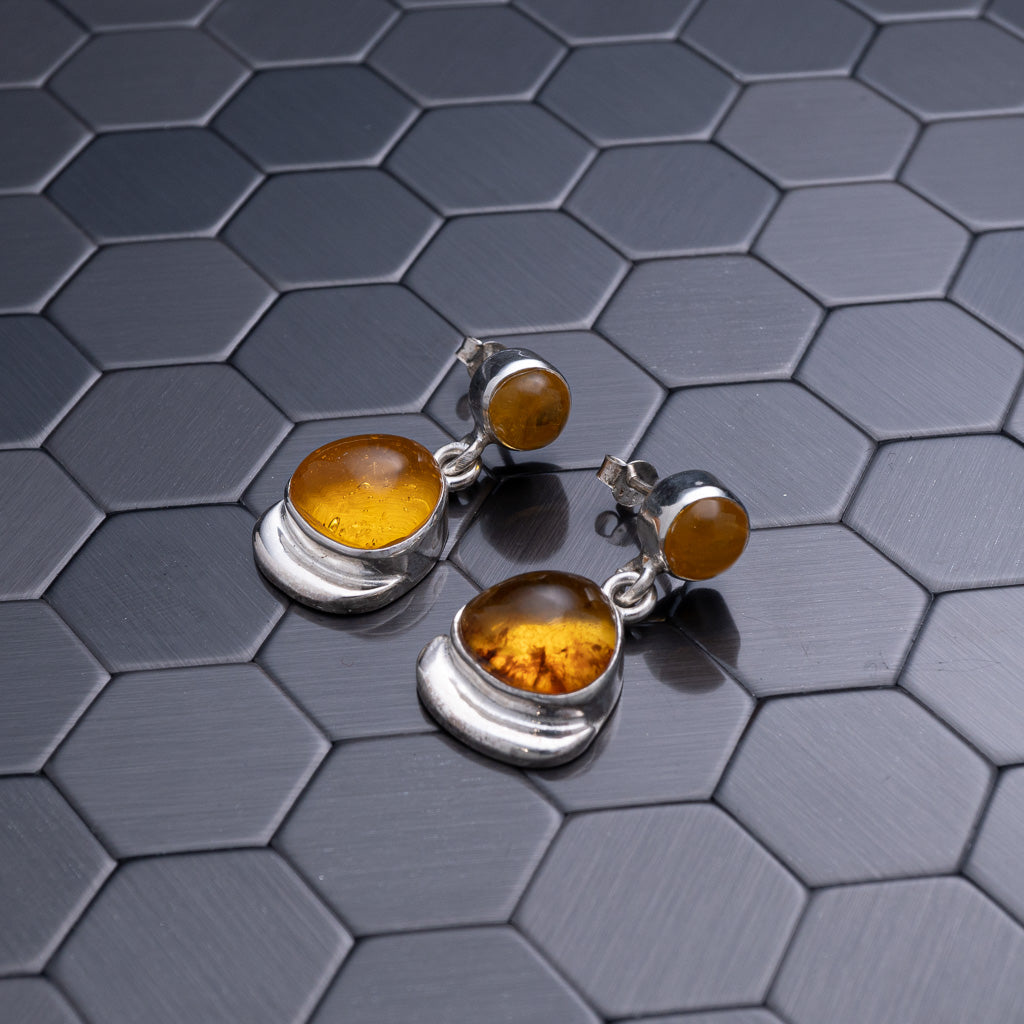
Some jewelry looks finished the moment you put it on. Amber pendants do something more interesting - they keep changing with the light. In one setting, the stone glows honey-gold. In another, it turns deep cognac, greenish, or even blue, depending on origin and structure. That shifting character is exactly why amber has remained so desired for centuries, especially for buyers who want jewelry with both presence and story.
For many collectors and thoughtful gift buyers, amber is not just another gemstone choice. It carries age, warmth, and a natural individuality that polished modern materials rarely match. Each piece reflects ancient resin transformed over time, then shaped by hand into something wearable. When that process is handled with care, the result feels intimate rather than mass produced.
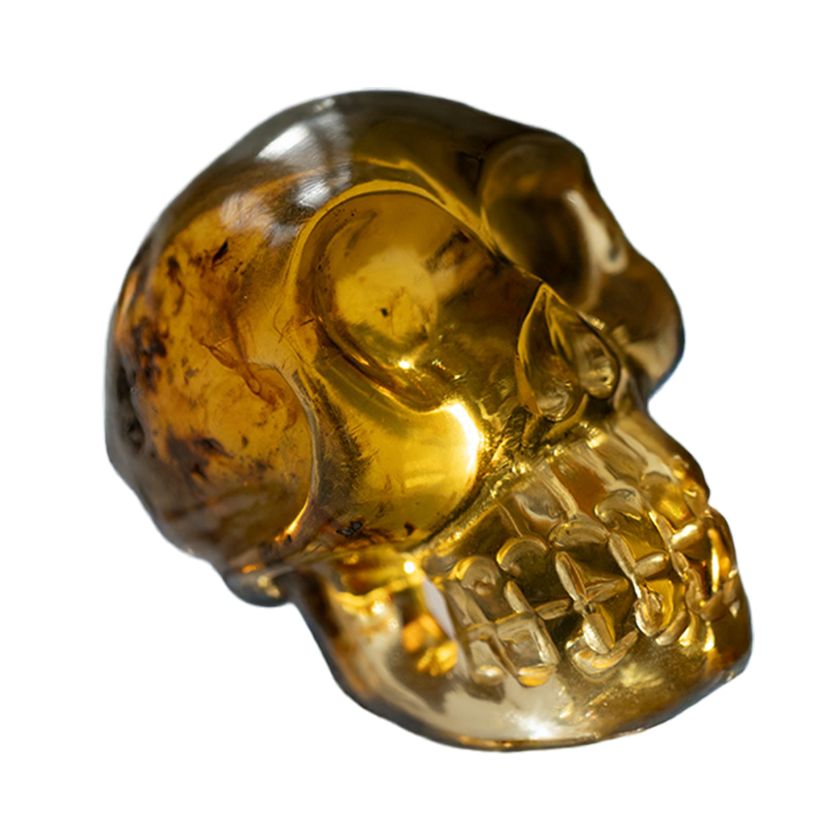
A pendant gives amber room to be seen. Rings and bracelets are beautiful, but a pendant places the stone where light can move through it more fully. That matters because amber is valued as much for its glow as for its color. A well-cut pendant can reveal soft internal patterns, natural inclusions, and tonal shifts that make one stone entirely different from the next.
There is also a practical reason pendants are such a natural format for amber. Amber is organic and lighter in weight than many traditional gemstones, so even a larger stone can feel comfortable for daily wear. That allows for bolder silhouettes without the heaviness that often comes with statement jewelry. If you want a piece that feels luxurious but still easy to wear, a pendant often strikes the right balance.
The emotional appeal matters too. Pendants sit close to the heart, which makes them especially popular as gifts and keepsakes. Buyers often choose amber for anniversaries, birthdays, or personal milestones because the stone feels warm, protective, and deeply individual.
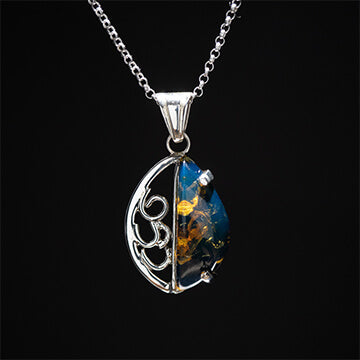
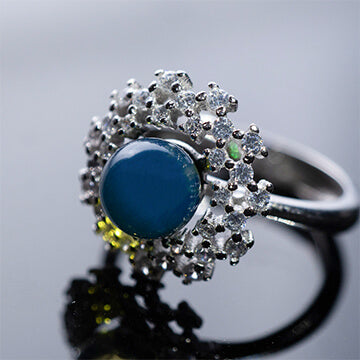
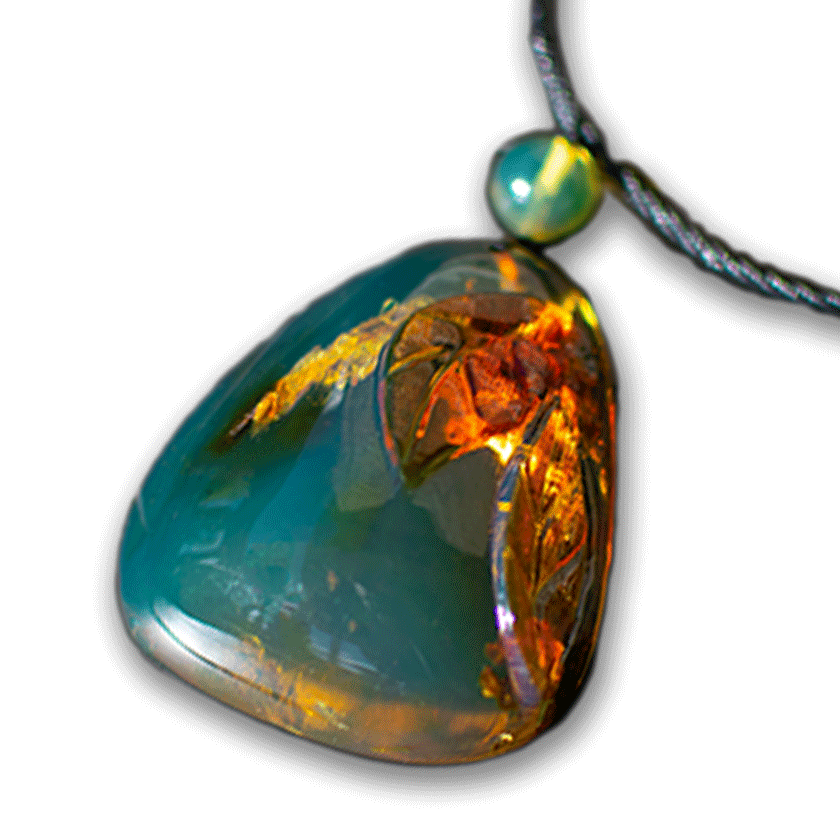
Not all amber is equal, and that is where informed buying makes a real difference. Color is usually the first thing people notice. Classic tones range from golden honey to rich cognac, but rarer varieties can show green, red, or the highly prized blue associated with Dominican origin. Blue amber, in particular, has a remarkable visual effect under certain light conditions, offering a depth and rarity that collectors immediately recognize.
Clarity also plays a role, though it depends on the look you prefer. Some buyers want clearer amber with a clean, luminous body. Others are drawn to the clouding, botanical traces, or natural inclusions that give the stone more character. Neither preference is wrong. A crystal-clear amber pendant may feel more refined and luminous, while an inclusion-rich stone can feel more organic and singular.
Origin matters as well. Baltic amber is widely known, but Dominican amber holds a special place for buyers seeking rarity, lighter weight, and exceptional color range. Within that category, genuine Dominican Blue Amber is particularly sought after for its unusual fluorescence and scarcity. When shopping at the premium end of the market, origin should never be vague. Credible sellers are transparent about sourcing and authenticity.
Craftsmanship is the final piece. A remarkable stone can lose its impact in a poorly made setting. The best pendants are designed to frame the amber without overwhelming it. Clean bezels, thoughtful bails, balanced proportions, and careful polishing all contribute to whether the piece feels elevated or ordinary.
The best pendant is not always the biggest or the rarest. It is the one that suits how you actually wear jewelry. If your wardrobe leans minimal, a small amber drop or oval cabochon may give you enough warmth without asking for too much attention. If you prefer expressive pieces, a larger freeform amber pendant can become the center of your look with very little effort.
Metal choice changes the mood. Sterling silver brings out amber's cooler contrasts and often feels artisanal, clean, and easy to wear. Gold settings heighten the richness of honey and cognac tones and create a more classic, heirloom feel. Neither is automatically better. It depends on whether you want the pendant to read modern, romantic, or bold.
Shape matters more than many buyers expect. Rounded cabochons tend to feel timeless and fluid. Teardrops add softness and movement. Freeform cuts celebrate the natural personality of the stone and often appeal to collectors who do not want jewelry that feels overly standardized. Heart pendants can be especially meaningful for gifts, though they work best when the craftsmanship keeps them elegant rather than overly sentimental.
If you are buying for everyday wear, look at the thickness of the amber and the security of the setting. Amber is durable enough for jewelry, but it is still an organic gem and benefits from thoughtful design. A pendant meant for frequent use should feel protected, not fragile.
Amber is one of the most imitated materials in jewelry. Resin, plastic, glass, and composite treatments can all be sold in ways that confuse buyers, especially online. For that reason, authenticity is not a marketing detail. It is central to value.
A trustworthy seller should be clear about whether the pendant contains natural amber, pressed amber, treated amber, or a substitute. Natural amber has a distinct appeal because each stone carries its own internal life and geological history. Certified gemstones add another layer of confidence, particularly for buyers investing in rarer Caribbean material.
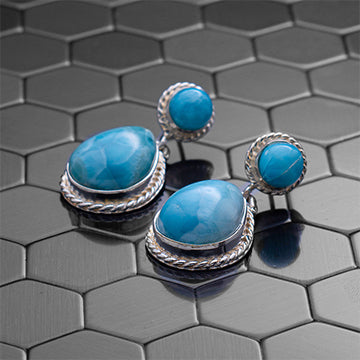
This is where specialization matters. A brand focused on authentic Larimar and Dominican amber, such as Larimar Creations, brings more authority than a general jewelry store that treats amber as one option among hundreds. When a retailer understands source, rarity, and handcrafted production, the shopping experience becomes more than visual. It becomes informed.
For buyers drawn to Caribbean gemstones, Dominican amber offers a very specific kind of beauty. It tends to be lighter, brighter, and often more transparent than many other amber types. That can make pendants feel especially luminous on the skin, with a glow that reads refined rather than heavy.
Dominican material also carries a stronger sense of place. It connects the wearer to a region known for exceptional natural treasures and artisan gemstone work. For some customers, that geographic identity is part of the luxury. They are not only buying a pendant. They are wearing a piece of the Caribbean.
Blue amber deserves separate mention because it is unlike what most people expect from amber. Rather than presenting one obvious color at all times, it reveals itself through light interaction. That subtle drama gives it collector appeal, but it also makes it remarkably wearable. It feels rare without being loud.
Amber pendants pair easily with neutral clothing, but their real strength is contrast. Against white linen, black silk, or soft earth tones, amber becomes vivid without looking forced. It works in both polished and relaxed settings, which is one reason it appeals to women who want jewelry that transitions across occasions.
Layering can work beautifully, though it depends on the pendant's size and color. A delicate amber piece can sit well with fine chains and simpler gemstones. A large statement pendant usually needs space. If the amber has exceptional color or unusual inclusions, letting it stand alone often creates the strongest effect.
For gifting, think about personality before trend. Someone who loves quiet elegance may prefer a classic oval or pear shape. A more expressive wearer may appreciate a sculptural setting or a stone with obvious natural character. Amber is personal by nature, so the best gift selections usually feel chosen rather than generic.
The right amber pendant can occupy an unusual place in a jewelry collection. It is beautiful enough for regular wear, distinctive enough to invite attention, and rare enough to feel like a true find. That combination is hard to fake. It comes from authentic material, careful sourcing, and craftsmanship that respects the stone.
Price should reflect those factors. If a pendant claims exceptional origin or rare color but is priced suspiciously low, caution is justified. Fine amber jewelry earns its value through authenticity, quality of cut, transparency around sourcing, and the artistry of the finished piece. Buyers who care about those details tend to be happiest with their purchase over time.
Amber rewards a slower kind of shopping. Look closely at the glow, the shape, the setting, and the source. When all of those elements align, the pendant does more than complete an outfit - it becomes the piece you reach for when you want your jewelry to feel unmistakably your own.