





Handcrafted in DR.







100% Handcrafted in DR.

The Dominican Republic has established itself as a significant player in the global mining industry, with Barrick Gold Corporation operating one of the world's largest gold mines in the country. This North American mining giant's presence in the Caribbean nation extends beyond simple extraction operations, encompassing exploration projects, community engagement initiatives, and substantial economic contributions that shape the region's development. Understanding the relationship between barrick gold dominican republic operations and the broader context of the nation's natural resource heritage provides valuable insights into how mining activities intersect with local communities, environmental considerations, and the country's unique position as a source of rare gemstones alongside precious metals.
Barrick Gold's flagship operation in the Dominican Republic centers on the Pueblo Viejo mine, located in the Sanchez Ramirez province. This world-class mining facility represents one of the most significant gold operations in the Western Hemisphere, contributing substantially to the Dominican economy through employment, tax revenues, and infrastructure development.
The mine's importance cannot be overstated. According to comprehensive data about the Pueblo Viejo mine, this facility has transformed the region's economic landscape while establishing the Dominican Republic as a notable gold producer on the international stage. The operation processes oxide and sulfide ores, extracting both gold and silver through modern metallurgical techniques.
In 2026, barrick gold dominican republic expansion plans demonstrate the company's commitment to extending operations well into the future. The mining corporation has announced plans to invest $1.3 billion in expanding the Pueblo Viejo mine, with the goal of extending its operational life beyond 2040. This substantial investment signals confidence in the deposit's long-term viability and the country's mining framework.
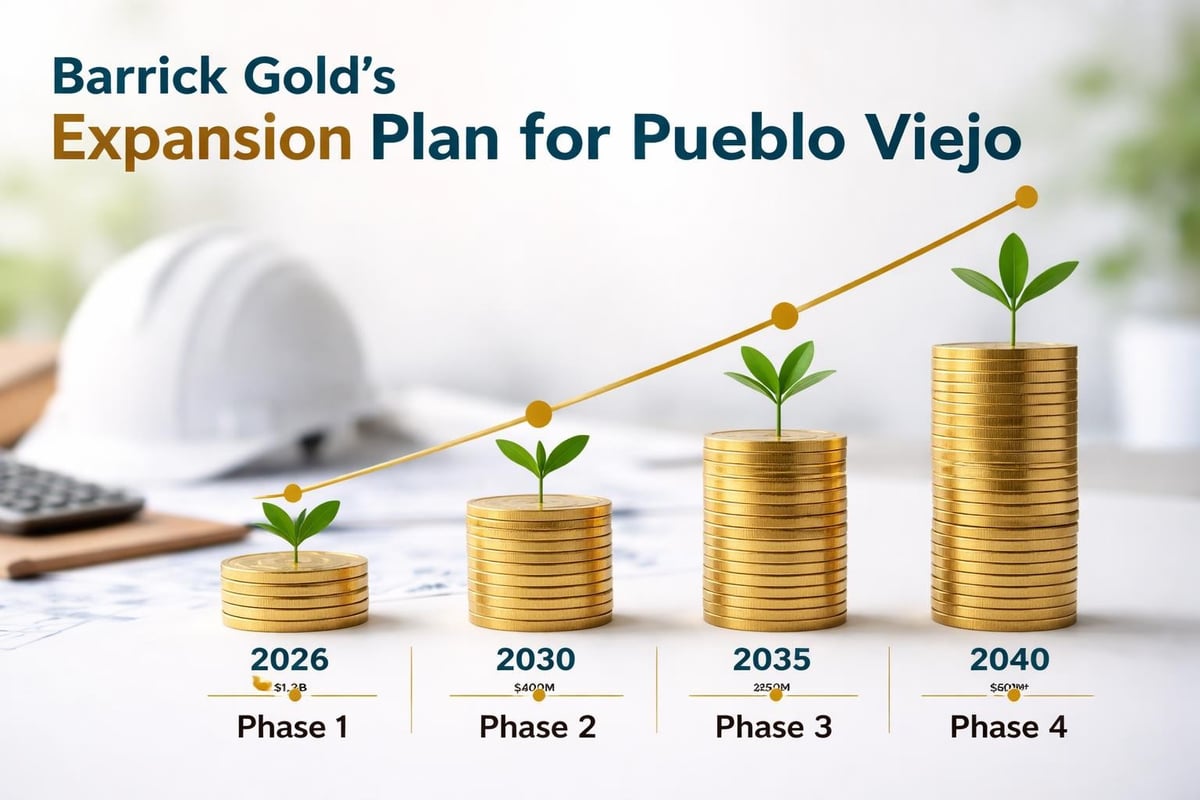
The expansion project encompasses several key components:
These infrastructure improvements will not only extend the mine's productive life but also enhance operational efficiency and environmental performance standards.
Beyond the established Pueblo Viejo mine, barrick gold dominican republic exploration efforts have focused on identifying additional mineral deposits in the region. The Pueblo Grande project represents a significant exploration initiative that has evolved considerably over recent years.
Barrick Gold initially entered into an earn-in agreement with Precipitate Gold Corp for the Pueblo Grande project, adjacent to the existing Pueblo Viejo mine. The company commenced a diamond drilling program to evaluate the property's potential, investing considerable resources into exploration activities.
The exploration commitment grew substantially when Barrick increased its total required work expenditures from $10 million to $22 million, demonstrating initial optimism about the project's prospects. This amendment reflected confidence in discovering economically viable mineralization adjacent to proven reserves.
However, exploration outcomes did not meet expectations. After completing extensive drilling programs, Barrick terminated its exploration rights on the Pueblo Grande project when drilling failed to yield significant gold mineralization. This decision illustrates the inherent risks in mineral exploration, where substantial investments may not always result in commercial discoveries.
| Exploration Phase | Investment | Outcome |
|---|---|---|
| Initial Agreement | $10 million commitment | Drilling program commenced |
| Amended Agreement | $22 million total expenditure | Expanded exploration scope |
| Final Assessment | Full investment deployed | Rights terminated - insufficient mineralization |
The relationship between barrick gold dominican republic operations and local communities extends beyond employment and economic contributions. The company has demonstrated commitment to community welfare through various initiatives, particularly during crisis situations.
When tropical storms and natural disasters impact the Dominican Republic, mining operations have resources and logistics capabilities that can provide crucial assistance. Barrick has collaborated with Dominican authorities to support storm-affected communities, providing emergency supplies, infrastructure support, and coordination assistance during recovery efforts.
These community engagement efforts include:
Such initiatives build social capital and demonstrate corporate citizenship, though they also serve to maintain operational licenses and community acceptance for mining activities.
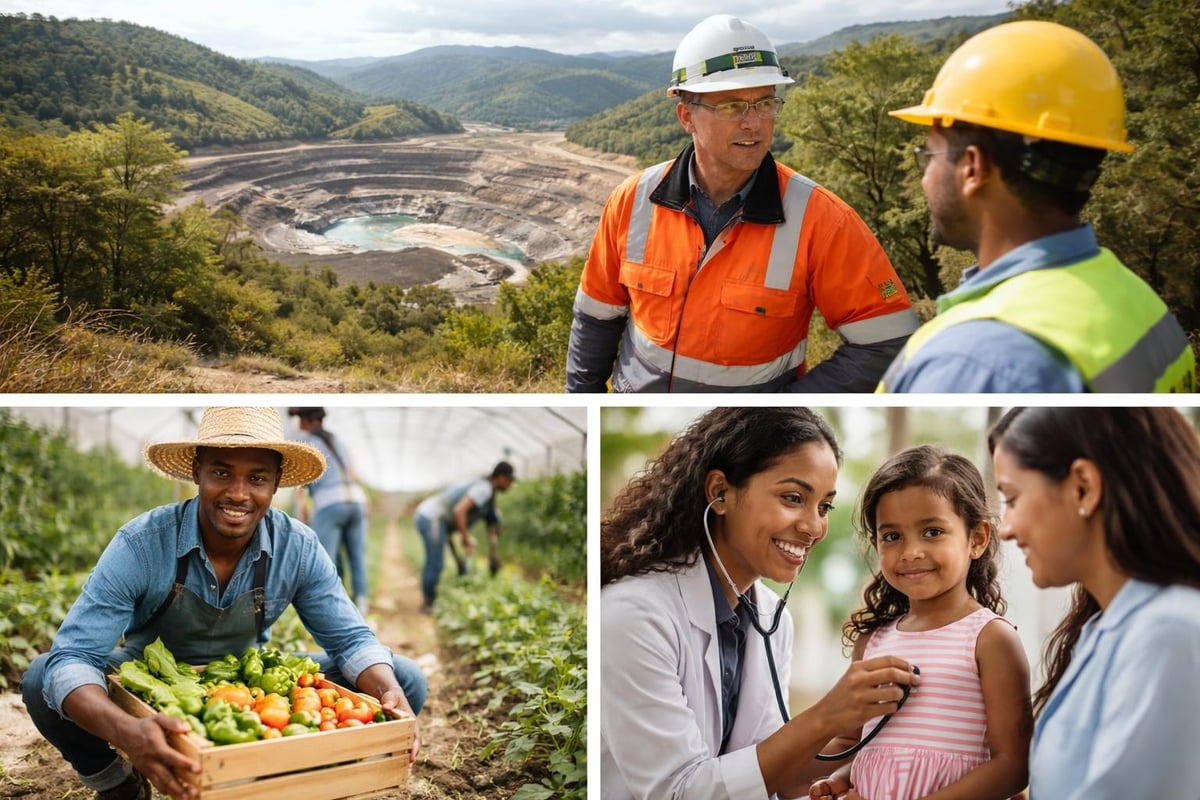
While barrick gold dominican republic operations contribute economically, they also generate environmental and social concerns that merit careful consideration. Mining activities inherently impact landscapes, water systems, and community dynamics, creating tensions that require ongoing management and mitigation.
Large-scale gold mining operations involve significant environmental footprints. Analysis of negative impacts from Barrick Gold's extraction activities highlights concerns including water quality issues, landscape transformation, and community displacement questions that emerge from major industrial projects.
The environmental challenges include several dimensions:
These technical challenges require sophisticated environmental management systems, ongoing monitoring, and transparent reporting to stakeholders. The balance between economic development and environmental protection remains a central tension in mining operations worldwide.
Beyond environmental factors, social dynamics create additional complexity. Recent reporting has examined social and environmental conflicts arising from Pueblo Viejo mine expansion, highlighting community concerns about water access, land use changes, and the distribution of economic benefits from mining activities.
Communities near mining operations often experience mixed outcomes. While employment opportunities and infrastructure improvements bring tangible benefits, concerns about environmental degradation, social disruption, and equitable benefit sharing create ongoing tensions that require continuous dialogue and adaptive management approaches.
While gold mining dominates international attention on Dominican mineral resources, the country possesses a unique position as the sole source of two exceptionally rare gemstones that connect to cultural identity and artisan traditions in ways that differ fundamentally from industrial mining operations.
The Dominican Republic is the only place on Earth where Larimar exists, a rare blue variety of pectolite found exclusively in the Bahoruco mountain range. This gemstone, often called the "Atlantis Stone" or "Dolphin Stone," embodies the Caribbean's azure waters in solid form. Unlike industrial gold extraction, Larimar mining typically occurs on smaller scales, with artisanal miners carefully extracting this precious material.
The gemstone's unique properties and limited availability have created a distinct market separate from precious metals. Understanding Larimar's authentic characteristics becomes essential for consumers seeking genuine Dominican gemstones, as the stone's rarity and beauty have unfortunately spawned imitation products.
For those drawn to the Dominican Republic's natural treasures, Larimar pendants offer wearable connections to this Caribbean nation's unique geological heritage, crafted by artisans who understand the stone's cultural and spiritual significance.
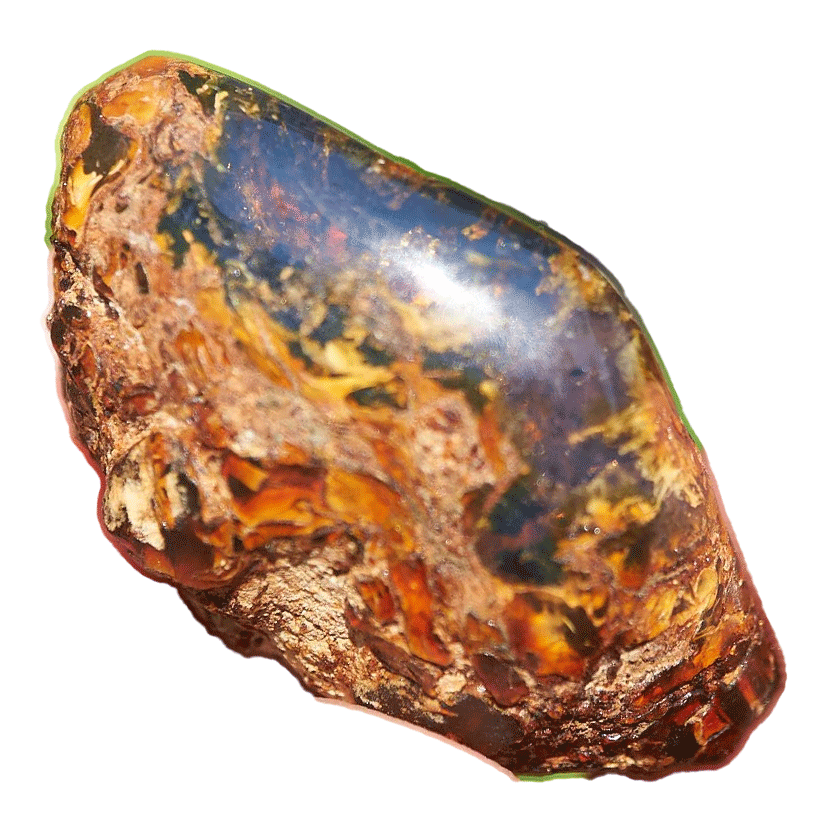
Alongside Larimar, the Dominican Republic produces extraordinary varieties of amber that fluoresce brilliant blue and green under UV light. This Dominican amber, formed from extinct tree resin millions of years ago, contains exceptional clarity and color properties that distinguish it from amber found elsewhere globally.
The connection between large-scale operations like barrick gold dominican republic mining and artisanal gemstone crafts might seem distant, yet both represent facets of how natural resources shape national identity, economic development, and global markets. While gold mining operates on industrial scales with sophisticated technology, Larimar and amber jewelry craftsmanship preserves artisanal traditions that connect consumers directly to Dominican heritage.
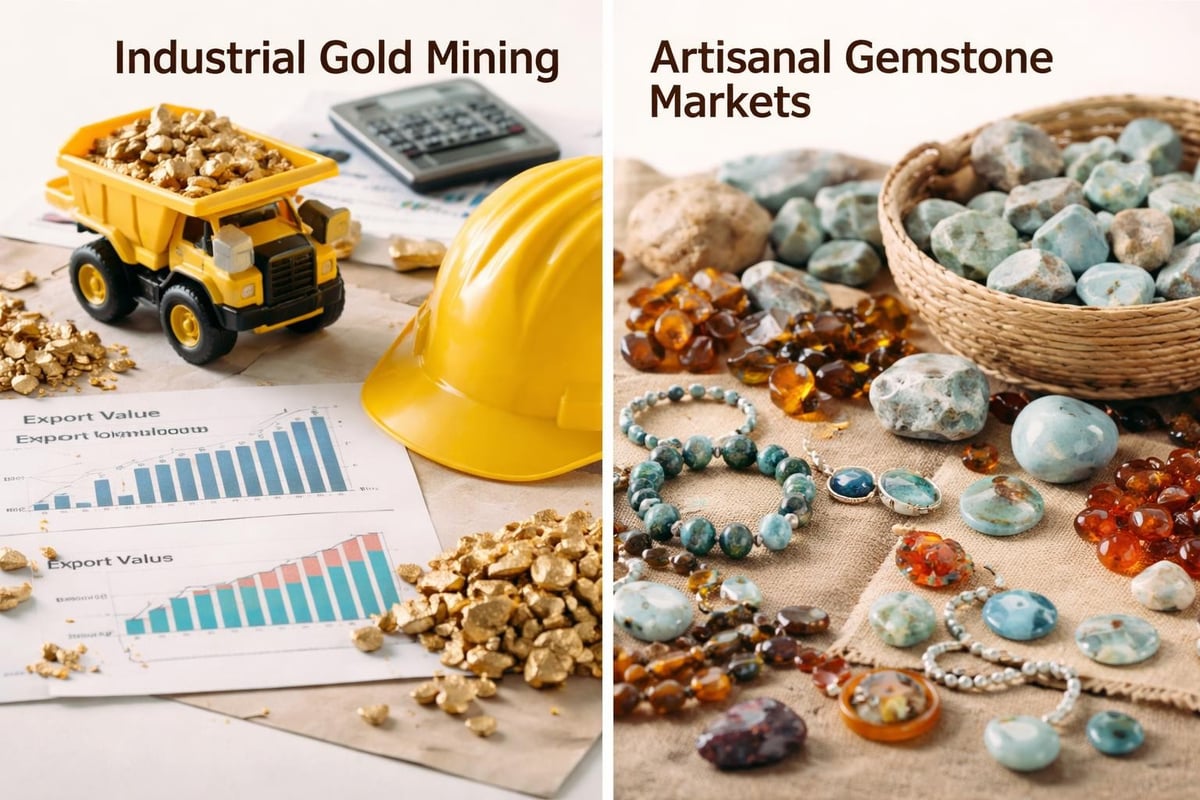
The barrick gold dominican republic relationship generates substantial economic impacts that extend throughout national development indicators. Gold mining contributes significantly to GDP, export revenues, foreign investment flows, and government tax receipts that fund public services and infrastructure.
Mining sector contributions manifest through multiple channels:
| Economic Indicator | Impact Category | Significance Level |
|---|---|---|
| Direct Employment | Thousands of jobs | High - skilled positions with competitive wages |
| Indirect Employment | Supply chain and service sectors | High - multiplier effects throughout economy |
| Tax Revenues | Government income | Very High - funds public services and development |
| Export Earnings | Foreign exchange | Critical - supports currency stability |
| Infrastructure Investment | Roads, power, water systems | Moderate - benefits extend beyond mining areas |
These contributions position mining as a cornerstone of Dominican economic strategy, though dependence on commodity prices creates vulnerability to global market fluctuations. Diversification strategies that include tourism, agriculture, and manufacturing help balance this resource-dependent economic model.
Effective mining operations require robust regulatory frameworks that balance development objectives with environmental protection and community welfare. The Dominican Republic's mining governance system establishes permitting requirements, environmental standards, taxation structures, and operational oversight mechanisms.
Mining regulations continue evolving in response to technological advances, environmental understanding, and social expectations. Modern regulatory frameworks address:
These regulatory elements attempt to ensure that mining activities generate sustainable benefits while minimizing negative externalities. Implementation effectiveness varies, with ongoing debates about enforcement capacity, penalty adequacy, and stakeholder participation in decision-making processes.
Contemporary mining operations like those conducted by barrick gold dominican republic facilities employ sophisticated technologies that differ dramatically from historical mining methods. These innovations improve efficiency, enhance safety, and reduce environmental footprints compared to older approaches.
Modern mining technology encompasses multiple domains:
These technological capabilities enable companies to extract resources more efficiently while managing environmental parameters more effectively than previous generations of mining operations. Continued innovation promises further improvements in coming decades.
Looking ahead, the trajectory of barrick gold dominican republic operations and broader mining sector development depends on multiple factors including commodity prices, regulatory evolution, technological innovation, and social acceptance. The announced Pueblo Viejo expansion signals confidence in long-term prospects, though challenges remain.
The central question facing Dominican mining involves balancing economic development benefits against environmental and social costs. This balance requires:
Successfully navigating these considerations will determine whether mining operations create lasting positive legacies or leave problematic environmental and social burdens for future generations to address.
The interplay between large-scale industrial mining and artisanal gemstone crafts illustrates different pathways for natural resource utilization. While gold extraction operates at massive scales with sophisticated corporate structures, Dominican gemstone traditions maintain cultural connections and artisanal skills that represent alternative models of resource-based livelihoods.
The presence of Barrick Gold in the Dominican Republic demonstrates both the opportunities and challenges inherent in natural resource development, from economic contributions to environmental stewardship responsibilities. As visitors and consumers explore the Dominican Republic's unique offerings, they discover a nation rich in both industrial mineral wealth and rare gemstones found nowhere else on Earth. Larimar Creations connects you directly to this Caribbean heritage through handcrafted jewelry featuring authentic Larimar and Dominican Blue Amber, bringing the Dominican Republic's geological treasures to customers worldwide with a commitment to quality, authenticity, and artisan traditions.