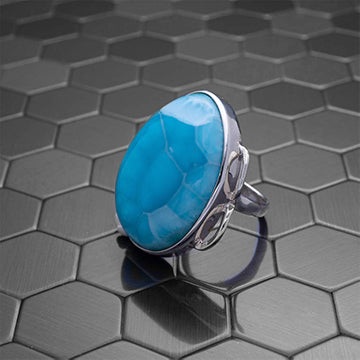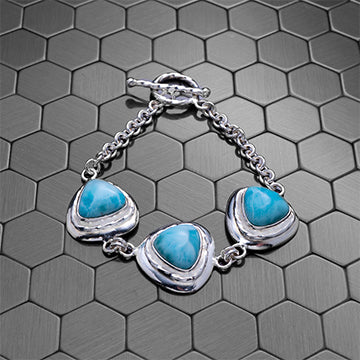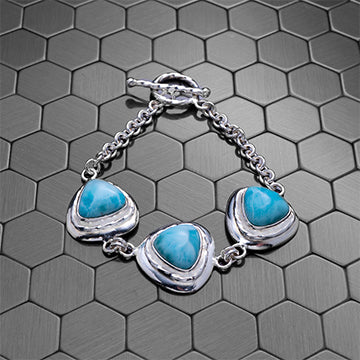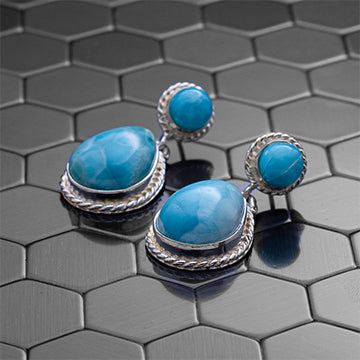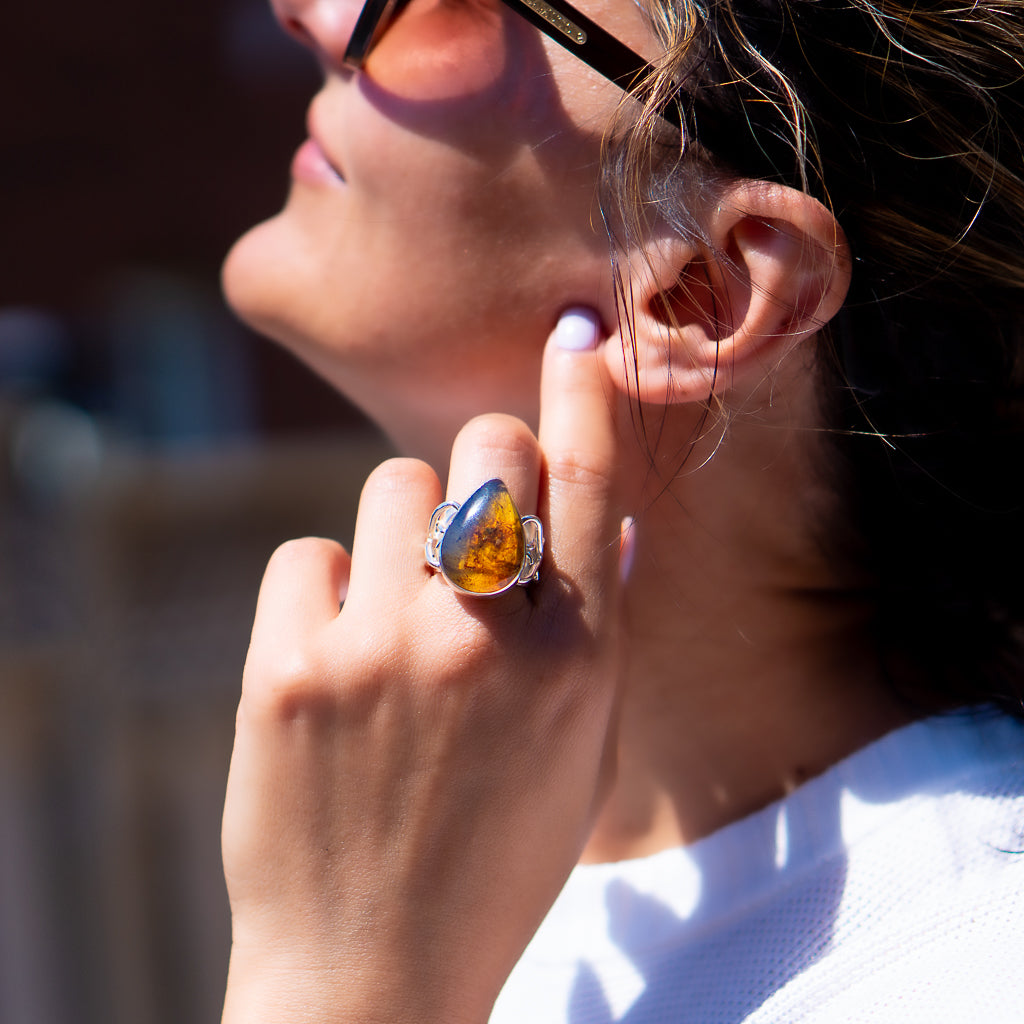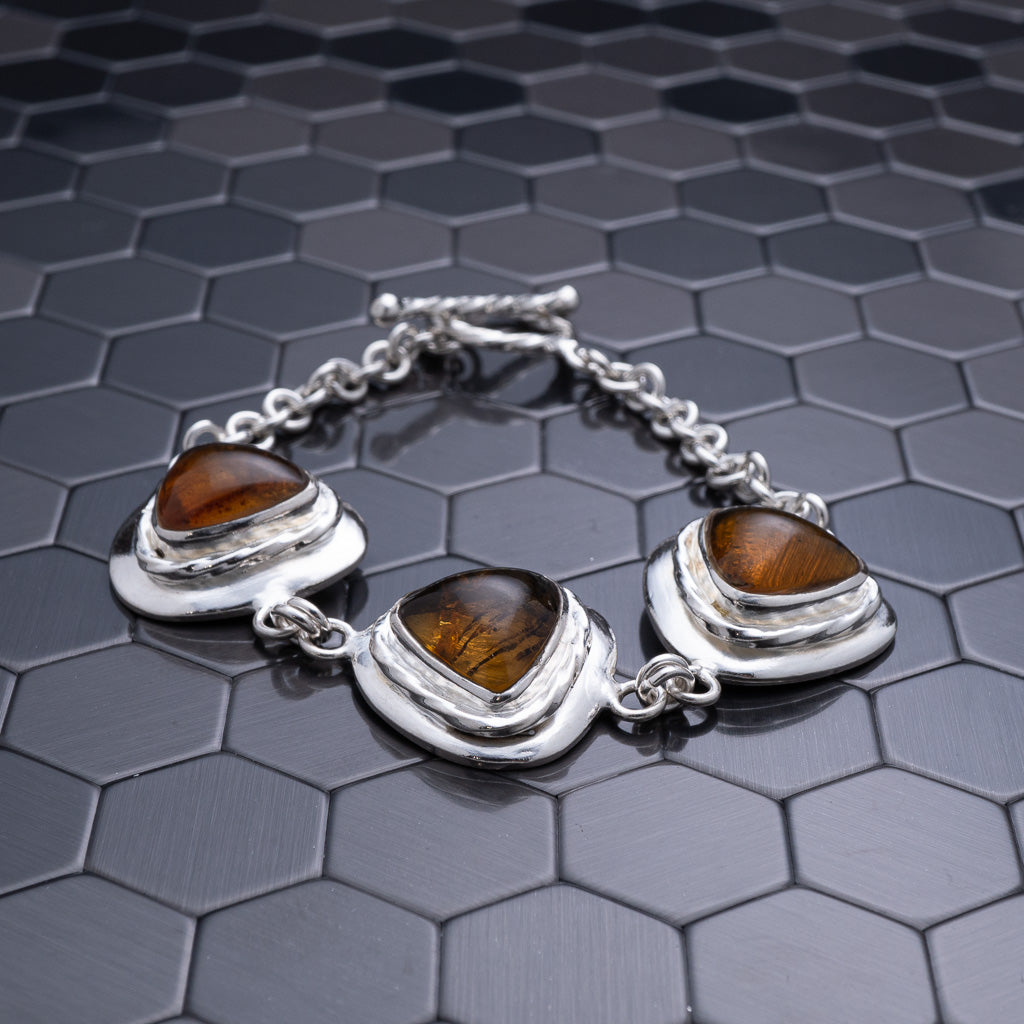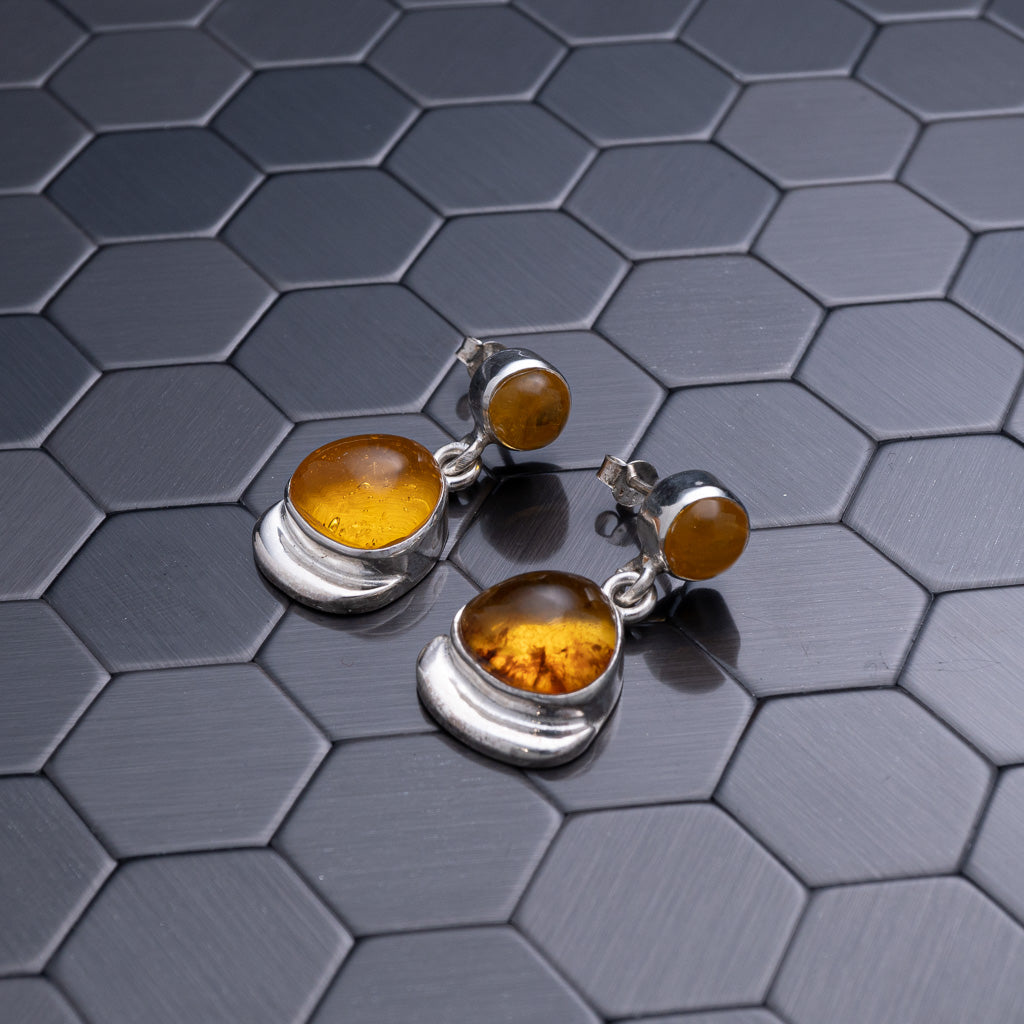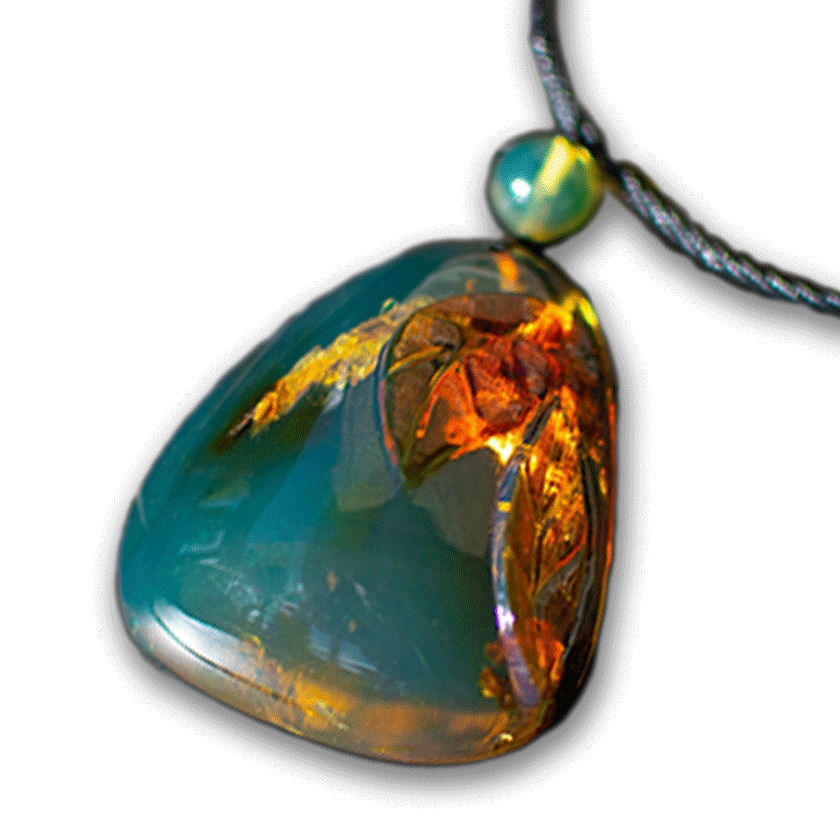


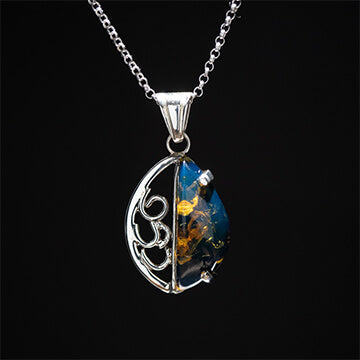
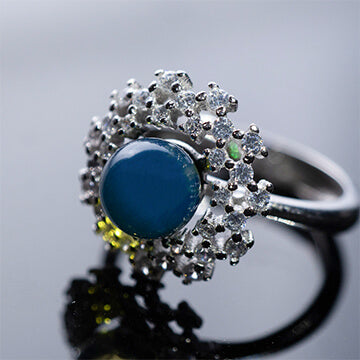
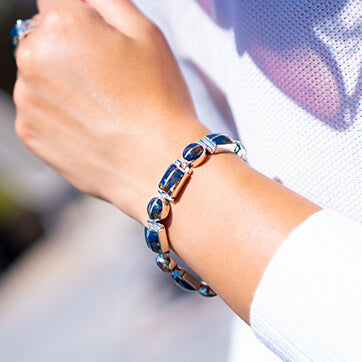
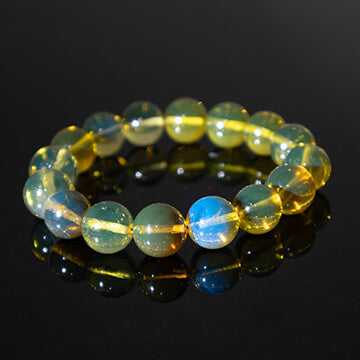
Handcrafted in DR.

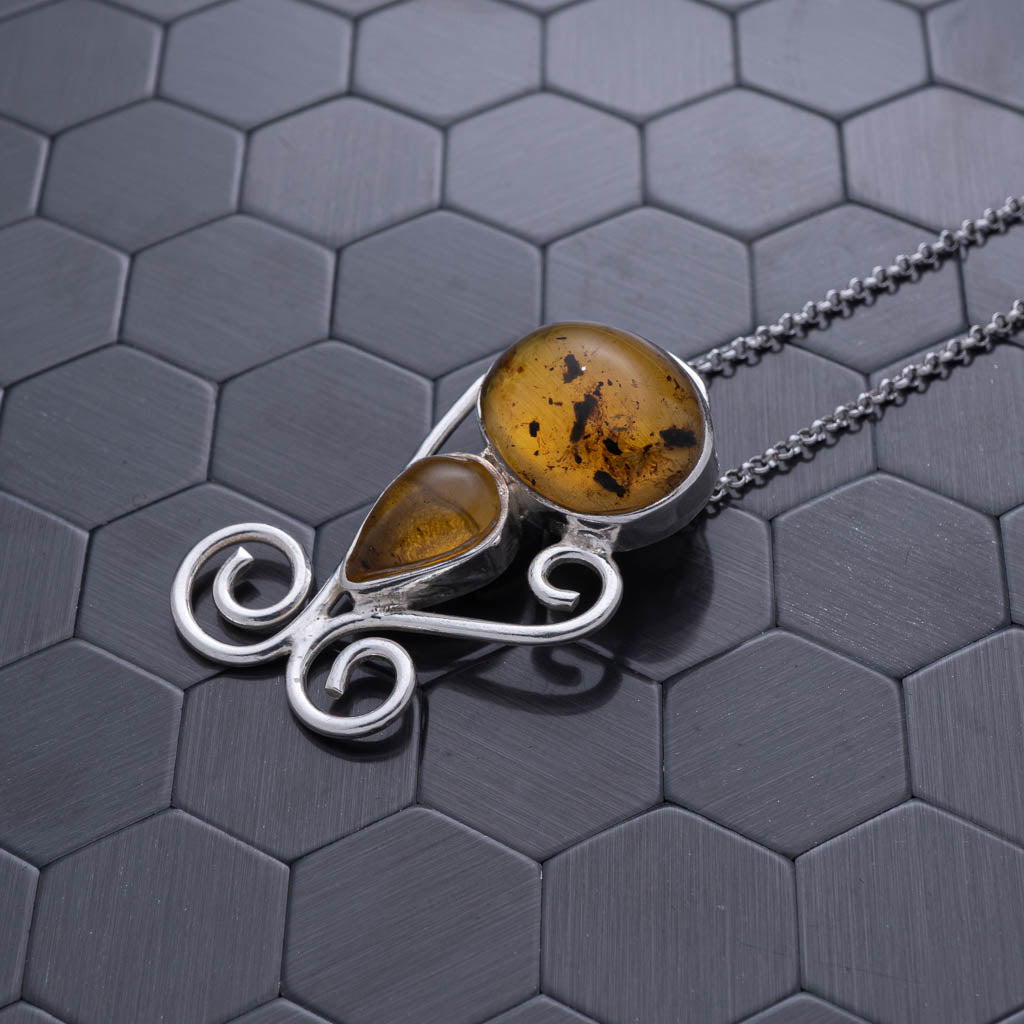
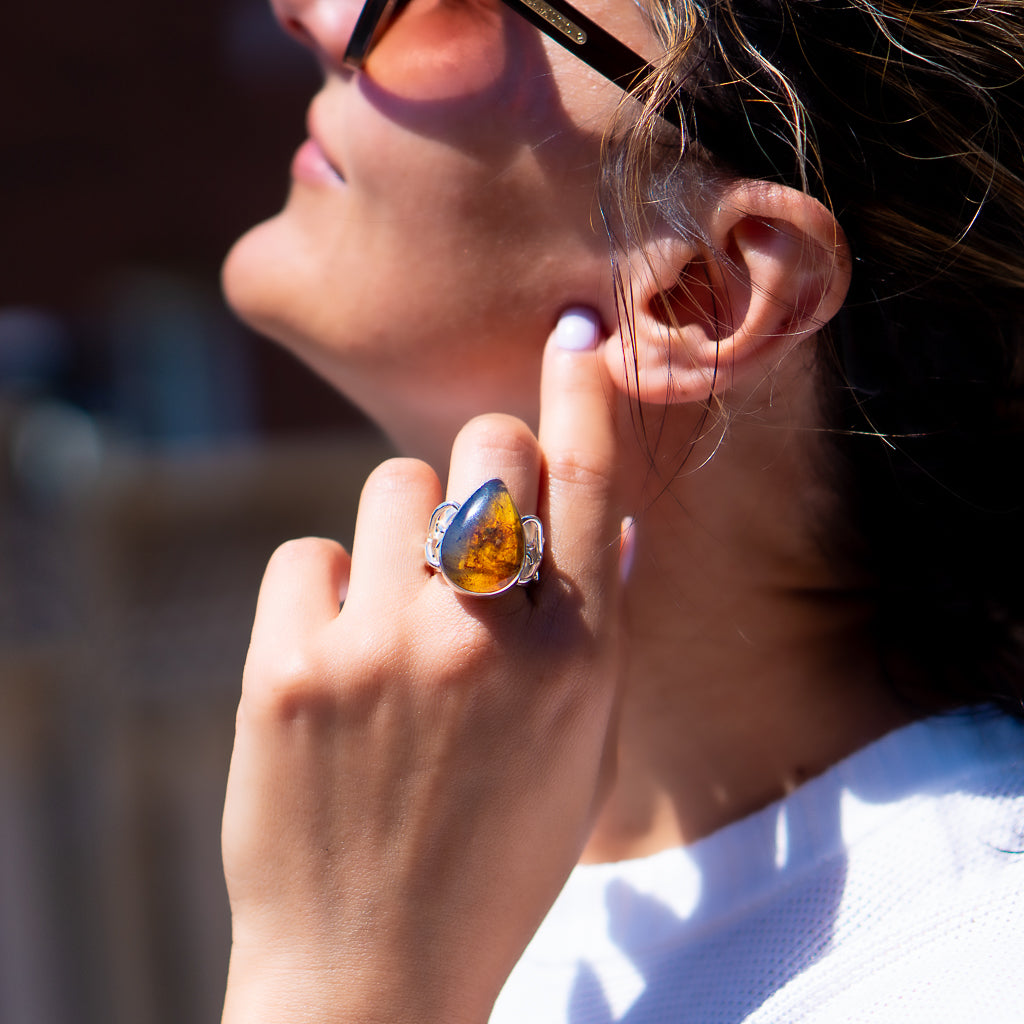
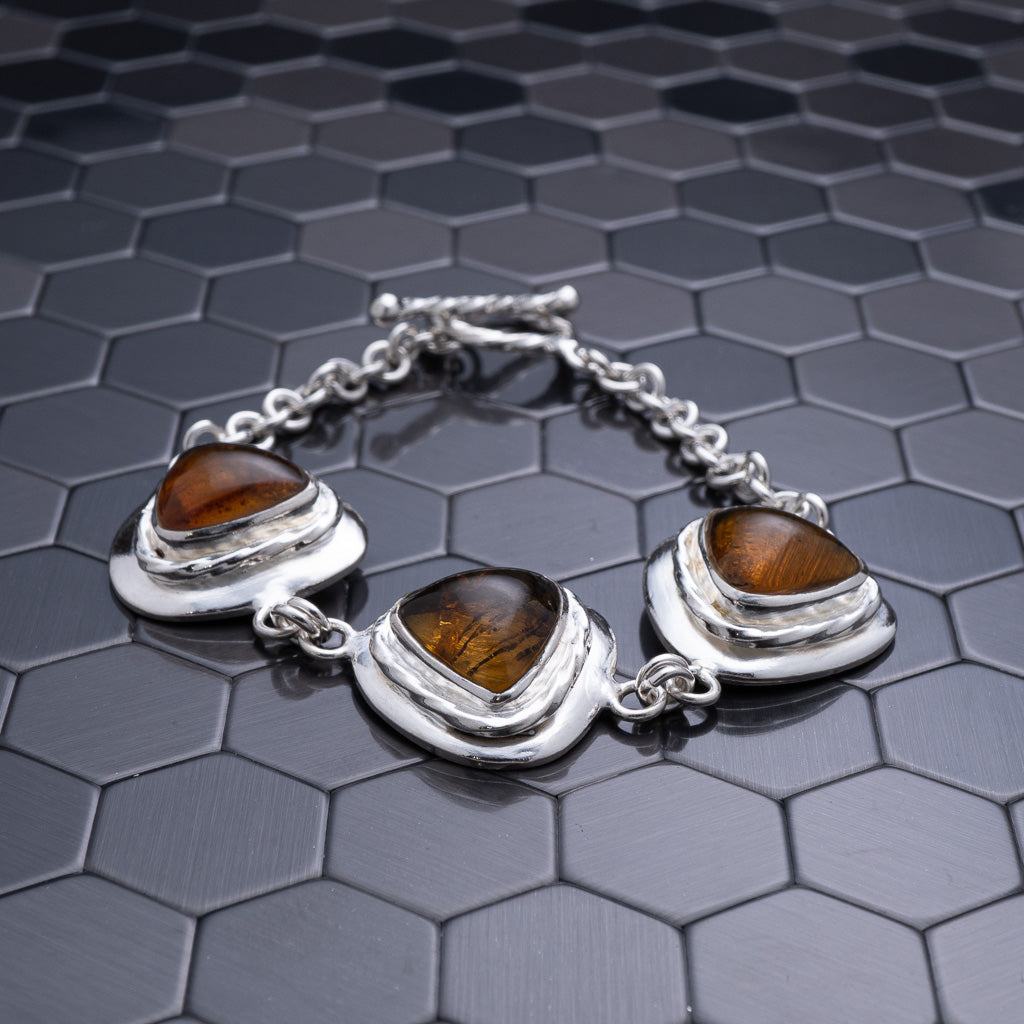
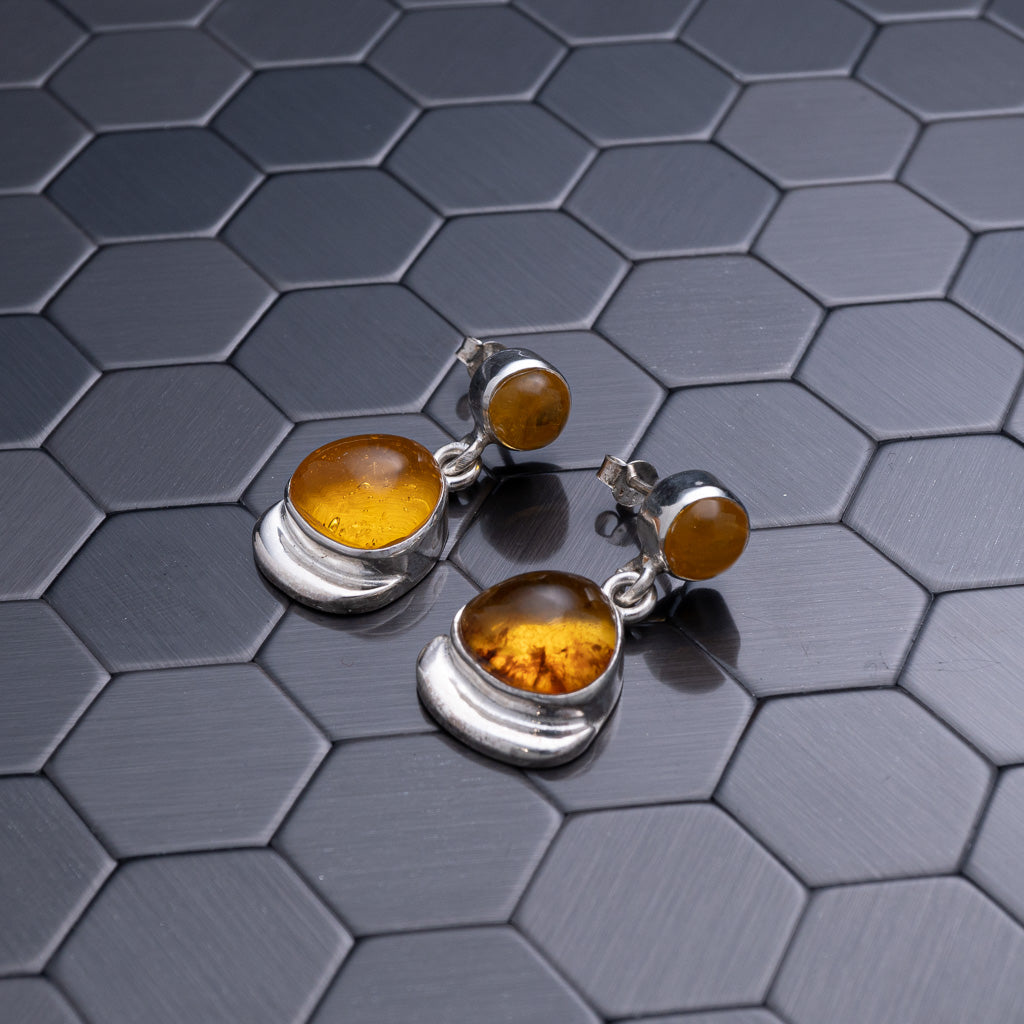


100% Handcrafted in DR.

Larimar, often called the "Atlantis Stone" or "Caribbean Gem," represents one of the world's rarest gemstones, found exclusively in the Dominican Republic's Bahoruco Mountain range. As demand for this stunning blue pectolite increases worldwide, so does the prevalence of imitations flooding the market. Understanding how to identify genuine larimar stones from imitations has become essential for collectors, jewelry enthusiasts, and anyone investing in this precious gemstone. With sophisticated fakes becoming increasingly common, knowing the distinguishing characteristics between authentic larimar and look-alikes protects both your investment and ensures you're acquiring the genuine article.
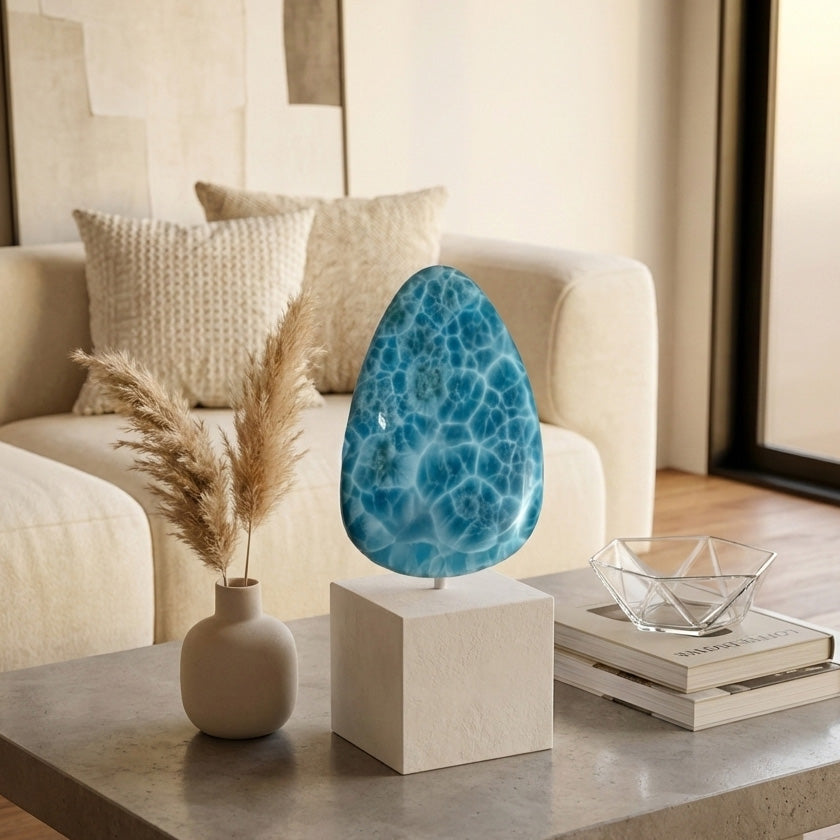
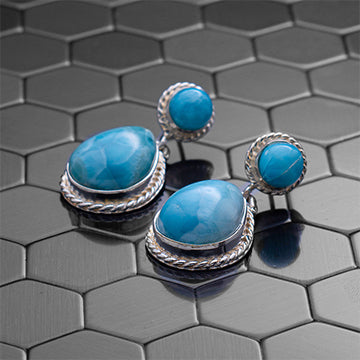
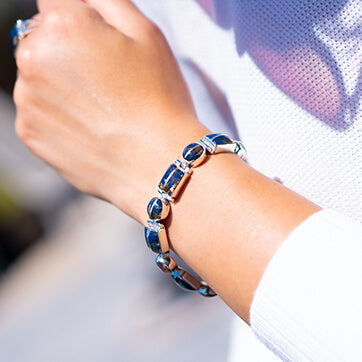
Authentic larimar possesses distinctive physical characteristics that set it apart from imitations. The gemstone's chemical composition as a copper-bearing pectolite creates its signature blue coloration, ranging from light sky blue to deep volcanic blue with white patterns resembling ocean waves.
Larimar registers between 4.5 and 5 on the Mohs hardness scale, making it relatively soft compared to many gemstones. This specific hardness means genuine larimar can be scratched by materials harder than glass but won't easily crumble under pressure.
Key Physical Measurements:
The density of authentic larimar creates a noticeable weight when held. Plastic or resin imitations feel significantly lighter, while glass fakes may feel heavier than genuine stones of comparable size. According to comprehensive guides on larimar identification, these measurements remain consistent across all authentic specimens regardless of grade or color intensity.
Learning how to identify genuine larimar stones from imitations begins with understanding authentic color patterns. Genuine larimar displays natural, organic color variations that flow throughout the stone in unpredictable patterns, similar to clouds moving across a sky.
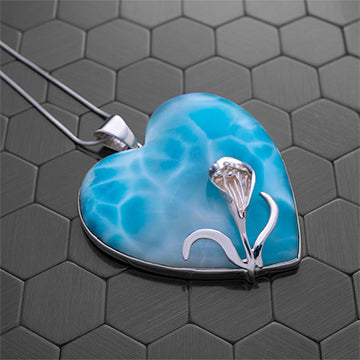
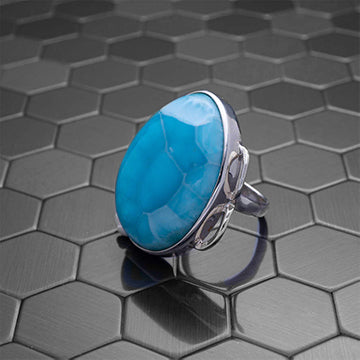
Authentic larimar exhibits color zoning with gradual transitions between shades. The blue coloration appears within a white matrix, creating unique patterns that never repeat identically across different stones. These patterns include feathery wisps, cellular structures, and wave-like formations.
Imitations often display several telltale signs:
Experts at LarimarCreations for verification before purchasing. The color consistency test involves examining the stone under different lighting conditions. Genuine larimar maintains its character under natural sunlight, indoor lighting, and LED sources, while dyed imitations may appear different under various light sources.
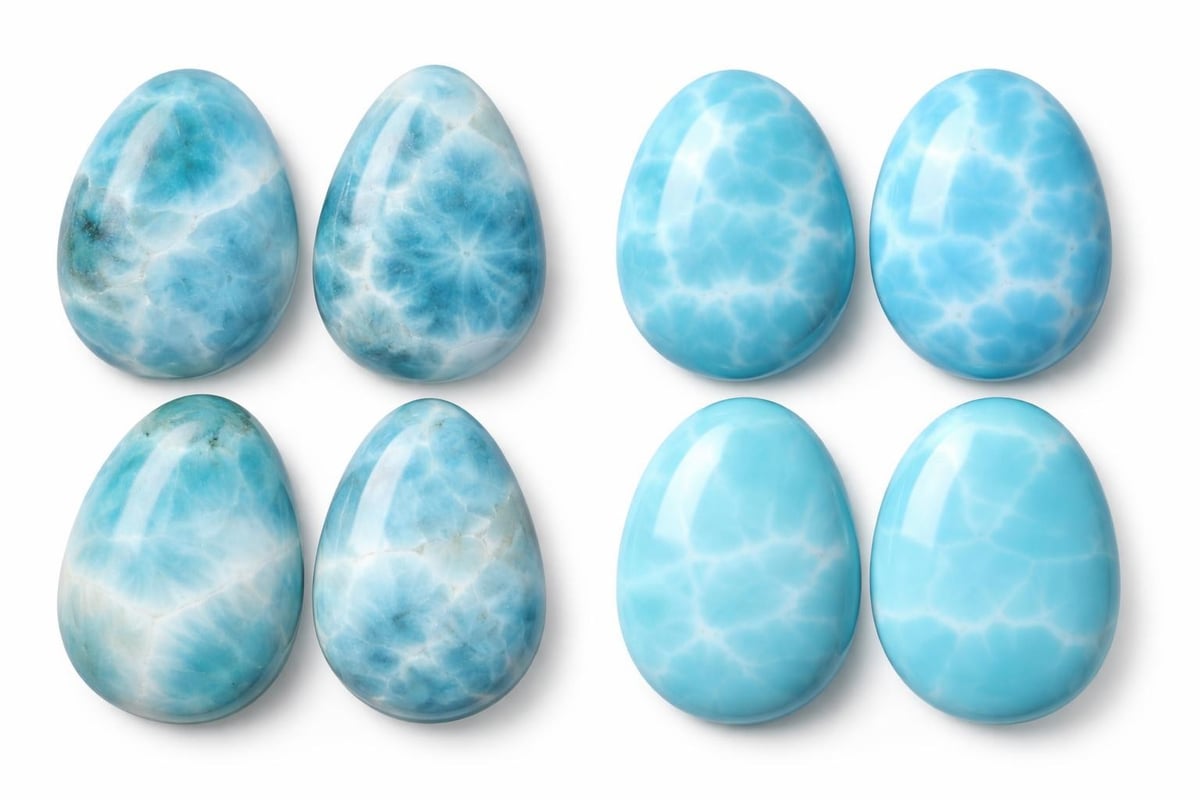
The surface characteristics of larimar provide crucial evidence for authentication. Genuine larimar displays specific textural qualities resulting from its natural formation process deep within volcanic environments.
When examining texture, authentic larimar feels smooth when polished but may contain natural pits, inclusions, or slight irregularities. These imperfections actually indicate authenticity rather than defects.
| Characteristic | Genuine Larimar | Common Imitations |
|---|---|---|
| Surface Feel | Naturally cool to touch, warms slowly | Quickly matches room temperature |
| Polish Quality | High gloss possible, slight natural texture | Overly perfect or plastic-like finish |
| Inclusions | Natural mineral deposits, small cavities | Bubbles (glass), perfect clarity (synthetic) |
| Edge Quality | Slightly irregular when broken naturally | Perfect geometric edges (molded fakes) |
The authentication process detailed by experts emphasizes examining the stone's surface under magnification. A jeweler's loupe or magnifying glass reveals natural growth patterns, microscopic inclusions, and the stone's internal structure. Glass imitations often contain tiny air bubbles, while dyed howlite or magnesite shows dye concentration in cracks and porous areas.
Understanding how to identify genuine larimar stones from imitations includes conducting simple temperature tests. Natural gemstones possess thermal properties different from synthetic materials or common substitutes.
Genuine larimar, like most natural stones, feels noticeably cool when first touched and takes several seconds to warm to body temperature. Hold the stone against your cheek or inner wrist, where skin sensitivity detects temperature differences more accurately.
Testing Procedure:
Plastic and resin imitations warm almost immediately, feeling closer to room temperature within seconds. Glass fakes may initially feel cool but warm faster than authentic larimar. This test works best when comparing multiple stones simultaneously, providing direct contrast between genuine and suspected imitations.
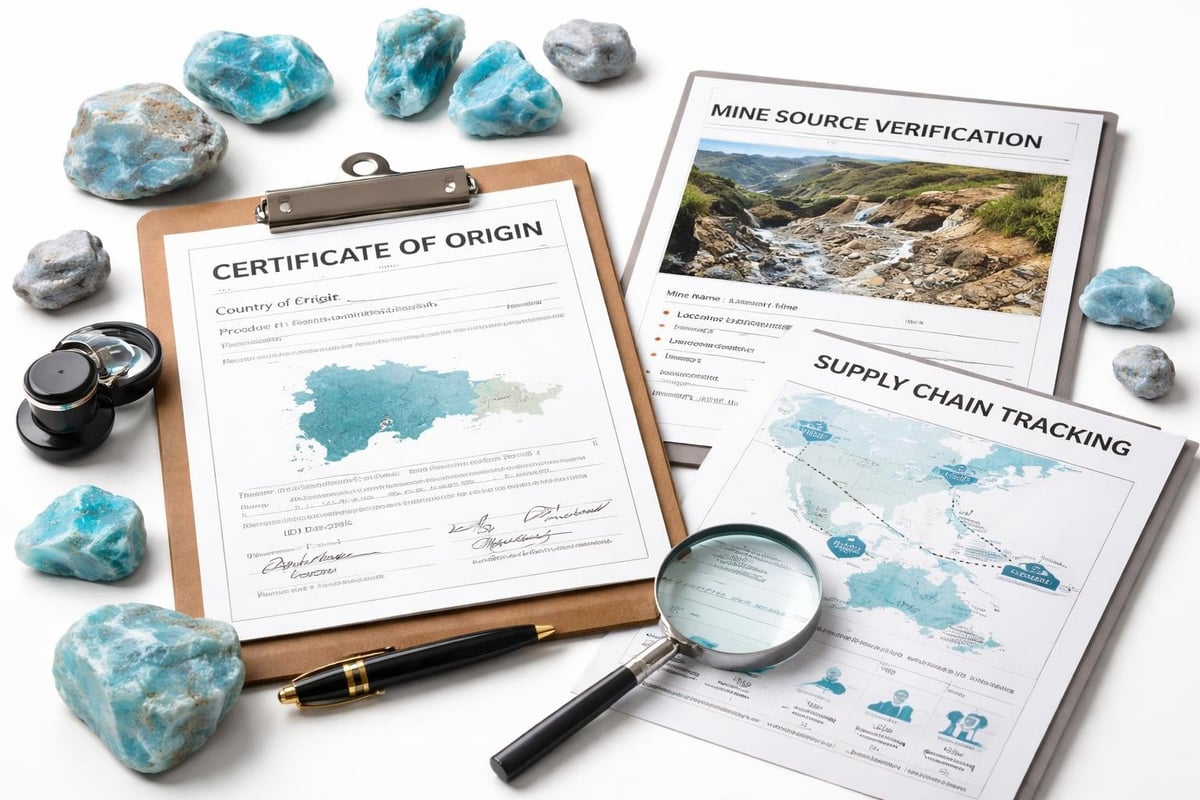
Authentic larimar comes exclusively from a single source: the Los Chupaderos mine in the Bahoruco region of the Dominican Republic. No larimar exists naturally anywhere else on Earth, making geographic origin a critical authentication factor.
Reputable sellers provide documentation verifying the stone's Dominican origin. These certificates should include specific details about the mine source, extraction date, and stone characteristics. When shopping for larimar pendants or other jewelry pieces, request provenance documentation from sellers.
According to research on high-risk purchasing locations, certain countries show elevated rates of fake larimar sales. Purchasing directly from Dominican sources or established dealers with verified supply chains significantly reduces imitation risk. Always research the seller's reputation, years in business, and customer reviews before investing in larimar jewelry.
Several minerals and synthetic materials mimic larimar's appearance, creating confusion for buyers. Recognizing these common substitutes helps when learning how to identify genuine larimar stones from imitations.
Caribbean Calcite has emerged as a popular larimar substitute. This recently discovered mineral from Pakistan displays similar blue and white patterns but lacks larimar's unique wave-like formations. Expert analysis of common look-alikes reveals that Caribbean calcite feels different to the touch and has different hardness properties.
| Material | Visual Similarity | Key Differences |
|---|---|---|
| Caribbean Calcite | High (blue-white patterns) | Softer (3 Mohs), different luster, blockier patterns |
| Dyed Howlite | Moderate (can be dyed blue) | Very porous, dye concentrates in veins, lighter weight |
| Blue Smithsonite | Moderate (similar blue tones) | Bubbly surface texture, different crystal structure |
| Hemimorphite | Moderate (blue coloring) | More translucent, different hardness, sparkly appearance |
| Synthetic Turquoise | Low to Moderate | Spider web matrix, different surface feel |
| Glass | Variable | Air bubbles under magnification, uniform color |
| Resin/Plastic | Variable | Warm to touch, lightweight, can smell when heated |
Dyed Stones represent the most common imitation category. Sellers frequently dye white howlite, magnesite, or marble to resemble larimar. These fakes reveal themselves through concentrated dye in cracks and porous areas visible under magnification. The acetone test, where a cotton swab with nail polish remover touches an inconspicuous area, detects dyed stones as color transfers to the cotton.
Professional gemologists employ sophisticated methods for definitive authentication. While casual buyers may not access laboratory equipment, understanding these techniques provides insight into professional verification processes.
Certified gemological laboratories use equipment like spectroscopy, X-ray diffraction, and microscopic analysis to identify larimar conclusively. These tests examine the stone's chemical composition, crystal structure, and optical properties.
Professional Analysis Tools:
Resources explaining general gemstone authentication methods note that ultraviolet testing produces specific reactions in genuine larimar. Under longwave UV light, authentic larimar typically shows weak to moderate yellowish fluorescence, though this varies by specimen. Imitations made from glass or plastic display different fluorescence patterns or none at all.
Understanding realistic pricing helps identify suspicious offerings. Authentic larimar commands premium prices reflecting its rarity, single-source origin, and increasing global demand.
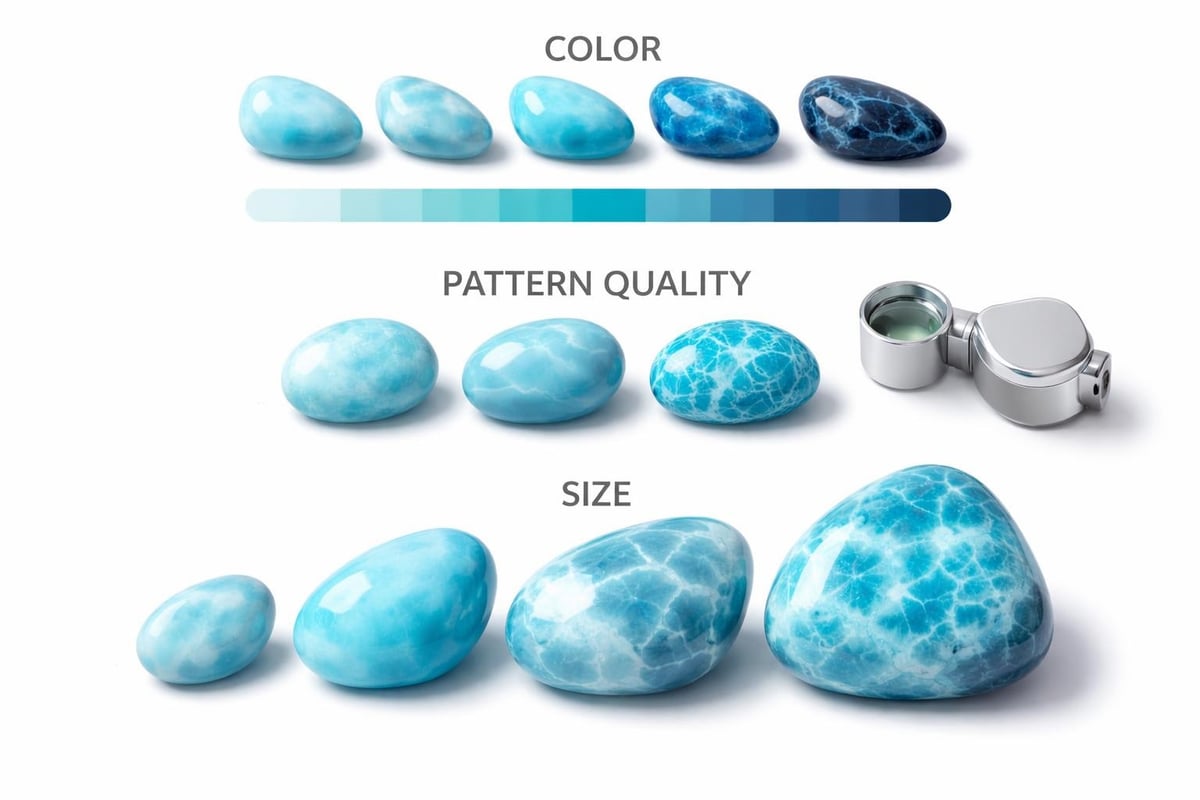
Larimar pricing varies significantly based on color intensity, pattern quality, size, and grade classification. Deep volcanic blue specimens with minimal white matrix command the highest prices, while lighter blue stones with extensive white patterns cost less but remain genuine.
2026 Price Range Guidelines (per carat for loose stones):
Finished jewelry prices reflect craftsmanship, metal quality, and design complexity beyond the stone value itself. When examining pieces at Larimar Creations, pricing aligns with authentic material costs and skilled artisan work. Suspiciously low prices often indicate imitations, particularly when sellers offer "larimar" at a fraction of market rates.
When evaluating potential larimar purchases, systematic testing provides confidence in authentication. Combining multiple verification methods yields more reliable results than relying on single indicators.
Immediate Visual Assessment:
Physical Testing Sequence:
According to detailed guidance on spotting authenticity concerns, combining visual inspection with physical testing and seller verification creates a comprehensive authentication approach. Never rely exclusively on appearance, as skilled counterfeiters produce increasingly convincing visual imitations.
Some sellers apply treatments to enhance larimar's appearance or stabilize softer specimens. While treatments don't necessarily indicate fraud, non-disclosure constitutes misrepresentation affecting value and authenticity claims.
Stabilization processes involve impregnating porous larimar with resins to improve durability and polish. Stabilized larimar remains authentic material but commands lower prices than untreated stones. Reputable sellers disclose stabilization treatments, allowing buyers to make informed decisions.
Surface treatments include waxing or oiling to enhance luster temporarily. These treatments wear off over time and should be disclosed at purchase. Some unethical sellers apply blue dyes to lower-grade white larimar, creating fraudulent high-grade imitations.
| Treatment Type | Legitimacy | Required Disclosure | Value Impact |
|---|---|---|---|
| Stabilization with resin | Acceptable | Yes | Moderate decrease |
| Surface waxing/oiling | Acceptable | Yes | Minimal decrease |
| Blue dye application | Fraudulent | N/A | Completely fake |
| Heat treatment | Not applicable to larimar | N/A | N/A |
Questions about treatments and authenticity standards frequently arise when purchasing. Always ask sellers directly about any treatments, enhancements, or stabilization processes applied to stones before purchase.
Where you purchase larimar significantly impacts authenticity likelihood. Established dealers with verifiable track records provide greater security than unknown vendors or marketplace sellers.
Reputable larimar dealers maintain direct relationships with Dominican mines, ensuring supply chain integrity. They provide detailed provenance information, authentication certificates, and return policies protecting buyers from inadvertent imitation purchases.
Red Flags Indicating Potential Problems:
Resources examining practical identification tips emphasize purchasing from specialists rather than general gemstone dealers lacking larimar expertise. Specialty retailers focusing on Dominican gemstones typically offer superior authenticity assurance compared to vendors selling diverse stone varieties.
Mastering how to identify genuine larimar stones from imitations develops through experience and continued education. Handling multiple authentic specimens builds recognition skills impossible to acquire through reading alone.
Visit museums, gem shows, and specialty retailers to examine authenticated larimar specimens. Request permission to handle stones, noting weight, temperature, and texture characteristics. Compare known authentic pieces with suspected imitations, training your eye to recognize subtle differences.
Learning Resources and Opportunities:
Photography skills complement authentication knowledge. Documenting stones from multiple angles under various lighting conditions reveals characteristics invisible to casual observation. Building a reference collection, even of small specimens, provides comparison standards when evaluating new purchases.
The journey toward expertise requires patience and dedication. Even experienced collectors occasionally encounter sophisticated fakes requiring professional gemological analysis. Maintaining healthy skepticism and verifying claims through multiple methods protects against costly authentication mistakes while building confidence in genuine larimar identification abilities.
Identifying authentic larimar requires combining visual assessment, physical testing, source verification, and seller evaluation into a comprehensive authentication approach. By applying these professional techniques and maintaining awareness of common imitations, you protect your investment while appreciating this rare gemstone's genuine beauty. When you're ready to add authentic, certified larimar to your collection, Larimar Creations offers expertly crafted jewelry pieces featuring genuine Dominican larimar, each backed by authenticity guarantees and direct sourcing from trusted mines. Explore their collection today to discover exquisite larimar pendants, rings, and other handcrafted pieces celebrating this Caribbean treasure's natural splendor.