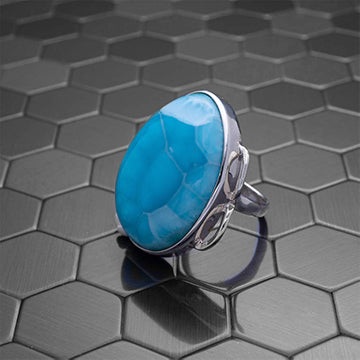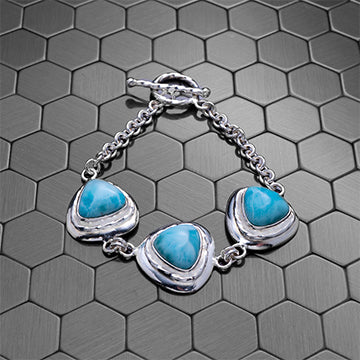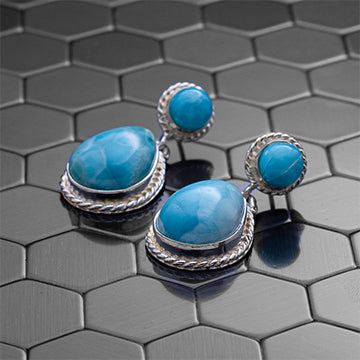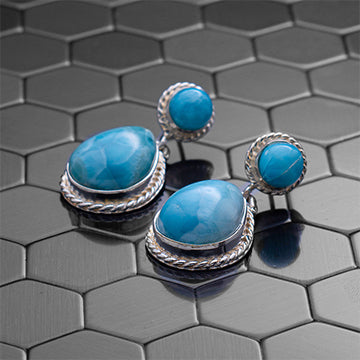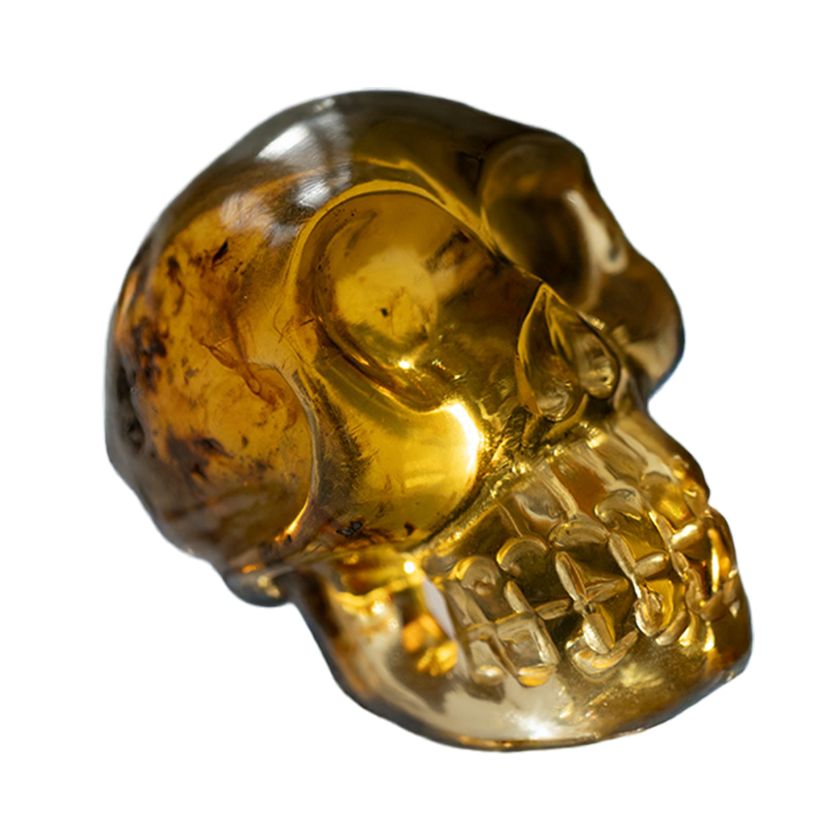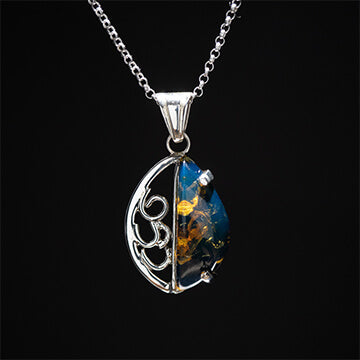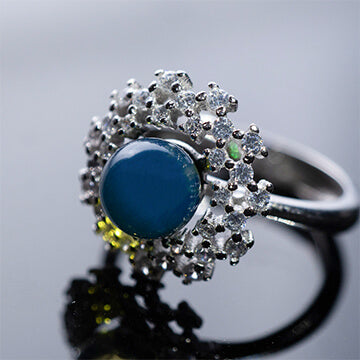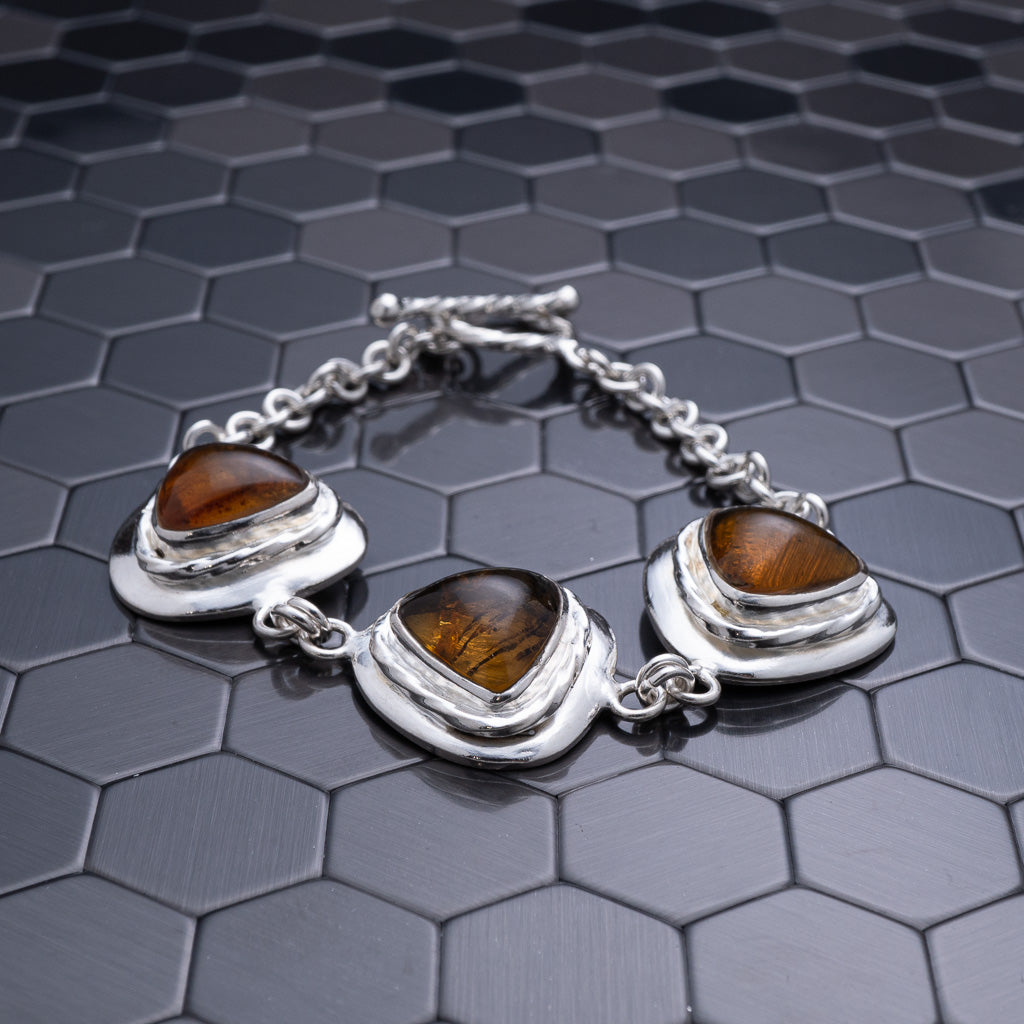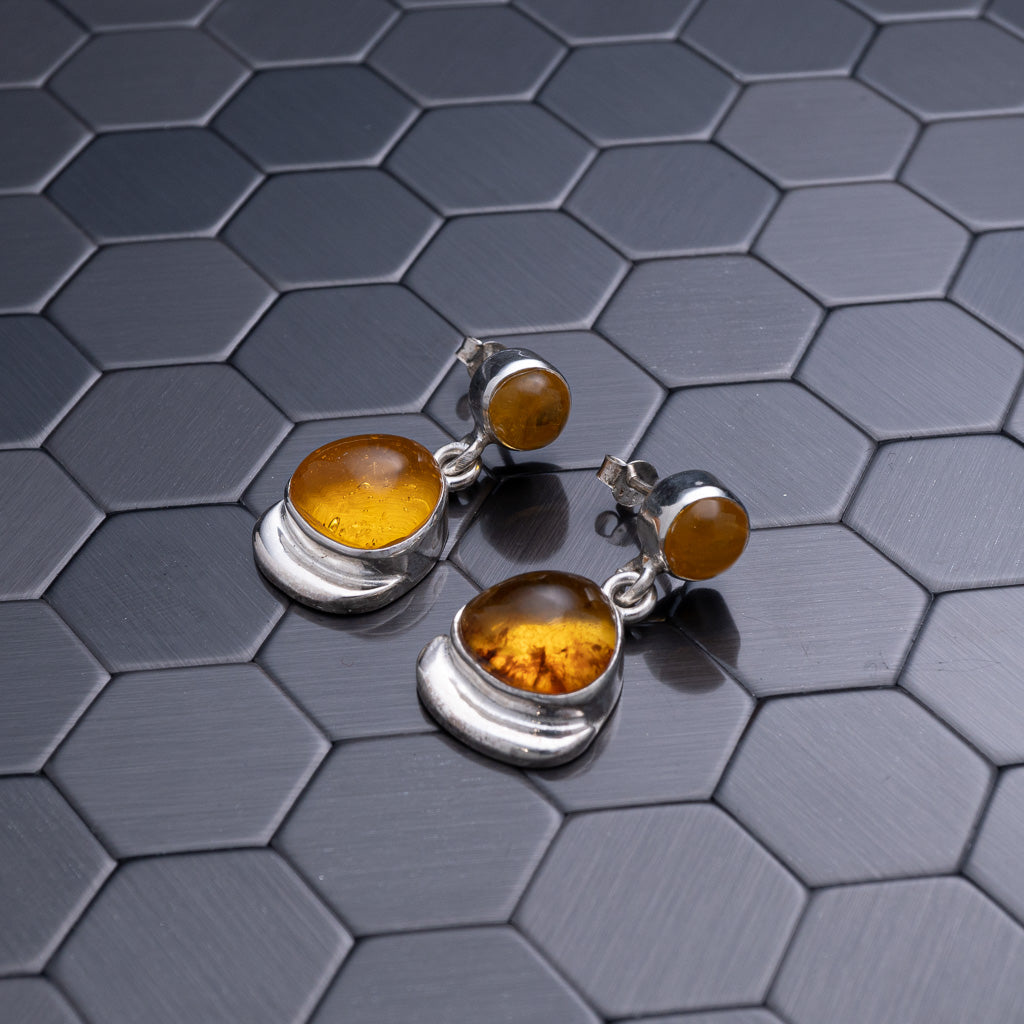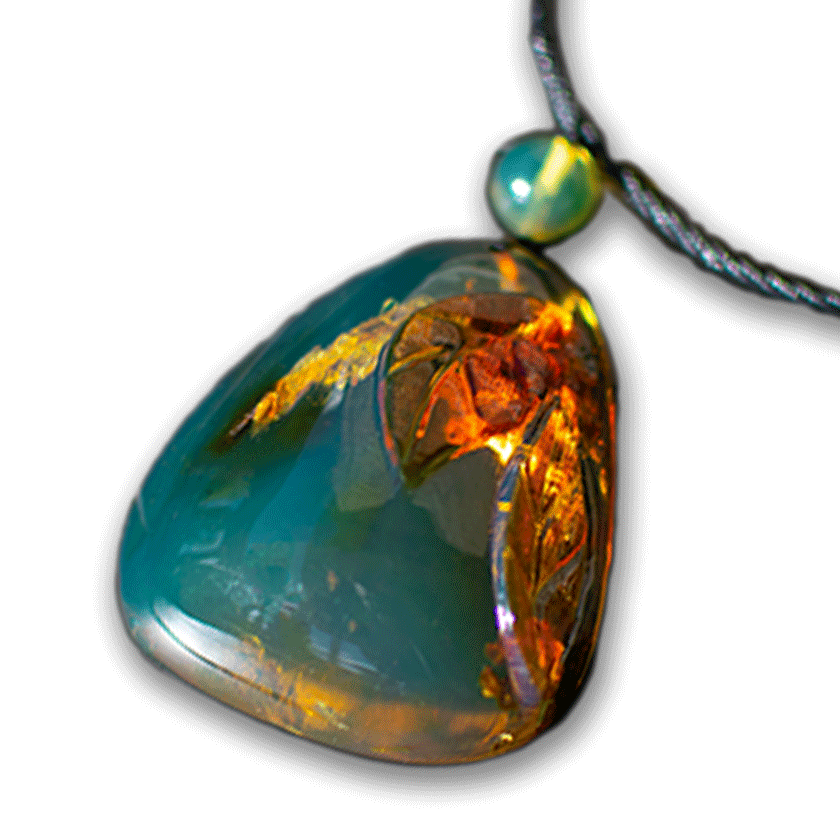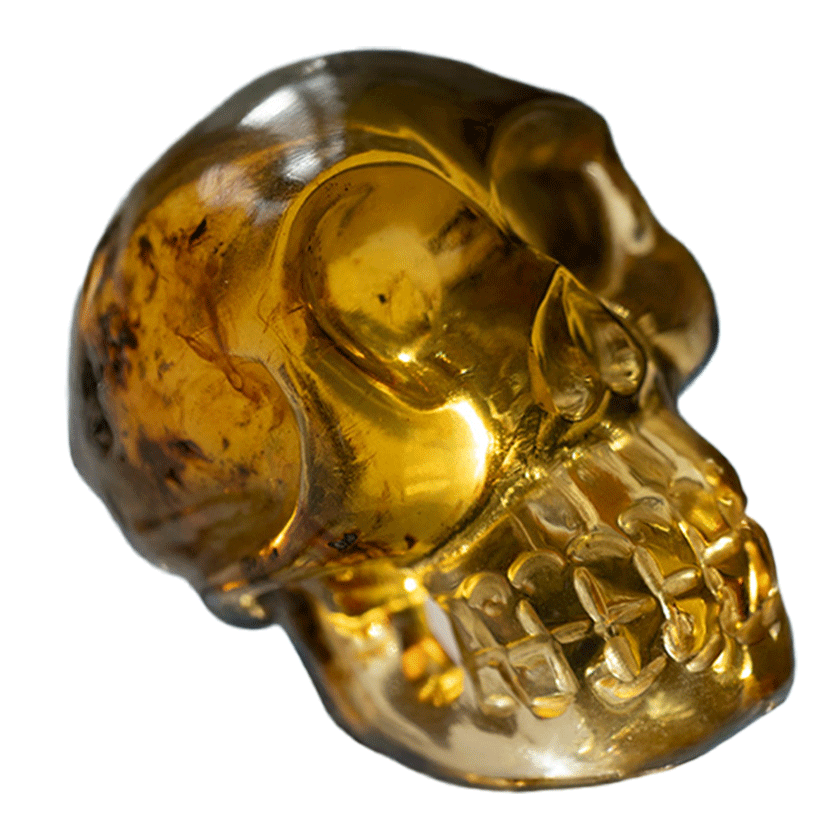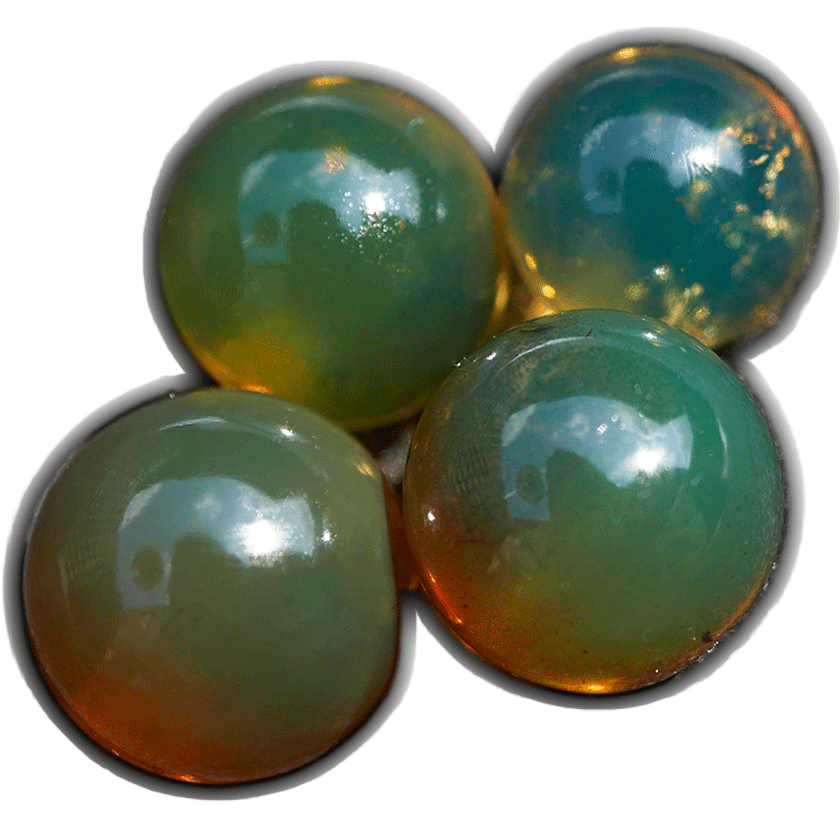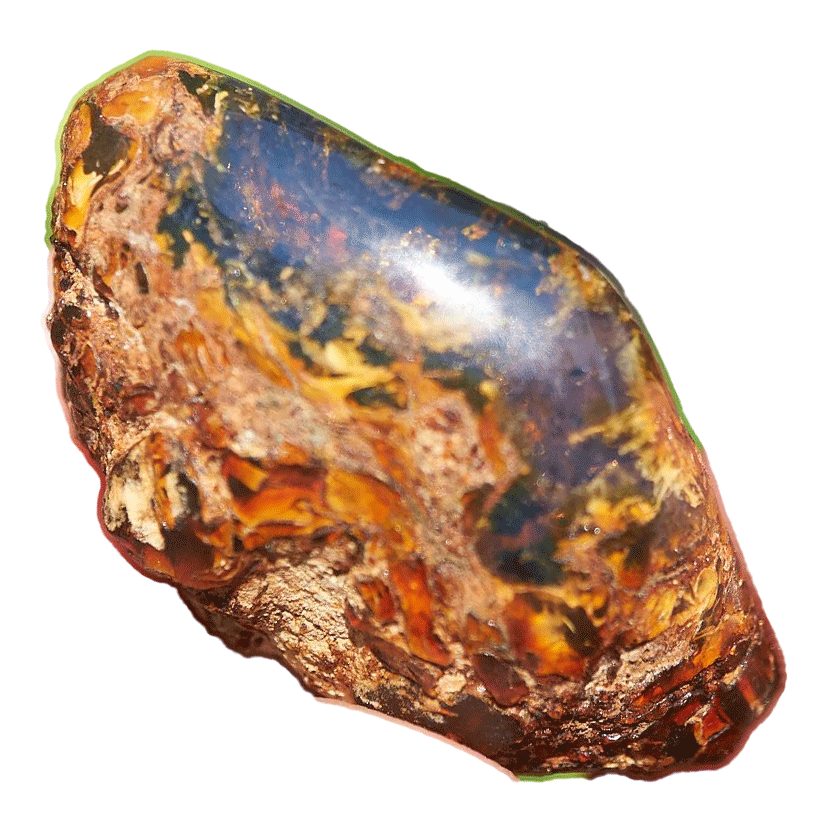


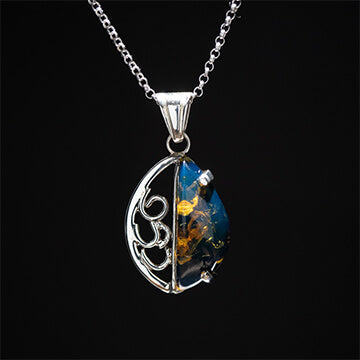
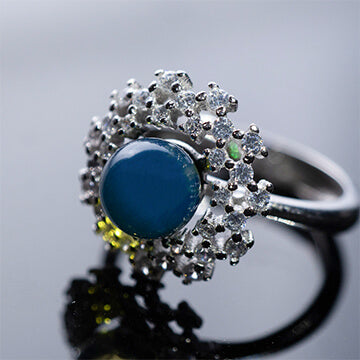
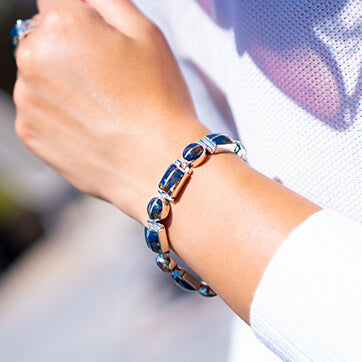
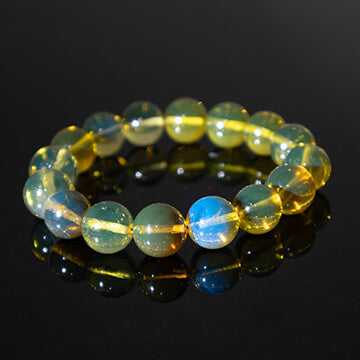
Handcrafted in DR.

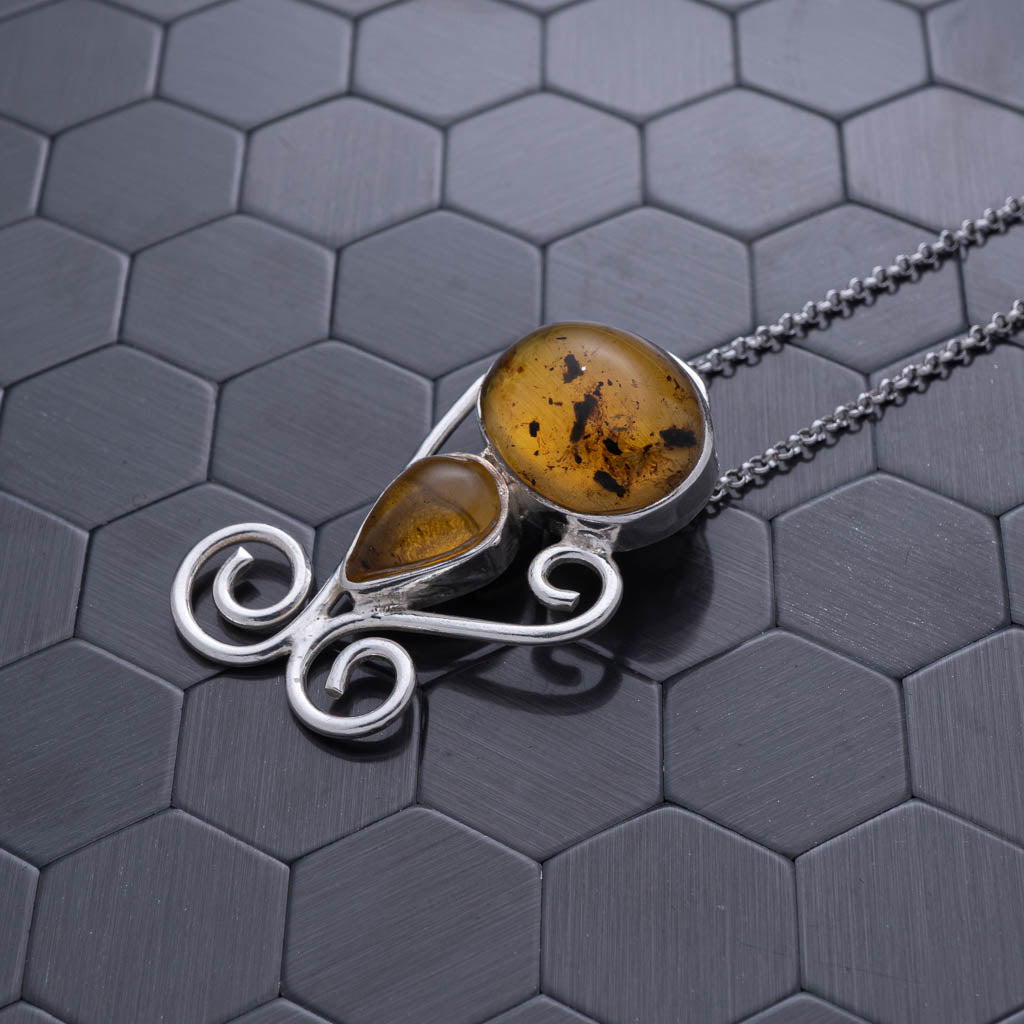
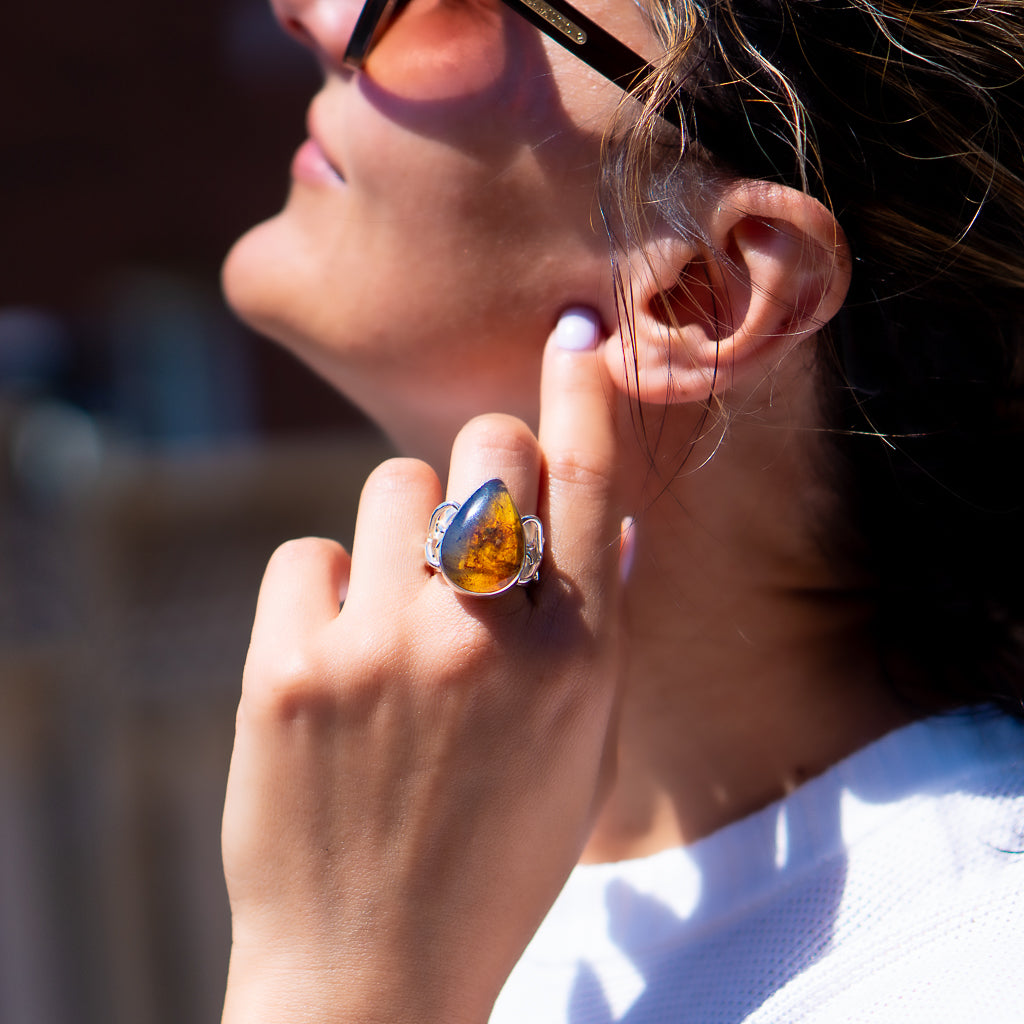
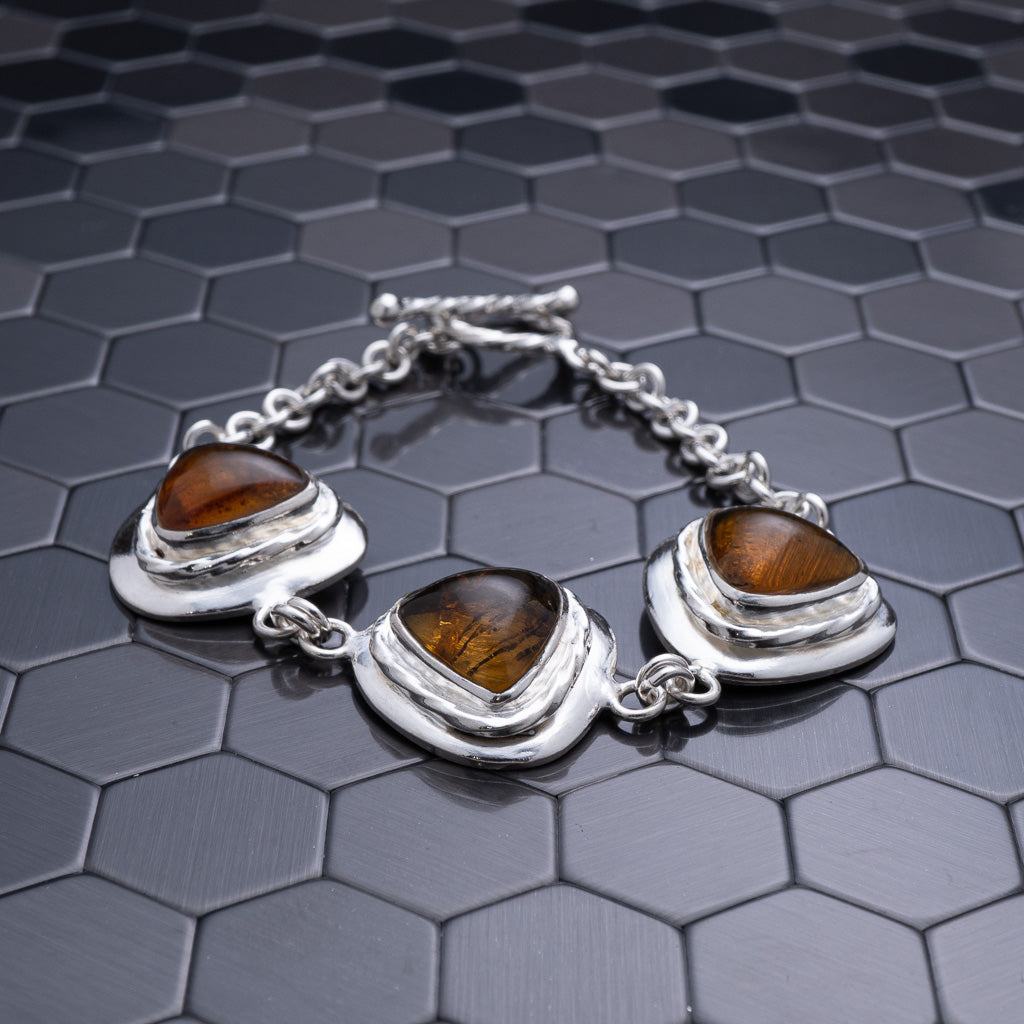
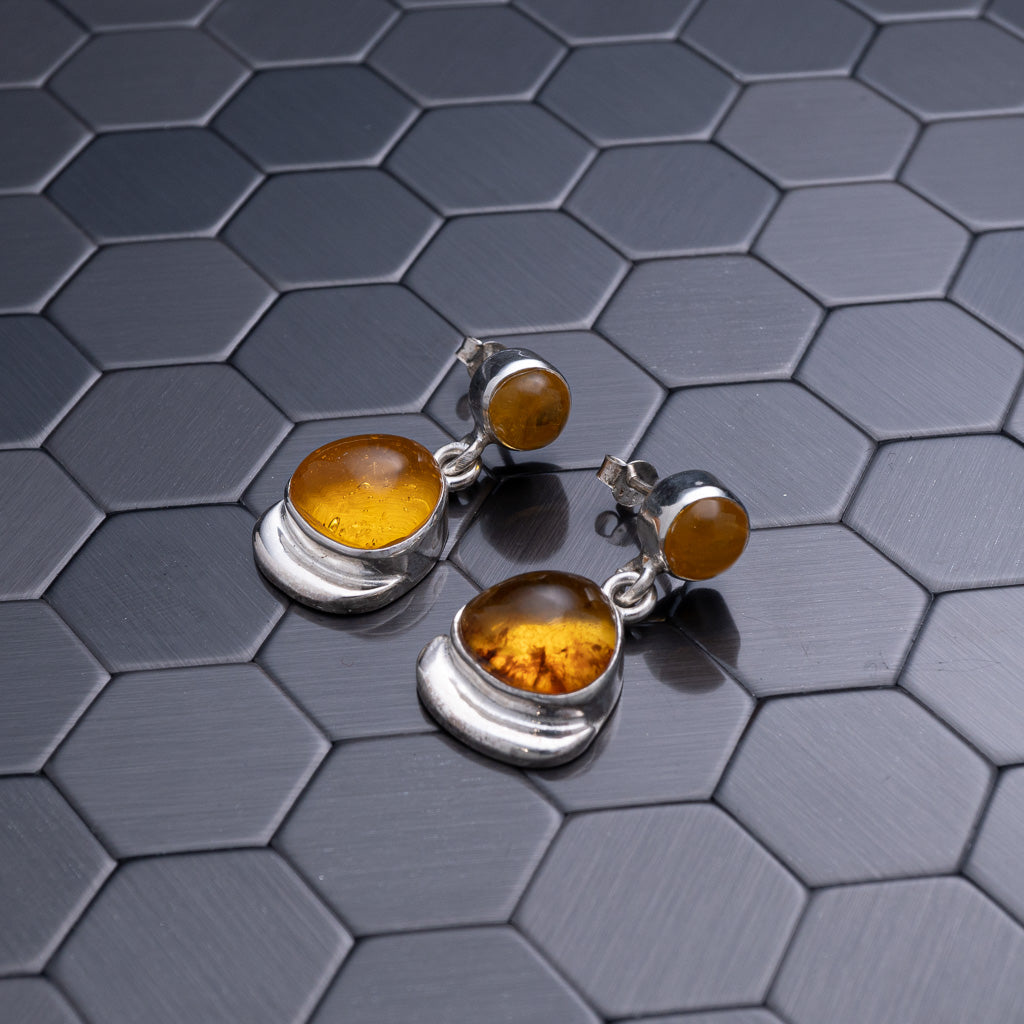


100% Handcrafted in DR.

The gemstone heart has captivated jewelry enthusiasts and crystal practitioners for centuries, combining the universal symbol of love with the natural power of minerals. These carefully carved treasures represent more than mere decorative objects; they embody intentions of compassion, healing, and emotional connection. Whether you're selecting a meaningful gift or building a personal collection, understanding the significance, varieties, and applications of heart-shaped gemstones helps you make informed decisions that resonate with your values and aesthetic preferences.
The heart shape itself carries profound meaning across cultures and traditions. When combined with the inherent properties of natural minerals, a gemstone heart becomes a powerful symbol that transcends simple ornamentation.
Throughout history, hearts have represented the center of human emotion and consciousness. Ancient civilizations believed the heart housed the soul, making it the focal point of spiritual practice and personal identity. When artisans shape gemstones into hearts, they're creating physical manifestations of these timeless concepts.
The symbolism of gemstone hearts in crystal therapy enhances the energetic qualities attributed to each stone type. Crystal practitioners believe the heart shape amplifies the stone's natural vibrations, directing energy toward emotional healing and relationship enhancement. This amplification effect makes heart-shaped specimens particularly valuable for meditation and energy work.
Key symbolic meanings include:
The fourth primary chakra, located at the center of the chest, governs our capacity for love, empathy, and emotional wellbeing. Gemstones associated with the heart chakra help balance this energy center when it becomes blocked or overactive.
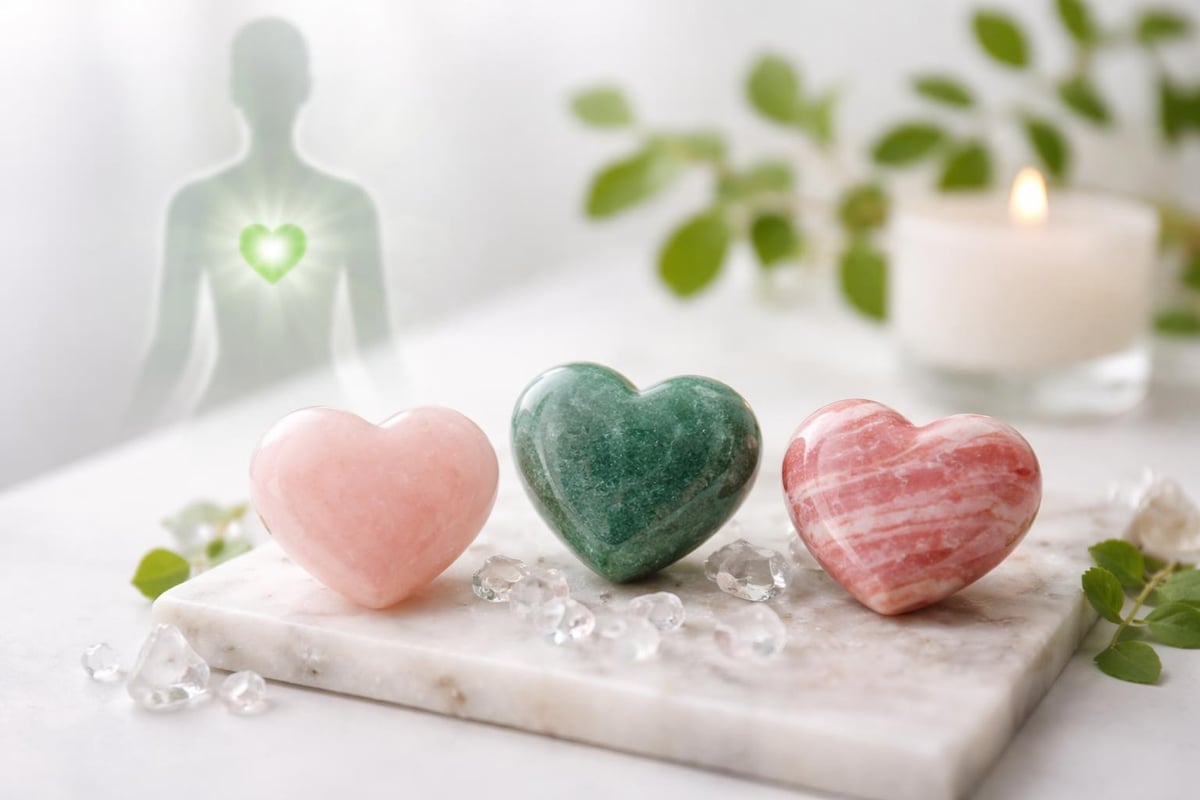
A gemstone heart carved from minerals that resonate with the heart chakra creates a synergistic effect. The shape reinforces the intention while the mineral composition provides specific energetic properties aligned with emotional healing.
Different minerals offer unique characteristics when shaped into hearts. Understanding these distinctions helps you select pieces that align with your specific intentions or aesthetic preferences.
Rose quartz remains the most recognized gemstone heart material, prized for its soft pink coloring and associations with unconditional love. This silicon dioxide mineral exhibits a translucent to transparent quality with subtle color variations ranging from pale blush to deeper rose tones.
| Property | Description |
|---|---|
| Hardness | 7 on Mohs scale |
| Color Range | Pale pink to medium rose |
| Transparency | Translucent to transparent |
| Primary Association | Universal love, self-acceptance |
| Care Requirements | Avoid prolonged sun exposure |
Rose quartz hearts work well for those seeking to cultivate self-love or heal from emotional wounds. The gentle energy attributed to this stone makes it particularly suitable for beginners exploring crystal work.
Purple amethyst combines beauty with spiritual significance. As a variety of quartz, it shares similar durability while offering distinctive violet hues created by natural irradiation and iron impurities within the crystal structure.
Amethyst gemstone hearts support meditation practices and conscious awareness development. The healing properties attributed to various gemstones include amethyst's traditional associations with mental clarity and spiritual connection.
Known as the Stone of the Compassionate Heart, rhodochrosite carries unique properties that make it exceptional for deep emotional healing work. Its distinctive banding patterns in pink and white create visually striking heart carvings.
This manganese carbonate mineral requires gentler handling than quartz varieties due to its lower hardness rating. However, its powerful associations with self-forgiveness and emotional recovery make it worth the extra care.
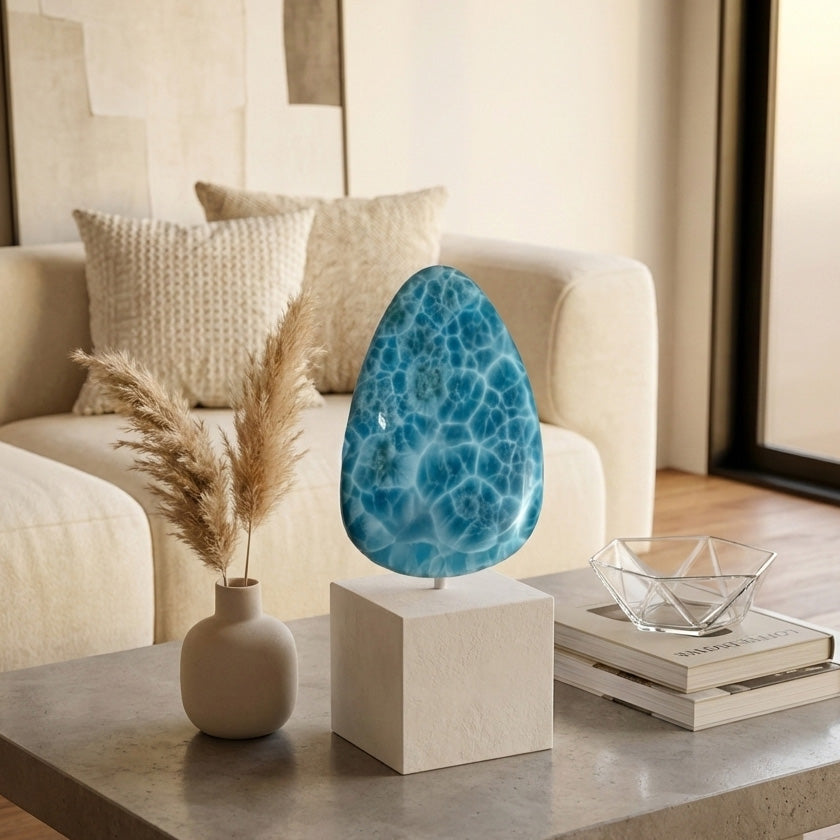
The rare blue pectolite known as Larimar offers a distinctive alternative to traditional pink and purple heart stones. Found exclusively in the Dominican Republic, this gemstone displays mesmerizing patterns reminiscent of Caribbean waters. When shaped into hearts, Larimar creates unique pieces that combine tropical beauty with calming energy.
Those interested in learning more about this exceptional stone can explore comprehensive information about authentic Larimar characteristics and variations. The stone's rarity and limited geographic origin make genuine Larimar hearts particularly valuable to collectors and jewelry enthusiasts.
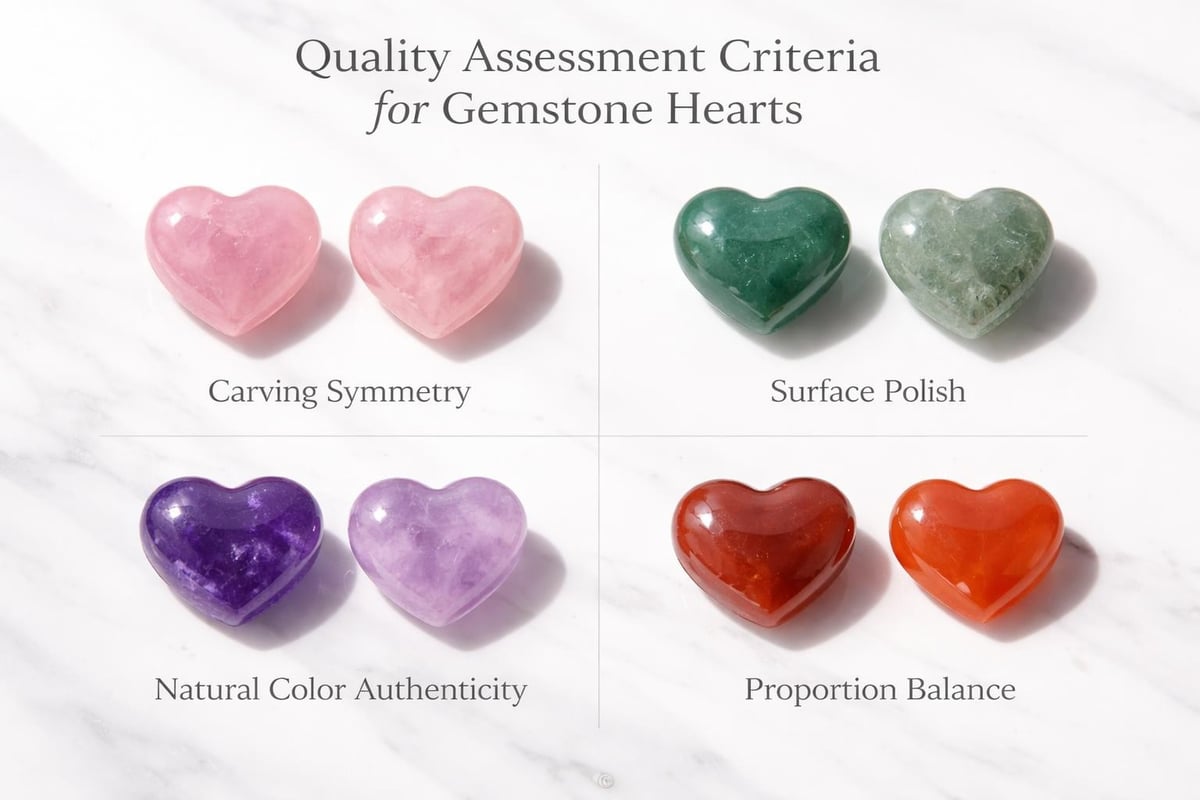
Choosing well-crafted pieces requires attention to several factors that influence both aesthetic appeal and long-term value. Whether purchasing for personal use or as gifts, quality assessment ensures satisfaction with your investment.
The heart shape presents specific challenges for lapidary artists. Achieving balanced proportions between the two lobes while maintaining a centered point requires skilled craftsmanship. Examine potential purchases for symmetry, smooth curves, and consistent thickness throughout the piece.
Quality indicators to evaluate:
Some gemstones undergo treatment to enhance color or clarity. While treatments aren't inherently problematic, transparency about these processes matters for informed purchasing decisions. Natural, untreated stones typically command higher prices due to their rarity and authenticity.
Heat treatment, irradiation, and dyeing represent common enhancement methods. Reputable sellers disclose these treatments, allowing buyers to decide whether treated or natural stones better suit their preferences and budgets.
Gemstone hearts range from tiny specimens measuring under one inch to substantial display pieces exceeding six inches. Size affects both price and practical applications.
| Size Category | Typical Measurement | Best Uses |
|---|---|---|
| Miniature | 0.5-1 inch | Pocket stones, small pendants |
| Small | 1-2 inches | Jewelry settings, personal carry |
| Medium | 2-3 inches | Meditation tools, display |
| Large | 3-5 inches | Centerpieces, grid work |
| Extra Large | 5+ inches | Statement displays, collections |
With increased demand for gemstone hearts comes the risk of synthetic or misrepresented materials. Learning to recognize authentic specimens protects your investment and ensures you receive the mineral you're seeking.
Research the specific characteristics of your desired gemstone. Understanding gemstone meanings and properties helps you recognize when something appears inconsistent with known mineral traits. Trusted sellers provide certificates of authenticity for higher-value pieces.
Beyond collecting, heart-shaped stones serve various practical and spiritual purposes. These applications help you engage with the stones' beauty and attributed energies in meaningful ways.
Transforming gemstone hearts into wearable art creates intimate connections with these stones. Pendants represent the most common jewelry application, positioning the heart near your own physical heart throughout the day.
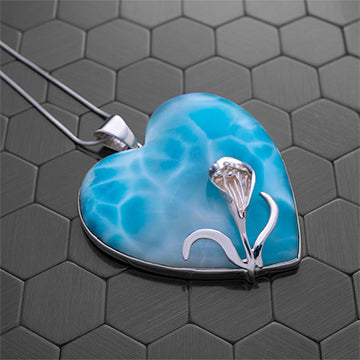
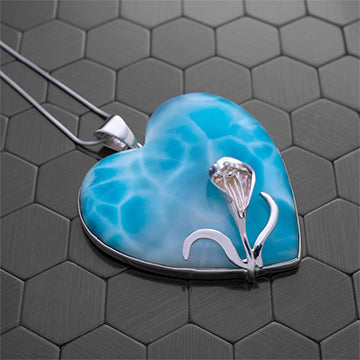
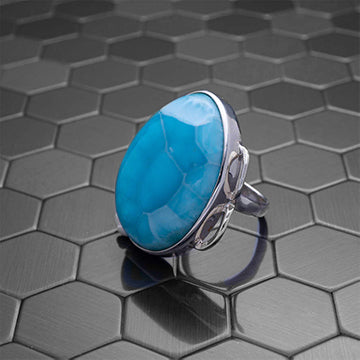
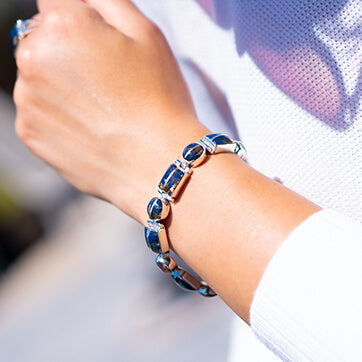
Larimar Pendants showcase how skilled artisans incorporate heart-shaped stones into elegant settings. These pieces combine the symbolic power of the heart form with the calming blue hues characteristic of Caribbean gemstones, creating jewelry that serves both aesthetic and spiritual purposes.
Wire wrapping techniques work particularly well for gemstone hearts, allowing the stone's natural shape to remain visible while securing it for wear. Sterling silver and gold settings complement most stone colors while providing durability for daily use.
Many practitioners incorporate gemstone hearts into meditation routines. Holding a heart-shaped stone during practice focuses intention on emotional healing, relationship cultivation, or heart chakra balancing.
Meditation techniques with gemstone hearts:
Displaying gemstone hearts in your environment creates visual reminders of your intentions while adding natural beauty to living spaces. Positioning hearts in relationship corners, bedrooms, or meditation areas reinforces their symbolic associations.
Consider grouping different stone types together to create diverse energy combinations. A display featuring rose quartz, amethyst, and green aventurine hearts represents love, spirituality, and prosperity working in harmony.
A gemstone heart makes an exceptionally meaningful gift for various occasions. The combination of natural beauty, symbolic meaning, and thoughtful selection demonstrates care and intention beyond conventional presents.
Match the stone type to the recipient's needs or personality. Someone experiencing grief might appreciate rhodochrosite's gentle support, while an individual beginning a spiritual journey could benefit from clear quartz's versatile properties.
Proper maintenance preserves both the physical beauty and energetic properties of your heart-shaped stones. Different minerals require varying care approaches based on their hardness, porosity, and sensitivity to environmental factors.
Hard stones like quartz varieties tolerate water cleaning without damage. Soft stones such as rhodochrosite or calcite require gentler approaches to prevent scratching or erosion.
| Stone Type | Safe Cleaning Method | Avoid |
|---|---|---|
| Quartz varieties | Water, mild soap, soft cloth | Harsh chemicals, ultrasonic |
| Amethyst | Water rinse, dry immediately | Prolonged sun exposure |
| Rhodochrosite | Dry soft cloth only | Water, chemicals, heat |
| Larimar | Damp cloth, mild soap | Harsh chemicals, ultrasonic |
| Aventurine | Water, gentle soap | Extreme temperature changes |
Beyond physical cleaning, many users perform energetic cleansing to clear accumulated vibrations. While scientific evidence doesn't support these practices, they remain important to those who work with stones spiritually.
Common cleansing methods include moonlight exposure, sound vibrations from singing bowls, smoke from sacred herbs, or placement on selenite charging plates. Choose methods aligned with your personal beliefs and the specific stone's physical tolerances.
Preventing scratches and chips requires thoughtful storage solutions. Harder stones can damage softer specimens when stored together, making separation important for mixed collections.
Storage best practices:
Creating a gemstone heart requires significant skill and understanding of mineral properties. Heart-cut gemstones present unique challenges compared to standard faceted cuts, demanding precision and artistic vision from lapidary artists.
Artisans begin with rough material, assessing color distribution, clarity, and structural integrity. They orient the stone to maximize its best features while minimizing inclusions or weak points. The heart outline is marked carefully, considering the final proportions and ensuring sufficient material remains after shaping.
Grinding removes excess material, gradually revealing the heart form. Multiple grits of progressively finer abrasives smooth the surface, eliminating scratches from coarser work. The final polish brings out the stone's natural luster, completing the transformation from rough mineral to refined gemstone heart.
Creating quality hearts demands hours of careful work. Unlike simple tumbled stones or basic cabochons, the heart shape requires symmetrical curves, defined cleavage between lobes, and a precise point. This complexity explains why well-crafted gemstone hearts command premium prices compared to simpler forms.
Master carvers develop intuitive understanding of how different minerals respond to grinding and polishing. Hardness variations, cleavage planes, and grain direction all influence the approach needed for optimal results. This expertise distinguishes exceptional pieces from mediocre attempts.
The gemstone heart continues evolving in contemporary jewelry design. Modern artisans blend traditional symbolism with innovative settings and combinations, creating pieces that honor heritage while embracing current aesthetics.
Clean, simple settings allow the gemstone heart to serve as the focal point. Thin metal bands, delicate chains, and unobtrusive prongs let the stone's natural beauty speak for itself. This approach particularly suits transparent or translucent varieties where light interaction creates visual interest.
Some designers create pieces featuring multiple small gemstone hearts, either in single or varied stone types. These layered arrangements produce dimensional effects and allow wearers to combine different energetic properties in one piece.
Collectors increasingly commission custom gemstone hearts from specific rough material. This approach ensures complete control over stone selection, size, and quality standards. Working directly with carvers also supports artisan communities and preserves traditional lapidary skills.
Those interested in rare Caribbean stones can explore distinctive Larimar varieties and their characteristics, understanding how color patterns and quality grades influence custom piece possibilities.
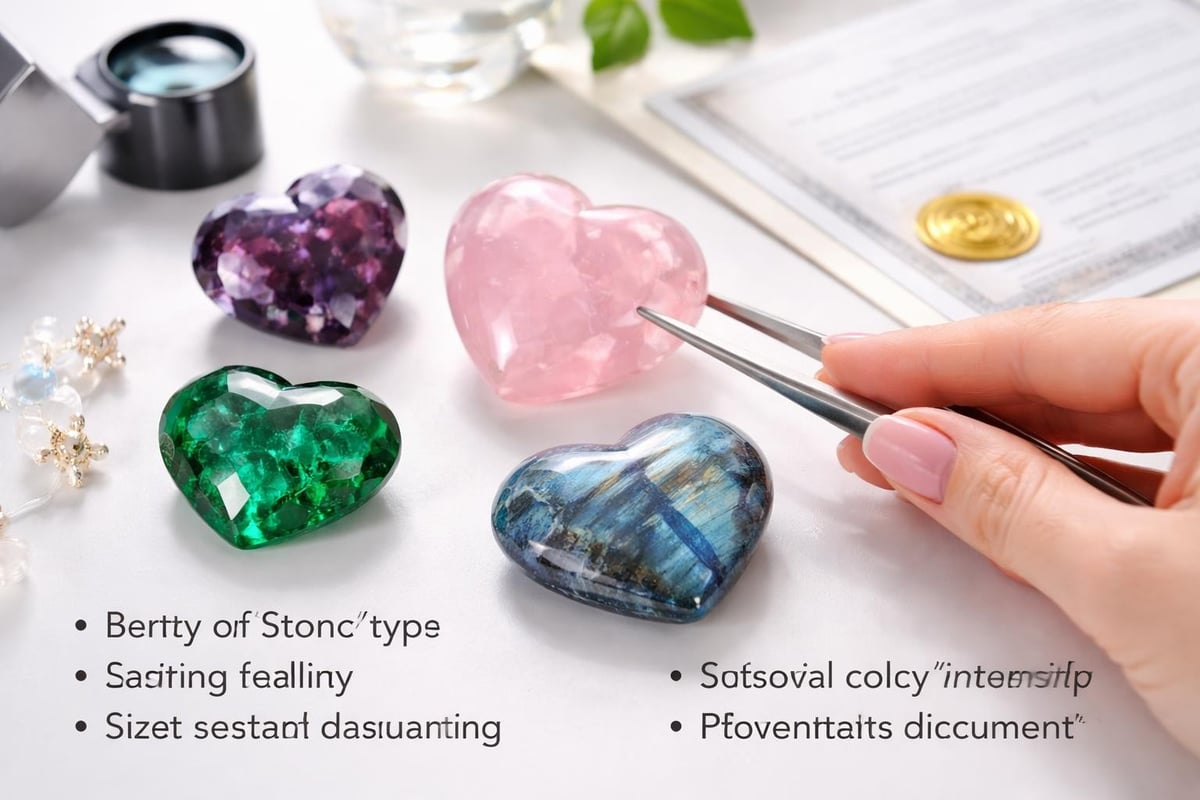
While many purchase gemstone hearts for personal enjoyment, some varieties represent legitimate investment opportunities. Understanding market dynamics helps collectors make strategic acquisition decisions.
Limited availability directly affects long-term value potential. Stones sourced from single geographic locations, like Larimar or certain rhodochrosite varieties, face supply constraints that support price appreciation over time.
Investment-grade characteristics:
Gemstone heart popularity fluctuates with broader crystal and metaphysical trends. Rose quartz maintains consistent demand due to its accessibility and universal associations. Rarer varieties experience more volatile markets but potentially higher appreciation for exceptional specimens.
Serious collectors often focus on specific themes: single stone types in various sizes, hearts from particular geographic regions, or pieces from renowned carvers. This focused approach creates cohesive collections with clearer value narratives than random accumulation.
Documentation matters significantly for investment-focused collecting. Maintain records of purchase prices, seller information, and any certification or authentication provided. Professional appraisals establish baseline values for insurance and future sales.
Responsible gemstone acquisition considers both human and environmental impacts. The mining and processing of minerals can create significant ecological disruption and labor concerns when conducted without proper oversight.
Ethical suppliers prioritize fair labor conditions, environmental remediation, and community benefit. They avoid conflict minerals, child labor, and destructive extraction methods that leave lasting environmental damage.
When purchasing gemstone hearts, ask sellers about their sourcing practices. Reputable businesses provide transparency about origin and can describe their supplier relationships. This information empowers consumers to support responsible industry practices.
Purchasing directly from or through companies working closely with artisan carvers ensures more equitable value distribution. These relationships preserve traditional skills while providing sustainable income for craftspeople and their communities.
For those interested in pieces crafted from Dominican gemstones including Larimar, seeking sellers with direct relationships to Caribbean artisans supports these specialized craft communities while ensuring authentic materials.
Technological advances now enable laboratory creation of many gemstone varieties. While these synthetic stones lack the natural formation history of mined specimens, they offer conflict-free alternatives with minimal environmental impact.
Transparency remains essential. Synthetic gemstone hearts should be clearly labeled as such, allowing consumers to make informed choices based on their preferences for natural versus created materials.
Many individuals choose gemstone hearts based on attributed energetic properties. While these beliefs lack scientific validation, they hold significant meaning within crystal healing and metaphysical communities.
Different traditions assign various properties to heart-shaped stones. Some believe the shape specifically enhances stones' emotional healing capabilities, directing energy toward matters of love, compassion, and relationships.
Common attributed properties include emotional release support, self-love cultivation, relationship harmony enhancement, and heart chakra activation. Individual experiences vary widely, with personal belief systems influencing perceived effects.
Practitioners incorporate gemstone hearts into various modalities including reiki, chakra balancing, and energy medicine. The hearts serve as tools for focusing intention and providing tactile anchors during healing sessions.
Those exploring the energetic dimensions of gemstone hearts often research specific stone properties to match their intentions. Rose quartz for unconditional love, amethyst for spiritual connection, and green aventurine for emotional calm represent common pairings of stone and purpose.
Approaching these practices with open-minded skepticism allows personal exploration without requiring belief in specific metaphysical frameworks. Whether attributed effects stem from genuine energetic properties or psychological placebo, many users report meaningful experiences with gemstone hearts.
The gemstone heart bridges aesthetic appreciation, symbolic meaning, and personal intention in a single elegant form. Whether you're drawn to these pieces for their natural beauty, metaphysical associations, or symbolic significance, selecting quality specimens from ethically sourced materials ensures lasting satisfaction. Larimar Creations specializes in handcrafted jewelry featuring rare Caribbean gemstones, offering authentic pieces that combine exceptional craftsmanship with the distinctive beauty of Larimar and Dominican Blue Amber. Explore their collection to discover unique treasures that speak to your personal style and intentions.