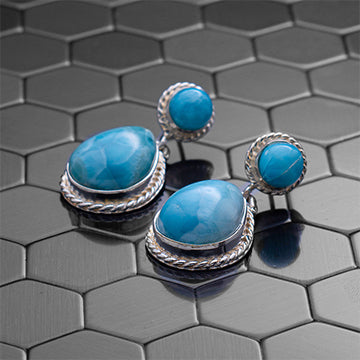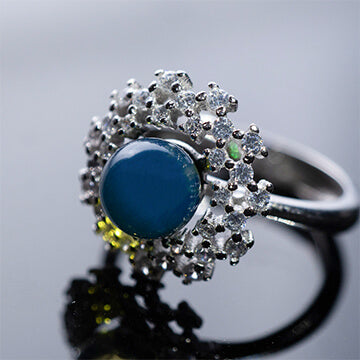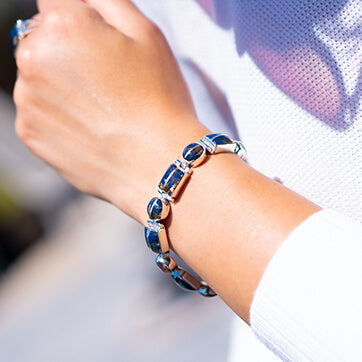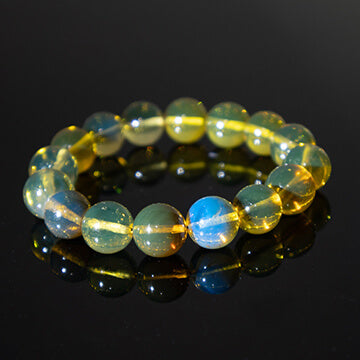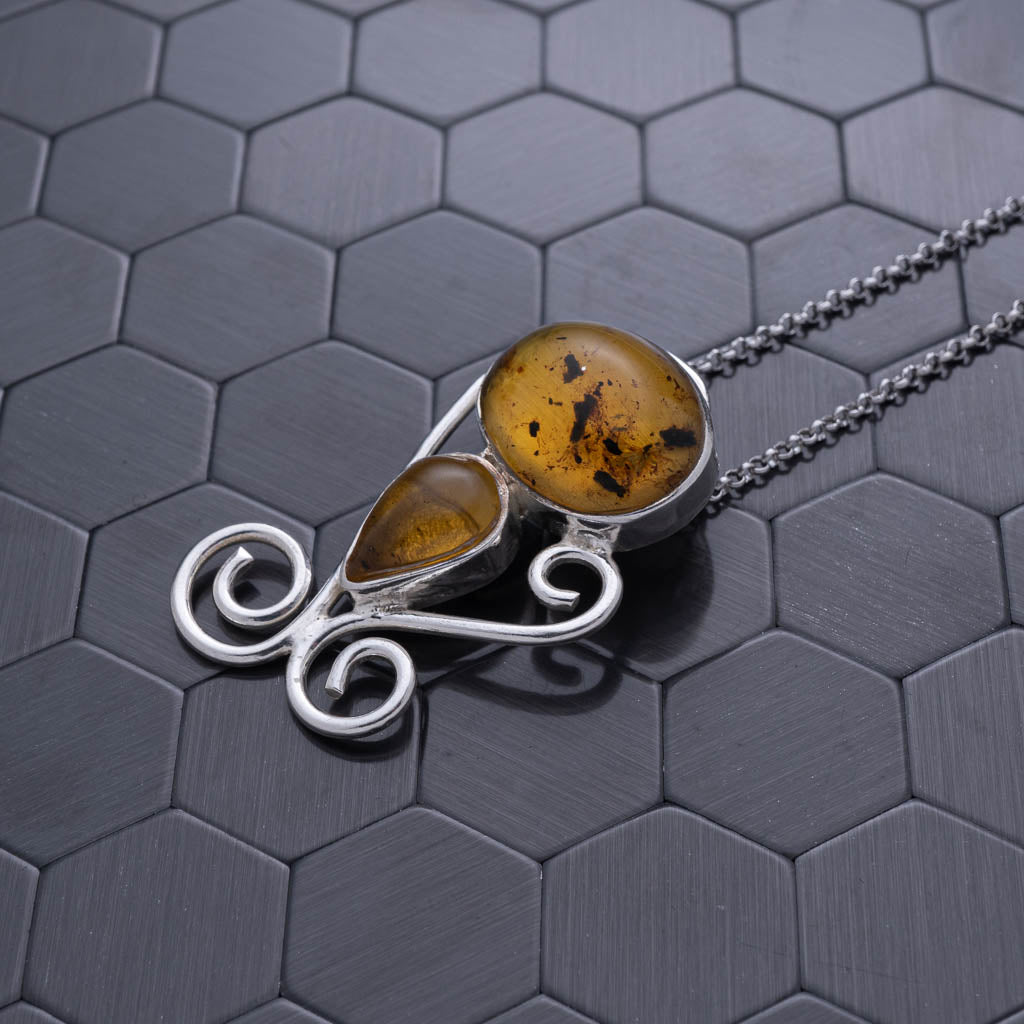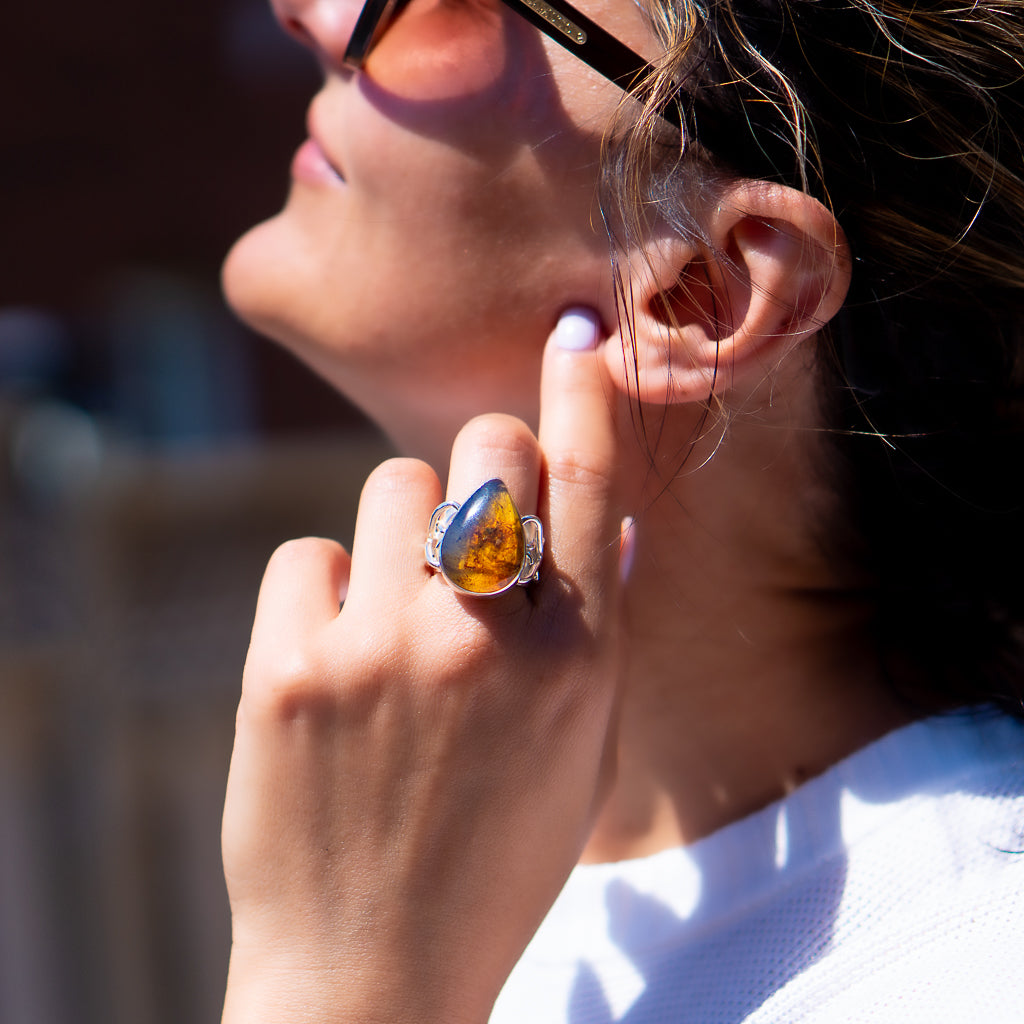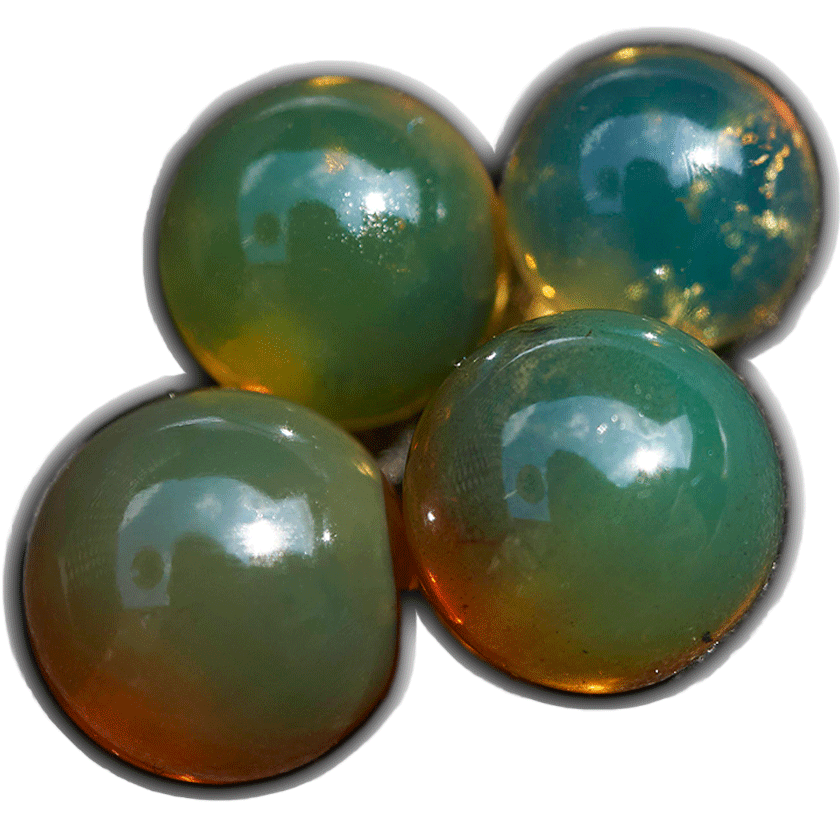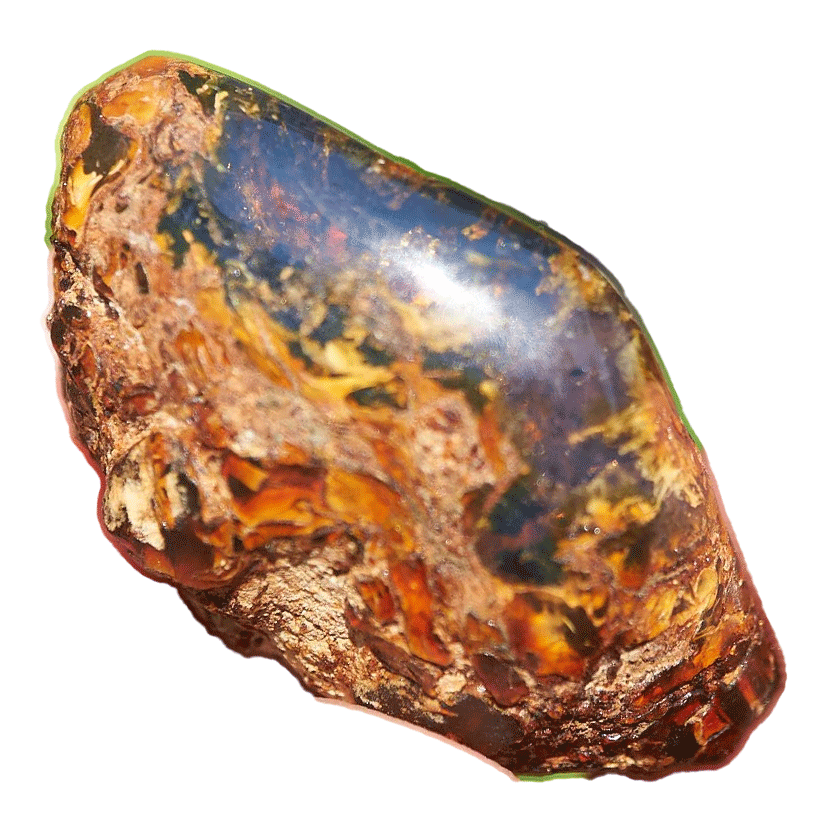

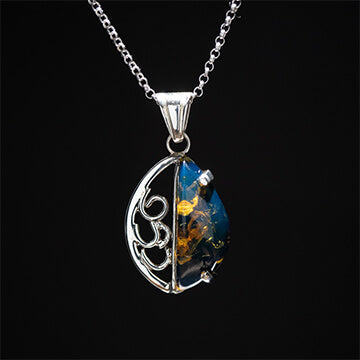
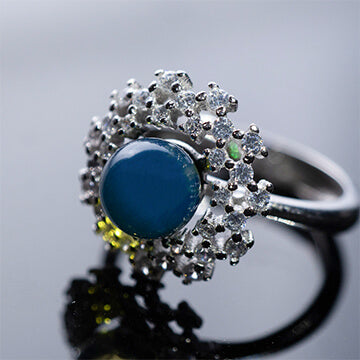
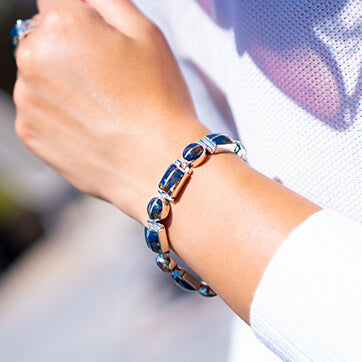
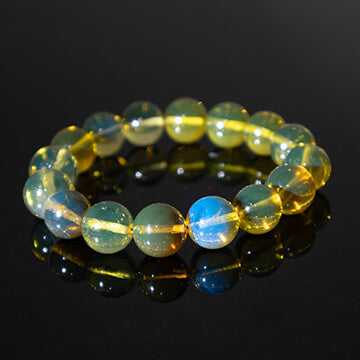
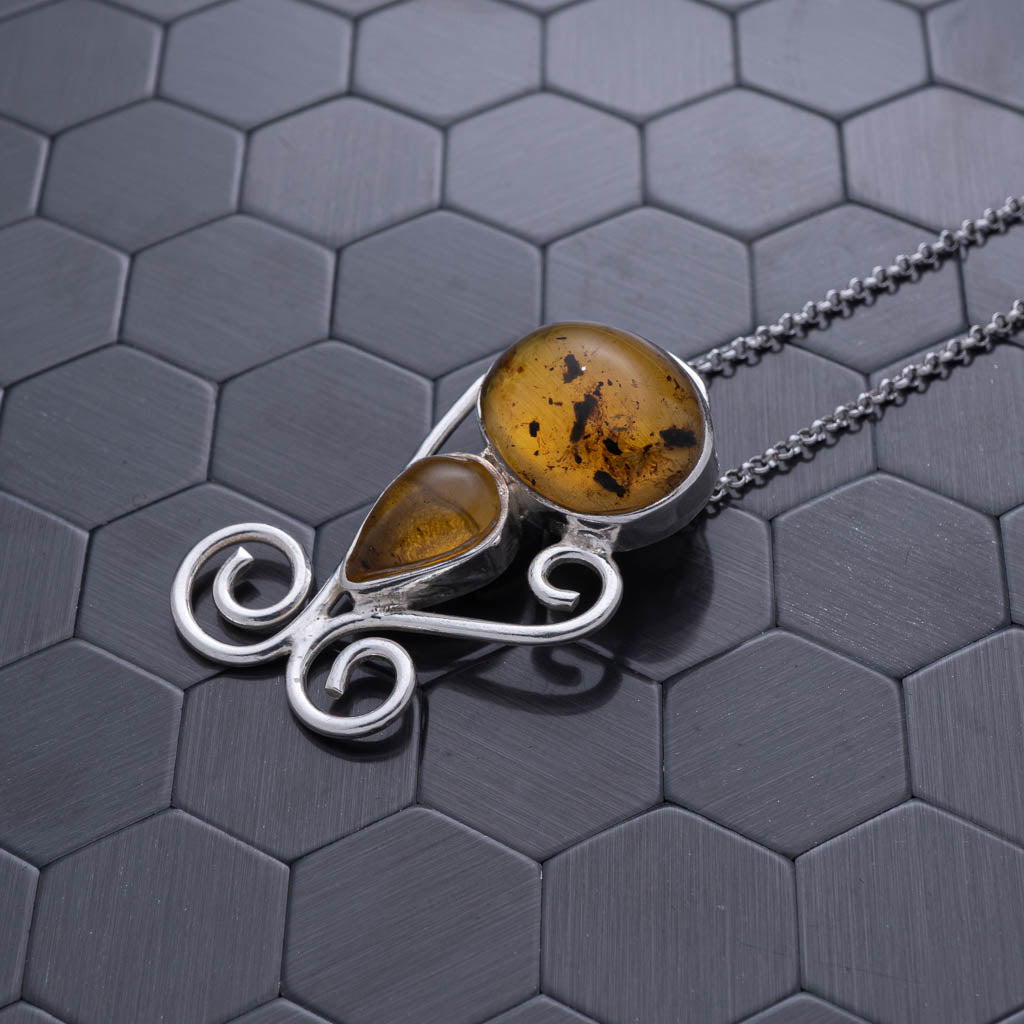
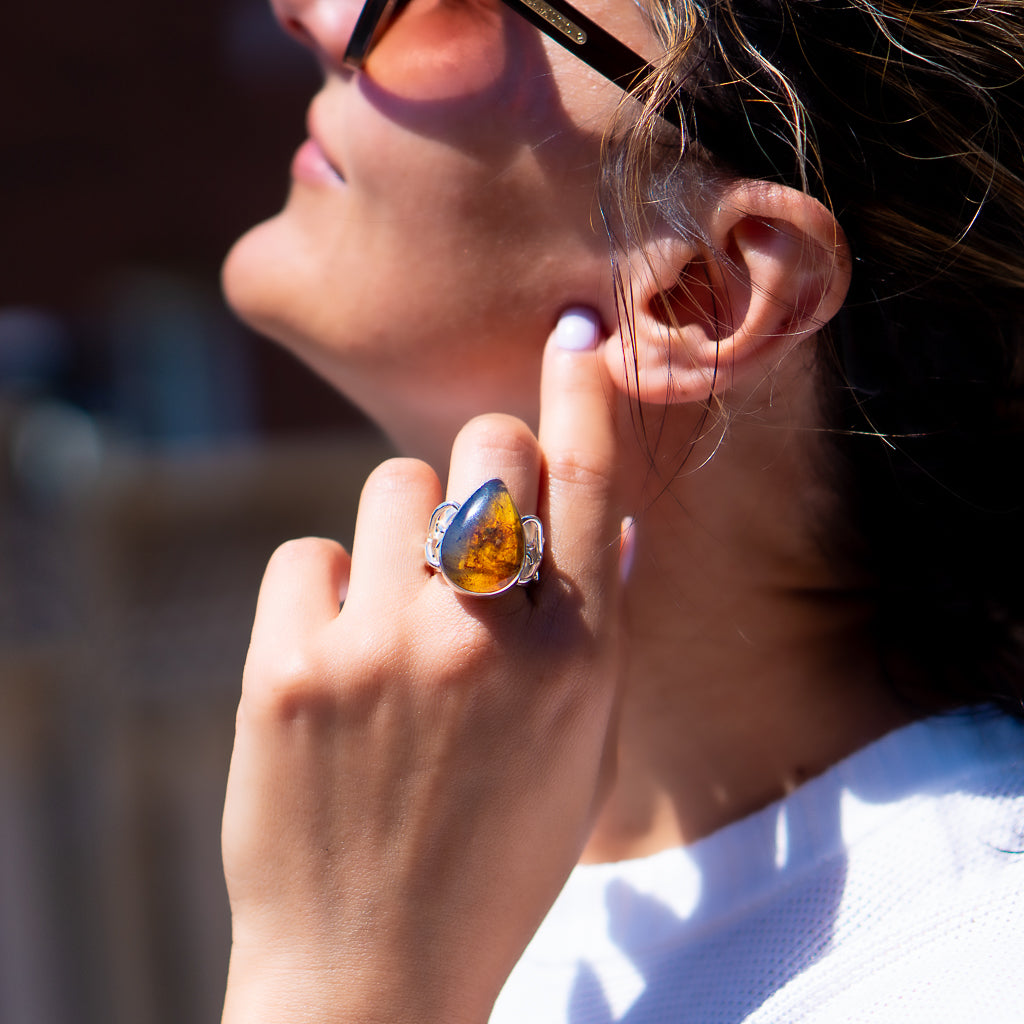
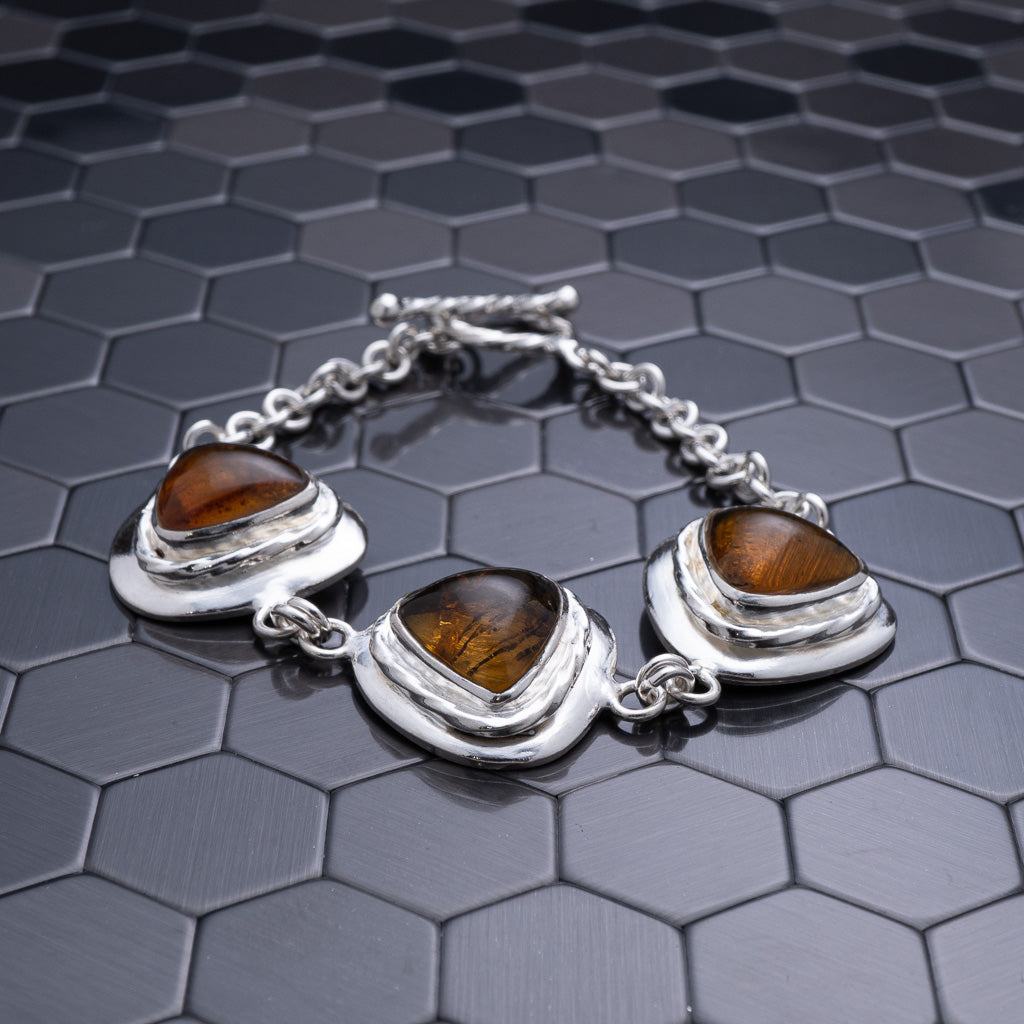
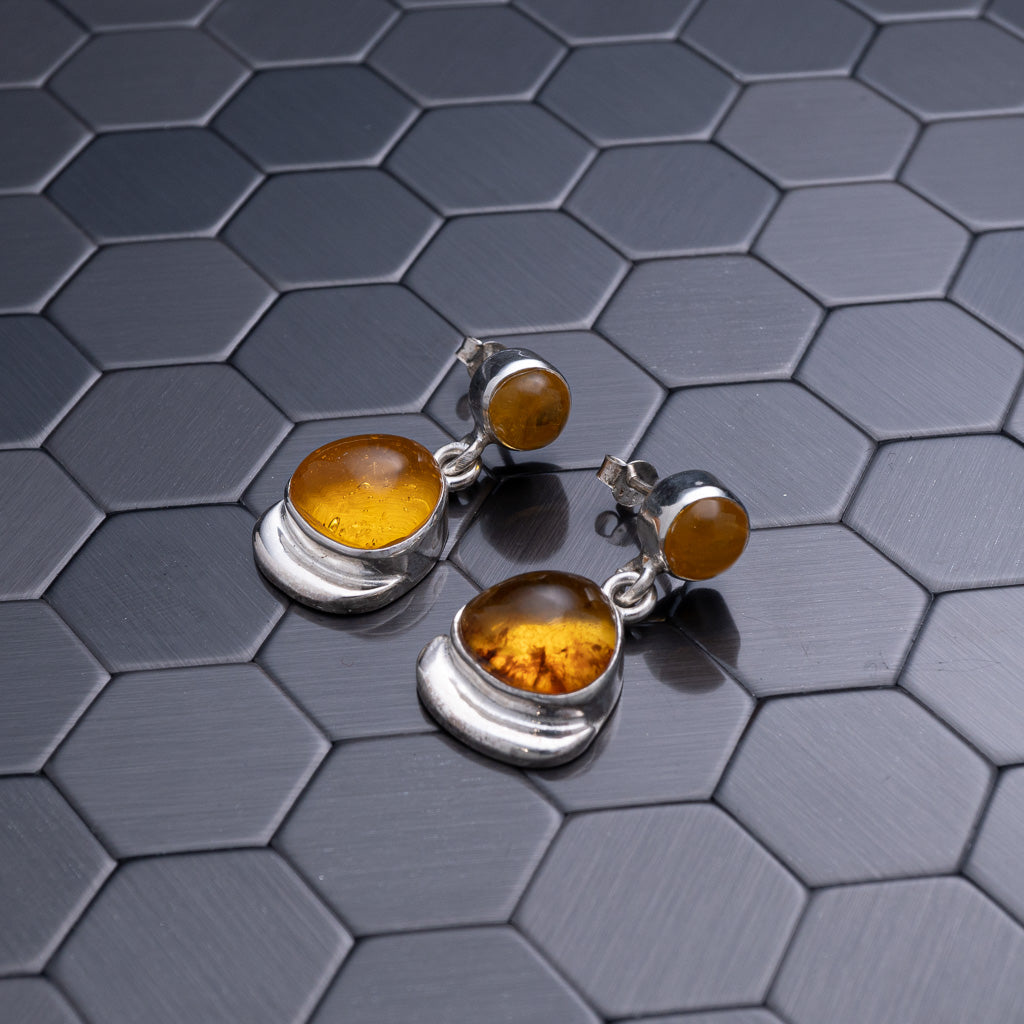
A true Larimar ring does not look like every other blue stone in a jewelry case. It carries a softer, more luminous character - like sunlight moving across shallow Caribbean water. That is exactly why authentic larimar rings deserve a closer look before you buy. When the stone is genuine, well cut, and thoughtfully set, the ring feels less like a trend piece and more like a rare expression of place, craft, and natural beauty.
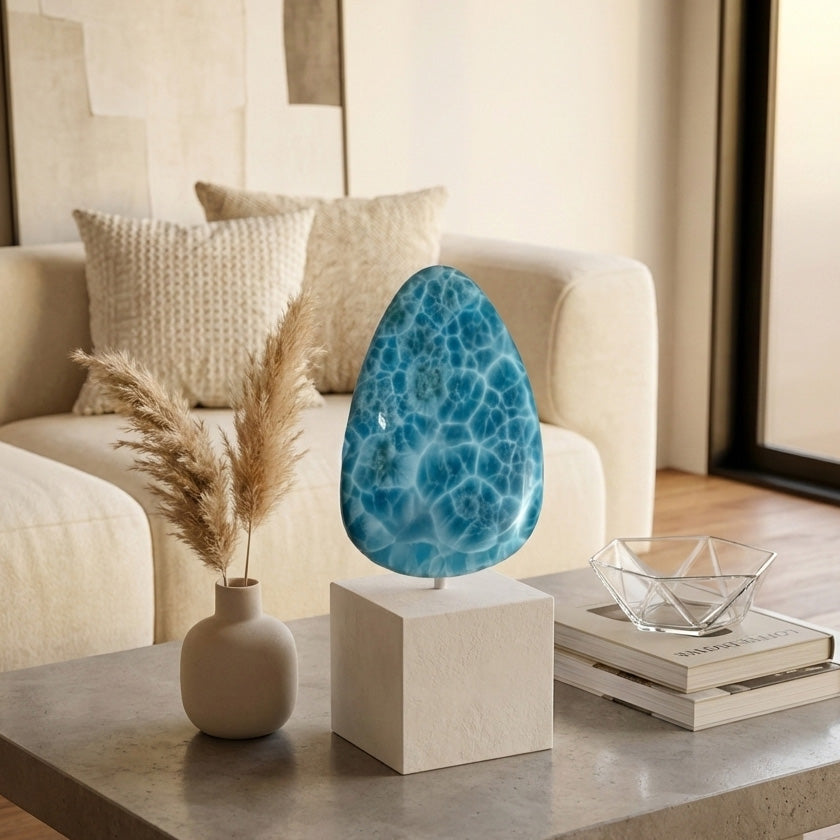
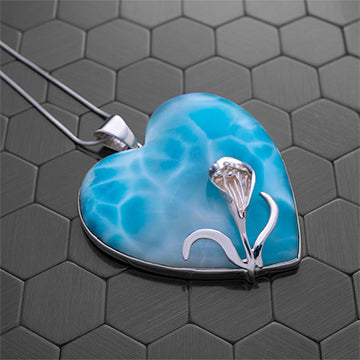
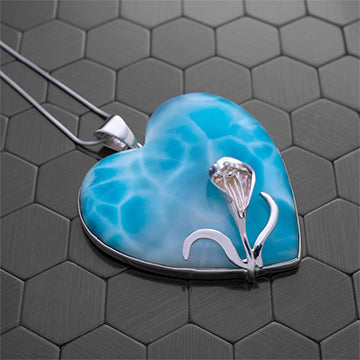
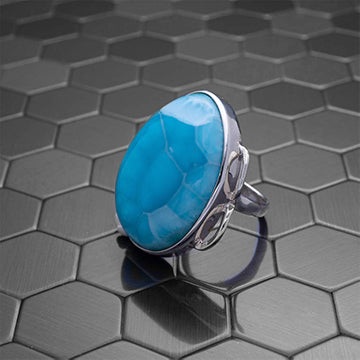
Larimar is a rare blue variety of pectolite found in the Dominican Republic, and that origin matters. Its appeal is not only the color, but the unmistakable patterns within the stone. White marbling, cloud-like movement, and shades that move from pale sky blue to vivid ocean blue give each ring its own identity.
That rarity is what makes authenticity so important. A genuine Larimar ring offers a one-of-a-kind surface pattern that cannot be mass-produced with perfect repetition. If several stones look identical, too glossy, or unnaturally even in tone, that is usually a sign to pause and ask more questions.
For buyers who value meaningful jewelry, origin adds another layer of significance. Wearing Larimar means wearing a stone tied to the Caribbean itself - mined from one region, shaped by nature, and transformed by human hands into something deeply personal.
Authenticity starts with the stone, but it does not end there. A real Larimar ring should be made with genuine Dominican Larimar and presented with clarity about what you are buying. That includes honest information about origin, natural variation, and craftsmanship.
A trustworthy seller will not promise impossible perfection. Natural Larimar often includes matrix, variation in saturation, and shifting internal pattern. Those features are part of the stone’s identity, not flaws to hide. In fact, many collectors prefer stones with distinct movement and character because they feel more alive than flat, uniform pieces.
Certification or clear authenticity claims can also provide reassurance, especially when buying online. In premium gemstone jewelry, confidence comes from transparency. You should know whether the stone is natural, where it comes from, and how the piece was made.
Not all genuine Larimar is equal. Two rings can both be authentic while offering very different levels of beauty, durability, and value. The difference usually comes down to color, pattern, cut, and setting.
The most sought-after Larimar often shows strong blue color with striking white contrast. Some stones lean soft and airy, while others show deeper tropical blue. Neither is automatically better for every buyer. A lighter stone can feel delicate and serene, while a more saturated stone makes a stronger statement.
What matters is whether the color looks natural and visually balanced. Authentic Larimar should not look neon, glassy, or artificially intense. It should have depth, softness, and variation that feels organic.
Larimar is loved for its patterns as much as its color. Swirls, marbling, and wave-like formations create the impression of sea and sky. Rings with more dynamic patterning often feel more collectible because no two are exactly alike.
That said, preference is personal. Some buyers are drawn to bold contrast, while others want a calmer stone with gentle, milky movement. There is no single correct look. The right ring is the one whose pattern feels unmistakably yours.
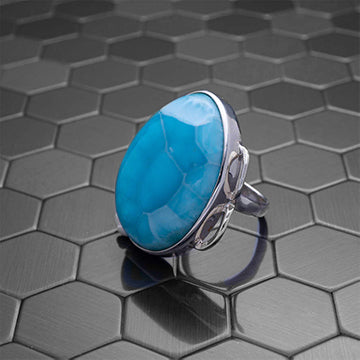
Most Larimar rings feature cabochon cuts rather than faceted stones. This smooth, domed surface suits the gem well because it highlights its internal pattern and soft glow. A quality polish should feel smooth and refined, with enough luster to bring out the stone’s natural beauty without making it look synthetic.
A poor cut can flatten the visual interest of even a good stone. If the shape is awkward, asymmetrical in an unintentional way, or overly thin, the ring may not wear as beautifully over time.
Larimar is beautiful, but it is not a stone you buy for extreme hardness. That makes setting design especially important. A well-made bezel or supportive prong setting helps protect the stone while showing it off. Sterling silver is a natural partner because its brightness complements Larimar’s cool blue tones, though fine metal choices depend on the style you prefer.
The best settings do not overpower the gemstone. They frame it with intention, allowing the color and pattern to remain the focal point. In artisan jewelry, that balance between design and restraint is often what separates a memorable ring from a generic one.
Online shopping opens access to rare stones and handcrafted pieces, but it also requires a more careful eye. Start with the photos. You should be able to see the individual stone clearly, not just a generic sample image. Since each piece of Larimar is unique, a ring should be presented as its own object, with visible pattern and color.
Read descriptions closely. Look for direct language about Dominican origin, genuine stone content, handcrafted construction, and any certification or authenticity standards. Vague claims such as blue natural gem ring are not enough when you are investing in a rare Caribbean stone.
Pay attention to how the brand talks about variation. Reputable sellers understand that natural gemstones differ from piece to piece and will frame that as a sign of authenticity, not inconsistency. That is often a strong indicator that the company knows its material well.
At Larimar Creations, this focus on authentic Dominican gemstones and handcrafted design is central to the shopping experience, and it reflects what serious buyers should expect from a specialist rather than a general jewelry marketplace.
Authentic larimar rings can be romantic, sculptural, understated, or bold. The best choice depends on how you plan to wear it.
If you want an everyday ring, look for a lower-profile setting with a secure mount and a shape that will not catch easily. Oval and round cabochons tend to wear comfortably, especially when framed by a bezel. If you are buying for special occasions or statement styling, a larger stone with dramatic blue pattern can be stunning.
For gift buyers, Larimar has unusual appeal because it feels both luxurious and personal. It is rare without being overly formal, and its oceanic palette carries a sense of calm, warmth, and escape. That makes it especially meaningful for anniversaries, birthdays, and milestone gifts where you want something less expected than traditional gemstone choices.
Because Larimar is softer than many classic jewelry stones, care should be part of the buying decision. This is not necessarily a drawback, but it does mean the ring deserves mindful wear. Remove it before heavy lifting, harsh cleaning, or activities where it may take impact.
Store it separately from harder gemstones to avoid scratches. Clean it gently with mild soap, water, and a soft cloth. Strong chemicals, ultrasonic cleaners, and prolonged heat are best avoided.
For many buyers, this level of care is a fair trade for owning a stone with such singular origin and visual character. Fine jewelry often asks for attention, and rare gemstones reward it.
There are cheaper blue rings on the market, and that is exactly the point. Authentic Larimar is not interchangeable with dyed stone, imitation material, or anonymous jewelry made to mimic a look. When you choose the real thing, you are paying for rarity, traceable origin, natural individuality, and craftsmanship.
That value shows up in ways that photos alone cannot always capture. Genuine Larimar has a softness and movement that feels alive in the hand. The best rings reveal new details as light changes throughout the day. They invite a closer look, and they keep it.
For collectors, authenticity protects long-term value and meaning. For style-driven buyers, it protects the integrity of the piece itself. Either way, the difference is not marketing language. It is visible in the stone, the setting, and the confidence behind the purchase.
A Larimar ring should feel like more than a pretty blue accessory. It should feel like a rare piece of the Caribbean shaped for everyday beauty - something chosen with care, worn with pleasure, and appreciated more each time you look down at your hand.