
by Admin July 17, 2026 6 min read

A Larimar bracelet should feel like more than a beautiful blue accessory. It should carry the character of a rare Caribbean gemstone, shaped by nature and finished with care. Knowing how to choose a Larimar bracelet begins with looking beyond the first flash of ocean-blue color and paying attention to origin, stone quality, construction, and the way the piece feels on your wrist.

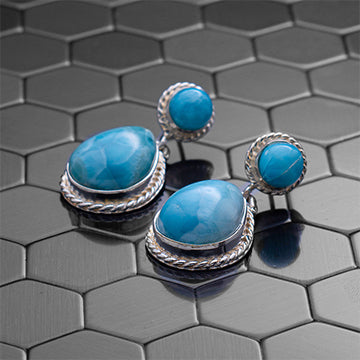
Larimar is found only in the Dominican Republic, and every genuine stone has its own pattern of pale sky blue, deep tropical blue, white clouding, and occasional natural mineral inclusions. That individuality is part of its value. The right bracelet is not necessarily the bluest or the largest. It is the one whose stone quality, setting, and proportions suit the way you want to wear a piece of the Caribbean.

Start With Authentic Dominican Larimar

The first question is always authenticity. Larimar is a rare blue variety of pectolite mined in the Dominican Republic. Because its look is so distinctive and desirable, buyers may encounter imitation materials, dyed stones, resin composites, or jewelry described with vague terms such as “Larimar-style.”

A trustworthy Larimar bracelet should clearly identify the gemstone as natural Larimar from the Dominican Republic. Reputable specialists are also transparent about materials, including the metal used in the setting and whether the piece is handcrafted. Certification or documented authenticity offers added reassurance, particularly when you are purchasing a substantial stone, a fine silver bracelet, or a meaningful gift.

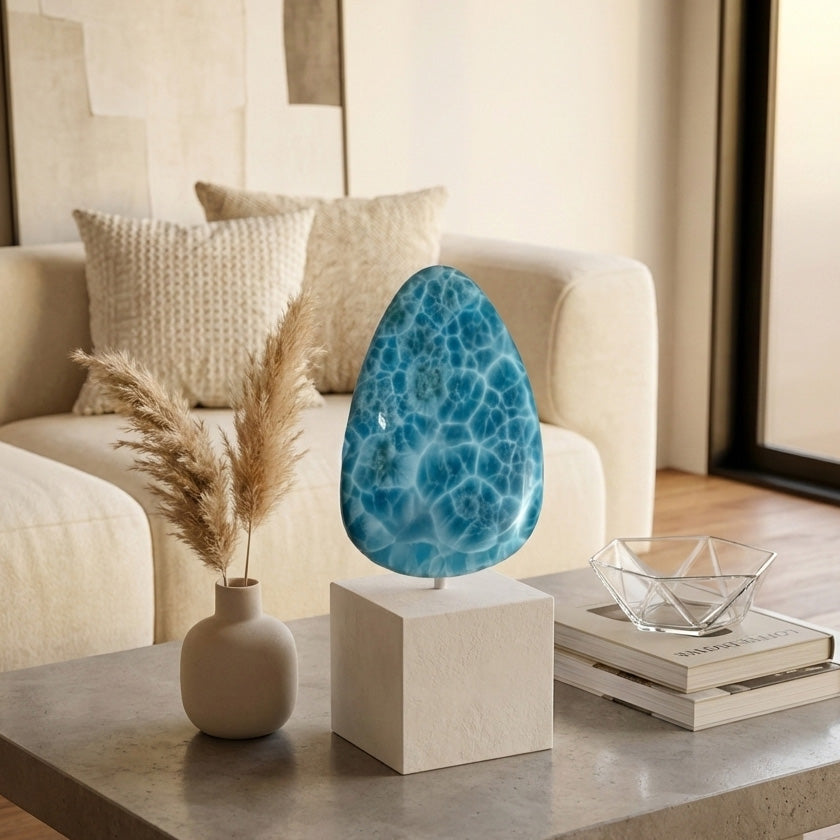
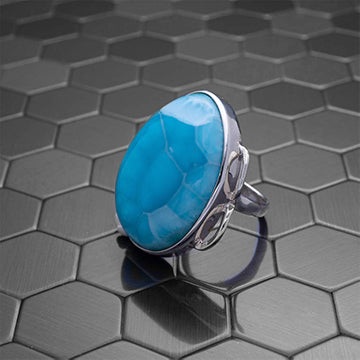
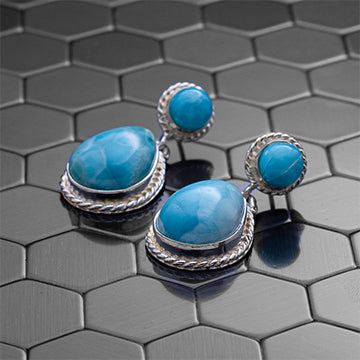
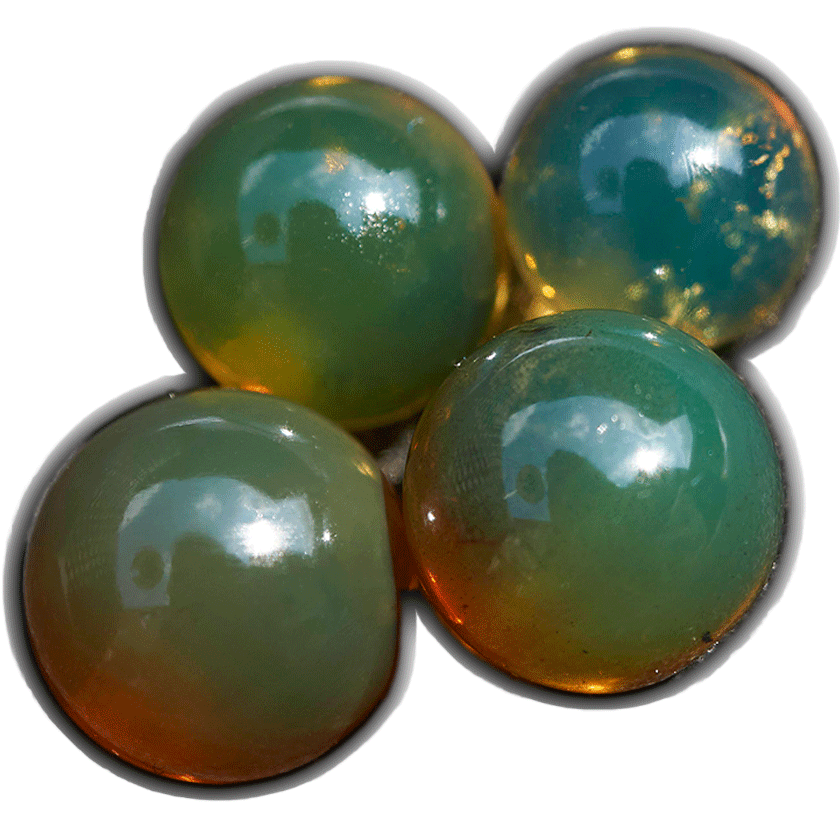
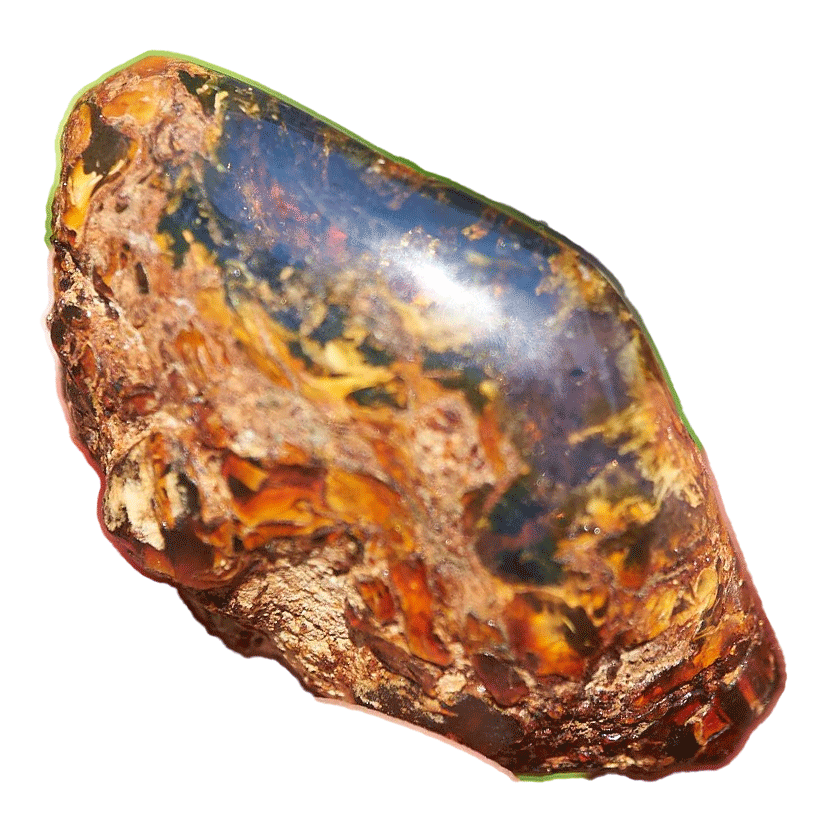
Natural Larimar is not a flat, uniform blue. Look for depth in the surface: soft white marbling, wave-like movement, and shifting areas of blue that resemble Caribbean water seen from above. Perfectly even color can be appealing, but an overly artificial-looking finish or a plastic-like shine deserves closer scrutiny.

How to Choose a Larimar Bracelet by Color and Pattern

Color is often what draws people to Larimar first, and it has a significant influence on rarity and price. The most prized material usually displays saturated blue with strong visual clarity and graceful white patterns. Rich blue Larimar is scarce, especially when it appears across a large, well-cut cabochon or a matched set of beads.

That said, choosing by color is personal. Pale blue stones can have an airy, calming quality, while blue-and-white pieces often show the classic cloud or sea-foam patterns collectors love. Some Larimar includes greenish undertones, gray areas, brown matrix, or small mineral markings. These features are not automatically flaws. In a natural gemstone, they can be part of the stone’s individual story.

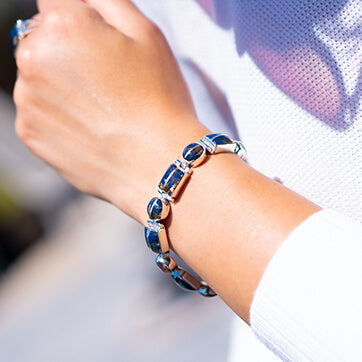
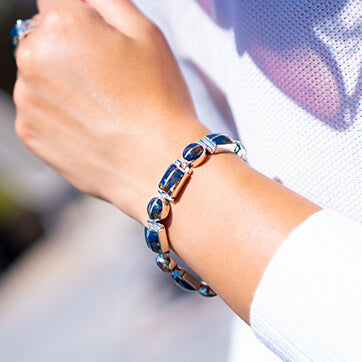
Consider how you intend to wear it. If you want a refined statement bracelet for dinners, celebrations, or resort evenings, a vivid blue stone in a polished silver setting may be your natural choice. For everyday wear, a bracelet with soft blue variation and a more relaxed artisan profile can feel equally special while being easier to style with linen, denim, and simple gold or silver jewelry.

Look for Visual Balance, Not Perfection

A well-chosen Larimar stone has balance. Its pattern should feel intentional rather than distracting, and the color should remain attractive from different angles. Fine polishing helps reveal the stone’s natural depth, but the best finish does not erase its character.

Be cautious of judging from one product photo alone. Natural Larimar can appear lighter or deeper depending on lighting, screen settings, and the stone’s polish. Detailed images, dimensions, and an honest description of the individual piece help set appropriate expectations. This matters most with one-of-a-kind cabochon bracelets, where the exact pattern is a central part of what you are buying.

Choose the Bracelet Style for Your Life

Larimar bracelets come in several forms, each with different strengths. A cuff bracelet creates a confident silhouette and gives a larger centerpiece stone room to shine. It suits someone who wants the gemstone to be the focal point of an outfit. An adjustable cuff can also be a practical option when sizing is uncertain.

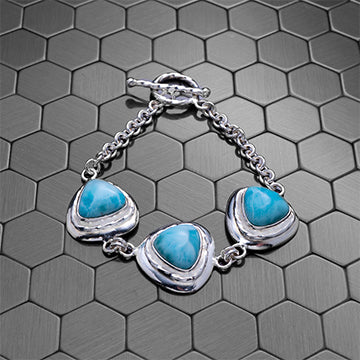
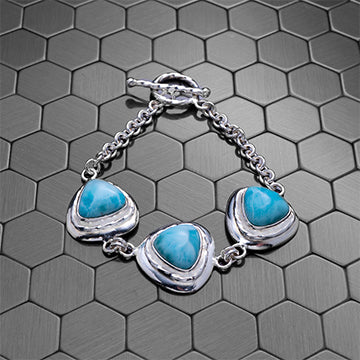
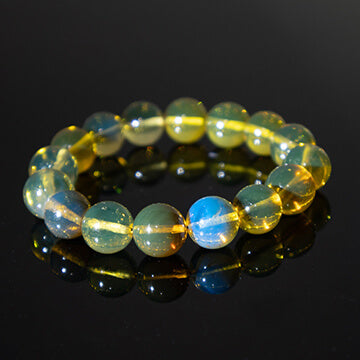
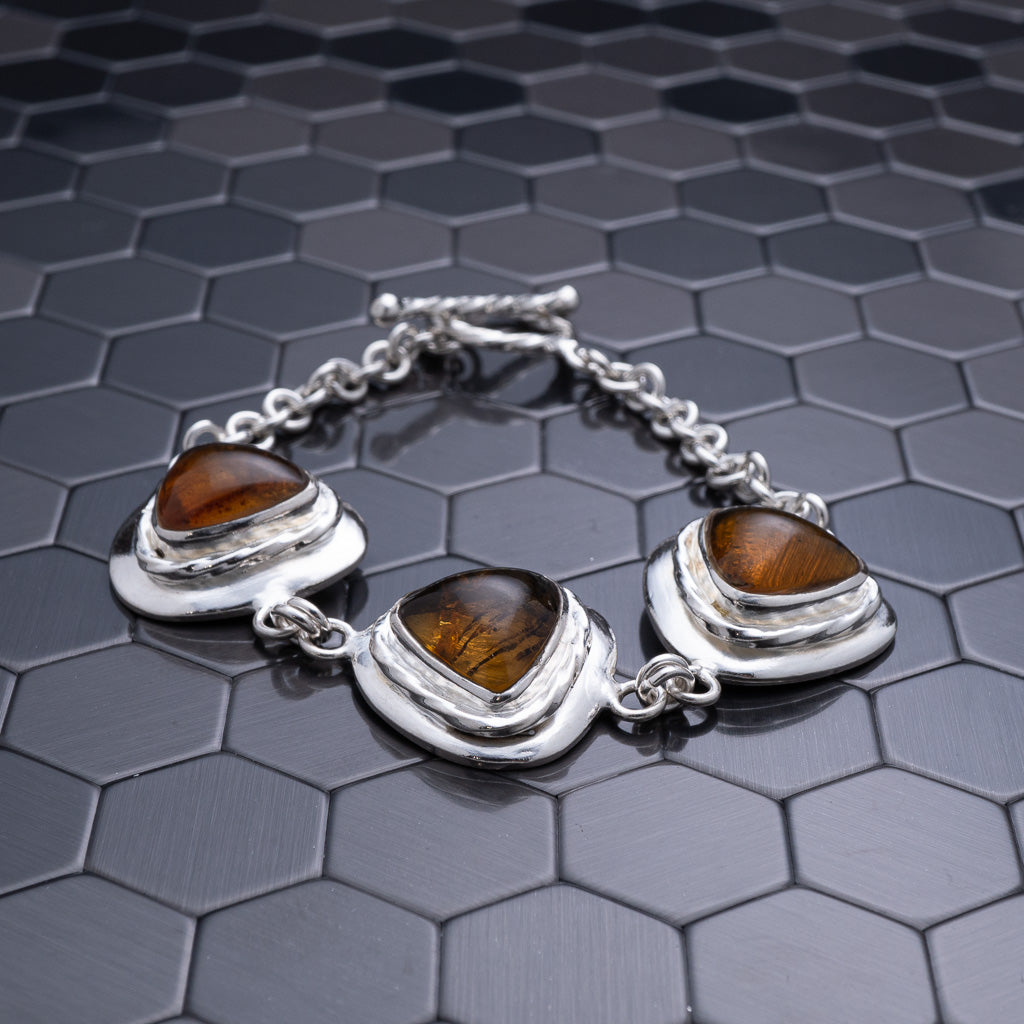
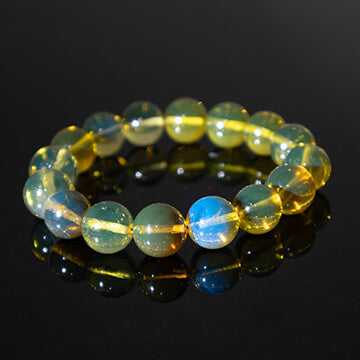
Chain bracelets with a single Larimar cabochon or several linked stones are more delicate and versatile. They layer beautifully with fine silver, gold, or other gemstone pieces, and they often work well as gifts because adjustable clasps offer flexibility. Beaded Larimar bracelets have a more organic, relaxed character, allowing the blue tones to flow around the wrist rather than appearing in one central setting.

There is no universally best style. A large cuff may showcase superior Larimar more dramatically, but it can feel less practical for someone who works with their hands or prefers minimal jewelry. A slender chain bracelet may be easy to wear every day, though it offers less visual impact than a bold artisan design. Let your routine guide the decision as much as your taste.

Inspect the Craftsmanship Around the Stone

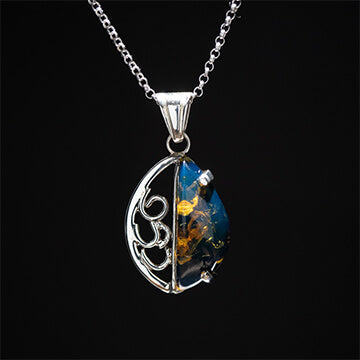
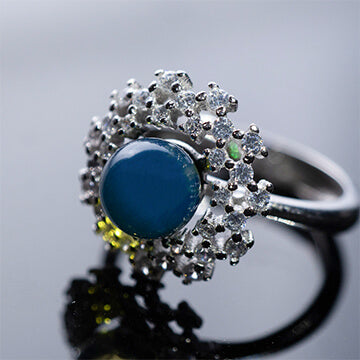
Larimar is relatively soft compared with diamonds or sapphires, so its setting matters. A carefully made bracelet protects the stone while allowing its color and pattern to remain visible. Look for smooth, secure bezels or prongs with no sharp edges, gaps, or signs that the stone is loose.

Sterling silver is a natural companion to Larimar. Its cool brightness echoes the gemstone’s blue-and-white palette and gives handcrafted designs a classic Caribbean elegance. Gold settings can create a warmer, more elevated contrast, especially with deeply colored blue Larimar. The choice comes down to the jewelry you already wear and the mood you want the bracelet to convey.

For linked designs, examine the connections between each element. They should move comfortably without looking thin or fragile. Clasps should close securely and be easy to operate. On beaded bracelets, quality stringing or elastic construction is essential, and beads should be consistently shaped with smooth drill holes. Small details are where artisan workmanship becomes clear.

Get the Fit Right Before You Fall in Love

A bracelet can have exceptional Larimar and still go unworn if the fit is wrong. Measure your wrist with a flexible tape or a strip of paper, then add room according to the style. For a fitted chain bracelet, adding about one-half inch generally creates comfortable movement. For a looser drape, add more space. Cuffs should sit securely without pinching or sliding freely toward the hand.

Pay attention to the dimensions of the centerpiece as well. A broad cabochon can look stunning on a wider wrist but may overwhelm a smaller frame. Conversely, a tiny stone may disappear if you want a true statement piece. Product measurements are more useful than phrases such as “large” or “delicate,” which can mean different things to different buyers.

If the bracelet is a gift, adjustable styles are often the thoughtful choice. They preserve the romance of a rare gemstone without requiring you to guess an exact wrist size.

Understand What Influences Larimar Bracelet Value

Price should reflect more than the presence of a blue stone. Exceptional color, desirable pattern, stone size, careful cutting, metal quality, and the complexity of handwork all contribute to value. A bracelet featuring a large, richly blue Larimar cabochon will usually cost more than a small pale stone, particularly if it is set in substantial sterling silver or gold.

Do not assume that the most expensive bracelet is automatically the best one for you. Some buyers value the rarest deep-blue material. Others are drawn to a stormy white-and-blue pattern that feels more expressive, even if it is not the highest grade by color. The strongest purchase is one where the price, authenticity, craftsmanship, and emotional connection all make sense together.

Care for the Ocean’s Gift

Once you choose your bracelet, a little care will protect its beauty. Remove Larimar jewelry before swimming, bathing, exercising, gardening, or using household cleaners. Perfume, lotion, and harsh chemicals can dull both the stone and the metal over time.

Clean it gently with a soft, dry or lightly damp cloth, then store it separately from harder gemstones and metal pieces that could scratch the surface. Avoid ultrasonic cleaners and steam cleaning. Larimar rewards gentle handling, and its natural beauty is best preserved through everyday mindfulness.

The finest Larimar bracelet is the one that makes you pause before putting it on: a genuine Dominican stone, an honest expression of craftsmanship, and a blue pattern that feels as personal as a memory of the sea. Choose with care, then wear it often enough for the Caribbean light within the stone to become part of your own story.


Let's Stay In Touch