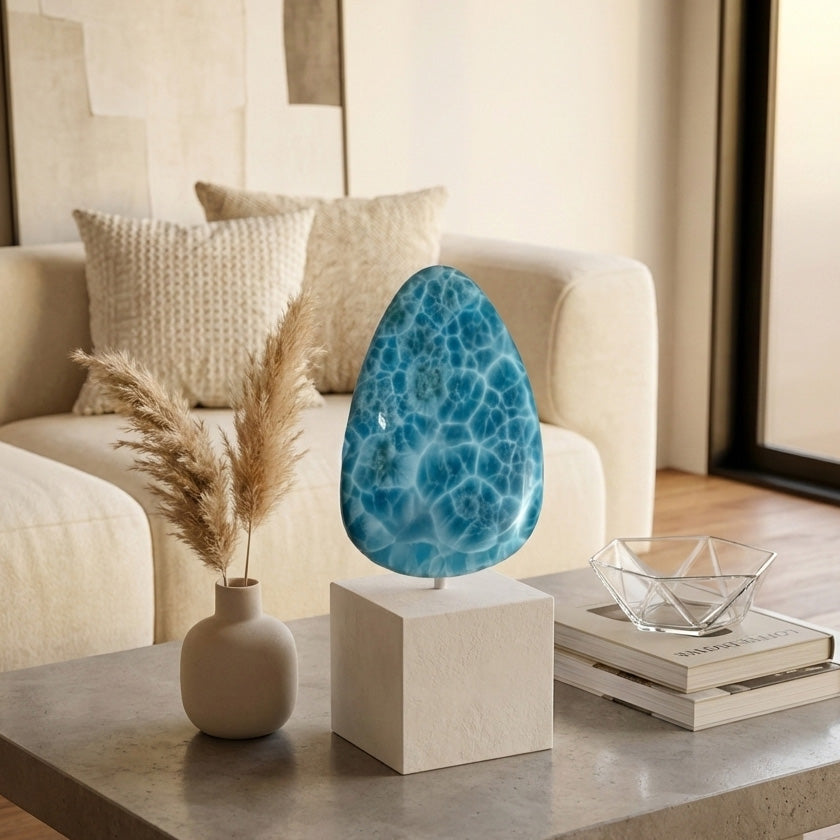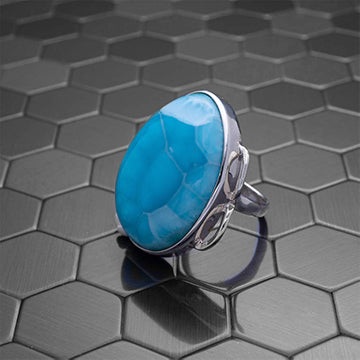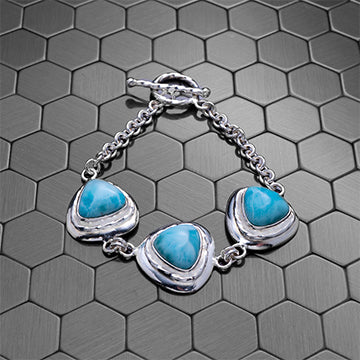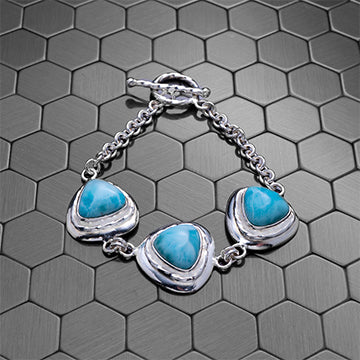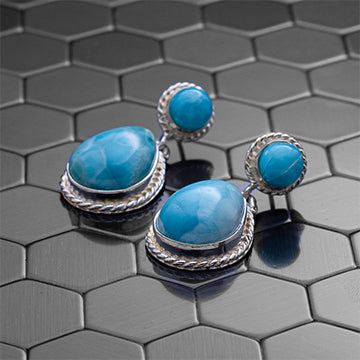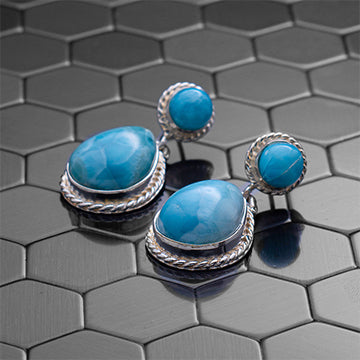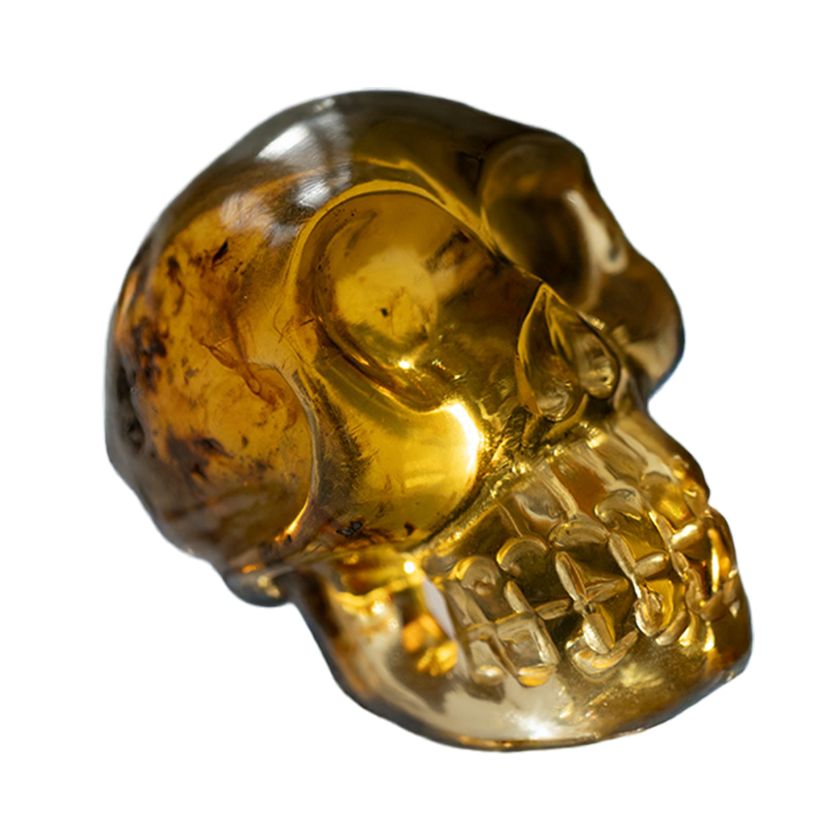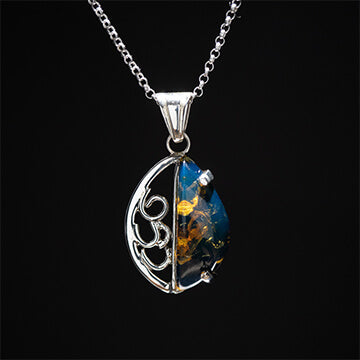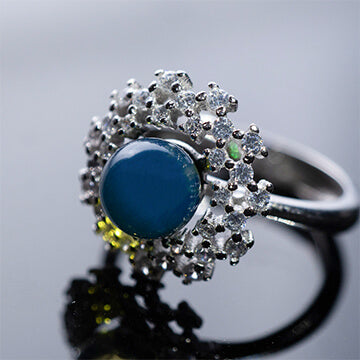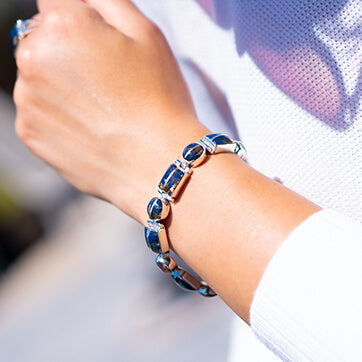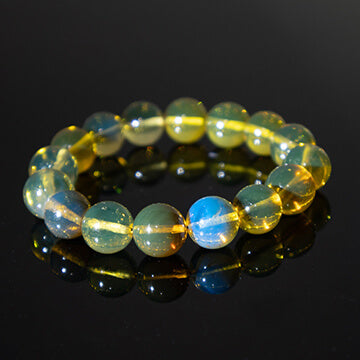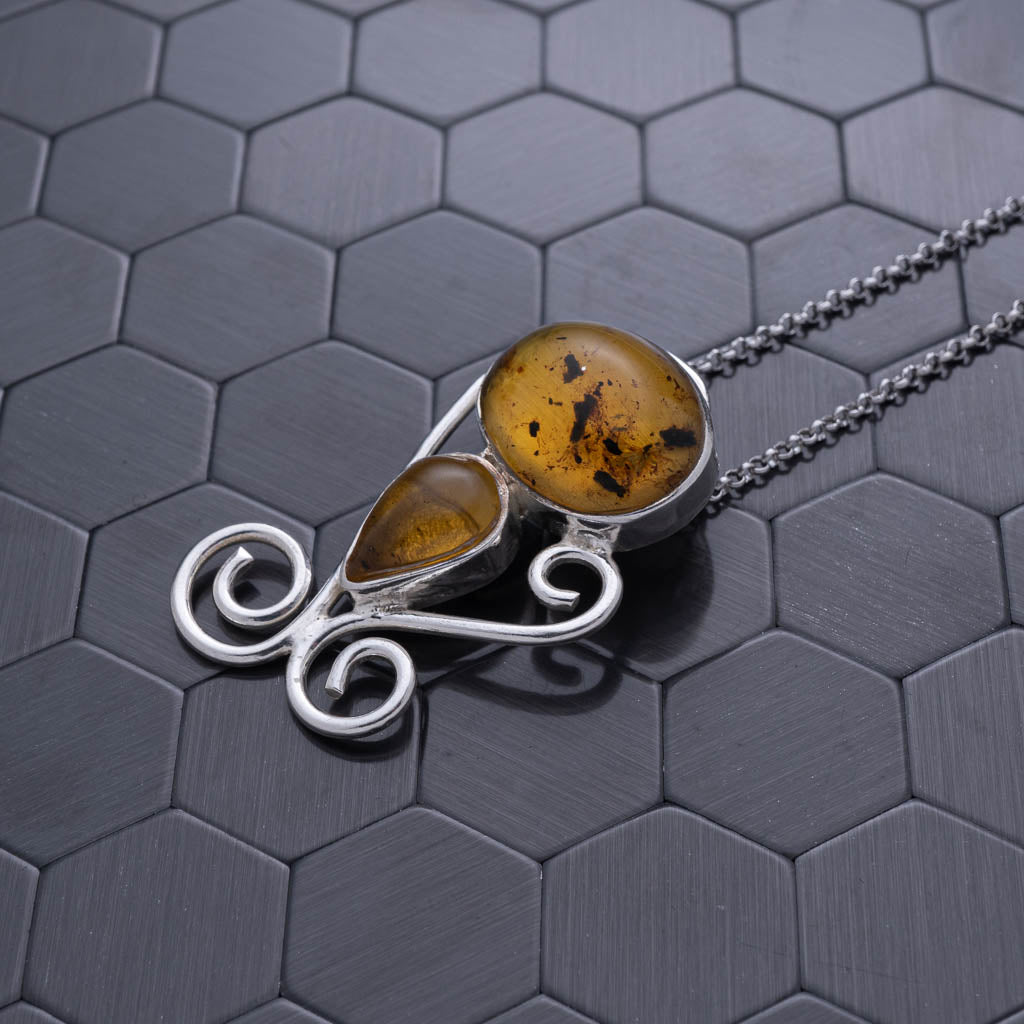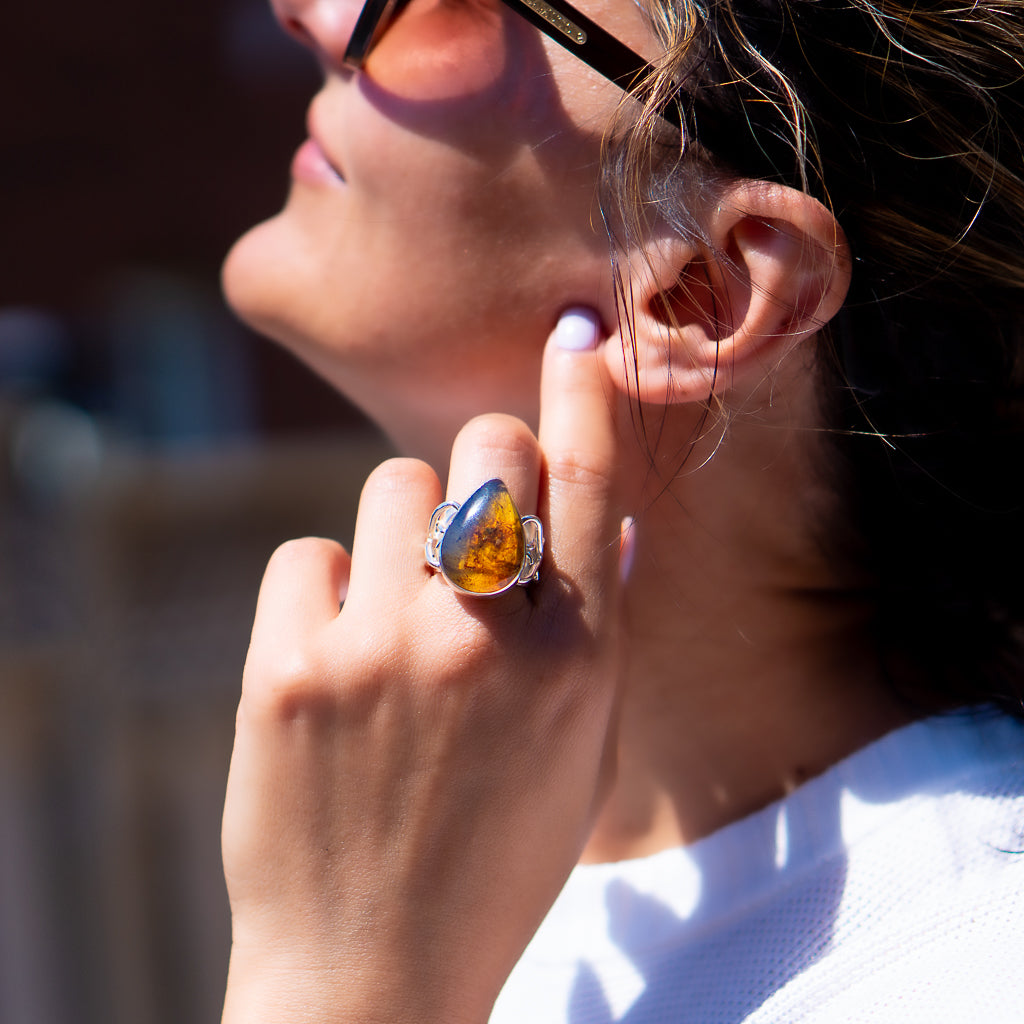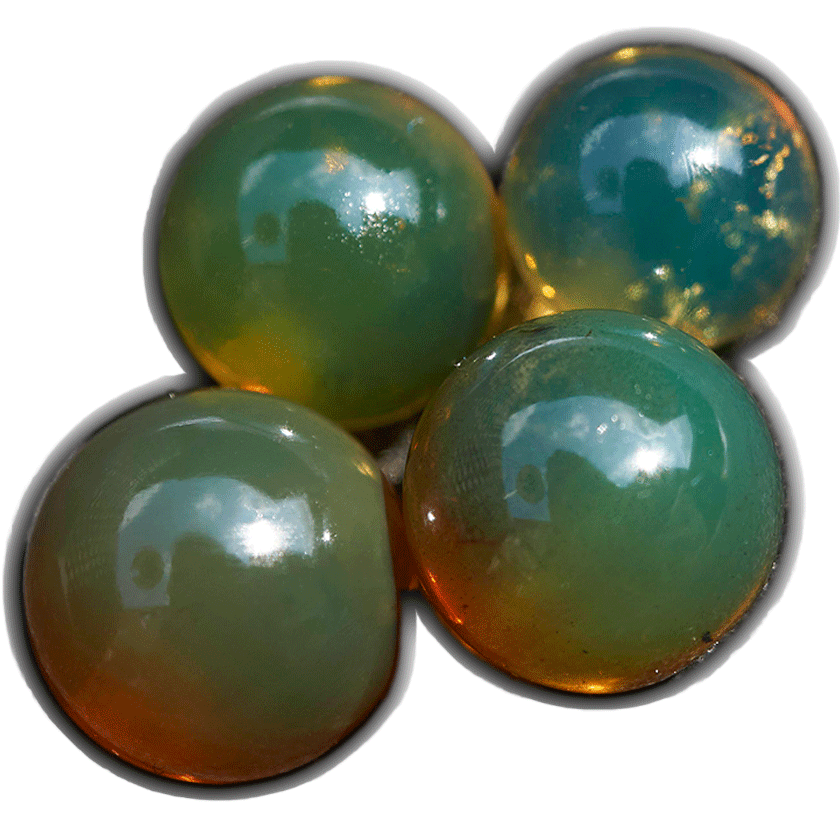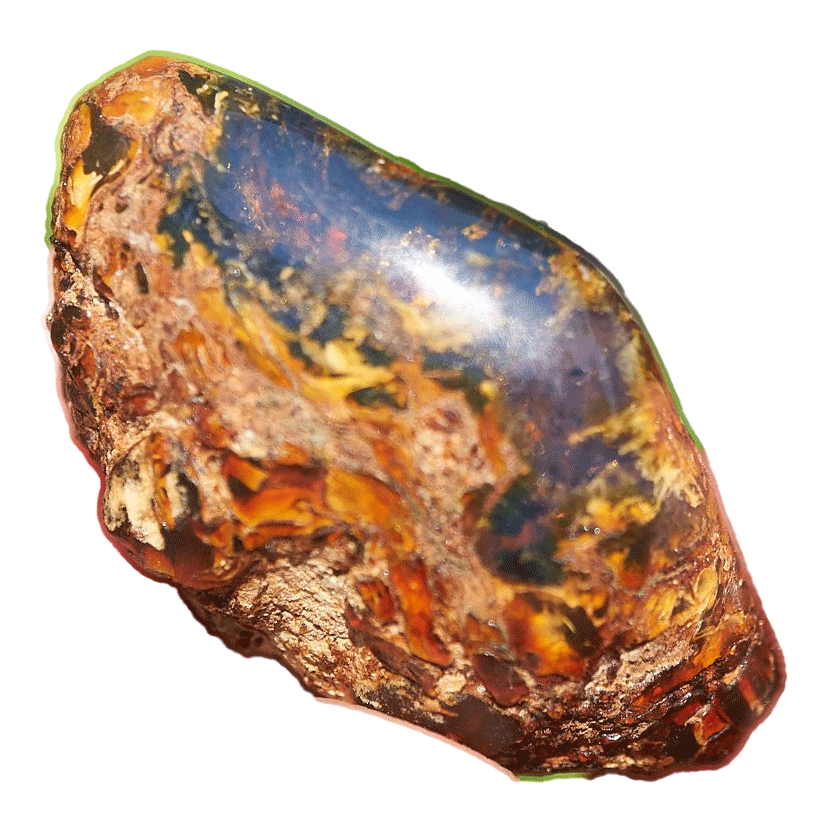

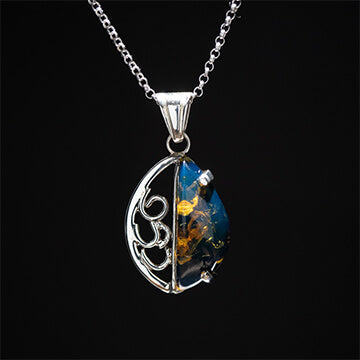
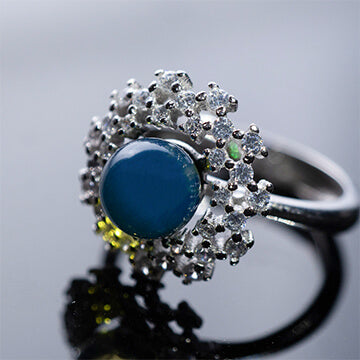
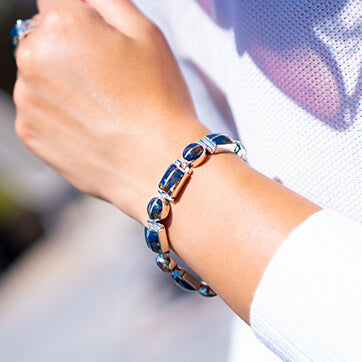
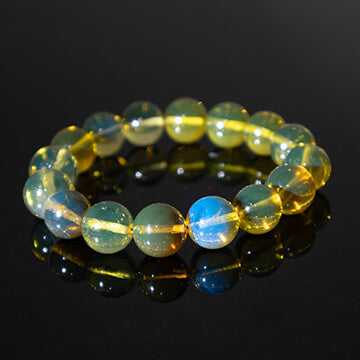
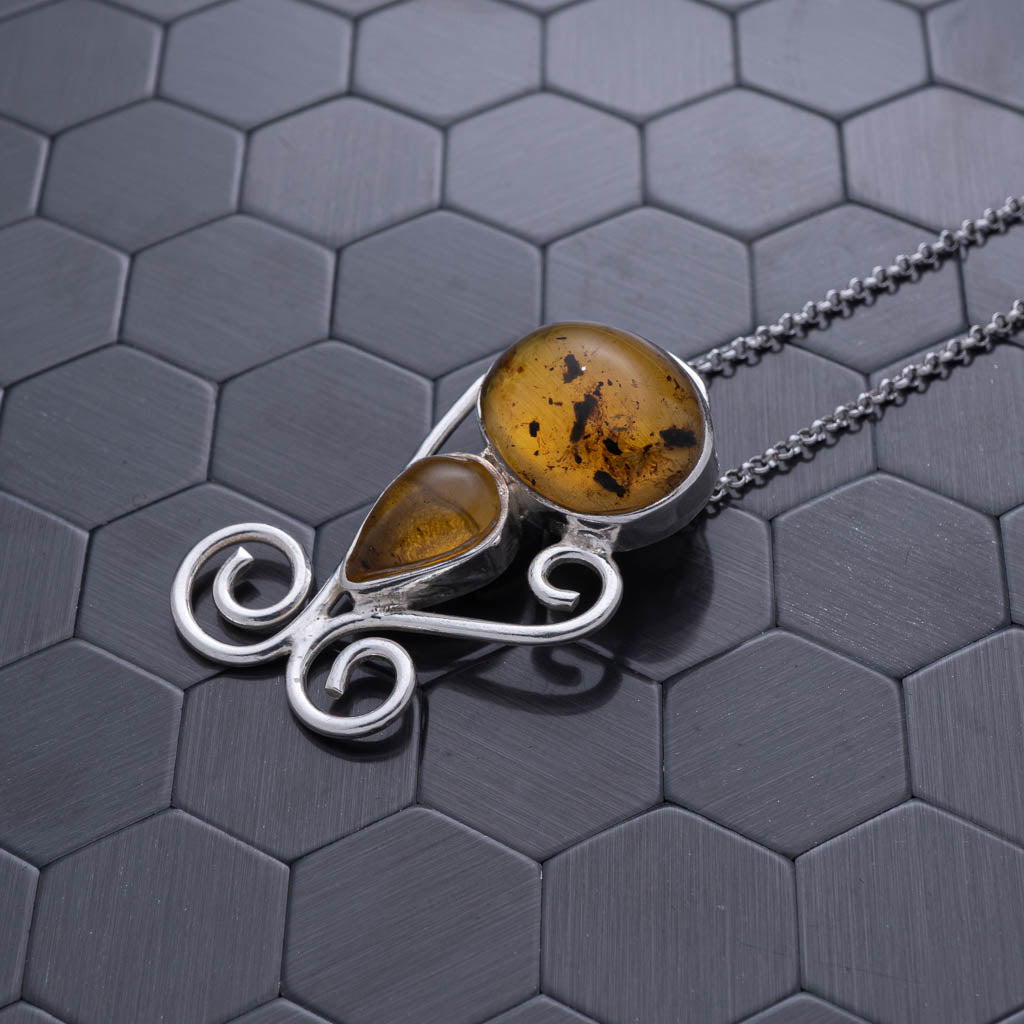
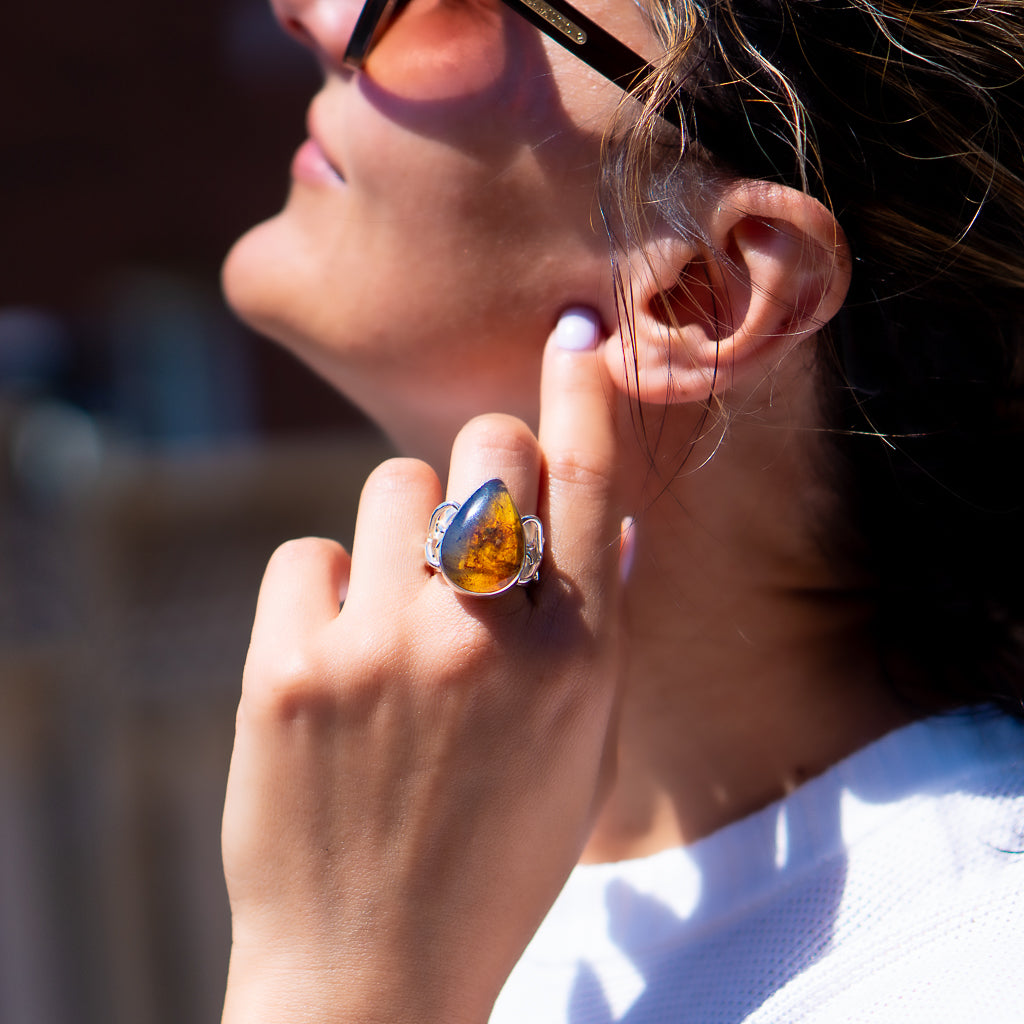
A fine Larimar stone can look like a piece of the Caribbean held still: pale surf, deep blue water, white sea foam, and drifting clouds captured in mineral form. Learning how to identify larimar patterns helps you appreciate why no two pendants, rings, or cabochons are ever exactly alike. It also gives you a more discerning eye when choosing a stone whose natural character feels personal to you.
Larimar is the rare blue variety of pectolite found in the Dominican Republic. Its celebrated patterns are created by the way blue and white mineral material formed within the host rock, not by an artist painting a surface design. A skilled lapidary can reveal that beauty through the cut and polish, but the pattern itself belongs to nature.
Start by looking at the stone as a whole rather than searching for a single "perfect" marking. Authentic Larimar can range from nearly white to soft sky blue, vivid turquoise-blue, and occasionally deeper blue. The most recognizable pieces carry a balance of blue body color and white movement that feels organic rather than repeated or mechanically regular.
Hold the piece under indirect natural light if possible. Natural Larimar commonly reveals layers, soft transitions, and changes in tone as the stone moves. A polished surface should have a smooth, luminous finish, yet the internal pattern should still appear dimensional. It may resemble rolling water, wisps of cloud, branching frost, or a shoreline viewed from above.
Pattern alone cannot certify a gemstone. Authenticity also depends on trusted Dominican origin, accurate material disclosure, and the standards of the seller. Still, a close look at the pattern offers one of the most rewarding ways to understand the individual beauty of a Larimar piece.
This is the image most people associate with Larimar. Blue areas sweep across the stone in gentle bands, interrupted by white or lighter-blue lines that suggest ripples, waves, or moving water. In a well-cut cabochon, these markings often have a flowing direction rather than sitting as flat, isolated patches.
Ocean-like patterning is especially appealing in larger pendants and collector cabochons because the stone has room to show its full landscape. In a smaller ring or earring, even one graceful wave of white across blue can make the design feel vivid and unmistakably Caribbean.
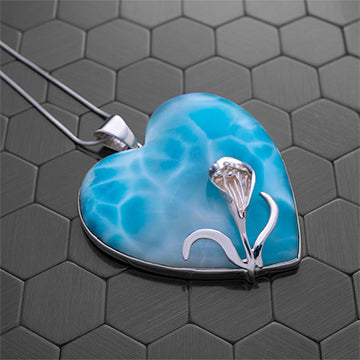
Cloud-pattern Larimar features soft white blooms or misty areas floating through a blue background. The edges are usually gradual, with pale blue transitional zones between white and stronger color. These stones often feel serene and romantic, particularly when set in sterling silver or paired with an airy, open design.
A cloudy stone is not automatically lower quality. The value depends on the depth and desirability of the blue, the visual balance, the clarity of the pattern, the cut, and the overall condition. A pale, cloud-filled Larimar can be every bit as captivating as a more saturated stone when the composition is graceful.
Some Larimar displays fine white lines that cross, branch, or spread through blue material. Collectors may describe this as a spiderweb, lace, or coral-like pattern. It can look delicate, but it should not be confused with an open crack.
Under a smooth polish, a natural mineral line may appear enclosed within the stone and remain stable. A true fracture can look sharp, break the surface, catch on a fingernail, or create a visible separation in the polish. When buying a finished jewelry piece, clear product photography and careful craftsmanship matter because they help distinguish intentional natural character from damage.
Marbled Larimar is defined by blended areas of blue, white, and sometimes greenish-blue that twist together without a strong wave or cloud shape. Layered stones may show distinct bands of color, as if the mineral formed in softly stacked sheets.
These patterns are often a favorite among gemstone lovers who enjoy a more geological expression. They make each stone feel like a miniature natural painting, especially in freeform cabochons and hand-carved pieces where the cutter follows the material rather than forcing it into a uniform look.
Larimar can contain gray, brown, black, or darker mineral areas known broadly as matrix or host-rock material. These inclusions may create dramatic contrast, suggesting volcanic shorelines against blue water. Since Larimar formed in a volcanic setting, matrix is a natural part of the story in many stones.
Whether matrix is desirable depends on the buyer and the piece. Fine jewelry buyers often prefer clean blue-and-white material with little visible matrix, while collectors may seek unusual, scenic inclusions that make a cabochon entirely one of a kind. Neither preference is wrong. The key is that the stone should be honestly represented and beautifully cut for its particular character.
Pattern and color work together. A stone with rich blue color and a clear white wave pattern may command greater attention than a pale stone with similar markings. Yet intensely blue Larimar can be more uniform, while lighter material may show intricate clouding and movement. The best choice depends on whether you are drawn to saturation, pattern detail, or a balance of both.
Look for natural variation within the blue. Larimar often shifts from powder blue to turquoise or deeper blue across a single stone. A perfectly flat, overly uniform color can be worth examining more carefully, particularly if it appears unusually bright or artificial. That said, photographs, lighting, and editing can affect color dramatically, so a reputable seller's sourcing and gemstone documentation remain more meaningful than an image alone.
Also consider scale. On a small bead, a subtle pattern may be all that is visible. On a large pendant, the same material may reveal broad waves, matrix, and several shades of blue. A pattern that seems busy in a close-up can look balanced and elegant when worn.
Natural Larimar is rarely symmetrical. White areas may fade unevenly, blue zones can pool in one corner, and one side of a cabochon may appear more saturated than the other. These irregularities are not flaws by default. They are often the details that prove you are looking at a stone shaped by geology rather than a mass-produced blue surface.
Be cautious with pieces that show repeated motifs, very hard printed-looking outlines, or a color layer that appears to sit on top of the stone. These visual signals do not replace professional testing, but they are sensible reasons to ask questions about treatment, origin, and material. A trustworthy jewelry source will be clear about what it sells and will not rely on vague language when authenticity is central to the purchase.
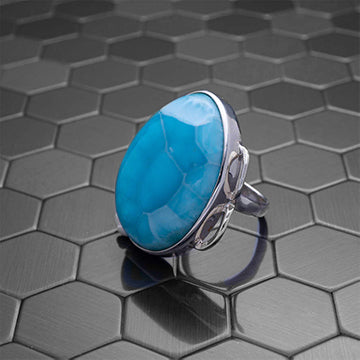
The setting should honor the stone's natural composition. A broad ocean-wave pattern is often ideal for a statement pendant, where the eye can travel across the surface. A heart pendant can make a soft cloud pattern feel especially tender and meaningful. For rings, a centered blue field with a clean wave or balanced marbling often wears beautifully because it remains visible at a glance.
For collector cabochons, allow yourself to choose with fewer rules. A dramatic matrix line, an unexpected green-blue area, or a rare branching pattern can be more memorable than a conventionally "perfect" stone. The finest Larimar is not only about a grade or a shade. It is about the way color, pattern, cut, and craftsmanship come together.
A Larimar pattern should invite a second look. Whether you choose tranquil clouds, rolling blue waves, or volcanic matrix framing the color of the sea, choose the stone that feels alive in your hand. That is the quiet privilege of wearing a genuine piece of the Caribbean.