
Larimar
Blue Amber
Green Amber
Amber Carvings
More

by Admin October 23, 2026 5 min read

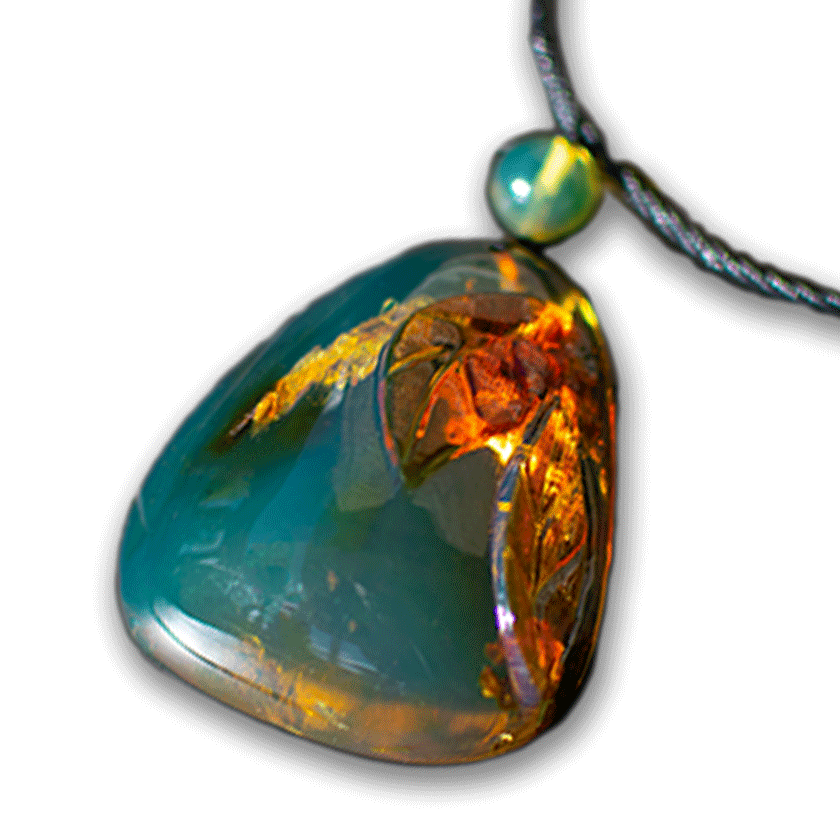
A Dominican blue amber pendant can look dramatically changed by a small amount of wear. In this amber jewelry restoration case study, the goal was not to make an older piece look newly manufactured. It was to preserve a rare Caribbean gem, stabilize the setting, and return the pendant’s natural light, transparency, and blue flash without removing the character that made it personal.

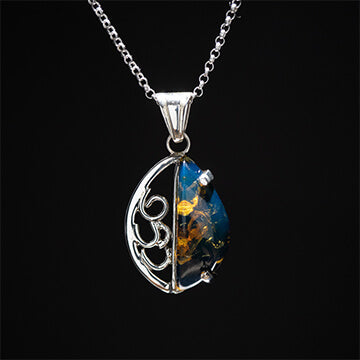
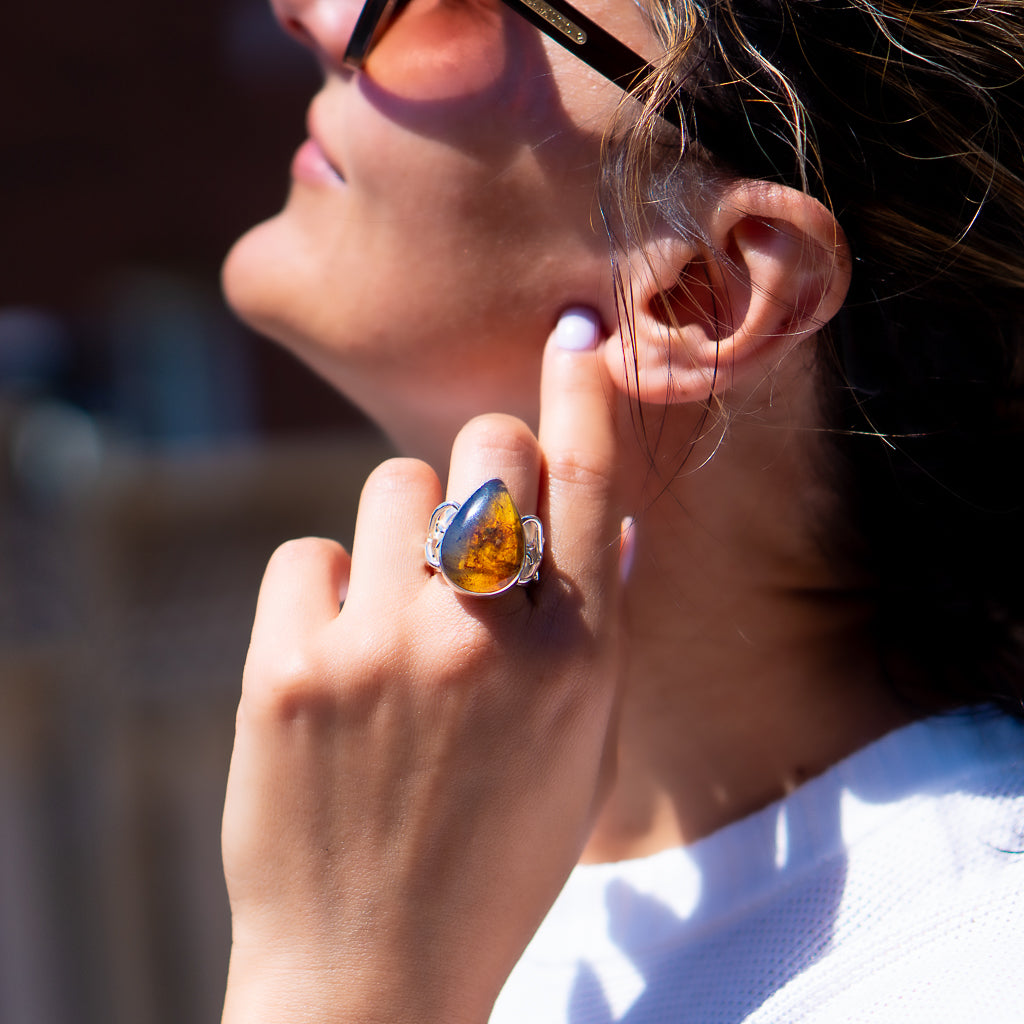
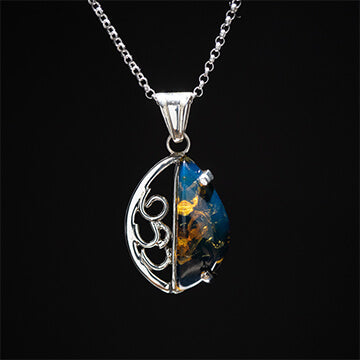
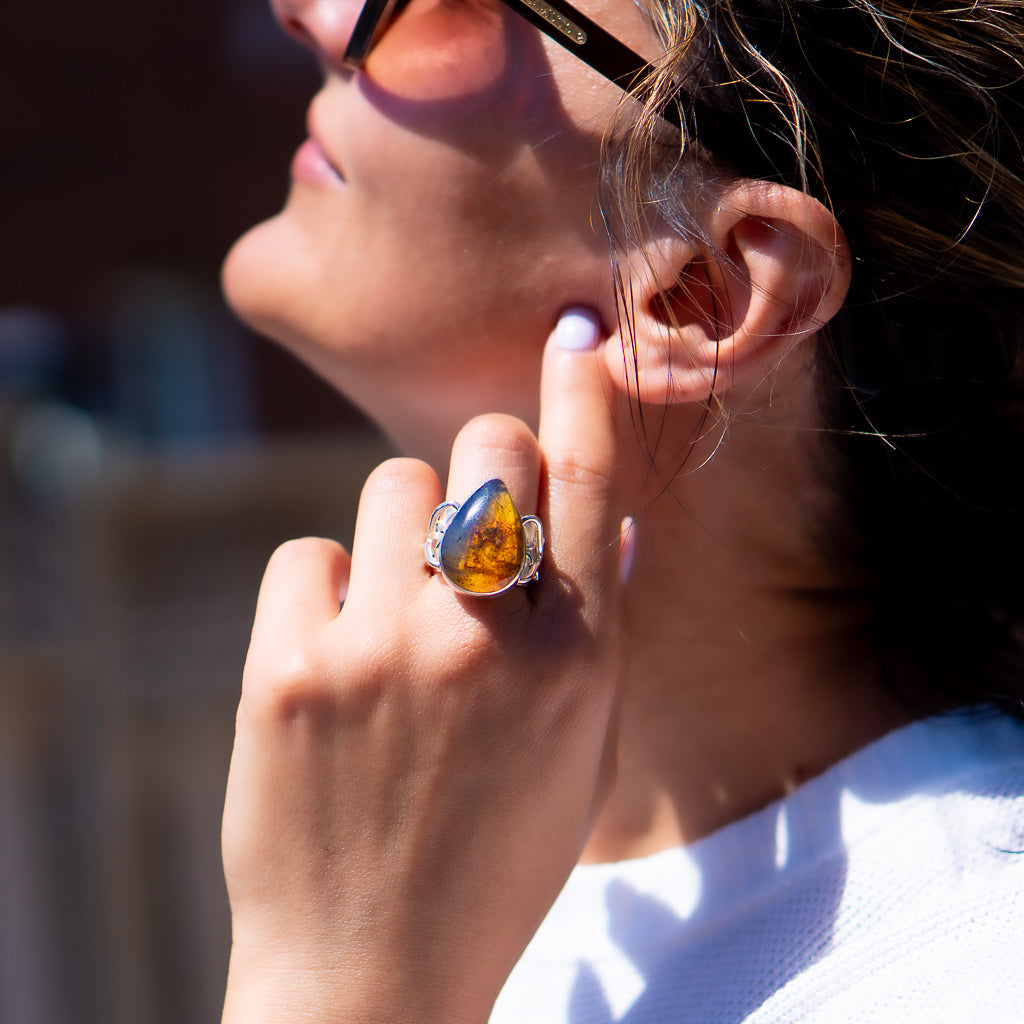
The piece was a pear-shaped Dominican amber cabochon in a sterling silver pendant, worn often over several years. The owner loved its ocean-blue glow in sunlight but had noticed a dull surface, dark residue near the bezel, and a slight movement of the stone in its setting. None of those signs called for aggressive polishing. With amber, restraint is part of craftsmanship.

The Starting Point: Beauty Beneath the Wear

The cabochon measured just under two inches long and showed the distinctive warm honey body color associated with Dominican amber. In direct light, it carried a soft blue cast that seemed to rise from within the stone. A few tiny botanical inclusions were visible near its lower edge, adding collector interest rather than diminishing its value.

Its condition told a familiar story. Everyday body oils, lotion, and airborne dust had formed a film across the polished surface. The silver bezel had collected dark residue along its inner rim, making the amber appear less luminous than it was. There were also shallow surface marks near the bail, likely from contact with other jewelry.

The more serious issue was structural. The amber was no longer firmly seated at one side of the bezel. Amber is fossilized tree resin, not a mineral crystal, so it has a different relationship with pressure, heat, chemicals, and impact. A stone that can appear perfectly sound may still be vulnerable to a cracked edge or a tightened bezel applied too forcefully.

For a rare gem, restoration begins with a question that is easy to overlook: what must be preserved? Here, the answer was clear. The pendant’s natural inclusions, hand-shaped cabochon form, and original silver setting mattered as much as surface brightness.

Amber Jewelry Restoration Case Study: Diagnosis Before Treatment

A careful diagnosis determined what could safely be improved and what should remain untouched. The amber was inspected under magnification for fractures, chips, crazing, and areas of surface instability. The shallow marks were confined to the outer polish and had not entered the body of the cabochon. Most importantly, there was no active crack extending from the bezel line.

Authenticity was also considered before any work began. Dominican blue amber is prized for its rare optical character, but color alone should never be treated as proof of origin. Its appearance can shift with light, background, cut, and thickness. In this case, the piece’s known provenance, natural inclusions, and visual behavior supported its identification, while the restoration approach remained intentionally non-destructive.

The pendant did not need a full rebuild. It needed careful cleaning, minimal surface refinement, and a precise adjustment to the silver. That distinction protected both the stone and its value. Over-restoration can erase subtle tool marks from artisan cutting, soften a pleasing cabochon contour, or make an older piece feel less authentic.

Why common cleaning methods were ruled out

Several popular jewelry-cleaning methods were unsuitable from the start. Ultrasonic cleaners can vibrate a loose stone and place stress on vulnerable areas. Steam creates heat that amber does not need. Alcohol, acetone, perfume, and harsh commercial cleaners can damage or dull its finish.

Even prolonged soaking is not ideal. Amber should be treated as an organic gem with a gentler care standard than diamond, sapphire, or metal alone. The treatment plan therefore used controlled moisture, soft materials, and short handling intervals rather than a one-size-fits-all cleaning process.

The Restoration Process

The first task was to lift surface residue without forcing moisture beneath the bezel. A soft, lint-free cloth and a lightly dampened cotton applicator were used in small sections, followed immediately by drying. This revealed the amber’s clearer golden interior and removed the haze that had masked its blue response to light.

Attention then moved to the setting. The dark material around the bezel was loosened carefully with non-abrasive tools designed to avoid scratching either the silver or the amber. The metal was cleaned selectively, preserving the pendant’s handmade character rather than polishing every surface to a mirror finish. A highly polished bezel can be beautiful, but it may not suit every artisan piece, especially one with a softly aged finish.

The shallow surface marks required the most judgment. Full resurfacing was not appropriate. Instead, only the visibly dulled area received minimal refinement, gradually restoring clarity while retaining the cabochon’s original profile. The goal was to improve how light traveled across the amber, not to remove every trace of a life well worn.

Finally, the bezel was adjusted in tiny increments to secure the cabochon. This is where experience matters most. Tightening metal against a hard gemstone can be routine. Tightening metal around amber requires patience, because excess pressure can create damage that cannot be undone. The pendant was checked repeatedly during the adjustment until the stone no longer moved but was not compressed.

The Result: A Brighter Stone, Still True to Itself

Once restored, the pendant did not look artificial or overworked. Its surface was clearer, the blue flash appeared more readily in natural light, and the silver frame once again supported the cabochon securely. The botanical inclusions remained visible, providing the quiet evidence of a gem formed millions of years ago.

The result also showed why a restoration should be evaluated beyond before-and-after shine. The pendant retained its original cut, its Caribbean identity, and the small signs of artisan work that give handmade jewelry its presence. Its beauty became easier to see, but its story was not polished away.

For a collector, that is an essential trade-off. A flawless-looking finish is not always the highest-value outcome. Natural inclusions, minor age-related marks, and the original contours of a hand-finished amber cabochon can all be part of what makes a piece singular. Restoration should respect those details rather than compete with them.

What This Case Reveals About Caring for Dominican Amber

The best restoration is often prevented by thoughtful daily care. Store amber separately from harder gemstones and metal pieces that can scratch it. Put pendants, rings, and bracelets on after fragrance, hairspray, and lotion have dried. After wearing, a soft dry cloth is usually enough to remove skin oils before they build into a visible film.

Temperature also deserves attention. Do not leave amber jewelry on a sunny dashboard, near a radiator, or in any place where heat becomes intense. While Dominican blue amber is treasured for the way it responds to light, heat exposure is not the same as admiring its color in daylight.

When a stone feels loose, develops a new crack, or loses its polish, pause before trying household remedies. A skilled jeweler or amber specialist can assess whether the issue is surface-level, structural, or related to the setting. That early assessment is often what keeps a small repair from becoming a permanent loss.

At Larimar Creations, the lasting appeal of Dominican amber lies in exactly this balance of rarity and care. Each piece carries a different world of color, inclusions, and natural history. Treat it gently, and its Caribbean glow can remain part of your collection for years to come.

Necklace Gift Guide: Choosing the Perfect Jewelry Present

Necklace Gift Guide: Choosing the Perfect Jewelry Present

11 min read

Discover how to choose the perfect necklace gift for any occasion. Expert tips on selecting meaningful jewelry that celebrates unique style.
Read More
Anniversary Jewelry Gifts With Caribbean Meaning

Anniversary Jewelry Gifts With Caribbean Meaning

5 min read

Choose anniversary jewelry gifts with the rarity, craftsmanship, and personal meaning that turn a milestone into a lasting daily treasure from the Caribbean.
Read More
Amber Jewelry Restoration Case Study in Detail - Larimar Creations

Amber Jewelry Restoration Case Study in Detail

5 min read

An amber jewelry restoration case study showing how careful assessment, low-risk cleaning, and skilled setting repair preserved a rare Dominican gem safely.
Read More