
by Admin May 13, 2026 6 min read

A beautiful Larimar cabochon is decided long before the final polish. In larimar cabochon cutting, the cutter is not simply shaping stone - they are reading color, softness, pattern, and structure to reveal the most compelling face of a rare Caribbean gem. That is why two cabochons from the same rough can look entirely different in value, character, and visual impact.

Why larimar cabochon cutting matters

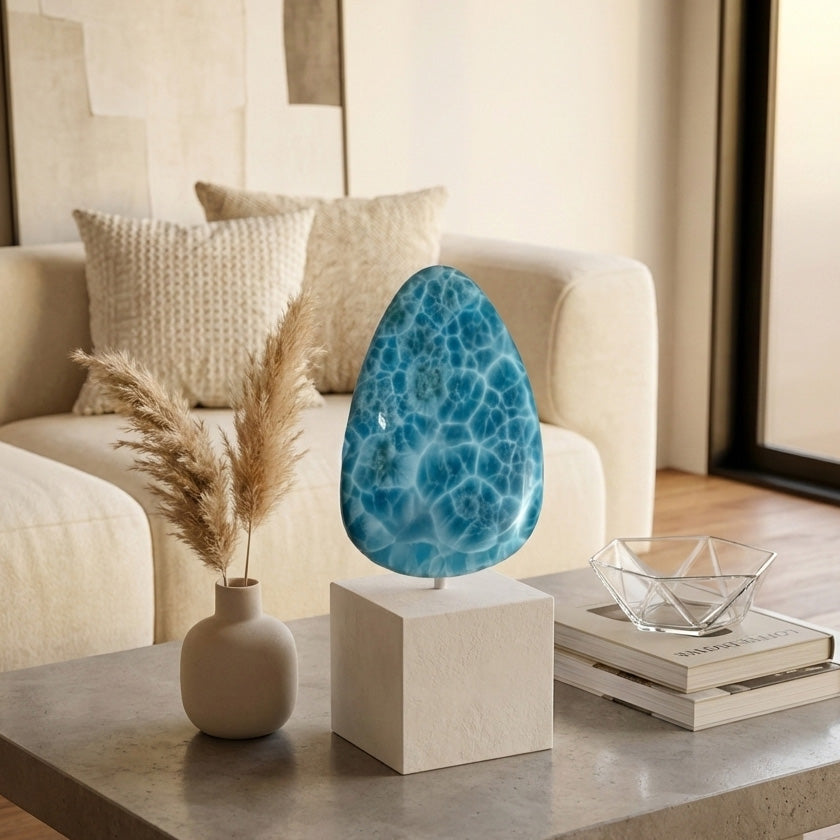
Larimar is unlike harder, more predictable gemstones. Its appeal comes from ocean-blue color, white clouding, volcanic matrix, and natural patterning that can resemble surf, sky, or shallow tropical water. Those same qualities also make cutting more selective. A skilled cutter has to preserve the best color zones, avoid weak areas, and create a shape that flatters the pattern rather than fighting it.

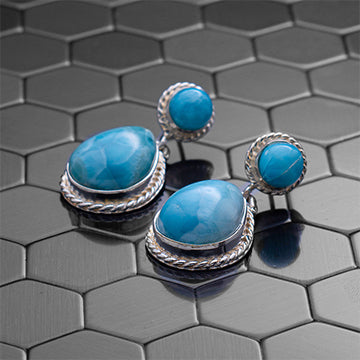
This is one reason collectors and jewelry buyers pay close attention to cut quality in Larimar. A fine cabochon does more than fit a setting. It presents the gem’s color in a way that feels alive, balanced, and distinctly natural. When done well, the result has a calm glow that suits rings, pendants, earrings, and collector stones alike.

What makes Larimar ideal for cabochons

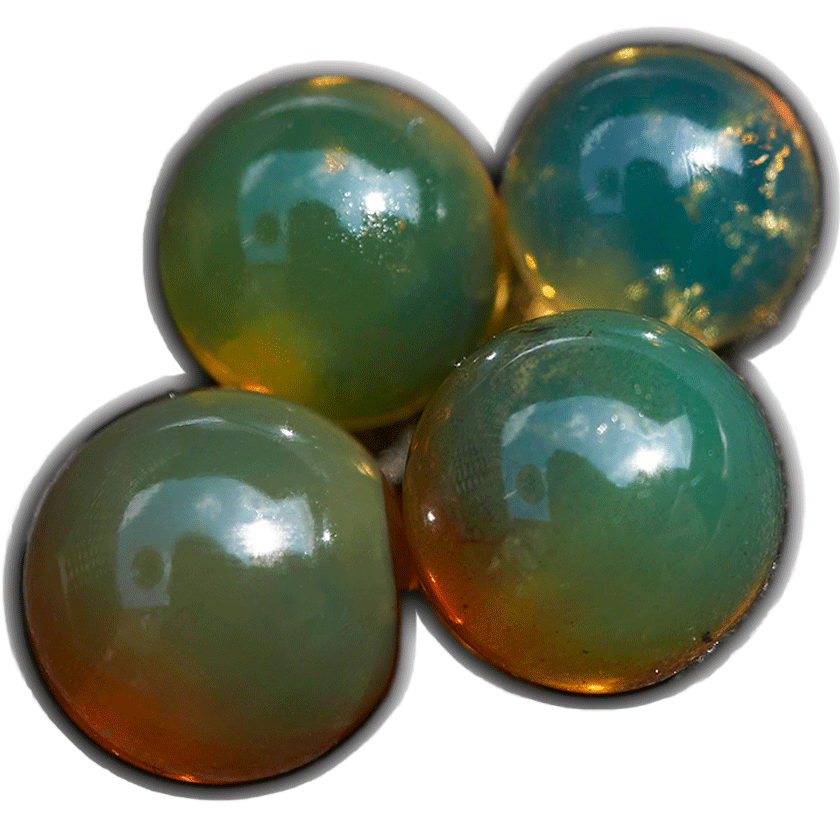
Larimar is typically cut as a cabochon rather than a faceted gem because of both aesthetics and material behavior. Its beauty is not based on brilliance or sparkle in the traditional sense. It is based on surface flow, pattern, saturation, and polish. The smooth dome of a cabochon gives the eye room to appreciate those details.

There is also a practical reason. Larimar is relatively soft compared with stones commonly used in faceted fine jewelry. Cabochon cutting protects the stone better by avoiding thin corners and delicate facet junctions. A rounded form is more forgiving in wear and better suited to a gem that is admired for color fields and visual texture.

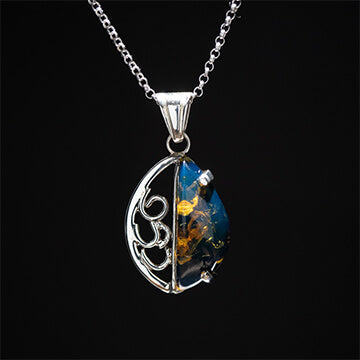
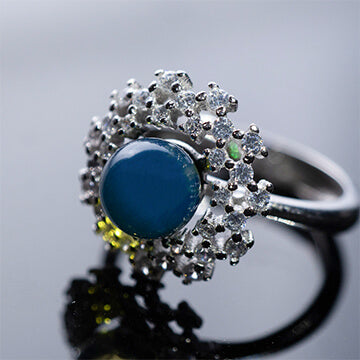
For premium jewelry, cabochons allow the artisan to pair the stone with silver or gold in a way that feels organic and refined. The cut does not compete with the gem’s natural personality. It frames it.

The first decision is always the rough

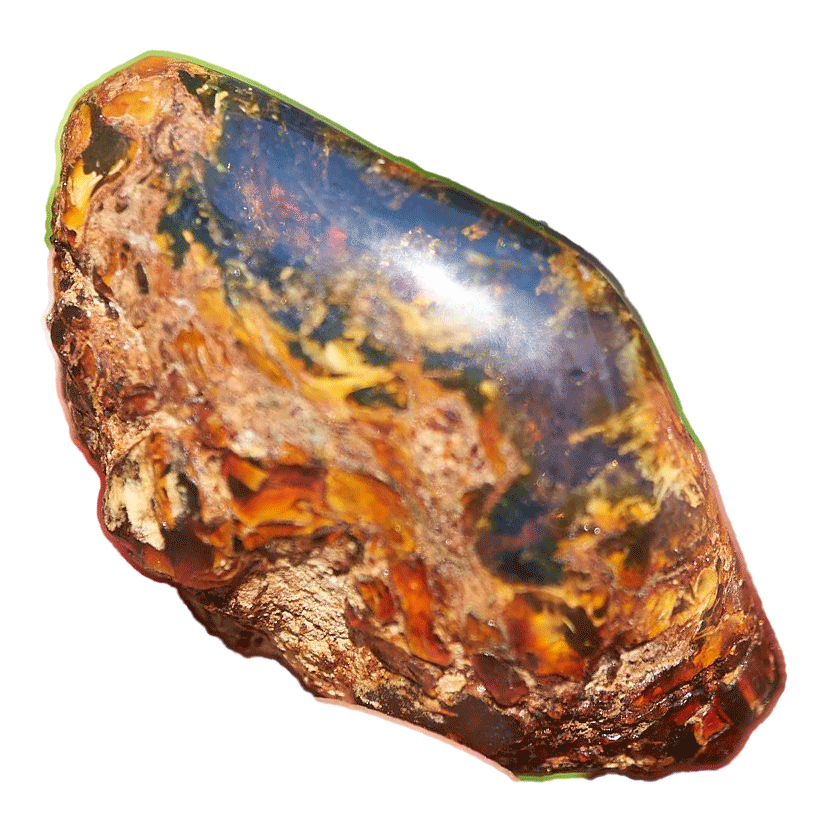
Excellent larimar cabochon cutting starts with rough selection. Not every piece of rough deserves the same treatment, and not every blue area should automatically become a finished cabochon. The cutter studies several things at once: the strength of the blue, the distribution of white patterning, the presence of fractures, the amount of stable material, and the orientation that will show the best face.

This is where experience matters most. Some rough looks promising from the outside but opens to reveal chalkier zones or structural weakness. Other pieces appear modest until they are trimmed and reveal concentrated blue with graceful pattern movement. The best cutters do not force a shape too early. They let the stone suggest what it can become.

For buyers, this helps explain why fine Larimar cabochons vary so much from one piece to another. Rarity is not just about finding Larimar. It is about finding rough with strong natural beauty and enough integrity to cut well.

Shape, dome, and orientation

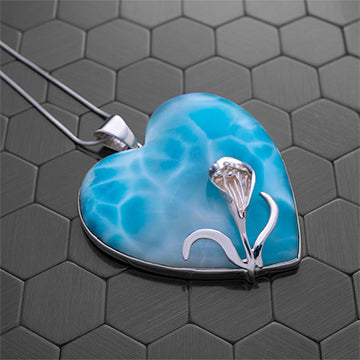
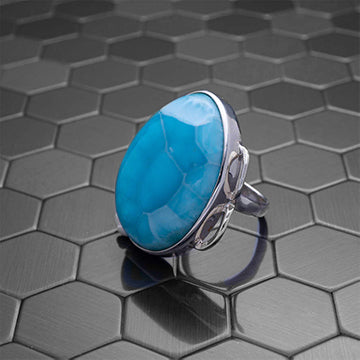
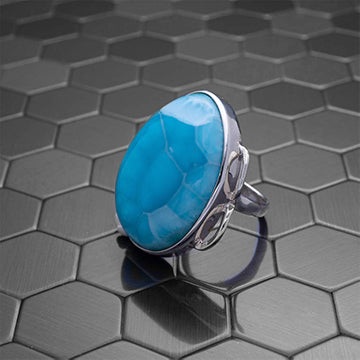
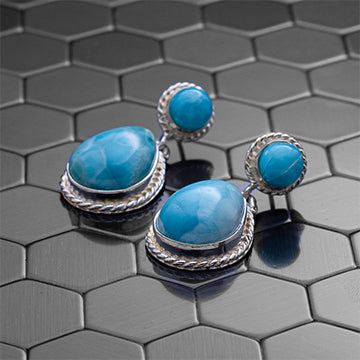
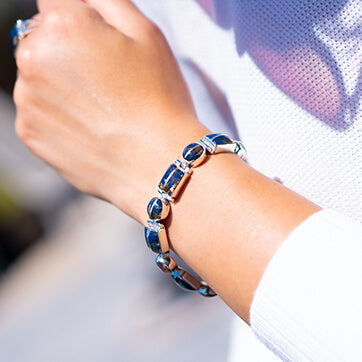
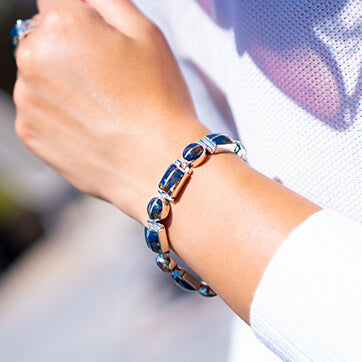
Once the rough is selected, the cutter chooses a shape. Oval remains one of the most popular because it suits Larimar’s flowing patterns and works beautifully in pendants and rings. Pears, freeforms, rounds, marquises, and hearts also appear, especially when the goal is to preserve a remarkable patch of color or a particularly beautiful wave-like formation.

The dome height matters more than many buyers realize. A dome that is too low can make the stone feel flat and lifeless. A dome that is too high can darken the face or emphasize unevenness in the material. The right dome creates gentle dimension while keeping the color open and visible.

Orientation is equally important. A cutter may rotate the rough several times to decide how the pattern should sit when worn. A sweeping white band might look like a breaker across blue water in one direction, and like an awkward interruption in another. In a premium cabochon, the composition feels intentional even though the pattern is entirely natural.

Color is the heart of the cut

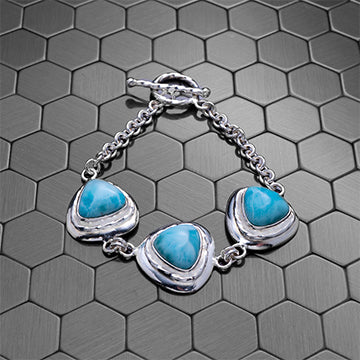
Larimar is treasured for its blue, but not all blue presents the same way after cutting. Some material shows pale, airy sky tones. Some shows richer pool-blue or turquoise-like areas. Many of the most attractive stones combine multiple tones with white patterning that adds contrast and movement.

A skilled cutter aims to present the most attractive color balance on the face of the cabochon. That may mean sacrificing size for saturation. It may mean trimming away distracting matrix. It may also mean preserving a little white because the contrast makes the blue appear brighter and more oceanic.

This is where value becomes nuanced. Buyers sometimes assume the biggest cabochon is the best one, but that is not always true. A smaller cabochon with vivid color, graceful pattern, and a clean polish often feels more luxurious than a larger stone with washed-out tone or structural issues. In Larimar, beauty is rarely about size alone.

Polish, finish, and surface quality

The finish of a Larimar cabochon tells you a great deal about the quality of the cutting. A fine polish should feel smooth, glossy, and even, without dull patches that interrupt the color. Because Larimar can contain areas of varying density, achieving a consistent polish takes care and patience.

Surface quality also affects how the gem wears in jewelry. Tiny pits, soft spots, or uneven finishing may not always be obvious in a quick glance, but they can reduce the cabochon’s visual crispness and durability. In a well-cut stone, the polish enhances the pattern instead of distracting from it.

Edges matter too. The girdle should be shaped cleanly enough for secure setting, especially in rings where protection is essential. A beautiful face means less if the stone has been left with weak edges or poor proportions that complicate setting.

The trade-offs behind every cabochon

No two cutting decisions are exactly the same because Larimar asks for judgment at every stage. A cutter may choose a larger shape and accept softer color, or go smaller to highlight a vivid patch of blue. One stone may look best with a classic oval, while another needs a freeform to preserve a rare wave-like pattern. Sometimes a little natural matrix adds character. Sometimes it distracts.

This is part of what makes authentic Larimar so compelling. It is not mass-produced sameness. It is a gemstone where craftsmanship and natural individuality meet. The best cabochons do not look generic. They look curated.

For collectors, that individuality is a major part of the appeal. For jewelry buyers, it means a ring or pendant can feel genuinely personal, as though the stone was chosen for a specific mood and design rather than pulled from a standardized batch.

How to recognize a well-cut Larimar cabochon

When viewing a finished stone, start with the face-up appearance. The color should feel pleasing and balanced, with pattern that draws the eye naturally across the surface. Then look at symmetry. Even freeform cabochons should feel harmonious rather than accidental.

Next, consider the dome and polish together. The surface should catch light softly and evenly, without flat dead areas. Finally, inspect the edges and back. A well-finished cabochon is not only attractive from the front. It is competently made all around, ready for fine jewelry or collecting.

If authenticity and craftsmanship matter to you, it is worth choosing specialists who understand Dominican material and its cutting demands. That expertise shows in the finished stone, and it is one reason discerning buyers turn to focused sources such as Larimar Creations when searching for collector-grade cabochons and jewelry stones.

Why this craftsmanship adds lasting value

A fine Larimar cabochon carries more than color. It carries origin, rarity, and the hand of the artisan who revealed its best qualities. In a market filled with generic gemstone offerings, that matters. People are not simply buying a polished blue stone. They are choosing a piece of the Caribbean shaped with respect for the material.

That is why larimar cabochon cutting deserves attention on its own. The cut determines whether the stone feels ordinary or unforgettable, whether the color sings or falls flat, whether the final piece has presence or merely size. When the rough is authentic and the craftsmanship is thoughtful, the result is something quietly exceptional.

The next time you see a Larimar cabochon that stops you for a moment, look a little closer. What you are admiring is not only nature’s pattern, but the judgment it took to bring that pattern forward with grace.


Let's Stay In Touch