
by Admin April 25, 2026 6 min read

A gemstone that looks like sunlight passing through shallow Caribbean water should feel rare - and Larimar is. The story of larimar stone origin is not a broad, global mining story with deposits scattered across continents. It begins and ends in one place: the Dominican Republic, where this remarkable blue variety of pectolite was formed by a singular combination of geology, volcanic activity, and time.

For buyers who care about authenticity, origin is not a minor detail. With Larimar, origin is the reason the stone holds its value, its identity, and its emotional appeal. When you wear a Larimar pendant, ring, or bracelet, you are not simply wearing a blue gemstone. You are wearing a piece of the Caribbean with a source so specific that it cannot be meaningfully separated from the stone itself.

What Is the Larimar Stone Origin?

The larimar stone origin traces back to the Barahona region of the Dominican Republic, especially the mountainous area around Bahoruco. This is the only known place in the world where Larimar is mined in commercially recognized quantities. That geographic exclusivity is one of the clearest reasons Larimar has become such a prized gemstone for collectors and jewelry buyers alike.

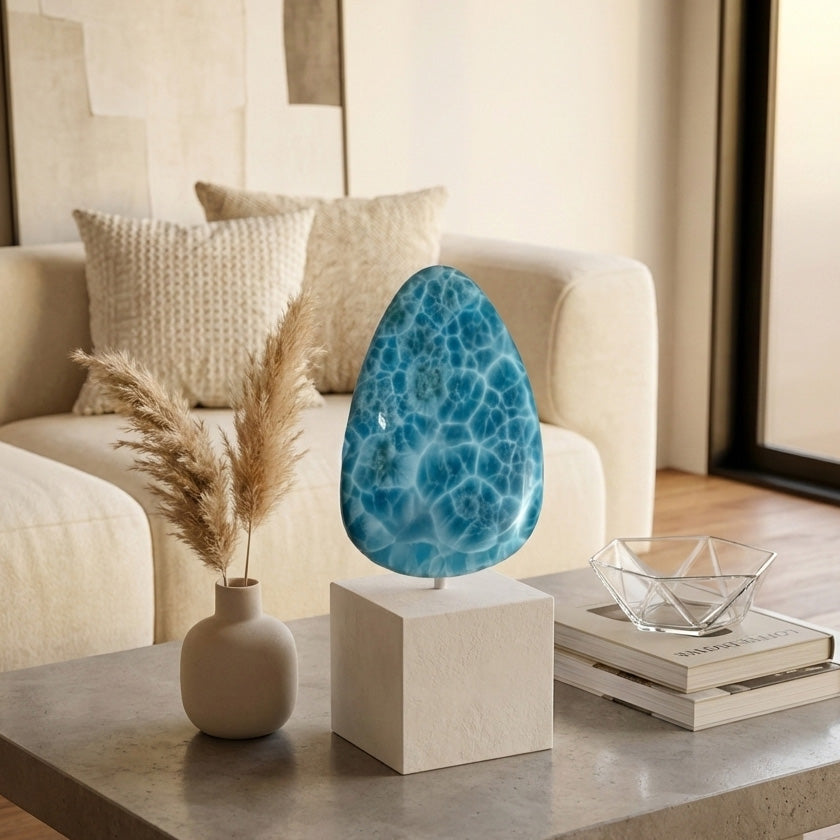
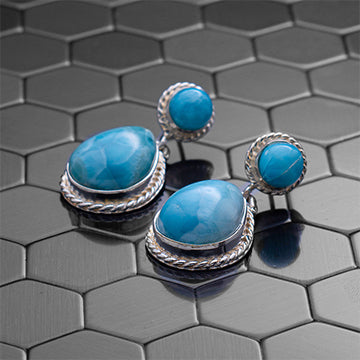
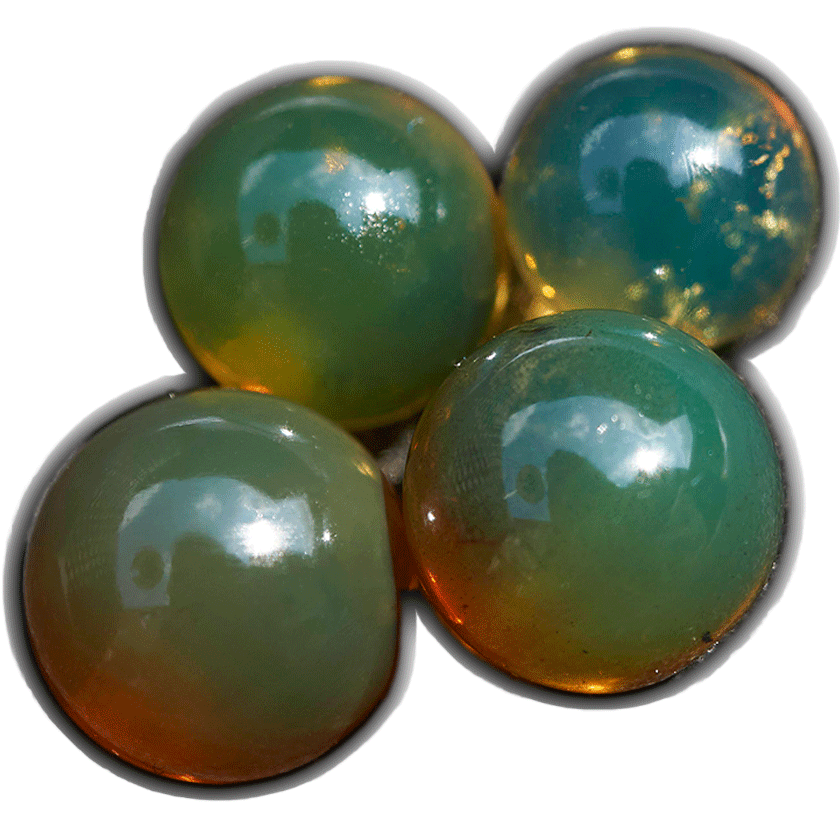
Mineralogically, Larimar is a rare blue variety of pectolite. Pectolite itself is not unique to the Dominican Republic and can be found in other parts of the world. What makes Larimar different is its distinctive volcanic blue color, often layered with white patterns that resemble sea foam, cloud wisps, or shifting surf. That color is tied to the specific mineral conditions present where it formed.

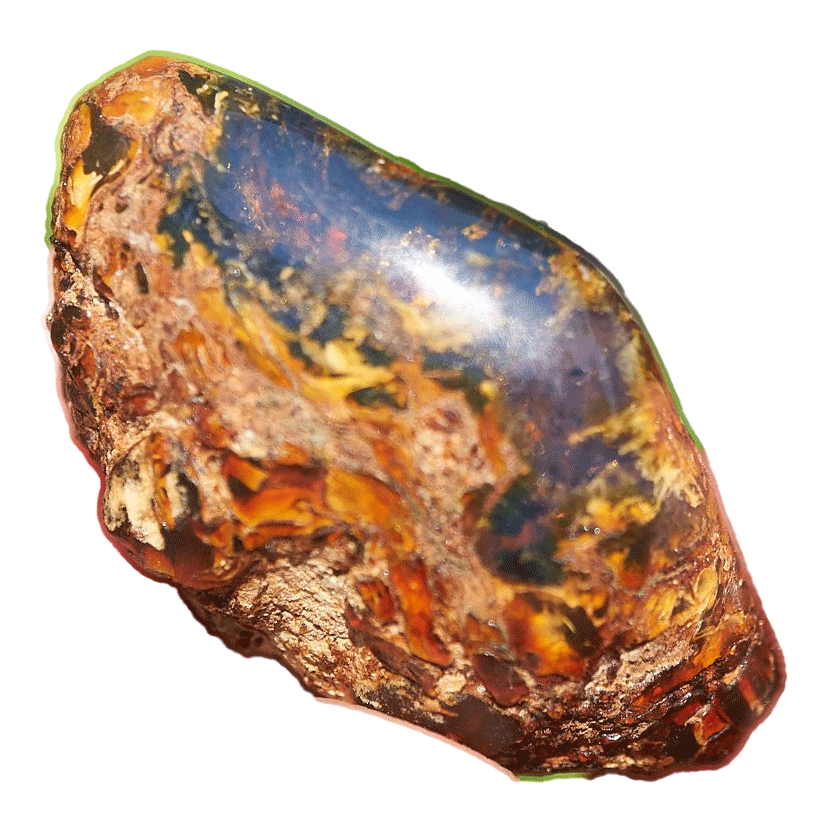
The widely accepted geological explanation is that Larimar developed in cavities created by volcanic activity. Hot mineral-rich solutions moved through the volcanic rock and crystallized over long periods. Trace elements, particularly copper, are associated with the blue coloration that makes Larimar instantly recognizable. Not every pectolite deposit becomes Larimar. In fact, almost none do.

Why Larimar Comes Only From the Dominican Republic

Rarity in gemstones can mean several things. Sometimes a stone is chemically uncommon. Sometimes it is difficult to mine. In Larimar’s case, rarity is also geographic. The conditions that created it appear to have occurred in a very limited area, and that matters.

The Dominican Republic offers a specific volcanic and mineral environment that produced this ocean-blue pectolite in a way not seen elsewhere. That does not mean no similar-looking stones exist on the market. It does mean that true Larimar, in the strict and authentic sense, is Dominican by origin.

This is where buyers need to be careful. Because Larimar is visually distinctive and tied to a strong travel and luxury narrative, it is sometimes imitated, misnamed, or loosely described. Pale blue stones, dyed materials, composites, and lower-grade lookalikes can all appear in the broader jewelry market. If origin is missing from the description, that omission is worth noticing.

For a gemstone this location-specific, authenticity begins with source transparency. A seller should be able to state clearly that the stone comes from the Dominican Republic. Better still, the craftsmanship and presentation should reflect respect for the material rather than treating it like interchangeable fashion inventory.

The Discovery Story Behind Larimar

Larimar feels ancient because it is geological, but its modern jewelry story is relatively recent. Local people in the Dominican Republic had noticed blue stones washed down toward the sea long before the deposit was formally recognized. The stone’s current name is often credited to a combination of Larissa, the name of a discoverer’s daughter, and mar, the Spanish word for sea.

That name fits the stone almost too perfectly. Larimar’s best pieces carry a visual language of water, light, and movement. White matrix patterns drifting through blue body color can resemble tropical waves, while deeper blue examples evoke the richer color of open water.

Still, the romance of the name should not overshadow the importance of the mining source. The deposit was not found in a showroom-ready form. It had to be traced inland from stones washed downstream to the mountainous mine area where the material could be extracted more directly. That journey from river-carried clues to mountain mining is part of what gives Larimar its sense of place.

Larimar Stone Origin and Mining Reality

When people imagine rare gemstones, they often picture polished perfection first. The reality begins underground. Larimar is mined in challenging conditions, and that affects both availability and quality.

Mining in the Dominican Republic is often labor-intensive. Stones are extracted from host rock, then sorted, cut, and evaluated for color, pattern, structural stability, and jewelry potential. Not every rough piece yields a fine cabochon or a collector-worthy carving. Some material is too pale. Some is heavily fractured. Some has attractive patterning but less saturated blue.

That is why two Larimar pieces can differ dramatically in appearance and value. Origin alone does not make every specimen equal. The finest material tends to show vivid blue color, balanced white patterning, and enough integrity to be shaped into jewelry that will wear well. More affordable stones may still be authentic, but they can have softer color or more matrix.

For buyers, this creates an important distinction. Authentic origin tells you the stone is real Larimar. Quality tells you how exceptional that particular piece is.

How Origin Shapes Value in Larimar Jewelry

In many gemstone categories, beauty and durability dominate the buying decision. With Larimar, origin is part of beauty. Knowing the stone comes from one Caribbean source gives it a narrative that mass-market blue gems cannot replicate.

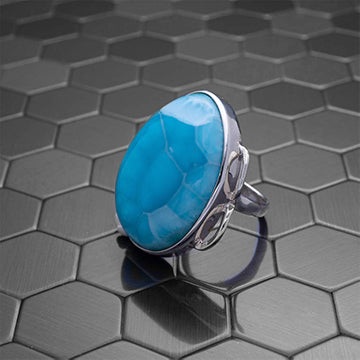
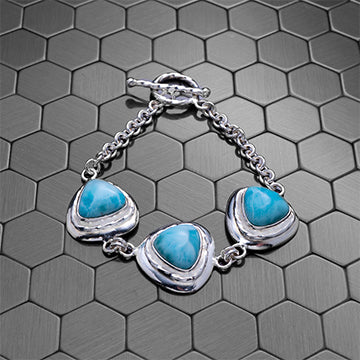
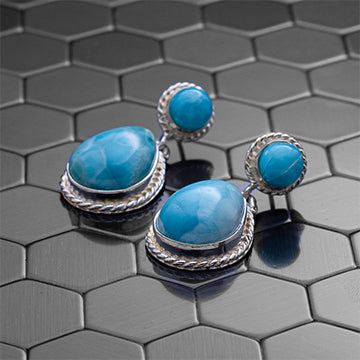
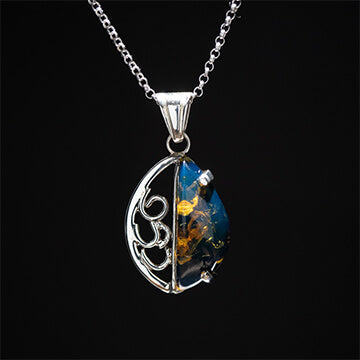
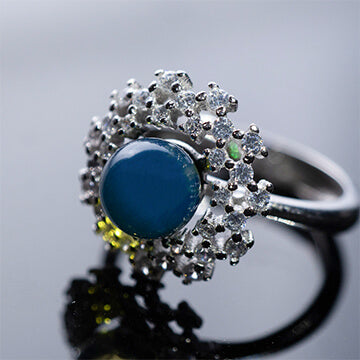
That matters whether you are shopping for a delicate pendant, a statement ring, artisan earrings, or collector cabochons. A genuine Larimar stone carries a direct connection to the Dominican Republic’s landscape, culture, and craftsmanship traditions. It is not a generic gemstone with a convenient backstory added later. Its backstory is inseparable from what it is.

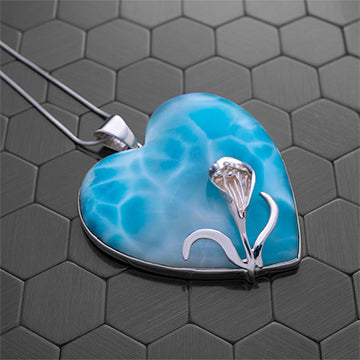
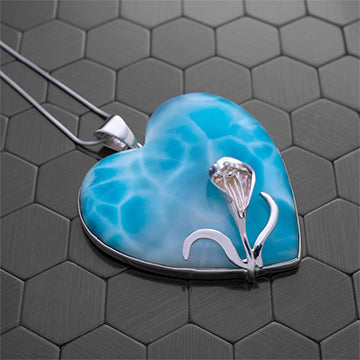
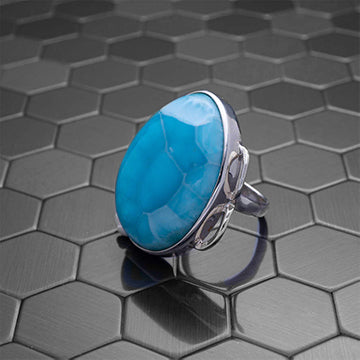
This also explains why handcrafted settings are such a natural match. Larimar has character. Its patterns are individual, and each stone tends to ask for a slightly different approach in design. A thoughtfully made setting respects the contours, color balance, and surface personality of the material rather than forcing it into a one-size-fits-all look.

For gift buyers, that origin adds meaning. For collectors, it adds legitimacy. For jewelry lovers who want something less common than mainstream blue stones, it adds distinction.

What Authentic Buyers Should Look For

If larimar stone origin matters to you, ask a few practical questions before purchasing. First, is the stone clearly identified as coming from the Dominican Republic? Second, does the seller emphasize authenticity rather than only aesthetics? Third, does the stone’s appearance align with natural Larimar, including the kind of blue-and-white variation expected in genuine material?

Certification or authenticity language can also be reassuring, especially when buying higher-value pieces. A premium Larimar seller should understand that customers are not just buying color. They are buying rarity, source credibility, and craftsmanship.

It also helps to have realistic expectations. Because Larimar is natural, no two stones will match exactly. Slight variation is a strength, not a flaw. In fact, perfectly uniform color in a suspiciously inexpensive piece may raise more concerns than gentle natural variation would.

At Larimar Creations, that connection between source and finished jewelry is central to the appeal. Buyers are not simply selecting a gemstone accessory. They are choosing authentic Caribbean material shaped into pieces meant to be worn, gifted, and kept.

Why the Origin Story Still Matters

Some gemstones become so commercialized that their source fades into the background. Larimar resists that. Its rarity is still tied to place, and place still shapes desire.

That is part of what makes Larimar feel intimate as jewelry. It brings together geology, geography, and design in a way that feels both luxurious and personal. The blue tones call to mind the sea, but the true value lies deeper - in a gemstone whose origin is narrow, traceable, and genuinely rare.

When you choose Larimar with care, you are choosing more than a beautiful stone. You are choosing authenticity with a clear homeland, shaped by nature in one extraordinary corner of the Caribbean. That kind of origin is not just interesting. It is exactly what makes the stone worth treasuring.


Let's Stay In Touch