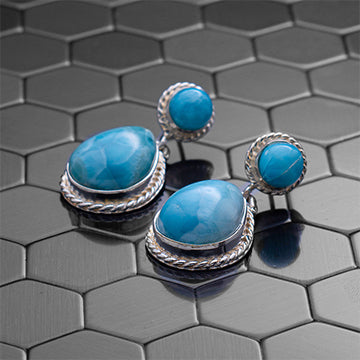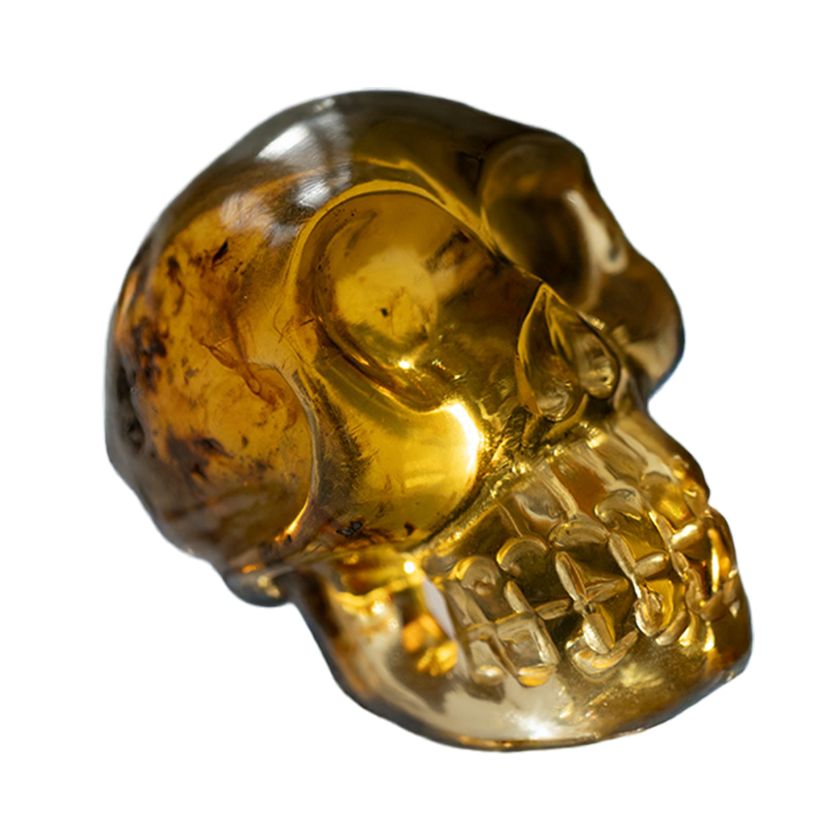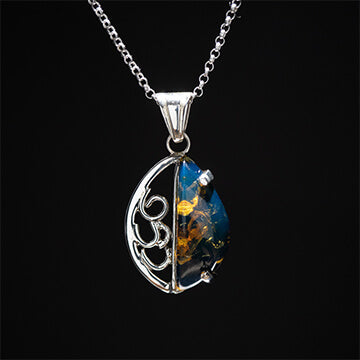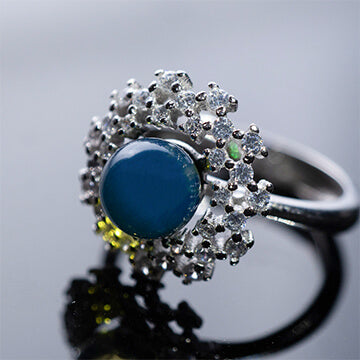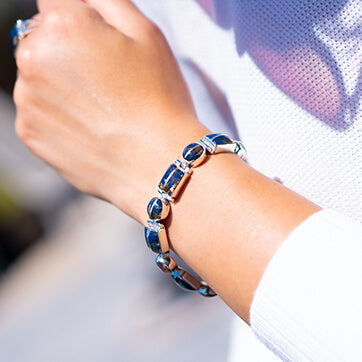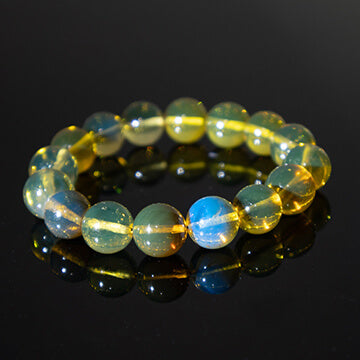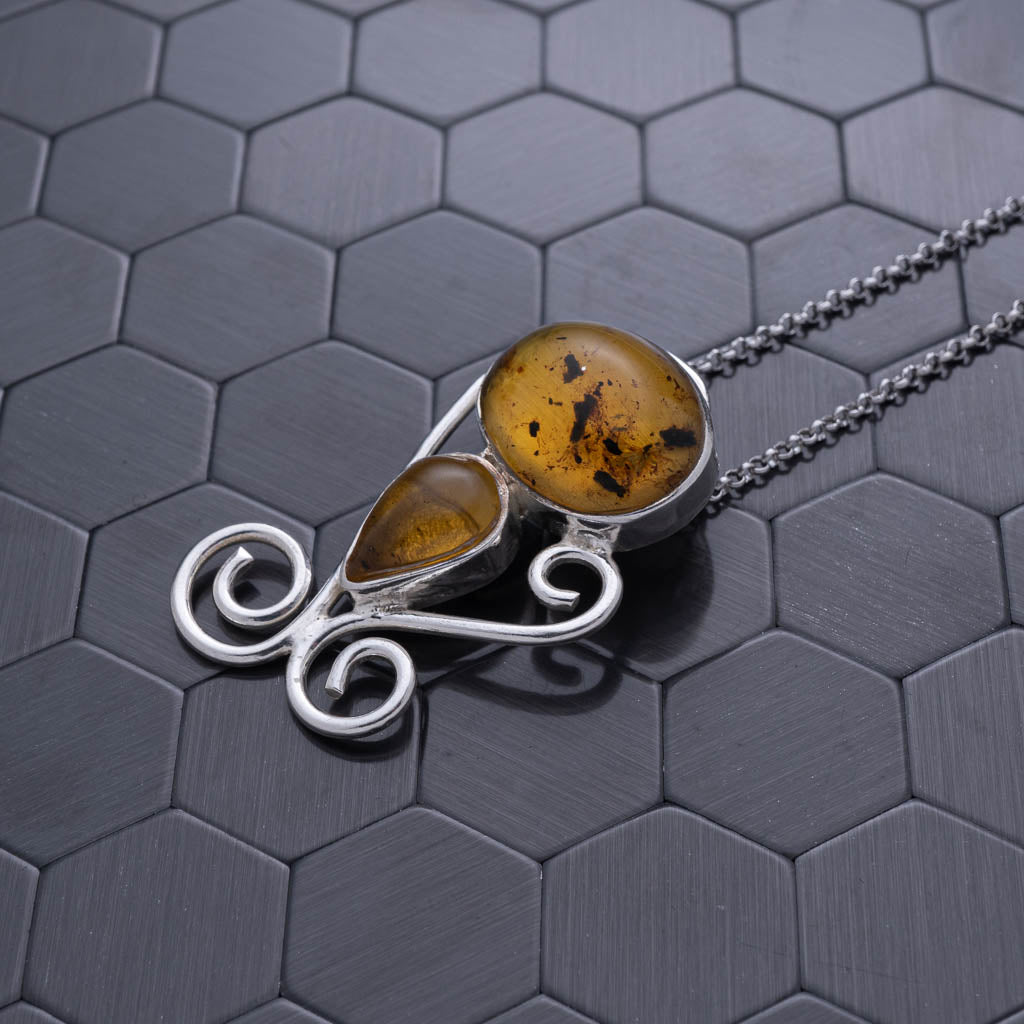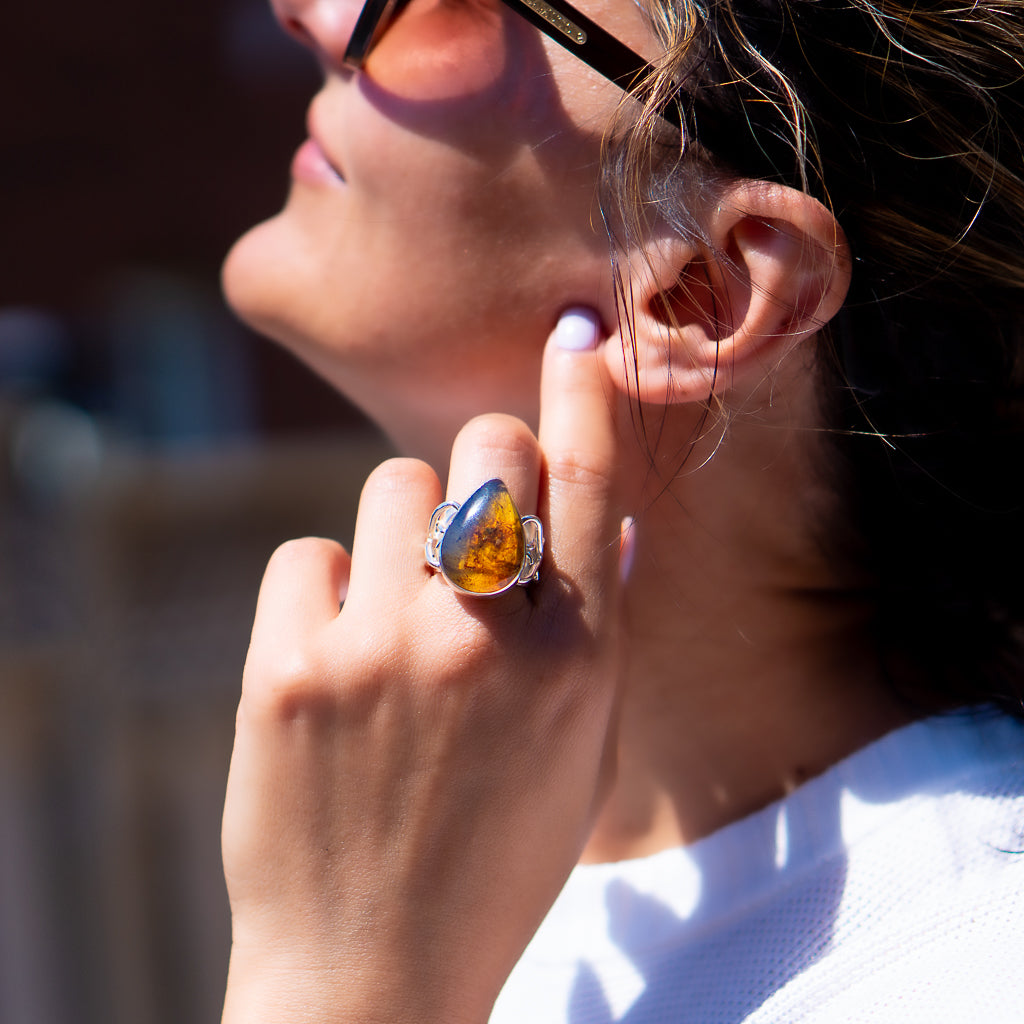

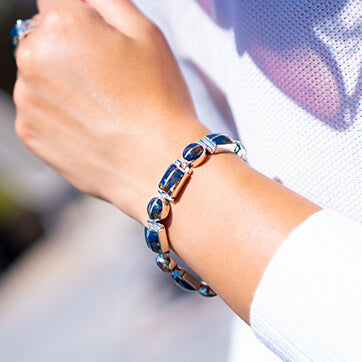
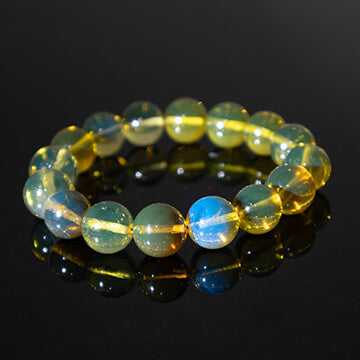
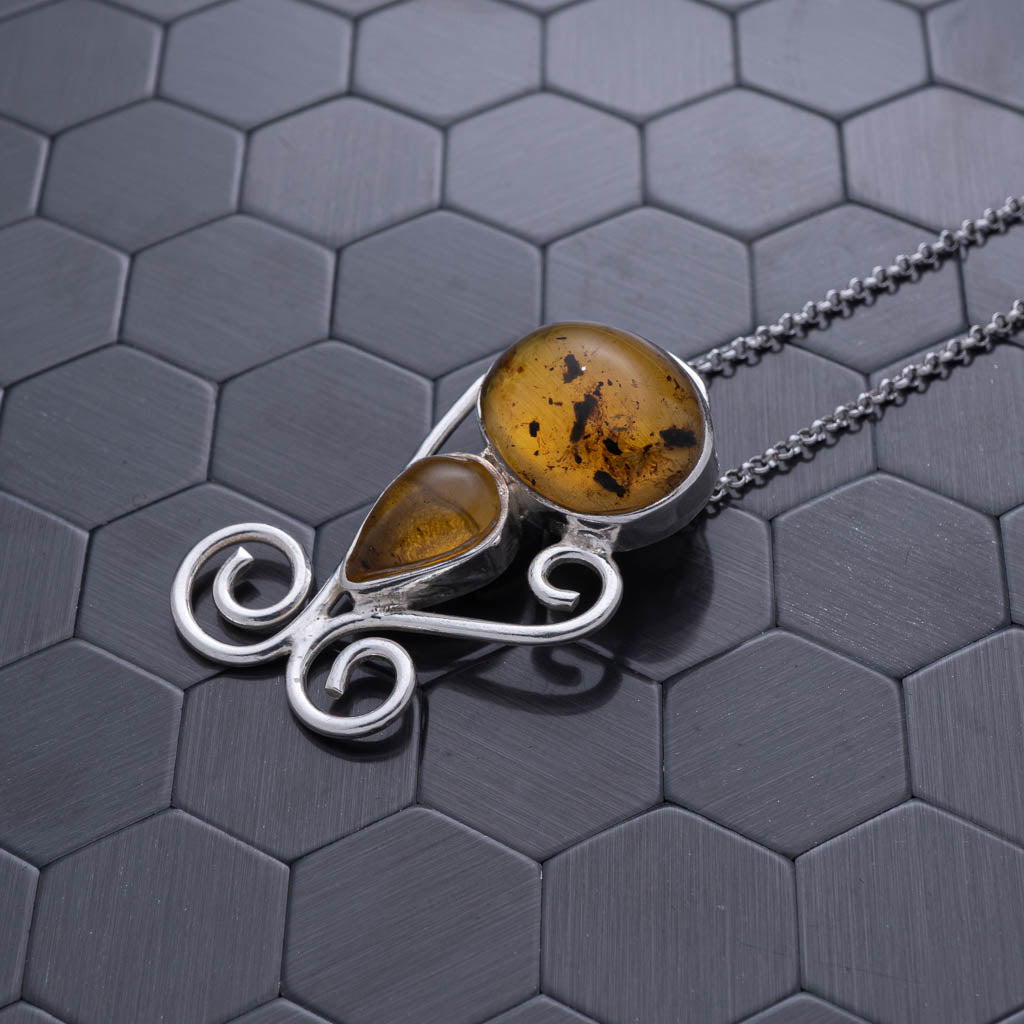
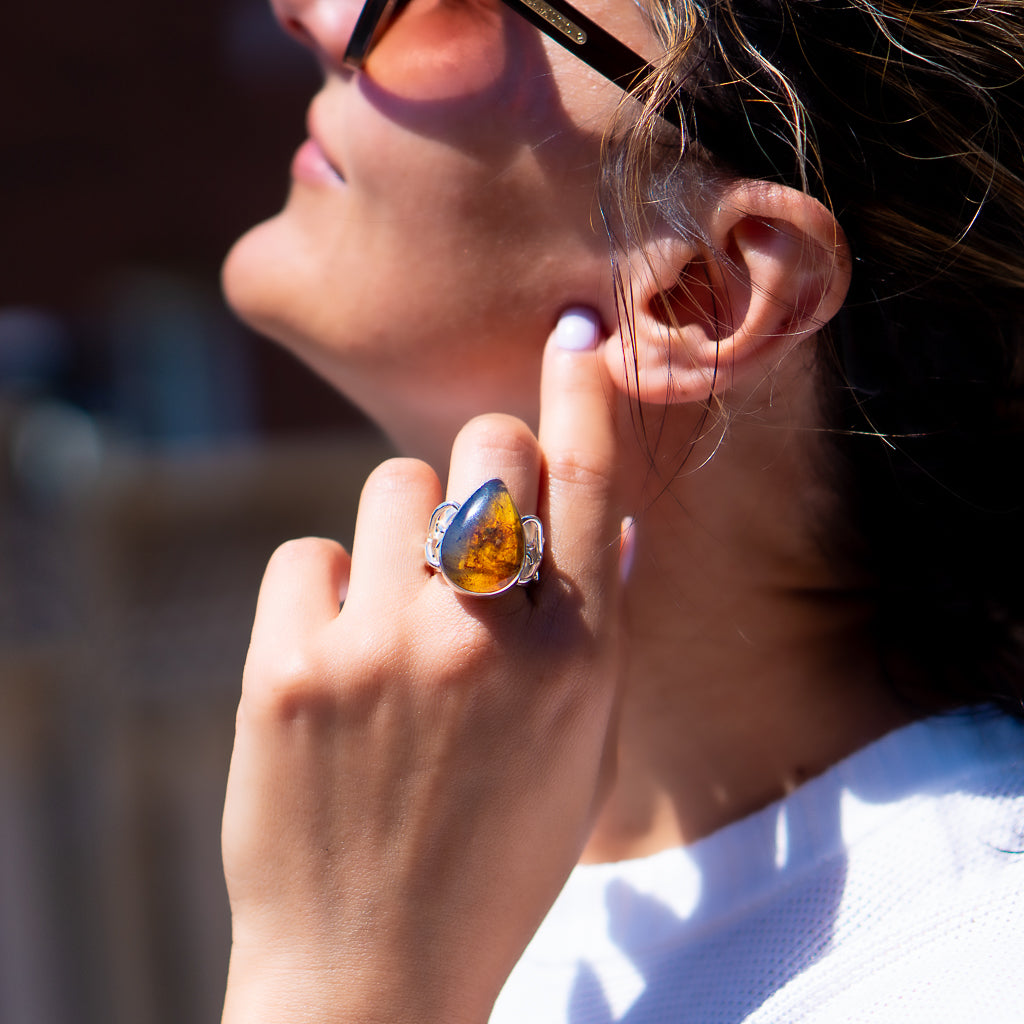
Larimar
Blue Amber
Green Amber
Amber Carvings
More

by Admin September 19, 2026 6 min read

A carving can be made from a rare stone and still fall short of collector quality. The difference often appears in the smallest places: a shallow facial detail, a dull area beneath the polish, an awkward curve, or a fracture concealed in the design. This gemstone carving quality review explains how to look beyond first impression and recognize the workmanship, material selection, and authenticity that give a Larimar or Dominican amber carving lasting appeal.

For collectors and gift buyers, a fine carving should feel intentional from every angle. It honors the personality of the stone rather than forcing a generic shape onto it. That balance is especially meaningful with Caribbean gemstones, where ocean-blue Larimar patterns and amber’s ancient inclusions make every piece naturally individual.

What Defines Quality in a Gemstone Carving?

Carving quality begins before the artisan touches a tool. A skilled cutter studies the rough material, identifies its strongest color and cleanest areas, and chooses a subject that works with the stone’s natural shape. This matters because both Larimar and amber have characteristics that require judgment, patience, and respect for the material.

A high-quality carving brings together three elements: sound gemstone material, confident sculptural work, and a finish that preserves the stone’s natural beauty. One cannot fully compensate for another. A detailed design made from heavily fractured material may be fragile, while a flawless blue amber specimen with flat, vague carving will not carry the same artistic value.

The best pieces feel balanced in the hand and visually alive under changing light. Their details remain clear without looking mechanically harsh. Their polish enhances the surface without creating a plastic-like appearance.

Gemstone Carving Quality Review: Start With the Material

Before assessing the design, look at the gemstone itself. Natural variation is not a defect. In fact, the individual patterns, inclusions, and color transitions that mass-produced jewelry tries to eliminate are often part of what makes a genuine Caribbean gemstone extraordinary.

Evaluating Larimar Carvings

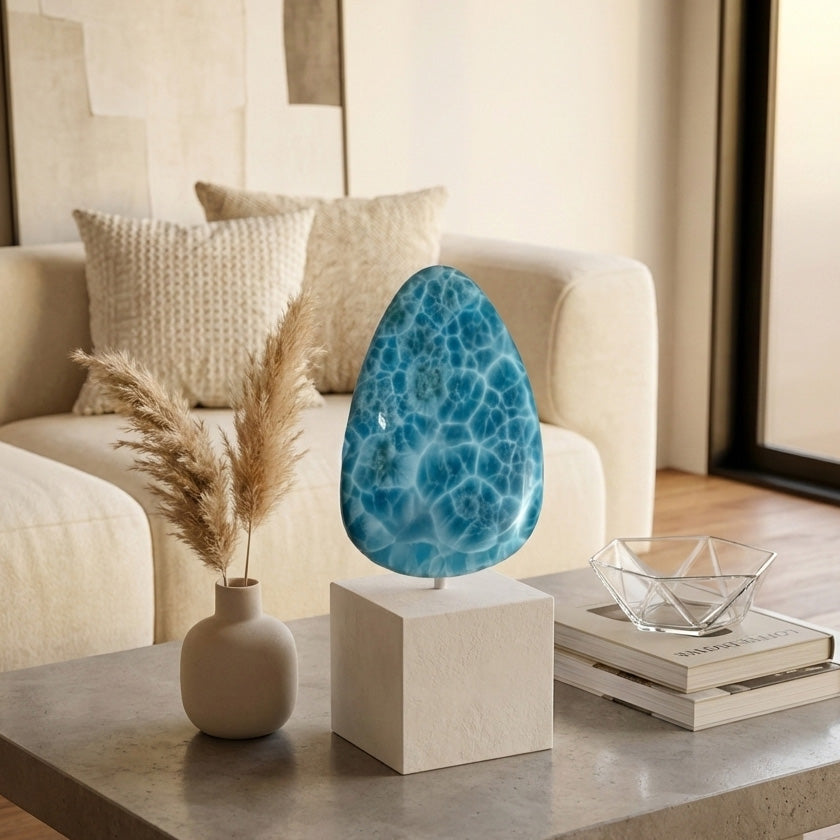
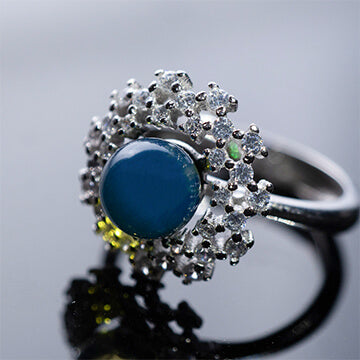
Exceptional Larimar is admired for its range of blue, from soft cloud blue to richly saturated sea-blue, often marked by white wave-like patterns. In a carving, color should be placed thoughtfully. A maker may position the most vivid blue at the center of a heart, a flower, or a sculpted ocean motif, allowing the pattern to become part of the composition.

Look for a surface that is stable and well polished, with no obvious open cracks or crumbly areas. Some natural matrix, pale zones, and pattern variation are expected in authentic Larimar. The question is whether these features add character or interrupt the carving’s strength and beauty.

A carving with deep blue color is desirable, but color alone is not the entire story. A paler piece with graceful sculpting, luminous polish, and a beautiful natural pattern can be more compelling than a darker stone cut without care. It depends on whether you value color saturation, artistic detail, rarity of pattern, or all three.

Evaluating Dominican Blue Amber Carvings

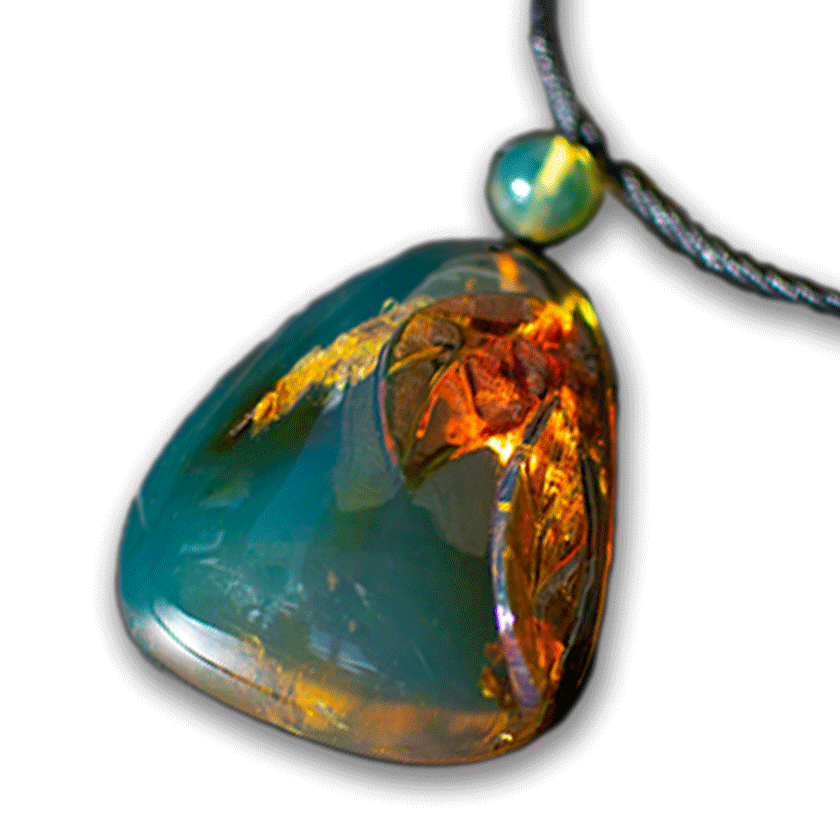
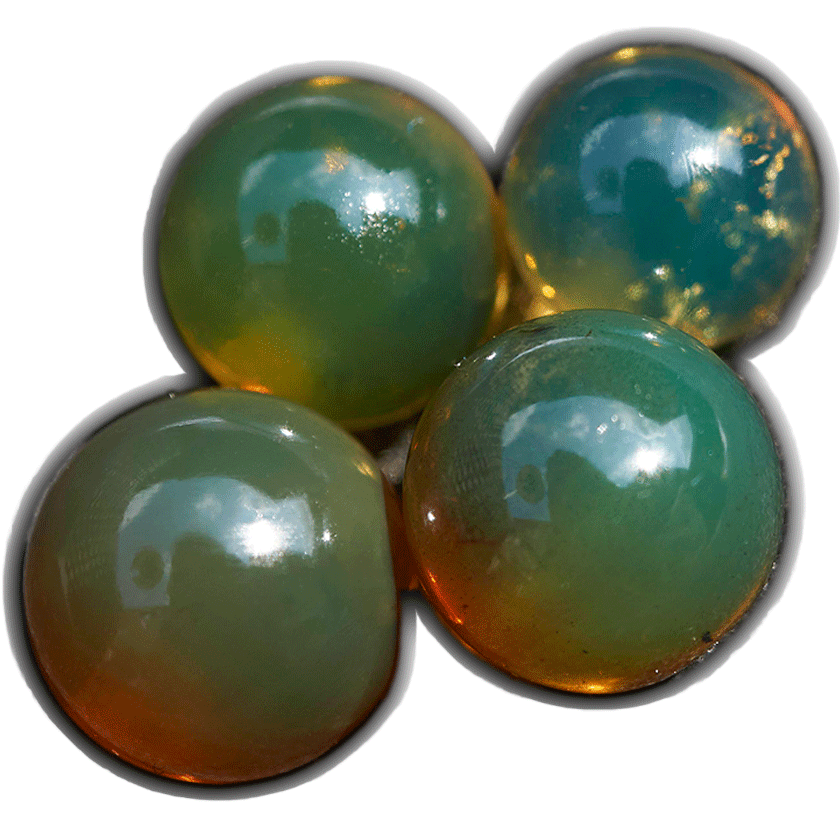
Dominican amber is warm, light, and organic in character, which allows talented artisans to create expressive forms that would be difficult in denser stones. Blue amber deserves particularly close attention because its remarkable blue or blue-green glow can shift with the light, background, and viewing angle.

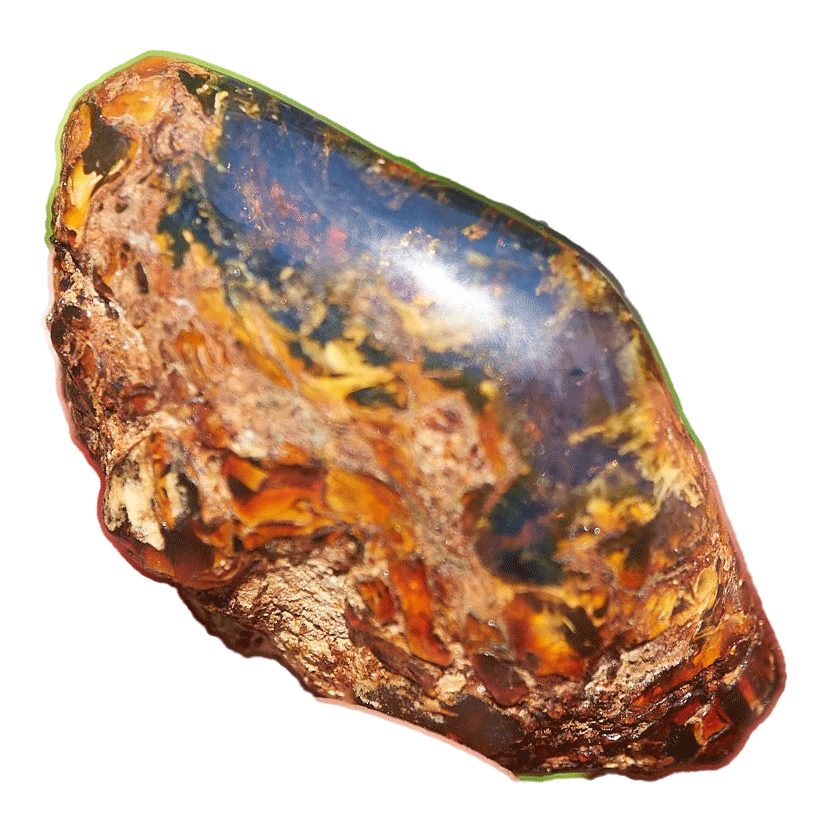
A quality blue amber carving should have good transparency or pleasing internal depth where the material allows it. Natural inclusions, wisps, and subtle internal features can be highly desirable, especially when they are clearly visible and do not compromise stability. An inclusion can transform a carving into a small time capsule from the Caribbean.

Be cautious of judging blue amber only by an intensely blue photograph. Lighting can strongly influence its appearance. Ask whether the stone is certified as authentic Dominican amber and examine images or descriptions that show its color behavior realistically. Authenticity and origin matter as much as visual drama.

Look Closely at the Carver’s Hand

The strongest carvings do not merely have more detail. They have the right detail. A small pendant cannot support the same depth as a large collector carving, so quality must be judged in proportion to scale.

Edges should be clean but not brittle-looking. Curves should flow naturally into one another. On figurative subjects, features such as eyes, petals, wings, or animal forms should have a sense of dimension rather than appearing scratched onto a flat surface. On abstract pieces, symmetry and rhythm should feel deliberate, even when the stone’s natural outline remains irregular.

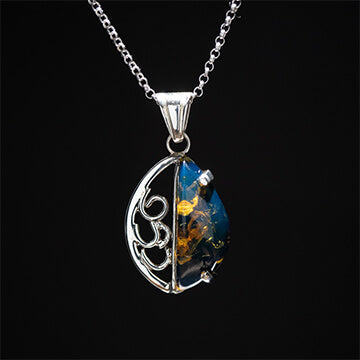
Turn the piece over. The reverse is often revealing. Fine work is usually finished on the back as carefully as the front, with smooth transitions and no neglected rough patches. A carving intended for jewelry should also have a practical profile. It should sit comfortably against the body, and any drilled hole, bail area, or setting point should be placed to support the piece without distracting from its design.

Hand-carved work may show subtle evidence of the artisan’s process, especially in complex areas. That is not automatically a flaw. The concern is not whether a carving is perfectly machine-uniform. The concern is whether tool marks feel unfinished, details are inconsistent, or thin projections appear weak enough to chip with ordinary wear.

Polish Is More Than Shine

Polish reveals whether a carving has been brought to completion. On Larimar, a fine polish should create a gentle, watery luster that lets the blue color and cloud patterns breathe. A hazy surface can make even excellent material look tired, while excessive polishing around delicate details can soften the very features that give the carving definition.

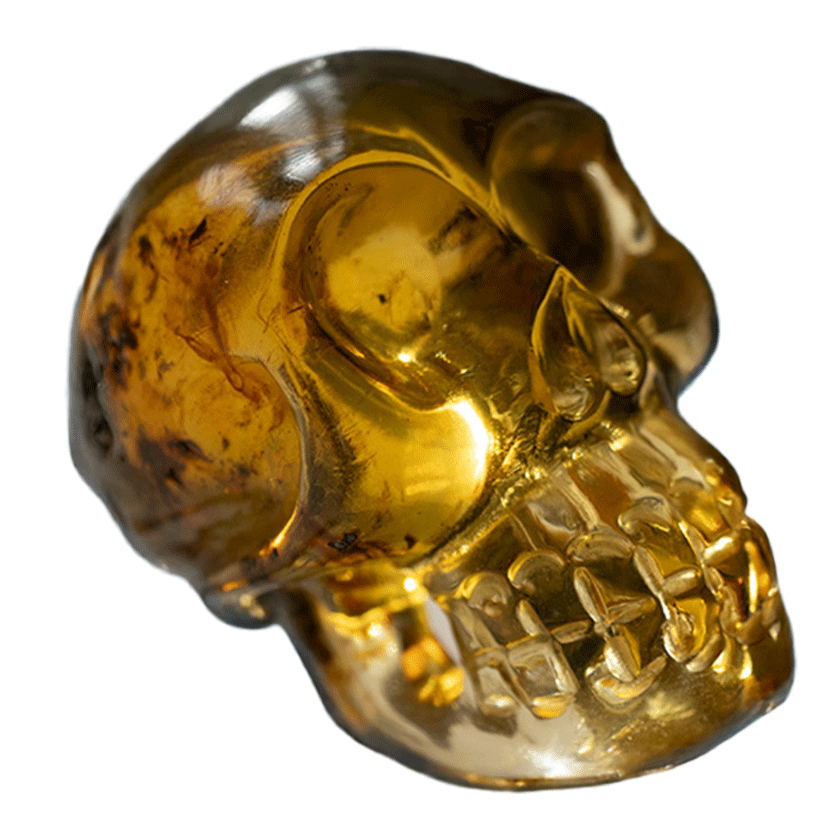
Amber calls for a slightly different eye. It can take on a glowing, almost sunlit finish, but it is softer than many mineral gemstones and can scratch more easily. A quality amber carving should feel smooth, clear, and carefully finished without visible sanding lines. It should also be treated with appropriate care after purchase: avoid harsh chemicals, high heat, and storage beside harder gemstones.

Inspect the polish under angled light if possible. This is where shallow scratches, dull spots, pits, and uneven finishing are easiest to see. Tiny natural surface characteristics may occur, particularly in amber, but they should not be confused with careless workmanship.

Assess Structural Integrity Before You Fall in Love

A dramatic design is only worthwhile if it can endure. Check thin areas around drilled holes, pendant bails, points, and deeply undercut sections. These are the places most likely to experience stress.

Natural internal lines require context. Some may be harmless growth features or inclusions, while others may indicate fractures that reach the surface. A trustworthy seller should represent these honestly and provide clear photographs. For valuable carvings, certification and transparent origin information add meaningful confidence, particularly with rare Dominican stones.

Weight can also offer a useful clue, though it should never be used alone to determine authenticity. Amber is notably light for its size, while Larimar has a more substantial mineral feel. If a piece seems unusually heavy, overly uniform, or lacks the natural character expected of the material, ask questions before treating it as a collector-grade purchase.

Artistry, Rarity, and Value Are Connected

The value of a gemstone carving is not measured by carat weight alone. A distinctive subject, a skilled artisan’s execution, superior color placement, a rare inclusion, and documented origin can all elevate a piece beyond its raw material value.

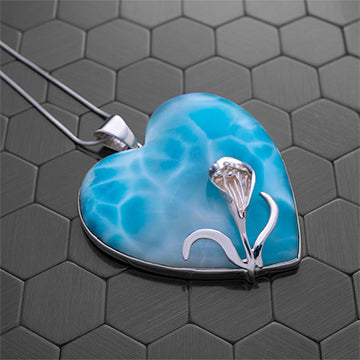
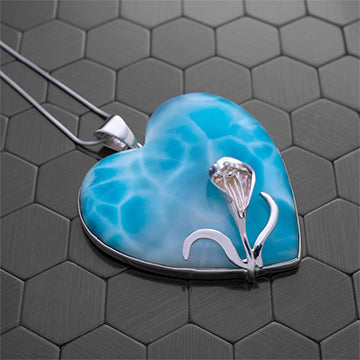
This is where personal taste belongs in the review. A serene Larimar heart with soft white waves may speak to someone seeking a romantic, wearable reminder of the sea. A blue amber carving with visible prehistoric life or striking internal glow may appeal more to a collector. Neither choice is inherently better. The better carving is the one whose material, craftsmanship, and story are all present at a level that justifies its price.

When choosing a piece from a specialized Caribbean gemstone collection, favor clear information over exaggerated claims. Ask about the stone’s origin, whether it is natural and certified, the carving method, and any visible characteristics that affect durability. A seller who values authentic Larimar and Dominican amber will welcome careful questions.

A remarkable carving rewards a second look. Let the blue shift across a Larimar surface, hold amber where light can reveal its depth, and notice whether every curve feels considered. Choose the piece that still feels exceptional after the first sparkle has passed - it is the one most likely to become a lasting part of your collection.

Polished Rings: Craftsmanship and Quality Guide 2026

Polished Rings: Craftsmanship and Quality Guide 2026

10 min read

Discover the art of polished rings, from lapidary techniques to metal finishing. Expert insights on polishing gemstones and metals for jewelry.
Read More
Amber Inclusion Collecting Guide for Beginners - Larimar Creations

Amber Inclusion Collecting Guide for Beginners

6 min read

This amber inclusion collecting guide helps you assess Dominican amber, identify genuine inclusions, and choose specimens with lasting collector appeal.
Read More
Polished Jewelry: Complete Guide to Care and Brilliance - Larimar Creations

Polished Jewelry: Complete Guide to Care and Brilliance

10 min read

Discover the art of polished jewelry care, from understanding finishes to maintaining gemstone luster. Expert guide for preserving your treasures.
Read More