
Larimar
Blue Amber
Green Amber
Amber Carvings
More

by Admin October 28, 2026 6 min read

A pale blue cabochon and a deep blue amber pendant may both be beautiful, but beauty alone does not tell a collector what they are buying. Thoughtful gemstone cataloging examples show how a stone’s color, origin, dimensions, treatment history, and craftsmanship become part of its lasting value. For rare Caribbean materials, a well-kept record protects the story behind every piece.

What a Gemstone Catalog Should Preserve

A gemstone catalog is more than inventory. It is a clear, lasting identity for a particular stone or finished jewel. This matters when each Larimar pattern is naturally one of a kind, or when Dominican amber reveals a rare optical character that cannot be captured by a simple product name.

The best records balance technical detail with visual clarity. A customer should be able to understand what makes a stone special, while a collector should have enough information to distinguish it from another piece years later. Origin deserves particular care. Larimar is associated with the Dominican Republic, and Dominican amber has a distinct place in the world of fossilized resin, especially when its blue fluorescence appears under the right light.

A useful catalog entry also separates verified facts from descriptive language. A statement such as natural Larimar, Dominican origin, should be supported by supplier documentation or certification where available. By contrast, ocean-blue color, cloud-like marbling, and sunset glow are honest visual descriptions. Both matter, but they should not be confused.

Gemstone Cataloging Examples for Larimar

Larimar is a stone of movement. Its white veining, soft blue body color, greenish notes, and occasional darker mineral patterns mean two stones of the same weight can have very different personalities. The catalog should make that individuality visible rather than reduce every piece to a generic blue gemstone.

Example: Larimar Cabochon for a Pendant

Catalog ID: LAR-CAB-0247
Material: Natural Larimar cabochon
Origin: Dominican Republic
Shape and cut: Freeform oval, high dome cabochon
Dimensions: 31.8 x 22.4 x 6.9 mm
Weight: 42.6 carats
Color and pattern: Medium Caribbean blue with white cloud veining and a small seafoam-green area near one edge
Clarity and surface: Opaque to slightly translucent at thin edges; polished surface, no visible chips
Treatment disclosure: No treatment disclosed
Intended use: One-of-a-kind pendant, bezel setting recommended
Images: Front, side profile, back, scale reference, and close-up of surface pattern

This entry gives the shopper a reason to look closely. The dimensions establish presence, the dome height helps a jeweler plan a setting, and the pattern description sets expectations before the stone arrives. Stating that the green note is localized also prevents a buyer from expecting an entirely blue cabochon.

For Larimar, color grades can be useful, but only when they are explained. A deep, saturated blue may be highly sought after, yet a lighter stone with remarkable white wave patterns can be equally compelling in a finished pendant. Rather than relying only on labels such as premium or AAA, describe the actual visual qualities: saturation, distribution of color, contrast, and pattern.

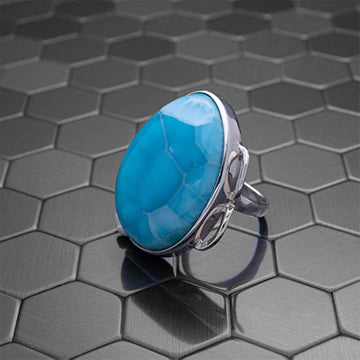
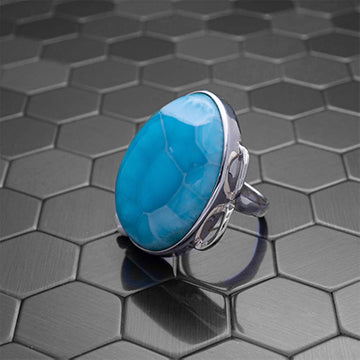
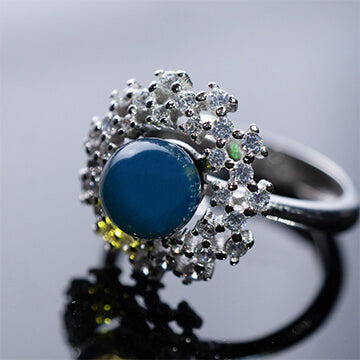
Example: Finished Larimar Ring

Catalog ID: LAR-RNG-118
Jewelry type: Handcrafted sterling silver ring
Center stone: Natural Larimar oval cabochon
Stone size: 14 x 10 mm
Ring size: US 7, sizable only if the setting construction allows it
Setting style: Open-back bezel with handcrafted rope border
Color and pattern: Sky blue with white marbling, moderate pattern contrast
Condition: New, handcrafted finish with natural variation in silver texture
Origin statement: Larimar sourced from the Dominican Republic
Care note: Avoid prolonged contact with perfume, household chemicals, and abrasive surfaces

Finished jewelry needs a different level of cataloging than a loose stone. The customer needs stone details, but also the practical realities of wear. Ring size, setting construction, metal content, and care instructions belong in the same record because they affect the ownership experience.

An open-back setting can allow more light around a stone and display the artisan’s work from every angle. It can also make a pale cabochon appear different against the skin than it does against a white photography background. That is not a flaw. It is precisely the kind of detail that makes a catalog trustworthy.

Cataloging Dominican Amber Beyond Color

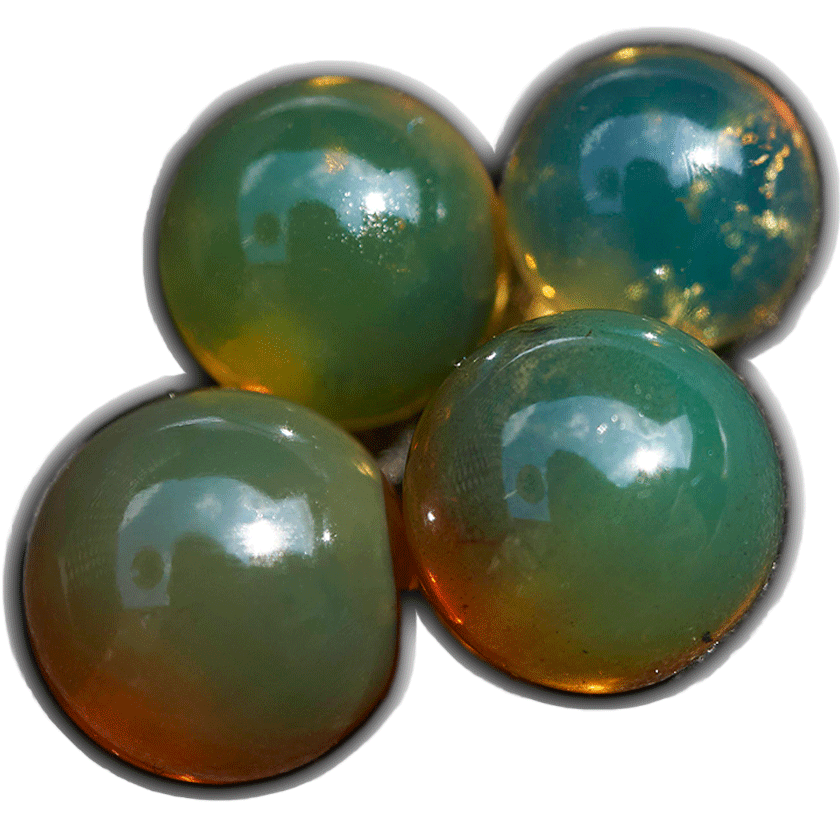
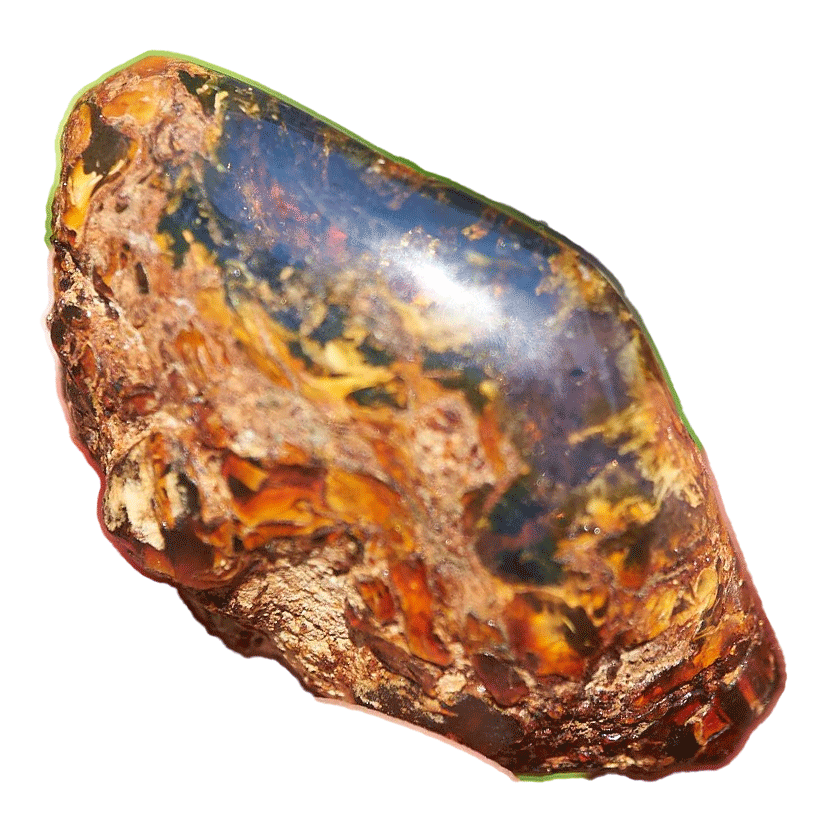
Amber requires language that is even more precise. It is fossilized tree resin, not a mineral crystal, and it can range from honey gold to cognac, greenish tones, and rare blue material. Dominican Blue Amber is especially admired for the way it may appear warm or golden in ordinary light, then show a blue glow or blue surface effect under sunlight or ultraviolet light.

The term blue should therefore never stand alone. A record should explain the viewing conditions, because the optical effect can shift with light source, background, angle, thickness, and polish. This protects the buyer from disappointment and honors the remarkable nature of the material.

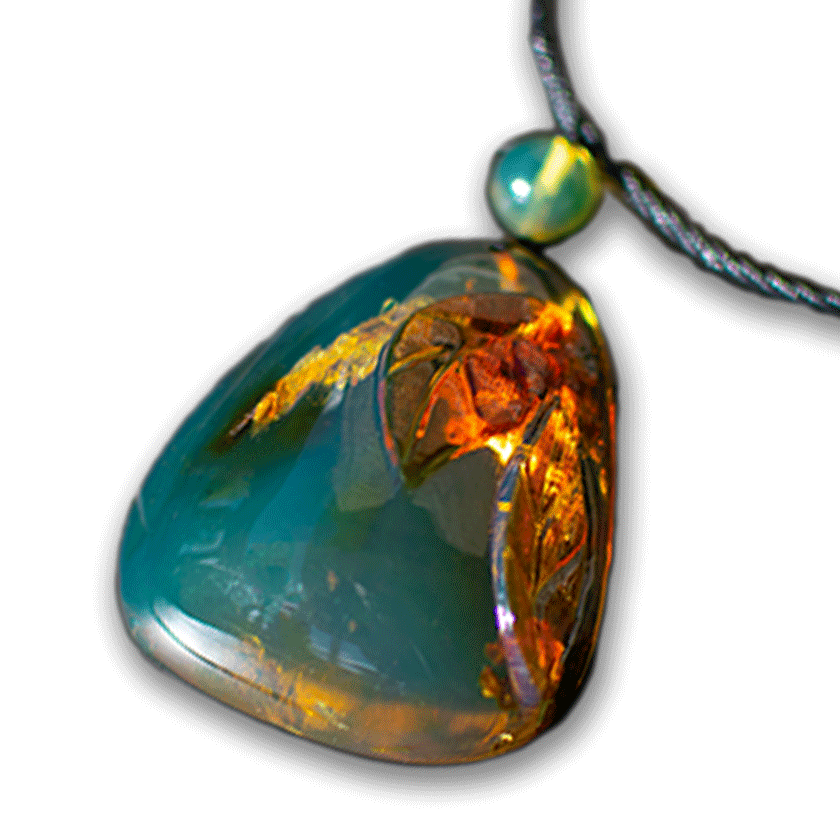
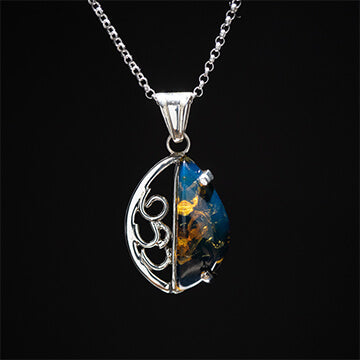
Example: Dominican Blue Amber Pendant

Catalog ID: DBA-PND-063
Material: Natural Dominican amber
Origin: Dominican Republic
Color in indoor light: Transparent warm honey with subtle greenish-blue surface tones
Optical behavior: Pronounced blue fluorescence under ultraviolet light; blue cast visible in direct sunlight against a dark background
Shape and finish: Hand-polished freeform drop
Amber dimensions: 35 x 18 x 9 mm
Inclusions: Fine botanical particulate visible under magnification; no large insect inclusion observed
Setting: Sterling silver bail, drilled amber attachment
Treatment disclosure: No treatment disclosed; avoid solvents and high heat
Photography note: Images shown in indoor light, sunlight, and ultraviolet illumination

This is stronger than calling the piece simply a blue amber pendant. It tells the truth about how the color performs and gives the buyer a clear visual reference. It also avoids promising that every setting, room, or photograph will produce the same blue appearance.

Inclusions deserve their own field. A tiny leaf fragment, air bubble, or botanical particle can add collector interest, but it should be identified carefully. If an inclusion has not been professionally examined, it is better to describe what is visible than to make a confident scientific claim. For example, botanical fragment visible is preferable to naming a specific plant without evidence.

Essential Fields That Change by Object Type

Every catalog entry needs a stable core: catalog ID, material, origin, dimensions, weight where appropriate, condition, treatment disclosure, and photographs. Beyond that, the right fields depend on whether the item is loose, mounted, collectible, or wearable.

For a cabochon, emphasize exact measurements, dome height, back profile, polish, and any natural fissures or matrix. For beads, record hole diameter, strand length, bead count, and whether the shapes are uniform or graduated. For carvings, include the artist or workshop when known, the subject, carving depth, and any fragile projections.

Jewelry calls for metal purity, chain length when included, clasp type, ring size, setting method, and total piece weight. A collector specimen may need provenance, prior collection history, acquisition date, and documentation reference numbers. These are not decorative extras. They establish continuity if the piece is gifted, insured, resold, or passed through a family.

Photograph the Record, Not Just the Product

A catalog can be accurate on paper and still leave questions unanswered if the photography is vague. Natural stones should be photographed from the front, back, and side, with at least one image showing scale. A close-up is valuable for surface texture, inclusions, or distinctive veining, but it should complement rather than replace a full view.

Color accuracy is a balance. Strong lighting can reveal beauty, but overly edited images can make a stone look unlike itself. For Dominican Blue Amber, show multiple lighting conditions and label them clearly. For Larimar, include an image that shows its pattern at a natural viewing distance, not only a saturated close-up.

Keep the catalog image file name aligned with the catalog ID. This small practice prevents confusion when a collection includes many near-identical cabochons, beads, or pendants. It also makes future updates much easier when a loose stone becomes a finished jewel.

Make Rarity Easy to Understand

The most effective catalog language does not exaggerate rarity. It explains why a piece is distinctive. A Larimar cabochon may stand apart because of its unusually even blue field, dramatic cloud pattern, or generous size. A Dominican amber piece may be notable for its transparency, blue optical effect, polished freeform shape, or visible natural inclusion.

When the record is complete, the object becomes more than a beautiful purchase. It becomes a documented piece of the Caribbean, shaped by nature and brought to life through craftsmanship. That is the kind of detail a buyer can treasure long after the first glimpse of blue.

Gemstone Cataloging Examples for Rare Caribbean Stones

Gemstone Cataloging Examples for Rare Caribbean Stones

6 min read

See gemstone cataloging examples for Larimar and Dominican amber, with clear fields that preserve origin, authenticity, beauty, and collector value too.
Read More
Amber Blue: The Rare Luminescent Treasure from the Caribbean

Amber Blue: The Rare Luminescent Treasure from the Caribbean

9 min read

Discover amber blue, the extraordinary Dominican gemstone that glows with ethereal color. Learn about its unique fluorescence, formation, and value.
Read More
2026 Ocean Inspired Jewelry Trends to Know - Larimar Creations

2026 Ocean Inspired Jewelry Trends to Know

5 min read

See the 2026 ocean inspired jewelry trends shaping refined gemstone style, from Larimar blues and organic forms to certified Caribbean amber pieces today.
Read More