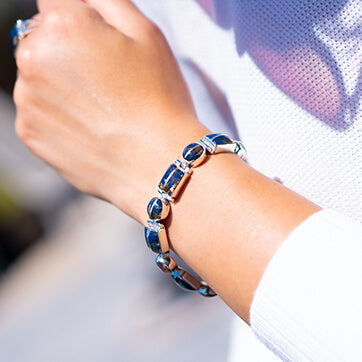

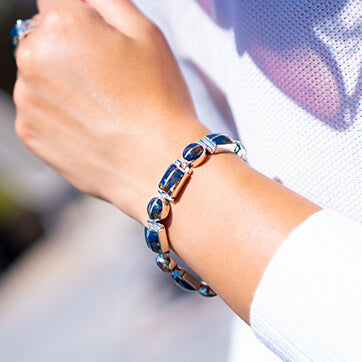
Larimar
Blue Amber
Green Amber
Amber Carvings
More

by Admin August 15, 2026 5 min read

A Larimar stone can hold the quiet blue of shallow Caribbean water, a vivid tropical current, or a dramatic meeting of blue and white like surf over sand. That visual range is exactly why a guide to Larimar color grades matters before you choose a pendant, ring, cabochon, or meaningful gift. Color is the first quality most buyers notice, but it becomes more meaningful when you understand what creates a stone’s character, rarity, and value.

Larimar is a rare blue variety of pectolite found only in the Dominican Republic. Each stone formed naturally, so no two pieces carry the same shade, cloud pattern, or movement. A beautiful Larimar is not simply the bluest one available. It is one whose color, pattern, cut, and craftsmanship come together in a way that feels exceptional.

Why Larimar color grades are not one fixed system

Unlike diamonds, Larimar does not have a single worldwide grading standard. Terms such as AAA, premium, or top grade can be useful shorthand, but they are not regulated categories with identical meanings from one seller to another. A responsible evaluation looks at the stone itself rather than relying on a label alone.

The strongest Larimar color grades generally consider five qualities: hue, saturation, tonal consistency, pattern, and visible inclusions. The polish and cut also matter, especially in jewelry, because a well-shaped cabochon can make the stone’s oceanic color appear deeper and more alive.

For collectors and jewelry lovers alike, this is welcome news. It means choosing Larimar can be personal. One buyer may seek an intensely blue, low-pattern cabochon; another may be drawn to swirling white marbling that resembles sea foam. Both can be authentic, beautifully crafted examples of this Caribbean treasure.

The Larimar color spectrum

Pale blue Larimar

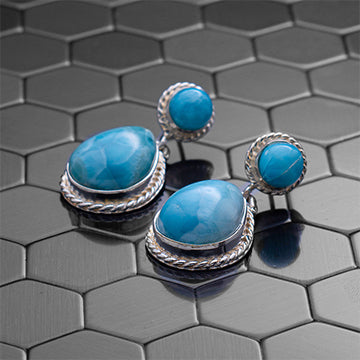
Pale Larimar ranges from soft powder blue to a gentle blue-white. It often has a luminous, airy appearance, particularly when set in sterling silver or paired with bright white accents. These stones can be lovely for everyday earrings, delicate pendants, and designs where a subtle Caribbean touch is the goal.

Paler material is usually more available than deeply saturated blue, although availability alone does not determine beauty. A clean, evenly polished pale-blue stone with graceful patterning can feel elegant and refined. It is also often a practical choice for those who want authentic Larimar at a more approachable price point.

Medium blue Larimar

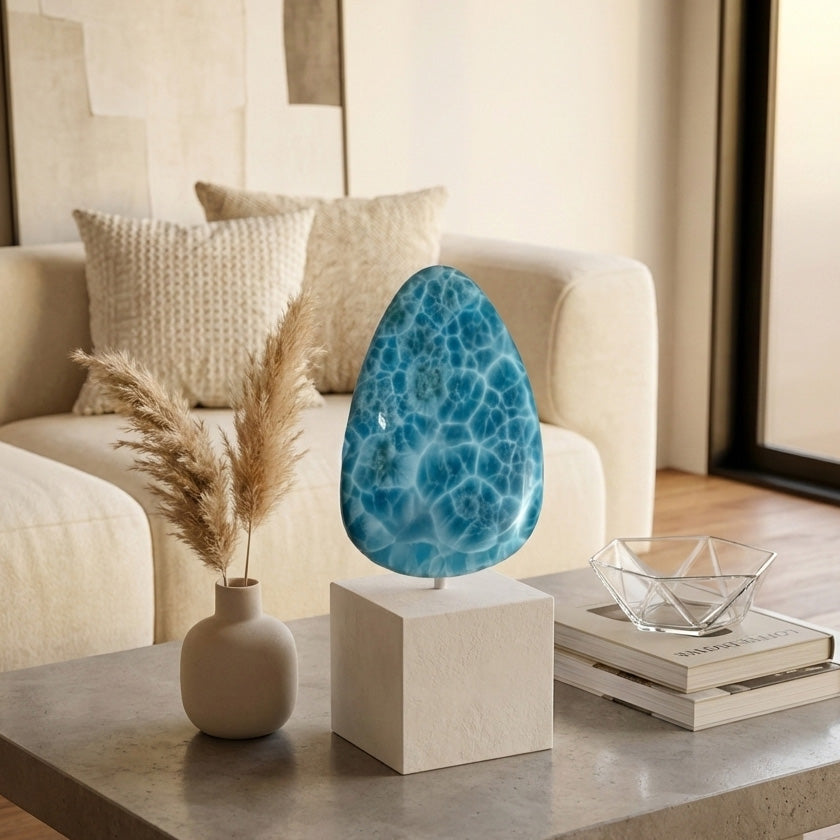
Medium blue is the classic Larimar many people picture first. Its color is clearly blue without becoming overly dark, often carrying white cloud-like veins or soft transitions between blue and lighter areas. This range offers a balance of visual presence, natural character, and versatility.

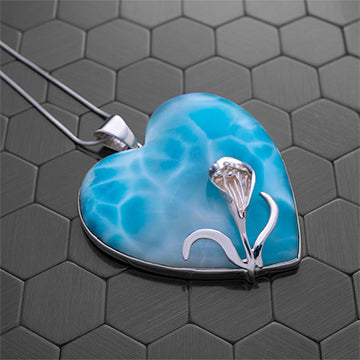
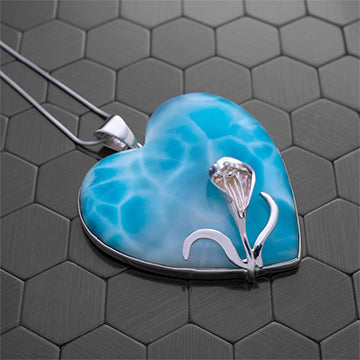
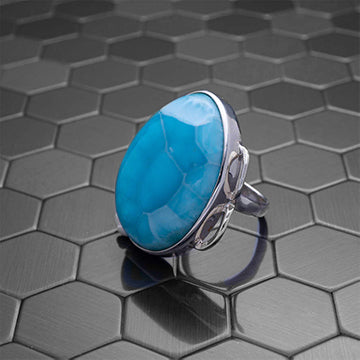
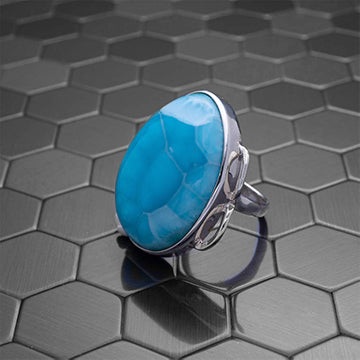
For jewelry buyers, medium blue Larimar is often an excellent choice. It reads beautifully from a distance, pairs easily with silver and gold, and gives designers enough natural variation to create pieces with personality. A heart pendant or statement ring in this color range can feel both romantic and distinctly Caribbean.

Deep sky blue and vivid blue Larimar

The most sought-after Larimar often displays a strong, vivid blue reminiscent of clear tropical water. High-quality stones in this range have noticeable saturation and a fresh, open brightness rather than a gray, washed-out, or muddy appearance. Many collectors refer to this look as “volcanic blue” or “Caribbean blue,” though those are descriptive terms rather than official grades.

Vivid blue Larimar is rare, especially when the color is distributed across much of the face of the stone. A cabochon with concentrated blue, attractive white movement, and a glassy polish may command a higher price because quality rough with these features is limited. In a fine pendant or ring, this color can become the entire focal point of the design.

The trade-off is that the rarest blue does not always suit every piece. A very valuable, saturated cabochon may be best appreciated in a simple setting that leaves its surface open to view. More patterned or lighter material can be a better fit for carved designs, bead strands, or jewelry meant to feel relaxed and organic.

How pattern changes the grade and personality

Larimar’s white markings are part of its identity. They can appear as wisps, clouds, lace-like lines, bold waves, or broad areas of white pectolite. In many gemstones, visible inclusions are treated as flaws. With Larimar, the answer is more nuanced.

Fine blue with delicate white webbing is often highly desirable because it creates the stone’s signature ocean effect without overwhelming the blue. A more uniform blue field may be rarer, but a stone with expressive wave patterns can be more visually memorable. The best choice depends on whether you prefer a calm, minimalist look or a lively piece that feels like a miniature Caribbean seascape.

What typically reduces value is not white pattern alone, but pattern that makes the stone appear dull, fractured, overly chalky, or lacking in blue. Dark brown or black matrix, large opaque areas, and uneven surface texture may also lower the perceived grade, though they can be intentional features in rustic artisan styles.

Clarity, polish, and cut: the details that reveal quality

A quality Larimar cabochon should have a smooth, even polish that allows light to travel across its surface. Look closely for pits, open fractures, rough spots, or cloudy patches that interrupt the finish. Natural internal features are expected, but obvious cracks can affect both appearance and durability.

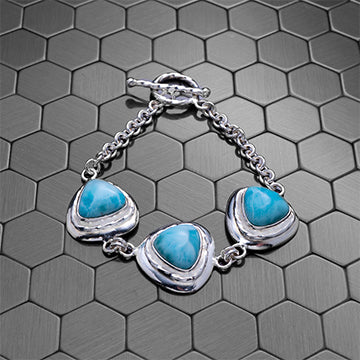
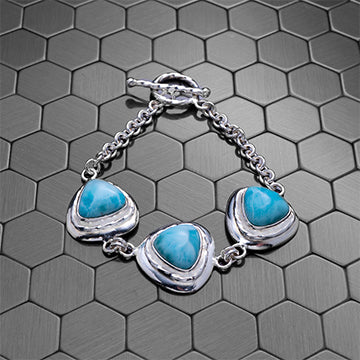
Cut matters because Larimar is usually shaped as a cabochon rather than faceted. A well-cut cabochon has a balanced dome, clean outline, and proportions suited to its setting. An overly flat stone may look less luminous, while an excessively high dome may be more vulnerable in a ring. For bracelets and rings, a secure setting is particularly valuable because Larimar is softer than diamond, sapphire, and many common jewelry stones.

Color should also be viewed in more than one light source. Daylight often reveals the clearest sense of true hue, while warm indoor lighting can make blue appear softer. When possible, assess the stone from several angles. A high-quality piece should remain appealing rather than depending on one perfect photograph or lighting condition.

A practical guide to Larimar color grades when shopping

Start by asking what you want the stone to communicate. If you want a collectible centerpiece, seek vivid, well-distributed blue with an attractive polish and controlled white pattern. If you want an everyday piece with a gentle, serene character, pale or medium blue can be just as rewarding.

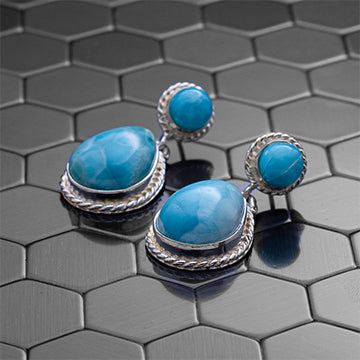
Then consider the setting. A larger pendant gives a patterned stone room to tell its story. In smaller earrings, strong color may matter more because there is less surface area to display complex marbling. A ring should balance beauty with wearability, favoring a secure design that protects the cabochon from hard knocks.

Most importantly, buy from a source that is clear about authenticity and origin. Genuine Larimar comes from the Dominican Republic. Certification, transparent sourcing claims, and knowledgeable product descriptions offer reassurance that the blue stone you are choosing is the real ocean-born gem, not dyed material or an imitation presented as Larimar.

Be cautious with labels that promise perfection at an unusually low price. Exceptionally saturated, clean blue Larimar is limited, and its pricing should reflect its rarity, size, finish, and the workmanship surrounding it. A trustworthy seller should help you understand why one stone costs more than another rather than using vague superlatives alone.

Choosing the grade that feels right to you

The finest Larimar is not always the stone with the least white or the darkest blue. It is the stone whose natural color feels vivid, whose pattern feels intentional, and whose craftsmanship honors a gem found nowhere else on earth. Whether you choose a soft blue everyday pendant or a vivid collector-grade cabochon, let the stone’s individual Caribbean character be part of the reason you wear it.

Larimar Spiritual Meaning: A Complete Guide for 2026 - Larimar Creations

Larimar Spiritual Meaning: A Complete Guide for 2026

9 min read

Discover the profound larimar spiritual meaning and how this rare Caribbean gemstone connects wearers to tranquility, healing, and divine feminine energy.
Read More
How to Measure Ring Size at Home Every Time - Larimar Creations

How to Measure Ring Size at Home Every Time

6 min read

Learn how to measure ring size at home with a paper strip or existing ring, plus expert tips for a comfortable, confident fit for treasured gemstone rings.
Read More
Natural Stone Jewelry: Your 2026 Guide to Gemstone Quality - Larimar Creations

Natural Stone Jewelry: Your 2026 Guide to Gemstone Quality

9 min read

Discover how to choose, care for, and style natural stone jewelry in 2026. Expert guidance on quality, authenticity, and the beauty of gemstones.
Read More