
FREE WORLD WIDE SHIPPING
HANDCRAFTED IN THE DOMINICAN REPUBLIC
BEST QUALITY LARIMAR
FREE WORLD WIDE SHIPPING
HANDCRAFTED IN THE DOMINICAN REPUBLIC
BEST QUALITY LARIMAR
FREE WORLD WIDE SHIPPING
HANDCRAFTED IN THE DOMINICAN REPUBLIC
BEST QUALITY LARIMAR
FREE WORLD WIDE SHIPPING
HANDCRAFTED IN THE DOMINICAN REPUBLIC
BEST QUALITY LARIMAR
FREE WORLD WIDE SHIPPING
HANDCRAFTED IN THE DOMINICAN REPUBLIC
BEST QUALITY LARIMAR
FREE WORLD WIDE SHIPPING
HANDCRAFTED IN THE DOMINICAN REPUBLIC
BEST QUALITY LARIMAR
100% Handcrafted in DR.
by Admin November 05, 2026 5 min read
A vivid blue stone can catch the eye in seconds, but true Larimar deserves more than a quick glance. Knowing how to identify natural larimar helps you choose jewelry with the rare Caribbean character, natural variation, and lasting value that make this gemstone so beloved.
Larimar is not meant to look factory-perfect. Its beauty comes from shifting pools of blue, white clouding, delicate veins, and the individual story held in every cabochon. A trustworthy purchase starts with understanding what those details should look and feel like, as well as what a responsible seller should be able to tell you.
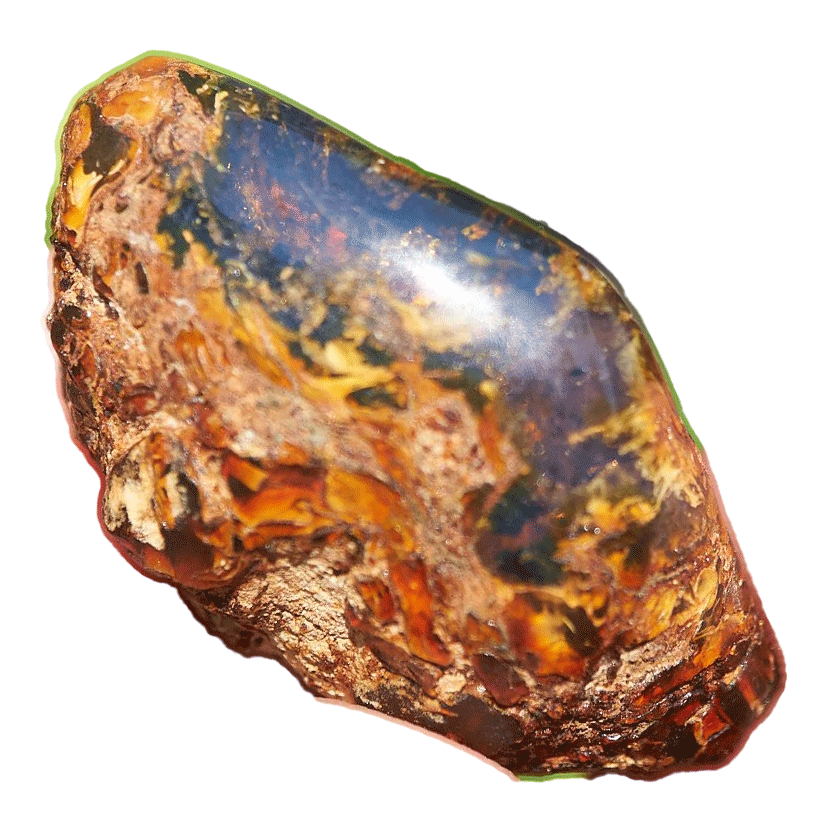
Larimar is the trade name for a rare blue variety of pectolite found in the Dominican Republic. It is associated with the mountainous Barahona region, where the material is mined in limited quantities and shaped by skilled lapidaries into cabochons, beads, carvings, and jewelry.
That origin matters. Fine Larimar is not simply a blue gemstone with an appealing name. Its limited Dominican source, natural mineral structure, and ocean-like appearance set it apart from common imitation materials. The most saturated blue material is especially scarce, which is why exceptional stones command more attention from collectors and jewelry lovers alike.
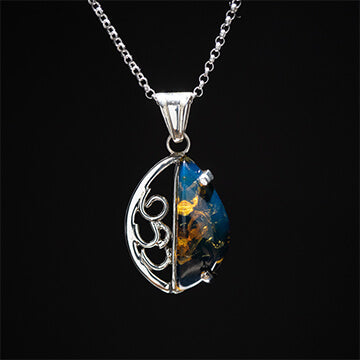
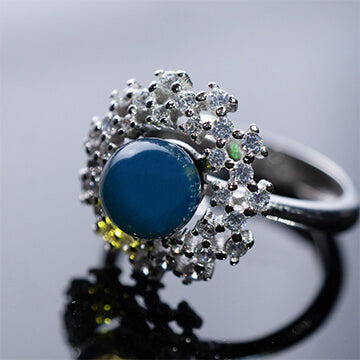
Natural Larimar is also softer than many familiar jewelry stones. It is generally cut with a smooth, protective dome rather than sharp facets. A polished surface is normal, but the stone itself should retain an organic visual depth rather than the uniform, manufactured appearance often found in glass or resin.
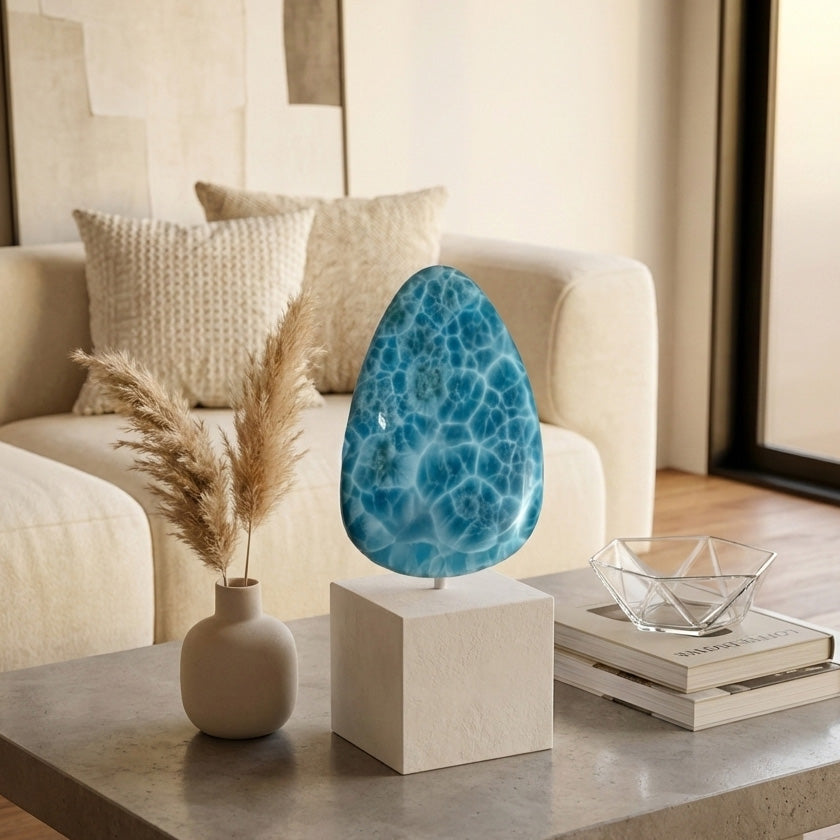
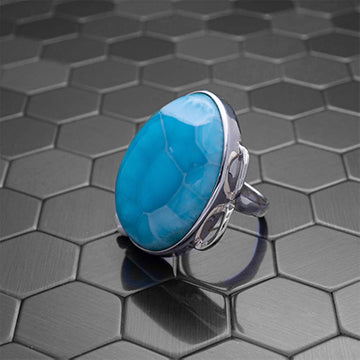
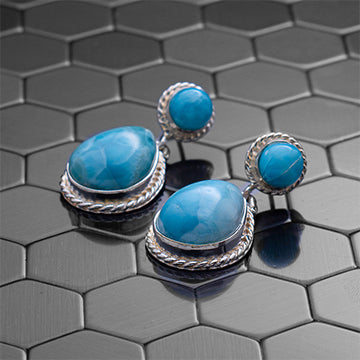
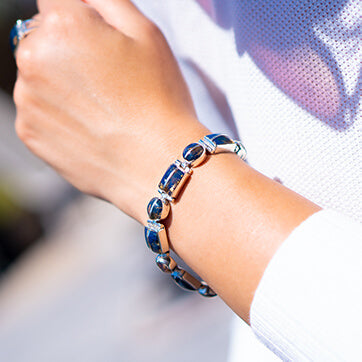
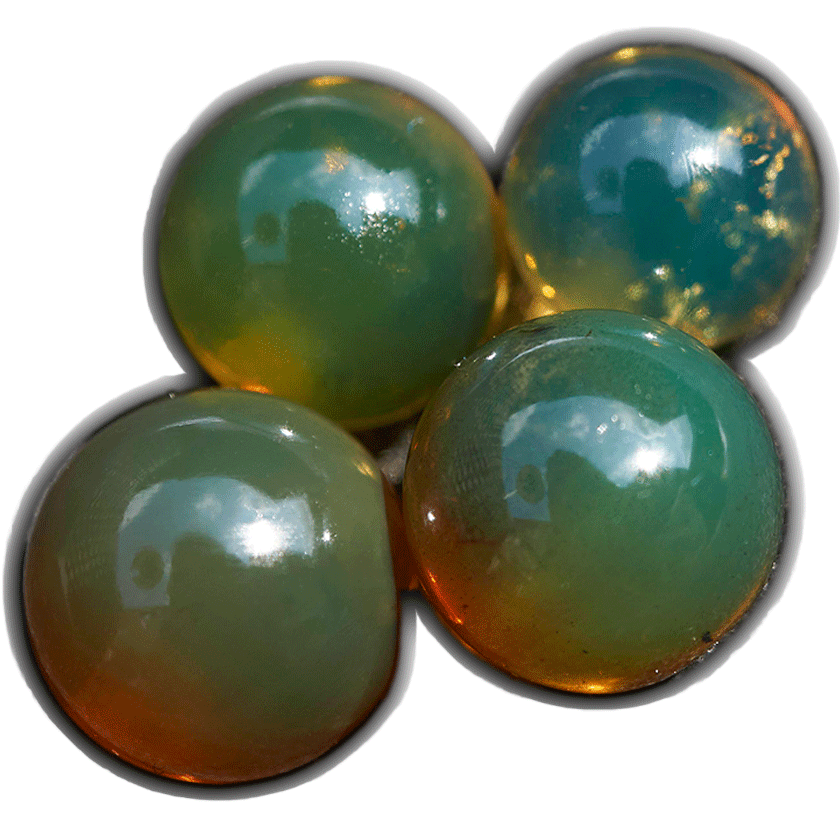
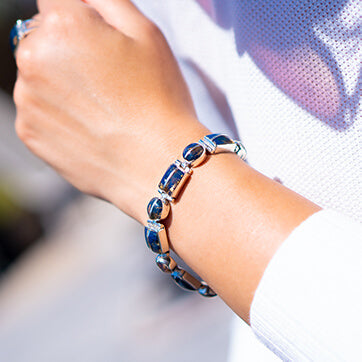
The first clue is color, though color alone can never authenticate a stone. Natural Larimar ranges from soft white and pale sky blue to turquoise blue and richly saturated volcanic blue. Fine specimens often show a balance of blue and white, creating patterns that can resemble sunlight moving across Caribbean water.
Look closely at the transitions. In genuine Larimar, blue areas commonly fade, feather, swirl, or gather in irregular islands. White lines and cloudy sections are part of the stone’s natural character. Some pieces may include small areas of green, gray, or brown mineral matrix. These features do not automatically make a stone less authentic. They simply reveal a different grade, cut, or section of rough material.
Be cautious with a stone that is intensely blue in one completely flat, unchanging tone, particularly if it appears unusually inexpensive. Dyed imitations can look bold at first glance but may lack the nuanced, layered patterning of natural pectolite. Still, premium Larimar can be remarkably blue, so the question is not whether the color is vivid. It is whether it looks naturally varied within the stone.
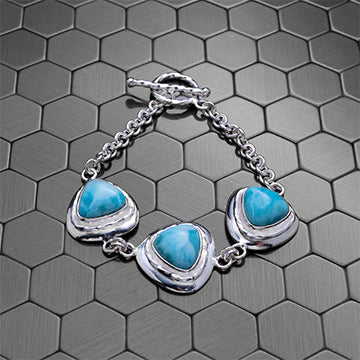
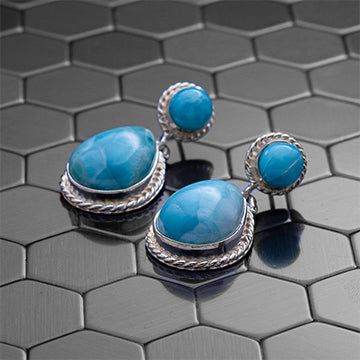
Natural patterns do not repeat with mechanical precision. If a pendant, bead, or cabochon displays identical webbing from one side to the other, or if several stones in a set look copied from the same printed design, ask more questions. Genuine Larimar is formed by geological processes, and each piece carries a distinct arrangement of color and veining.
A uniform jewelry collection can be beautifully matched by a skilled designer, but no two natural stones will be exact twins. That individuality is part of what makes Larimar jewelry feel personal.
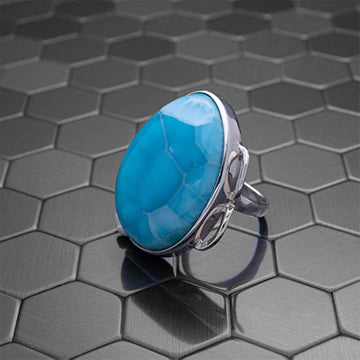
Most authentic Larimar used in jewelry is polished into cabochons. The surface should feel smooth, cool, and stone-like in the hand. A quality polish creates a soft luster, not necessarily a mirror-like glare. Under bright light, you should see visual depth beneath the surface rather than a color layer that appears to sit on top.
Resin and plastic imitations may feel unusually light or warm quickly in the hand. They can also show molded seams, tiny trapped bubbles, or an overly glossy finish. Glass can feel cool and look convincing from a distance, but it often has a more glassy brilliance and lacks Larimar’s cloud-like internal movement.
Do not scratch-test a stone, apply chemicals, or use extreme heat to prove authenticity. Larimar can be damaged by harsh treatment, and home tests can harm a piece you intended to enjoy for years. Visual examination and reputable sourcing are far more useful than destructive experiments.
Imitations are not always sold with dishonest intent. Some blue stones are marketed as “Larimar style” or presented as affordable alternatives. Problems arise when substitutes are represented as natural Dominican Larimar without clear disclosure.
Common look-alikes include dyed howlite, dyed magnesite, blue resin, glass, and composite materials. Dyed howlite and magnesite can show dark gray or black web-like lines that look more like a spiderweb than Larimar’s softer white clouding. Resin can appear too lightweight or too uniformly colored. Composite stones may contain powdered material mixed with binding agents, which can reduce the value and natural integrity of the piece.
Watch for these warning signs when evaluating a listing or a stone in person:
The most reliable way to buy natural Larimar is to work with a specialist who can speak plainly about the material. Ask where the stone was sourced, whether it is natural pectolite from the Dominican Republic, and whether any treatments or composite processes were used. A reputable seller should welcome those questions.
Certification can provide valuable reassurance, especially for significant purchases, but it should be specific. A meaningful document identifies the stone and, when applicable, its natural status or origin. A generic card that merely says “Larimar” is less useful than clear, written product details from a seller with genuine expertise in Dominican gemstones.
Photographs matter as well. Look for multiple views in natural or neutral lighting, including close images of the actual stone. Stock photos can make it difficult to judge pattern, saturation, inclusions, and craftsmanship. With one-of-a-kind Larimar, the piece pictured should be the piece you receive.
Larimar is graded largely by color, pattern, clarity, size, and craftsmanship. Pale stones with more white can be authentic and beautiful at a more accessible price. Deep blue material with dramatic, balanced patterning is rarer and generally more valuable. A larger stone also does not automatically mean a finer stone. Quality depends on the character of the material, not size alone.
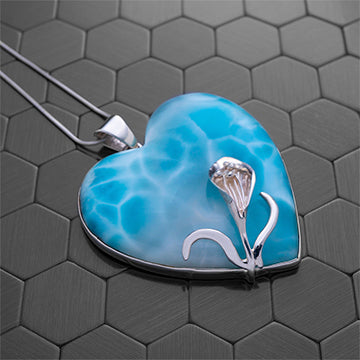
The best value is not always the bluest cabochon or the lowest price. It is a natural stone whose appearance, workmanship, and documentation align honestly. For a gift, a soft blue heart pendant may carry more meaning than a collector-grade specimen. For a collector, a highly saturated cabochon with a distinctive pattern may be worth seeking out.
Larimar is often called the Caribbean’s blue treasure because no two pieces capture the sea in quite the same way. A white wave across a blue center, a small trace of matrix near the edge, or a quieter sky-blue tone can be evidence of a stone shaped by nature rather than manufactured to a template.
When you choose from a knowledgeable source such as Larimar Creations, look beyond a single shade of blue. Choose the pattern that feels like yours, ask for clear authenticity details, and let the individuality of a genuine Dominican stone become the reason you wear a piece of the Caribbean.
Sign up to get the latest on sales, new releases and more …
5 min read
5 min read
8 min read