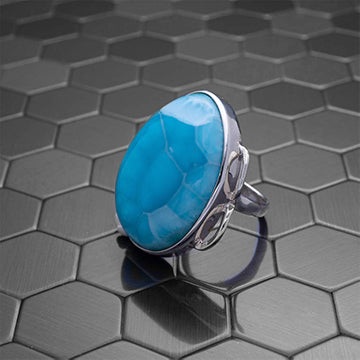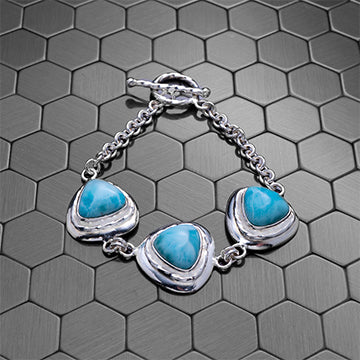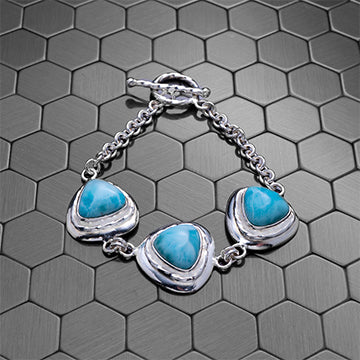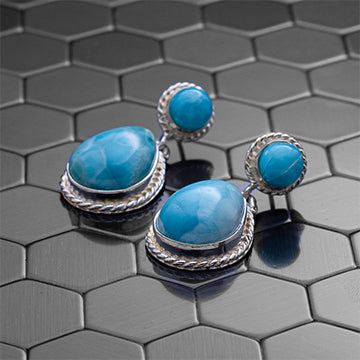

Last Updated: January 2026 | 12 min read
Is your Larimar really AAA grade, or are you overpaying for an A-grade stone? With Larimar prices ranging from $2 to $44 per gram, understanding quality grading isn't just helpful—it's essential for making a smart investment.
As authentic Larimar miners and jewelers based in the Dominican Republic, we've spent decades sourcing, grading, and crafting this rare Caribbean gemstone. In this comprehensive guide, we'll show you exactly how to identify genuine quality Larimar, understand the grading system used by experts, and ensure you're getting true value for your money.
Whether you're a serious collector hunting for investment-grade Super Blue Larimar, or simply looking for a beautiful Larimar pendant for everyday wear, this guide will give you the insider knowledge you need to buy with confidence.
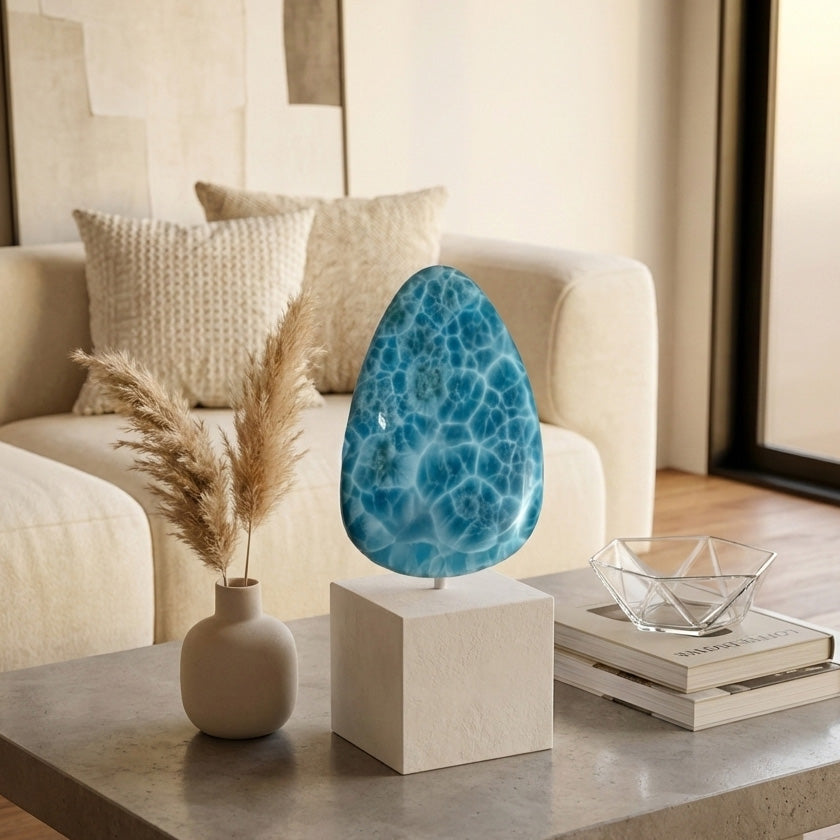
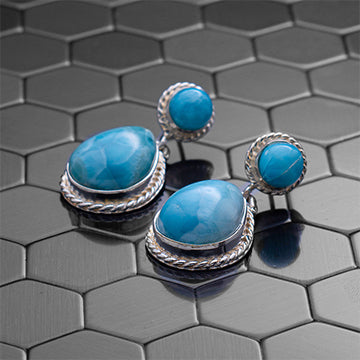
Larimar grading is the industry-standard system used to classify the quality and value of this rare blue pectolite gemstone, found only in the Barahona region of the Dominican Republic. Unlike diamonds, which follow the universal 4Cs system, Larimar grading evaluates multiple unique characteristics specific to this volcanic gemstone.
The grading system matters because Larimar quality varies dramatically—from pale, cloudy stones sold in tourist shops to museum-quality specimens with deep volcanic blues that rival fine sapphires. Understanding these differences means you can spot authentic quality and avoid common buying mistakes that cost collectors thousands of dollars.
Professional Larimar graders evaluate stones based on five critical factors:
1. Color Saturation and Hue The depth and vibrancy of blue (or green/red for specialty varieties) determines much of a Larimar's value. The most prized specimens display rich, saturated blues ranging from Caribbean turquoise to deep volcanic navy. Color should be evenly distributed without muddy or washed-out areas.
2. Pattern Clarity Larimar's distinctive patterns are what make each stone unique. The three most valued patterns are:
3. Health (Inclusions and Imperfections) Like all natural gemstones, Larimar contains varying levels of inclusions, cracks, or mineral deposits. Higher grades show minimal imperfections, with clean, translucent material throughout. Professional graders classify stones from Class I (perfectly clean) to Class V (rough material for cutting).
4. Clarity and Translucency Premium Larimar exhibits a soft translucency when held to light, creating an almost glowing effect. Opaque or milky stones rank lower in quality, while pieces with semi-translucent areas command premium prices.
5. Size and Shape Considerations Larger specimens are exponentially rarer and more valuable, especially in higher grades. A 50-gram AAA-grade piece is worth significantly more per gram than a 10-gram stone of equal quality. Shape also matters—naturally formed cabochons with ideal proportions are prized for jewelry settings.
The Larimar industry primarily uses a letter-grade system (A, AA, AAA, AAAA) combined with specialty classifications for unique varieties. Here's what these grades mean:
Beyond letter grades, experts also use Class I-V purity classifications:
Understanding both systems helps you evaluate Larimar accurately and compare offerings from different sellers.
Not all Larimar is created equal. Let's explore each grade in detail so you can identify exactly what you're looking at.
The Bestseller and Most Sought-After Grade
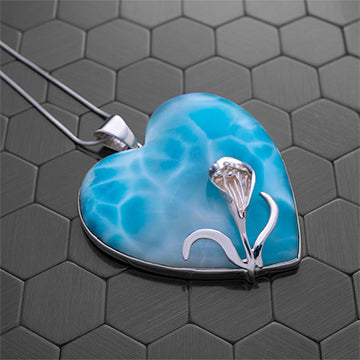
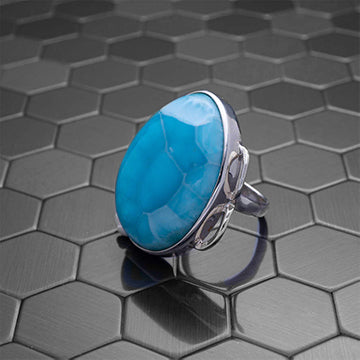
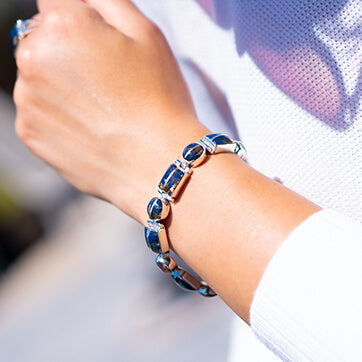
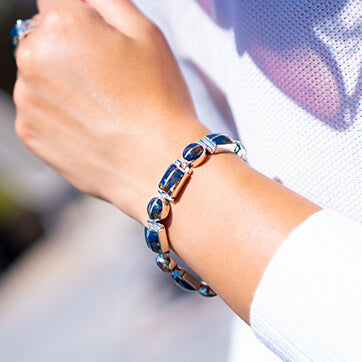
AAA Larimar represents the pinnacle of commercial-quality Larimar—the grade most people envision when they think of this legendary gemstone. This is the quality you'll find in fine jewelry stores and serious collector portfolios.
Visual Characteristics:
Pricing: $15-$25 per gram for finished cabochons
Best For:
When you browse our AAA Larimar collection, you'll notice each piece is individually photographed and certified because no two specimens are identical. The natural variation is part of what makes AAA Larimar so captivating.
Authentication Tip: Genuine AAA Larimar should show natural pattern variation under magnification. Perfectly uniform coloring often indicates synthetic or treated material.
The Most Spectacular and Investment-Worthy
Super Blue Larimar is the rarest and most valuable grade available—the gemstone equivalent of finding a perfect blue diamond. These extraordinary specimens come from mining depths exceeding 300 meters, where geological conditions create colors so intense they seem almost unnatural.
What Makes It Special:
Pricing: $35-$44 per gram (matching or exceeding gold prices per gram)
Investment Potential: Super Blue Larimar has shown consistent appreciation over the past decade as mining depths increase and extraction becomes more difficult. Collectors report 8-15% annual value increases on museum-quality specimens. With Larimar being a single-source gemstone (found nowhere else on Earth), supply limitations make Super Blue one of the most promising gemstone investments for 2026.
Rarity Factor: Less than 5% of mined Larimar qualifies as Super Blue. Most Dominican mines now operate at depths where oxygen levels drop and mining becomes dangerous, meaning Super Blue discoveries are increasingly rare.
Where to Find Authentic Super Blue: Genuine Super Blue comes with detailed certificates of authenticity and provenance documentation. At Larimar Creations, we source directly from Dominican mines and provide certification for every premium Larimar piece we offer.
Collector's Note: Super Blue Larimar from specific mine locations (particularly the Los Chupaderos mine) commands premium prices due to historical significance and proven quality.
One of Nature's Most Stunning Mathematical Creations
Fractal Larimar showcases natural geometric patterns that repeat at different scales—a phenomenon that creates mesmerizing visual depth rarely seen in other gemstones. This grade is particularly prized by collectors who appreciate nature's mathematical precision.
Visual Characteristics:
Pricing: $20-$29 per gram
Scientific Background: Fractal patterns in Larimar form during crystallization when mineral-rich solutions flow through volcanic rock fissures. The branching patterns reflect the mathematical principles of self-similarity found throughout nature.
Best Display Methods: Fractal Larimar excels in larger cabochon forms where the pattern complexity can be fully appreciated. Many collectors choose display-quality Larimar cabochons specifically for their fractal characteristics.
Rarity: Fractal Larimar is harder to find than standard AAA grade and commands premium prices when patterns show exceptional detail and coverage across the stone.
The Most Common Market Grade
If you've shopped for Larimar in tourist areas or beach markets, you've likely encountered AA and A grades. While these are the most common and affordable options, they still represent genuine Larimar with value for casual jewelry and entry-level collecting.
Visual Characteristics:
Pricing: $4-$8 per gram
When This Grade Makes Sense:
Quality Considerations: A-grade Larimar is still genuine and can be quite beautiful in the right setting. The key is understanding what you're buying and paying appropriately. Never pay AAA prices for A-grade material.
Common Locations: You'll find this grade in hotel gift shops, beach vendors, and general tourist markets throughout the Dominican Republic. Always request certification and compare to reference photos of higher grades before purchasing.
Honest Assessment: A-grade Larimar works wonderfully for costume jewelry, craft projects, or as an introduction to the gemstone. Just understand you're not getting collector-quality material, and future value appreciation will be minimal.
The Underappreciated Beauty
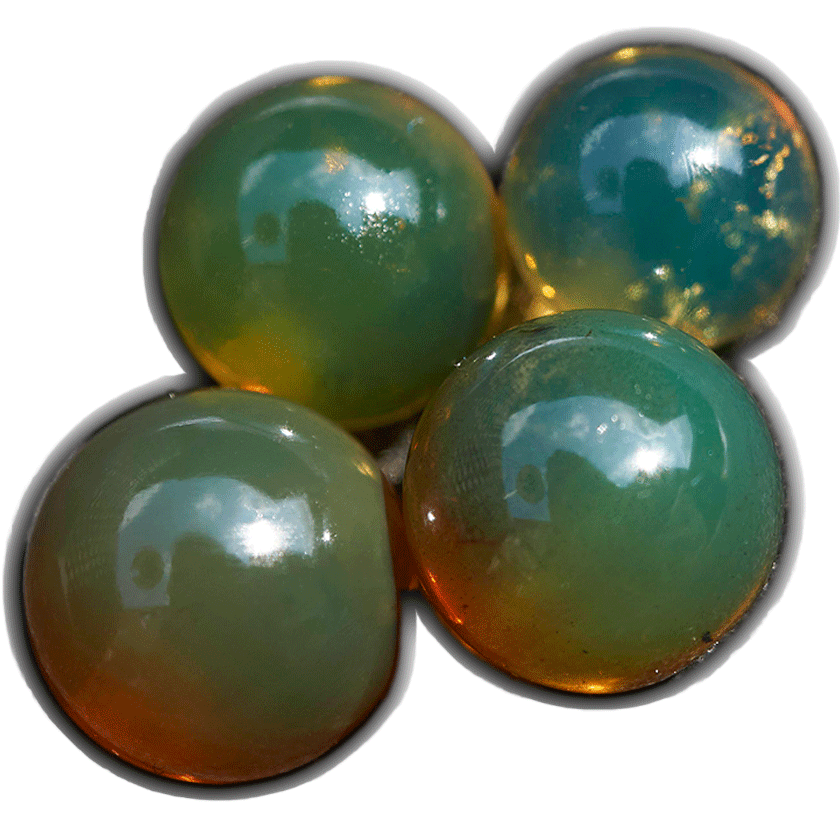
Green Larimar is often overlooked in favor of blue varieties, but knowledgeable collectors recognize its unique appeal and growing investment potential. The green coloration comes from different mineral compositions during formation, creating a distinct appearance while maintaining Larimar's characteristic patterns.
Visual Characteristics:
Pricing: $6-$9 per gram for quality specimens
Metaphysical Properties: Green Larimar enthusiasts attribute different energetic properties compared to blue varieties, associating it with growth, abundance, and heart chakra healing. This has created growing demand among crystal collectors.
Market Trend: Green Larimar has seen increasing collector interest over the past 3-4 years as buyers seek unique alternatives to traditional blue. Prices have risen approximately 20% since 2022, suggesting strong future potential.
Best Uses: Green Larimar creates stunning contrast in silver jewelry settings, particularly when combined with complementary gemstones. The unexpected color palette makes it perfect for those wanting distinctive, conversation-starting pieces.
Authenticity Note: Green coloring should be natural and even. Artificially dyed imitations often show color concentration in cracks or unnatural uniformity.
Ethereal Beauty That Captures Hearts
Angelic Larimar, sometimes called "Snow Larimar," features predominantly white coloring with soft blue wisps and patterns. This delicate variety appeals to those who appreciate subtle elegance over bold statement pieces.
Visual Characteristics:
Pricing: $3-$6 per gram
Design Applications: The soft coloring of Angelic Larimar makes it perfect for:
Why It's Undervalued: Many buyers dismiss Angelic Larimar as "low quality" due to reduced color saturation. However, when you appreciate it for its own aesthetic merits rather than comparing it to vivid blues, the grade offers exceptional value. High-clarity Angelic specimens can be quite beautiful.
Collector's Perspective: Some advanced collectors specifically seek museum-quality Angelic Larimar as a contrast piece to their blue specimens. Well-patterned examples in Class I or II purity can command prices exceeding the typical range.
Shopping Tip: Look for pieces where the blue patterns are distinct and the white base is clean and translucent rather than chalky or opaque.
The Collector's Hidden Gem
Iron Larimar develops its distinctive red-to-rust coloration from iron oxide deposits that formed during the stone's creation. This striking variety catches attention immediately and appeals to collectors seeking unusual specimens.
Visual Characteristics:
Pricing: $7-$10 per gram (higher with visible copper)
Copper Enhancement: Some Iron Larimar contains visible copper particles that create a metallic shimmer—these specimens are graded as Copper Larimar (see below) and command significantly higher prices.
Rarity Factor: True red/iron coloration is relatively uncommon, making quality specimens particularly desirable for collectors building comprehensive Larimar collections.
Display Considerations: Iron Larimar creates dramatic visual impact in larger cabochon forms or as statement pendant pieces. The warm coloration contrasts beautifully with traditional blue Larimar in collection displays.
Metaphysical Associations: Crystal practitioners associate red Larimar with grounding, root chakra work, and combining Larimar's calming properties with stimulating, energizing vibrations.
Authentication: Genuine iron coloring should be integrated throughout the stone's structure, not surface staining. Check that red/orange areas show the same hardness and pattern structure as blue areas.
Fascinating and Extremely Rare
Copper Larimar represents one of the most unusual and valuable Larimar varieties, featuring visible copper particles that create metallic shimmer throughout the stone. This grade is highly sought by serious collectors and can be exceptionally difficult to find.
Visual Characteristics:
Pricing: $25-$34 per gram (some exceptional specimens exceed $40/gram)
Geological Formation: Copper inclusions form when copper-rich solutions permeate pectolite during crystallization. The Dominican Republic's volcanic geology creates perfect conditions for this rare occurrence, but Copper Larimar still represents less than 2% of all Larimar mined.
Investment Potential: Given extreme rarity and growing awareness among collectors, Copper Larimar has shown the strongest price appreciation of any Larimar variety over the past five years. Museum-quality specimens from the 1990s-2000s have increased 200-300% in value.
Authentication Importance: The high value of Copper Larimar makes it a target for fraud. Genuine copper inclusions:
Artificial copper treatments, metallic paints, or copper foil backing are unfortunately common. Always purchase from reputable dealers like Larimar Creations who provide certificates of authenticity.
Collector's Market: Serious Larimar collectors actively hunt for Copper specimens and will pay premium prices for exceptional examples. If you find genuine Copper Larimar, it's worth considering as a long-term investment piece.
The Mystery Stone
Black Larimar showcases a dramatic dark base with veins of grey, red, green, or blue Larimar running through volcanic black material. This striking contrast creates pieces that look more like modern abstract art than traditional gemstones.
Visual Characteristics:
Pricing: $3-$5 per gram
Unique Properties: The black material in Black Larimar has a Mohs hardness of 7, notably higher than standard Larimar's 4.5-5 rating. This increased durability makes it suitable for applications where traditional Larimar might be too soft.
Aesthetic Appeal: Black Larimar appeals to those seeking bold, modern jewelry aesthetics. The high contrast creates dramatic visual impact and works particularly well in contemporary designs or men's jewelry.
Mystical Associations: Crystal practitioners view Black Larimar as combining Larimar's calming properties with grounding, protective energies. It's sought for meditation practices and energy work.
Market Position: While priced lower than premium blue grades, Black Larimar has developed its own dedicated collector base. Quality specimens with artistic pattern distribution can exceed typical pricing, especially in designer jewelry applications.
Design Applications: Black Larimar excels in:
Amazing Volcanic Creations
Art Larimar encompasses specimens with unique visual characteristics that don't fit standard grading categories but possess distinctive aesthetic appeal. These pieces often look like miniature paintings or abstract art created by volcanic forces.
Visual Characteristics:
Pricing: $2-$4 per gram
Why This Grade Exists: Not all Larimar conforms to traditional beauty standards, yet some pieces possess undeniable artistic merit. Art Larimar recognizes specimens valued for creative appeal rather than conventional gemstone criteria.
Collector Appeal: Artists, designers, and creative individuals often gravitate toward Art Larimar for its unique character. These pieces inspire custom jewelry designs that celebrate individuality rather than following traditional aesthetics.
Best Uses:
Investment Perspective: While Art Larimar typically doesn't appreciate significantly in value, exceptional pieces with truly unique characteristics can become sought-after by niche collectors, particularly if featured in award-winning jewelry designs.
Understanding what drives Larimar pricing helps you recognize good value and avoid overpaying. Let's break down the key factors and current market rates.
1. Grade and Purity Class As detailed above, grade makes the largest impact on price:
Within each grade, purity class (I-V) further refines pricing, with Class I specimens commanding 20-40% premiums over Class IV of the same grade.
2. Size Premium Larger specimens are exponentially rarer and more valuable:
A 100-gram AAA Larimar specimen might sell for $30-40 per gram versus $20-25 for a 10-gram piece of identical quality.
3. Artisan Work Premiums Raw material versus finished pieces shows dramatic price differences:
Our handcrafted Larimar jewelry reflects skilled Dominican craftsmanship, with each piece requiring hours of expert work beyond the raw material value.
4. Form and Finish
5. Certification and Provenance Documented authentication adds value:
Processed Larimar (per gram)
| Grade | Class I-II | Class III | Class IV |
|---|---|---|---|
| A | $6-8 | $4-6 | $2-4 |
| AA | $10-12 | $8-10 | $6-8 |
| AAA | $20-25 | $15-20 | $12-15 |
| Super Blue | $40-44 | $35-40 | $30-35 |
| Fractal | $25-29 | $20-25 | $15-20 |
| Green | $7-9 | $6-7 | $4-6 |
| Copper | $30-34 | $25-30 | $20-25 |
Rough Larimar (per kilogram)
When you purchase Larimar jewelry rather than loose stones, consider these typical cost additions:
Prices vary significantly by location:
For collectors considering Larimar as an investment:
Strong Investment Grades:
Moderate Investment Grades:
Personal Enjoyment Rather Than Investment:
Historical Price Appreciation:
Knowing grading systems means nothing if you can't distinguish genuine Larimar from clever fakes. Let's explore authentication strategies that protect your investment.
1. Synthetic and Treated Materials
Common Larimar imitations include:
Dyed Howlite
Blue Glass
Synthetic Turquoise/Resin
Enhanced/Stabilized Material
2. Misgraded Stones
Perhaps more common than outright fakes are genuine Larimar pieces misrepresented as higher grades:
3. Inflated Tourist Pricing
Beach vendors and hotel shops often charge 200-400% markups on legitimate Larimar. Compare these typical scenarios:
4. Fake Certificates
Sophisticated forgeries include:
Use this systematic approach when evaluating any Larimar purchase:
Visual Inspection (Basic Level)
✓ Check pattern authenticity
✓ Examine color distribution
✓ Look for natural inclusions
✓ Assess surface texture
Physical Testing (Intermediate Level)
✓ Weight and density check
✓ Hardness test (use extreme caution)
✓ Heat test (controversial, use carefully)
✓ UV light examination
Documentation Review (Critical)
✓ Certificate verification
✓ Provenance documentation
✓ Seller reputation check
Most Reliable Sources:
1. Direct Dominican Sellers Purchasing directly from Dominican Republic sources like Larimar Creations offers:
2. Specialized Gemstone Dealers Established gemstone retailers with:
3. Reputable Online Retailers When buying online, look for:
4. Gem and Mineral Shows In-person events allow:
Places to Avoid or Use Extreme Caution:
❌ Beach vendors and street sellers (90% fake rate) ❌ Hotel gift shops without certification ❌ Auction sites without authentication guarantee ❌ Sellers unwilling to provide documentation ❌ Anyone offering "too good to be true" prices ❌ Vendors pressuring immediate purchase
Before any Larimar purchase, ask:
Legitimate sellers welcome questions and provide detailed answers. Evasive responses or high-pressure tactics signal problems.
At Larimar Creations, every piece undergoes rigorous authentication:
We stand behind every stone we sell because we control the entire process from mine to finished jewelry. When you purchase certified Larimar jewelry from us, you receive generations of Dominican expertise and absolute guarantee of authenticity.
Beyond its beauty, quality Larimar represents a legitimate alternative investment opportunity. Let's examine the market fundamentals and investment strategies.
1. Single-Source Scarcity Unlike diamonds or gold found worldwide, Larimar exists in only one location on Earth: a small mining region in the Dominican Republic. This absolute scarcity creates inherent value as extraction becomes more difficult.
2. Increasing Mining Challenges
3. Growing Global Awareness As Larimar gains recognition beyond Caribbean tourism:
4. Limited Production Capacity Small-scale artisanal mining limits supply:
10-Year Price Appreciation (2015-2025)
| Grade | Annual Appreciation | Total 10-Year Growth |
|---|---|---|
| AAA Top Grade | 5-8% | 63-116% |
| Super Blue | 10-15% | 159-305% |
| Copper Larimar | 15-20% | 305-519% |
| Fractal | 7-10% | 97-159% |
| Standard A/AA | 2-3% | 22-34% |
Notable Sales:
Essential Characteristics for Investment Pieces:
Size Matters
Grade Requirements
Documentation Critical
Condition
For Beginning Collectors ($500-2,000 budget)
For Intermediate Investors ($2,000-10,000 budget)
For Advanced Investors ($10,000+ budget)
Conservative gemstone portfolio might include:
Potential Risks:
Market Liquidity
Authentication Challenges
Political/Regulatory Risk
Physical Vulnerabilities
Mitigation Strategies:
Consult tax professionals, but generally:
Bullish Factors:
Projected Appreciation:
Catalysts to Watch:
Proper care preserves and protects value:
Cleaning:
Storage:
Handling:
Professional Maintenance:
Insurance:
For detailed care instructions for your specific pieces, visit our FAQ section or contact our customer service team.
Super Blue (AAAA grade) represents the highest quality Larimar available, featuring deep volcanic blue coloring from the deepest mine levels (300+ meters). These exceptional specimens command $35-44 per gram and represent less than 5% of all Larimar mined. Super Blue exhibits intense color saturation, minimal inclusions, and can display any pattern type. Investment-grade Super Blue pieces have shown 10-15% annual appreciation over the past decade, making them the most valuable and sought-after Larimar variety.
Authentic Larimar identification requires multiple verification steps. Real Larimar shows natural pattern variation (never perfectly uniform), appropriate weight and density (specific gravity 2.7-2.9), and characteristic silky sheen when polished. Check for organic-looking inclusions and color gradients—artificial fakes often show too-perfect clarity or unnatural uniformity. The most common fake, dyed howlite, concentrates color in cracks and feels lighter. Always request certificates of authenticity and purchase from reputable dealers like Larimar Creations who provide mine-source documentation. When possible, examine under UV light and magnification before purchasing.
Yes, Super Blue Larimar has demonstrated strong investment potential with 10-15% annual appreciation over the past decade. Its extreme rarity (less than 5% of production), single-source scarcity, and increasing mining difficulties create favorable long-term value prospects. Specimens over 50 grams from reputable sources with proper documentation have proven particularly strong performers. However, like any alternative investment, purchase quality pieces from established dealers, maintain proper documentation, and view as a long-term hold (5-10+ years). The combination of genuine scarcity, growing global awareness, and proven track record makes museum-quality Super Blue one of the most promising colored gemstone investments for 2026.
AAA Larimar features significantly higher color saturation (vibrant Caribbean to deep blue), clearer pattern definition (distinct Ocean or Turtleback formations), and minimal inclusions (typically Class I-II purity). AA Larimar shows moderate blue tones with less contrast, somewhat visible patterns, and more inclusions (Class III-IV). The quality difference translates to 100-200% price variation: AA typically sells for $8-12 per gram while AAA commands $15-25 per gram. For fine jewelry and investment purposes, AAA grade offers substantially better long-term value and appreciation potential. Browse our AAA Larimar collection to see the quality difference firsthand.
All genuine Larimar originates from a small mining region in the Barahona province of the Dominican Republic—it's found nowhere else on Earth. Within this region, the Los Chupaderos mine area produces the highest percentage of premium specimens, particularly Super Blue from deep veins. The best quality comes from depths exceeding 200-300 meters where specific geological conditions create the most intense blue coloration. Surface deposits and shallower mines yield predominantly lower grades (A and AA). When purchasing, look for documentation specifying Dominican Republic origin and, ideally, specific mine information. We source all our Larimar jewelry directly from trusted Dominican mining partners, ensuring authenticity and optimal quality.
AAA Larimar cabochons typically range from $15-25 per gram depending on purity class, size, and pattern characteristics. Class I purity (perfectly clean) commands the highest prices at $22-25/gram, while Class II (up to 15% inclusions) sells for $18-22/gram. Larger specimens (50g+) carry 20-40% premiums per gram due to rarity. Finished Larimar jewelry adds setting costs: sterling silver settings typically add $30-100, while design complexity and carvings can increase prices 50-200%. Always calculate the per-gram base price to ensure fair value. Tourist markets often inflate prices 200-400% above fair market rates, so compare carefully and request grading certificates before purchasing.
Yes, color dramatically impacts Larimar value. Deep, saturated blues command highest prices, particularly the volcanic blues of Super Blue grade ($35-44/gram). Vibrant Caribbean blues in AAA grade sell for $15-25/gram. Lighter blues, whites, and angelic varieties typically range $3-8/gram. Specialty colors like Green Larimar ($6-9/gram) and Red/Iron Larimar ($7-10/gram) occupy mid-range pricing. Copper Larimar, despite variable colors, commands premium prices ($25-34/gram) due to rare copper inclusions. Pattern clarity and color distribution also matter—evenly saturated stones with high contrast exceed prices of pale or muddy specimens. For investment purposes, focus on deep, vibrant blues with excellent color consistency throughout the stone.
Copper Larimar is an extremely rare Larimar variety featuring visible copper particles that create metallic golden or bronze shimmer throughout the stone. Representing less than 2% of all Larimar mined, genuine Copper Larimar forms when copper-rich solutions permeate pectolite during crystallization. These specimens command $25-34 per gram (some exceed $40/gram) and have shown 15-20% annual appreciation since 2018. Copper inclusions appear naturally distributed in three-dimensional patterns—never surface treatments or coatings. This grade appeals to serious collectors seeking rare specimens and offers strong investment potential due to extreme scarcity. Always verify authenticity with reputable dealers, as high values attract counterfeits. View our authenticated Copper Larimar pieces for examples of genuine specimens.
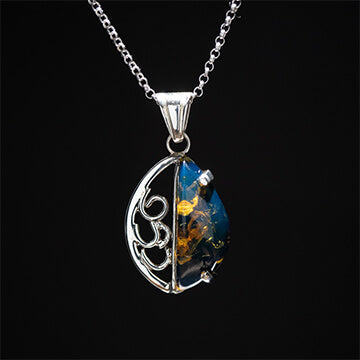
Understanding Larimar grading transforms you from a casual buyer into an informed collector capable of recognizing genuine quality and value. Whether you're investing in museum-quality Super Blue specimens or selecting a beautiful Larimar pendant for daily wear, knowledge protects your purchase and ensures satisfaction.
Key Takeaways:
✓ Grade matters significantly - The difference between A and AAA grades represents 200-400% price and quality variation ✓ Certification is essential - Never purchase significant Larimar without documentation from reputable sources
✓ Bigger isn't always better - A 20-gram AAA piece outvalues a 50-gram AA specimen ✓ Patterns tell stories - Ocean, Turtleback, and Fractal patterns each offer unique beauty ✓ Investment potential exists - Quality Larimar has demonstrated consistent appreciation over decades ✓ Authentication protects value - Learn to spot fakes and always verify sources
Ready to start or expand your Larimar collection?
Explore our authenticated, certified Larimar jewelry handcrafted by Dominican artisans:
Every piece includes a certificate of authenticity, detailed grading information, and the backing of our decades of Dominican expertise. We stand behind every stone we sell with transparent grading, fair pricing, and a commitment to customer education.
Questions about a specific piece or need help identifying quality?
Contact our team at Larimar Creations for personalized guidance. We're here to help you make confident, informed decisions about your Larimar purchases.
Found this guide helpful? Share it with fellow collectors and jewelry enthusiasts! Use the sharing buttons below to spread accurate Larimar information and help others avoid common buying mistakes.
Stay Updated: Subscribe to our newsletter for market updates, new specimen alerts, and exclusive collector insights delivered monthly.
About the Author: This comprehensive guide draws on decades of direct experience mining, grading, and crafting Larimar in the Dominican Republic. Larimar Creations works directly with Dominican mining families and master artisans to bring authentic, certified Larimar to collectors worldwide.
Last Updated: January 2026 | All pricing current as of publication date