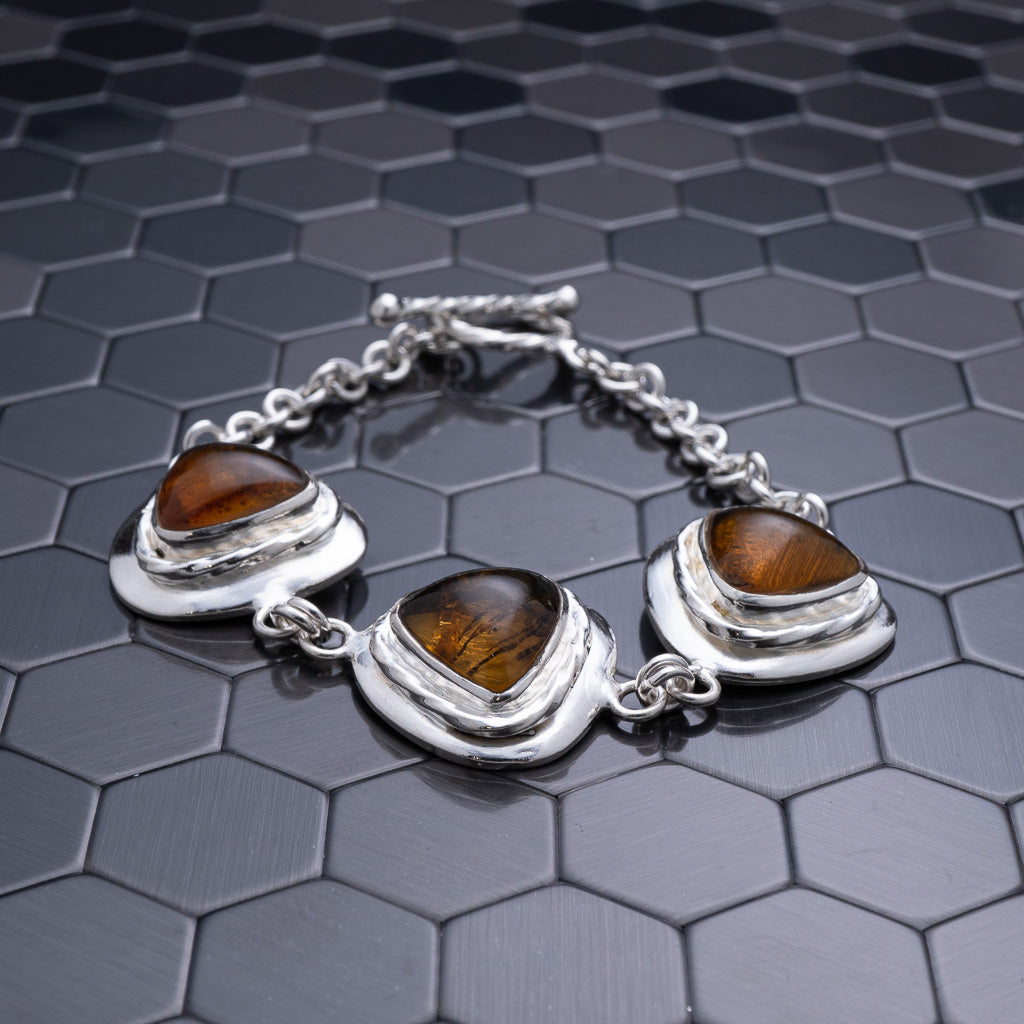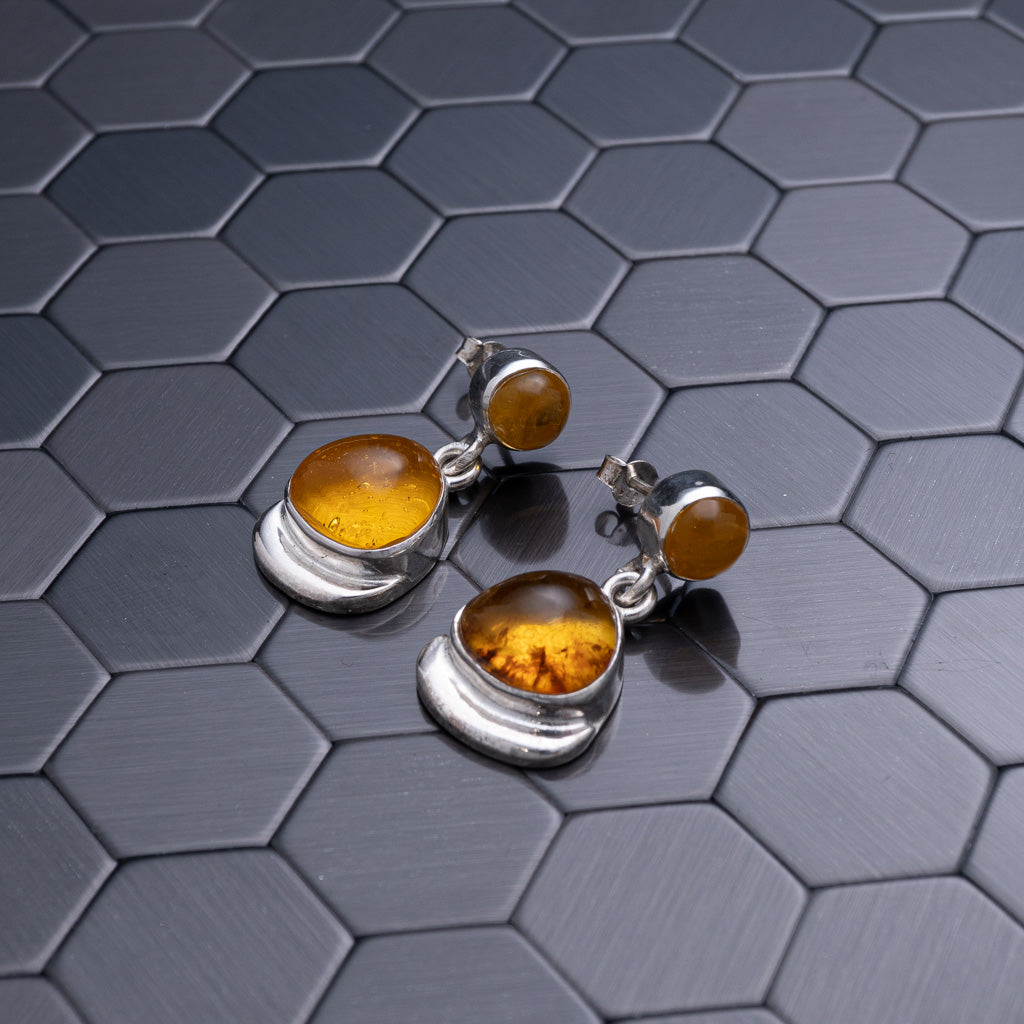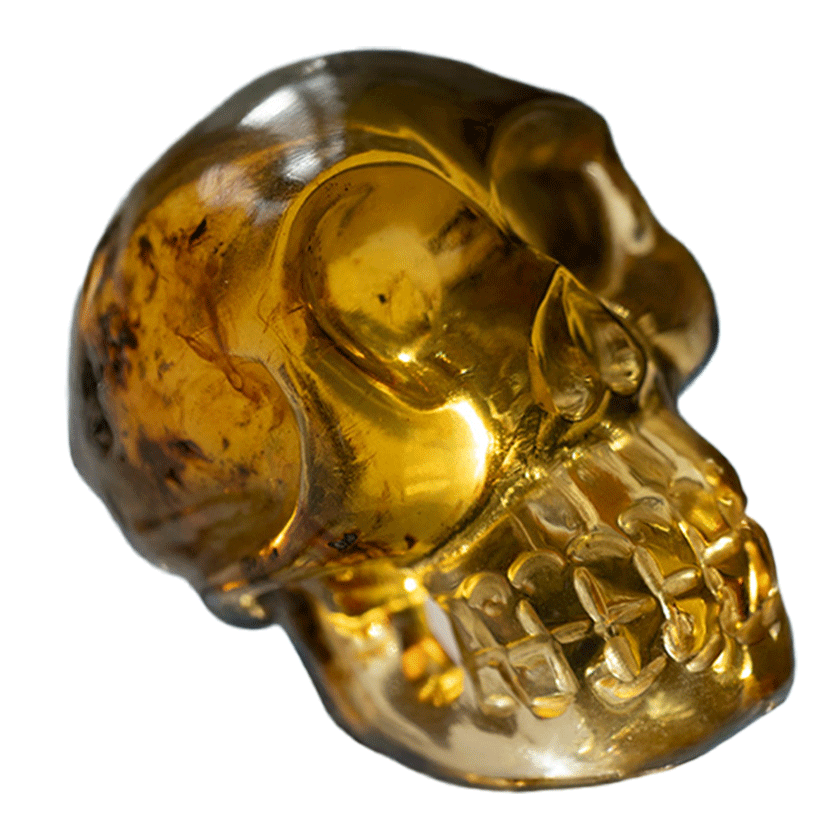


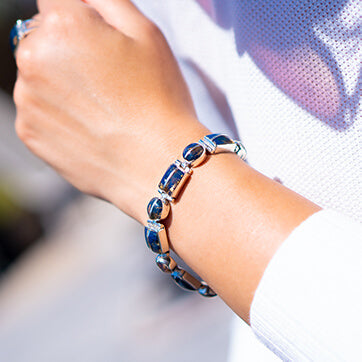
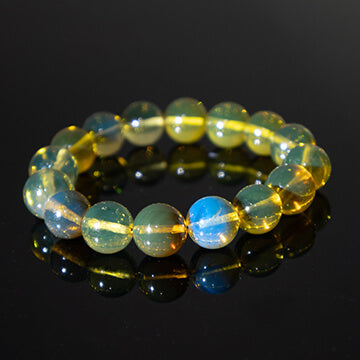
Handcrafted in DR.

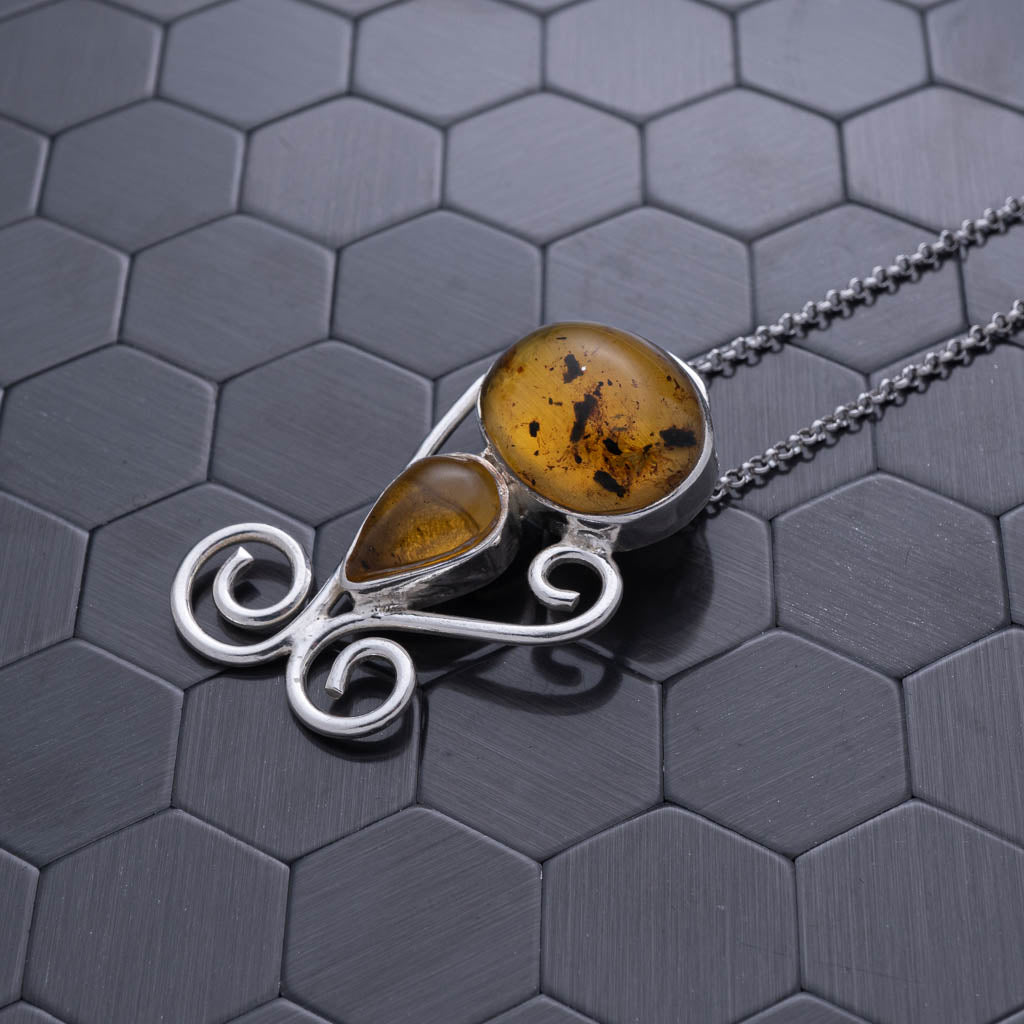
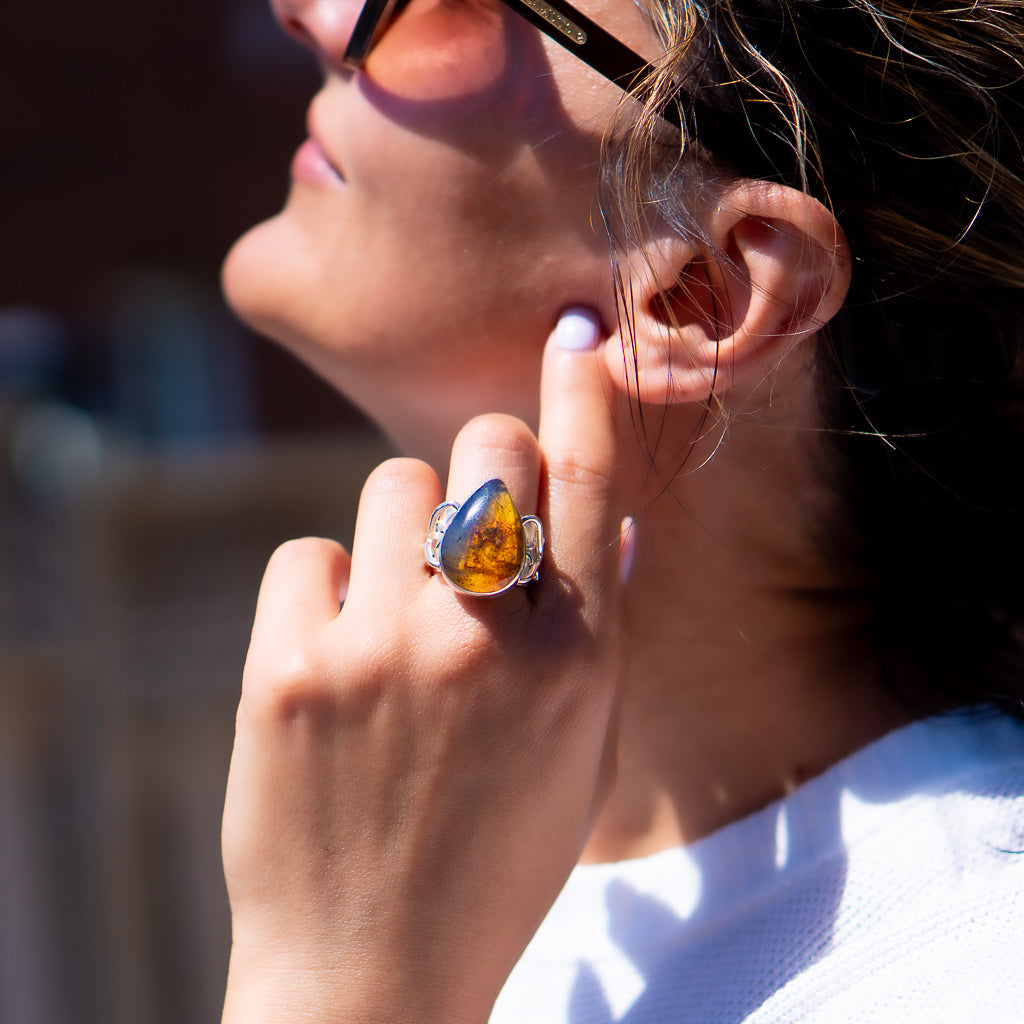
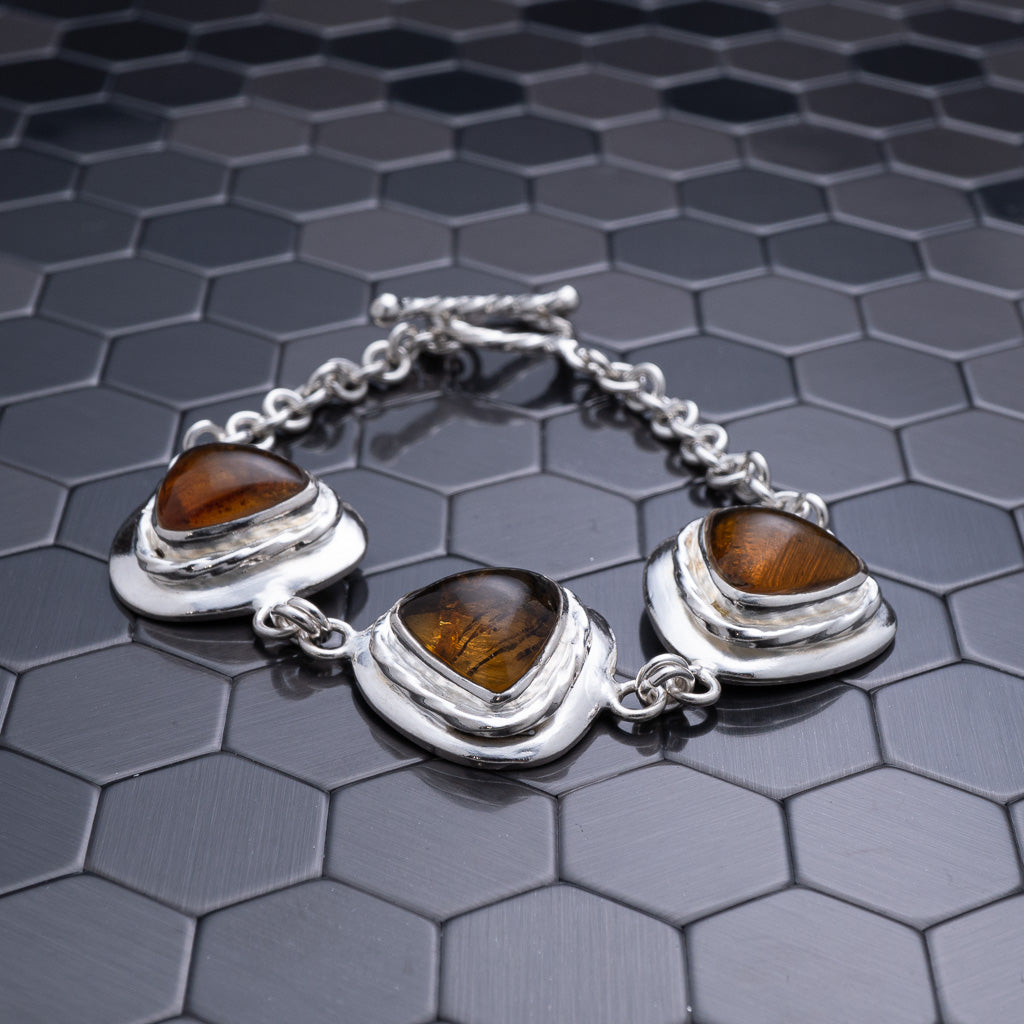
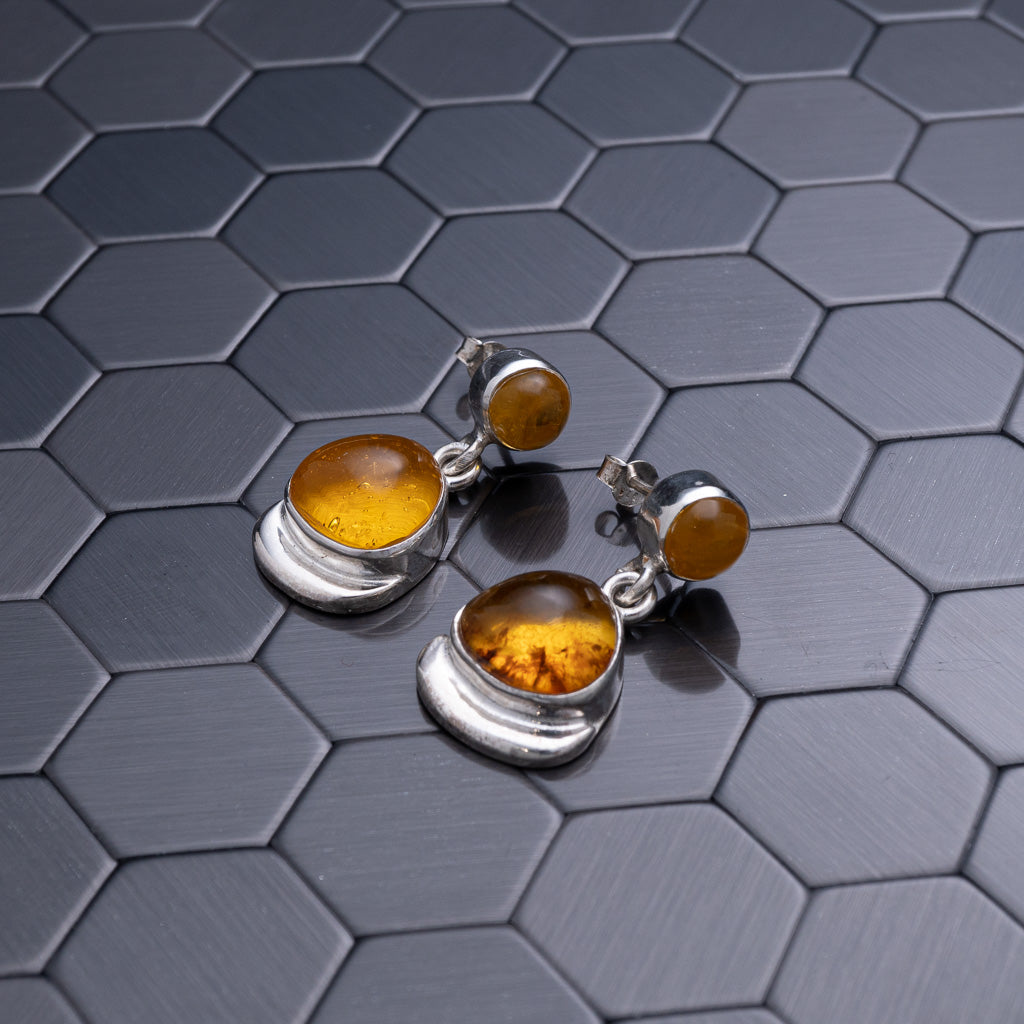


100% Handcrafted in DR.

A beads pendant necklace combines a strand of beads with a central pendant, and the best choice depends on three things: the bead style, the pendant's size, and a length that suits your neckline. Get those three right and the necklace looks balanced whether you wear it daily or save it for special occasions. This guide covers the main styles, how to size and measure, how to pair beads and pendants, and how to care for the finished piece.
A beads pendant necklace is a necklace in which beads form the strand, the pendant sits at or near the center, or both. The category is broad, so it helps to separate the common constructions.
The distinction matters when you shop. A necklace described as "beaded" may have no pendant at all, while a pendant necklace may have no beads. The pieces that earn the name combine both on purpose.
The best bead styles for pendants are those that stay quiet enough to let the pendant lead: small round beads, faceted beads, and evenly sized strands. Style depends on how much attention you want the pendant to carry.
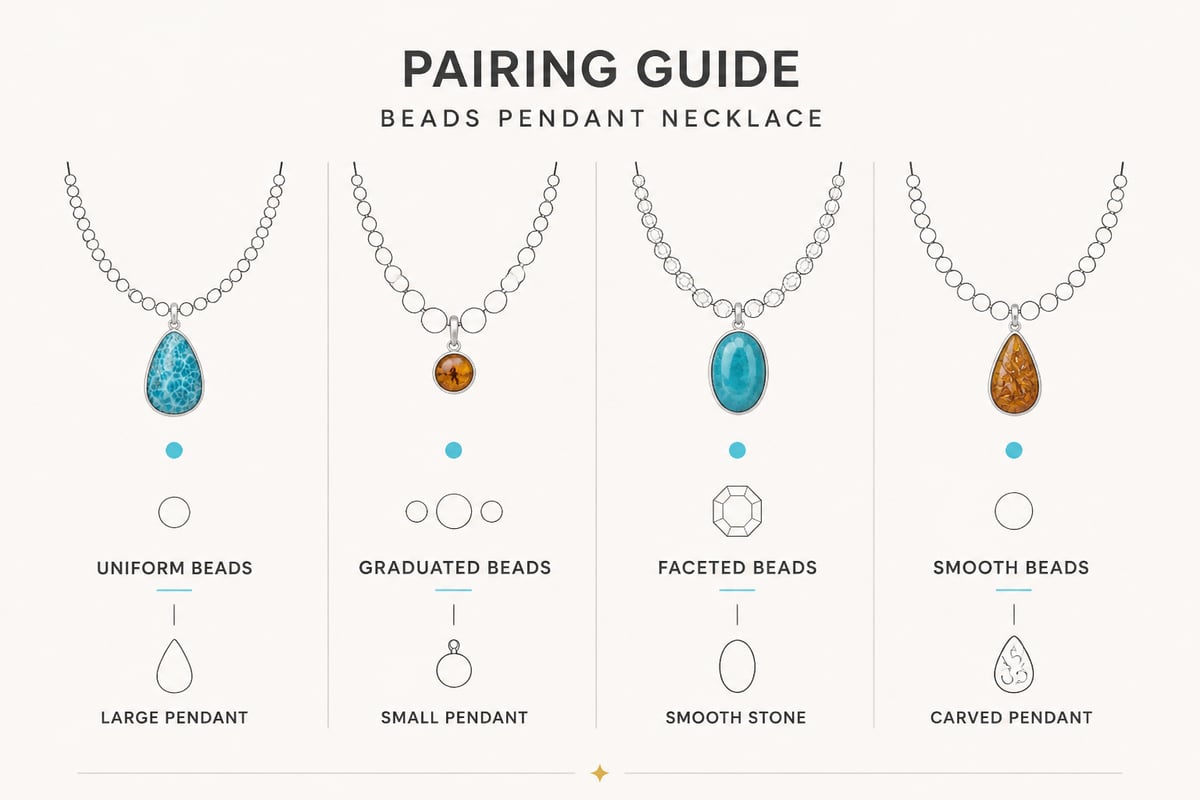
According to Jewelers of America, a uniform beaded design uses stones of about the same size, while a graduated design increases stone size uniformly, usually toward the center. Both can support a pendant, but they behave differently.
| Bead style | Look | Pairs best with |
|---|---|---|
| Uniform small round | Clean, understated | A large or detailed pendant |
| Graduated | Draws the eye to the center | A smaller, simple pendant |
| Faceted | More light and sparkle | A smooth, polished stone pendant |
| Smooth polished | Soft, calm finish | A carved or textured pendant |
| Mixed shapes and spacers | Casual, layered feel | A single bold focal piece |
A practical rule: let one element be the star. If the pendant is bold, keep the beads uniform and modest. If the beads are the feature, choose a pendant that is smaller and simpler.
Teardrop, oval, and heart pendants suit most necklines, while larger freeform and triangle shapes make a stronger statement. Shape changes how a necklace reads on the body, so it is worth choosing deliberately.
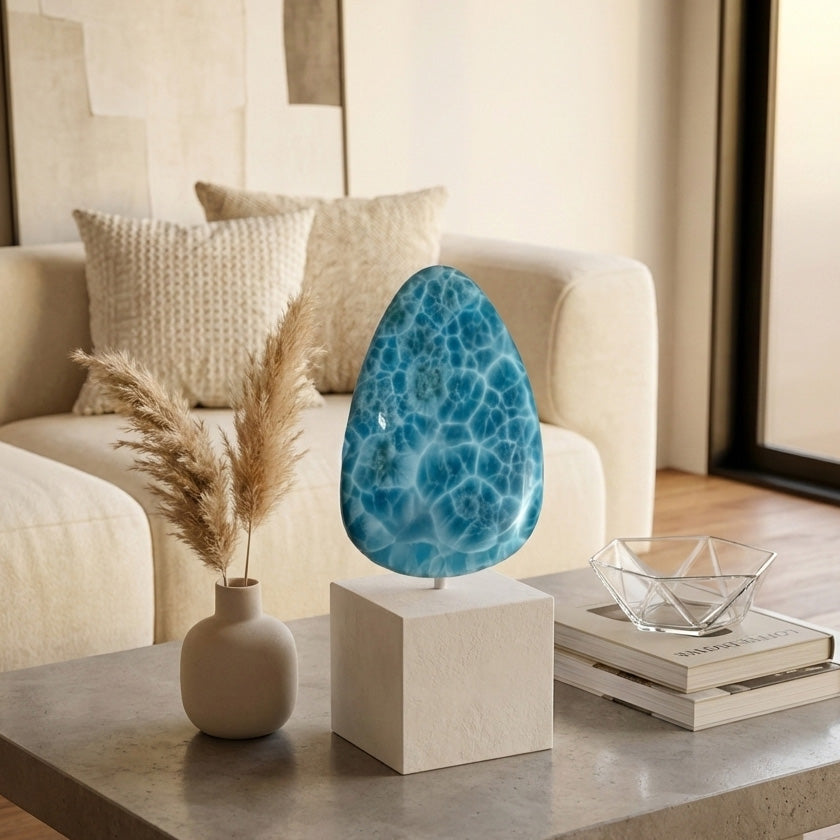
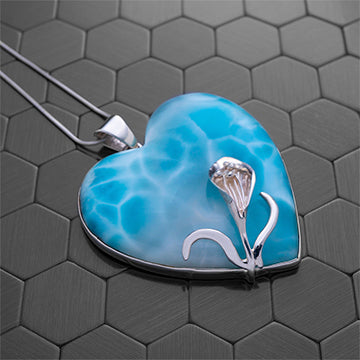
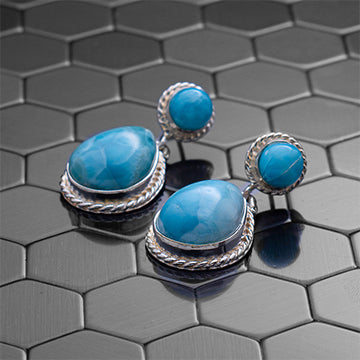
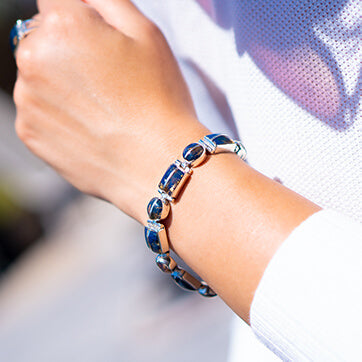
If you collect or prefer natural stone, shape also shows off the material. Larimar, a blue gemstone found only in the Dominican Republic, has swirling white and blue patterns that read well in larger, smooth shapes. A large Larimar teardrop pendant necklace lets those patterns run across the whole stone, while a Larimar heart pendant keeps the look compact and giftable.
For most people, 16 to 20 inches is the most flattering range for a beads pendant necklace, with 18 inches the most common choice. Length determines where the pendant lands, and that placement affects the whole outfit.
Jewelers Mutual describes 18 inches as a popular necklace length that falls just below the collarbone, and lists women's necklace lengths ranging from 14 to 36 inches. The standard length names, according to Jewelers of America, are:
Princess length is the most reliable starting point for a pendant. It sits in the open space below the collarbone, which gives the pendant room to be seen. Matinee length drops the pendant toward the chest and suits crew necks and higher collars.
Measure your neck and the spot where you want the pendant to land, then choose a chain length that matches. A flexible tape or a piece of string is all you need.
Bead size and pendant size also need to be in proportion. A pendant much heavier than the beads can pull the strand out of shape, while a very small pendant on thick beads can look lost. As a general guide, keep the pendant at least as visually dominant as the largest bead. For a bolder look, a big pendant necklace works best with a lighter, finer chain or strand.
Neck size and body frame matter too. A shorter neck often looks better with a longer pendant that draws the eye downward, and a longer neck can carry a choker or princess length comfortably.
Match the pendant's position to the open space your neckline creates. The goal is a pendant that sits in a visible area rather than colliding with fabric.
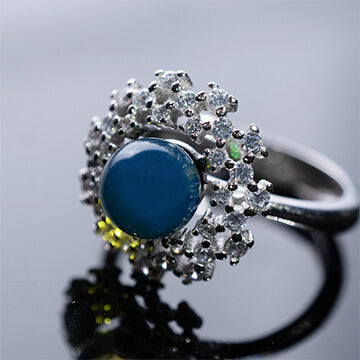
Color works alongside shape. Blue stone pendants pair naturally with white, navy, and neutrals, and they stand out clearly against darker tones. Our notes on a blue pendant necklace cover how different shades read against common wardrobe colors.
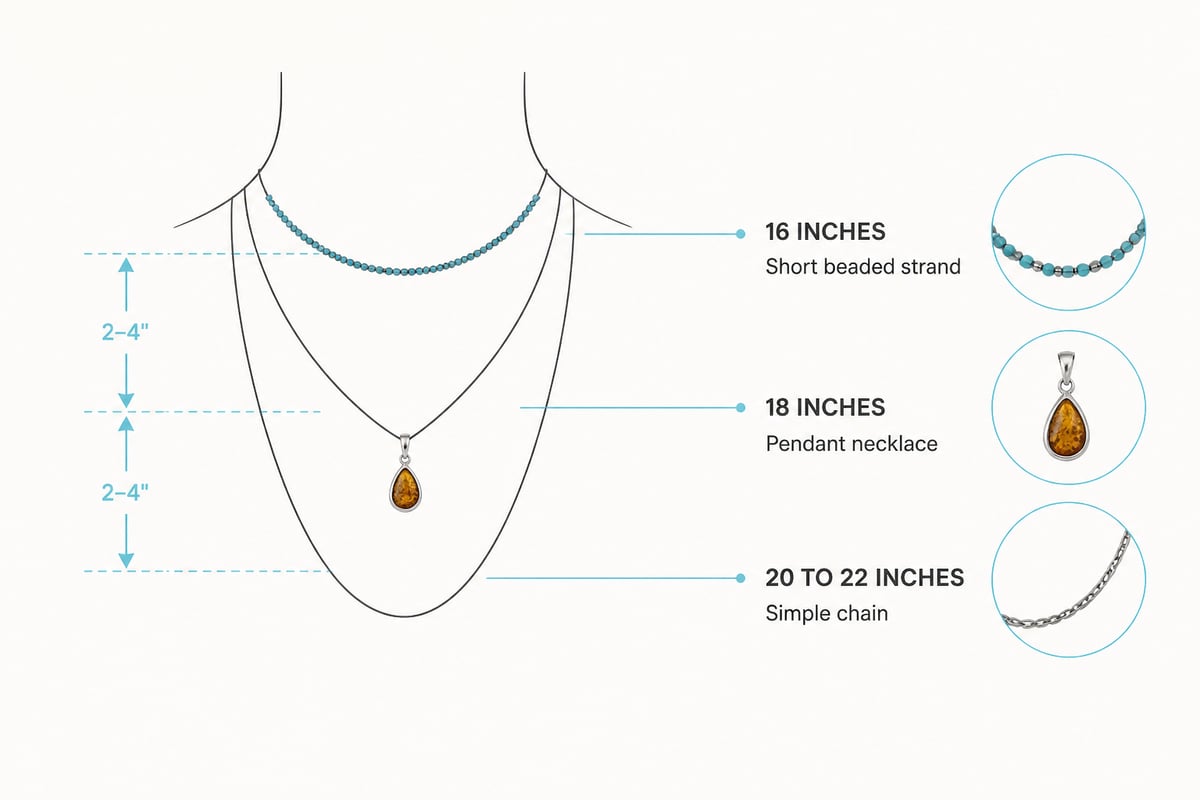
Yes, you can layer a beads pendant necklace by varying the lengths by about two to four inches and keeping only one strand visually busy. Layering works when each necklace has its own space.
Start with the shortest piece, then step outward. A short beaded strand at 16 inches, a pendant at 18 inches, and a simple chain at 20 to 22 inches create three distinct lines. If two pieces are close in length, they tend to tangle and compete.
A few guidelines help:
For a clean, wearable result, a single pendant over a plain neckline often looks better than a crowded stack, so layer only when the outfit has room for it.
Look for natural gemstones or high-quality glass beads strung on durable cord or chain, with a pendant set in sterling silver or another stable metal. Material quality affects how the necklace looks after years of wear, not only on the first day.
Natural stone beads vary slightly from one to the next, which is part of their character. Glass and acrylic beads are consistent but have a different weight and feel. Pearl, shell, and wood beads each bring their own tone.
For the pendant, sterling silver is a long-standing choice for stone settings because it is durable and takes a polish well. Check the clasp and the stringing material too, since a weak clasp is the most common point of failure.
Buyers should also be aware that jewelry safety rules differ by country. As one example, the London Borough of Bromley describes UK restrictions that set a 0.05% by-weight lead limit for individual jewelry parts and a 0.01% by-weight cadmium limit for metal jewelry components. Buying from a seller who sources materials openly and names the metal in the piece is the simplest way to avoid doubt.
Gemstone sourcing deserves the same attention. Larimar is mined and handcrafted in the Dominican Republic, the only place on Earth where it is found, so a pendant sold as Larimar should come with clear origin information.
A natural stone pendant offers a one-of-a-kind pattern, lasting value, and a material with a story, which suits both personal wear and gifting. No two stones are identical, so the pendant you choose is the pendant nobody else has.
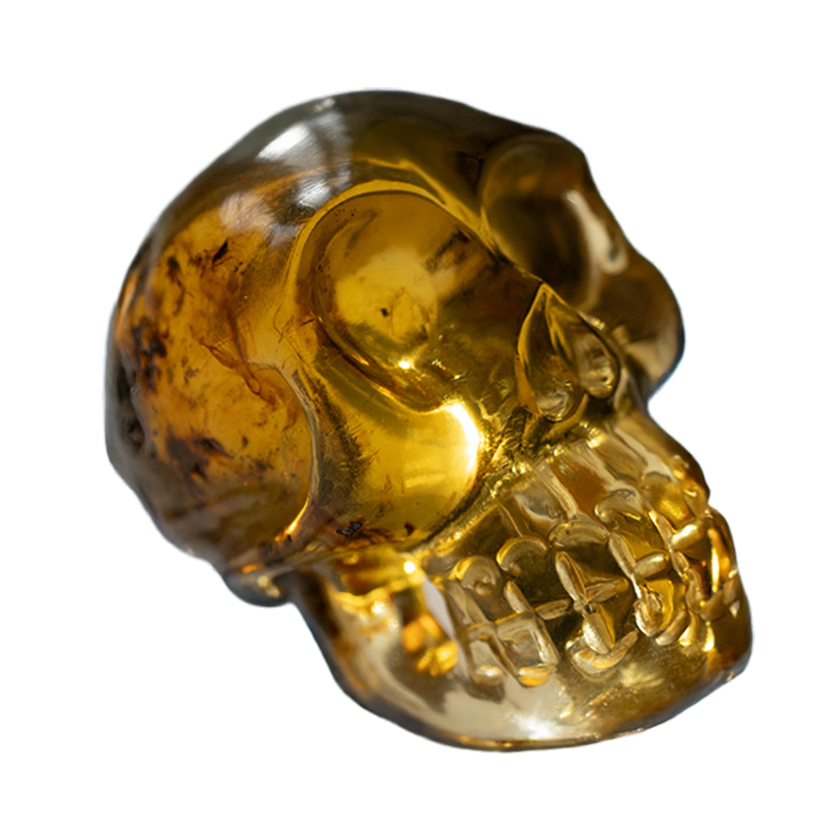
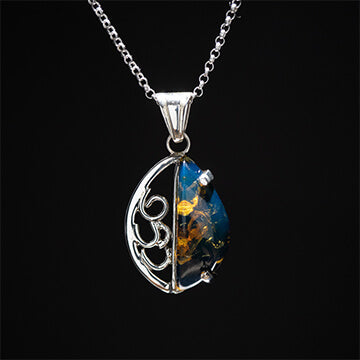
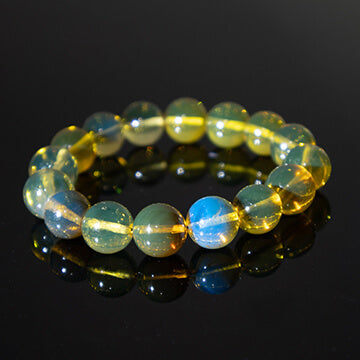
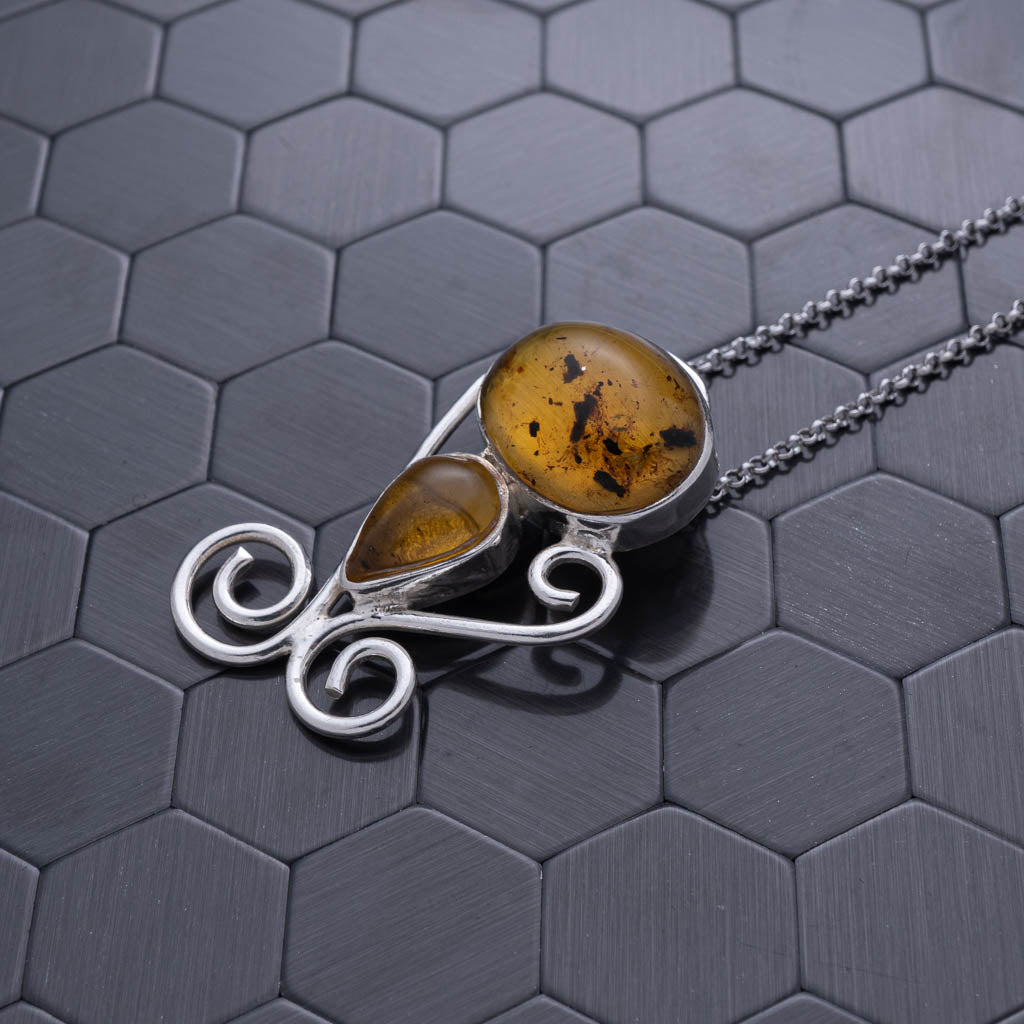
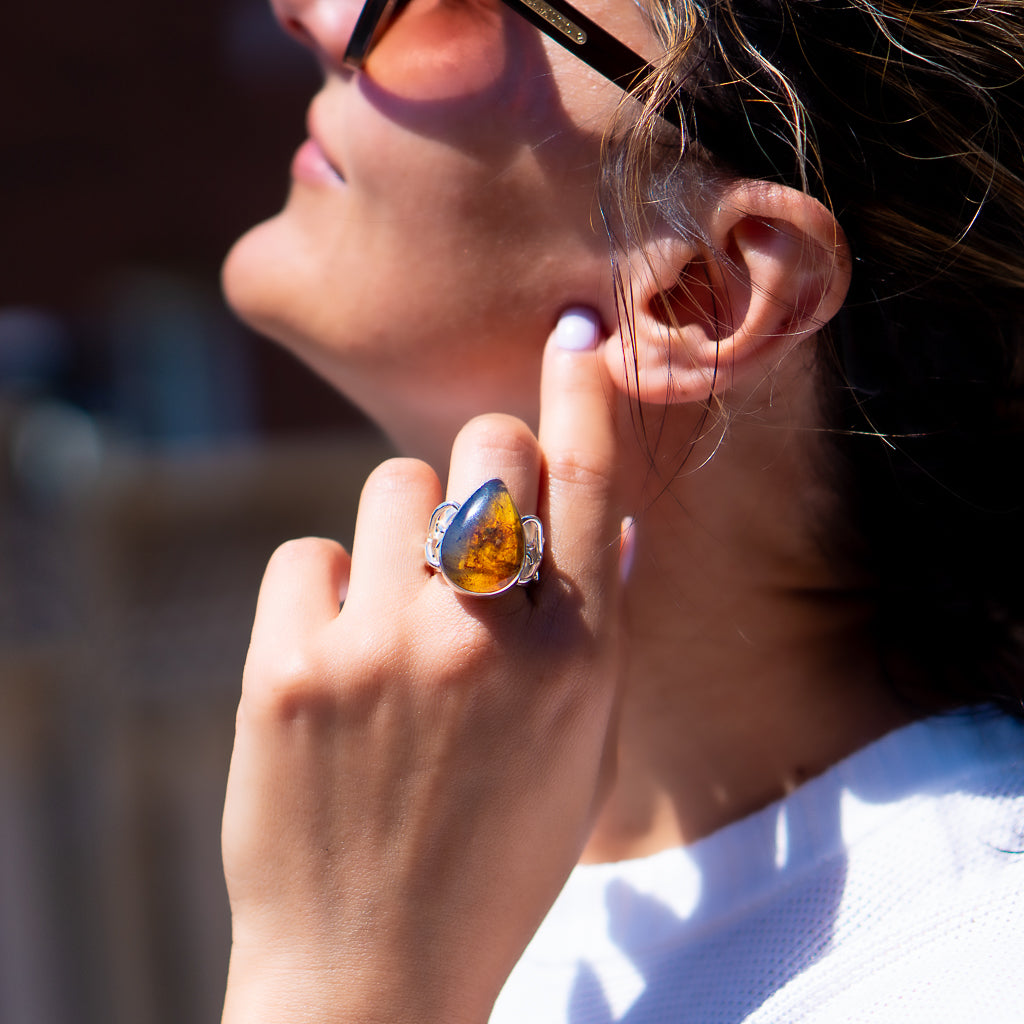
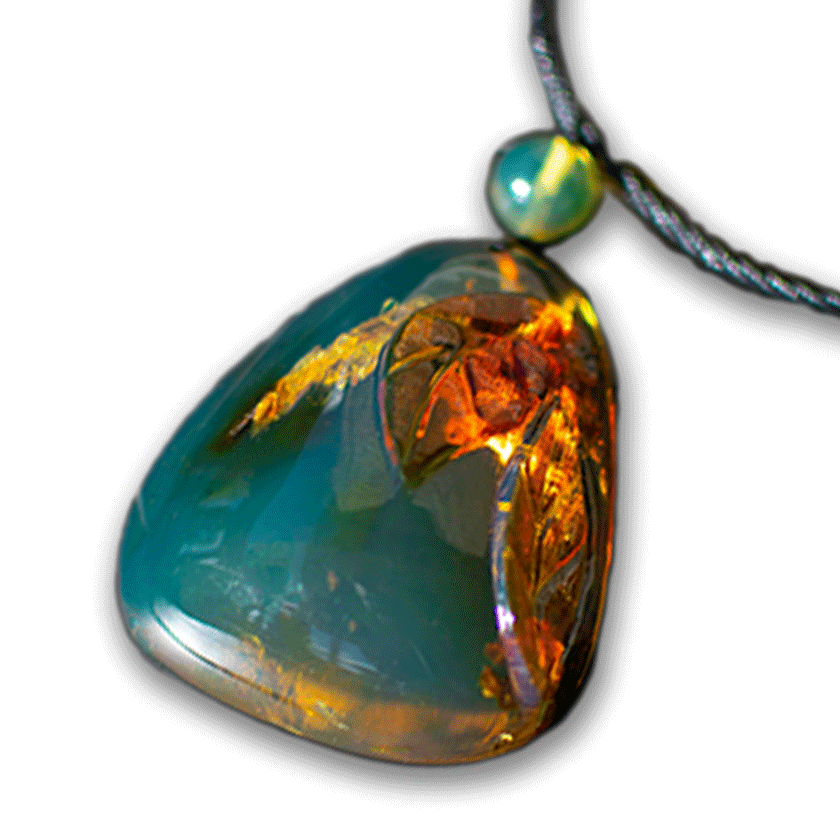
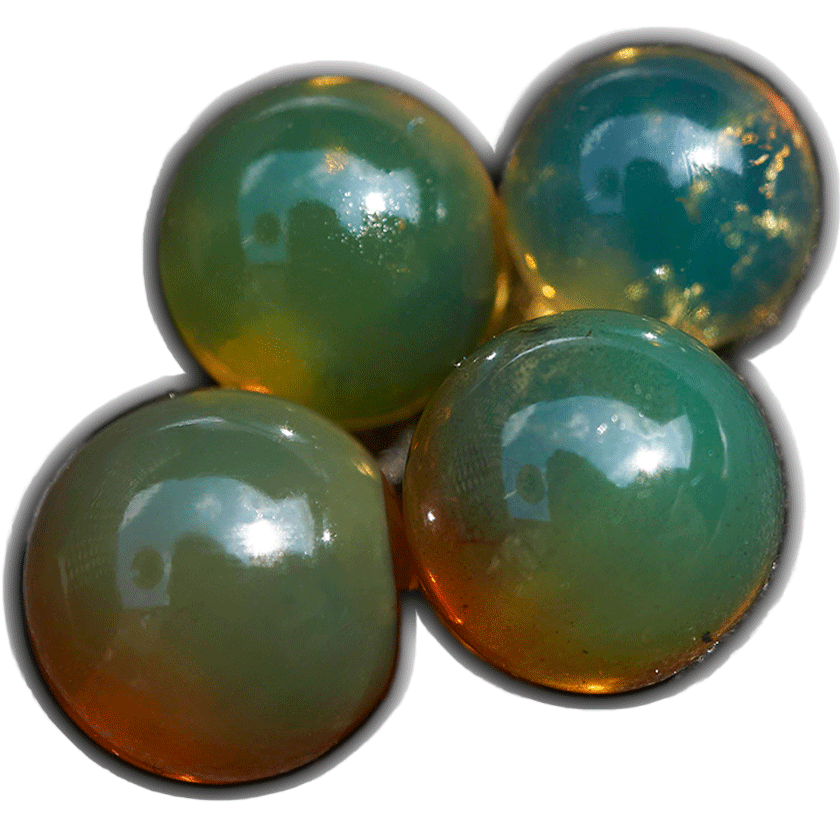
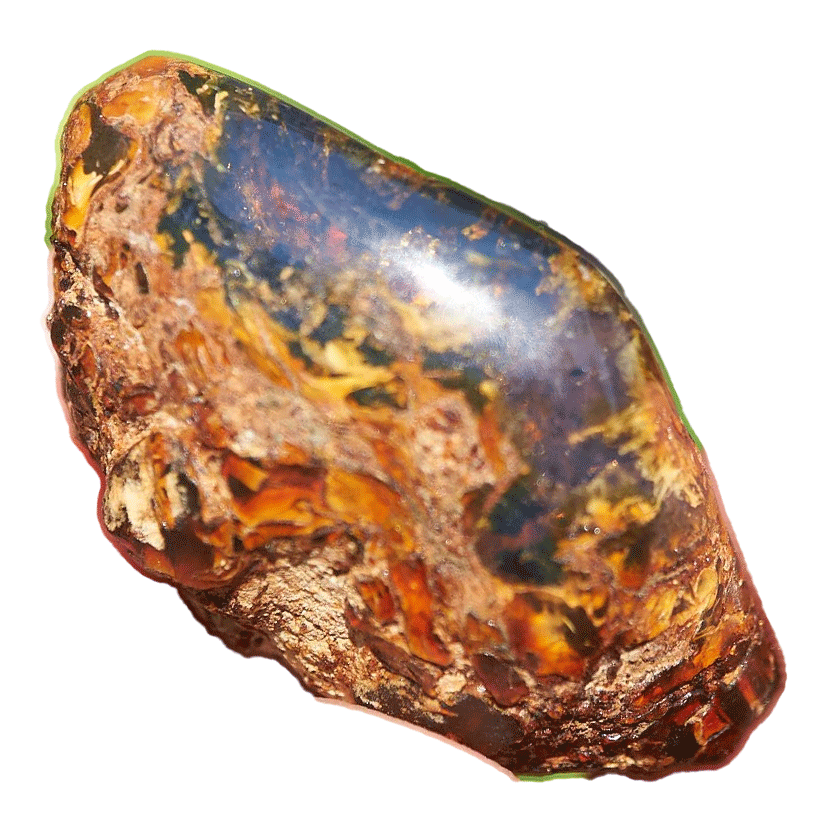
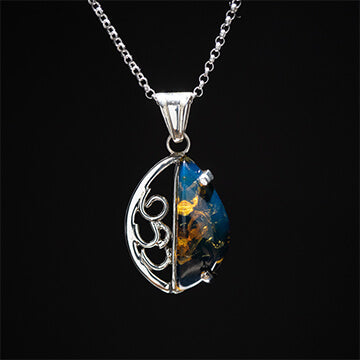
For collectors, stone character matters: color depth, pattern, and clarity. Larimar ranges from pale sky blue to deeper ocean tones, often with white veining. Dominican Blue Amber is another distinctive material, prized for its rarity and warm, sometimes bluish glow under light. A Dominican blue amber pendant necklace shows how different an amber piece looks from a blue stone.
For gift buyers, a stone pendant carries meaning without needing a special occasion. Larimar is often associated with calm and peace, and a heart or angel wing design adds a personal note. A fair price matters too: when stones come straight from the mine, as Larimar Creations' do, authentic pieces stay accessible rather than carrying a retail markup.
If you want a pendant with real gemstone character to anchor a beaded strand, Larimar Pendants from Larimar Creations are a strong place to start. The family-owned business has made Larimar and amber jewelry since 1982, and it holds smaller or less expensive pieces to the same quality standard as larger ones. That means a modest pendant is not a lesser stone. Customers rate the company 4.6 from over 946 reviews.
Before buying, look at the product page for the pendant's dimensions, metal, and chain details, and use the contact page with any questions about sizing or options.
Store it flat, keep it dry, and clean it gently with a soft cloth. A little routine care prevents most damage.
Larimar and amber are both relatively soft compared with many gemstones, so they should be kept away from hard surfaces and abrasive cleaners. A gentle approach keeps the surface smooth for decades.
Choose a classic length, a pendant shape with broad appeal, and a material the recipient will recognize as genuine. Gift buyers rarely know the recipient's exact neck size, so a princess length of 18 inches is the safest option.
A few points make the choice easier:
If the gift is part of a larger occasion, such as an anniversary or a honeymoon, a travel company like Hellenic Holidays offers tailor-made vacation packages to Greece and Turkey that pair well with a keepsake piece of jewelry.
Most disappointments come from mismatched proportions, the wrong length, and unclear materials. These are the points to check before buying.
If you want fine jewelry in other categories, such as diamonds for formal occasions, Flawless Jewels NY offers handcrafted diamond pieces that can sit alongside a gemstone pendant in a wider collection.
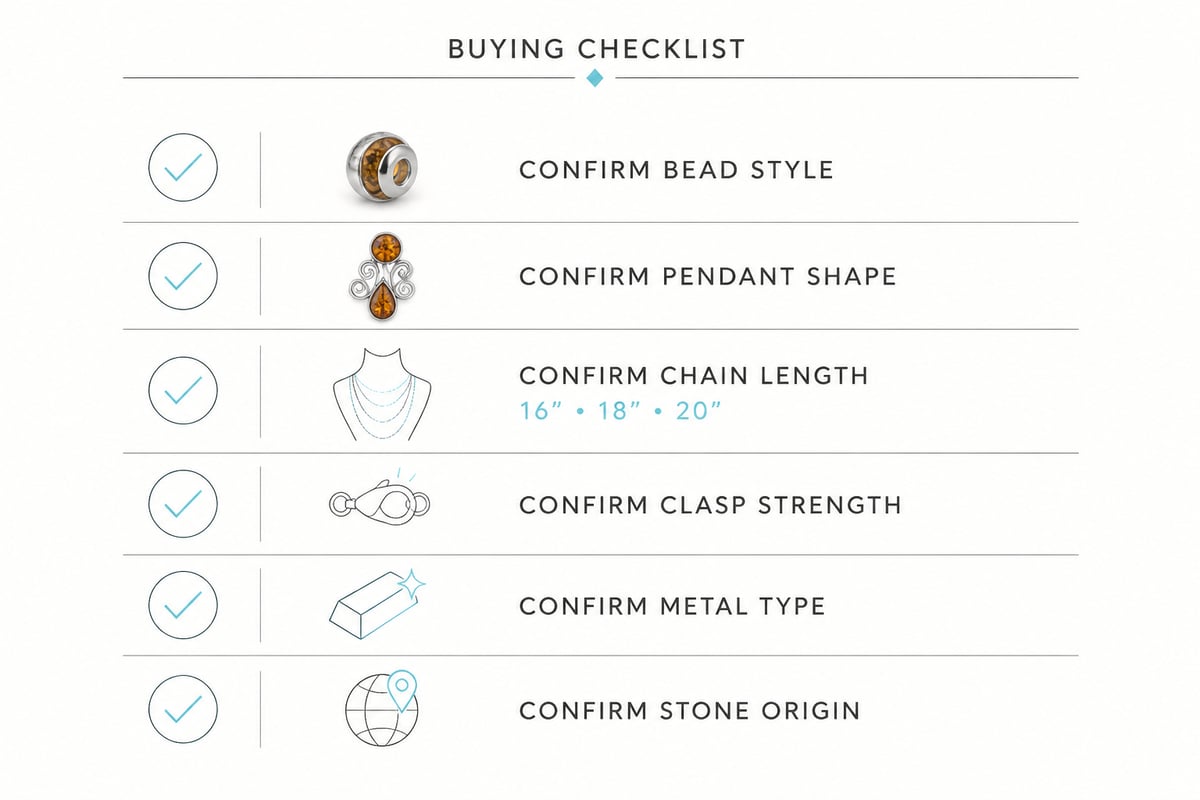
Take your measurement with a piece of string today, so you know whether 16, 18, or 20 inches suits you before you shop. From there, Larimar Creations can help you find a pendant that fits your length and style, starting with the Larimar Pendants collection of handcrafted pieces made from Dominican Larimar and Blue Amber. The company ships worldwide, so you can Shop Larimar and have an authentic pendant delivered wherever you are.