
FREE WORLD WIDE SHIPPING
HANDCRAFTED IN THE DOMINICAN REPUBLIC
BEST QUALITY LARIMAR
FREE WORLD WIDE SHIPPING
HANDCRAFTED IN THE DOMINICAN REPUBLIC
BEST QUALITY LARIMAR
FREE WORLD WIDE SHIPPING
HANDCRAFTED IN THE DOMINICAN REPUBLIC
BEST QUALITY LARIMAR
FREE WORLD WIDE SHIPPING
HANDCRAFTED IN THE DOMINICAN REPUBLIC
BEST QUALITY LARIMAR
FREE WORLD WIDE SHIPPING
HANDCRAFTED IN THE DOMINICAN REPUBLIC
BEST QUALITY LARIMAR
FREE WORLD WIDE SHIPPING
HANDCRAFTED IN THE DOMINICAN REPUBLIC
BEST QUALITY LARIMAR
100% Handcrafted in DR.
by Admin November 19, 2026 6 min read
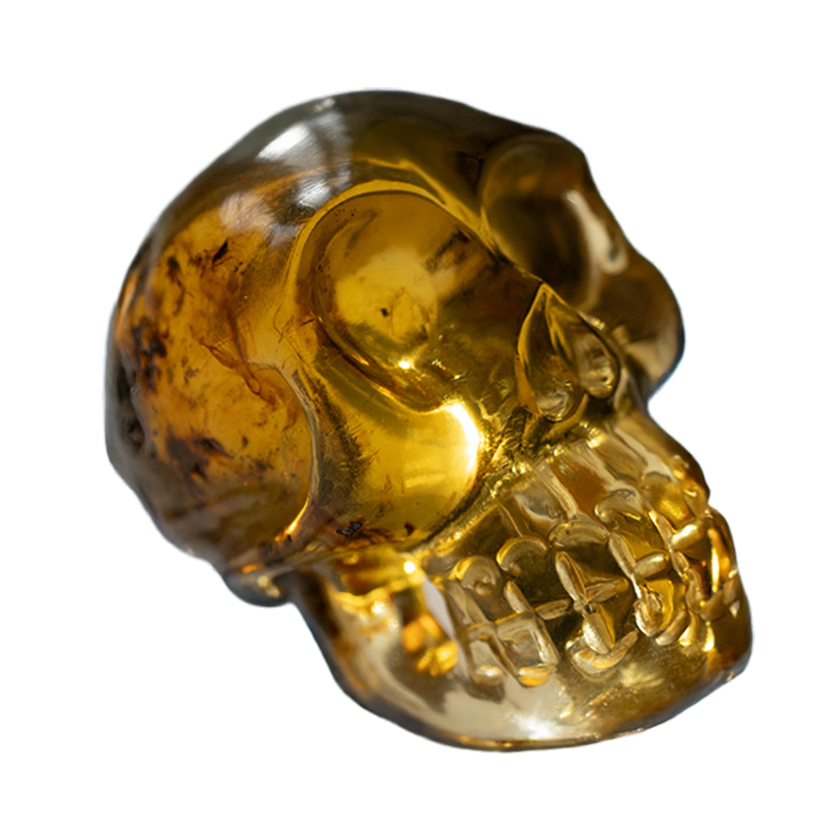
A tiny mosquito suspended in honey-gold resin. A fern fragment that still shows its delicate structure. A constellation of ancient bubbles that seems to move when the stone turns in your hand. The finest amber inclusion examples make jewelry and collector pieces feel less like ornaments and more like intimate windows into a long-vanished forest.
For buyers drawn to Dominican amber, inclusions are part of the stone’s singular appeal. They are naturally preserved traces caught in tree resin millions of years ago, then protected as the resin hardened into amber. No two are arranged alike. That individuality is why an inclusion-rich cabochon, pendant, or carving can carry such a strong sense of place and history.
An inclusion is any material enclosed within amber while it was still fresh, sticky tree resin. As resin flowed down a trunk or branch, it could capture plant matter, insects, water droplets, air bubbles, or particles from the forest floor. Over immense spans of time, the resin transformed into amber and preserved those captured details.
Not every visible mark is an inclusion. Fine internal fractures, cloudy areas, and shifting bands of color can be natural features of amber without representing a separate object trapped in the resin. A genuine inclusion usually has recognizable form: a wing, a leaf vein, a small insect body, a cluster of bubbles, or a fragment of bark.
The distinction matters when choosing a piece. A clean, transparent amber gemstone allows light and color to take center stage. An inclusion piece asks the eye to linger. Neither is inherently better, but they offer very different kinds of beauty.
Insect inclusions are the images most people picture first, and for good reason. Flies, mosquitoes, beetles, ants, termites, and small winged insects may be preserved with remarkable detail. In rare examples, collectors can see legs, segmented bodies, antennae, or the delicate patterning of wings.
Spider inclusions are less common and especially compelling because their fine legs create a dramatic silhouette. Their value depends on several factors: the species or apparent type, the completeness of the specimen, its size, how clearly it can be viewed, and whether it sits in an attractive position within the amber.
A visible insect does not automatically make a stone more valuable than all clear amber. A tiny insect obscured by haze or fractures may be less desirable than a luminous, transparent blue amber cabochon. But a well-preserved specimen with strong visibility is undeniably a rare conversation piece.
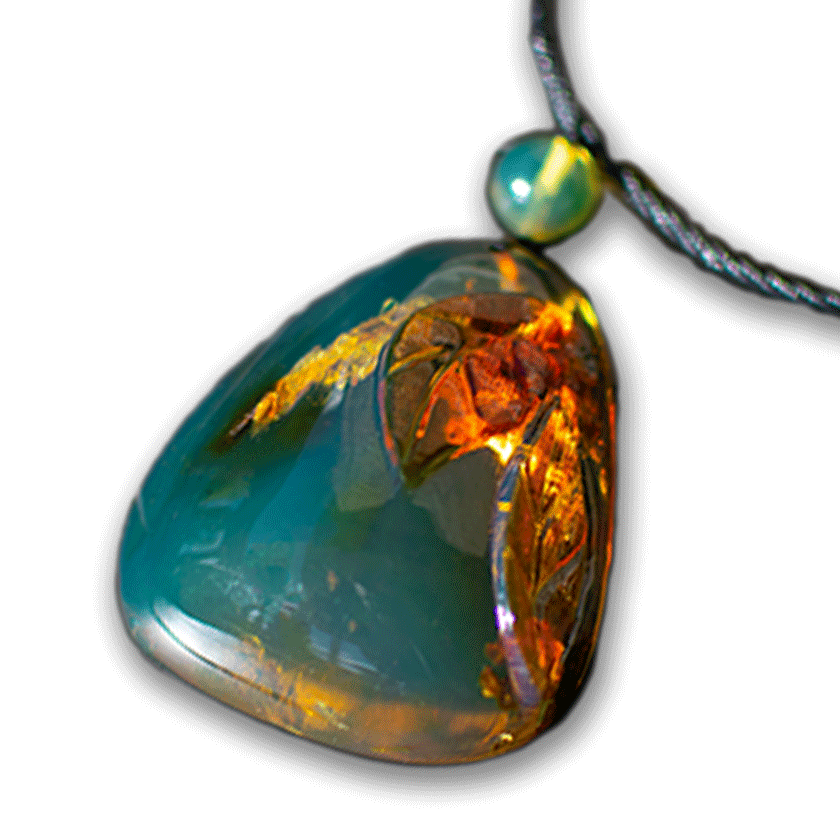
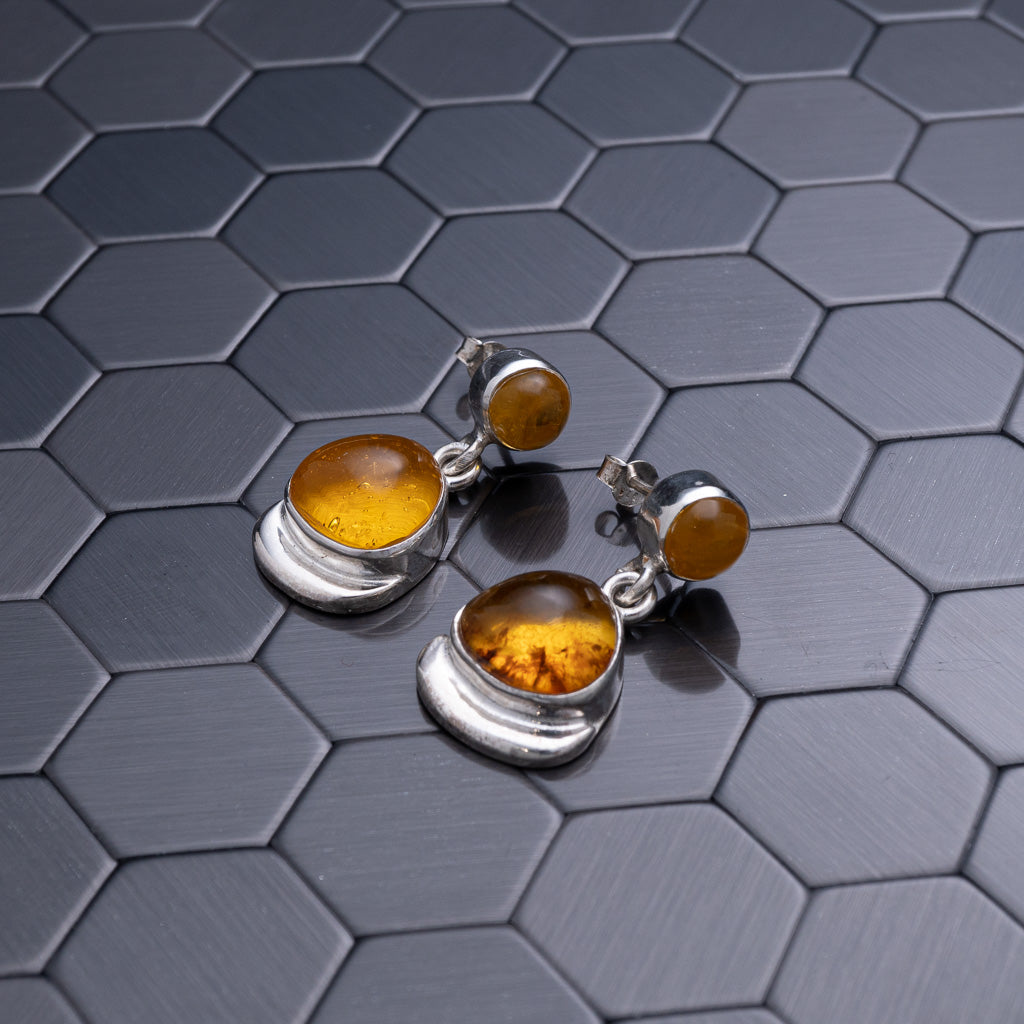
Leaves, seeds, moss, flower fragments, twigs, and bark offer a quieter kind of wonder. Botanical inclusions can be exceptionally beautiful in jewelry because their shapes often read clearly at a glance. A dark leaf fragment floating in warm cognac amber can look almost hand-painted, while a sprig of moss may create the impression of a miniature landscape.
Plant inclusions also pair naturally with the Caribbean character of Dominican amber. They suggest the ancient tropical forest that produced the resin in the first place. In a pendant or polished carving, a botanical inclusion can feel romantic and organic without demanding the close inspection that a tiny insect specimen may require.
Bubbles are among the most accessible and visually captivating amber inclusion examples. They formed when gas became trapped in resin before it hardened. Some appear as solitary, round pockets; others gather in lively trails or layered clusters.
Bubbles are not proof of a particular origin on their own, nor are they a guarantee of exceptional value. Yet they can add movement and depth, especially in transparent amber. When amber is rotated, light catches the curves of the bubbles and gives the stone a luminous, almost underwater character.
Collectors sometimes encounter inclusions that appear to be liquid. These require care in description and evaluation. A fluid-looking feature may be a bubble, a cavity, or another natural internal structure. Claims of ancient water should be supported by qualified examination rather than appearance alone.
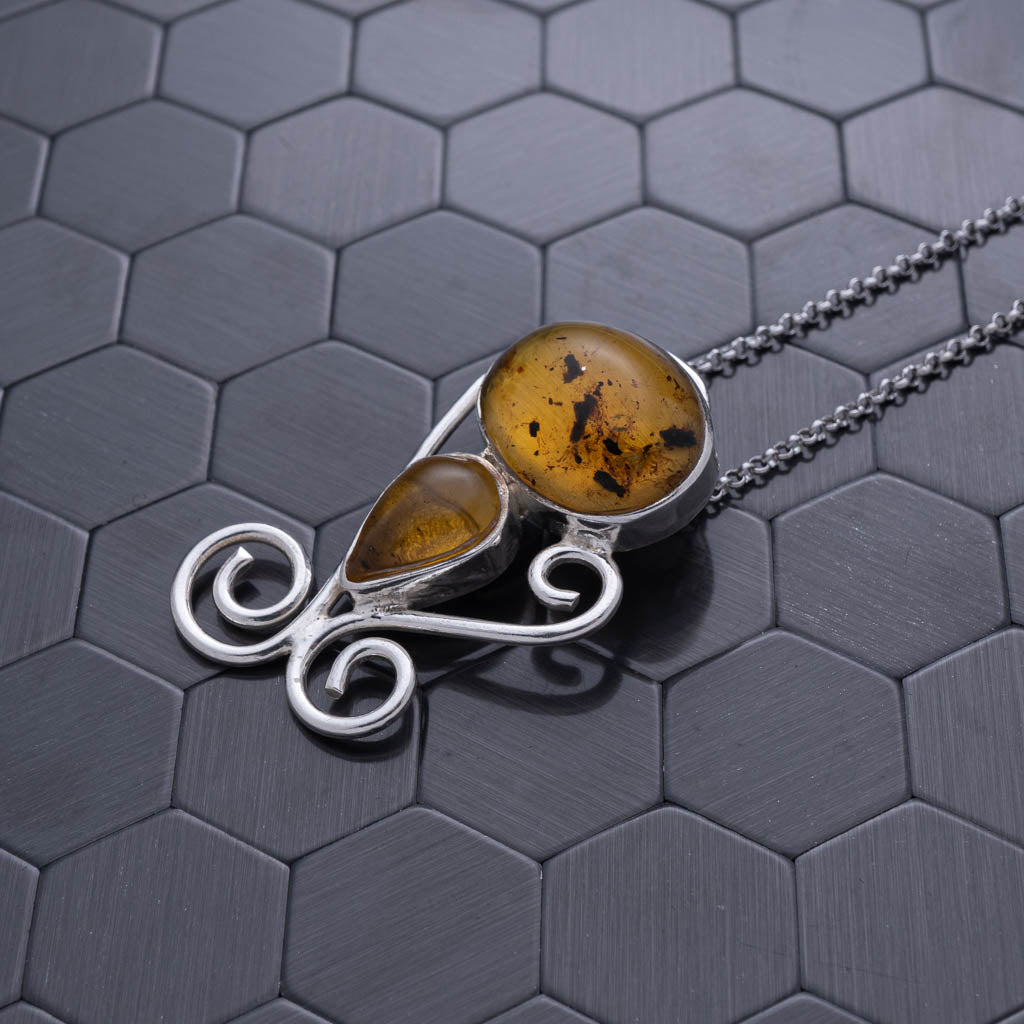
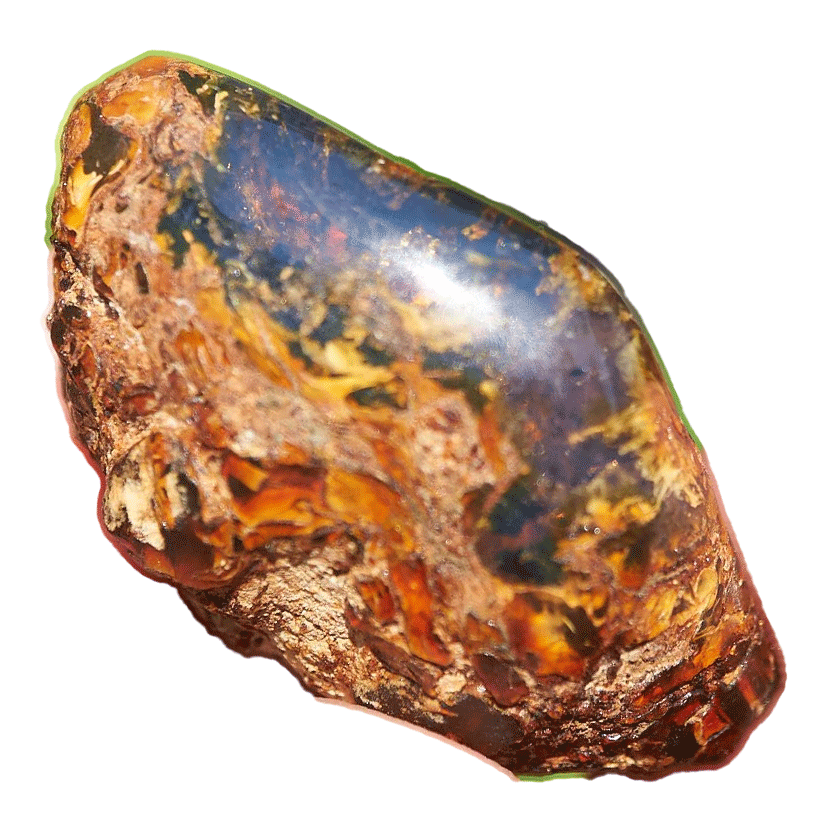
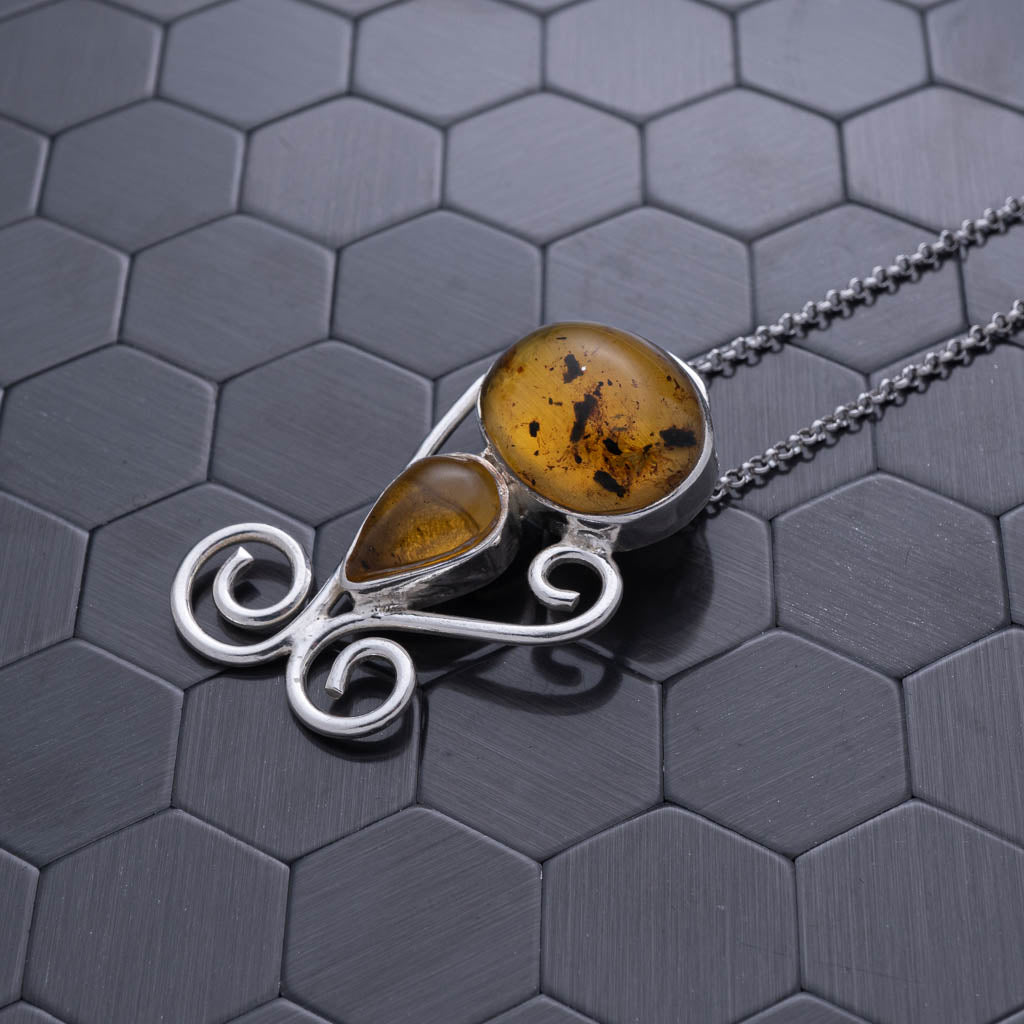
Amber often preserves fragments from the environment around the resin-producing tree. Wood fibers, bits of bark, mineral particles, and dark organic debris can create earthy patterns within the gem. These inclusions are not always as immediately recognizable as insects or leaves, but they can be deeply expressive.
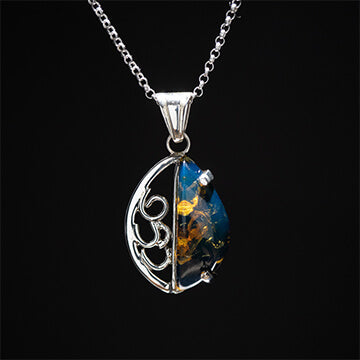
A piece containing forest debris may look more rustic than a clear, polished gem. For a collector, that raw character can be precisely the point. For everyday jewelry, it depends on personal style and the setting. A carefully designed sterling silver or gold pendant can elevate a richly included stone while allowing its natural story to remain visible.
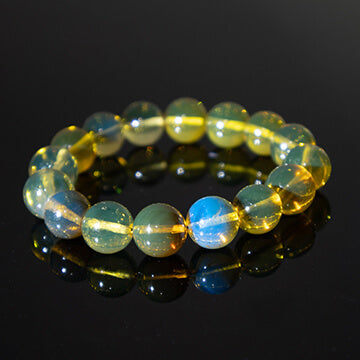
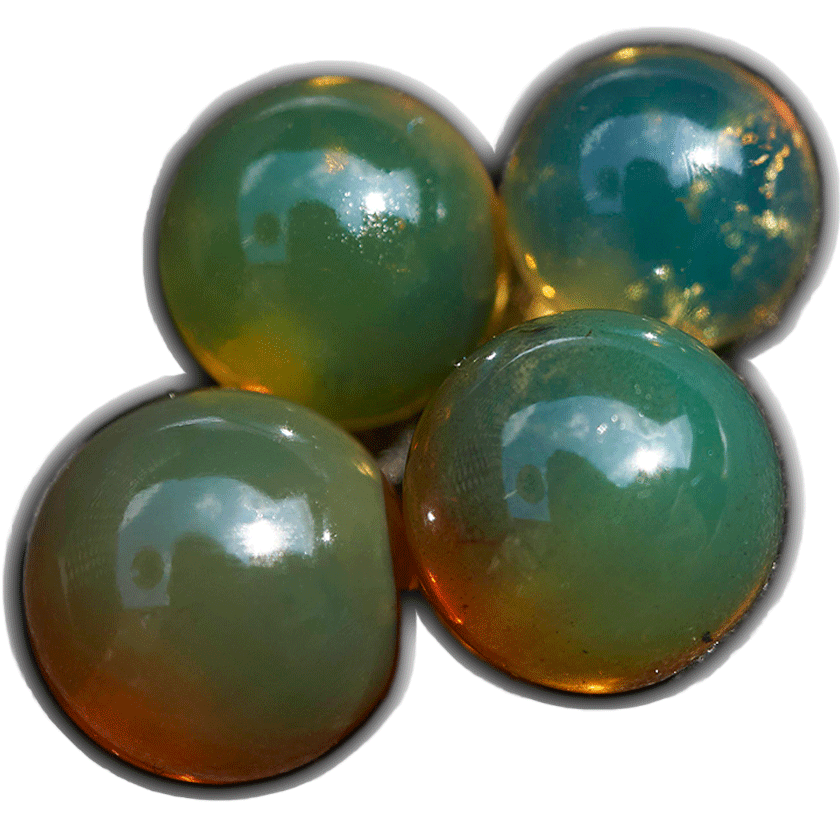
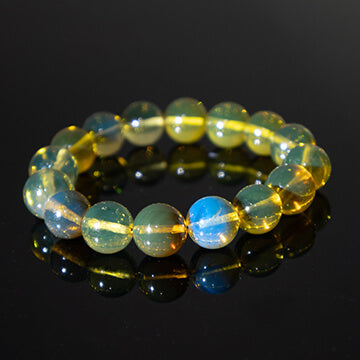
Dominican amber is celebrated for its clarity, wide color range, and notable fluorescence. Its rare blue variety can appear golden, greenish, or honey-toned in ordinary light, then reveal a striking blue glow under sunlight or ultraviolet light. Inclusions within blue amber can add another dimension to this changeable beauty.
An insect or botanical fragment may look softly suspended in warm daylight, then become more pronounced against the blue fluorescence. This contrast makes Dominican blue amber especially rewarding for collectors who enjoy examining a gemstone in different conditions.
Still, blue color and inclusions involve trade-offs. A highly transparent blue amber piece may be prized for its open, glowing appearance, while a more included stone may offer stronger historical character but less clarity. The right choice depends on whether you are buying for visual color, natural history, daily wear, or a collection built around rare specimens.
Start with visibility. Ask whether the inclusion can be seen clearly without forcing your eye to search through cloudiness, deep fractures, or a heavy setting. A visible inclusion does not need to be perfectly centered, but its placement should feel intentional and balanced in the finished piece.
Then consider condition. Natural internal lines are common in amber, but cracks that reach the surface can affect durability. Amber is an organic gemstone, softer than many traditional jewelry stones, so a piece with a delicate inclusion is best protected from impacts, extreme heat, perfume, and harsh household chemicals.
Origin is equally important. Authentic Dominican amber has a distinct place in the gemstone world, and certification or clear sourcing information provides confidence when buying a meaningful piece. Be cautious of overly perfect specimens offered at implausibly low prices. Modern resin can contain insects or plant material too, but it does not carry the geological age or collectible significance of genuine amber.
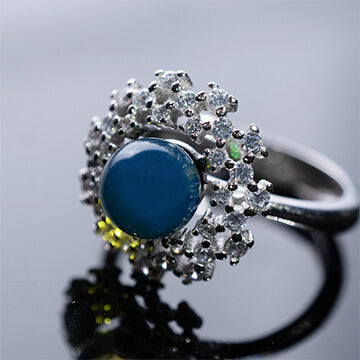
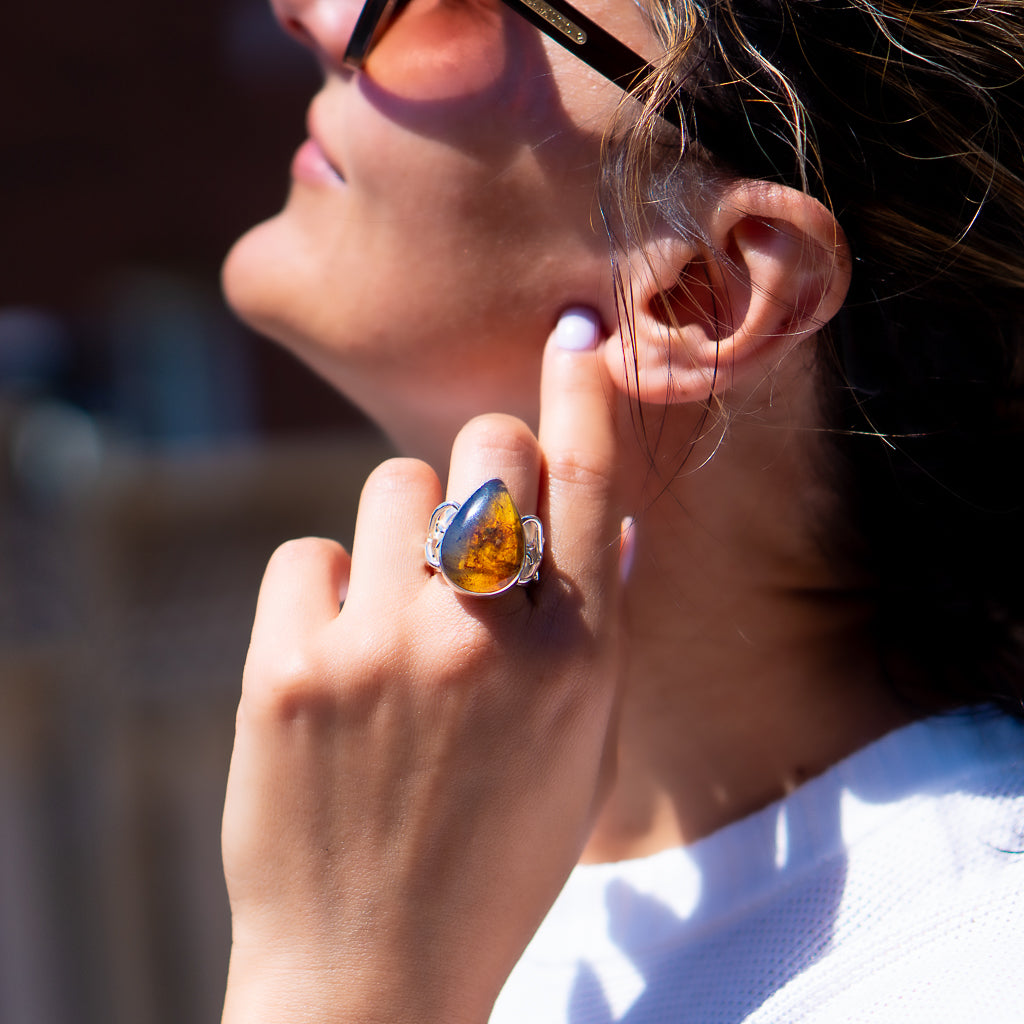
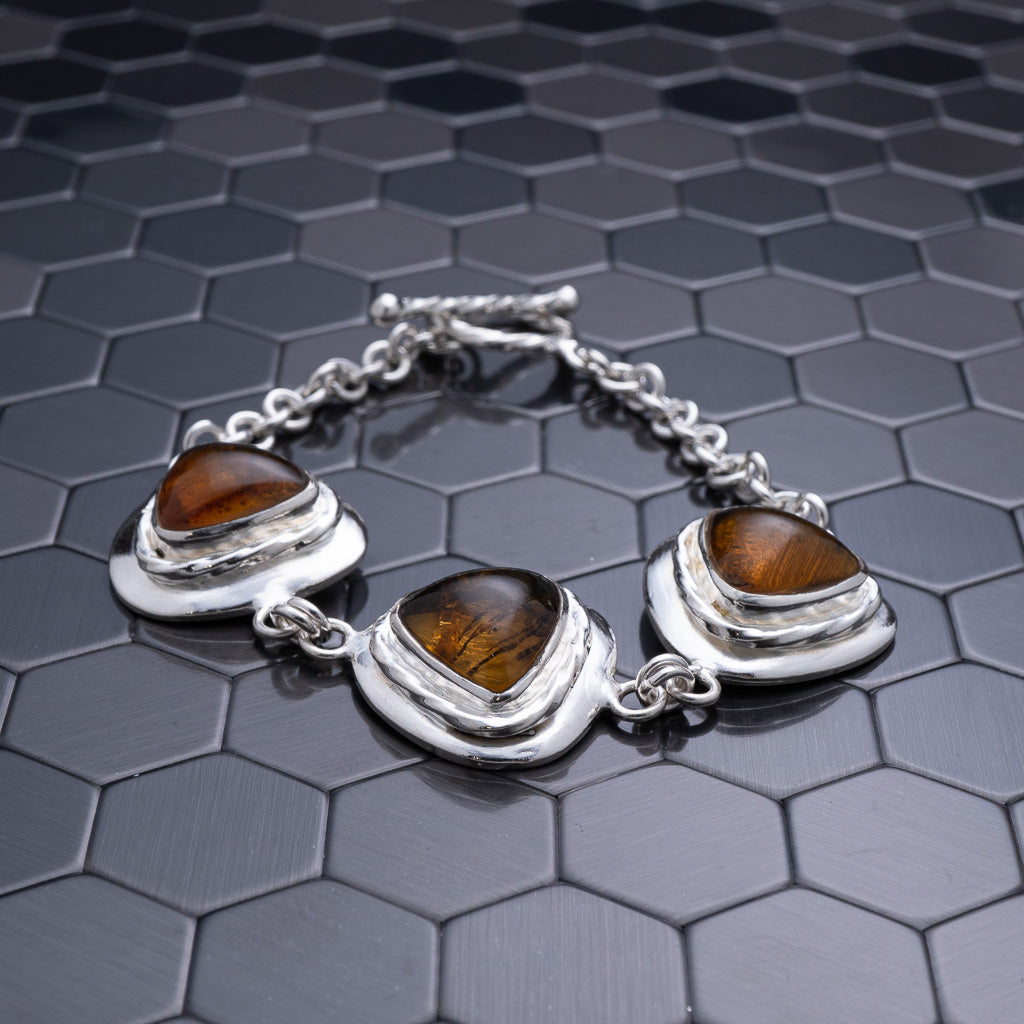
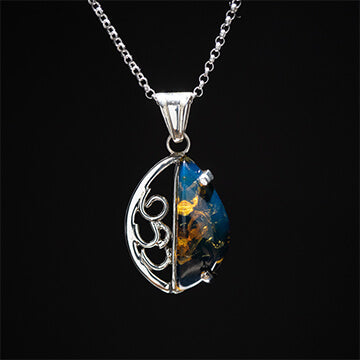
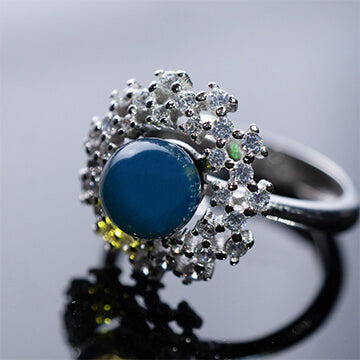
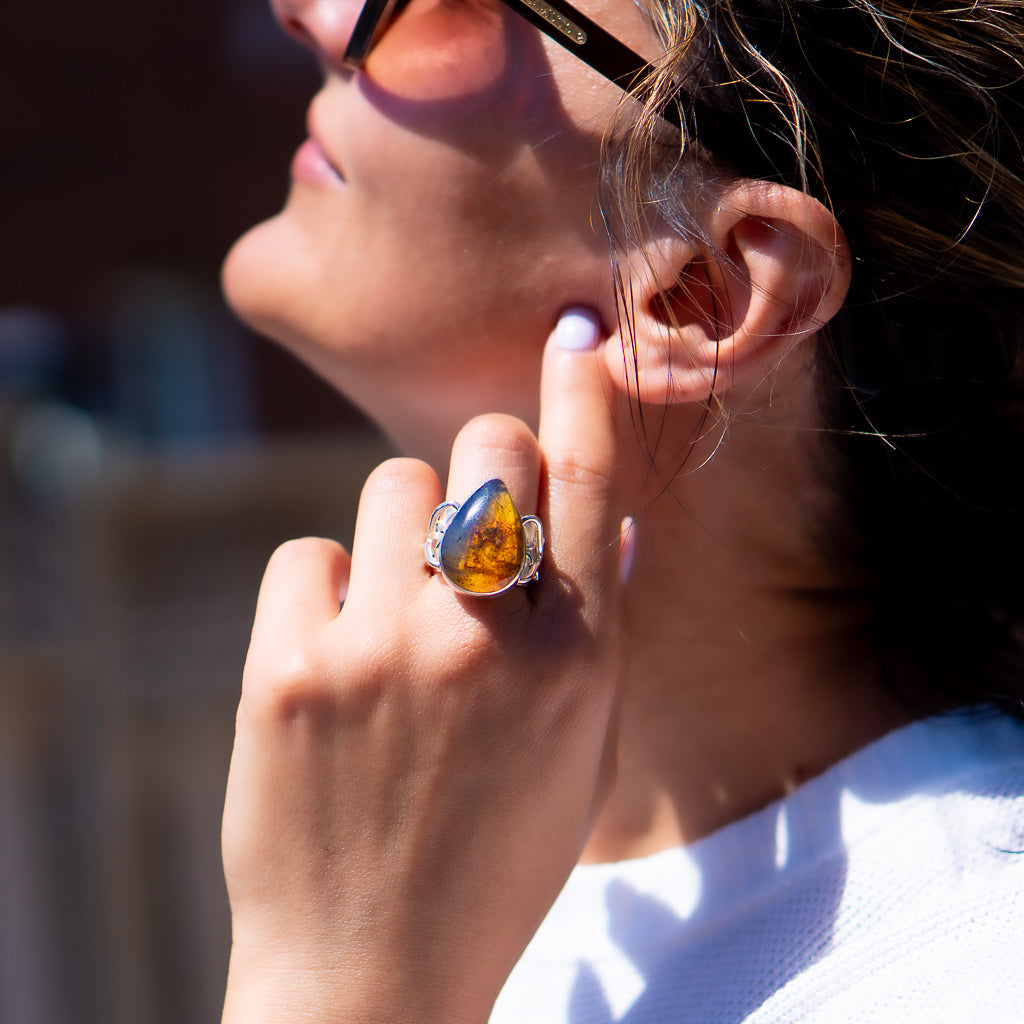
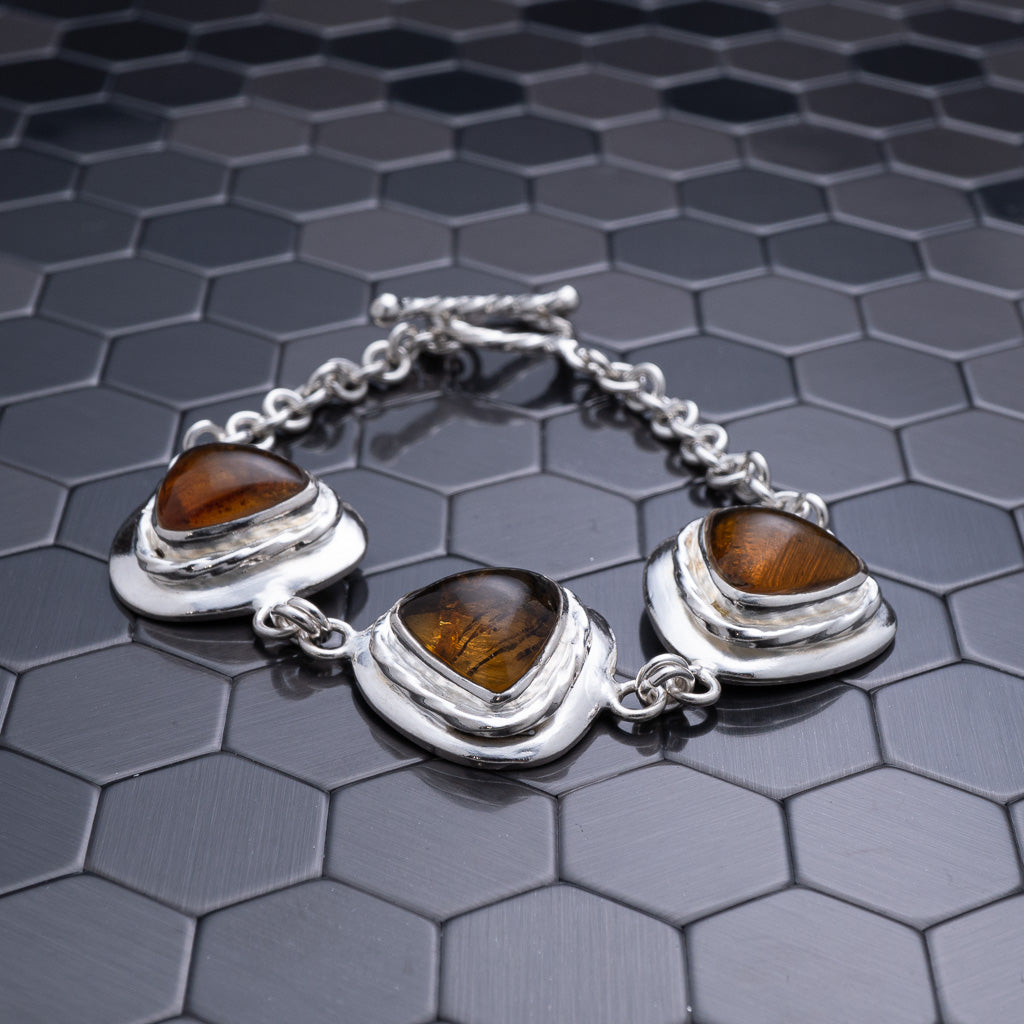
Finally, look at craftsmanship. In a pendant, ring, or pair of earrings, the setting should protect the amber without hiding what makes it special. A thoughtful design frames the inclusion, keeps the stone secure, and lets natural light reach it. At Larimar Creations, the appeal of certified Dominican stones rests not only in their rarity, but in presenting each one with the care its origin deserves.
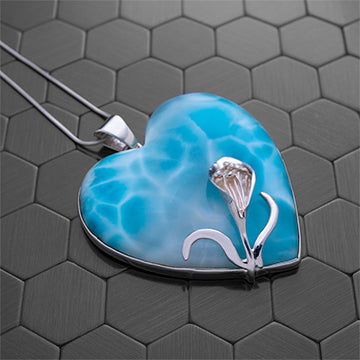
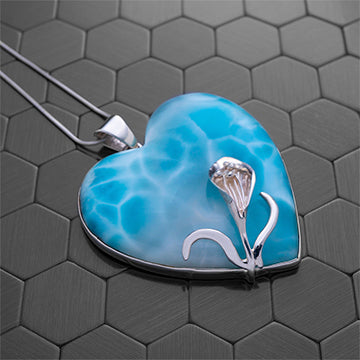
For a gift, a botanical or bubble-rich amber pendant is often an easy choice. It tells a story immediately, wears beautifully, and feels personal without requiring the recipient to be a fossil specialist. Heart pendants can make that story even more intimate, pairing ancient natural detail with a romantic silhouette.
For collectors, a loose cabochon, polished specimen, or carving may offer a better view of the inclusion than a heavily mounted jewelry piece. A larger surface gives the eye room to study the specimen from different angles. It can also make room for the unusual: a clear beetle, a detailed plant structure, or an intricate combination of bubbles and organic matter.
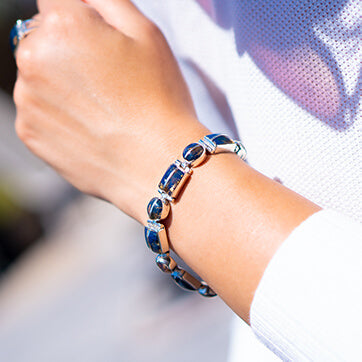
For regular wear, choose a protective style and remember that amber rewards gentleness. Store it separately from harder gemstones, clean it with a soft cloth and mild care, and let it remain what it has always been: a precious organic record, shaped by time rather than manufactured for perfection.
The most memorable inclusion is not always the rarest one. Sometimes it is the leaf that recalls a garden, the tiny wing that invites a closer look, or the blue-lit bubble that makes you pause in the sun. Choose the amber that keeps drawing your attention, and you will wear a genuine piece of the Caribbean with a story that is entirely its own.
Sign up to get the latest on sales, new releases and more …
6 min read
8 min read
9 min read