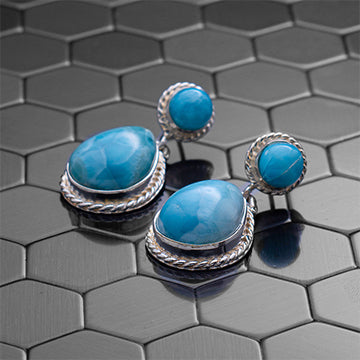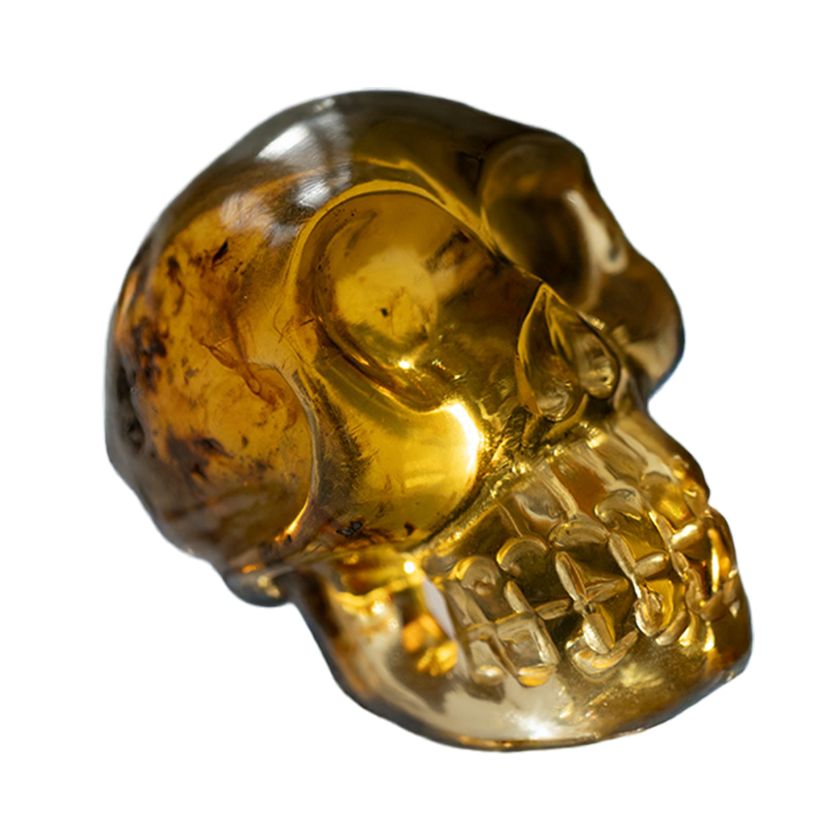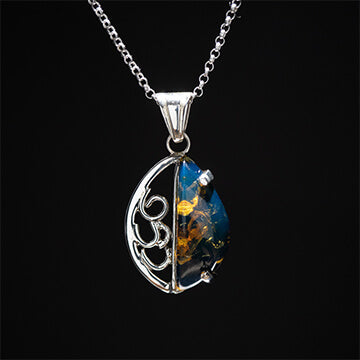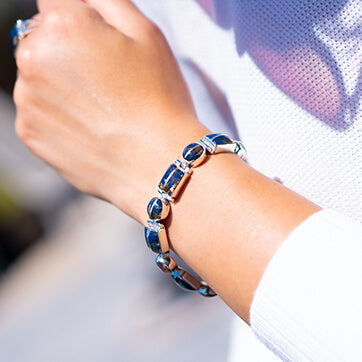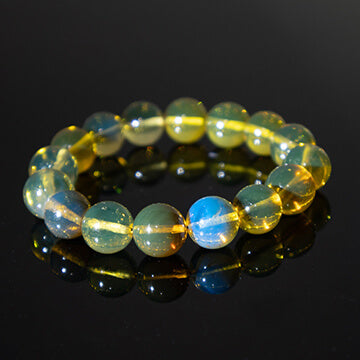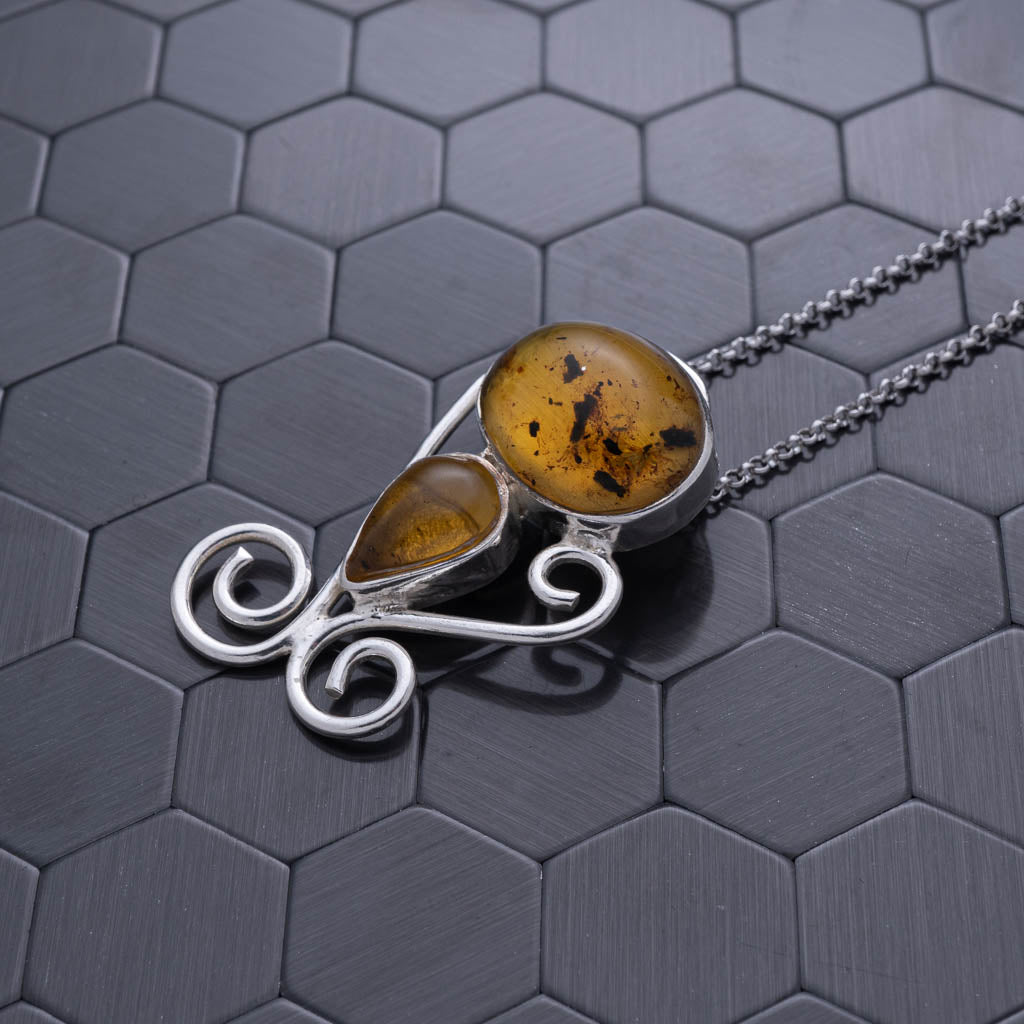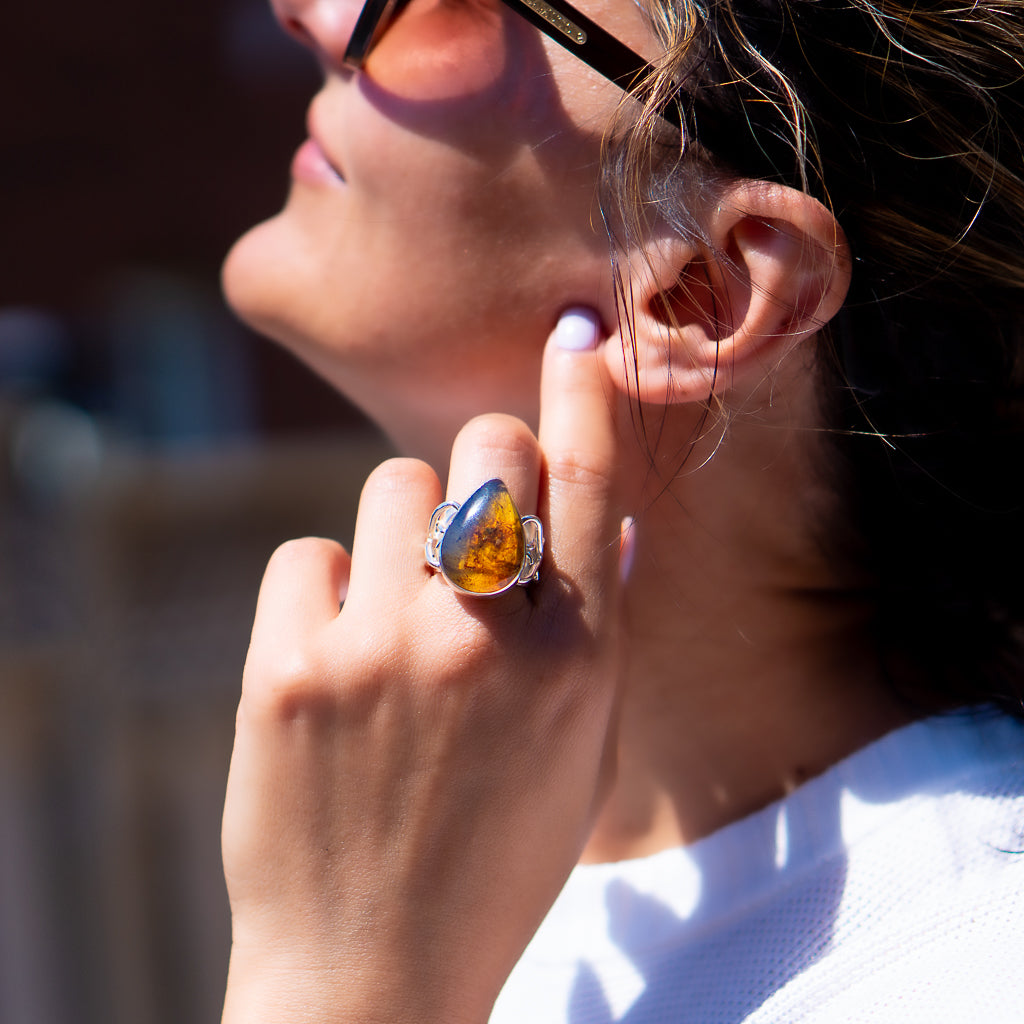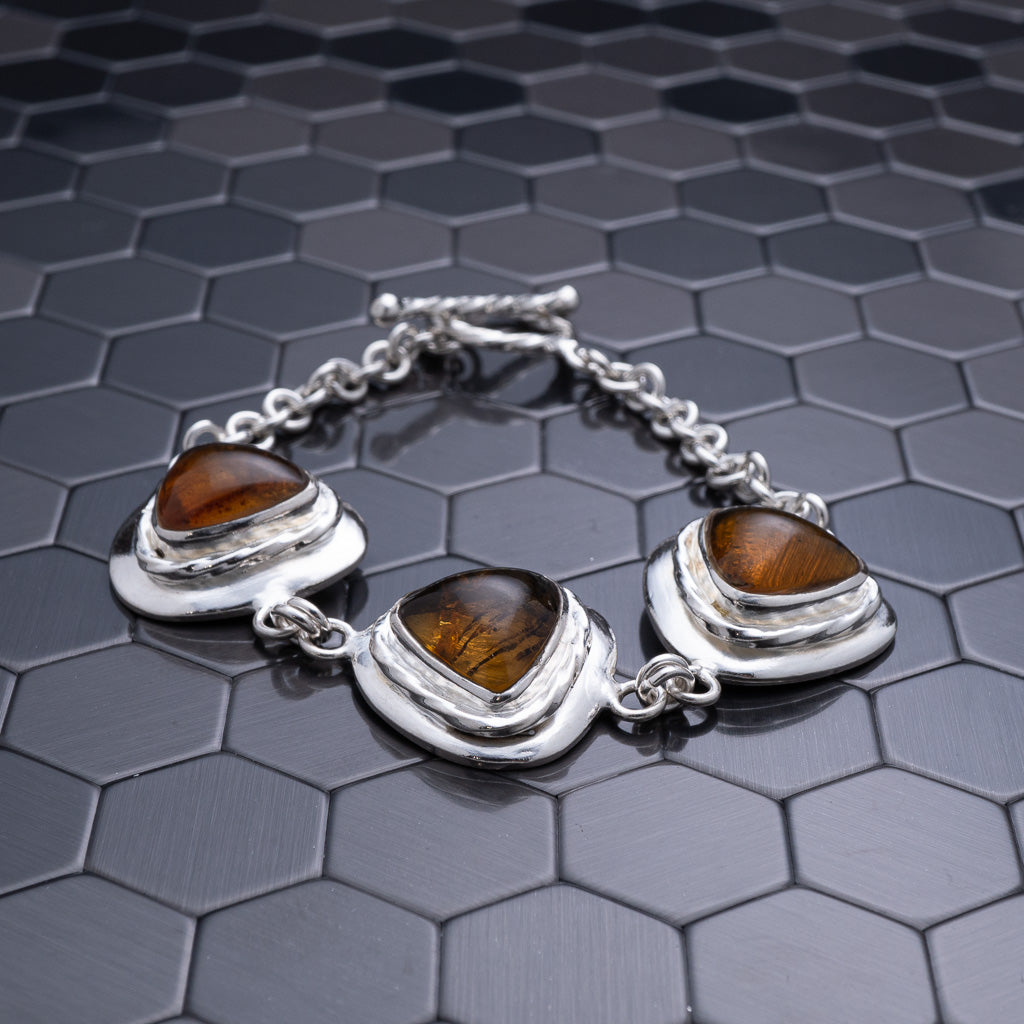



Handcrafted in DR.

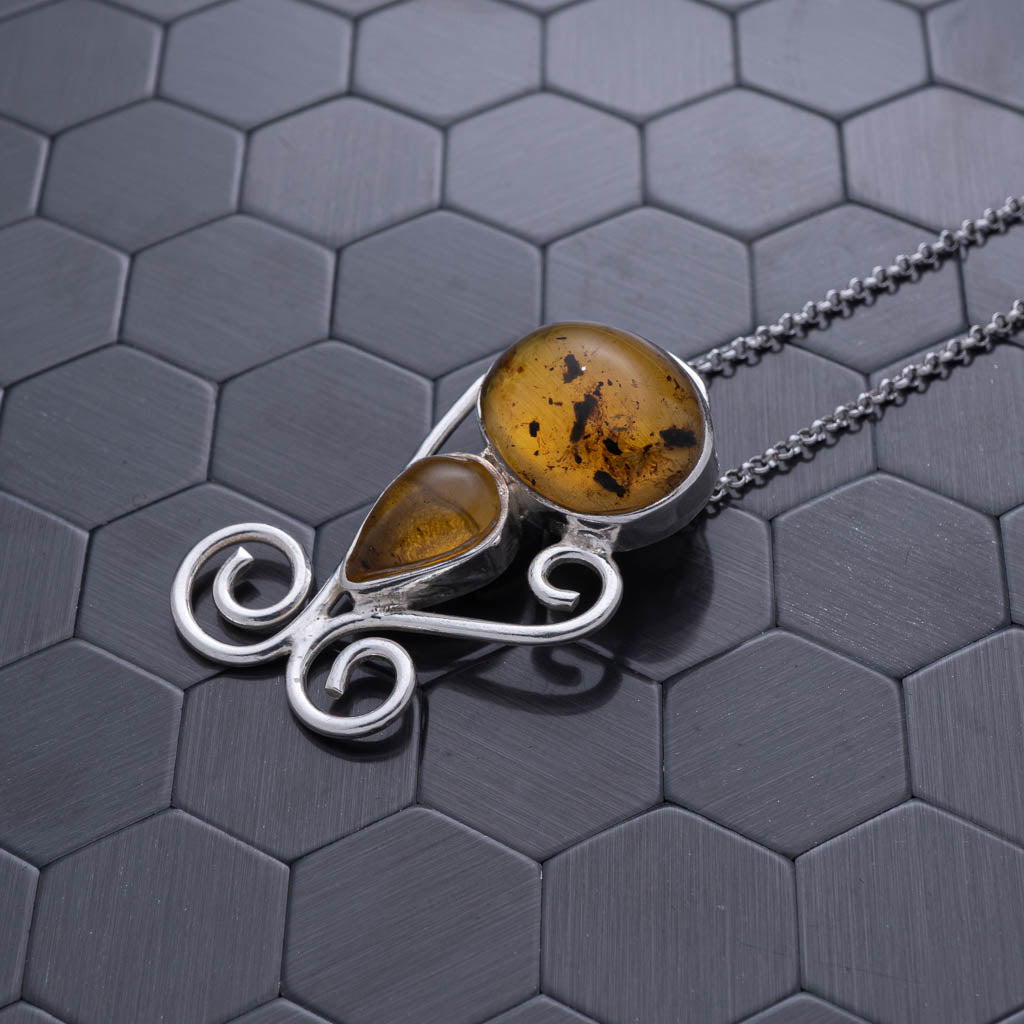
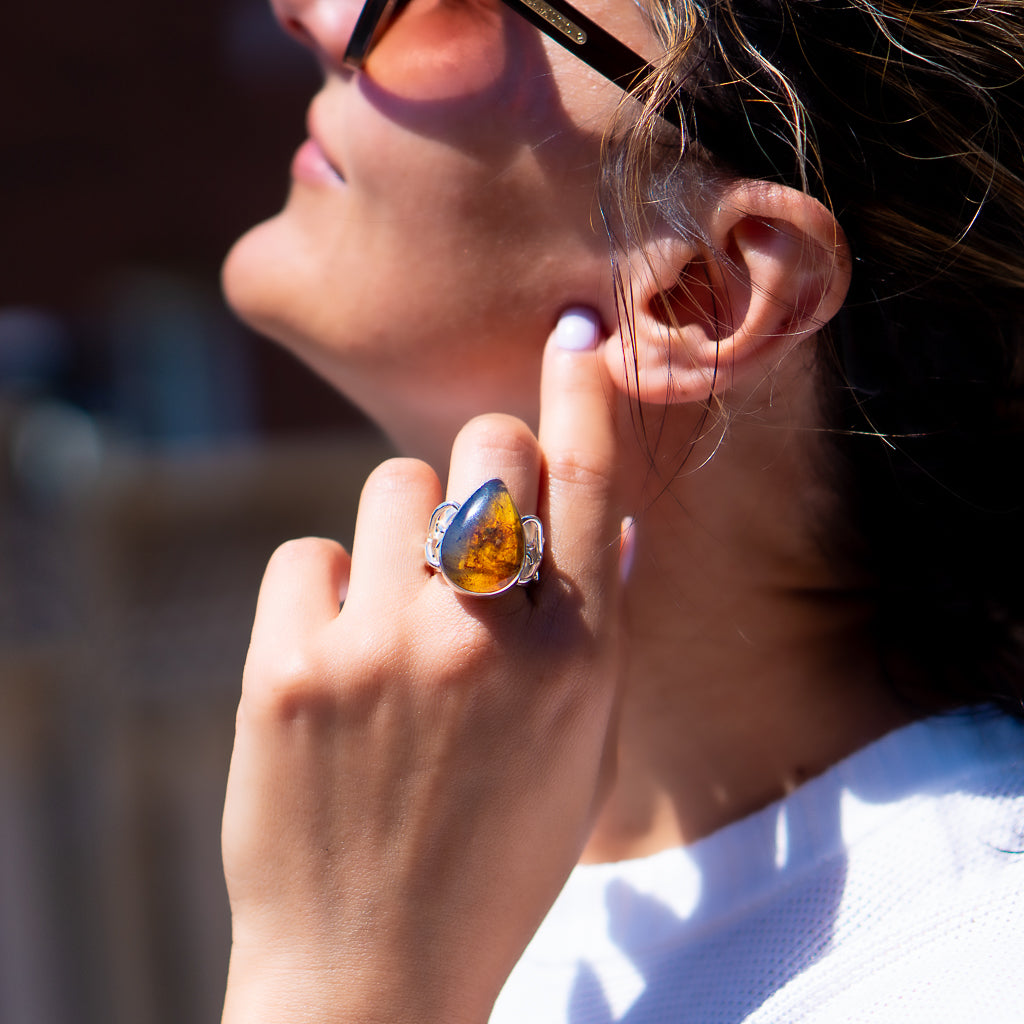
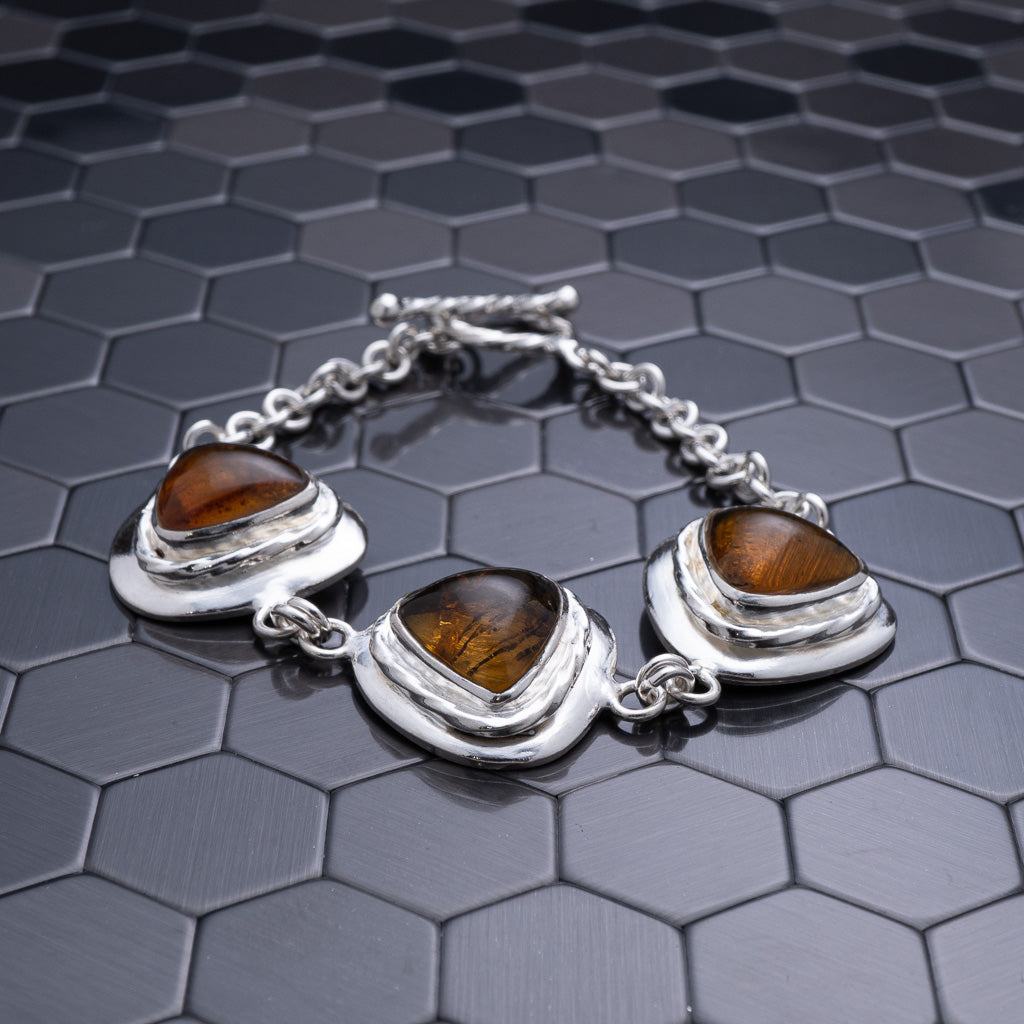
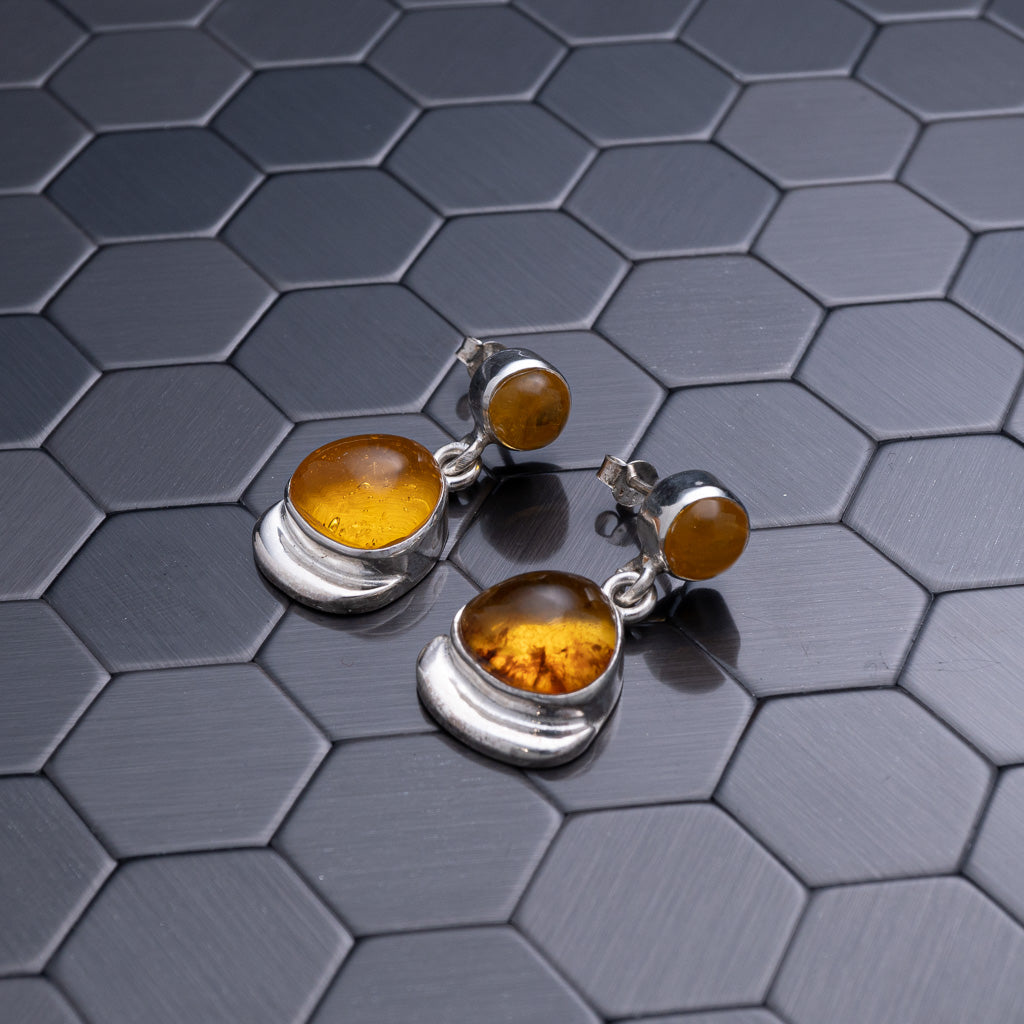


100% Handcrafted in DR.

The larimar palm stone represents one of the most intimate and practical ways to connect with the rare blue gemstone found exclusively in the Dominican Republic. Unlike jewelry settings that showcase larimar's beauty, a palm stone offers direct contact with the mineral, making it popular among crystal enthusiasts, meditation practitioners, and those seeking the calming energy associated with this Caribbean treasure. These smooth, polished stones fit comfortably in your hand, providing a tactile experience that combines geological rarity with holistic wellness traditions. Whether you're drawn to larimar for its aesthetic appeal or its purported metaphysical properties, understanding quality, authenticity, and proper selection ensures you acquire a genuine piece worth treasuring.
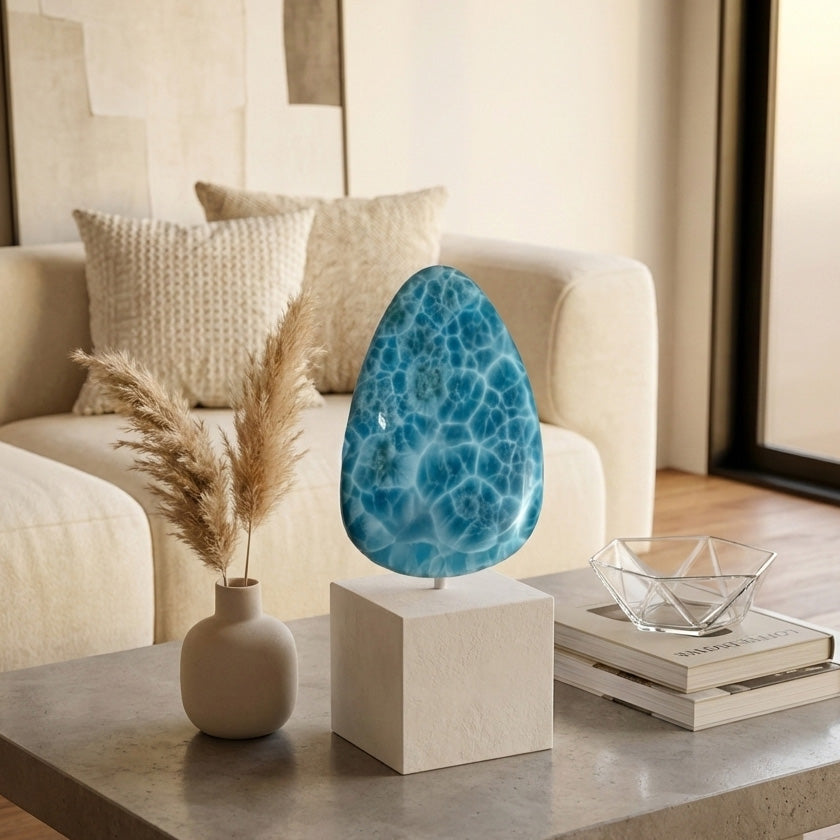
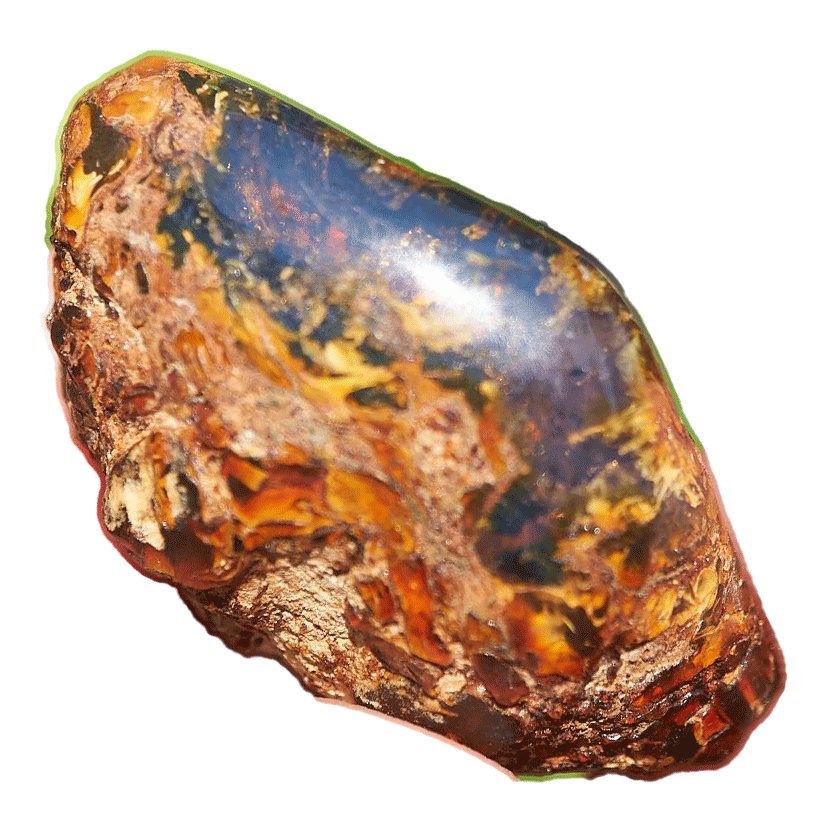
A larimar palm stone is a piece of polished pectolite, shaped and sized to fit comfortably in the palm of your hand. The typical dimensions range from 1.5 to 3 inches in length, with an oval or rounded rectangular shape that allows for easy gripping during meditation or stress relief practices. The stone's surface receives extensive polishing to achieve a smooth, sometimes glassy finish that showcases larimar's distinctive blue coloration and white veining patterns.
The geological composition of larimar makes each palm stone genuinely unique. This rare form of pectolite develops its signature blue color from copper substitution within the mineral structure, creating shades ranging from pale sky blue to deep volcanic blue. The white streaks and patterns result from calcium-rich areas within the stone, creating the cloud-like appearance that has made larimar famous worldwide.
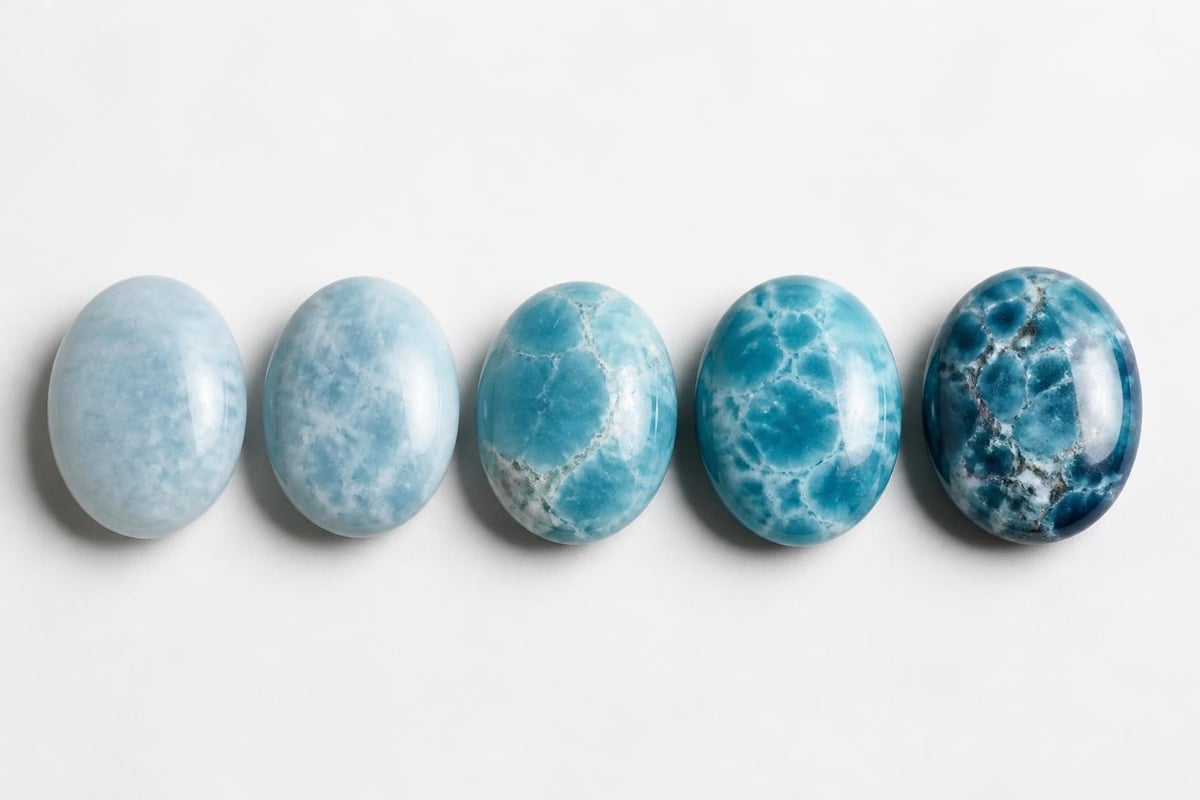
Larimar palm stones receive grading based on several key factors that significantly impact their market value:
The color intensity directly correlates with copper concentration during formation. Stones with deeper, more saturated blue tones command premium prices because they represent rarer geological conditions. According to the International Gem Society's pectolite profile, the most valued larimar exhibits vivid blue similar to turquoise but with distinctive swirling patterns that create a three-dimensional effect.
Every authentic larimar palm stone originates from a single mountainous region in the southwestern Dominican Republic, specifically the province of Barahona. The Larimar Mine region near Los Chupaderos remains the world's only known source of gem-quality blue pectolite, making geographic origin a critical authentication factor.
The mining process involves extracting larimar from volcanic rock formations that developed millions of years ago. Small-scale miners work in challenging conditions, following blue veins through the mountainside. This labor-intensive extraction contributes to larimar's relative scarcity and value in the gemstone market.
| Mining Aspect | Details |
|---|---|
| Location | Barahona Province, Dominican Republic |
| Geological Age | Approximately 10 million years |
| Formation Type | Volcanic cavity mineral |
| Mining Method | Primarily artisanal, small-scale operations |
| Annual Production | Limited, variable by year and mine accessibility |
The limited geographic source means supply remains constrained, unlike more widely distributed gemstones. This exclusivity adds both collectability and potential long-term value appreciation for high-quality pieces.
Modern consumers increasingly prioritize ethically sourced gemstones. The Dominican Republic has made strides in mining sector transparency, though challenges remain in standardizing practices across small-scale operations. When selecting a larimar palm stone, consider sellers who provide clear provenance information and support fair labor practices in the mining communities.
Within holistic wellness communities, the larimar palm stone holds significance as a tool for emotional healing and spiritual practice. Practitioners associate the stone with calming energy that reflects its oceanic coloration, often calling it the "Dolphin Stone" or "Atlantis Stone" based on various cultural interpretations.
Common uses include:
The physical act of holding a smooth, cool stone provides genuine tactile benefits regardless of belief in metaphysical properties. The repetitive motion of rubbing a palm stone can serve as a meditative anchor, similar to worry stones or prayer beads used across cultures.
For those interested in exploring the broader context of larimar's cultural significance and geological formation, understanding both scientific and traditional perspectives enriches appreciation for these pieces.
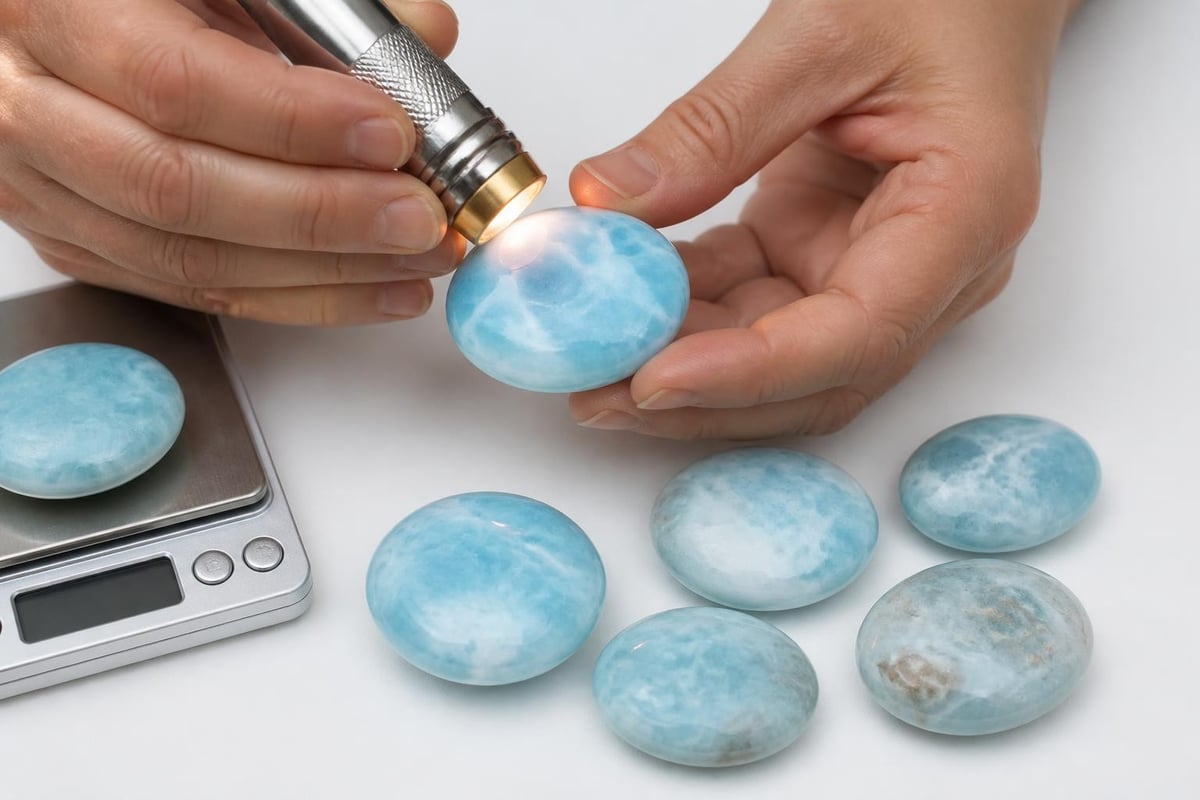
Imitations pose a significant challenge in the larimar market. Glass, resin, and synthetic materials can mimic larimar's appearance, making authentication crucial for serious buyers. Recent gemmological research has documented increasingly convincing glass imitations that require careful examination to detect.
Authentic larimar exhibits specific characteristics that help distinguish it from imitations:
Pattern Analysis: Genuine larimar shows irregular, natural patterns that never repeat exactly. The white veining appears organic rather than painted or artificially inserted. Under magnification, you should observe subtle color transitions and mineral inclusions consistent with natural formation.
Weight and Density: Larimar has a specific gravity of approximately 2.84-2.90, making it feel substantial for its size. Glass imitations often feel lighter, while resin fakes may feel slightly hollow or different in temperature response.
Light Transmission: When held against a strong light source, quality larimar displays subtle translucency, especially in thinner areas. The light reveals internal structure and depth that flat-painted imitations cannot replicate.
Surface Examination: A properly polished larimar palm stone shows consistent luster across its surface. Look for natural imperfections, small pits, or mineral inclusions that confirm natural origin. Overly perfect, bubble-free pieces warrant additional scrutiny.
| Authentication Method | Genuine Larimar | Common Imitations |
|---|---|---|
| Scratch Test (careful) | Hardness 4.5-5 on Mohs scale | Glass often harder, resin softer |
| UV Response | Generally inert (no fluorescence) | Some fakes may glow |
| Temperature Feel | Cool to touch, slow to warm | Resin warms quickly, glass varies |
| Pattern Consistency | Unique, non-repeating | May show molded repetition |
Choosing a larimar palm stone involves balancing aesthetic preferences, quality considerations, and intended use. Different buyers prioritize different characteristics based on their goals.
Palm stones typically range from 40-80 grams, with dimensions suited for comfortable hand holding. Smaller pieces work well for children or those with smaller hands, while larger specimens appeal to collectors seeking impressive display pieces. The shape affects both usability and visual appeal.
Oval and rounded rectangular shapes remain most popular because they fit naturally in the palm without sharp edges. Some carvers create more artistic free-form shapes that highlight specific color zones or patterns within the rough material. These unique pieces often command premium prices due to the additional craftsmanship and material yield considerations.
Larimar palm stone prices vary dramatically based on quality grade, size, and market conditions. Entry-level pieces with pale coloring and extensive white areas might start around $20-40, while museum-grade specimens with intense volcanic blue coloration can exceed several hundred dollars.
Consider these factors when evaluating value:
For those exploring rare larimar colors and their investment potential, understanding grading systems helps make informed purchasing decisions.
Proper care ensures your larimar palm stone maintains its beauty for years. Larimar ranks 4.5-5 on the Mohs hardness scale, making it moderately soft and susceptible to scratching from harder materials.
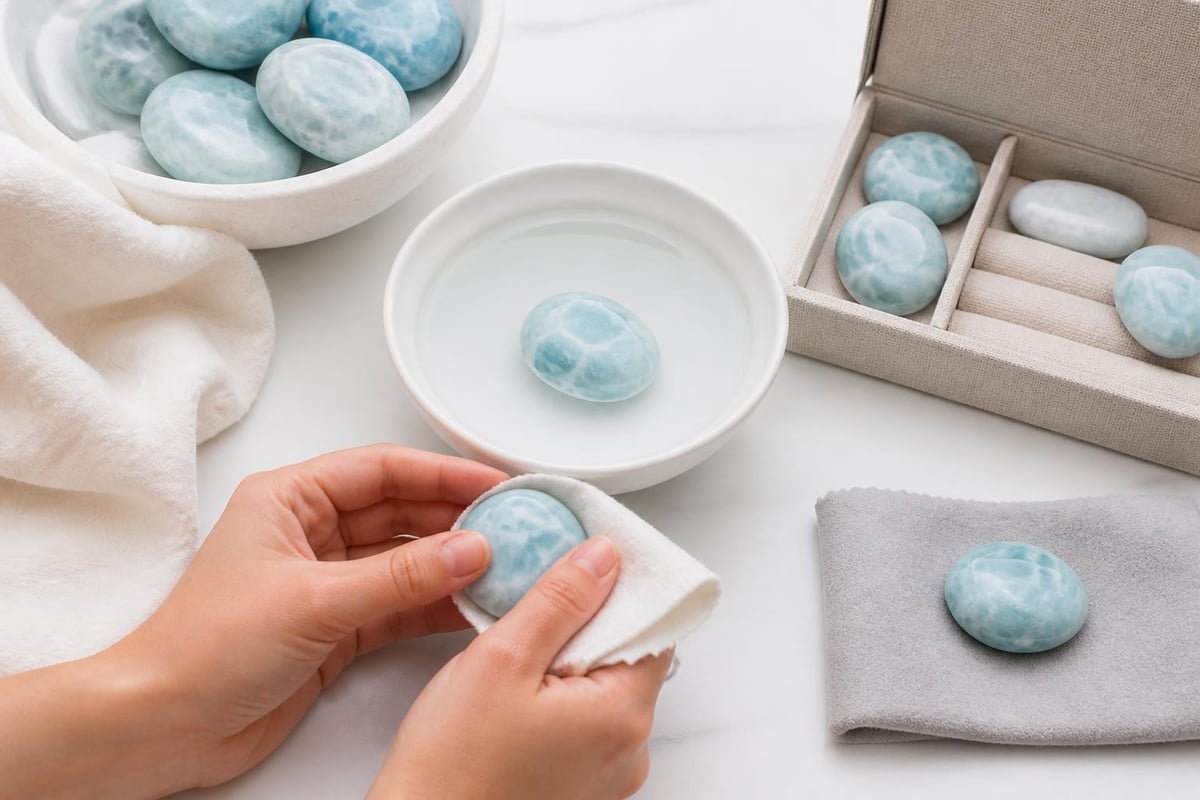
Cleaning Protocol: Use lukewarm water with mild soap and a soft cloth. Avoid ultrasonic cleaners, steam cleaning, or harsh chemicals that can damage the stone's surface or alter its appearance. Pat dry thoroughly after cleaning to prevent water spotting.
Storage Guidelines: Keep your palm stone separate from harder gemstones that could scratch its surface. A soft pouch or lined box provides ideal protection. Avoid prolonged exposure to direct sunlight, which may gradually fade the blue coloration over extended periods.
Usage Precautions: While palm stones are designed for handling, avoid dropping them on hard surfaces, as larimar can chip or fracture upon impact. Remove the stone before activities involving chemicals, extreme temperatures, or physical labor.
The larimar market offers various product forms, each serving different purposes and price points. Understanding how palm stones compare helps buyers select the most suitable format.
| Product Type | Primary Use | Price Range | Advantages | Considerations |
|---|---|---|---|---|
| Palm Stones | Meditation, wellness | $30-300+ | Direct contact, portable | No setting to protect stone |
| Jewelry (rings, pendants) | Adornment, daily wear | $50-500+ | Protected in setting, always accessible | Smaller stone size, setting costs |
| Cabochons | Collection, jewelry making | $20-200+ | Versatile, pure stone value | Requires mounting for wear |
| Carvings | Display, collection | $100-1000+ | Artistic value, larger pieces | Less practical for daily use |
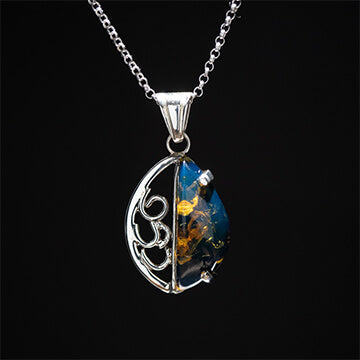
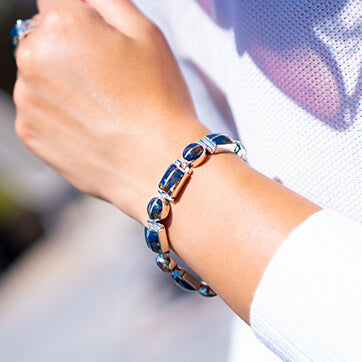
For those particularly drawn to wearable options, Larimar Pendants offer an alternative way to keep this gemstone close while protecting it within a jewelry setting, combining daily accessibility with the security of precious metal bezels.
Palm stones occupy a unique niche, offering substantial size and direct contact without the formality or fragility concerns of jewelry settings. This makes them ideal for meditation practices, therapeutic applications, or as gateway pieces for those exploring larimar before investing in fine jewelry.
Larimar's relatively recent discovery in 1974 gives it a unique position among gemstones. Unlike ancient stones with millennia of documented history, larimar's story unfolds within living memory. Local artisan Miguel Méndez and Peace Corps volunteer Norman Rilling are credited with the modern discovery, though indigenous peoples likely knew of the stone previously.
The name "larimar" combines Méndez's daughter's name, Larissa, with "mar" (Spanish for sea), reflecting the stone's oceanic coloration. This personal naming origin adds charm to the gemstone's narrative, connecting it to family heritage and Dominican pride.
Dominican culture embraces larimar as a national treasure, representing the island's natural wealth and geological uniqueness. The stone appears in cultural events, tourism promotion, and national identity narratives. This cultural significance enhances larimar's appeal beyond mere aesthetics, connecting owners to Caribbean heritage and environmental appreciation.
The larimar market has experienced steady growth since the 1980s, with increasing international awareness driving demand. However, several factors create uncertainty about long-term availability and pricing.
Mining Challenges: The mountainous terrain and small-scale operation nature mean production remains inconsistent. Weather events, economic conditions, and geological factors all influence annual output. No major commercial mining operations exist, keeping supply fundamentally limited.
Quality Degradation: Some observers note that the highest-grade material becomes increasingly difficult to find as accessible deposits deplete. This scarcity drives premium prices for exceptional specimens and may make top-tier palm stones appreciating assets.
Market Authentication Needs: As demand grows, so does the prevalence of imitations and misrepresented material. The industry needs improved standardization and certification to protect buyers and maintain market integrity.
Recent analysis of Dominican mining transparency suggests ongoing efforts to formalize the sector, which could affect future availability, pricing, and buyer confidence through improved traceability.
For enthusiasts considering multiple pieces, developing a collection strategy enhances both enjoyment and potential value. Collectors often focus on specific criteria to create cohesive, meaningful collections.
Thematic Approaches:
Documentation Practices: Maintain records of purchase date, source, price, and any authenticity certificates. Photograph each piece for insurance purposes and to track collection growth. This documentation becomes increasingly valuable as pieces age and market conditions evolve.
Display and Rotation: While palm stones invite handling, creating an attractive display honors their aesthetic qualities. Rotating which piece you use for meditation or carry daily prevents excessive wear on a single stone while keeping your collection active and appreciated.
Understanding the broader context of Dominican gemstones enriches collection development by placing larimar within the Caribbean's geological and cultural landscape.
Larimar palm stones make thoughtful gifts for various occasions, carrying symbolic associations that enhance their personal significance. The stone's calming blue tones suit recipients dealing with stress, major life transitions, or those drawn to ocean imagery and tropical aesthetics.
Occasion Suitability:
When gifting, consider including information about larimar's Dominican origin and care requirements. This educational component adds value beyond the physical stone, connecting the recipient to the gemstone's story and proper stewardship practices.
The environmental impact of larimar mining deserves consideration as ethical consumption grows more important to buyers. Small-scale artisanal mining carries different implications than large industrial operations common with other gemstones.
Positive Aspects: The limited scale prevents massive landscape disruption. Many miners are local residents with generational connections to the land, creating economic opportunities in rural communities. The lack of chemical processing required for larimar means minimal pollution compared to gemstones requiring extensive treatment.
Challenges: Lack of formal regulation can lead to unsafe working conditions and inconsistent environmental practices. Waste rock disposal and hillside stability become concerns in the steep terrain. The informal nature of many operations makes monitoring and enforcement difficult.
Responsible buyers can support sustainability by choosing vendors committed to fair labor practices, environmental stewardship, and community investment in mining regions. Asking about sourcing practices signals market demand for ethical operations.
The larimar palm stone offers a unique intersection of geological rarity, tactile pleasure, and cultural significance that few gemstones can match. Whether you seek a meditation tool, a collectible specimen, or a meaningful gift, understanding quality grades, authentication methods, and proper care ensures satisfaction with your investment. Larimar Creations brings decades of expertise in sourcing authentic Dominican larimar, offering not only palm stones but exquisite jewelry pieces crafted with the same commitment to quality and authenticity that discerning collectors demand. Explore their collection to discover how this Caribbean treasure can become part of your personal journey.