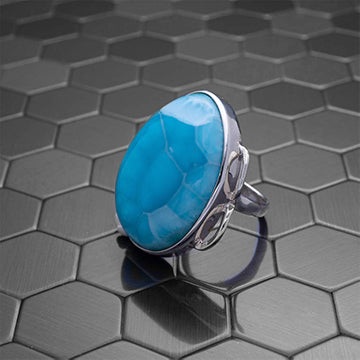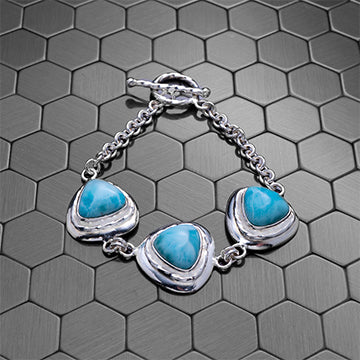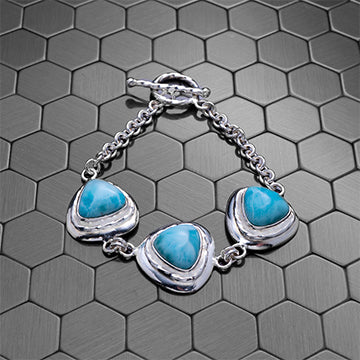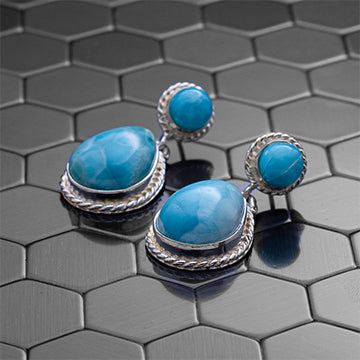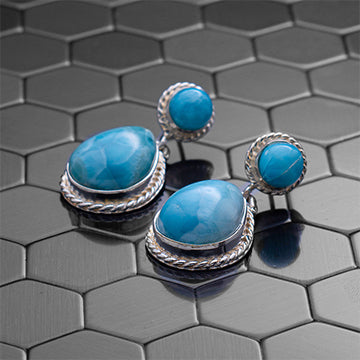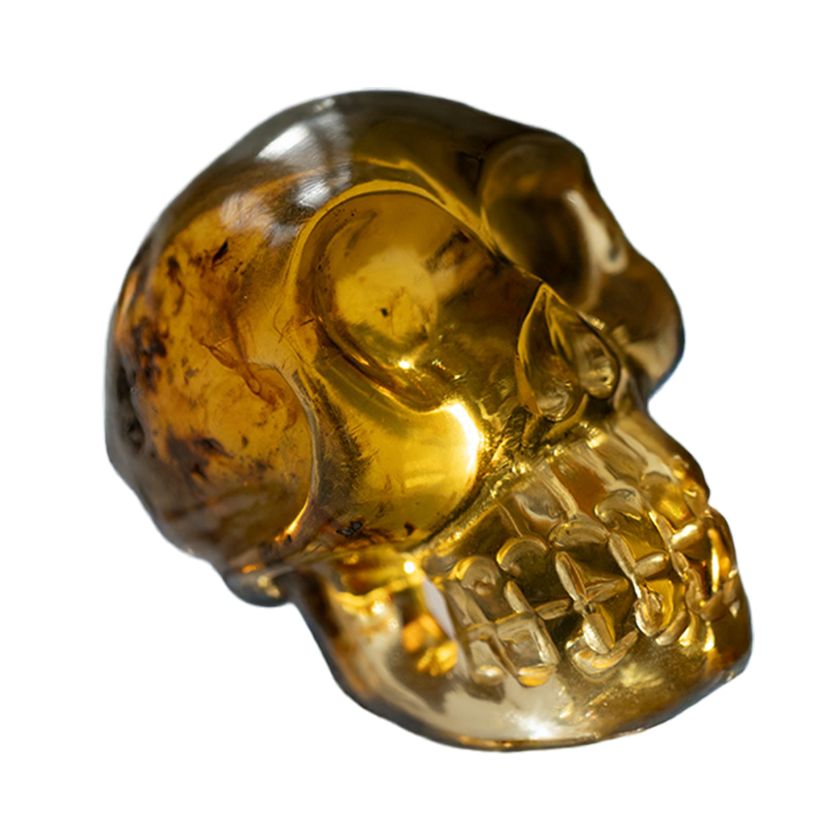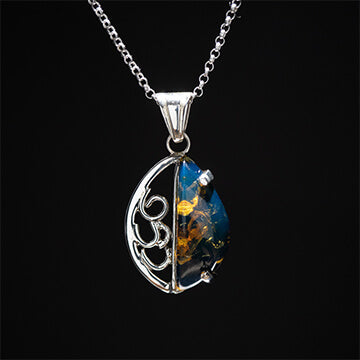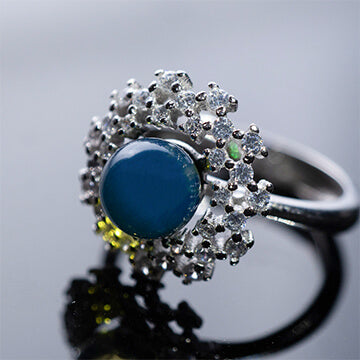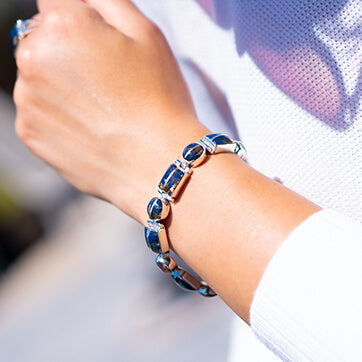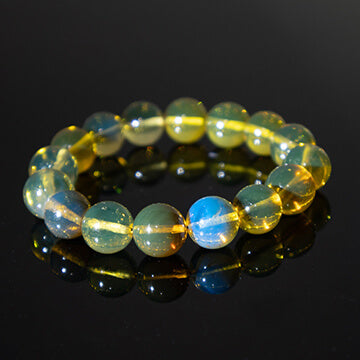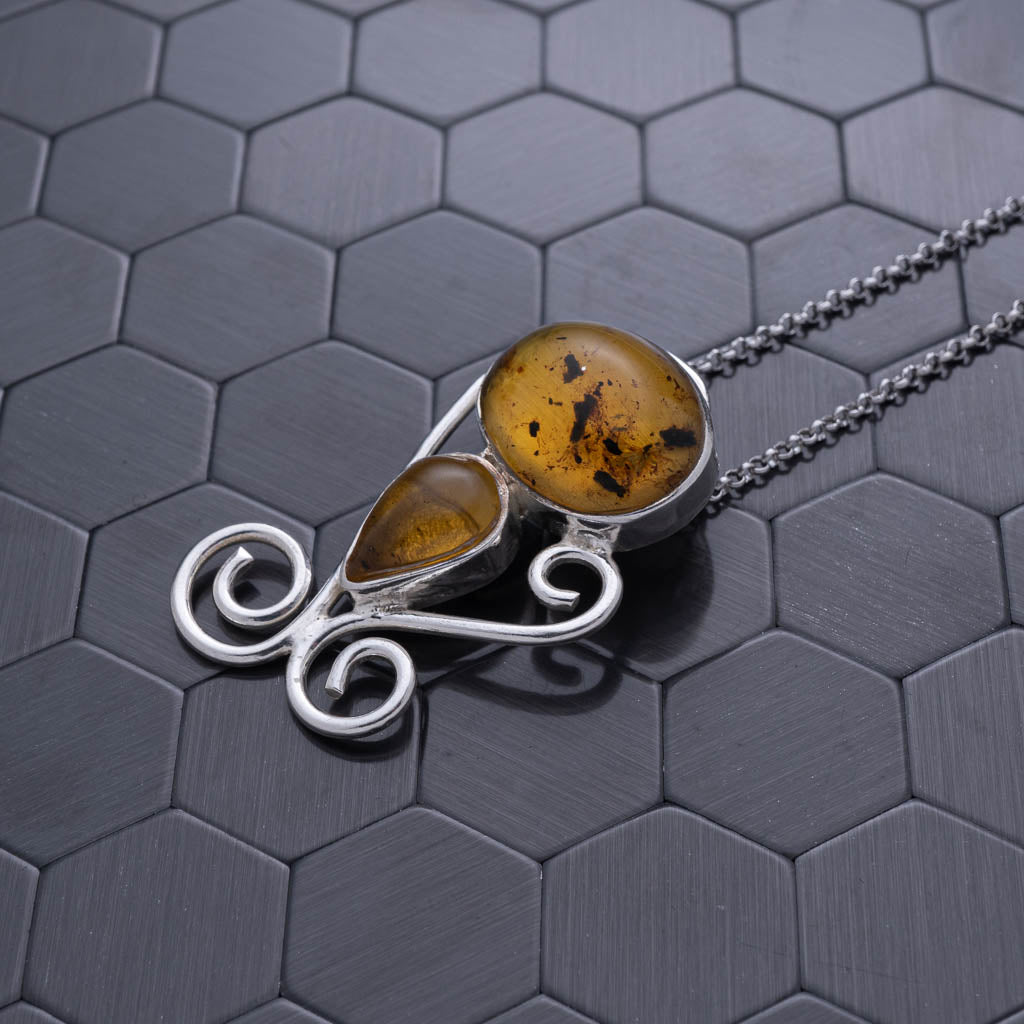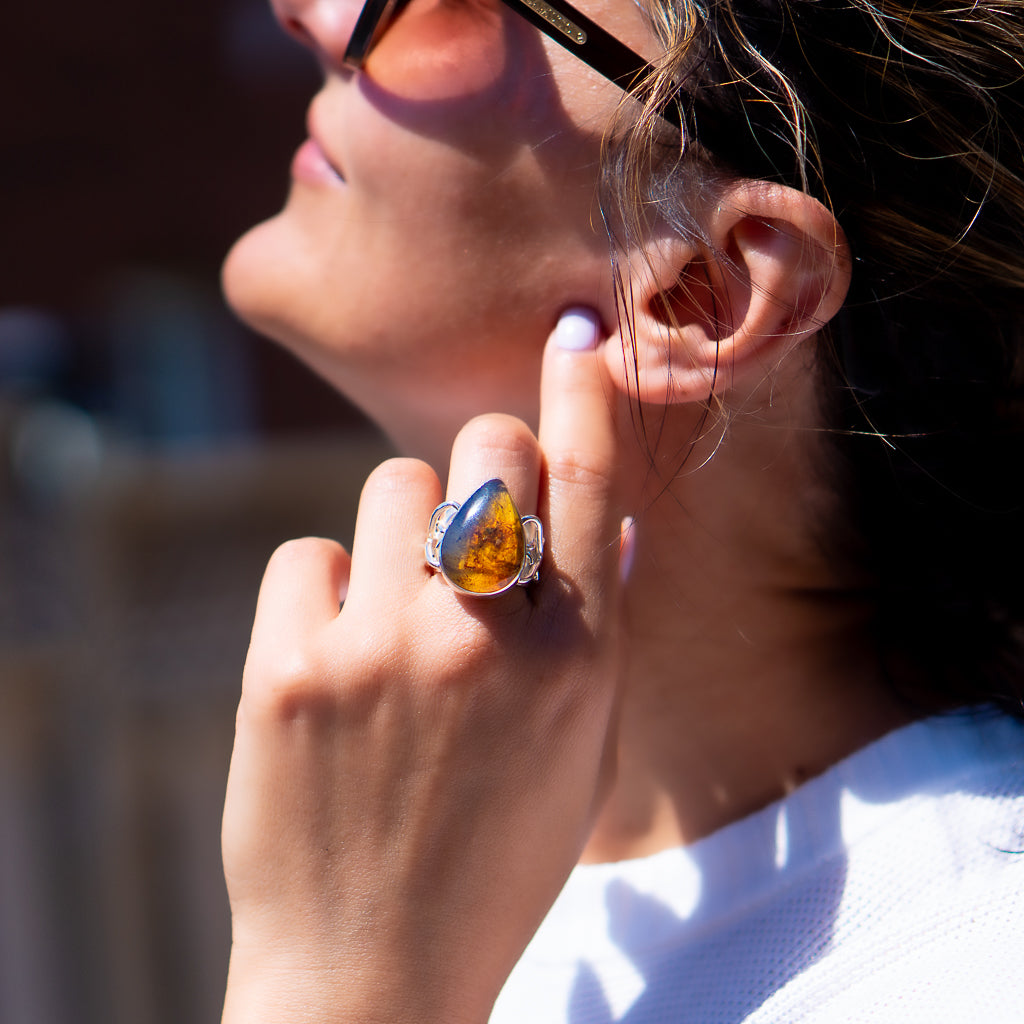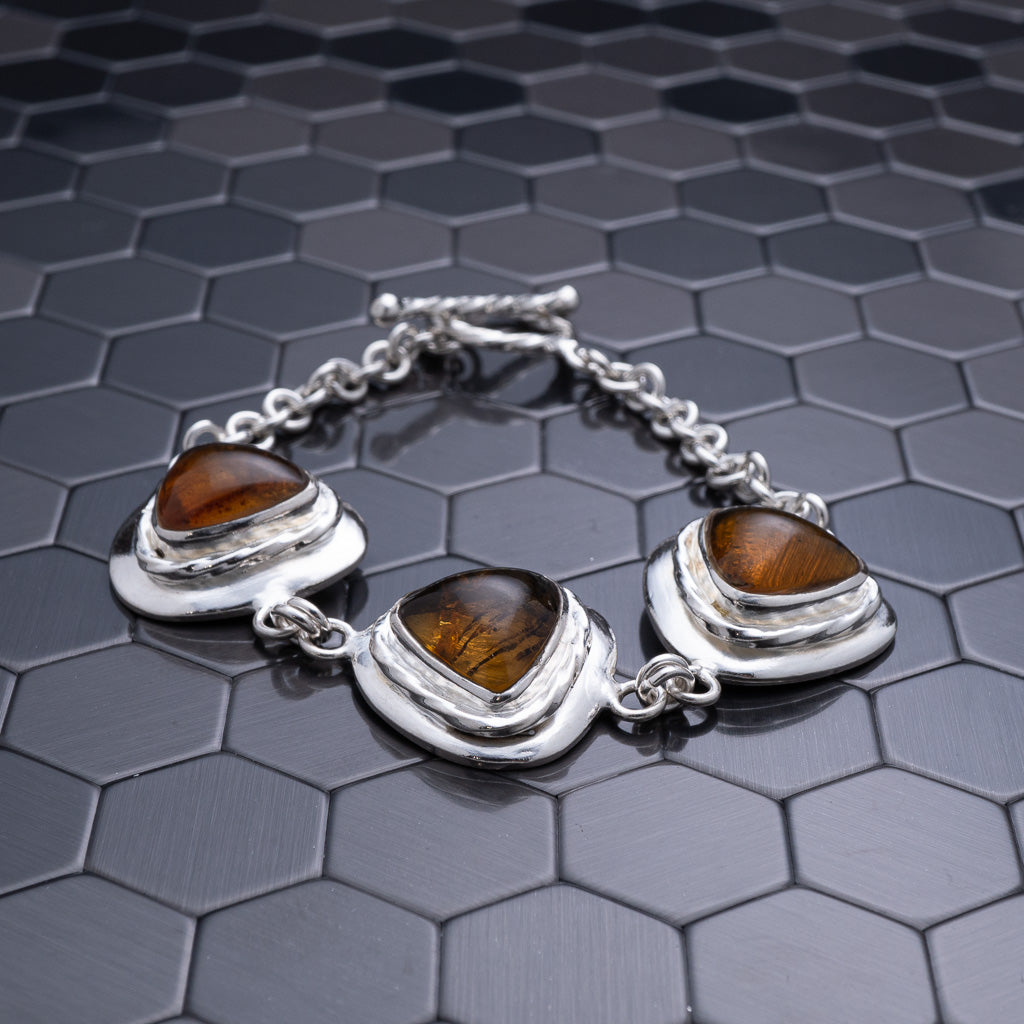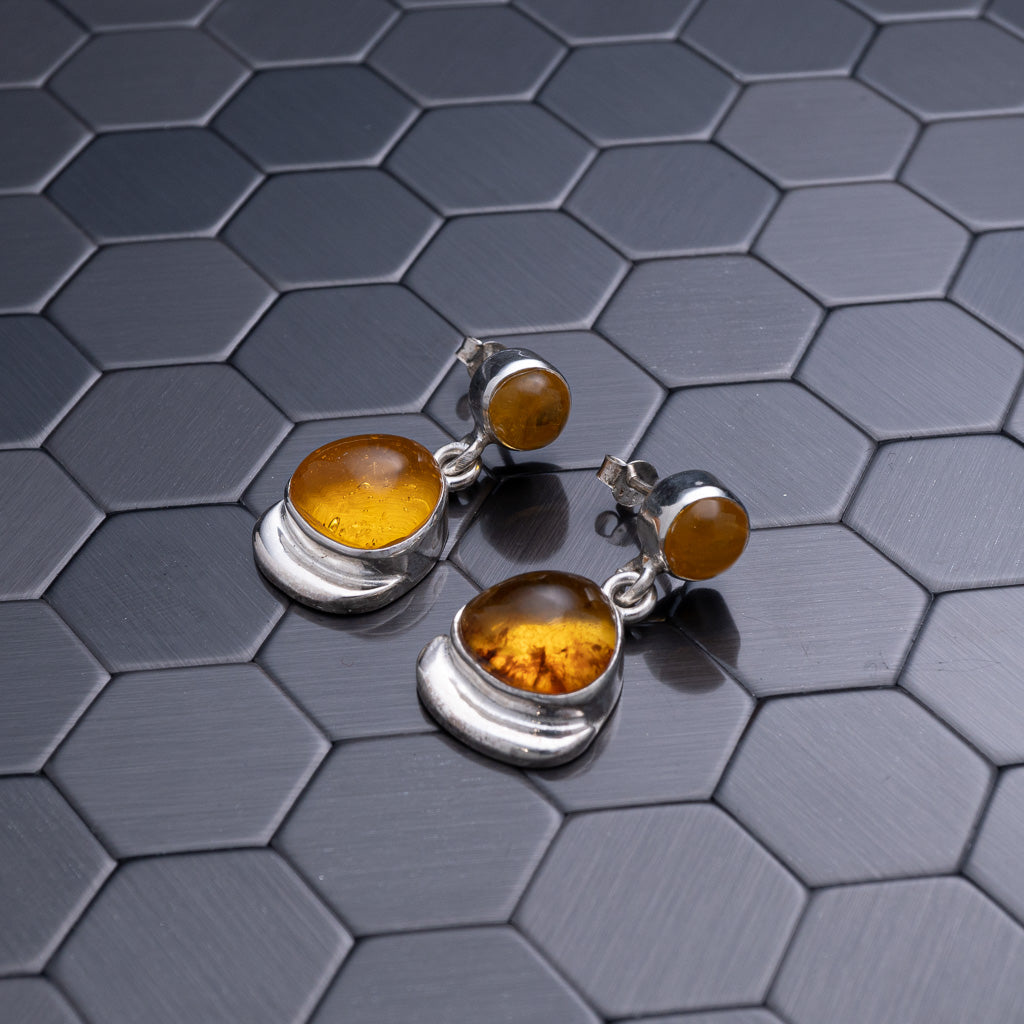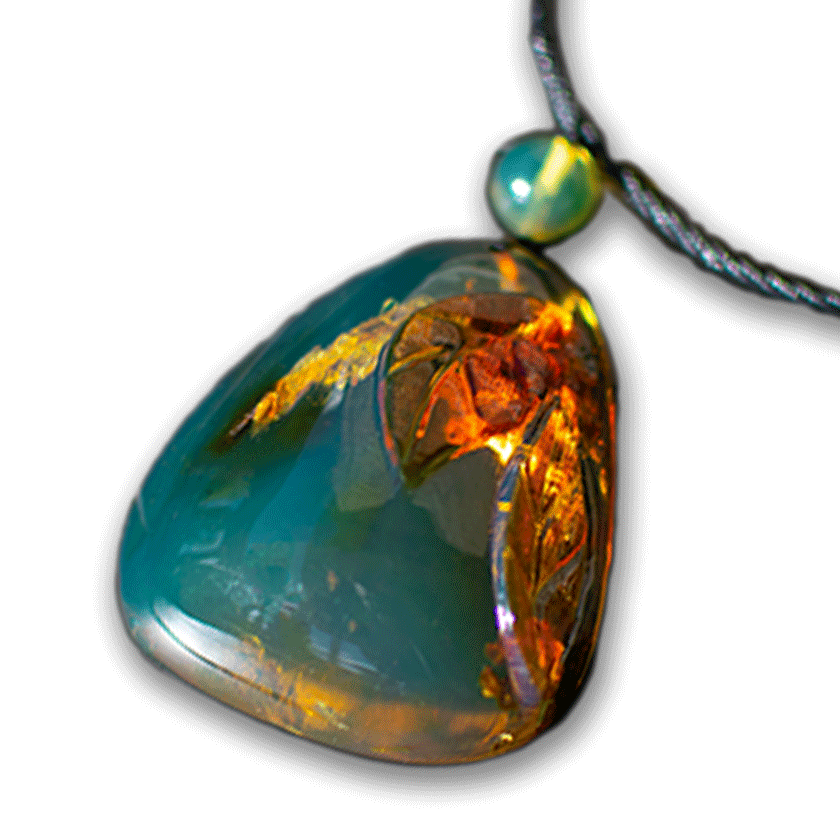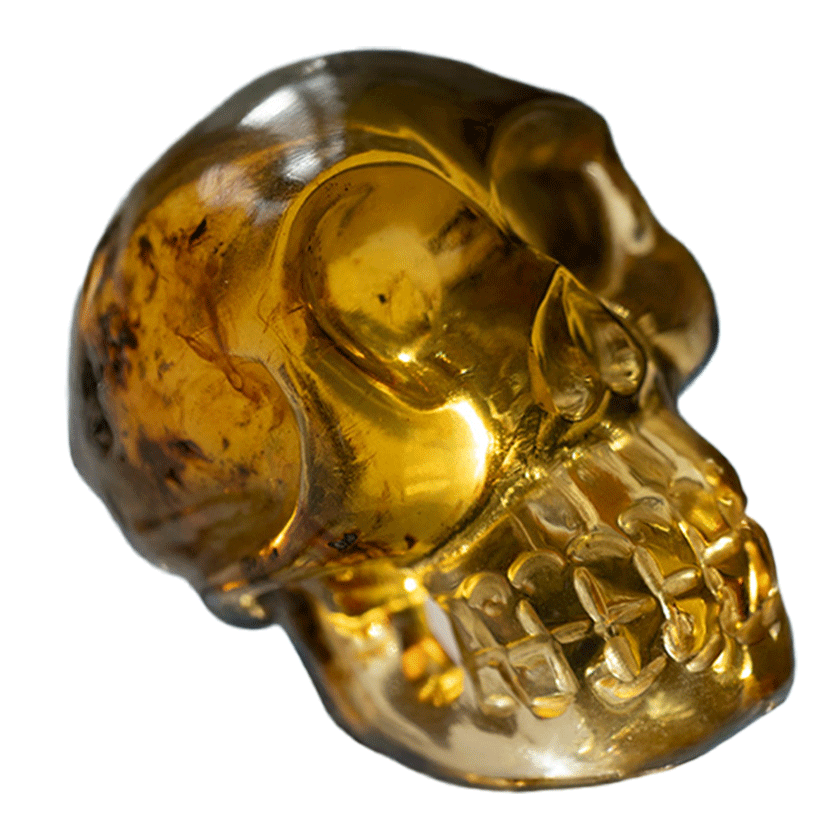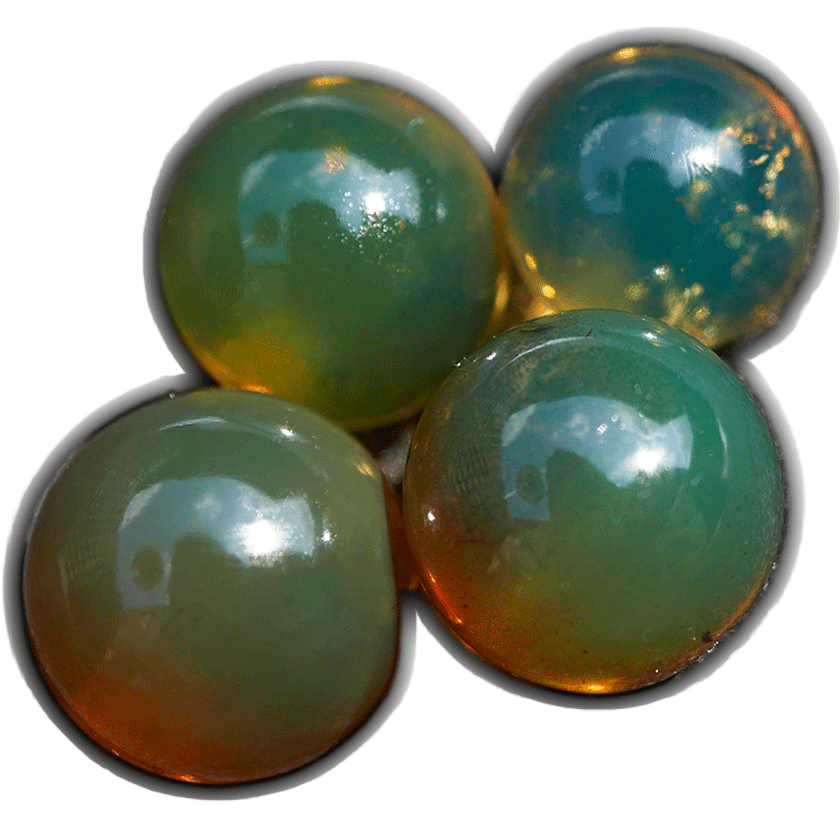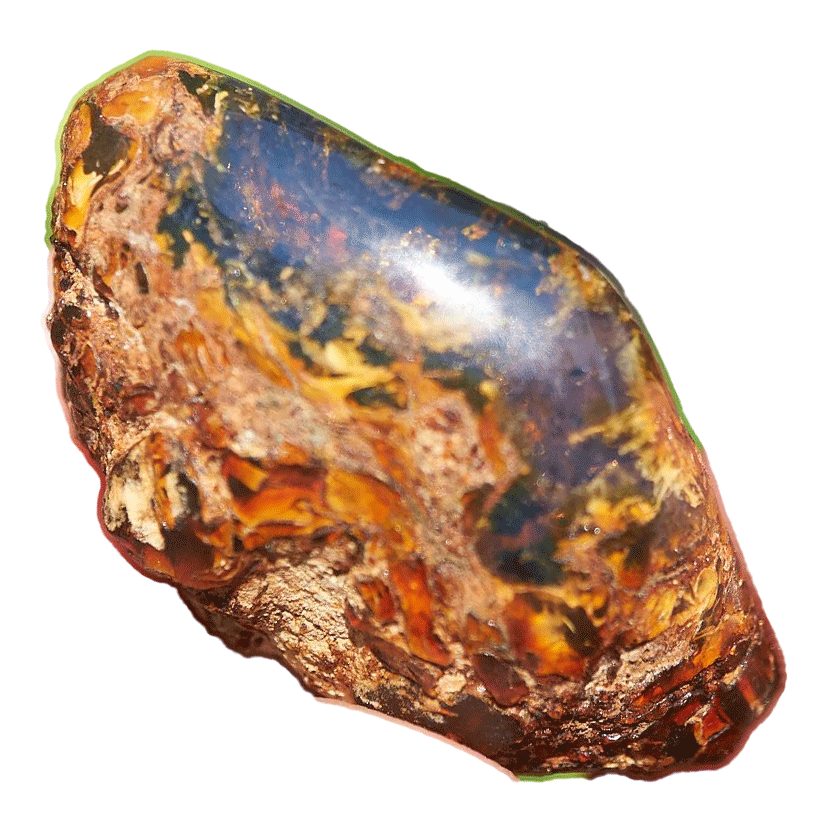


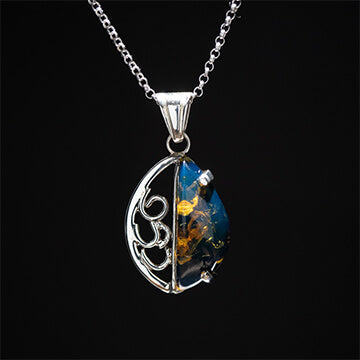
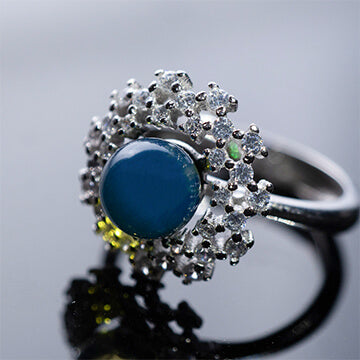
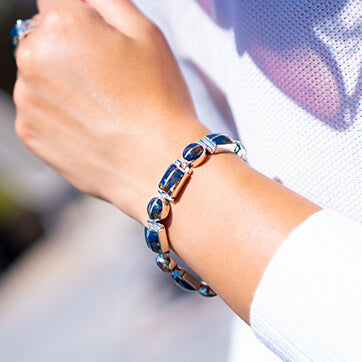
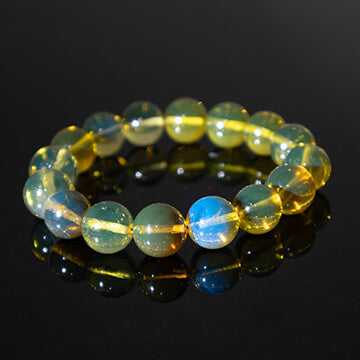
Handcrafted in DR.

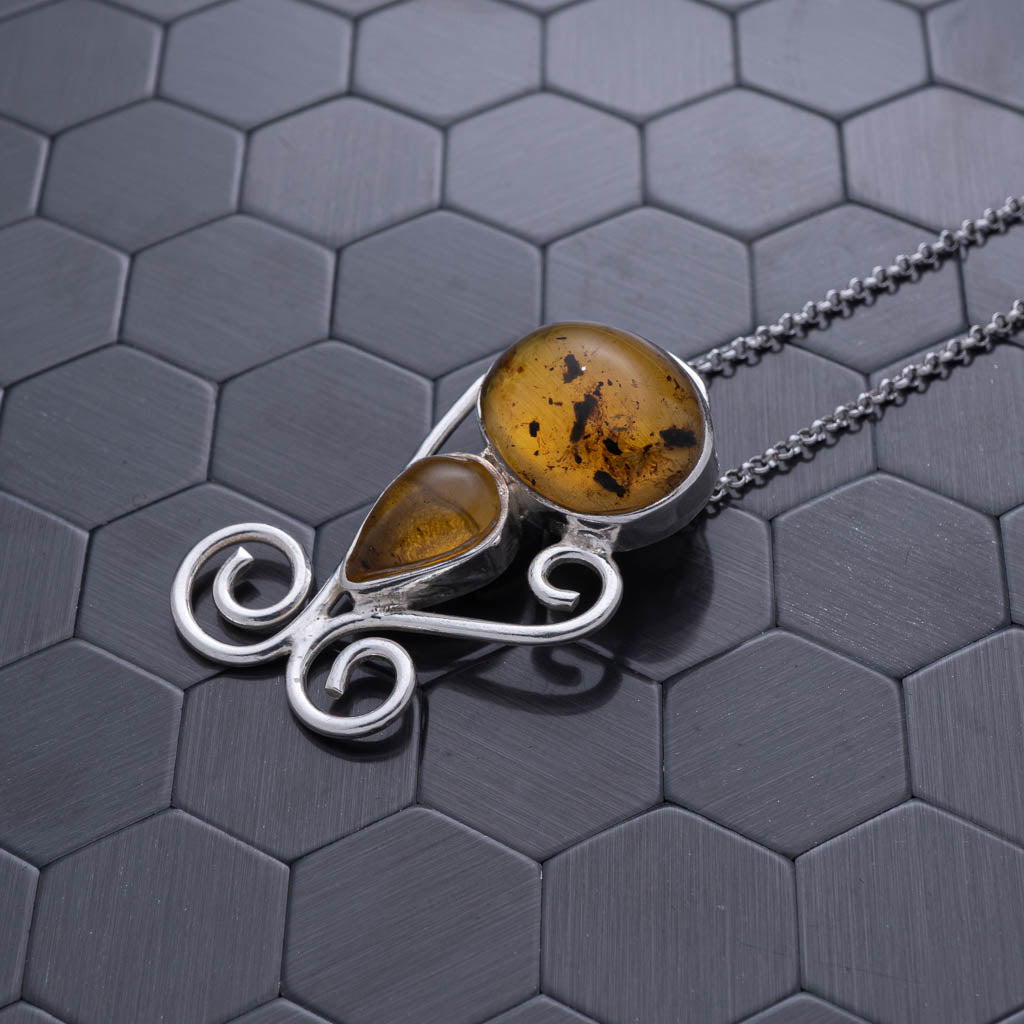
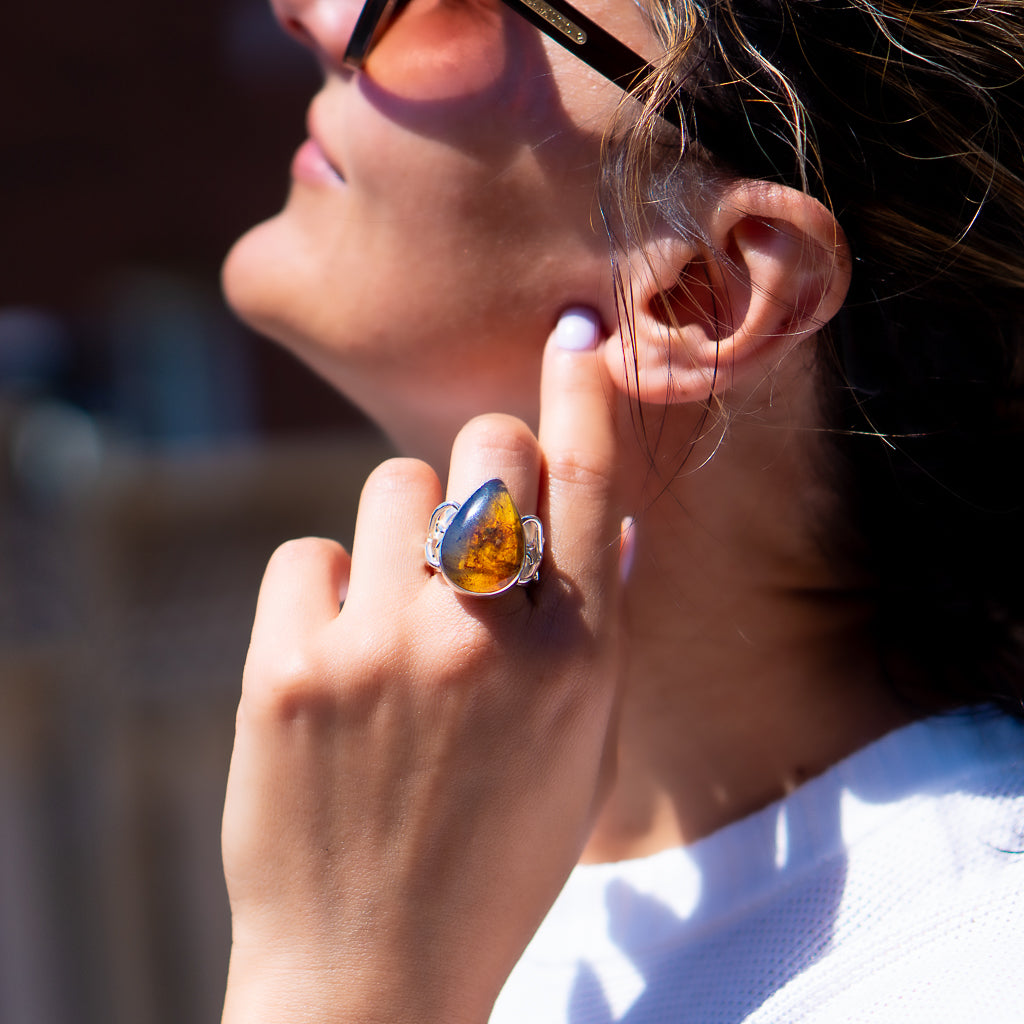
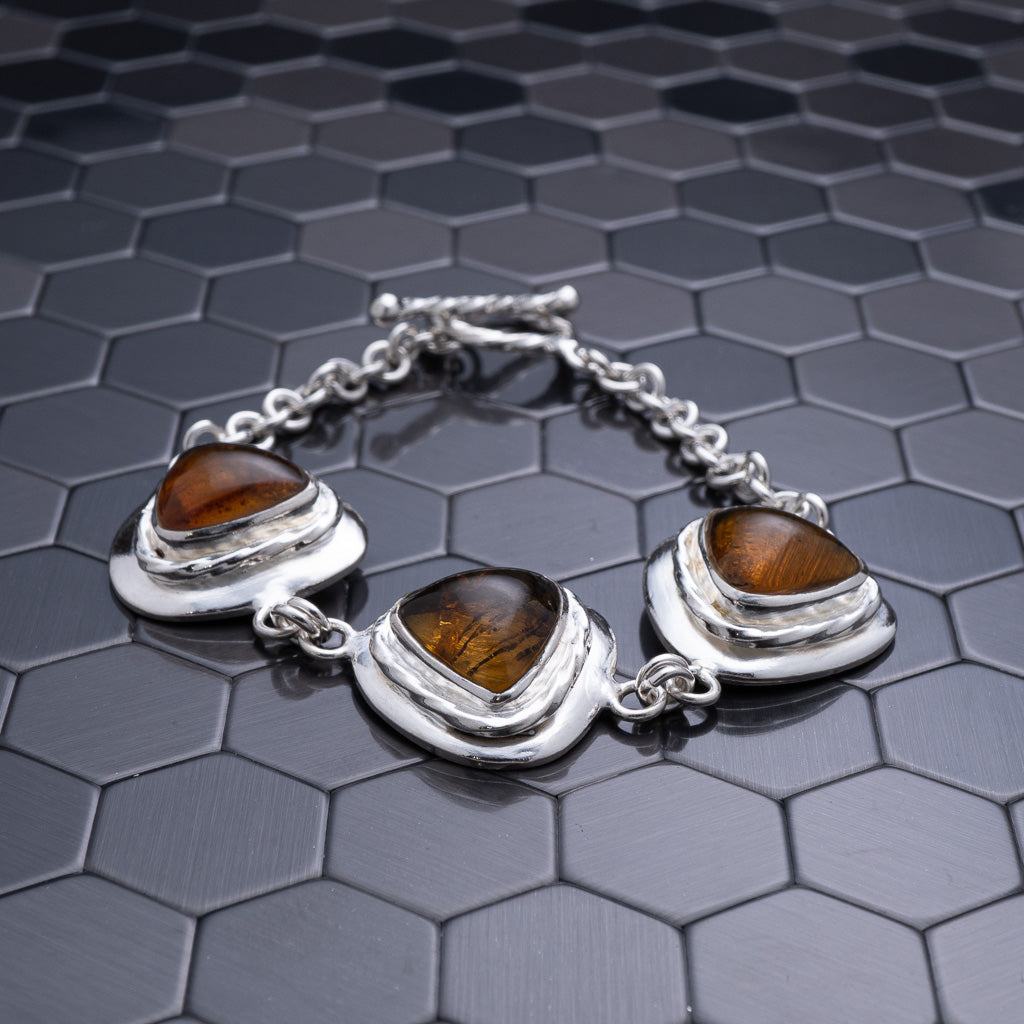
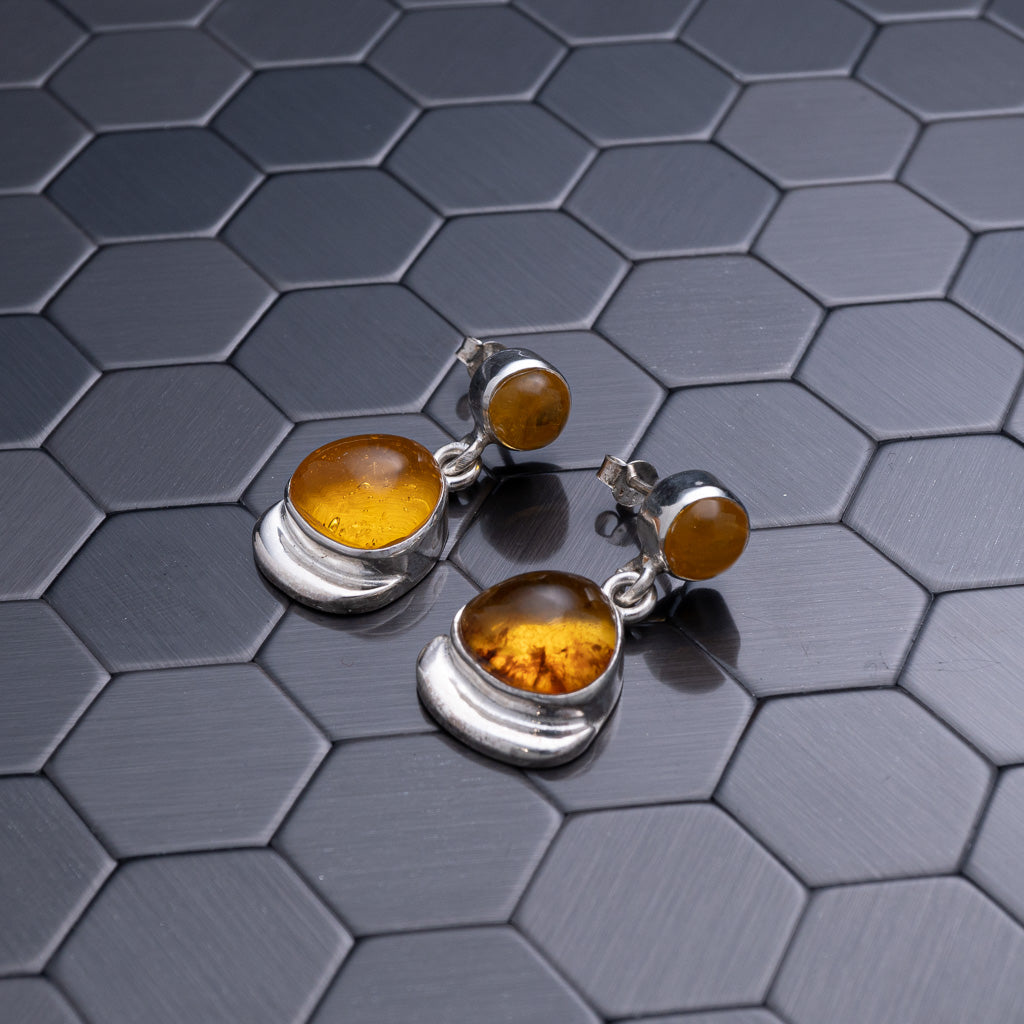


100% Handcrafted in DR.

The leather necklace has emerged as a versatile accessory that bridges the gap between casual and sophisticated style. Whether you're drawn to the rugged appeal of a simple cord or the refined elegance of leather paired with precious gemstones, this timeless piece offers endless possibilities for personal expression. In 2026, the resurgence of natural materials in jewelry design has elevated the leather necklace from a bohemian staple to a fashion-forward statement piece embraced by designers and wearers across all style preferences.
Leather has maintained its position as a favored material in jewelry crafting for centuries, and its popularity continues to grow in modern fashion. The natural texture and warmth of leather create a striking contrast when paired with metals and gemstones, offering a grounded aesthetic that resonates with contemporary minimalism. Unlike rigid materials, leather develops a unique patina over time, making each piece increasingly personal to its wearer.
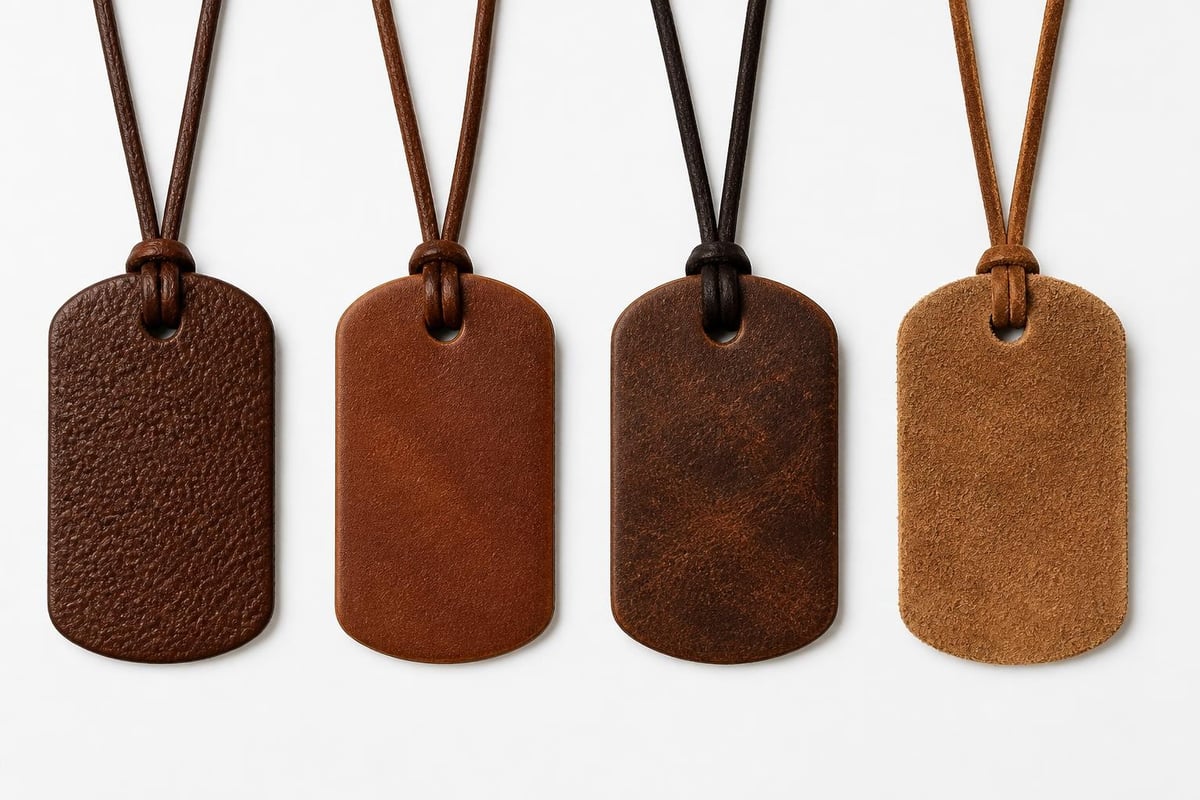
The versatility of this material allows artisans to create everything from delicate chokers to statement pieces that command attention. Genuine leather comes in various finishes, from smooth and polished to distressed and weathered, each bringing a distinct character to the finished jewelry. The historical significance of leather jewelry stretches back to ancient civilizations, where it served both functional and decorative purposes.
Modern designers appreciate leather for its sustainability credentials as well. When sourced responsibly, leather represents a biodegradable alternative to synthetic materials. This aligns perfectly with the growing consumer demand for eco-conscious fashion choices in 2026.
Understanding the different types of leather available helps you select the perfect piece for your needs and preferences. Each variety offers distinct characteristics in terms of durability, flexibility, and aesthetic appeal.
Common leather types include:
The choice of leather directly impacts the necklace's appearance, longevity, and how it ages over time. Full-grain options develop the most beautiful patina, becoming richer and more characterful with wear. Meanwhile, suede varieties offer a softer, more delicate aesthetic suited to feminine designs.
The leather necklace manifests in countless design variations, each serving different aesthetic purposes and occasions. From minimalist cords to elaborate braided creations, the range of possibilities ensures there's a style for every preference.
The classic leather cord necklace represents the foundation of this jewelry category. These streamlined designs typically feature a single strand of leather, often adjustable, that serves as the perfect base for pendants and charms. The simplicity allows the focal point-whether a gemstone, metal pendant, or carved element-to take center stage without competing visual elements.
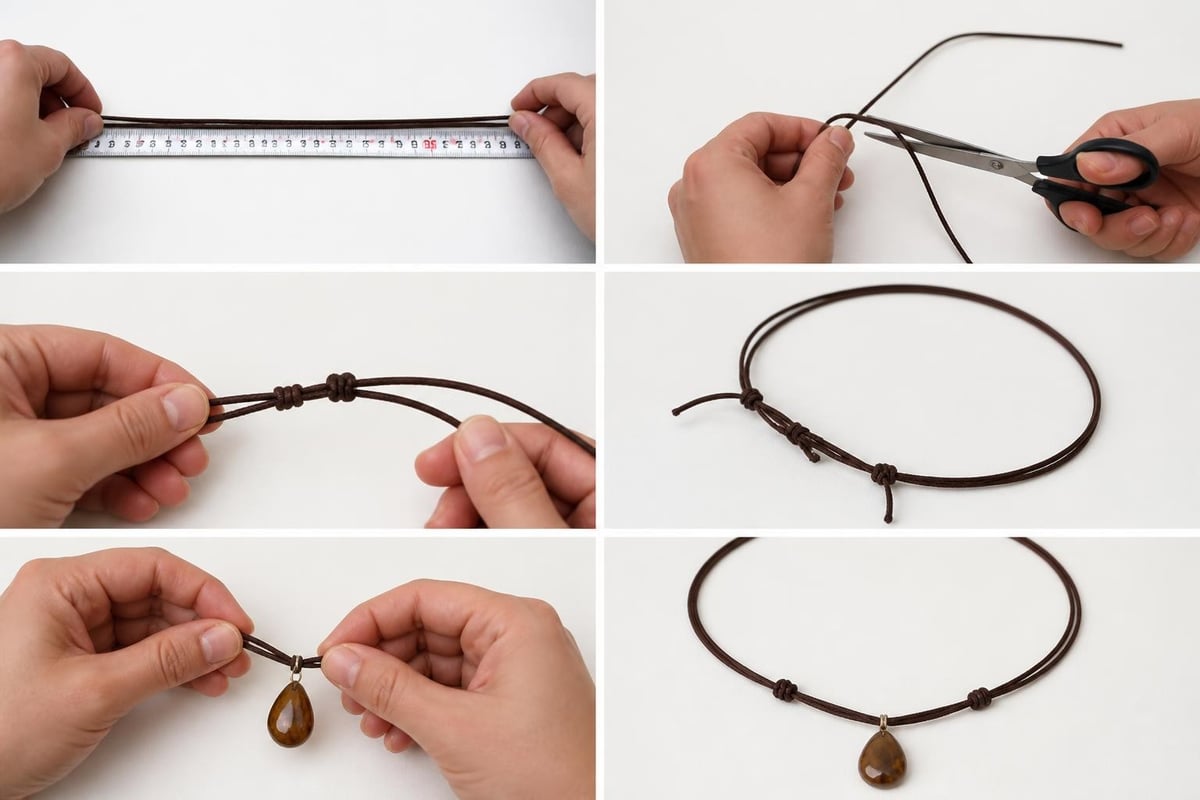
Creating an adjustable leather cord necklace requires specific knotting techniques that eliminate the need for metal clasps. This approach maintains the organic aesthetic while providing practical wearability across different necklines and preferences.
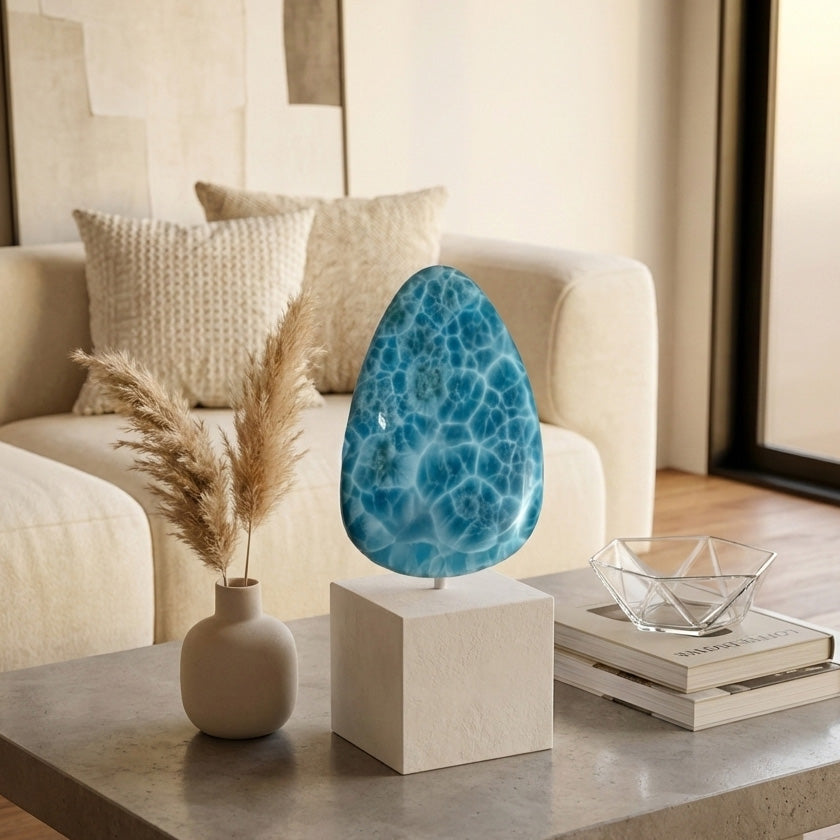
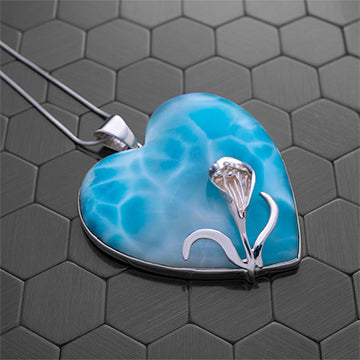
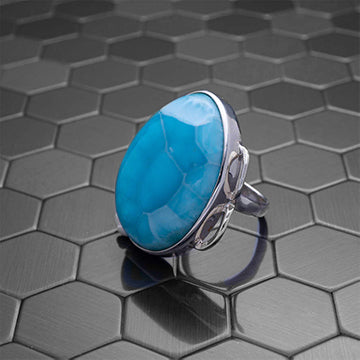
For those who appreciate the calming properties of natural gemstones, pairing a leather cord with Larimar pendants creates a stunning contrast. The earthy warmth of leather beautifully complements the serene blue hues of Larimar, resulting in a piece that embodies both grounding and tranquility.
More complex leather necklace designs incorporate braiding, weaving, and plaiting techniques that transform multiple leather strands into intricate patterns. These construction methods add visual texture and dimension while increasing the piece's durability and presence.
| Braiding Style | Complexity Level | Best Suited For |
|---|---|---|
| Three-strand braid | Beginner | Casual, everyday wear |
| Four-strand flat braid | Intermediate | Statement pieces |
| Six-strand round braid | Advanced | Bold, chunky designs |
| Celtic weave | Expert | Artistic, unique pieces |
Braided designs work exceptionally well for individuals seeking a more substantial leather necklace that makes a visual impact. The dimensional quality of these pieces pairs beautifully with both casual attire and more polished ensembles.
The leather choker has experienced renewed popularity in recent years, evolving from its 1990s origins into sophisticated contemporary designs. Modern iterations range from slim bands that sit close to the neck to wider collar styles that create dramatic silhouettes.
Crafting a charm leather choker allows for personalization through the addition of meaningful charms, stones, or pendants. This customization transforms a simple accessory into a deeply personal talisman that reflects individual style and values.
One of the most compelling aspects of the leather necklace is its compatibility with diverse materials, allowing for creative combinations that enhance both elements. The organic nature of leather provides an ideal backdrop for showcasing precious stones, metals, and other decorative components.
The juxtaposition of rugged leather with polished gemstones creates visual interest through contrasting textures and finishes. This pairing has become increasingly popular in contemporary jewelry design, offering a balanced aesthetic that appeals to both minimalists and maximalists.
Effective gemstone pairings include:
When selecting gemstones for your leather necklace, consider both the color relationships and the energetic properties you wish to incorporate into your daily wear. The benefits of Larimar extend beyond visual beauty to include calming and healing properties that many wearers find meaningful.
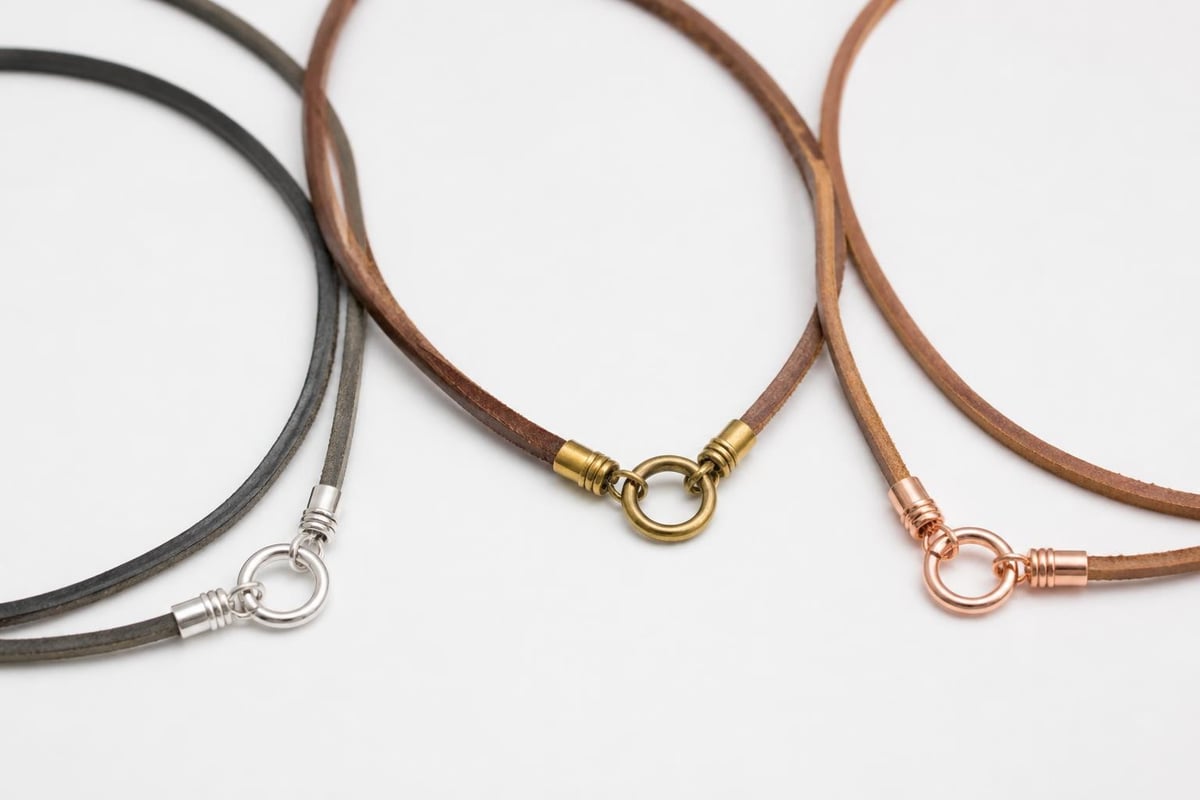
Metal components in leather necklace designs serve both functional and decorative purposes. Clasps, crimps, jump rings, and decorative elements in silver, gold, brass, or copper add polish and structure to otherwise organic pieces.
The choice of metal finish dramatically affects the overall aesthetic. Sterling silver offers a cool, contemporary feel, while antique brass provides warmth and vintage character. Rose gold accents have surged in popularity throughout 2026, offering a romantic touch that complements various leather shades.
Proper care extends the life of your leather necklace while maintaining its appearance and integrity. Unlike metal jewelry that resists environmental factors, leather requires specific attention to preserve its quality and prevent deterioration.
Understanding how to wear your leather necklace appropriately protects it from unnecessary damage. Leather responds negatively to excessive moisture, extreme temperatures, and chemical exposure, making awareness crucial for preservation.
Protection strategies include:
These simple precautions significantly impact how well your leather necklace withstands regular wear. For those who wear their pieces daily, establishing a routine that incorporates these protective measures becomes second nature.
Regular cleaning maintains the appearance of your leather necklace without compromising the material's integrity. The proper care methods differ significantly from those used for metal jewelry, requiring gentler approaches and specific products.
For routine maintenance, wipe leather with a slightly damp cloth to remove surface dirt and oils. Avoid soaking or submerging leather pieces, as excessive water causes warping and stiffness. Specialized leather conditioners applied sparingly every few months keep the material supple and prevent cracking.
| Cleaning Method | Frequency | Purpose |
|---|---|---|
| Dry cloth wipe | After each wear | Remove oils and dust |
| Damp cloth cleaning | Weekly | Surface cleaning |
| Leather conditioner | Monthly | Maintain suppleness |
| Professional cleaning | Annually | Deep restoration |
When leather shows signs of stiffness or dryness, a small amount of leather conditioner or natural oil (such as coconut or jojoba) can restore flexibility. Apply with a soft cloth, working the product into the leather with gentle circular motions, then buff away any excess.
How you store your leather necklace when not wearing it directly impacts its longevity and appearance. Proper storage prevents tangling, creasing, and exposure to damaging elements.
Hang leather necklaces whenever possible to maintain their shape and prevent creases. If hanging isn't feasible, lay them flat in a drawer lined with soft fabric. Avoid plastic bags or containers that trap moisture, which can promote mold growth or cause leather to become sticky.
Creating a custom leather necklace offers the satisfaction of wearing a truly unique piece while developing leather crafting skills that can evolve into a rewarding hobby. The process requires minimal tools and materials, making it accessible for beginners.
Starting your leather jewelry journey requires a modest investment in basic supplies. Most materials are available at craft stores or specialized leather suppliers, with quality varying significantly across price points.
Basic supply list:
The quality of your leather dramatically affects the finished product. Investing in genuine leather rather than imitation materials ensures durability and the desirable patina development over time.
Learning fundamental knotting techniques for leather jewelry expands your creative possibilities. Several basic knots serve as the foundation for most leather necklace designs, from simple sliding closures to decorative elements.
The square knot creates secure connections between leather pieces, while the overhand knot provides adjustability. The surgeon's knot offers superior holding power for leather that tends to slip. Practice these fundamental techniques before attempting more complex braiding patterns.
Step-by-step basic leather necklace creation:
The simplicity of construction allows for infinite variations. Experiment with different cord thicknesses, multiple strands, or mixed materials to develop your signature style.
The leather necklace transcends traditional style boundaries, appearing in contexts ranging from casual weekend wear to refined evening attire. Understanding how to style this versatile accessory maximizes its impact across various occasions and personal aesthetics.
For relaxed, everyday styling, the leather necklace serves as an effortless accent that adds organic texture to simple outfits. Pair a single cord with a meaningful pendant over basic tees, flowing tunics, or casual button-downs for understated sophistication.
Layering multiple leather necklaces in varying lengths creates dimensional interest without appearing overdone. Combine different thicknesses and colors, perhaps mixing a thin black cord with a thicker brown braided piece, to achieve a collected-over-time aesthetic that feels authentic rather than contrived.
The bohemian approach embraces mixing materials freely. Combine your leather pieces with necklaces featuring natural stones, wooden beads, or shell elements to create a nature-inspired look that celebrates organic materials.
The leather necklace transitions seamlessly into professional environments when selected and styled thoughtfully. Opt for refined designs in black or dark brown leather paired with precious metal accents for workplace-appropriate sophistication.
A slim leather choker worn under a crisp collar adds subtle edge to traditional business attire without crossing into casual territory. Similarly, a delicate leather cord bearing a small, elegant pendant provides visual interest while maintaining professional decorum.
Professional styling guidelines:
These considerations ensure your leather necklace enhances rather than detracts from your professional presence.
Contrary to common assumptions, the leather necklace can make stunning contributions to formal attire when selected appropriately. The key lies in choosing pieces that incorporate luxurious elements while maintaining leather's inherent character.
Braided leather in metallic finishes or dyed in jewel tones elevates the material beyond its casual associations. Pairing leather with substantial gemstones creates striking contrasts that command attention in evening settings. The organic warmth of leather actually softens the formality of evening wear, creating approachable elegance.
Consider how the unique historical and cultural significance of certain gemstones adds depth to your jewelry choices, transforming accessories into conversation pieces that carry meaning beyond mere decoration.
As conscious consumerism shapes purchasing decisions in 2026, understanding the environmental and ethical implications of leather jewelry becomes increasingly important. The leather industry faces scrutiny regarding both animal welfare and environmental impact, making informed choices essential.
Not all leather production methods carry equal environmental footprints. Vegetable-tanned leather, processed using natural tannins from tree bark, represents a significantly more sustainable option than chrome-tanned alternatives that rely on heavy metals and harsh chemicals.
Seeking leather from suppliers committed to transparency in their sourcing practices ensures your jewelry aligns with your values. Many artisan jewelers now provide detailed information about their materials' origins, allowing conscious consumers to make informed decisions.
Ethical sourcing indicators:
Supporting small-scale artisans who craft leather necklaces often ensures more sustainable practices than mass-produced alternatives. These makers typically work with smaller quantities, reduce waste, and maintain direct relationships with material suppliers.
For those seeking the aesthetic of leather without animal products, several alternatives have emerged that convincingly mimic leather's appearance and feel. Materials such as cork, pineapple leather (Piñatex), mushroom leather, and various plant-based synthetics offer cruelty-free options.
These alternatives continue improving in quality and durability, with some now matching or exceeding traditional leather's performance characteristics. When selecting vegan leather options, research the specific material's environmental credentials, as some synthetics carry their own sustainability concerns.
While leather necklaces span a broad price range, understanding value factors helps you make purchases that deliver satisfaction and longevity. Quality pieces represent investments that improve with age rather than disposable fashion that quickly deteriorates.
Several elements contribute to a leather necklace's price point, from material quality to craftsmanship complexity. Premium full-grain leather commands higher prices than genuine or bonded alternatives but offers superior durability and aging characteristics. Handcrafted pieces incorporating complex braiding or traditional techniques justify higher costs through the skill and time invested.
The addition of precious metals, gemstones, or artisan-created components naturally increases value. A simple cord with a hand-carved pendant or rare stone represents both material and artistic worth that transcends fast-fashion pricing.
| Value Factor | Impact on Price | Impact on Longevity |
|---|---|---|
| Leather quality | High | Very High |
| Craftsmanship | Medium-High | High |
| Gemstone/Metal quality | High | Medium |
| Brand reputation | Medium | Low |
| Design complexity | Medium | Medium |
Understanding these relationships helps you allocate your budget toward features that deliver lasting satisfaction rather than purely aesthetic considerations that may fade in appeal.
The effort invested in proper maintenance directly correlates with your leather necklace's lifespan and continued beauty. Well-maintained pieces can last decades, developing character that makes them increasingly precious over time. This longevity transforms what might seem like a modest purchase into a lasting element of your personal style.
Consider the cost-per-wear calculation when evaluating leather jewelry investments. A higher-quality piece worn regularly for years delivers better value than multiple cheaper alternatives requiring frequent replacement. The emotional attachment that develops with a well-loved piece adds intangible value that transcends monetary considerations.
The leather necklace offers timeless versatility that adapts to evolving personal style while maintaining its essential character and appeal. Whether you're drawn to minimalist cords, intricate braided designs, or leather paired with precious gemstones, selecting quality pieces and maintaining them properly ensures years of enjoyment. For those seeking to complement leather's earthy warmth with exceptional gemstones, Larimar Creations offers exquisite handcrafted jewelry featuring the rare beauty of Larimar and Dominican Blue Amber, perfect for creating unique combinations that reflect your individual style and values.