

by Admin June 04, 2026 6 min read

A Larimar stone can stop you in a second when the pattern is right. Not just because of the color, but because the surface looks like moving water, broken clouds, coral lace, or a tiny map of the Caribbean sea. That is where rare larimar patterns explained becomes more than a collector’s question - it becomes the key to understanding why one piece feels simply pretty and another feels unforgettable.

Larimar is never uniform in the way mass-produced gemstones try to be. Its beauty comes from natural variation, and the finest pieces show a balance of vivid blue, strong contrast, and pattern formation that looks almost painterly. For jewelry buyers, that means pattern matters as much as color. For collectors, it often matters even more.

What makes a Larimar pattern rare?

Rarity in Larimar is not about one single trait. It comes from the interaction of color saturation, mineral distribution, line definition, and how cleanly a pattern presents across the surface of the stone. A rare pattern is usually one that looks distinct at first glance, with visual structure that appears naturally composed rather than random or muddy.

Some stones have pleasant blue-and-white movement but remain fairly common because the pattern is soft, broken, or low in contrast. Others show bold formations with deep sky blue or volcanic blue zones separated by white matrix in a way that feels dramatic and balanced. That is where rarity begins to show itself.

Size also changes the conversation. A striking pattern in a larger cabochon is harder to find than the same visual effect in a very small piece. Clean face-up presentation matters too. If the best part of the pattern is lost near the edge, heavily included, or interrupted by fractures, the stone may still be beautiful but not truly exceptional.

Rare Larimar patterns explained by visual type

Collectors and sellers often use descriptive names for Larimar patterns because the stone invites comparison to natural scenes. These are not rigid gemological grades, but they are useful for understanding what buyers are seeing.

Turtleback pattern

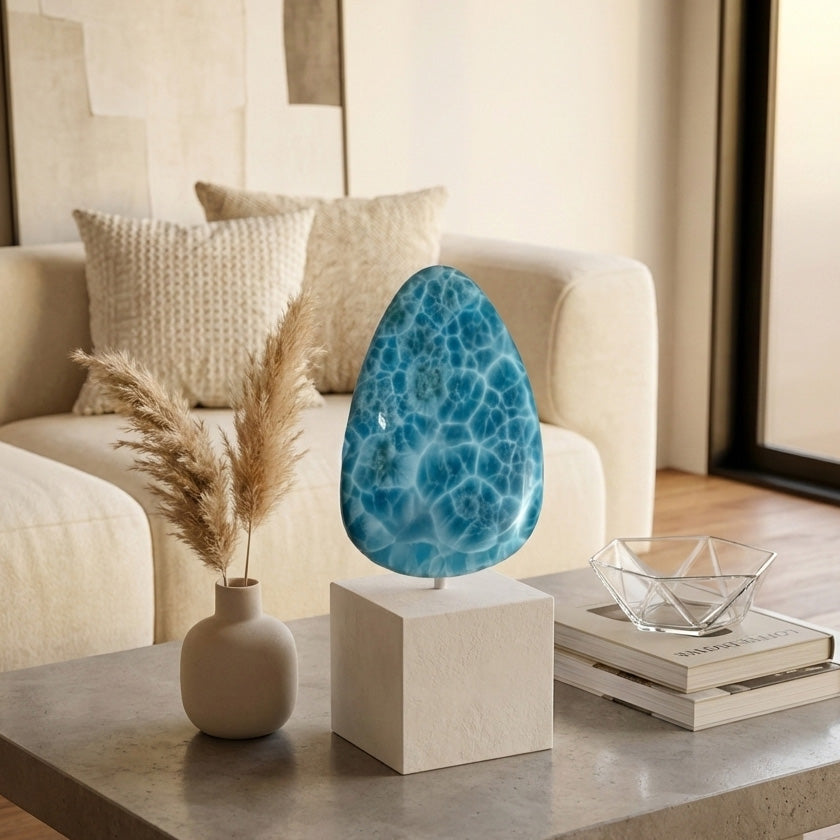
Turtleback is one of the most admired Larimar looks. It usually appears as a network of rounded or polygonal blue sections divided by pale lines, resembling the plates of a turtle shell. In top examples, the divisions are clear without looking harsh, and the blue areas have enough saturation to create depth.

Not every segmented pattern qualifies as rare turtleback. Lower-grade stones may show a similar structure but with washed-out color or uneven, blurry separation. The finest pieces combine strong blue with clean natural partitioning, which gives the stone a graphic, almost architectural beauty.

Webbing and lace pattern

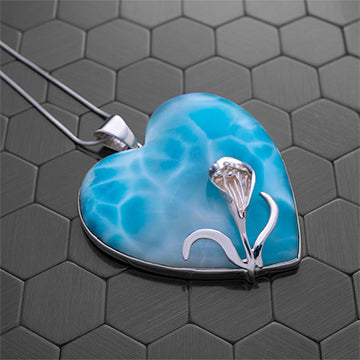
Webbed Larimar shows fine white or pale mineral lines moving through blue fields like sea foam trails or delicate lace. This pattern can be especially desirable when the lines are intricate but not overcrowded. Too much webbing can mute the overall blue impression, while too little may not create enough distinction.

A rare webbed stone usually has crisp movement and contrast. It draws the eye across the surface rather than flattening into one tone. In pendants and statement rings, this kind of pattern often feels elegant because it carries detail without losing softness.

Cloud pattern

Cloud Larimar has softer white formations drifting through blue areas, often with blurred edges and a tranquil look. This pattern is widely loved in jewelry because it feels gentle and oceanic. Still, cloud pattern alone does not always signal rarity.

What makes a cloud-style piece exceptional is color quality and composition. If the blue is vivid and the white creates a floating, atmospheric effect rather than a chalky patch, the stone becomes much more desirable. Think less about whether it has clouds at all and more about whether those clouds create beauty with depth.

Layered blue pattern

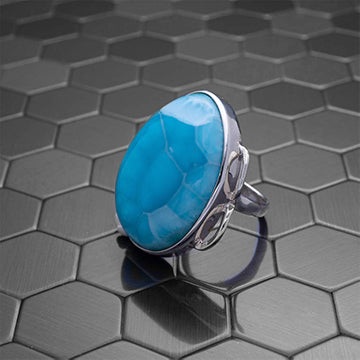
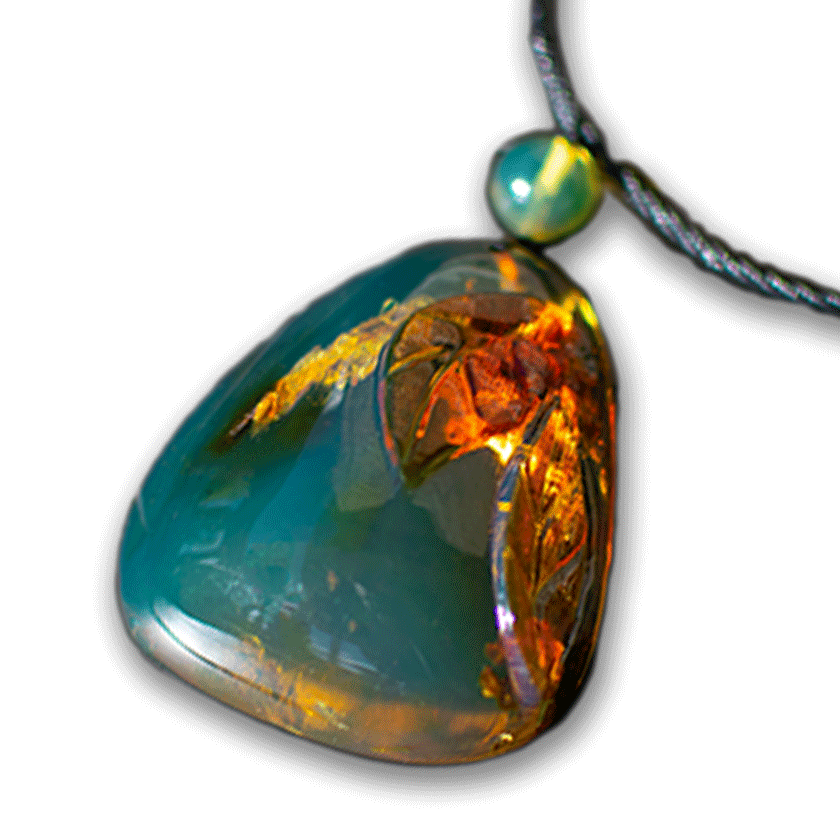
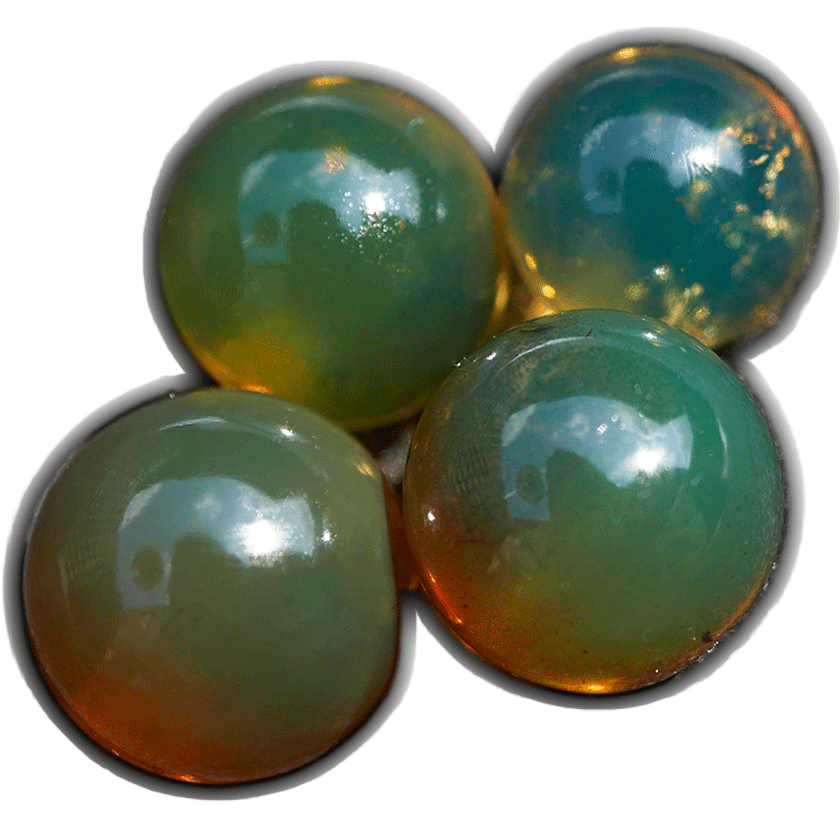
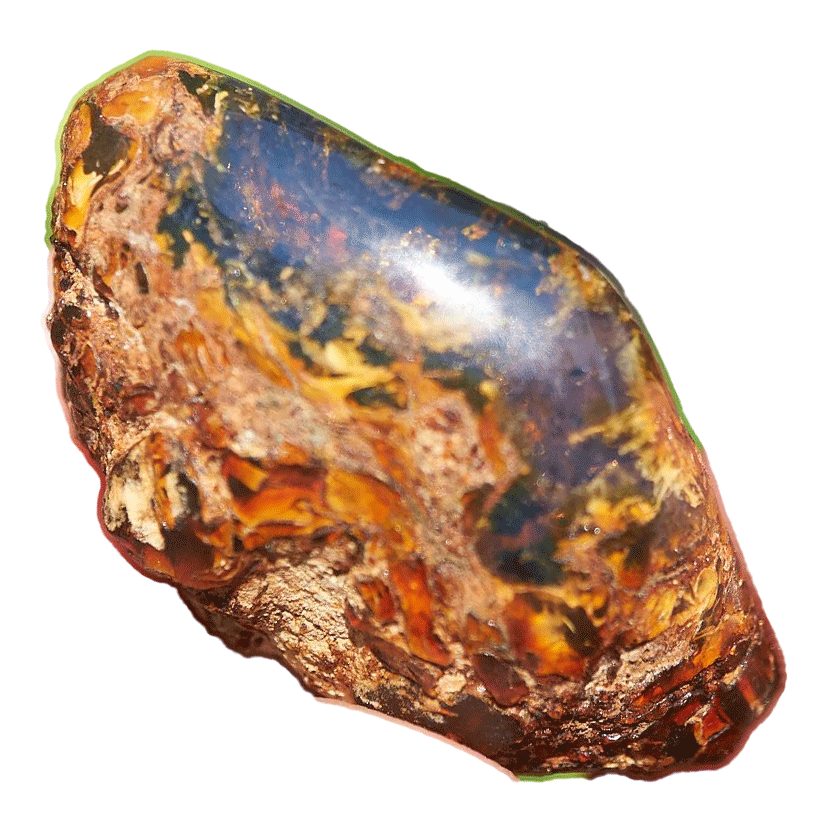
Some of the rarest and most valuable Larimar stones show multiple blue tones in one face-up view. You may see pale aqua, sky blue, and richer volcanic blue arranged in layers or pools. This kind of natural color zoning can make the stone look like shallow and deep tropical water meeting in one scene.

This pattern is especially appealing because it combines rarity of tone with rarity of arrangement. A stone with strong layered blues can feel alive from every angle. In collector-grade cabochons, this is often the kind of material that gets set aside quickly.

Coral or plume-like formations

Occasionally, Larimar displays branching or plume-style white forms that resemble coral, sea fans, or underwater growth. These stones tend to be highly individual. When the image is clear and the background blue is rich, the effect can be extraordinary.

This is where taste comes in. Some buyers prefer clean turtleback structure, while others are drawn to more organic, free-form scenes. Neither preference is wrong. In premium jewelry, the best pattern is often the one that feels most naturally complete.

Color and pattern work together

A rare pattern can lose impact if the color is weak. Likewise, strong color alone does not guarantee a memorable stone if the surface looks flat. The most desirable Larimar usually brings both elements together - saturated blue and a pattern that gives the eye something to follow.

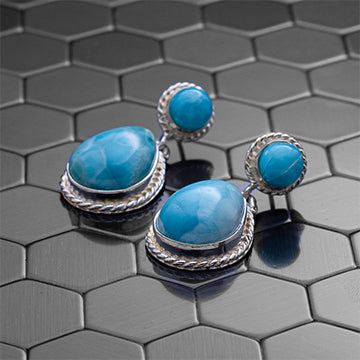
This is why two stones with similar size and polish can have very different appeal. One may show decent blue but little internal character. Another may present high-contrast movement, layered tones, and a composition that looks almost curated by nature. That difference is what buyers notice in fine Larimar pendants, rings, and collector cabochons.

There is also a trade-off to understand. Some of the deepest blue Larimar appears in areas with less visible pattern, creating a more solid color look. Those stones can still be highly prized. On the other hand, a slightly lighter blue with exceptional turtleback or lace may feel rarer because the pattern is so distinctive. It depends on whether the buyer prioritizes color intensity, pattern identity, or the balance of both.

How to tell natural rarity from ordinary variation

When people ask for rare larimar patterns explained, they are often trying to separate truly special material from stones that are simply different. The easiest way to do that is to look for harmony.

In a rare piece, the pattern, color, and cut support each other. The cabochon is shaped to showcase the most beautiful face. The pattern is visible enough to read clearly. The blue areas hold interest without turning gray, and the white matrix adds contrast instead of distraction.

Ordinary variation tends to look less resolved. The pattern may be scattered, the white may dominate too much, or the color may fade unevenly across the stone. None of that makes the piece undesirable, especially in artisan jewelry where every stone is unique. It simply means the visual event is less uncommon.

Why rare patterns matter in jewelry

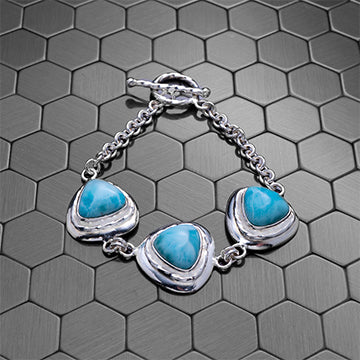
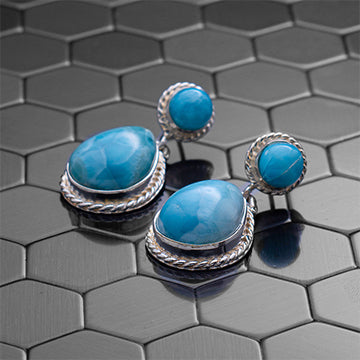
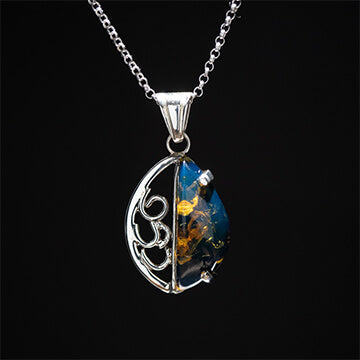
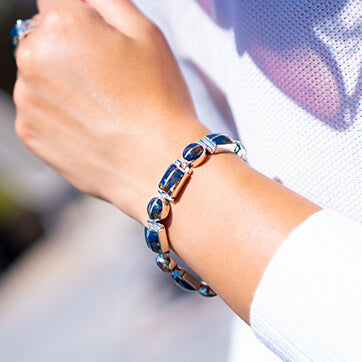
In fine Larimar jewelry, pattern is not a technical footnote. It is the personality of the stone. A rare pattern gives a pendant more presence, makes a ring feel one-of-a-kind, and turns even a simple bezel setting into something with story and origin.

This matters even more in handcrafted jewelry, where the gem is not competing with excessive design. The stone leads. A beautifully patterned Larimar cabochon can carry an entire piece with very little embellishment because its surface already feels alive.

Gift buyers often respond to this instinctively. They may not know terms like turtleback or plume formation, but they know when a stone feels singular. That emotional response is part of the value. Authentic rarity is both visible and felt.

What collectors and careful buyers should look for

If you are choosing Larimar for a jewelry piece or a loose gemstone, start by viewing the stone as a whole rather than chasing one pattern name. Ask whether the pattern is clear, whether the blue has strength, and whether the cut showcases the best section of the material.

Then look closer. Check for muddy zones, distracting pits, or a pattern that disappears under low lighting. Consider scale as well. A rare pattern in a generous, well-polished stone is harder to source than a similar effect in a tiny piece. Authentic sellers who specialize in Caribbean gemstones, including curated houses such as Larimar Creations, understand that distinction and select for visual quality, not just for the label attached to the stone.

The final test is simple. Does the stone still look compelling after the first glance? Rare Larimar often reveals more the longer you look at it. New lines appear. Blue shifts become more obvious. The pattern starts to resemble tide, cloud, reef, or open water. That lasting pull is part of what makes these gemstones so coveted.

The best Larimar does not ask to be explained away by trend or novelty. It carries the quiet authority of something formed once, in one place, and never repeated in exactly the same way. When you find a pattern that feels like a piece of the Caribbean captured in stone, trust that response - it is usually the right one.


Let's Stay In Touch