
by Admin June 22, 2026 6 min read

A tiny fern fragment suspended in golden resin can feel more intimate than a large faceted gemstone. That is part of amber’s enduring appeal. When shoppers ask for natural amber inclusions explained, they are usually trying to answer a deeper question - is this piece truly natural, and what exactly am I seeing inside it?

In authentic amber, inclusions are not flaws in the ordinary sense. They are part of the stone’s history. Each veil, bubble, speck, plant trace, or fossilized fragment reflects the resin’s original environment and the long natural process that turned tree resin into amber. For jewelry lovers and collectors alike, these internal features often make a piece more desirable, not less.

What inclusions in natural amber really are

Amber began as resin, not sap, released by ancient trees millions of years ago. As that sticky resin flowed and hardened, it captured whatever the surrounding environment offered - air, moisture, organic matter, microscopic particles, and occasionally more dramatic remains such as insects or plant material. Over immense spans of time, pressure and natural chemical change transformed that resin into amber.

That is why inclusions in amber look different from inclusions in crystalline gemstones. In a diamond or sapphire, an inclusion may be a mineral crystal or structural feature formed during crystal growth. In amber, inclusions are often remnants of life and movement. They can appear soft, cloudlike, layered, botanical, or fluid in character.

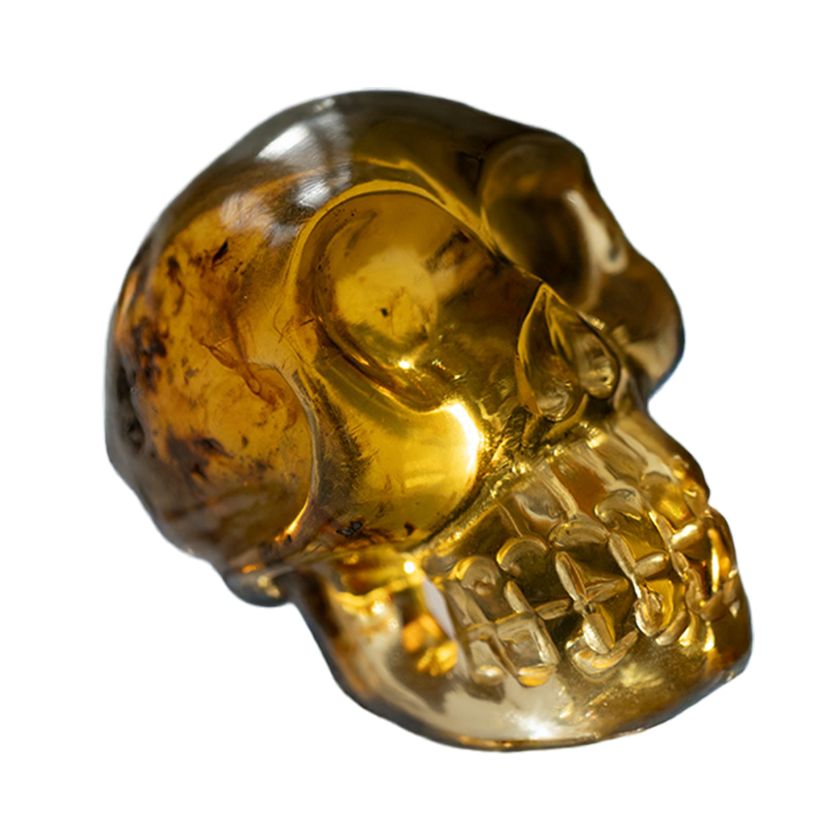
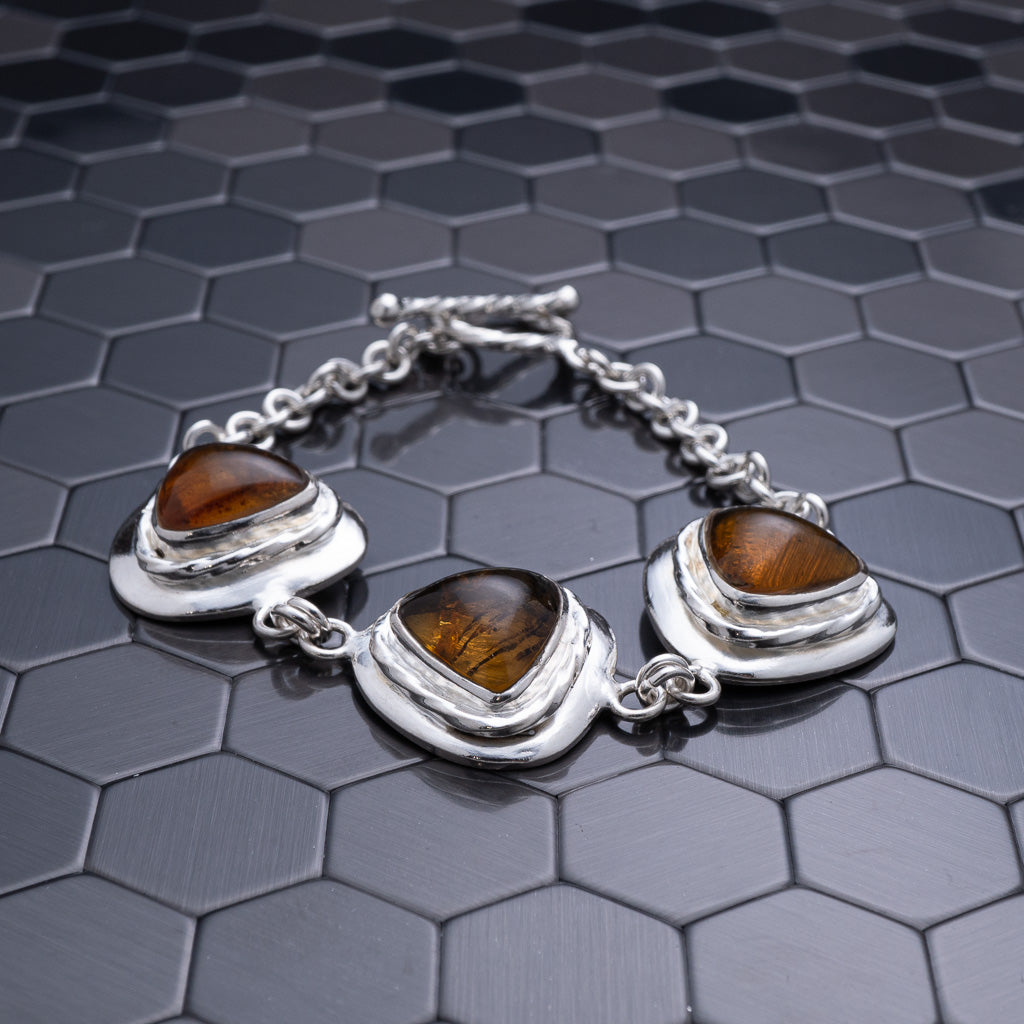
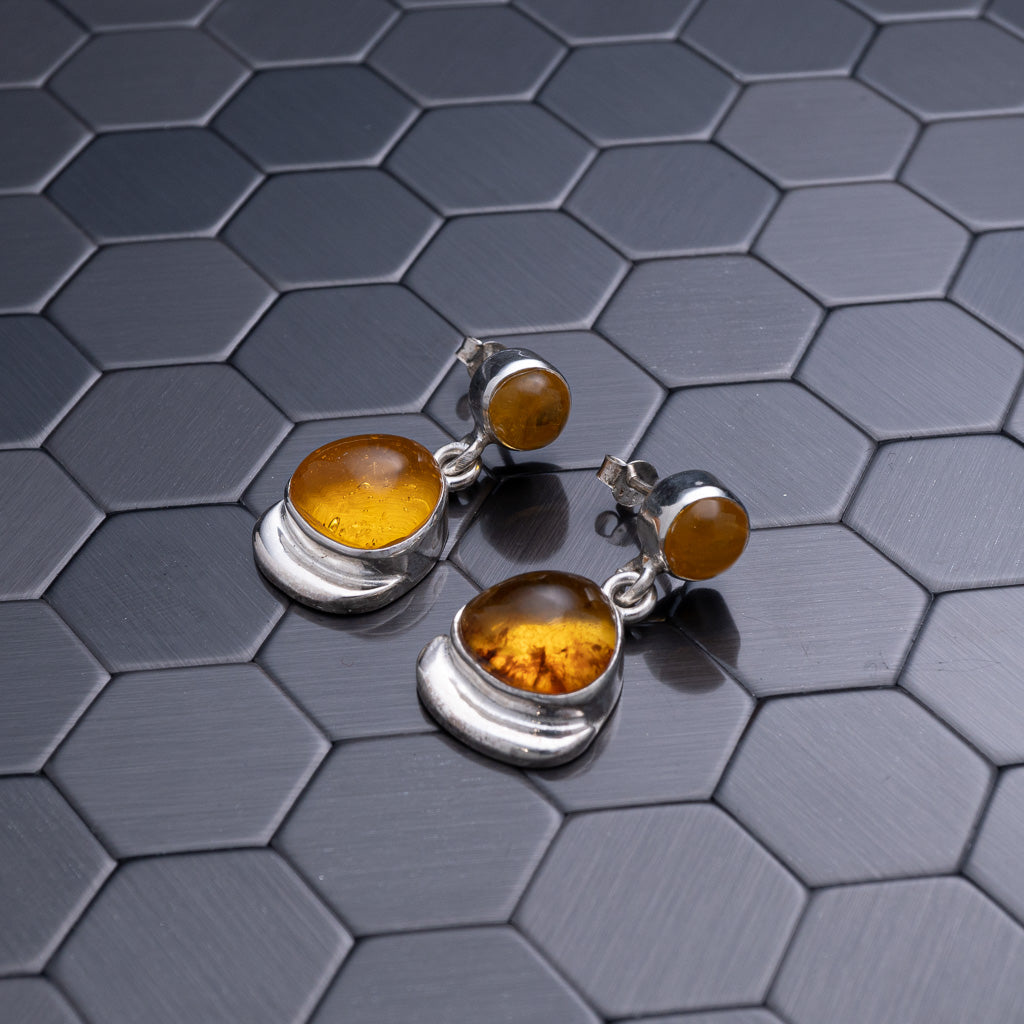
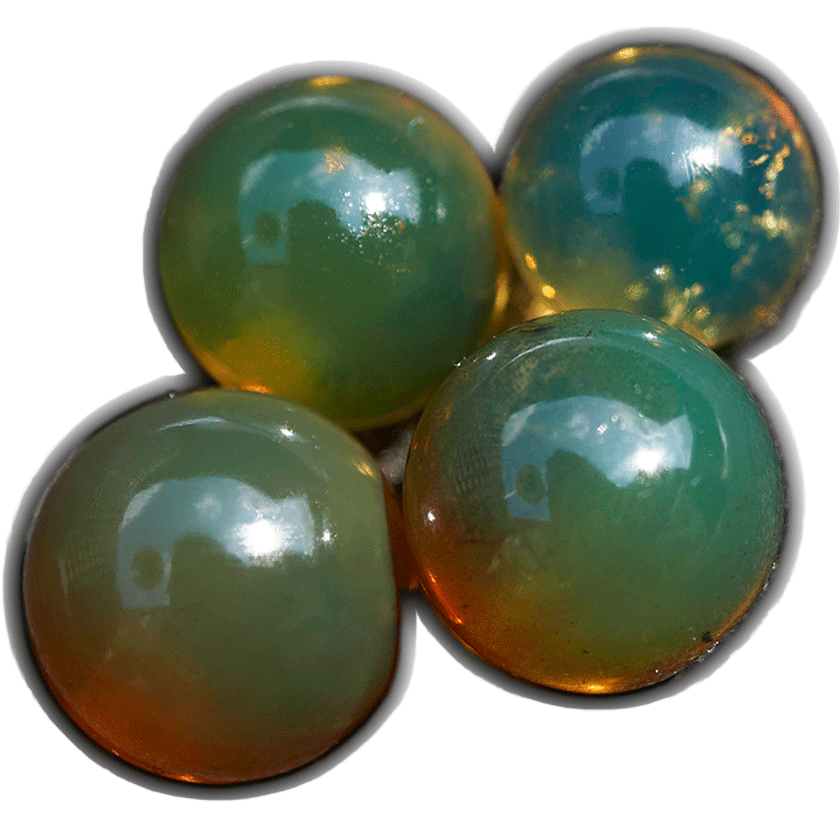
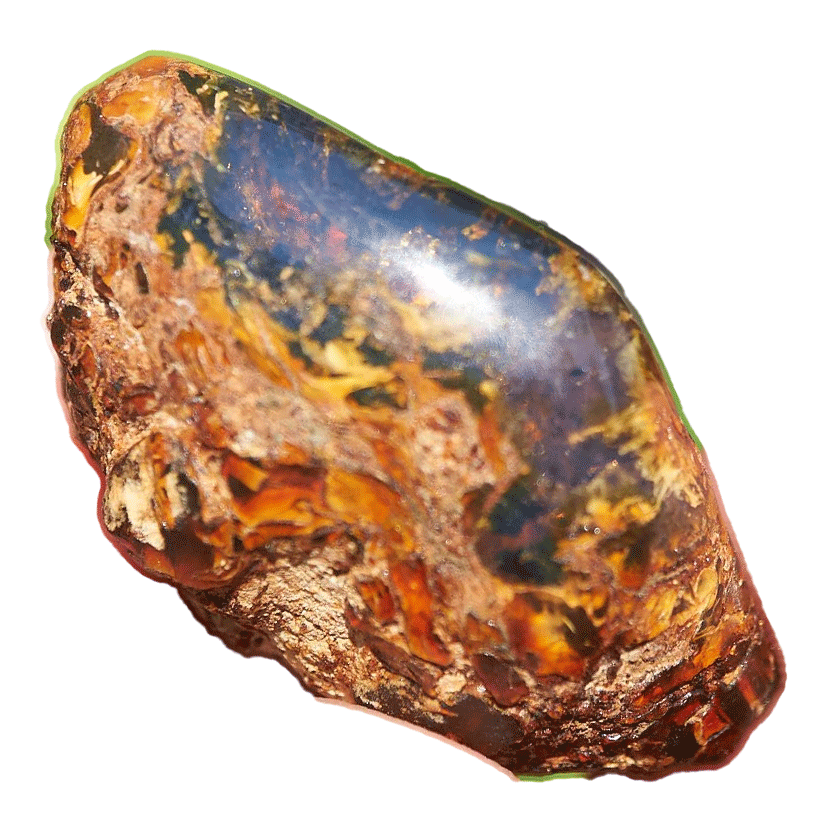
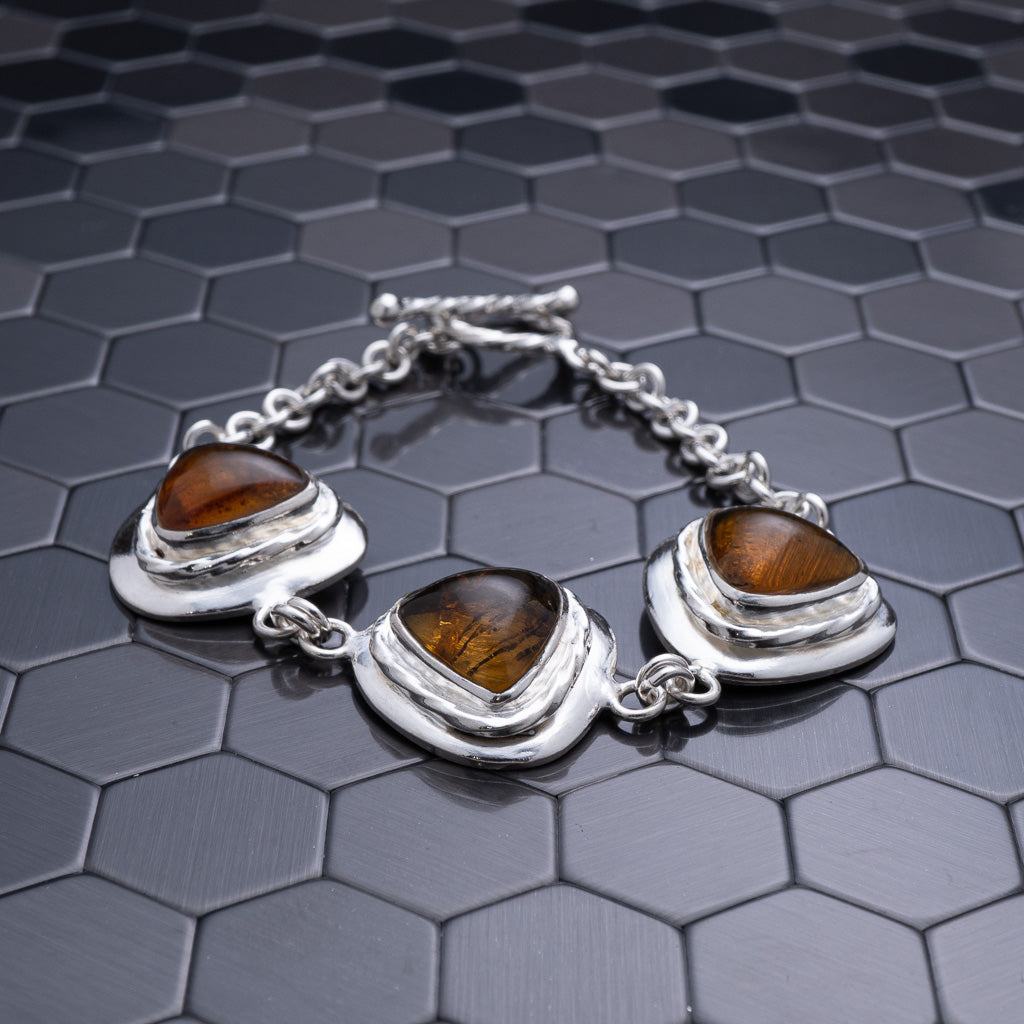
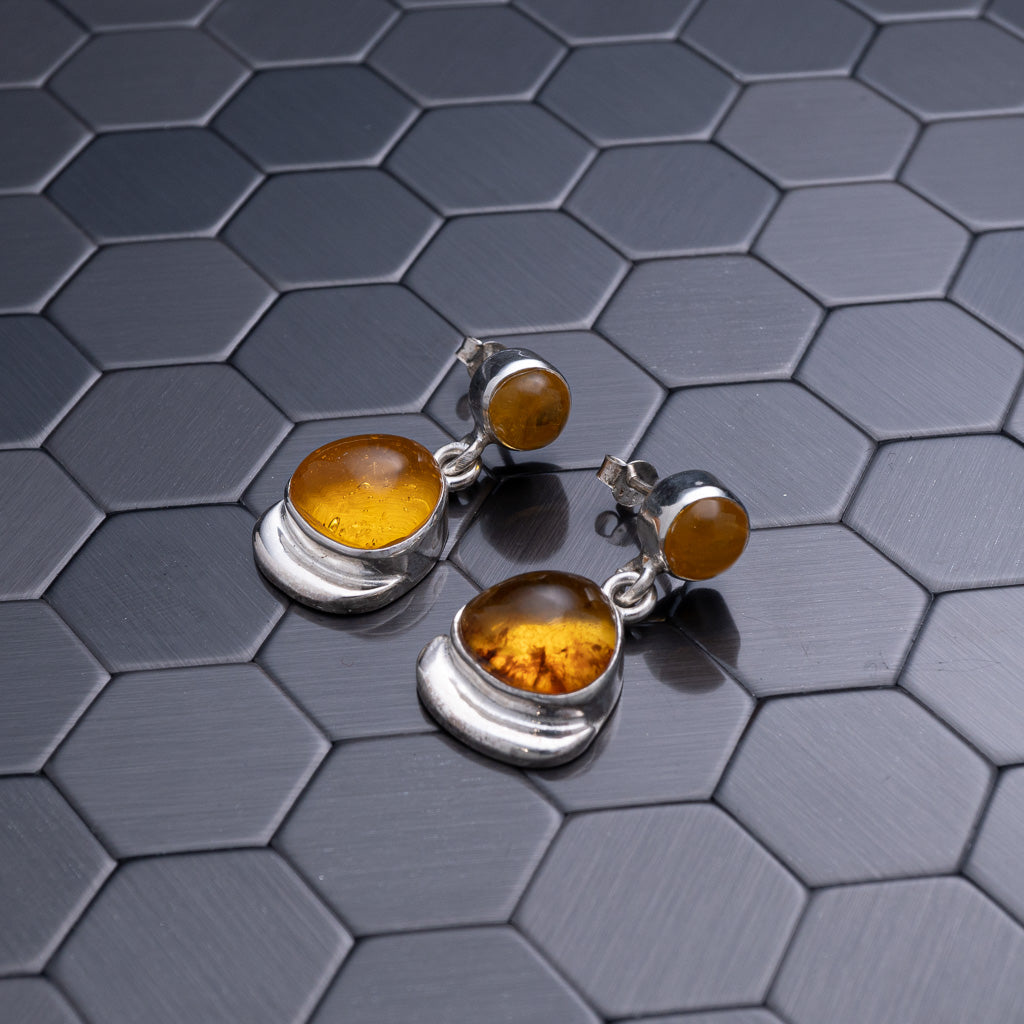
Some inclusions are obvious. Others only reveal themselves under light. A clear amber cabochon may show a fine scatter of tiny bubbles, while a deeper honey or blue amber piece may hold wispy organic patterns that seem to shift as the stone turns. This natural variation is one of the reasons no two genuine amber pieces are exactly alike.

Natural amber inclusions explained by type

If you look closely at real amber, you may notice several different categories of inclusions. Air bubbles are among the most common. These formed when air became trapped in fresh resin. In natural amber, bubbles often vary in size and shape rather than appearing perfectly uniform.

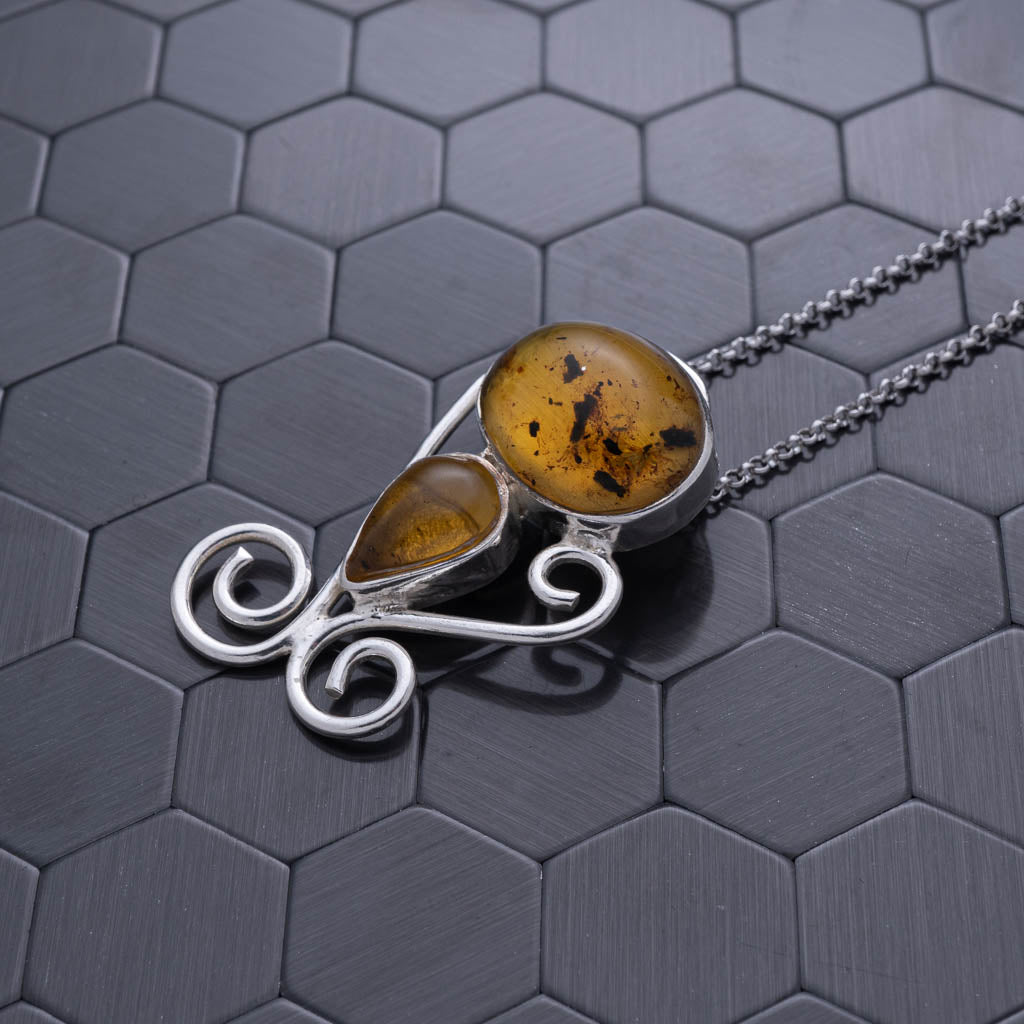
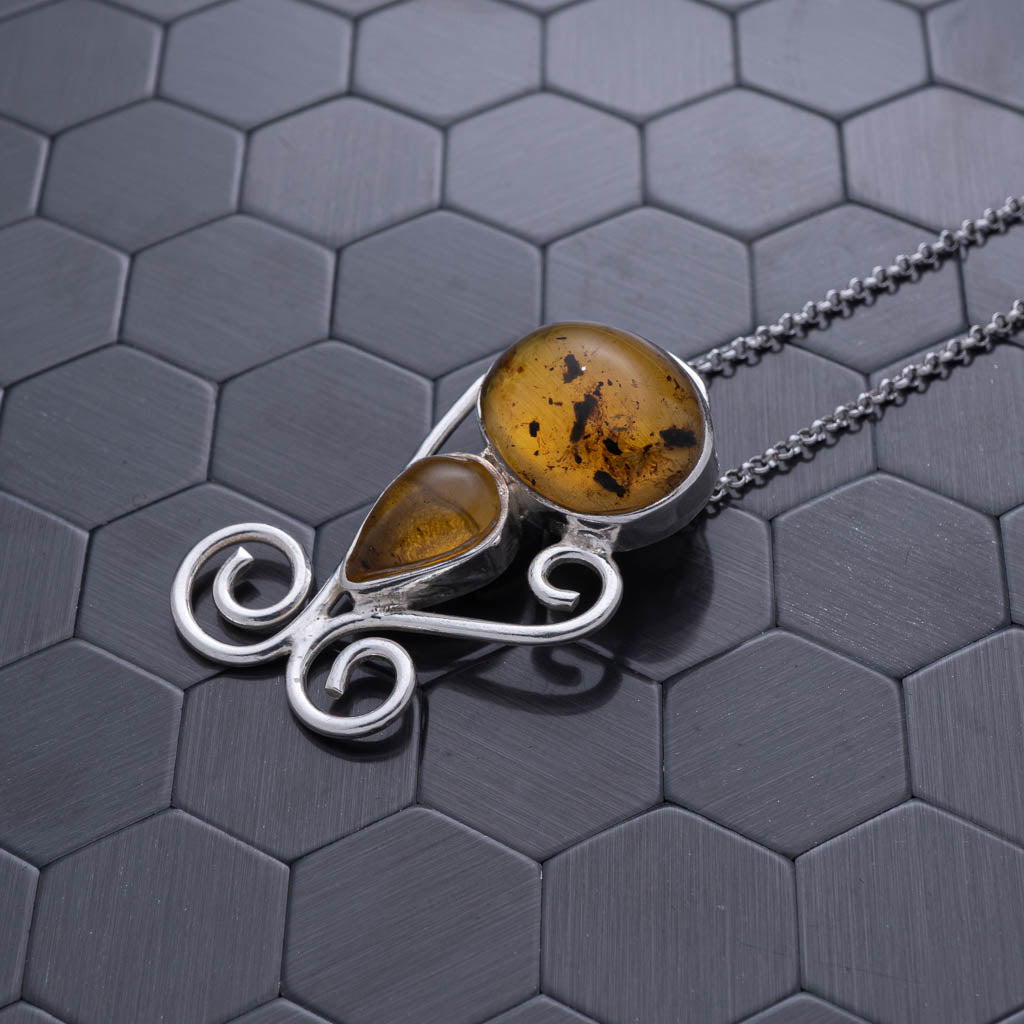
Plant matter is another frequent inclusion. This may include bits of leaves, bark, pollen, needles, or fine organic debris. Sometimes these appear as delicate threads or dark flecks. In other pieces, they create landscapes within the amber, almost like a preserved forest scene.

Fracture-like patterns can also occur. These are not always signs of damage. Some are internal stress features formed during fossilization or later geological movement. They may look like feathers, swirls, or subtle lightning lines inside the stone.

Cloudiness is especially misunderstood. In amber, a cloudy zone can be completely natural and may result from dense fields of microscopic bubbles or fine particulate material. In some cases, that softness of appearance adds depth and warmth, especially in artisan jewelry where the stone is appreciated for its natural character rather than machine-perfect transparency.

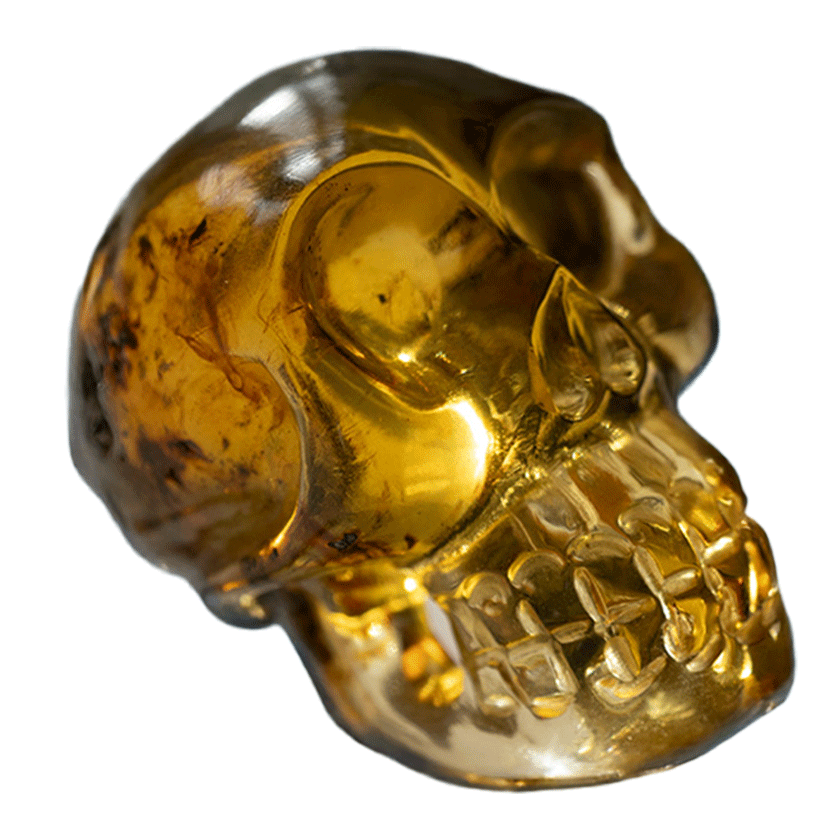
Then there are the rare and famous inclusions - insects and larger fossilized organisms. These are the pieces many people imagine first, but they are far less common than popular culture suggests. A mosquito, ant, or wing fragment trapped in amber is remarkable, yet most authentic amber on the market contains subtler natural evidence of origin rather than museum-style specimens.

What inclusions can tell you about authenticity

This is where natural amber inclusions explained becomes especially useful for buyers. Internal features can offer clues, but they should never be judged in isolation. Real amber often shows irregularity. The inclusions tend to look organic, random, and naturally distributed rather than staged.

For example, in imitation amber made from plastic or resin, bubbles may appear too round, too evenly spaced, or too visually convenient. A piece with an insect centered perfectly like a display object can deserve extra scrutiny, especially if the insect looks modern, undisturbed, or suspiciously pristine. Natural entrapment usually looks accidental, not curated.

That said, authenticity is not as simple as spotting one feature. Some genuine amber is quite clear and may have few visible inclusions. Some treated or reconstructed amber can still contain natural material. And some imitations are made cleverly enough to mislead the untrained eye. This is why provenance, seller credibility, and gemstone expertise matter just as much as visual inspection.

For buyers investing in fine amber jewelry or collectible stones, certification and trusted sourcing provide reassurance that visual clues alone cannot.

Do inclusions make amber more valuable?

Sometimes yes, sometimes no. Value depends on the kind of inclusion, the amber’s clarity, color, rarity, origin, size, and the quality of the finished piece.

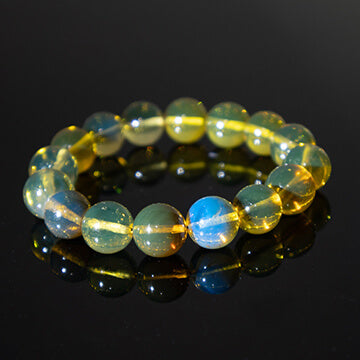
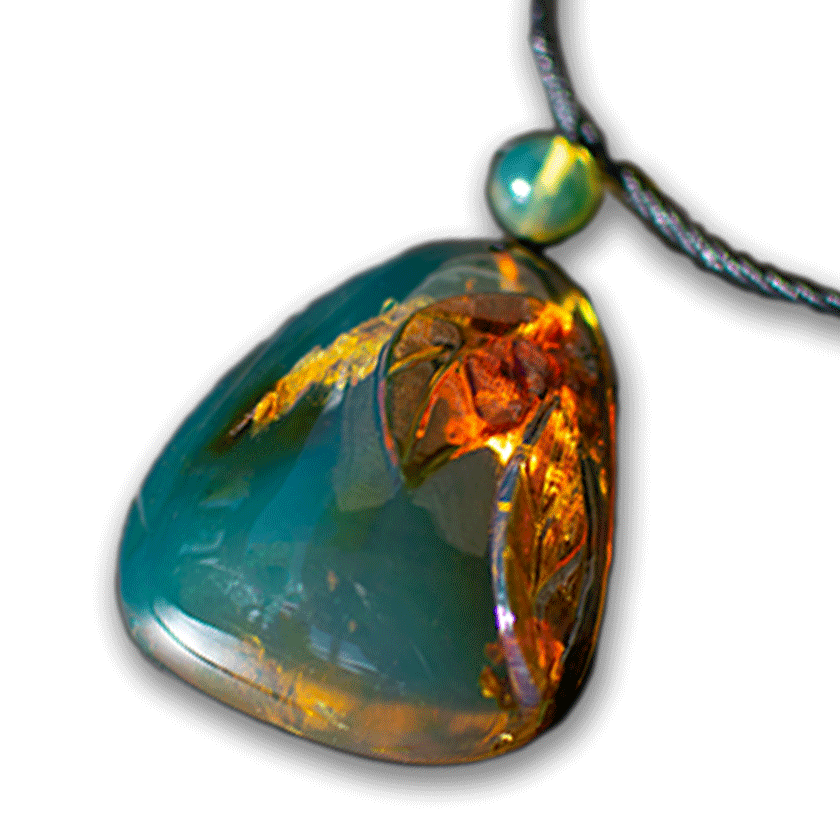
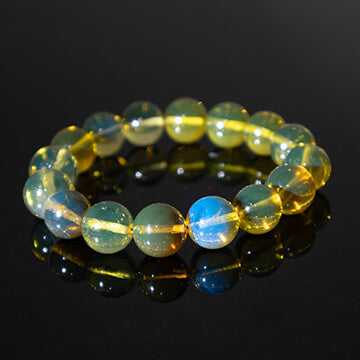
A rare biological inclusion, especially one that is well preserved and clearly visible, can increase collector value substantially. Dominican amber is particularly admired in the collector world because of its age, clarity, and occasional fossil inclusions. Blue amber from the Dominican Republic adds another layer of rarity, with its distinctive optical character and strong appeal among serious gemstone enthusiasts.

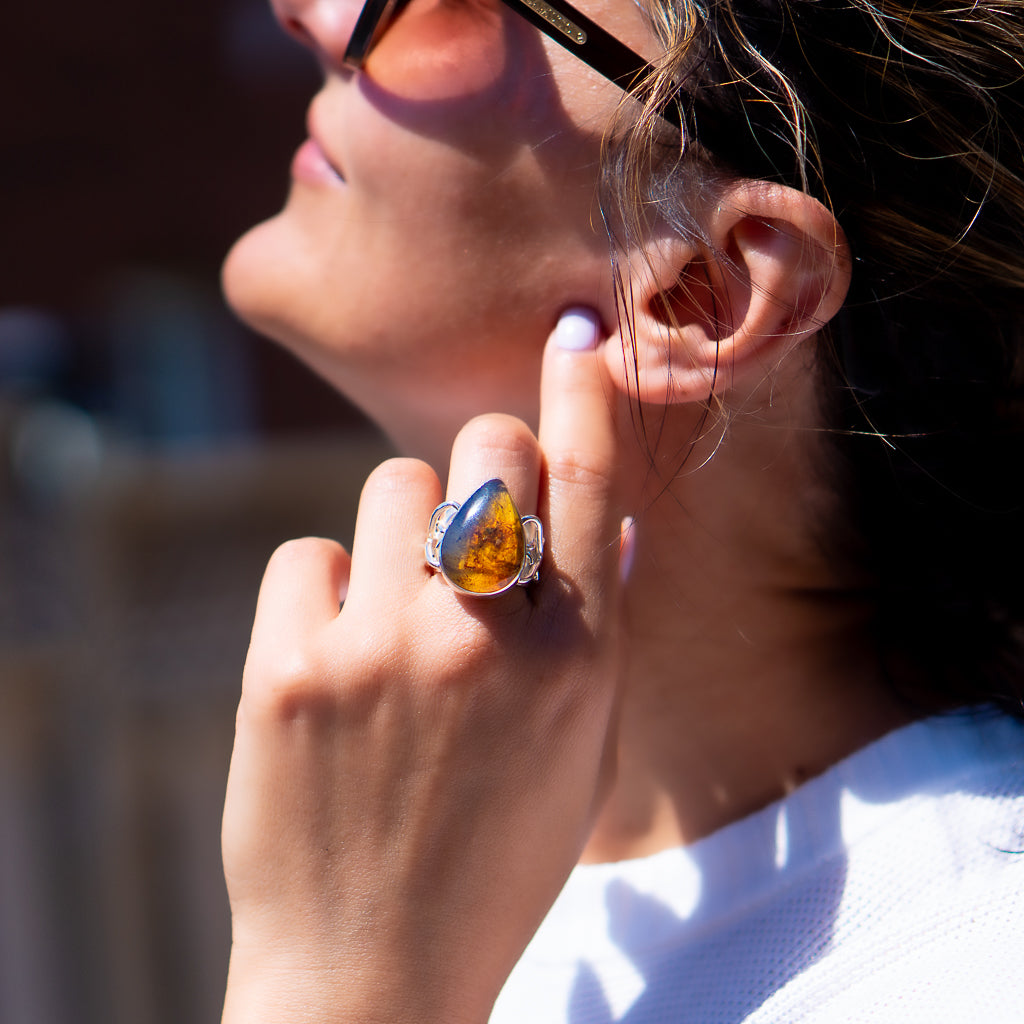
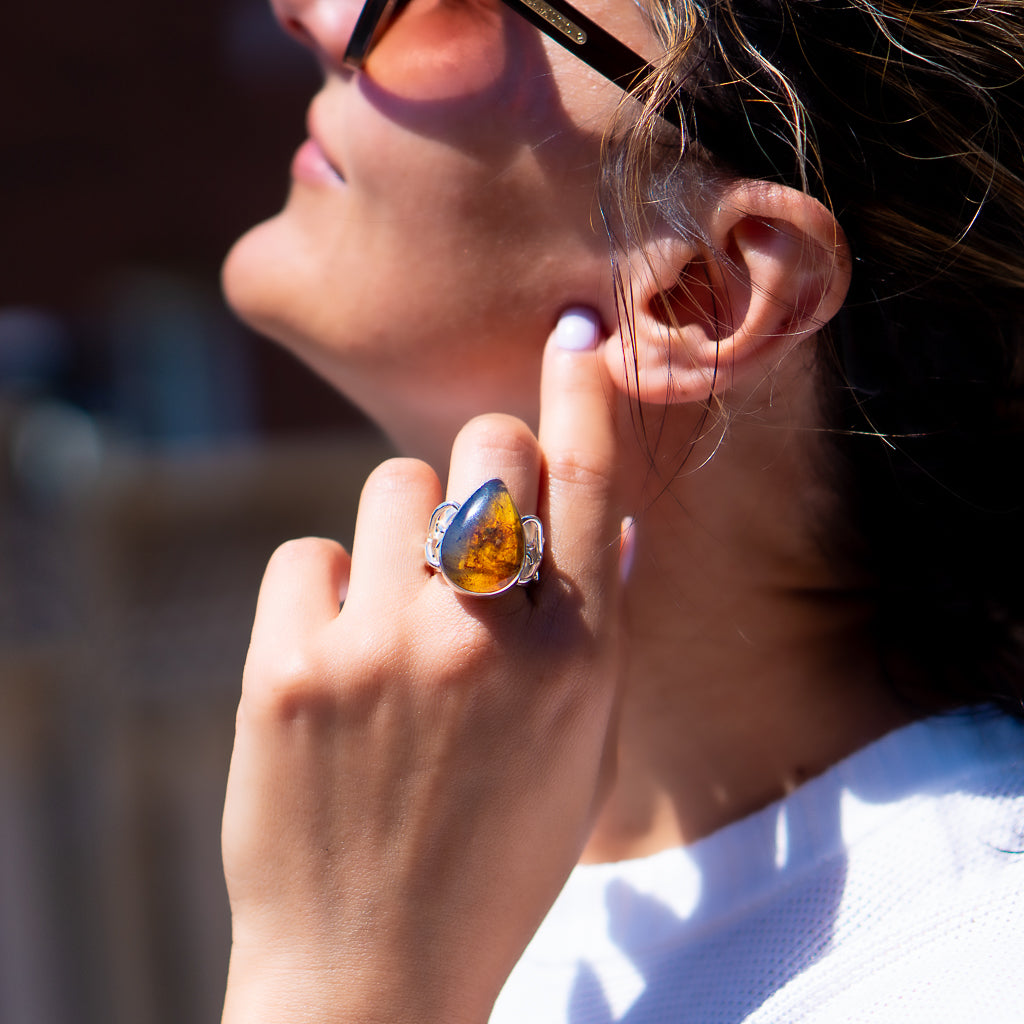
But dramatic inclusions are not the only path to beauty or value. A luminous amber cabochon with soft natural veils, glowing internal texture, or delicate plant traces can be more desirable in jewelry than a piece with a distracting dark inclusion. For wearable luxury, balance matters. The finest piece is not always the one with the most material inside it - it is the one where color, light, shape, and natural character work together.

This is also why two amber pieces of similar size can feel entirely different in worth. One may be prized for transparency and rich glow. Another may be loved for its internal story. It depends on whether the piece is being chosen as jewelry, as a gift, or as a collector specimen.

Inclusions, treatments, and common confusion

A refined amber buyer should know that not all amber on the market is untreated. Some amber is heat treated to improve clarity or intensify color. Some is pressed or reconstructed from smaller amber fragments. These materials may still contain real amber, but they are not equivalent to a naturally preserved solid piece.

Treatment can alter the appearance of inclusions. Heat may expand internal features or create a sun-spangled effect. Pressed amber can display flow patterns that differ from those of a naturally formed single piece. None of this automatically makes a piece unattractive, but it does affect rarity and should be disclosed honestly.

Natural surface marks can also be confused with internal inclusions. Amber is relatively soft compared with many gemstones, so polish lines, surface wear, or tiny scratches are different from what lies inside the material. An experienced eye separates surface condition from true internal structure.

How to appreciate inclusions when choosing amber jewelry

The best way to view amber is in natural light and from several angles. Rotate the stone slowly. Real amber often reveals depth gradually. What looks like a simple honey-colored gem at first glance may show suspended botanical traces, tiny bubbles, or shifting internal layers once light moves across it.

Think about your purpose. If you want an elegant pendant or ring for daily wear, you may prefer a stone with balanced clarity and a few refined natural features rather than a busy interior. If you are buying as a collector or gifting someone who loves one-of-a-kind gems, a more distinctive inclusion pattern may be exactly what makes the piece memorable.

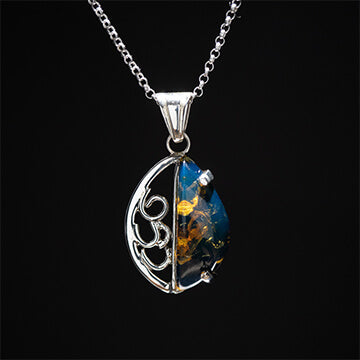
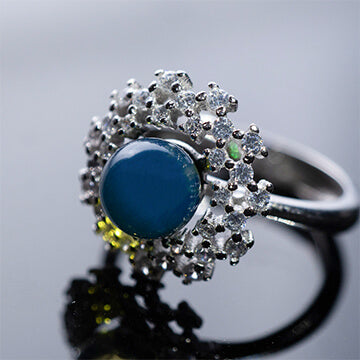
Color also changes the way inclusions read. In lighter golden amber, inclusions can appear more visible and bright. In cognac tones, they may feel richer and more dramatic. In blue amber, the interaction between body color, fluorescence, and internal structure can be especially captivating, giving the stone an almost atmospheric quality.

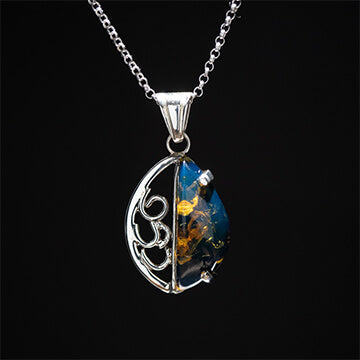
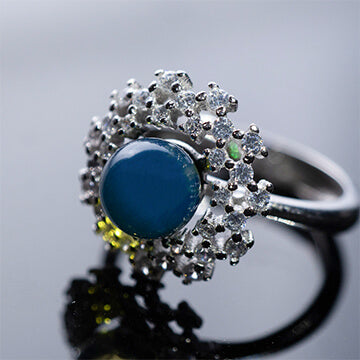
This is where craftsmanship matters. A well-cut cabochon or carefully designed pendant should frame the amber’s natural features, not fight them. At Larimar Creations, that marriage of authenticity and artisan presentation is part of what makes rare Caribbean stones feel both collectible and deeply wearable.

Why natural imperfection is part of amber’s beauty

Modern shoppers are often trained to equate perfection with value. Amber asks for a more thoughtful eye. Its beauty is not sterile. It is alive with evidence of origin - ancient resin flow, trapped air, fragments of prehistoric plant life, and organic textures no lab can truly duplicate.

That does not mean every inclusion is desirable in every context. Some can reduce transparency too much, interrupt a design, or weaken visual harmony. But the right natural inclusion gives amber its soul. It confirms that this gem was formed by nature, shaped by time, and preserved as a small window into a vanished world.

When you understand what you are seeing inside amber, shopping becomes more meaningful. You stop looking only for a clean stone and start looking for a genuine one. And often, the piece that stays with you is the one with a little mystery held inside the light.


Let's Stay In Touch