
Larimar
Blue Amber
Green Amber
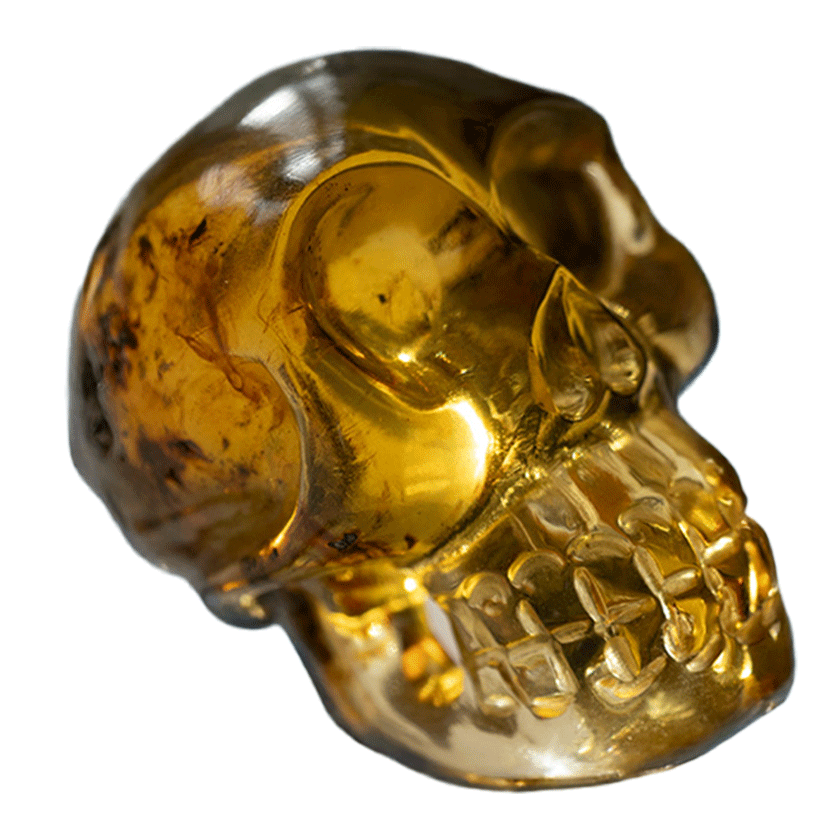
Amber Carvings
More

by Admin November 17, 2026 5 min read

A golden piece of resin can look ancient at first glance, especially when it holds a leaf, tiny insect, or a soft veil of bubbles. Yet appearance alone cannot tell its story. When comparing amber fossils versus copal resin, the defining difference is time: true amber has undergone millions of years of natural transformation, while copal is younger tree resin still progressing toward that state.

For jewelry lovers and collectors, this distinction reaches beyond terminology. It affects durability, rarity, care, provenance, and the lasting significance of a piece chosen to be worn or treasured. Dominican amber, celebrated for its clear honey tones and rare blue fluorescence, offers a remarkable connection to the Caribbean's prehistoric landscape.

Amber Fossils Versus Copal Resin: The Essential Difference

Amber is fossilized tree resin. It began as sticky resin released by ancient trees, then became buried and changed under the pressure, heat, and chemistry of the earth over immense spans of time. The material becomes more stable, more polymerized, and far less soluble than fresh resin.

Copal is also natural tree resin, but it is comparatively young. Depending on its source, it may be hundreds, thousands, or even hundreds of thousands of years old. It has not completed the geological transformation that gives amber its distinctive permanence. Think of copal as resin in an earlier chapter of a much longer natural history.

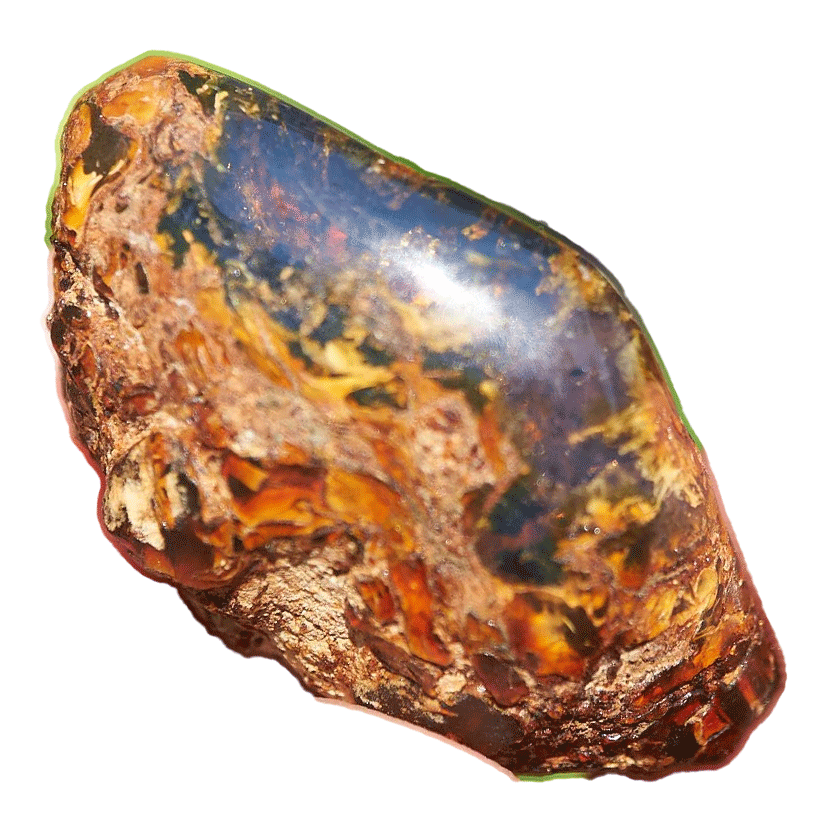
The word fossil can create confusion here. Amber itself is fossilized resin, but the phrase amber fossil often refers specifically to an inclusion preserved within amber, such as an insect, flower fragment, feather, or spider. These inclusions are not merely decorative details. They are tiny records of vanished ecosystems, held in extraordinary three-dimensional detail.

Why age changes the material

Time changes more than a specimen's story. True amber tends to be harder and more stable than copal, although amber remains an organic gemstone and requires considerate wear. Copal is usually softer and can be more vulnerable to heat, pressure, alcohol, perfume, and household chemicals. It may also develop surface damage more easily.

That does not mean copal is without beauty or cultural value. It can be luminous, fragrant, and visually captivating. Some collectors appreciate it precisely because it preserves a more recent botanical world. Still, it should be accurately represented. A buyer selecting a meaningful heirloom pendant or a collector-quality cabochon deserves to know whether the material is ancient amber or younger copal.

How Dominican Amber Earns Its Rarity

Dominican amber is prized for its clarity, warm color range, and exceptional inclusions. It formed from resin produced by an extinct tropical tree related to modern legumes, in a region that was once rich with lush forests. Most Dominican material is generally dated to roughly 15 to 30 million years old, placing it firmly in the category of genuine amber.

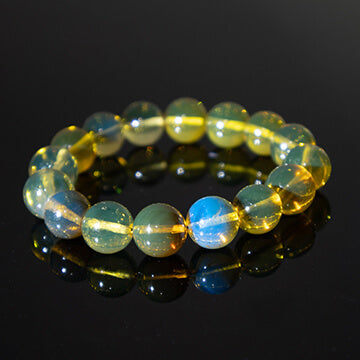
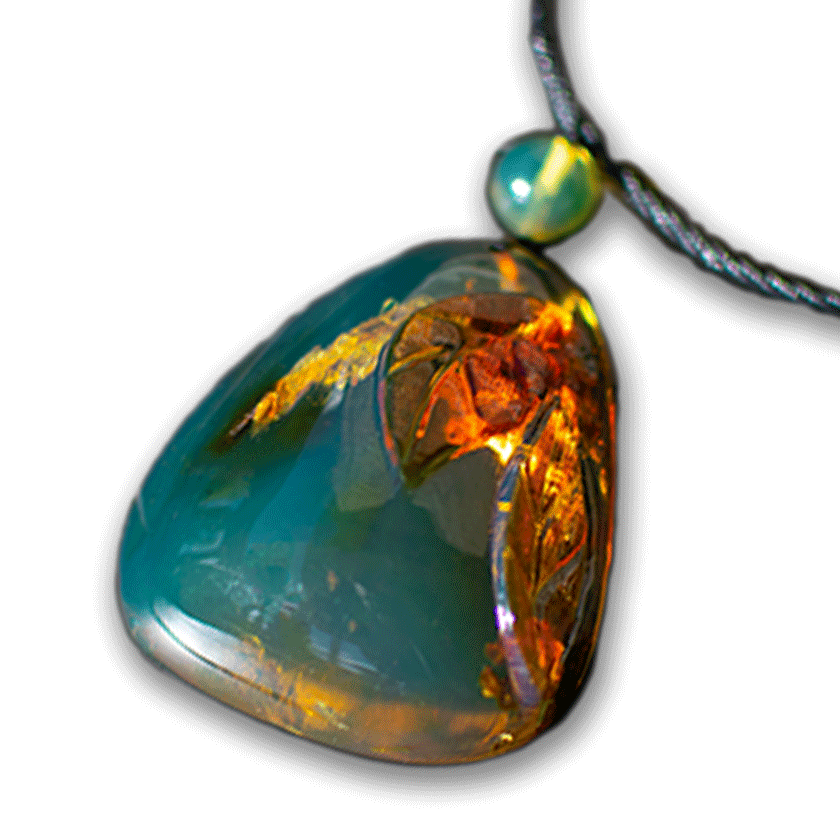
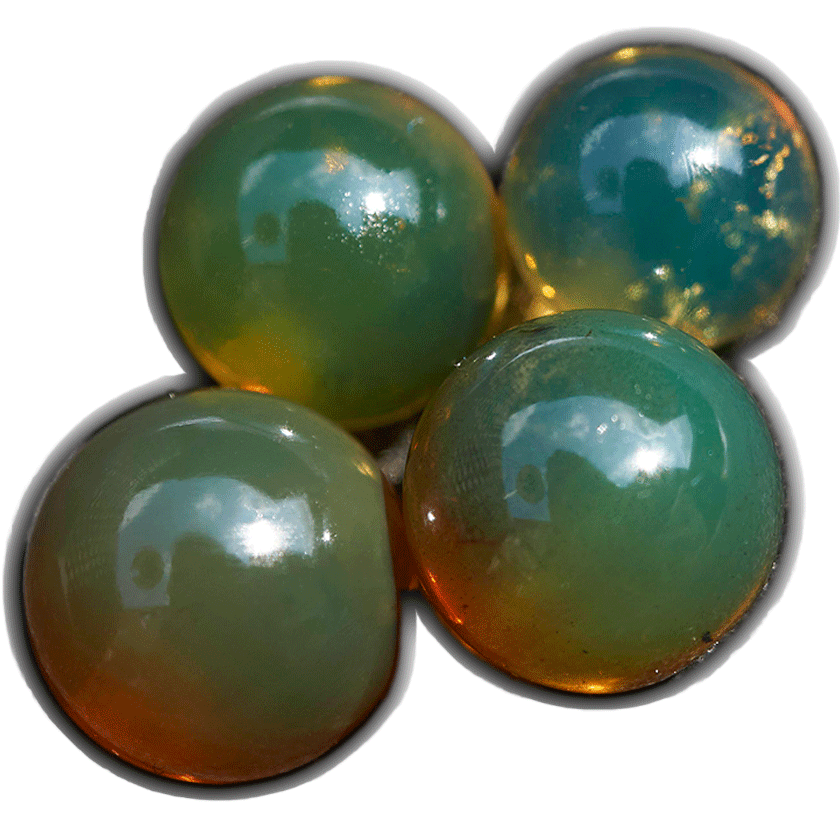
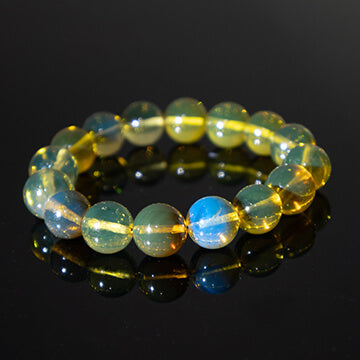
The Dominican Republic is particularly associated with blue amber, one of the world's most coveted amber varieties. In ordinary light, blue amber may appear honey-gold, cognac, or softly greenish. Under sunlight or ultraviolet light, it can reveal an electric blue fluorescence that seems to glow from within. This effect comes from fluorescent compounds in the amber, not from dye or a surface coating.

Blue amber's beauty should be viewed with discernment. The strength and shade of fluorescence can vary with the specimen, its cut, the lighting, and the background behind it. A dramatic blue response is desirable, but a piece should also be appreciated for its clarity, natural color, craftsmanship, and documented origin. The finest jewelry is never defined by one feature alone.

Can You Tell Amber From Copal at Home?

A careful visual inspection may raise useful questions, but it rarely provides final proof. Copal can look remarkably like amber, particularly after it has been polished into beads, carvings, or smooth cabochons. Color is not a reliable guide. Both materials can appear yellow, orange, red, brown, or nearly clear, and each may contain bubbles or organic inclusions.

A few commonly discussed tests can also mislead or damage a valuable piece. Ultraviolet light may cause both amber and copal to fluoresce, although often in different ways. A saltwater float test is unreliable for mounted jewelry and offers little certainty with treated, altered, or unusually dense pieces. The heated needle test, which is sometimes used to assess resin, can permanently mark a surface and should never be used on a finished gemstone or collectible inclusion.

Professional examination is the wiser path when authenticity matters. Specialists may evaluate the material through magnification, infrared spectroscopy, fluorescence behavior, and other non-destructive methods. Just as important is provenance: credible information about where the amber was sourced, how it was represented, and whether it has been modified.

For a buyer, the most practical safeguard is to purchase from a seller that clearly identifies the material and origin. Ask direct questions about whether a piece is Dominican amber, whether its color is natural, and whether an inclusion is authentic and untreated. Certification and transparent sourcing add confidence where appearance cannot.

Inclusions: Beauty, Science, and Value

An insect inside amber can be mesmerizing, but an inclusion does not automatically make every specimen more valuable. Value depends on preservation, rarity, visibility, size, scientific interest, clarity of the surrounding amber, and the quality of the cut or presentation. A well-preserved small insect seen clearly through transparent amber may be more desirable than a larger inclusion obscured by fractures or cloudiness.

Copal can contain insects too, sometimes in striking condition. The difference is scientific context. An insect in ancient Dominican amber may represent a species from a long-lost ecosystem. An insect in copal is far more recent. Both can be beautiful, but they are not equivalent in geological age or collector significance.

There is also an ethical consideration. Inclusions are natural archives. A rare or especially significant specimen may be better preserved as a collector piece rather than drilled, set, or heavily altered for jewelry. For wearable art, a stable cabochon, bead, or carefully selected inclusion can bring the warmth of the Caribbean into a design while respecting the character of the material.

Choosing the Right Material for Jewelry or Collecting

Your best choice depends on what you value. If you are drawn to ancient origin, lasting collectibility, and the romance of prehistoric life, authentic amber is the natural choice. It is especially fitting for meaningful gifts, heirloom jewelry, polished cabochons, and collector specimens where origin carries real weight.

Copal may suit someone seeking a more accessible natural resin or a recent inclusion specimen, provided it is clearly labeled and priced accordingly. Its softness means it is often better reserved for protected pendants, display pieces, or occasional wear rather than rings and bracelets exposed to daily impact.

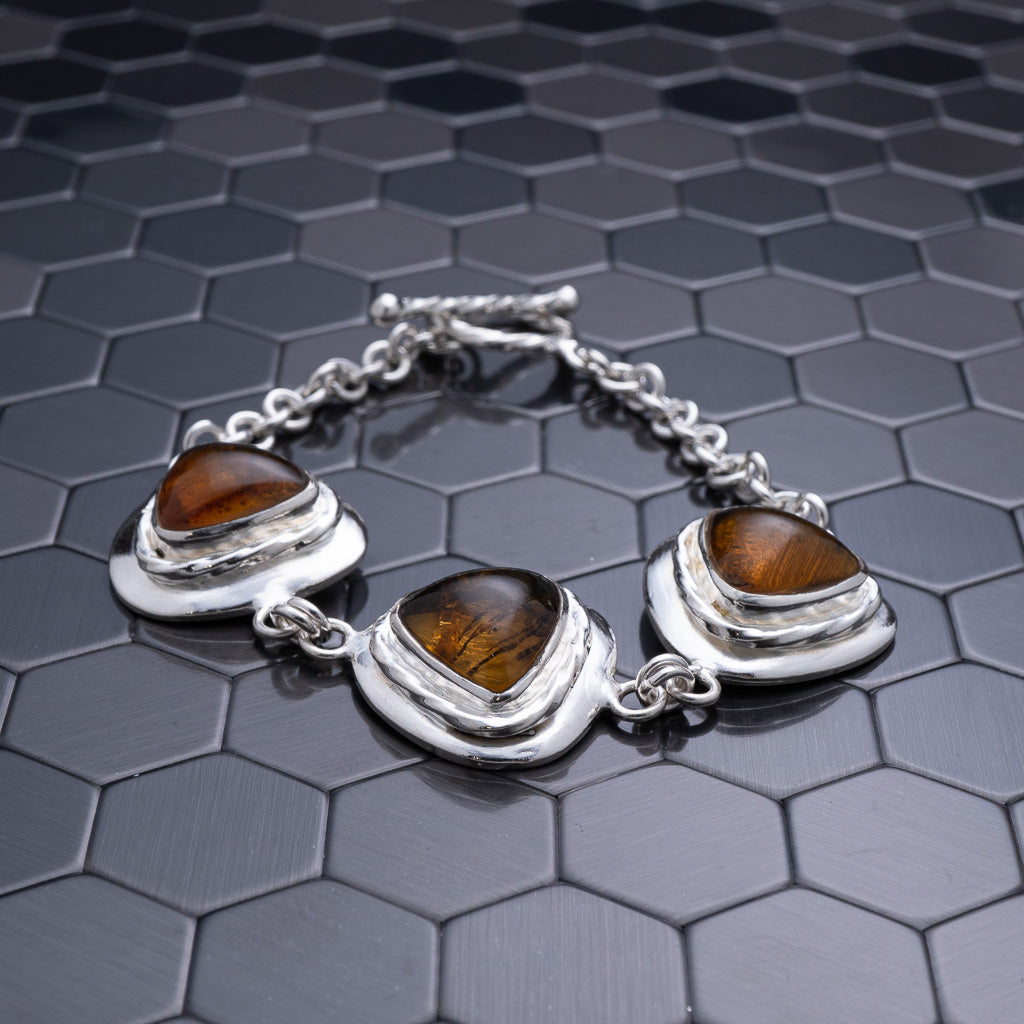
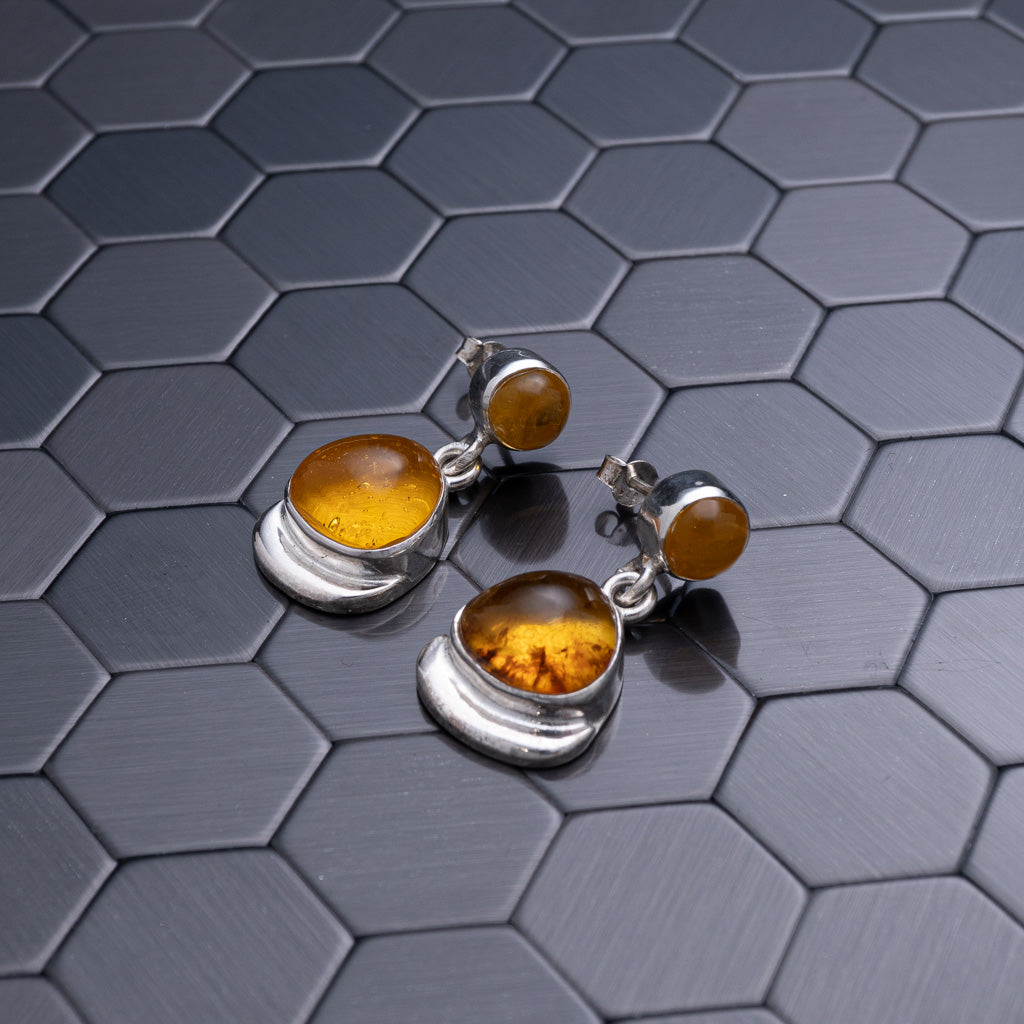
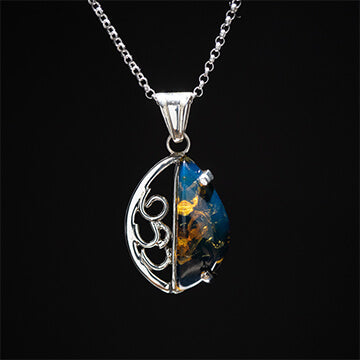
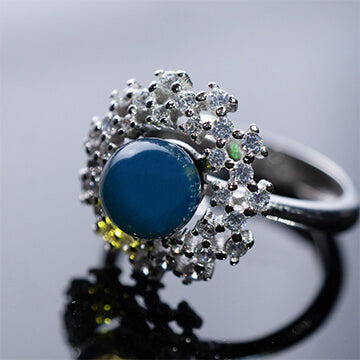
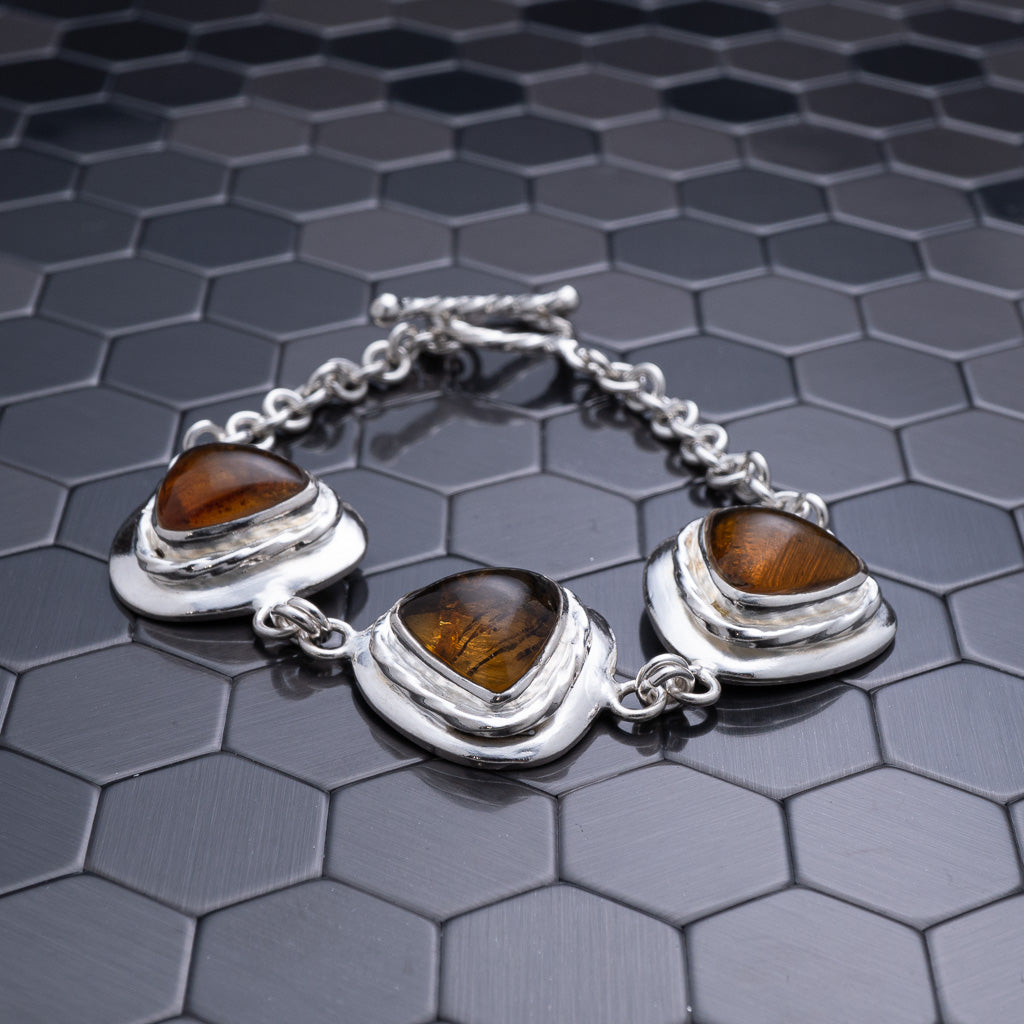
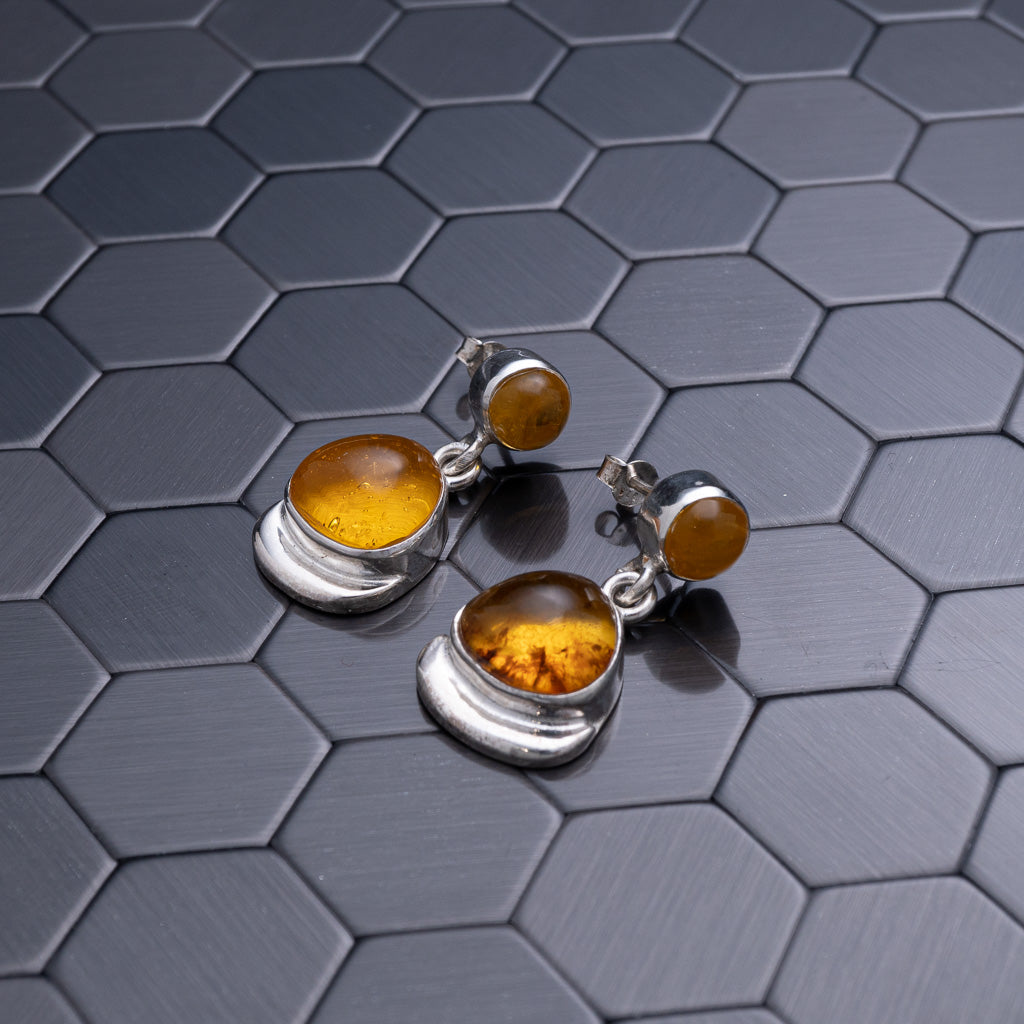
For amber jewelry, choose a setting that respects the gemstone's organic nature. Bezels and protective designs can be especially reassuring for pieces worn often. Remove amber before swimming, bathing, exercising, or applying fragrance. Clean it gently with a soft dry or lightly damp cloth, then store it separately from harder gemstones and metals that could scratch its surface.

At Larimar Creations, the appeal of Dominican amber lies in this union of natural history and wearable craftsmanship. A thoughtfully chosen amber piece is not simply an accessory. It is a fragment of Caribbean light, formed long before the first shoreline was mapped.

When you hold amber to the light, look beyond the color and sparkle. Ask where it came from, how it was identified, and what story it has carried through time. That curiosity is what turns a beautiful gemstone into a personal treasure.

Amber Inclusion Examples Worth Looking For

Amber Inclusion Examples Worth Looking For

6 min read

See amber inclusion examples, from ancient insects to leaves and air bubbles, and learn how Dominican blue amber reveals natural history in warm light.
Read More
How to Choose a Pendant and Earrings Set for Your Style - Larimar Creations

How to Choose a Pendant and Earrings Set for Your Style

8 min read

Learn how to match a pendant with earrings by style, stone, metal, and face shape so your set looks intentional, balanced, and easy to wear every day.
Read More
Beads Pendant Necklace Guide: Styles and Sizing Tips - Larimar Creations

Beads Pendant Necklace Guide: Styles and Sizing Tips

9 min read

Learn how to choose a beads pendant necklace, from bead styles and pendant shapes to chain length, sizing, layering, and everyday care.
Read More