
Larimar
Blue Amber
Green Amber
Amber Carvings
More

by Admin September 22, 2026 6 min read

A tiny wing suspended in honey-gold resin can feel like a private message from prehistoric Caribbean forests. Yet amber inclusions versus fossils is not a contest between two separate materials. It is a question of language, preservation, rarity, and what, exactly, you are holding in your hand. For jewelry lovers and collectors, knowing the distinction brings deeper appreciation to an amber pendant, cabochon, carving, or one-of-a-kind specimen.

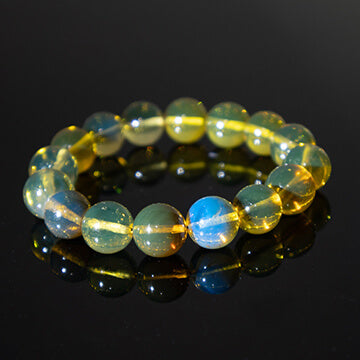
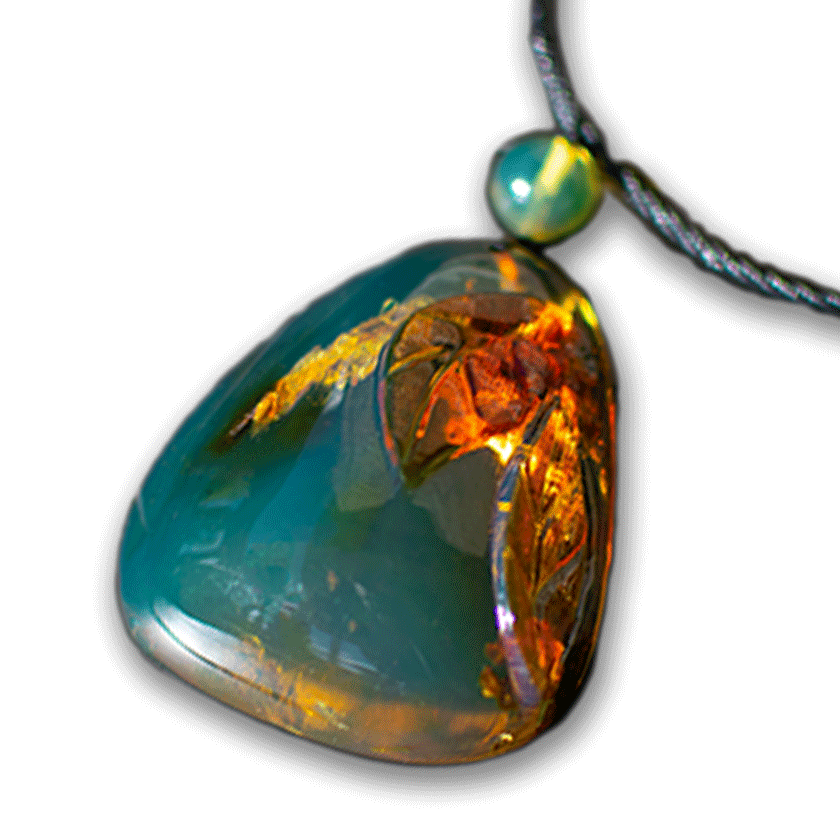
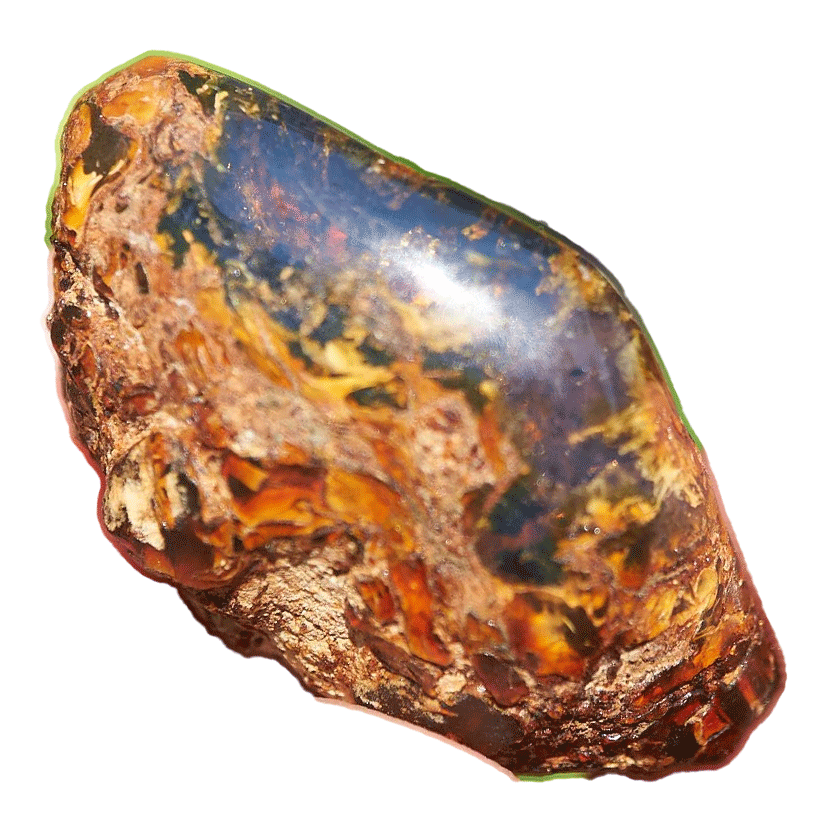
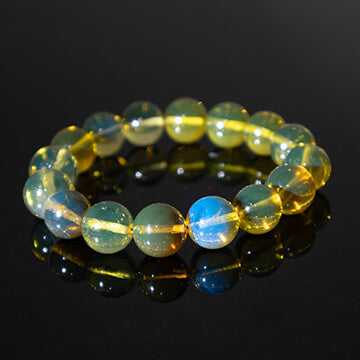
Dominican amber is especially captivating because its exceptional clarity can make preserved details appear remarkably close: a delicate insect leg, a leaf fragment, a bubble, or a veil of ancient plant matter. Blue amber adds another layer of wonder. In natural light, it may appear warm golden or cognac-toned; under ultraviolet light or certain lighting conditions, it can reveal its sought-after blue fluorescence. Whether chosen for a collection or worn as a piece of the Caribbean, amber deserves to be understood on its own terms.

Amber Inclusions Versus Fossils: The Simple Difference

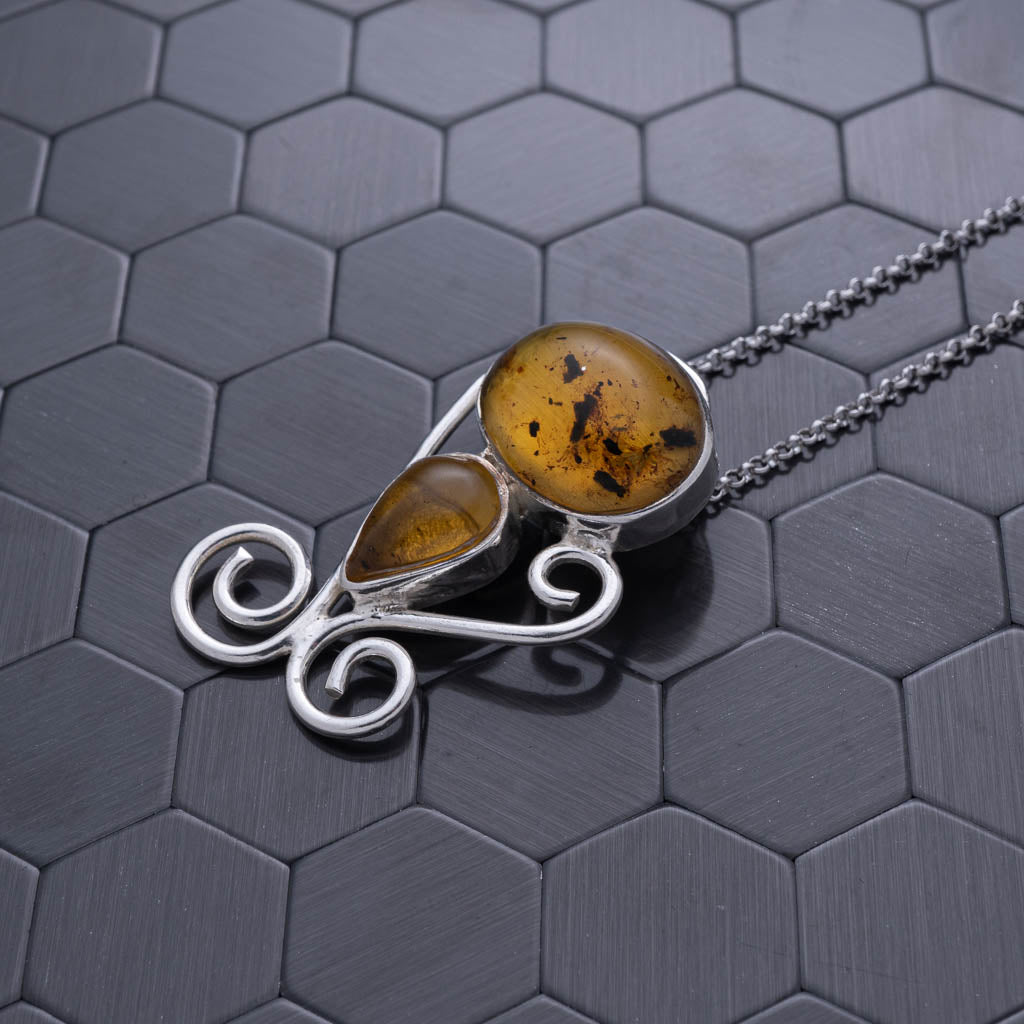
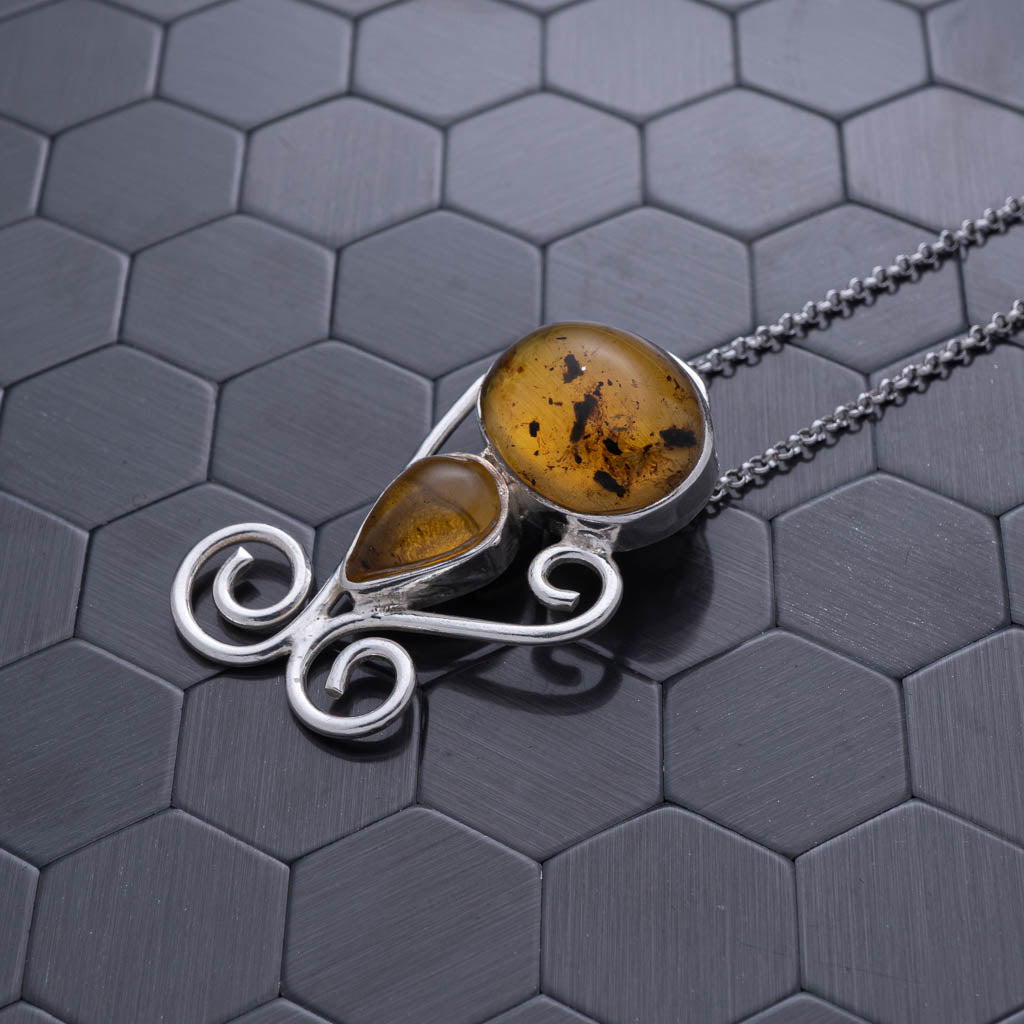
An inclusion is anything enclosed within amber. It may be biological, such as an insect, spider, feather, pollen grain, leaf piece, or fungal structure. It may also be non-biological: air bubbles, water droplets, mineral particles, cracks, or flowing layers of resin.

A fossil is a broader scientific term for evidence or remains of ancient life preserved through geologic time. Amber itself is fossilized tree resin, not tree sap. Fresh resin was released by ancient trees, then buried and altered over millions of years until it became the stable organic gemstone known as amber.

The overlap is where the terms become confusing. An insect trapped in amber is both an inclusion and a fossilized biological inclusion. But a bubble inside amber is an inclusion, not a fossil. A fossil shell in sedimentary rock is a fossil, but it is not an amber inclusion. The terms describe different things: one describes something enclosed, and the other describes ancient biological preservation.

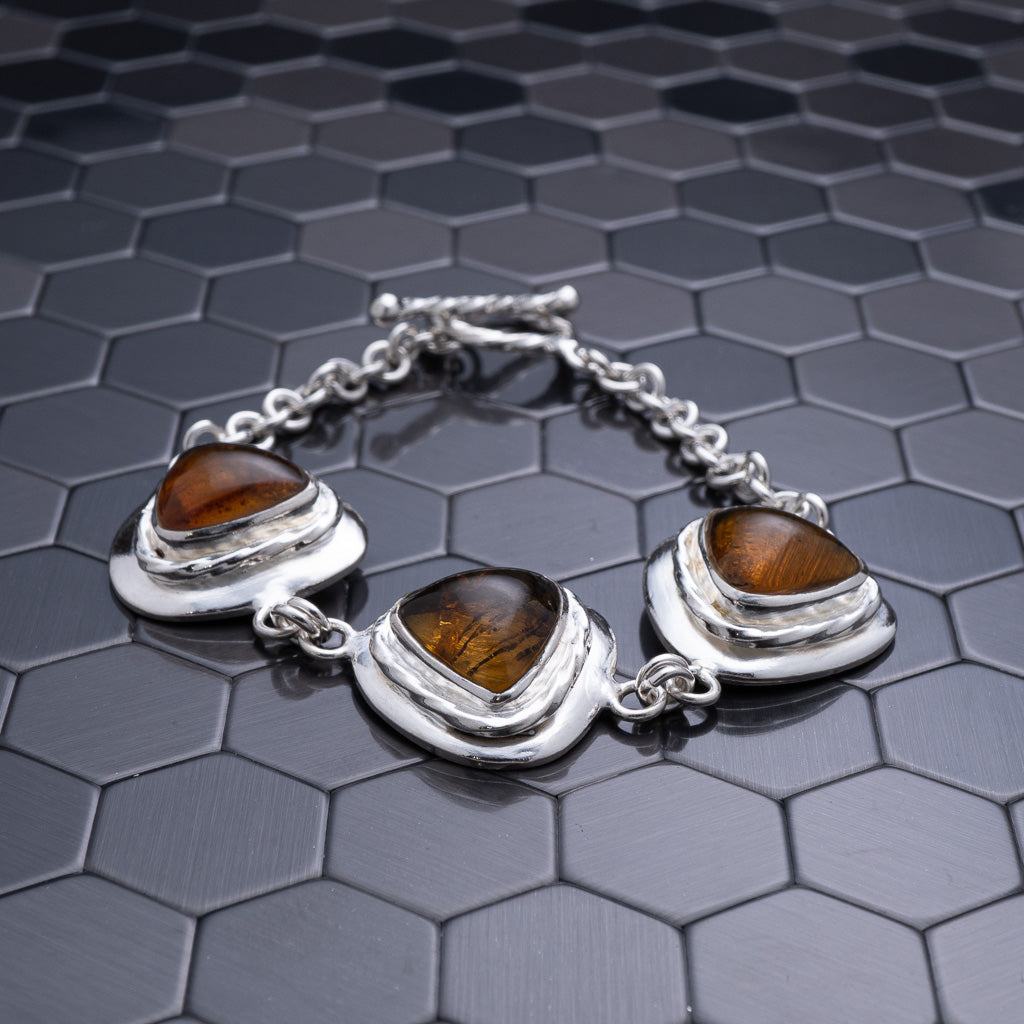
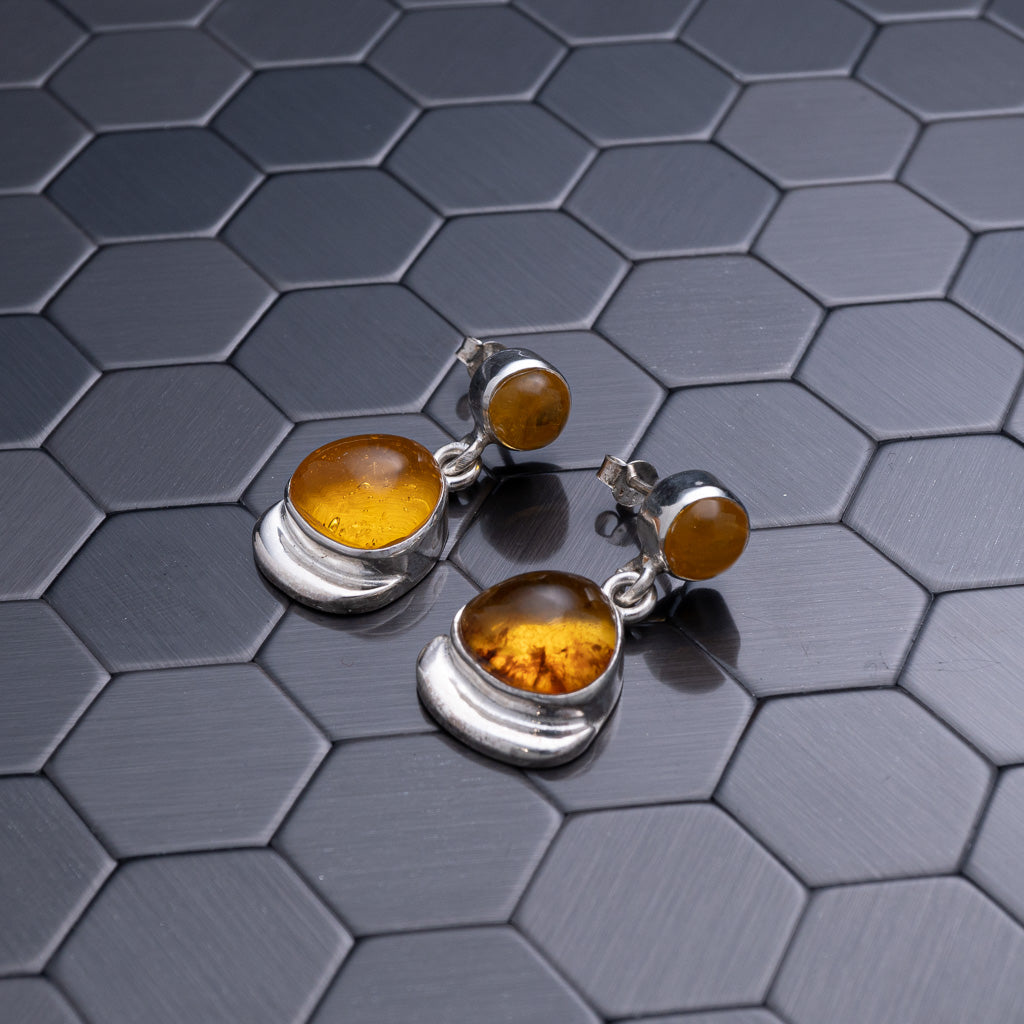
For a seller or collector, calling every visible feature a “fossil” is imprecise. A transparent Dominican amber cabochon with a floating bubble can be beautiful and entirely natural, but its bubble does not make it a fossil specimen. Precision protects the value of genuine material and helps buyers choose with confidence.

What Makes Amber Such an Extraordinary Preserver?

When sticky resin flowed from prehistoric trees, it could entomb small organisms and fragments from the surrounding forest almost instantly. Resin was not a perfect time capsule, and it did not preserve every creature it touched. Larger animals could escape, decay, or become only partially enclosed. But small, lightweight material had a better chance of being captured before the resin hardened.

Over vast periods, layers of resin could accumulate and become buried. Heat, pressure, and chemical change transformed that resin into amber. The process sealed some inclusions away from oxygen, moisture, scavengers, and physical disturbance that would normally destroy delicate structures.

That is why an amber inclusion can preserve qualities rarely retained in stone fossils. Fine hairs, wing veins, pollen grains, and soft-bodied organisms can be visible in astonishing detail. It is not that amber makes an inclusion more “real” than another fossil type. Rather, it preserves a different kind of evidence - often intimate, three-dimensional glimpses of an ancient ecosystem.

Dominican Amber and the Blue Amber Difference

Dominican amber is prized for its clarity, color range, and inclusions. It formed in the Caribbean from resin associated with an extinct legume tree, commonly identified as Hymenaea protera. Its age is generally understood to be millions of years old, although exact dates can vary by deposit and scientific method.

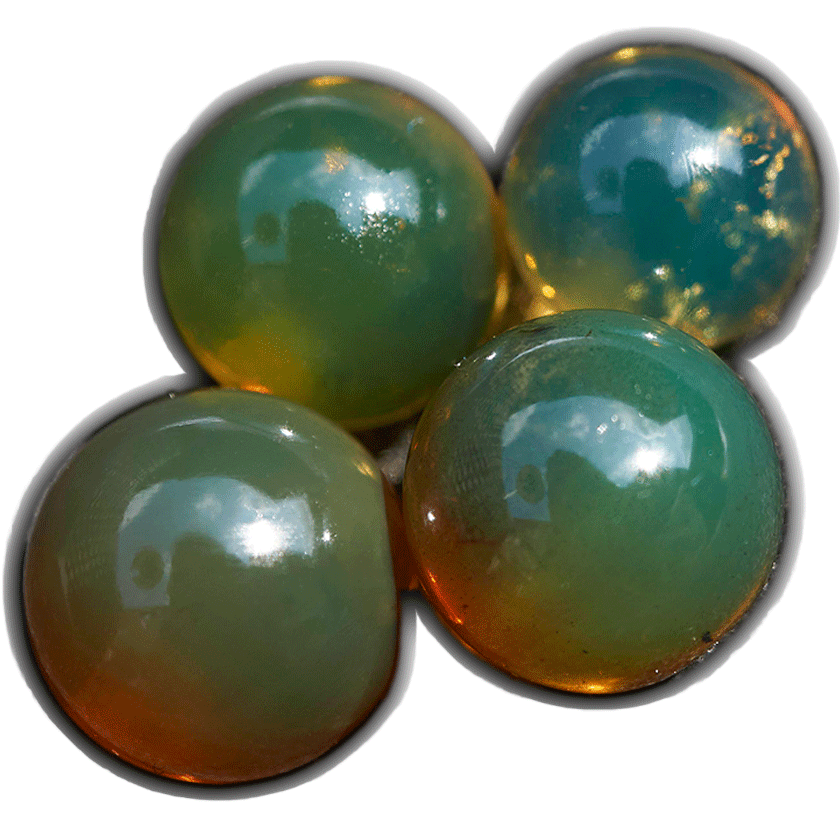
Many people first picture amber as warm yellow or cognac, but Dominican material can occur in shades of golden honey, orange, red, greenish tones, and rare blue. Dominican Blue Amber is particularly celebrated for its vivid fluorescent response. This phenomenon is linked to naturally occurring compounds within the amber and is not the same as an inclusion.

A blue glow does not automatically indicate a fossil-bearing piece, just as a fossil inclusion does not guarantee blue fluorescence. A clear blue amber pendant may have no visible inclusions at all and still be exceptionally rare and desirable. Conversely, an inclusion-rich amber specimen may be golden rather than blue. Each quality has its own appeal: fluorescence offers visual drama, while inclusions offer a direct connection to prehistoric life.

Not Every Inclusion Raises Value

An inclusion can increase collector interest, but value depends on much more than the fact that something is trapped inside. The species or type of inclusion, its visibility, completeness, position, rarity, and condition all matter. So do the amber’s clarity, color, size, origin, craftsmanship, and whether the material has been altered.

A clearly visible spider, flower fragment, or well-preserved insect can command strong interest because it gives the piece a distinct identity. A dark, obscured speck may still be authentic, but it may not have the same collector appeal. In jewelry, an inclusion also needs to be placed thoughtfully. A beautiful inclusion near the center of a polished pendant can become a focal point; one positioned at an edge may be more vulnerable during cutting or setting.

Natural fractures and flow lines deserve a balanced view. They are part of amber’s organic story, but extensive cracking can affect durability and appearance. A skilled artisan chooses material and orientation carefully, preserving character while creating a piece made to be admired and worn.

How to Evaluate an Amber Inclusion Piece

Start with transparency in every sense of the word. Ask whether the item is natural amber, where it was sourced, and whether its origin or authenticity is supported by reliable documentation. Genuine Dominican amber is a rare natural treasure, and its desirability has made it a frequent target for imitations made from plastic, glass, copal, or composite materials.

Copal is younger tree resin that has not completed the full fossilization process. It can look similar to amber and may contain insects, but it is not the same material. Plastic imitations can be even more misleading when they contain a deliberately inserted insect. A perfectly centered, unusually pristine modern-looking insect can be a reason to ask more questions, particularly when the price seems too good to be true.

Visual assessment helps, but it is not enough on its own. Genuine amber commonly feels warm and light for its size, and it may show natural internal flow patterns, bubbles, or organic variation. Still, no single home test should be treated as proof. Scratching, heating, or using chemicals can damage a piece, especially a polished cabochon or finished jewelry. The wiser choice is to buy from a specialist who clearly represents material, origin, and treatment.

At Larimar Creations, the appeal of certified Dominican gemstones lies not only in their beauty but in the confidence that comes with authentic Caribbean sourcing. An amber piece should never need a dramatic story invented around it. Its natural color, inner light, and preserved history are already extraordinary.

Choosing Between Inclusion Amber and Clear Amber

The right choice depends on what you want your piece to express. If you are drawn to natural history and singular details, an inclusion specimen or inclusion-focused pendant can feel intensely personal. No two are alike. You may find yourself returning to the same tiny leaf, wing, or ancient air bubble and noticing something new each time.

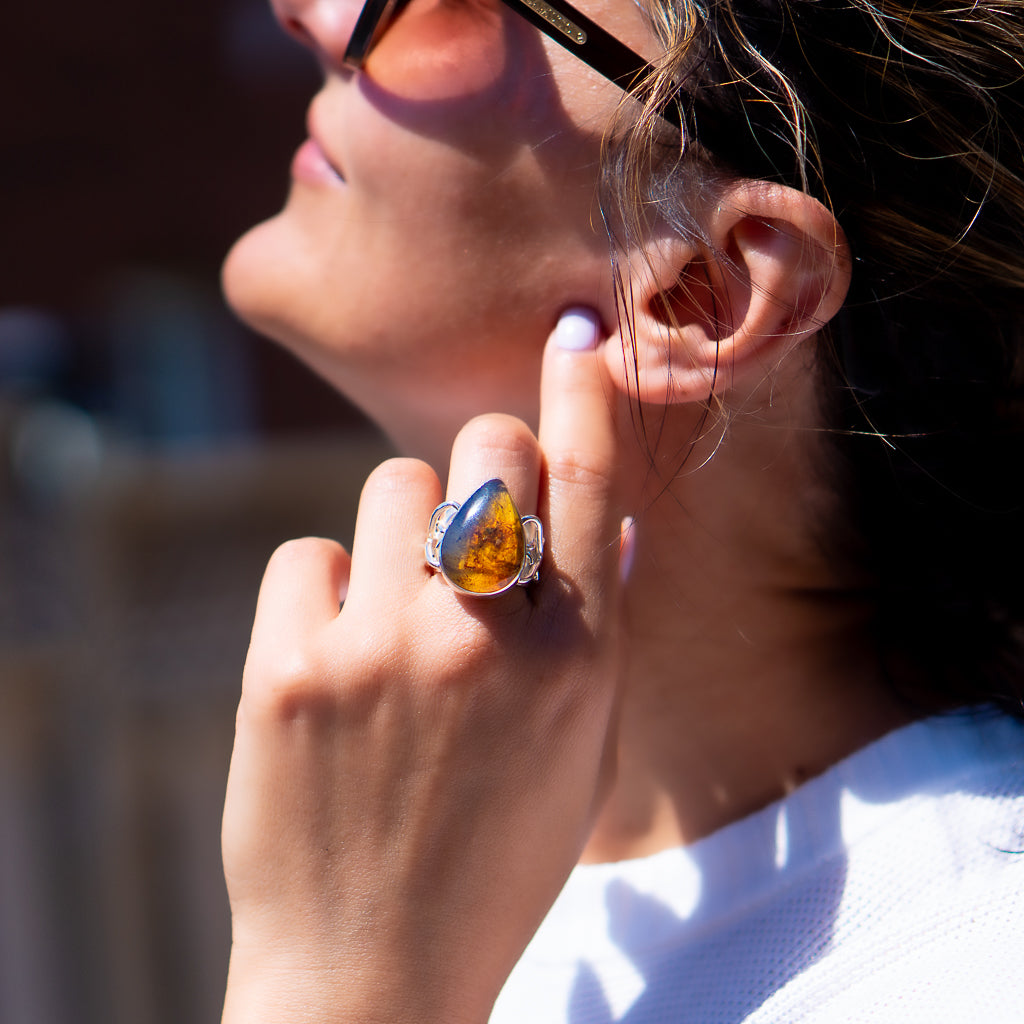
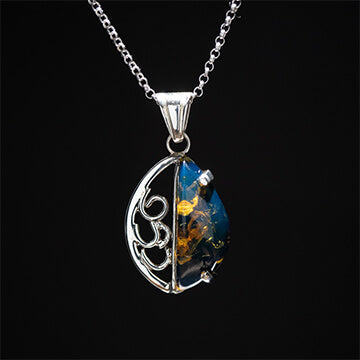
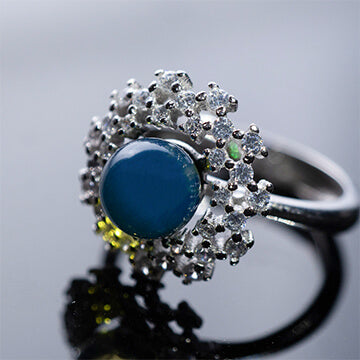
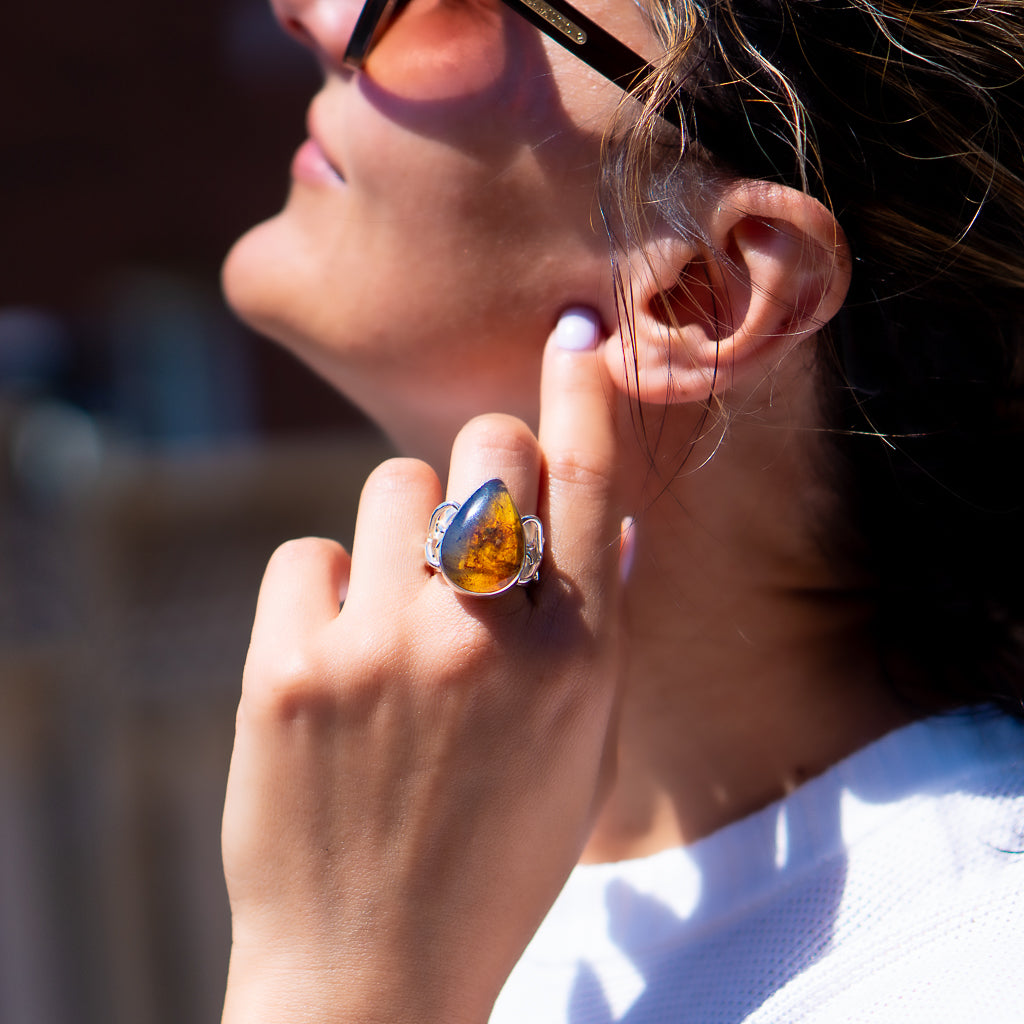
If you prefer luminous color and a cleaner, more refined look, clear Dominican amber or Blue Amber may be the better match. A finely polished, inclusion-free cabochon allows fluorescence, depth, and shifting color to take center stage. It can pair beautifully with sterling silver or gold and remain easy to wear from day to evening.

There is also room for both. A collection can include a clear blue amber jewel for its electric glow and an inclusion-bearing specimen for its scientific romance. Neither is inherently superior. Rarity is not a single scale, and beauty is often found in the exact feature another person might overlook.

Care for Amber Like the Organic Gem It Is

Amber is softer than many gemstones, so it benefits from gentle care. Store it separately from harder jewelry, avoid perfume and hairspray directly on the stone, and remove it before swimming, exercising, or using household cleaners. Clean it with a soft cloth and lukewarm water if needed, then dry it carefully.

Avoid prolonged heat and direct sun, especially for pieces displayed near windows. Amber’s warmth is part of its charm, but it should not be treated like a hard mineral such as sapphire or diamond. With considerate wear, an authentic amber jewel can carry its Caribbean glow for generations.

The next time you notice a shadow, bubble, insect, or leaf inside amber, pause before calling it a fossil. Look closer. You may be seeing an inclusion, a fragment of ancient life, or simply a natural trace of resin’s journey through time. That distinction makes the piece more meaningful, not less - and turns wearing amber into a quiet way to wear a piece of the Caribbean.

Necklace Blue Pendant: Ultimate Guide to Blue Gemstones

Necklace Blue Pendant: Ultimate Guide to Blue Gemstones

11 min read

Discover everything about necklace blue pendant styles, from rare Larimar to sapphires. Expert guide to choosing, styling, and caring for blue pendant jewelry.
Read More
Amber Resin Versus Copal: How to Tell the Difference

Amber Resin Versus Copal: How to Tell the Difference

6 min read

Learn how amber resin versus copal differs in age, beauty, value, and care, so you can choose authentic Caribbean amber jewelry with confidence every day.
Read More
Necklace Making: Expert Guide to Crafting Jewelry

Necklace Making: Expert Guide to Crafting Jewelry

8 min read

Master necklace making with expert techniques, materials, and design tips. Learn stringing, wirework, and finishing for stunning handcrafted jewelry.
Read More