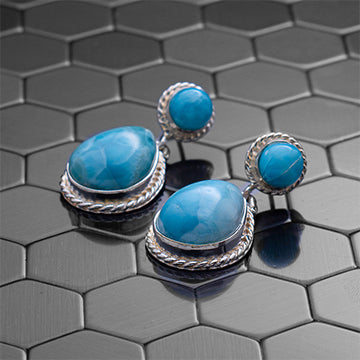

Larimar
Blue Amber
Green Amber
Amber Carvings
More

by Admin November 21, 2026 6 min read

A Larimar pendant can carry the quiet blue of Caribbean water; Dominican blue amber can hold a flash of ancient light. When a piece is made by hand, its details matter just as much as its gemstone. Artisan jewelry hallmarks are among those details: small impressions that may identify the metal, the maker, or the place where a piece entered the market. They are valuable clues, but they are not a shortcut to judging every aspect of authenticity.

For buyers who choose jewelry for its rarity, origin, and craftsmanship, knowing how to read a hallmark brings confidence to the purchase. It also helps you ask better questions about the stone, the setting, and the story behind the piece.

What Are Artisan Jewelry Hallmarks?

A hallmark is a stamped, engraved, laser-marked, or otherwise applied symbol on jewelry. Traditionally, hallmarks were part of regulated systems designed to verify precious-metal content. Depending on the country and era, a complete set of marks may include a purity mark, an assay-office mark, a date letter, and a sponsor or maker’s mark.

In modern artisan jewelry, the word is often used more broadly. A small stamp inside a ring shank or on the back of a pendant may state “925,” “14K,” or “18K.” It may also include an artist’s initials, a studio logo, or a registered trademark. Some handmade pieces have no visible hallmark at all, particularly when the design is too delicate for a clean stamp or when local rules do not require one.

That distinction matters. A hallmark can support a jewelry description, but it should be read alongside construction quality, seller transparency, documentation, and, for exceptional gemstones, appropriate certification.

The Marks You Are Most Likely to See

Metal purity marks

Metal marks are the most familiar type. Sterling silver is commonly marked “925,” meaning the alloy contains 92.5 percent silver. Gold may be marked “10K,” “14K,” or “18K,” or with a three-digit fineness number such as “417,” “585,” or “750.” These numbers correspond to the precious-metal content by parts per thousand.

For example, 14K gold is generally 585, or 58.5 percent gold. The remaining metals create the alloy’s strength and influence its color. Yellow, white, and rose gold can all carry the same karat mark while looking very different on the hand.

A stamp such as “925” is useful, yet it is not automatically proof that every visible component is solid sterling silver. Clasps, pin backs, chain extenders, and plated accents can vary. A trustworthy product description should clarify the primary metal and disclose plating where relevant.

Maker’s marks

A maker’s mark identifies the jeweler, workshop, designer, or company responsible for the piece. It may be a name, initials within a shape, a symbol, or a compact logo. On artisan work, this mark can be especially meaningful because it connects the jewelry to a specific hand and creative tradition.

Still, a maker’s mark is only as useful as its traceability. A clear studio name or registered symbol can help establish provenance. Unfamiliar initials without supporting records are simply an interesting clue. They should not be used to assign a famous maker or high value without careful research.

Country and assay marks

Jewelry made under established hallmarking systems may carry marks for a country or assay office. These marks can be highly informative, particularly on vintage European pieces, because they may narrow down where and when the metal was tested.

Imported artisan jewelry often follows a different pattern. A Dominican-made silver pendant, for example, may have a straightforward “925” stamp and a workshop mark rather than a full sequence of formal assay symbols. This does not make it less beautiful or less genuinely handcrafted. It reflects the manufacturing context and the regulations that apply to that piece.

Where to Look Without Damaging the Piece

Hallmarks are often placed where they do not interrupt the design. Check the inside of a ring band, the reverse of a pendant bail, the back of earrings, the clasp of a bracelet, or the end tag of a chain. On a substantial gemstone setting, the mark may be tucked beneath the gallery or along the edge of the mounting.

Use bright indirect light and a jeweler’s loupe or phone camera with magnification. Do not scrape, polish aggressively, or use a metal-testing solution on a finished piece just to reveal a faint stamp. Those methods can damage patina, plating, or carefully oxidized details that are part of the artisan’s intended finish.

A faint or slightly uneven mark is not necessarily suspicious. Handmade jewelry can have curved surfaces, textured metal, and small-scale settings that make a crisp strike difficult. What matters more is whether the overall workmanship and the seller’s information align with the claim.

What Hallmarks Cannot Verify

This is the point many buyers miss: a hallmark speaks primarily to metal and maker identity, not to the gemstone itself. A sterling stamp does not confirm that a blue stone is natural Larimar, that amber is Dominican, or that an inclusion inside amber is genuine and ancient.

Natural Larimar has visual characteristics that experienced jewelers recognize, including its range of blue and white patterning. Dominican blue amber is prized for its rare blue fluorescence and distinctive origin, but origin and treatment claims require expertise beyond reading the metal stamp. The same is true for cabochon quality, stone treatments, and whether a gem has been assembled, reconstituted, dyed, or simulated.

For rare Caribbean gemstones, ask for clear material identification and origin information. Certification or documentation is particularly valuable for collector-grade stones, unusual carvings, significant amber specimens, and purchases where provenance influences value. Hallmarks are one part of the evidence, not the final answer.

Reading Hallmarks Alongside Craftsmanship

An artisan piece should be evaluated as a whole. Look at how the stone is secured, whether prongs are even and substantial, and whether the bezel sits cleanly around the cabochon. Examine solder joins, clasp function, polish, and the balance of the design. Fine handwork may show subtle individuality, but it should never compromise durability or comfort.

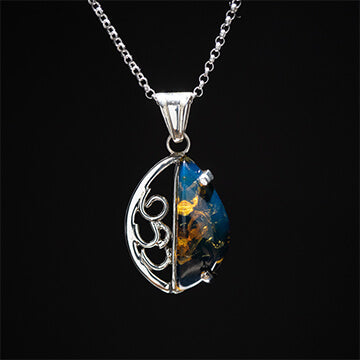
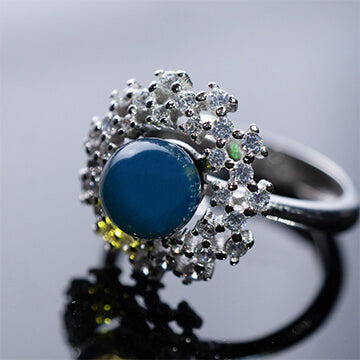
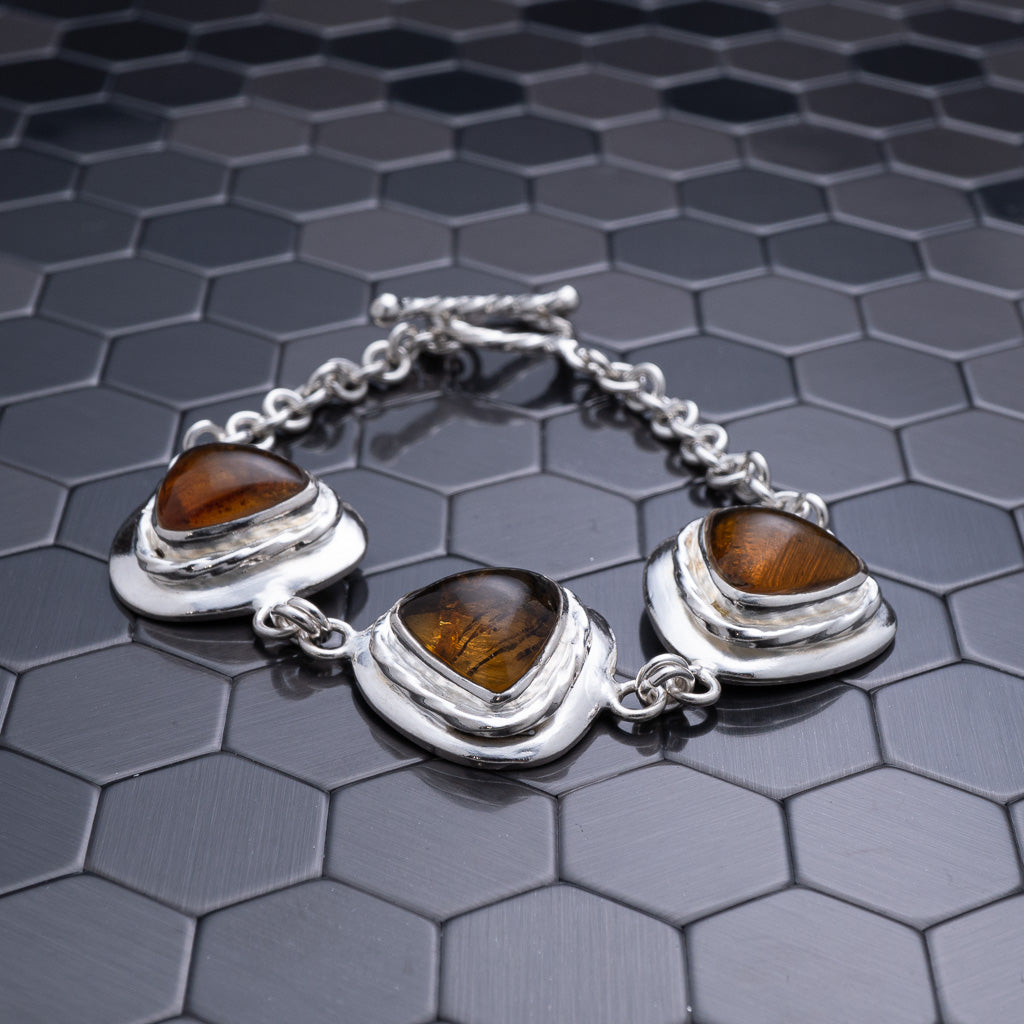
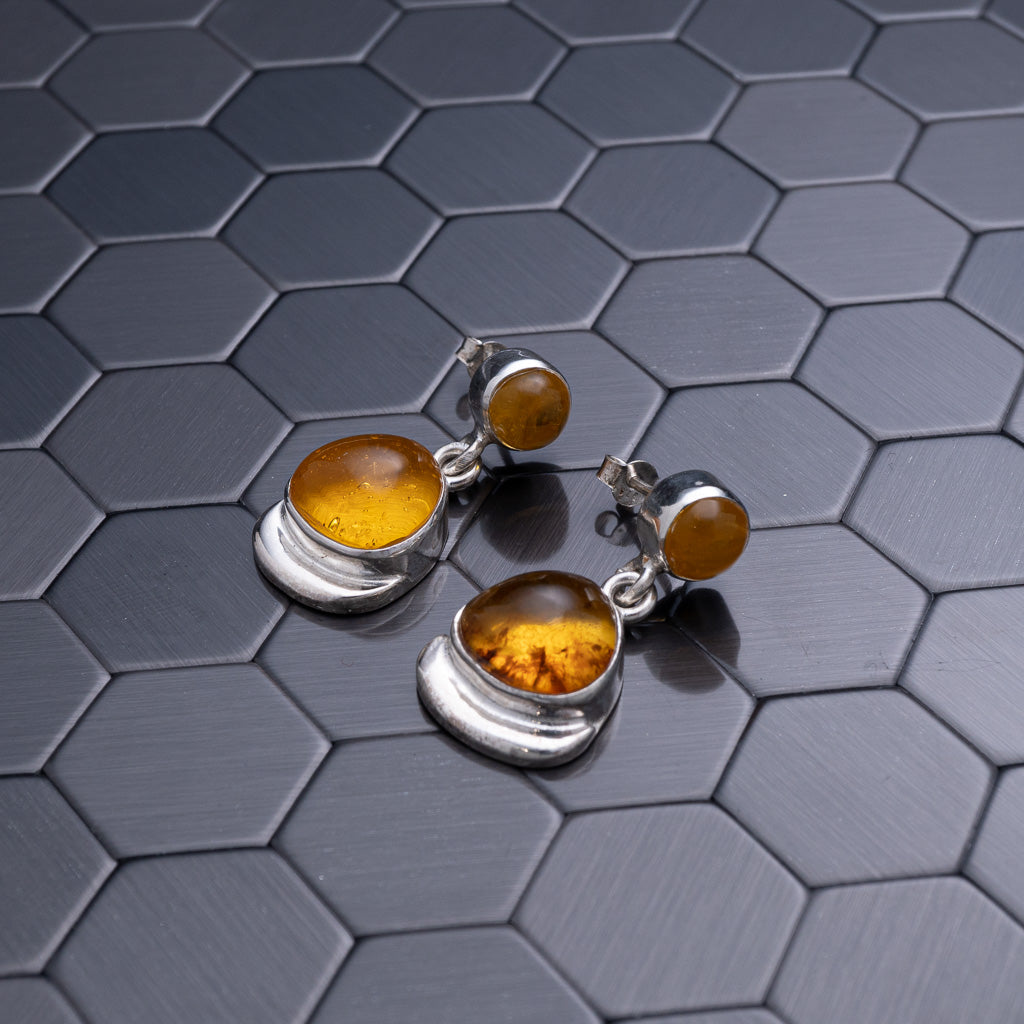
For a Larimar ring or amber pendant, the setting should honor the stone rather than overpower it. A well-made bezel protects softer or more vulnerable materials, while an open-backed design may allow more light through translucent amber. Neither approach is universally better. The right choice depends on the stone, the design, and how the jewelry will be worn.

There is also a practical trade-off between highly detailed work and easy maintenance. Intricate silver textures can be captivating, but they may require more careful cleaning than a smooth, polished surface. A collector may welcome that character; a daily-wear buyer may prefer a simpler construction.

Questions Worth Asking Before You Buy

When a hallmark is present, ask what it represents. Is it a metal purity mark, a registered maker’s mark, or both? Is the metal solid, plated, or vermeil? If the design includes multiple metals, which portions are precious metal?

Then move beyond the stamp. Ask whether the Larimar or amber is natural, where it was sourced, and whether it has received any disclosed treatment. For an artisan piece, it is also reasonable to ask where it was made and whether the setting was handcrafted or assembled from prefabricated components.

At Larimar Creations, the value of a Caribbean gemstone begins with that kind of transparency: the material’s identity, its origin, and the care taken to present it in a lasting wearable form. The most memorable jewelry does not rely on a tiny stamp alone. It earns trust through details that agree with one another.

When a Missing Mark Should Concern You

A missing hallmark is not always a red flag, especially on very small, vintage, handmade, or custom jewelry. Some artists intentionally avoid stamping delicate designs, while marks on older pieces can wear away with decades of polishing.

It becomes more concerning when a seller makes a specific precious-metal claim but cannot explain the absence of a mark, provide testing information, or offer a clear return policy. Be cautious when a piece is represented as high-karat gold or sterling silver yet priced far below the material and craftsmanship you would reasonably expect.

Trust your eyes, but also trust your questions. A well-made piece should invite them. When you choose a Larimar or Dominican amber jewel, let the hallmark be the beginning of its story, then look for the stone’s natural character and the maker’s care to carry the rest.

Artisan Jewelry Hallmarks: A Buyer’s Guide

Artisan Jewelry Hallmarks: A Buyer’s Guide

6 min read

Learn how artisan jewelry hallmarks reveal metal purity, maker identity, and what they can - and cannot - really tell you about rare gemstones.
Read More
Large Necklace Styles Worth Wearing Right Now - Larimar Creations

Large Necklace Styles Worth Wearing Right Now

8 min read

Discover eight large necklace styles for 2026, from layered long chains to bold gemstone pendants, with length guidance and honest verdicts on each.
Read More
Amber Stone Jewelry: A Buyer's Guide to Real Amber - Larimar Creations

Amber Stone Jewelry: A Buyer's Guide to Real Amber

8 min read

Learn how to spot genuine amber stone jewelry, understand color and value, and care for your pieces so they last for years.
Read More