
FREE WORLD WIDE SHIPPING
HANDCRAFTED IN THE DOMINICAN REPUBLIC
30% DISCOUNT APPLIED AT CHECKOUT
FREE WORLD WIDE SHIPPING
HANDCRAFTED IN THE DOMINICAN REPUBLIC
30% DISCOUNT APPLIED AT CHECKOUT
FREE WORLD WIDE SHIPPING
HANDCRAFTED IN THE DOMINICAN REPUBLIC
30% DISCOUNT APPLIED AT CHECKOUT
FREE WORLD WIDE SHIPPING
HANDCRAFTED IN THE DOMINICAN REPUBLIC
30% DISCOUNT APPLIED AT CHECKOUT
FREE WORLD WIDE SHIPPING
HANDCRAFTED IN THE DOMINICAN REPUBLIC
30% DISCOUNT APPLIED AT CHECKOUT
FREE WORLD WIDE SHIPPING
HANDCRAFTED IN THE DOMINICAN REPUBLIC
30% DISCOUNT APPLIED AT CHECKOUT
100% Handcrafted in DR.
by Admin July 30, 2026 6 min read
A Larimar pendant begins long before it catches the light at your neckline. True artisan larimar pendant craftsmanship starts with a rare Dominican gemstone, then asks the maker to read its color, pattern, shape, and natural character with care. No two pieces of Larimar are identical, which is precisely why a handcrafted pendant feels so personal: it is designed around one singular expression of the Caribbean.
The finest pendants do more than hold a beautiful blue stone. They honor the material, protect it for everyday wear, and create a balanced piece that feels as considered from the back as it does from the front. For those choosing a meaningful gift, a wearable statement, or a collector-quality gemstone jewel, understanding the work behind the pendant makes its beauty even more lasting.
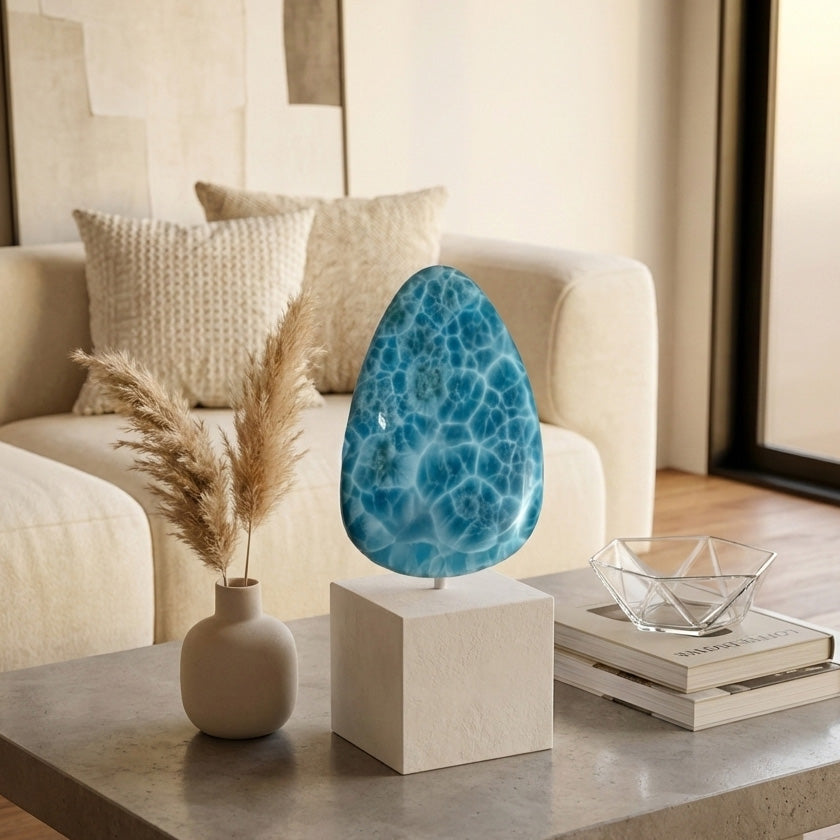
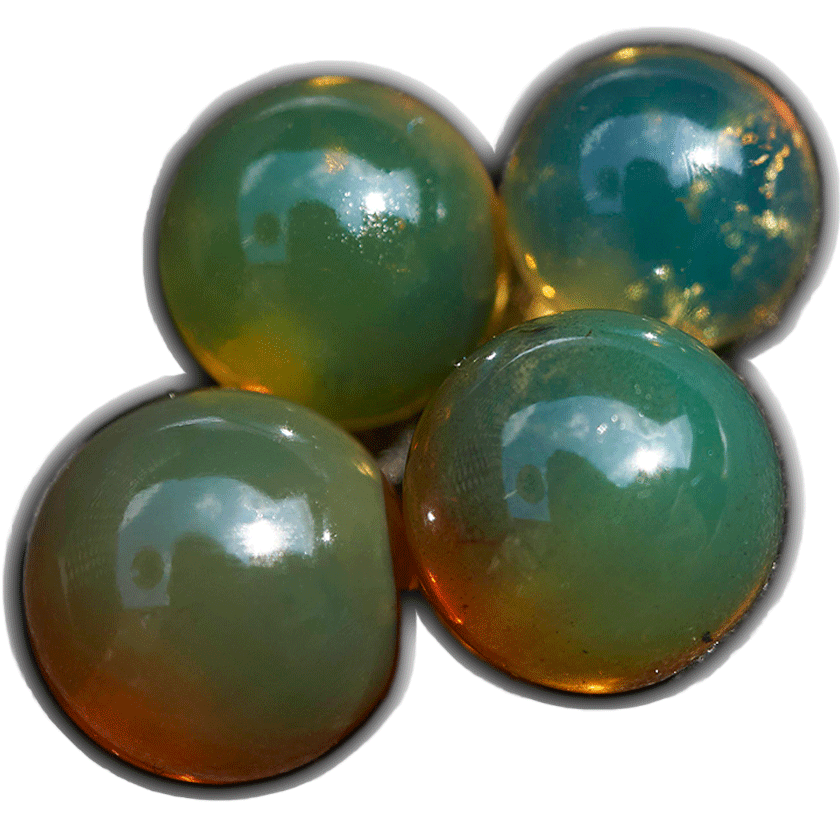
Larimar is found only in the Dominican Republic, and its limited origin is central to its appeal. The stone is a rare blue variety of pectolite, admired for colors that can recall shallow Caribbean water, seafoam, white surf, and a bright open sky. Some stones show a soft cloud-like pattern; others have deeper blue pools, webbing, or natural mineral inclusions.
An artisan cannot treat Larimar like a uniform factory material. A small cabochon with a vivid blue center may call for a simple, open setting that lets the color remain the focus. A larger freeform stone may inspire a more sculptural pendant, with the silverwork following its organic outline. The stone's individual shape often determines the finished design.
Color is important, but it is not the only measure of beauty. Strong blue Larimar is especially sought after, yet a paler stone with graceful white movement can be equally captivating in the right pendant. Natural pattern, polish, proportion, and the maker's ability to showcase the best face of the stone all matter. A thoughtful artisan works with what nature has created rather than forcing every gem into the same standard form.
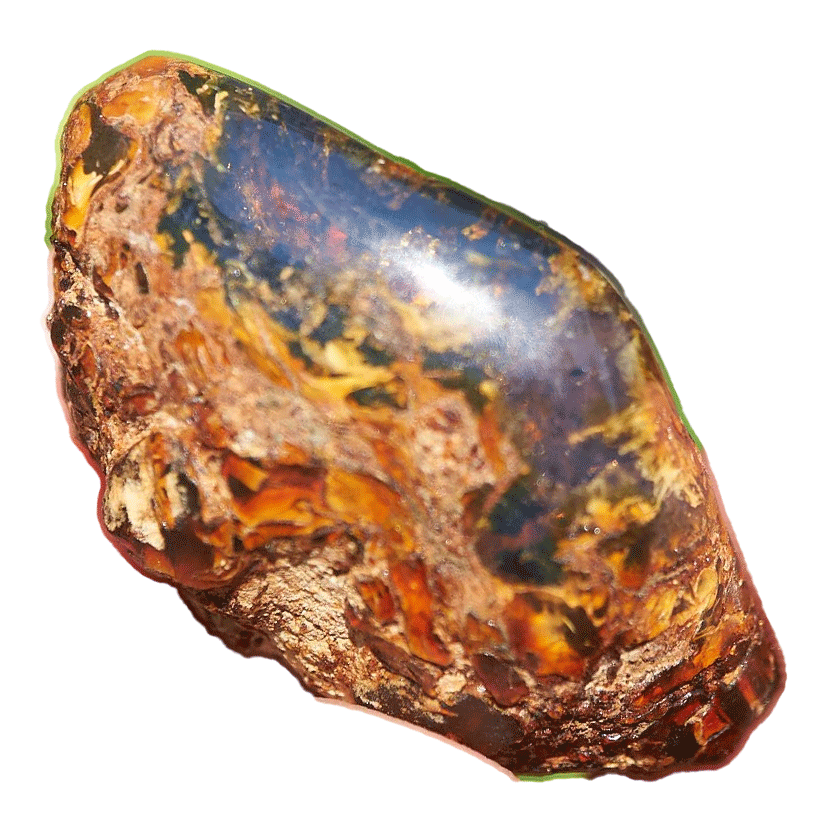
Before a pendant can be set, the gemstone must be carefully cut and polished. This stage requires patience because Larimar's beauty is revealed gradually. The cutter first studies the rough material to determine where the most attractive color and pattern sit within the stone. Cutting too deeply can remove a desirable blue area; cutting too shallowly may leave a less stable or less balanced piece.
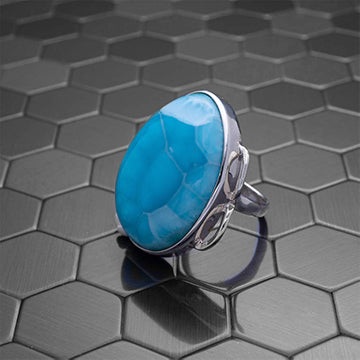
The goal is often a cabochon - a smooth, domed stone without facets. This cut suits Larimar beautifully because its color and ocean-like pattern are best appreciated across a broad, polished surface. The dome should be graceful rather than excessive, while the base should sit properly in its future setting. A well-made cabochon feels smooth to the touch and has a clean, even polish that allows light to move gently across the surface.
This process also involves practical judgment. A cutter may preserve a natural curve or choose an asymmetrical freeform shape when it protects more of the finest material. That decision can make a pendant feel distinctly artisanal, but it also means the final jewelry design must be built specifically for that one stone.
A freeform Larimar pendant is not simply an irregular shape. At its best, it is a design decision rooted in respect for the gem. The outline may follow a ribbon of blue, preserve a dramatic patch of white patterning, or retain the natural visual balance of the rough.
Because each freeform cabochon differs, the pendant cannot be mass-produced in a true sense. Its setting, bail, and decorative details must be considered one piece at a time. For buyers who prefer jewelry with character over perfect repetition, this is part of the pleasure. You are wearing a stone that could not be recreated exactly.
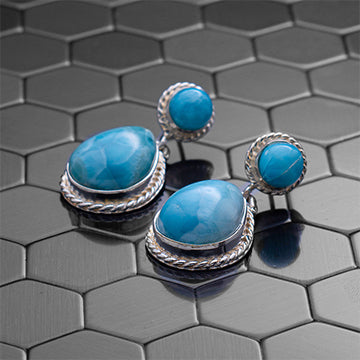
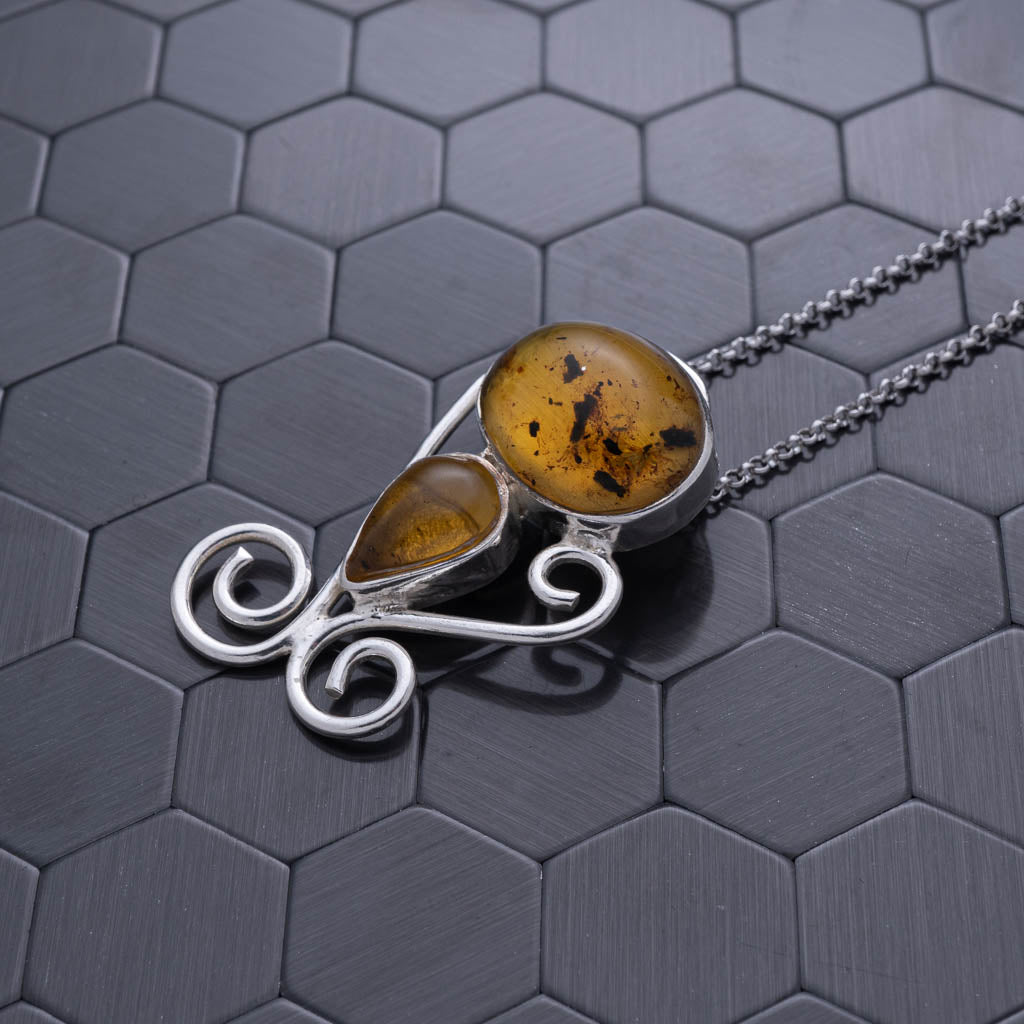
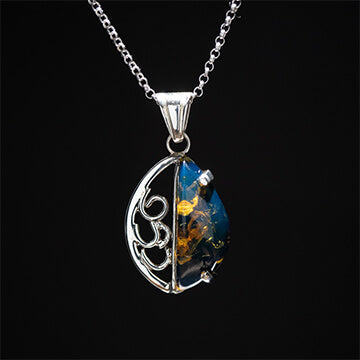
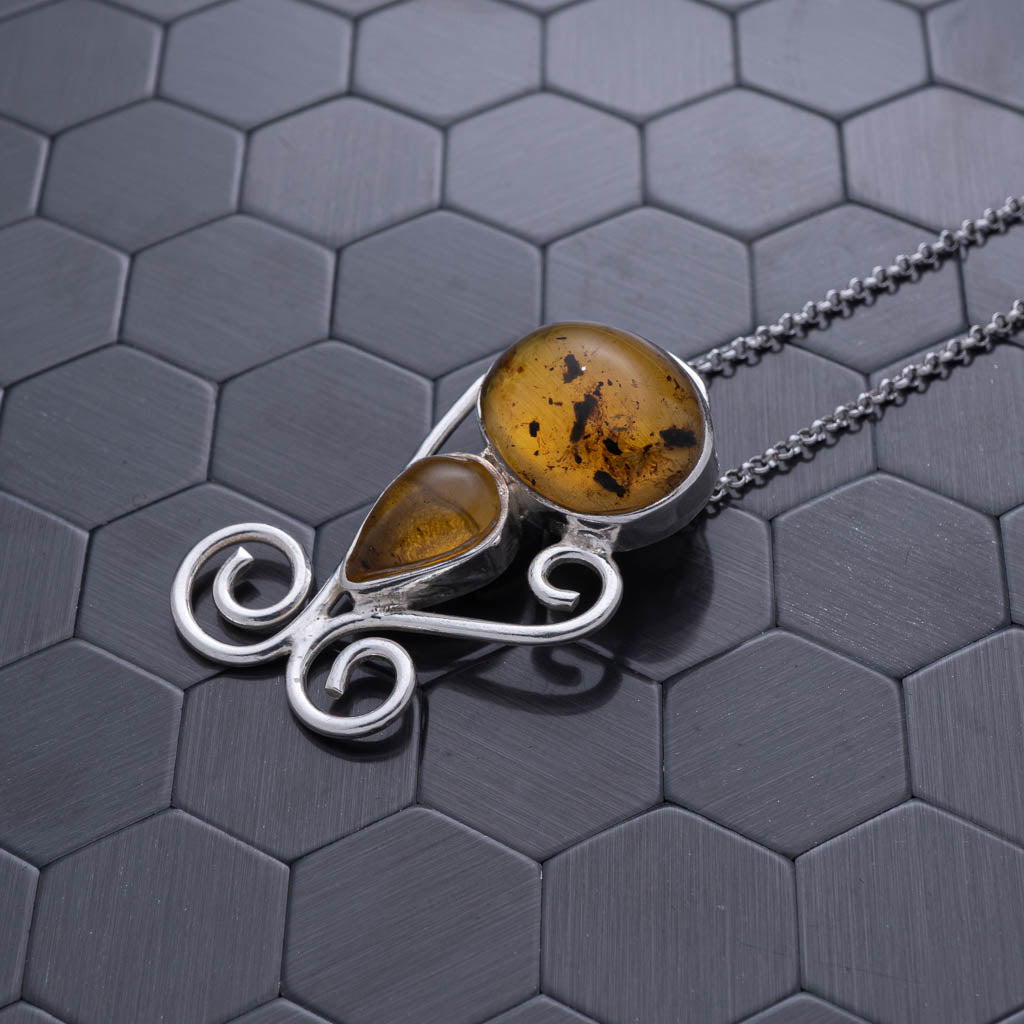
The setting is where artisan skill becomes especially visible. Sterling silver is a natural partner for Larimar because its cool luster complements the stone's blue tones without competing for attention. Depending on the design, an artisan may use a smooth bezel, prongs, a partial bezel, or an ornate hand-finished frame.
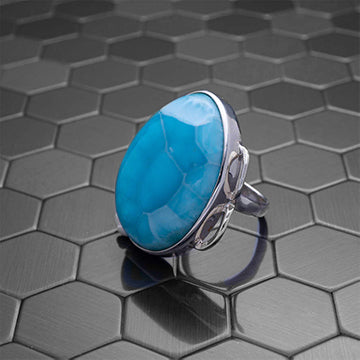
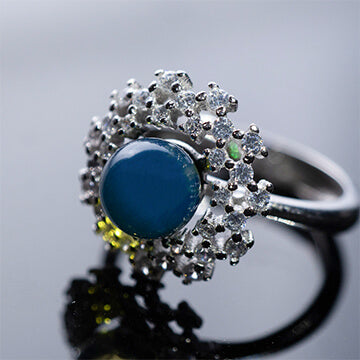
A bezel setting, where metal wraps around the edge of the cabochon, is a classic choice for Larimar pendants. It offers a clean, refined outline and helps protect the stone's perimeter. The bezel should be secure and even, with no sharp edges or gaps. Yet it should not rise so high that it hides the gemstone's face. This balance is subtle, and it separates a carefully made pendant from one that merely looks attractive at first glance.
Prong settings can reveal more of the stone's edge and create a lighter visual effect, but they require special attention to fit and security. Larimar is not a stone to treat carelessly. A pendant designed for frequent wear benefits from a setting that offers thoughtful protection, especially around exposed corners and pointed freeform areas.
The back of the pendant matters, too. An open-backed setting can allow more light around the stone and reduce weight, while a closed back creates a more substantial feel and offers a different finishing surface. Neither option is automatically superior. The right choice depends on the cabochon's thickness, the design's intended look, and how the pendant should sit against the body.
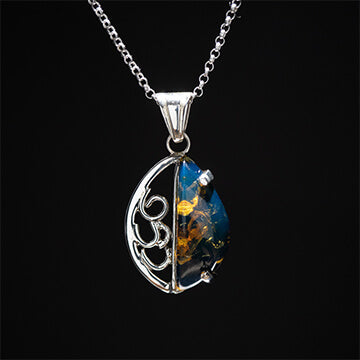
The most memorable details are often quiet ones. Look closely at the bail, the loop that connects the pendant to its chain. It should feel proportional to the stone, strong enough for use, and smoothly finished so it does not catch or wear unevenly. A generous bail can also make it easy to pair the pendant with different chains, from a delicate silver chain to a more substantial statement style.
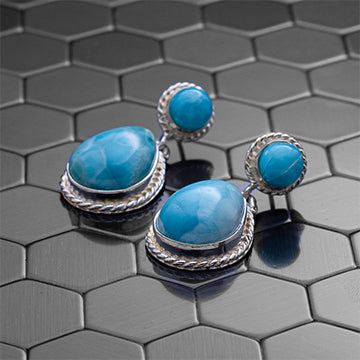
Hand-applied texture, rope borders, filigree, leaf motifs, and ocean-inspired silverwork can add romance to a Larimar pendant. The trade-off is one of balance. Highly decorative metalwork can create a dramatic heirloom presence, while a minimal setting gives a vivid stone room to speak for itself. Neither is more authentic than the other. It depends on whether you are drawn to the gem as the central statement or to the artistry of the entire composition.
Finishing also deserves attention. Silver should be polished where brightness is desired, with intentional oxidation only where it enhances texture and depth. Solder seams should be clean. The pendant should lie comfortably, without a heavy front that flips forward or a bail that twists the stone out of place. These qualities may seem small, but together they determine whether a piece feels refined in the hand and effortless when worn.
The rare beauty of Larimar has also made authenticity essential. Genuine Larimar comes from the Dominican Republic, and a responsible purchase begins with confidence in the stone's origin. A trustworthy specialist should be able to speak clearly about Dominican sourcing and represent the gemstone honestly, rather than relying on vague descriptions or overly perfect imagery.
Natural Larimar varies widely. A pendant with soft blue, white veining, or a distinctive inclusion is not necessarily flawed; it may be a genuine record of the stone's formation. What matters is transparent presentation, careful craftsmanship, and a design that treats the gem as something rare rather than interchangeable.
At Larimar Creations, this connection between authentic Dominican material and handcrafted jewelry is at the center of the collection. Each pendant offers more than a blue gemstone. It carries a visible link to the Caribbean, shaped into a piece intended to be worn and remembered.
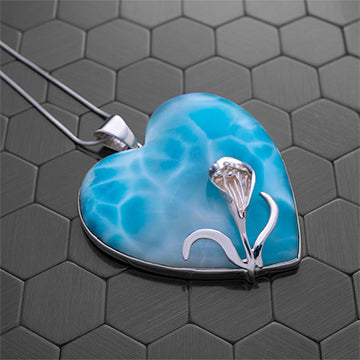
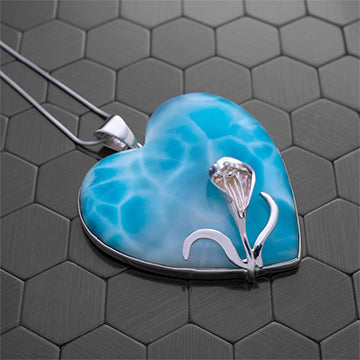
When selecting a Larimar pendant, begin with the stone that makes you pause. You may be drawn to intense blue color, a tranquil pale-blue surface, a bold freeform outline, or the romance of a heart-shaped cabochon. Let that first response guide you, then consider practical details such as pendant size, setting style, chain compatibility, and how often you plan to wear it.
For daily wear, a securely bezel-set pendant in a moderate size is often a versatile choice. For a special occasion or a collector's jewelry box, a larger freeform Larimar with elaborate sterling silver work can feel like a true centerpiece. If the pendant is a gift, consider the recipient's style: understated and classic, richly detailed, spiritually meaningful, or naturally expressive.
Larimar rewards gentle care. Store the pendant separately from harder gemstones, avoid harsh chemicals and prolonged heat, and clean it with a soft cloth rather than abrasive products. With thoughtful wear, its polished surface and silver setting can remain beautiful for years.
A well-crafted Larimar pendant is an invitation to wear a piece of the Caribbean in your own way. Choose the stone and setting that feel unmistakably yours, and let the craftsmanship give that connection a lasting place in your collection.
Sign up to get the latest on sales, new releases and more …
9 min read
6 min read
9 min read