
FREE WORLD WIDE SHIPPING
HANDCRAFTED IN THE DOMINICAN REPUBLIC
30% DISCOUNT APPLIED AT CHECKOUT
FREE WORLD WIDE SHIPPING
HANDCRAFTED IN THE DOMINICAN REPUBLIC
30% DISCOUNT APPLIED AT CHECKOUT
FREE WORLD WIDE SHIPPING
HANDCRAFTED IN THE DOMINICAN REPUBLIC
30% DISCOUNT APPLIED AT CHECKOUT
FREE WORLD WIDE SHIPPING
HANDCRAFTED IN THE DOMINICAN REPUBLIC
30% DISCOUNT APPLIED AT CHECKOUT
FREE WORLD WIDE SHIPPING
HANDCRAFTED IN THE DOMINICAN REPUBLIC
30% DISCOUNT APPLIED AT CHECKOUT
FREE WORLD WIDE SHIPPING
HANDCRAFTED IN THE DOMINICAN REPUBLIC
30% DISCOUNT APPLIED AT CHECKOUT
100% Handcrafted in DR.
by Admin August 31, 2026 6 min read
Larimar carries the shifting blue of Caribbean water, but it is not a gemstone to treat like an everyday diamond. Choosing the best settings for larimar means balancing beauty with protection: honoring the stone’s soft, cloudlike patterns while giving it the support needed for a lifetime of wear. The right setting does more than hold a cabochon in place. It frames its color, protects its edges, and turns a rare Dominican treasure into jewelry that feels distinctly yours.
Because every natural Larimar stone has its own waves, white marbling, and depth of blue, setting choice is also a matter of personal style. A smooth silver bezel can make an ocean-blue cabochon feel modern and serene. A detailed gold surround can bring warmth and heirloom character to a paler stone. The best choice depends on how you plan to wear it.
Larimar is a variety of pectolite found only in the Dominican Republic. It typically ranks around 4.5 to 5 on the Mohs scale of hardness, which makes it noticeably softer than sapphire, ruby, or quartz. Its beauty is exceptional, yet it deserves more care than a hard, faceted gemstone.
That is why an exposed setting may not be the ideal option for every piece. A design that leaves the stone’s vulnerable perimeter unprotected can increase the chance of chips from a knock against a countertop, doorframe, or desk. Settings with a protective rim, a secure base, and considered metalwork are especially valuable for Larimar.
This does not mean every Larimar piece must look heavy or enclosed. Fine craftsmanship can create a setting that feels airy and elegant while still supporting the stone where it matters. The goal is not to hide the gem. It is to let its ocean-inspired character take center stage with confidence.
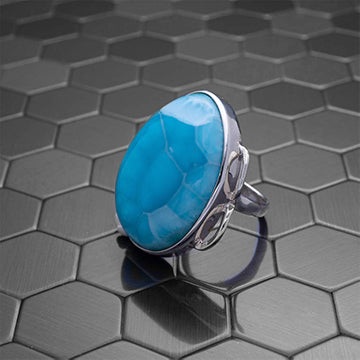
A bezel setting surrounds all, or most, of a Larimar cabochon with a smooth band of precious metal. For rings, bracelets, and other pieces likely to meet everyday surfaces, it is often the best all-around setting. The metal edge helps guard the stone’s sides and keeps the cabochon stable against its backing.
A full bezel offers the greatest protection and suits clean, contemporary designs beautifully. Sterling silver provides a cool frame that complements vivid sky-blue and deep blue Larimar. Yellow gold creates richer contrast, particularly with pale blue stones carrying white foam-like patterns. Rose gold can make the gem feel softer and more romantic, though the warm metal is a more distinctive style choice.
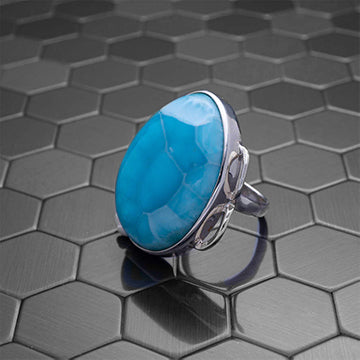
Bezel-set Larimar rings are ideal for those who want a meaningful statement piece without excessive height. A low-profile bezel is less likely to catch on fabric or strike nearby objects. Still, even a well-set Larimar ring should be removed for gardening, workouts, household cleaning, and heavy lifting.
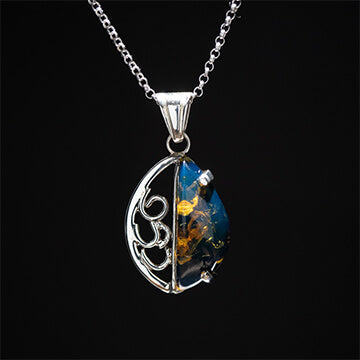
A partial bezel, sometimes called a half bezel or open bezel, supports selected areas around the stone rather than fully encircling it. This approach allows more of the cabochon’s outline to remain visible, making it especially appealing for freeform Larimar with unusual natural shapes.
The trade-off is straightforward: less metal around the edge means less protection. A partial bezel is best for pendants, earrings, and occasional-wear rings rather than jewelry exposed to frequent impact. When thoughtfully designed, it can highlight the individuality of a hand-cut stone while keeping key points secure.
Look for a partial bezel that grips the stone at durable, well-positioned areas instead of leaving sharp corners completely exposed. For a rare freeform cabochon, this detail separates a beautiful artistic setting from one that merely looks delicate.
Prongs can create an open, luminous presentation, allowing more light and more of the gem’s edge to show. They are common in faceted stones, but they can also be used with Larimar cabochons when the design is made carefully. A prong-set Larimar pendant can feel refined and sculptural, especially with four or six substantial prongs and a strong gallery beneath the stone.
For Larimar rings, prongs require more caution. Thin or widely spaced prongs leave the edge of a softer stone exposed, and they can catch on clothing. A design with broad, rounded prongs and a low setting is safer than a tall, delicate basket. If you love the look of prongs, reserve it for a pendant or earrings where the stone encounters fewer hard surfaces.
Prong settings also deserve regular inspection. If a prong bends or loosens, the stone can shift. A jeweler experienced with softer gemstones can check the security of the setting without placing unnecessary pressure on the Larimar.
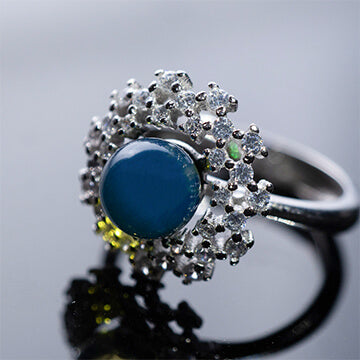
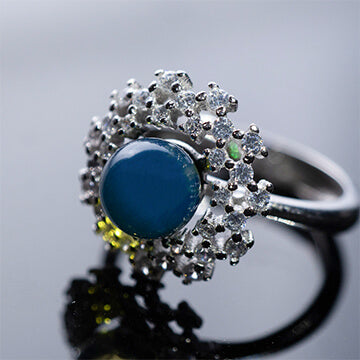
A halo frames a center stone with smaller diamonds, white sapphires, zircon, or complementary gemstones. Around Larimar, a halo can amplify its soft blue color and create a more formal, fine-jewelry presence. White stones lend crisp sparkle, while a mixed halo of blue and white gems can echo sea and surf.
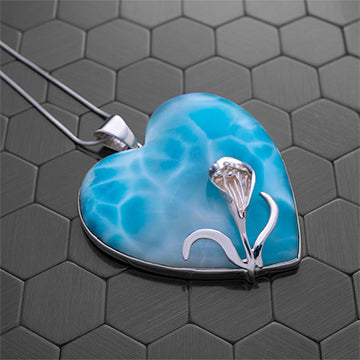
This setting works particularly well for Larimar engagement-style rings, dress rings, and heart pendants. However, the center Larimar should still have a secure rim, low bezel, or carefully engineered prong structure. The halo is decorative. It should never replace solid support for the central cabochon.
A halo also changes the visual scale of the piece. It can make a modest Larimar appear larger and more dramatic, while a large, richly patterned stone may need only a slim border to avoid looking crowded. Let the character of the individual gem guide the design.
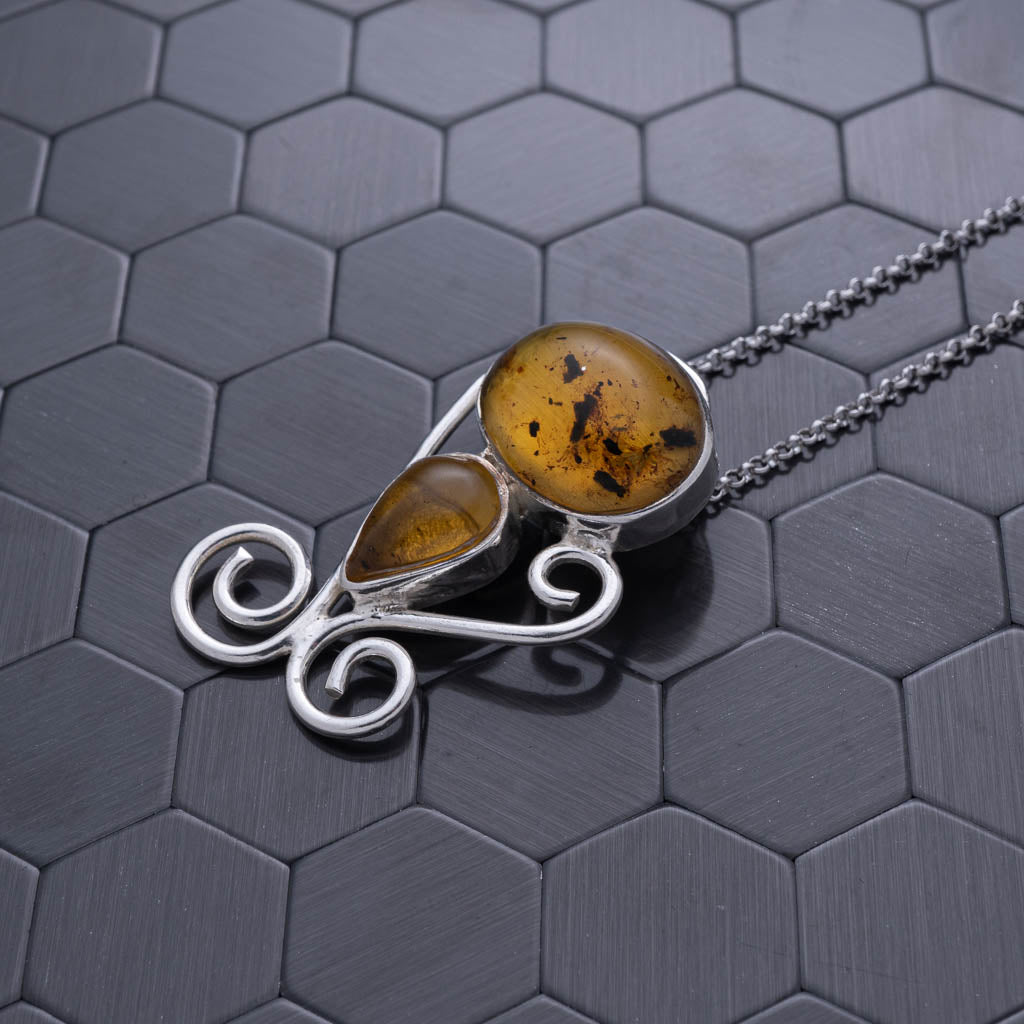
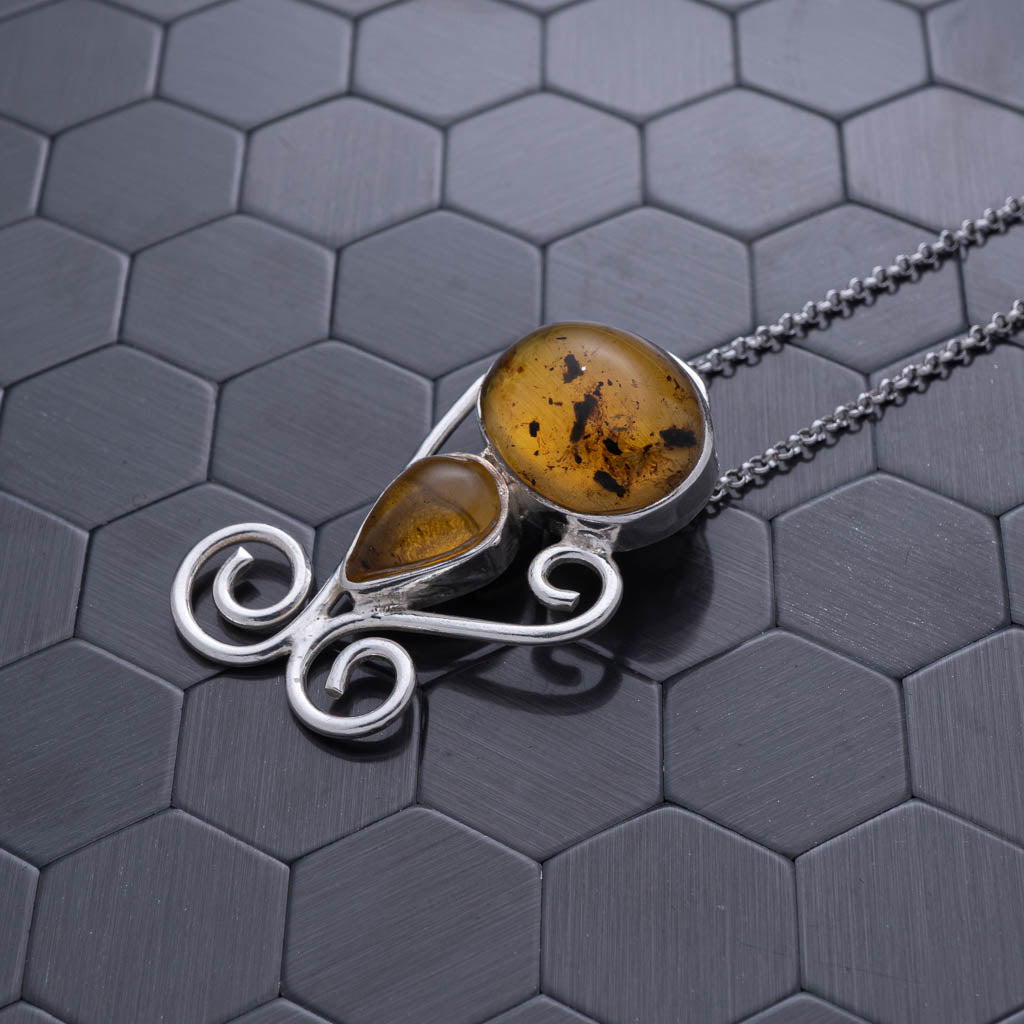
Wire wrapping brings an artisanal, one-of-a-kind quality to Larimar. Flowing silver wire can echo the stone’s natural wave patterns, while gold-filled details add warmth. This style is especially lovely for pendants, earrings, and collector pieces where organic texture is part of the appeal.
The important question is whether the wire work truly secures the stone. Fine decorative wire alone is not enough for a cabochon intended for regular wear. The best artisan settings include a firm backplate, a stable frame, and strong points of contact that prevent movement. A well-made wrapped pendant should feel intentional from every angle, not simply ornamental from the front.
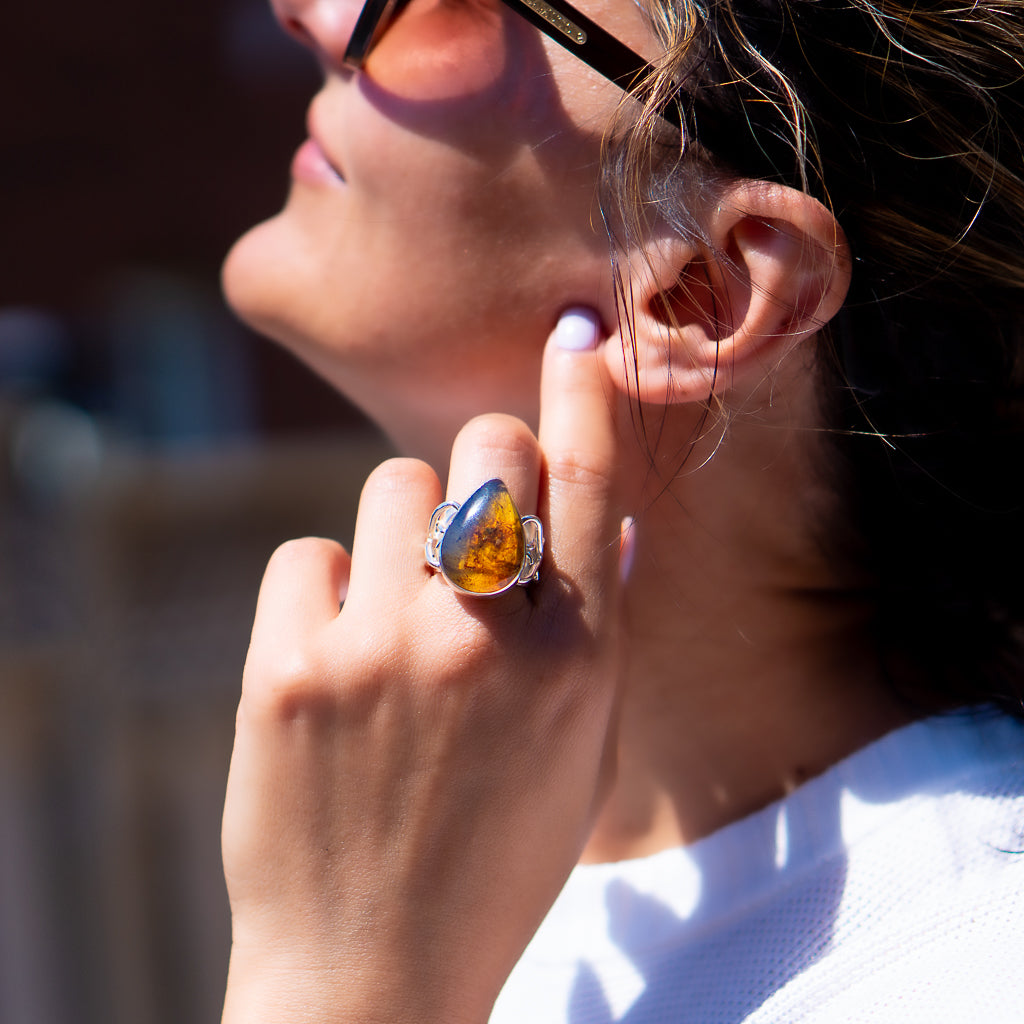
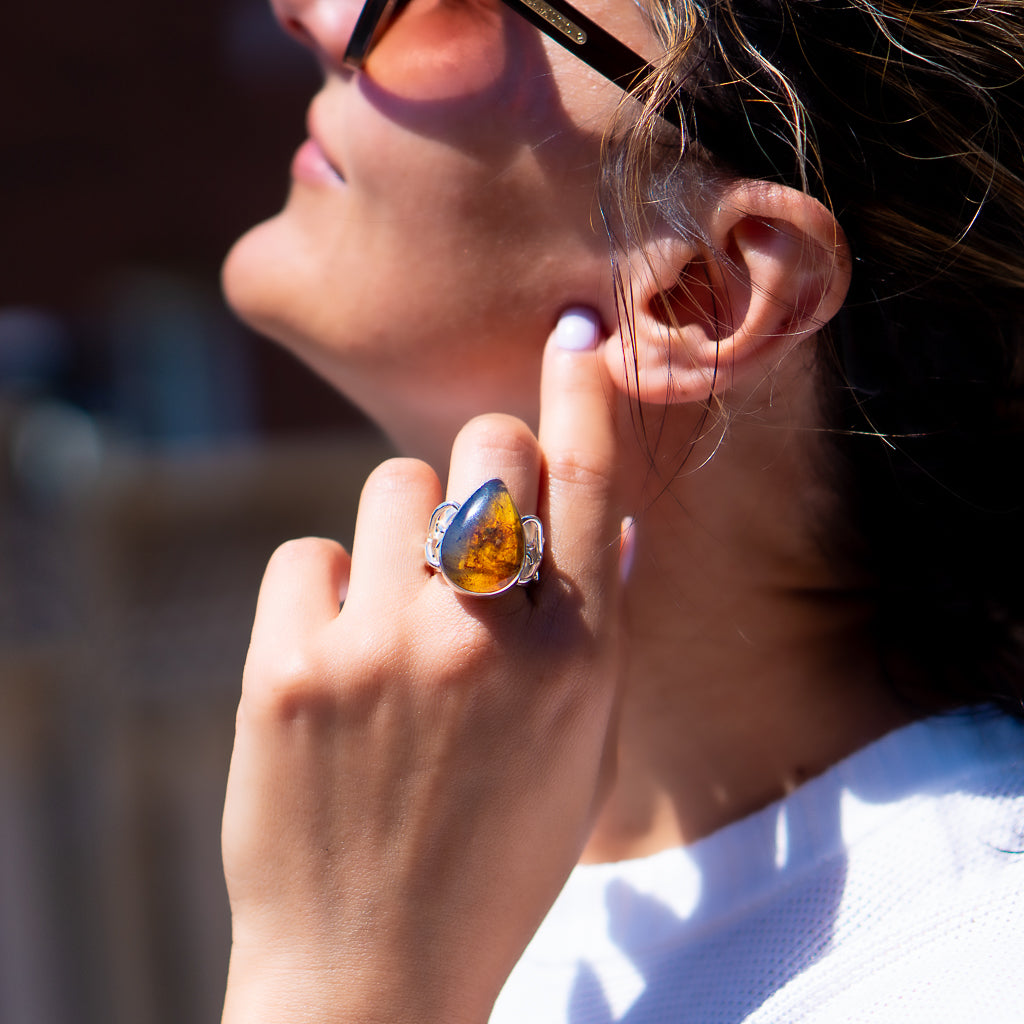
For Larimar rings, a low, full bezel is usually the most practical choice. It offers excellent protection while allowing the blue stone to remain the focal point. A wider band can add stability for larger cabochons, and a slightly recessed setting gives extra peace of mind for daily use.
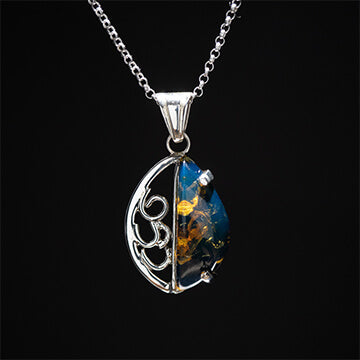
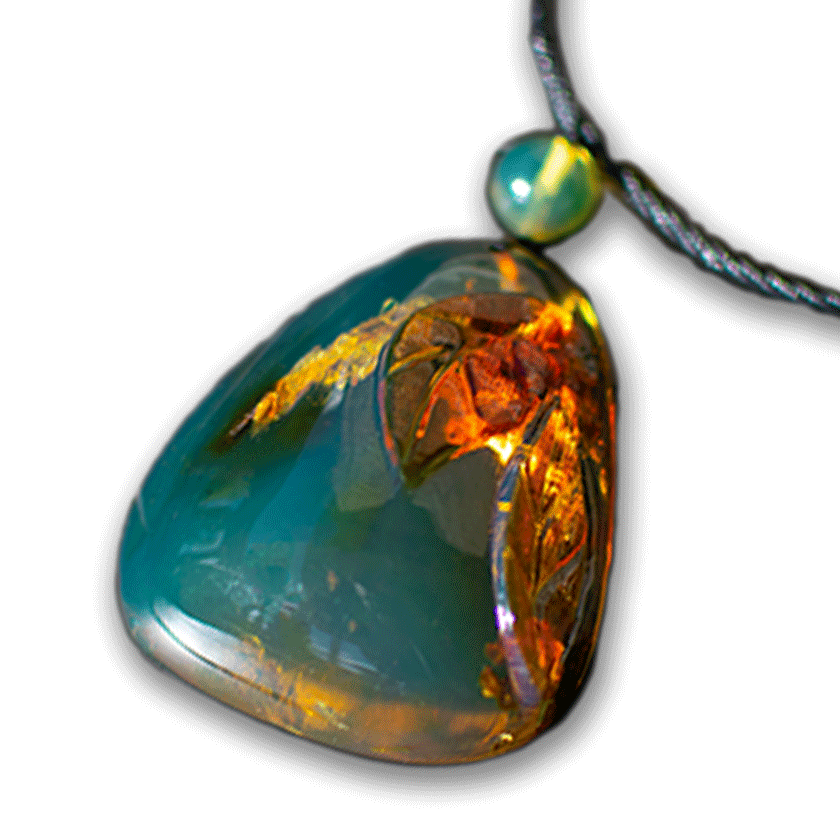
For Larimar pendants, you have more freedom. Bezels, partial bezels, prongs, halos, and artisan frames can all work beautifully because pendants receive fewer direct impacts. Consider the bail as carefully as the stone setting. A generously sized, securely attached bail helps a pendant hang gracefully and accommodates your preferred chain.
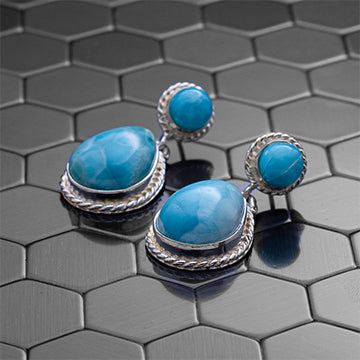
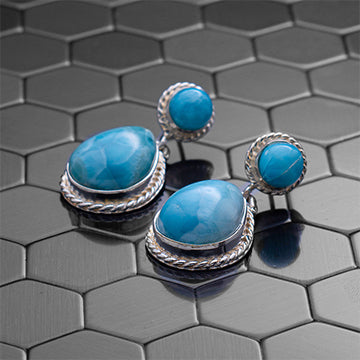
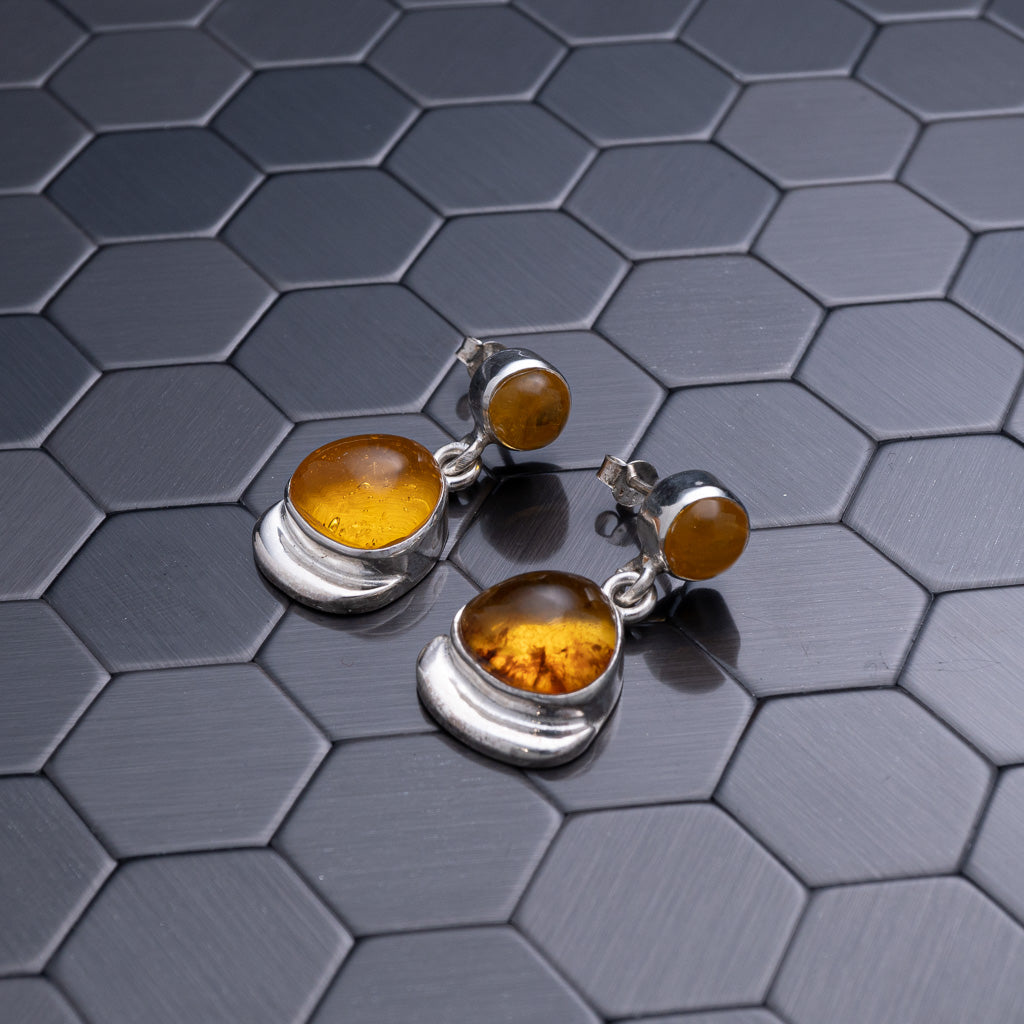
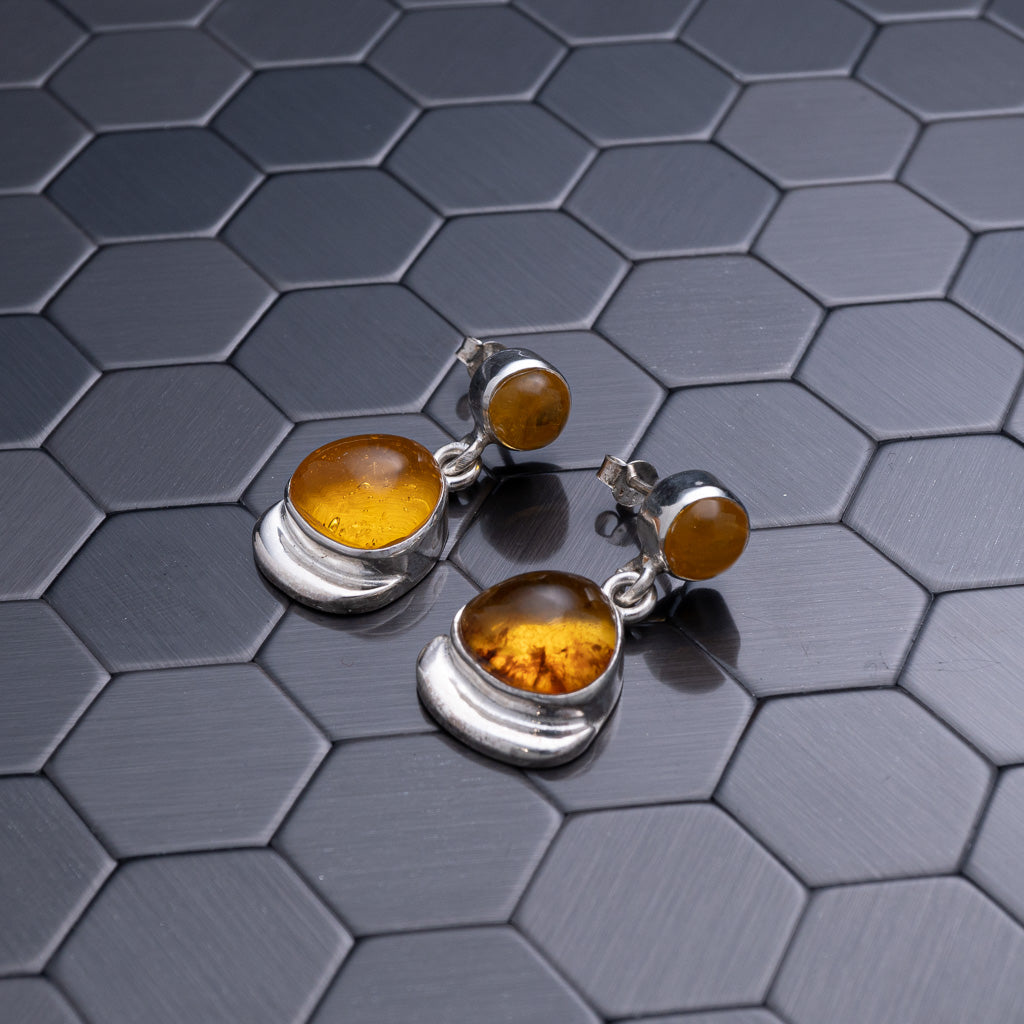
For Larimar earrings, lightweight bezel-set studs and drops are dependable choices. A bezel helps protect the stone during storage and wear, while lever-back or secure post closures provide comfort. Larger statement earrings can support more decorative metalwork because they are not subject to the same pressure as rings.
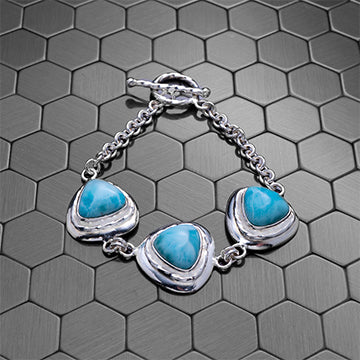
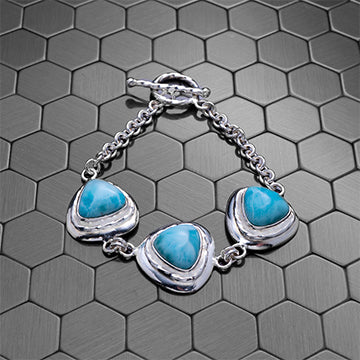
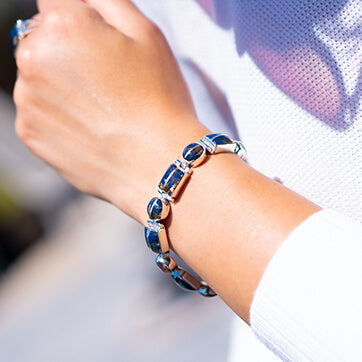
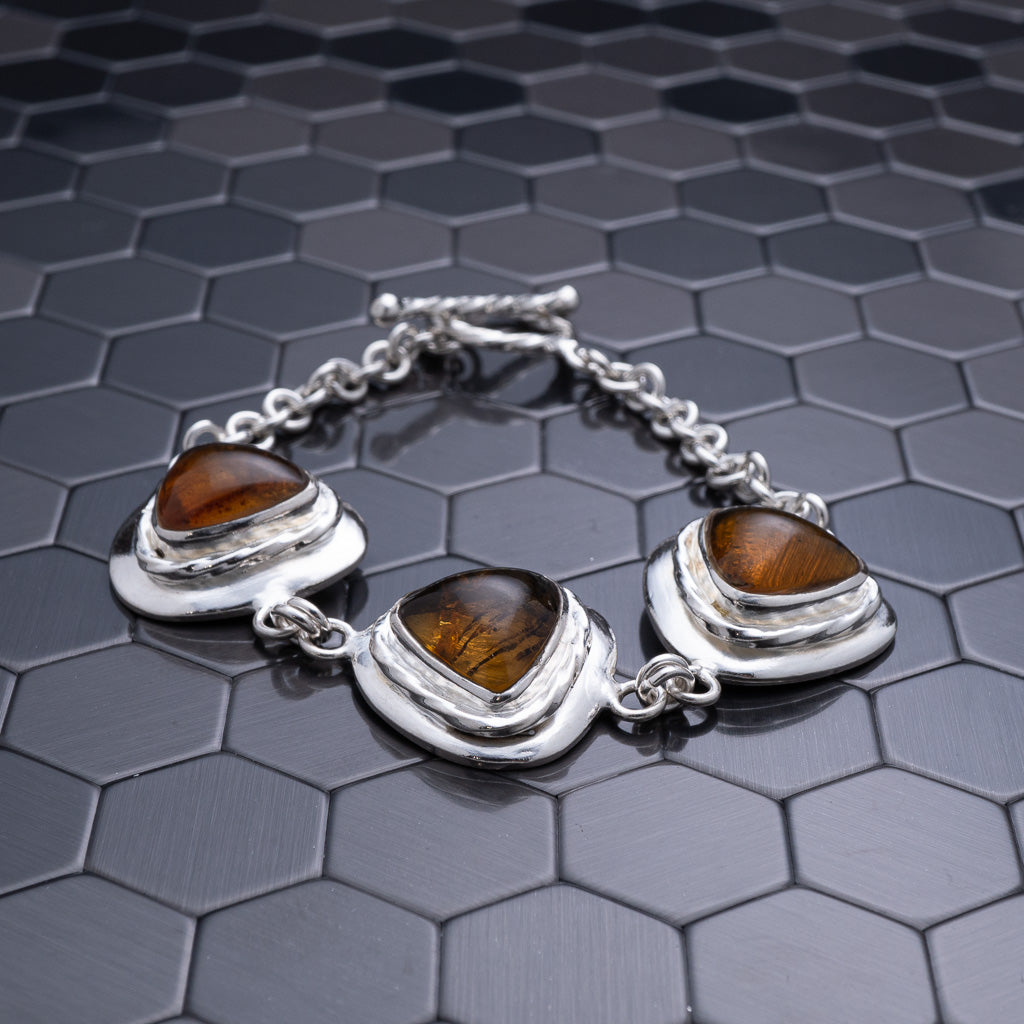
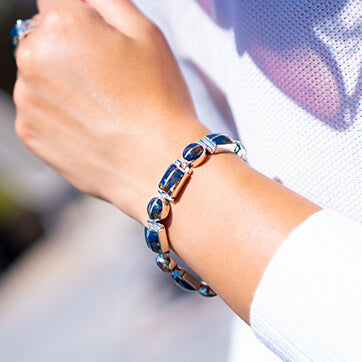
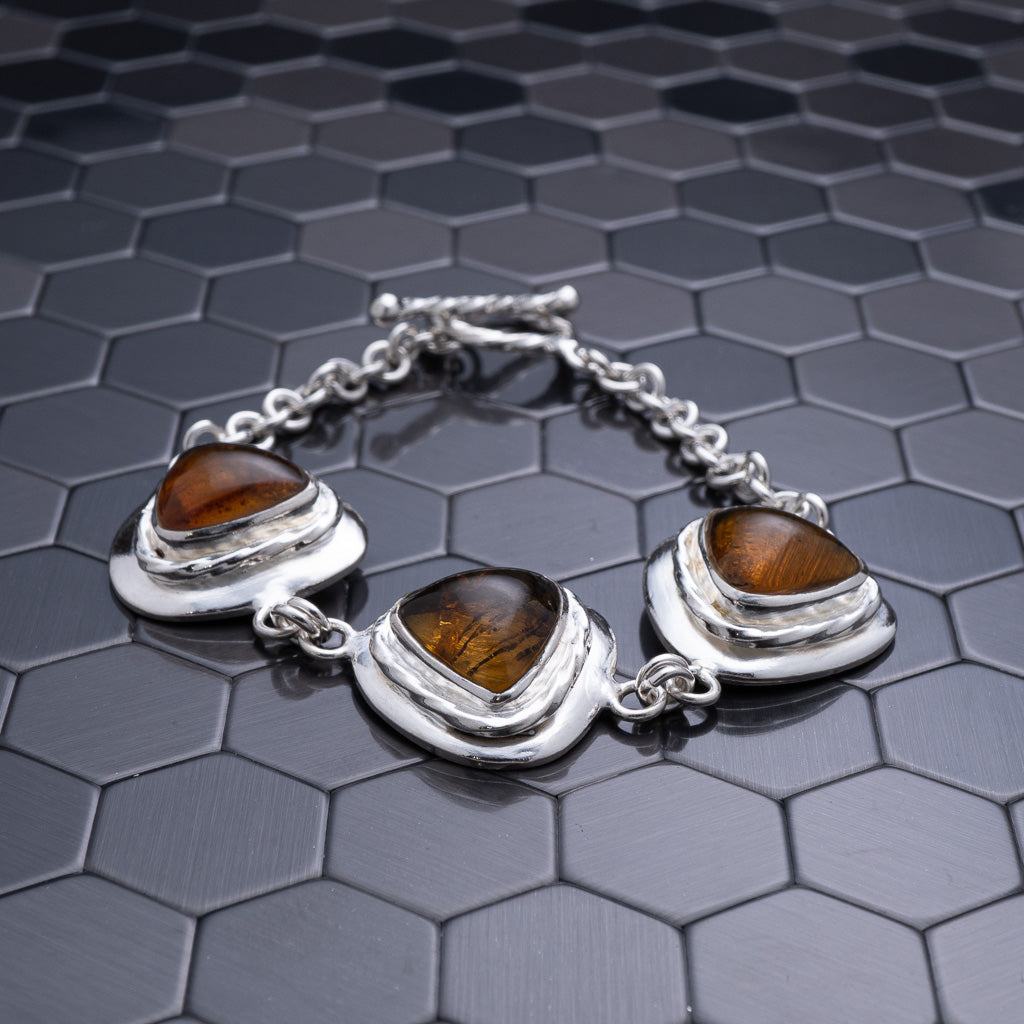
For Larimar bracelets, choose settings with caution. Wrists meet tables, keyboards, and doorframes throughout the day. Bezel-set stones in a sturdy cuff or linked bracelet are safer than high prong settings. If you prefer a delicate bracelet, smaller Larimar elements and thoughtful spacing reduce the risk of impact.
The setting is more than its visible border. A substantial backing plate supports Larimar from beneath and gives the cabochon a stable foundation. This is especially important for thin cuts, large freeform stones, and pieces with intricate openwork around the edges.
Sterling silver remains a natural partner for Larimar, reflecting its cool Caribbean palette and offering enduring versatility. Gold settings bring a more elevated contrast and are often chosen for gift-worthy pendants, rings, and heirloom-inspired designs. Whichever metal you prefer, look for clean finishing, secure soldering, and a stone that rests evenly without gaps or movement.
Authenticity belongs in this decision, too. Genuine Dominican Larimar has natural variation, not a uniform manufactured blue. Choose handcrafted jewelry made for the unique cabochon it holds, not a generic setting forced around a stone. At Larimar Creations, that relationship between authentic stone and thoughtful craftsmanship is part of what makes each piece feel personal.
A Larimar setting should invite you to wear a piece of the Caribbean, not worry about it. Choose the design that fits your life, give it the care a rare natural gem deserves, and let its blue carry a little calm wherever you go.
Sign up to get the latest on sales, new releases and more …
9 min read
6 min read
11 min read