
FREE WORLD WIDE SHIPPING
HANDCRAFTED IN THE DOMINICAN REPUBLIC
30% DISCOUNT APPLIED AT CHECKOUT
FREE WORLD WIDE SHIPPING
HANDCRAFTED IN THE DOMINICAN REPUBLIC
30% DISCOUNT APPLIED AT CHECKOUT
FREE WORLD WIDE SHIPPING
HANDCRAFTED IN THE DOMINICAN REPUBLIC
30% DISCOUNT APPLIED AT CHECKOUT
FREE WORLD WIDE SHIPPING
HANDCRAFTED IN THE DOMINICAN REPUBLIC
30% DISCOUNT APPLIED AT CHECKOUT
FREE WORLD WIDE SHIPPING
HANDCRAFTED IN THE DOMINICAN REPUBLIC
30% DISCOUNT APPLIED AT CHECKOUT
FREE WORLD WIDE SHIPPING
HANDCRAFTED IN THE DOMINICAN REPUBLIC
30% DISCOUNT APPLIED AT CHECKOUT
100% Handcrafted in DR.
by Admin August 24, 2026 5 min read
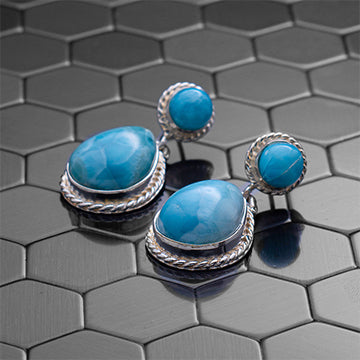
That tranquil blue in a Larimar pendant is not a surface treatment to take for granted. Can larimar fade sunlight exposure? Yes, prolonged direct sun can gradually affect the color of this rare Dominican gemstone, especially when heat is part of the equation. A little daylight while wearing your jewelry is not cause for alarm, but Larimar deserves more thoughtful care than a stone that can live indefinitely on a sunny windowsill.
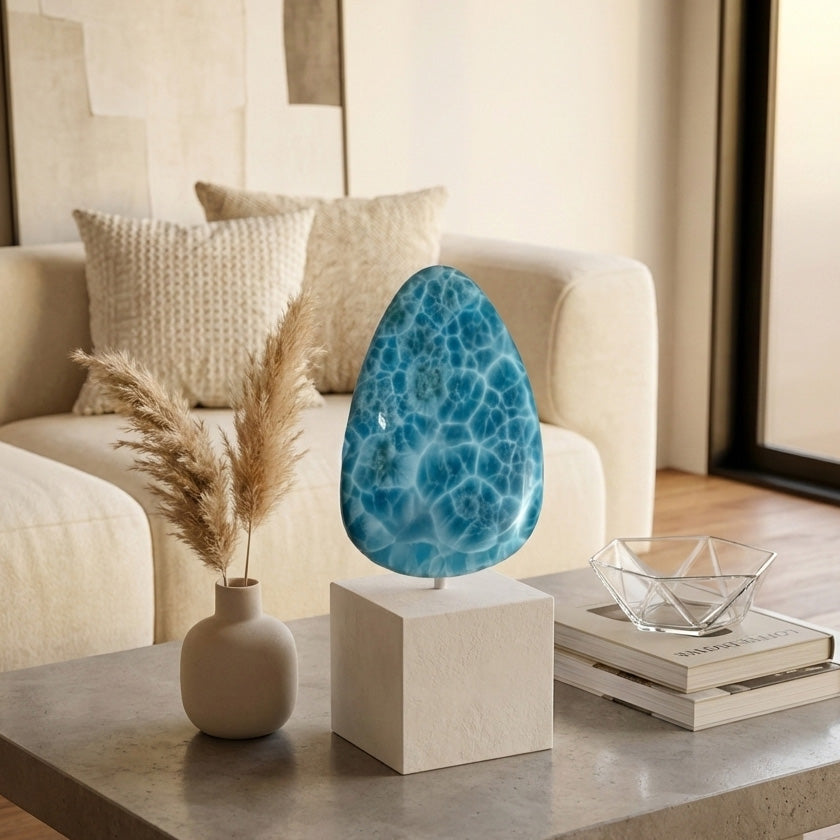
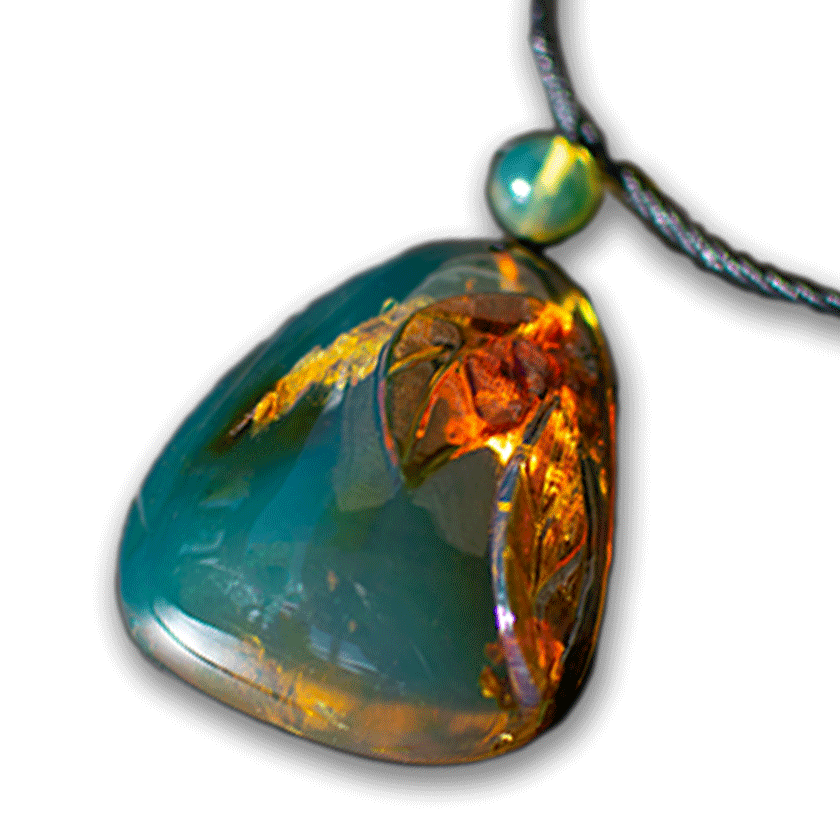
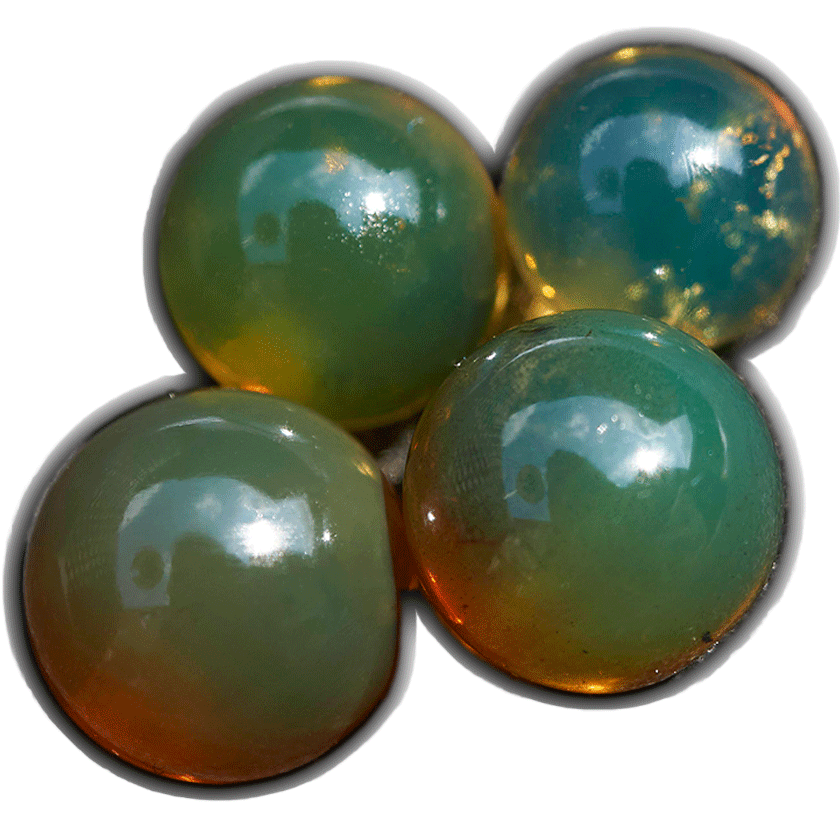
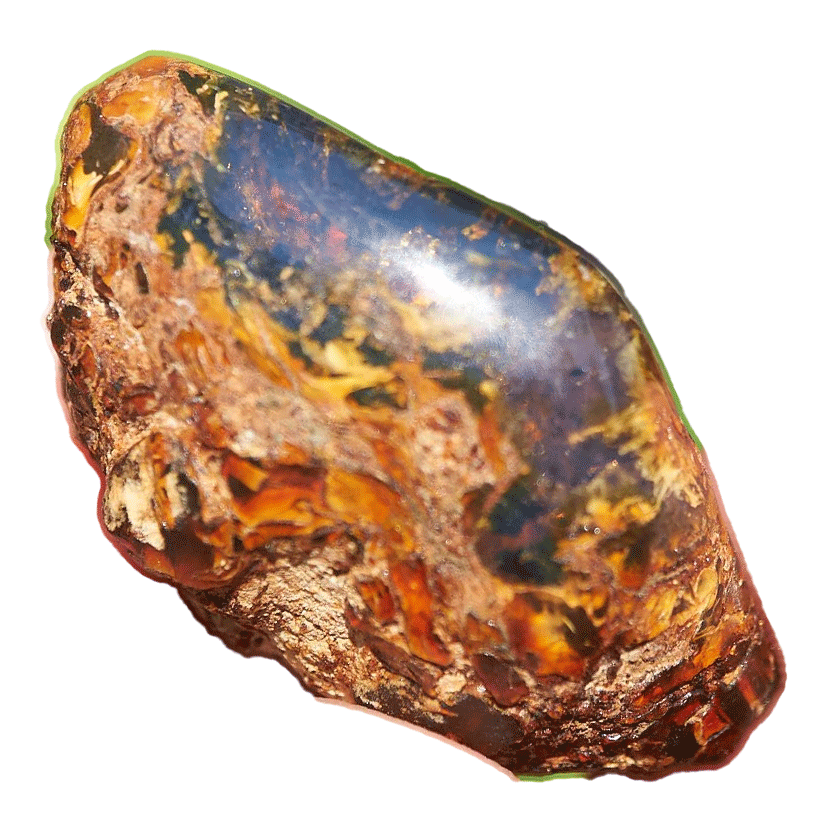
Known for patterns that recall Caribbean water, authentic Larimar is a blue variety of pectolite found only in the Dominican Republic. Its color can range from nearly white-blue to vivid turquoise and deep ocean blue, often with cloudlike marbling. That natural variation is part of its character, but it also means every piece may respond somewhat differently to years of light, warmth, and daily wear.
Larimar can fade in sunlight, particularly after repeated or extended exposure to strong direct UV light and heat. The risk is not usually a dramatic overnight change. More often, a once-saturated blue may slowly look paler, less lively, or more muted over time.
Sunlight is only one part of the concern. Heat can intensify the effect, which is why a car dashboard, a bright windowsill, a beach bag left in the sun, or a hot outdoor table are poor places to leave Larimar jewelry. The combination of direct rays and rising temperature creates more stress than simply wearing a ring or pendant while stepping outside.
The exact degree of change depends on the individual stone. Larimar is a natural gem, not a uniform manufactured material. A pale blue stone may show subtle changes differently than a richly colored cabochon, and the way a gem has been cut, polished, and worn can influence how noticeable those changes become.
Larimar gets its coveted blue appearance from traces of copper within pectolite. Like many colored gemstones, its delicate visual qualities can be sensitive to environmental conditions. Strong light and heat may alter the way those color-causing elements appear to the eye over time.
This does not make Larimar unsuitable for jewelry. It simply places it in the category of gems that reward mindful ownership. Fine gemstones are often cared for according to their individual properties: pearls are protected from chemicals, opals from abrupt temperature changes, and Larimar from prolonged heat and direct sun.
There is also a useful distinction between natural color variation and actual fading. Larimar commonly contains white areas, soft blue pools, gray-blue veining, and occasional greenish or brownish matrix. These features are formed by nature and do not mean a stone has faded. Fading is more likely when a previously stronger, more even blue appears noticeably washed out after long-term exposure.
Normal, incidental exposure is generally not the issue. Wearing a Larimar necklace to lunch, walking through a sunny street, or enjoying a special occasion outdoors will not automatically harm your gemstone. Jewelry is meant to be worn and admired.
The concern begins with repetition and duration. Leaving a Larimar bracelet in direct sun for hours, displaying a cabochon beneath an intense window every day, or storing earrings near a heat source can create conditions that are unnecessarily harsh. Think of direct sunlight as something to enjoy briefly, not as a storage environment.
Beach days call for extra care. Larimar’s Caribbean spirit makes it a natural companion for resort wear, but sun, heat, sunscreen, saltwater, and sand can be a demanding combination. Consider wearing your piece for dinner after the beach rather than during a full afternoon in the sun and surf. You still wear a piece of the Caribbean, while giving the gem the protection it deserves.
The most effective care habit is simple: store Larimar away from direct light when it is not being worn. A fabric-lined jewelry box, soft pouch, or closed drawer offers a stable, gentle setting. Keep each piece separate when possible, since Larimar is softer than many popular jewelry stones and can be scratched by harder gems or metal components.
For daily wear, put Larimar jewelry on after applying perfume, lotion, hair spray, and sunscreen. These products do not necessarily cause immediate visible damage, but residue can dull a polished surface and make the stone look less luminous. Removing rings and bracelets before housework, gardening, swimming, or exercise also protects the setting as well as the gem.
Avoid ultrasonic cleaners, steam cleaning, and harsh chemical dips. High heat, pressure, and aggressive cleaning agents are not appropriate for Larimar. A soft cloth lightly dampened with lukewarm water is usually enough for routine cleaning. If needed, use a very mild soap, rinse carefully, and dry the piece fully with a soft, nonabrasive cloth.
For collector cabochons, carvings, beads, and other unset Larimar, storage matters even more. Keep them in a closed box or pouch rather than in a sunlit display case. If you love seeing your collection every day, choose a location with indirect light and rotate pieces rather than leaving one exceptional blue stone exposed continuously.
First, inspect the stone in neutral indoor light. Bright sunlight can make color look different than it does inside, and lotion, soap film, or everyday residue may reduce the polish and make Larimar seem duller than it truly is. Gently clean the piece, dry it thoroughly, and compare it with older photographs if you have them.
If the color shift seems real, protect the jewelry from further sun and heat exposure. Do not attempt to restore color with chemicals, oils, polishing compounds, or heat. These methods can damage the surface or create a temporary shine that does not address the gem itself.
A trusted jeweler with experience in soft ornamental stones can examine the piece if you are concerned about the condition of the polish, setting, or surface. Be cautious with any promise to “recolor” Larimar. Authentic Larimar is valued for its natural Dominican origin and its one-of-a-kind patterns, not for artificial enhancement that obscures what the stone truly is.
When selecting Larimar, color is naturally part of the attraction, but it should not be the only consideration. Look for a stone whose pattern speaks to you, whether that is a luminous sky-blue field, dramatic white marbling, or a deep blue area that recalls the sea. Fine craftsmanship matters too: a secure setting, a smooth polish, and thoughtful design help protect a gemstone through years of wear.
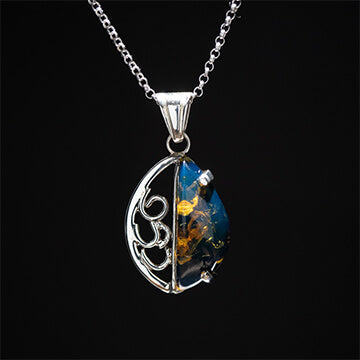
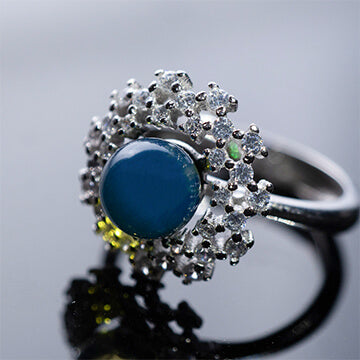
A pendant or pair of earrings may be especially practical for those who want to wear Larimar often, since these pieces tend to receive fewer knocks than rings and bracelets. Rings can be beautiful everyday companions, but they benefit from more attentive use around hard surfaces, chores, and outdoor activities.
At Larimar Creations, we believe authentic Larimar is more than a color. It is a rare expression of the Dominican Republic, shaped by the earth and finished by hand for a life of meaningful wear. Careful storage is not a restriction on enjoying it. It is how you preserve that ocean-blue presence for future celebrations, travels, and everyday moments worth remembering.
Let your Larimar catch the light while you wear it, then let it rest in the shade. That small ritual keeps a treasured Caribbean gem ready to glow whenever you reach for it next.
Sign up to get the latest on sales, new releases and more …
9 min read
6 min read
11 min read