
FREE WORLD WIDE SHIPPING
HANDCRAFTED IN THE DOMINICAN REPUBLIC
30% DISCOUNT APPLIED AT CHECKOUT
FREE WORLD WIDE SHIPPING
HANDCRAFTED IN THE DOMINICAN REPUBLIC
30% DISCOUNT APPLIED AT CHECKOUT
FREE WORLD WIDE SHIPPING
HANDCRAFTED IN THE DOMINICAN REPUBLIC
30% DISCOUNT APPLIED AT CHECKOUT
FREE WORLD WIDE SHIPPING
HANDCRAFTED IN THE DOMINICAN REPUBLIC
30% DISCOUNT APPLIED AT CHECKOUT
FREE WORLD WIDE SHIPPING
HANDCRAFTED IN THE DOMINICAN REPUBLIC
30% DISCOUNT APPLIED AT CHECKOUT
FREE WORLD WIDE SHIPPING
HANDCRAFTED IN THE DOMINICAN REPUBLIC
30% DISCOUNT APPLIED AT CHECKOUT
100% Handcrafted in DR.
by Admin September 16, 2026 6 min read
A strand of amber can look deceptively simple until light reaches it. Then the material reveals its age, inner landscape, and unmistakable warmth. Amber beads are not merely colored beads for a necklace or bracelet. They are polished pieces of fossilized tree resin, formed over millions of years and shaped by nature long before a jeweler gives them their final silhouette.
For collectors and jewelry lovers, that history is part of the appeal. Every bead may carry a different veil of honey, cognac, butterscotch, green, or golden sunlight. Dominican amber brings an especially compelling Caribbean character to the category, prized for its clarity, rich color range, and rare blue fluorescence.
Amber occurs in several regions of the world, but origin affects both its appearance and its character. Dominican amber is admired for its often luminous transparency and remarkable range of natural colors. While warm yellow and cognac tones are classic, the Dominican Republic is also the source of the world’s most celebrated blue amber.
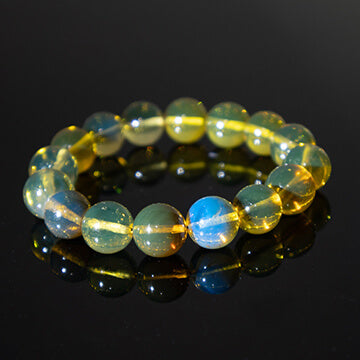
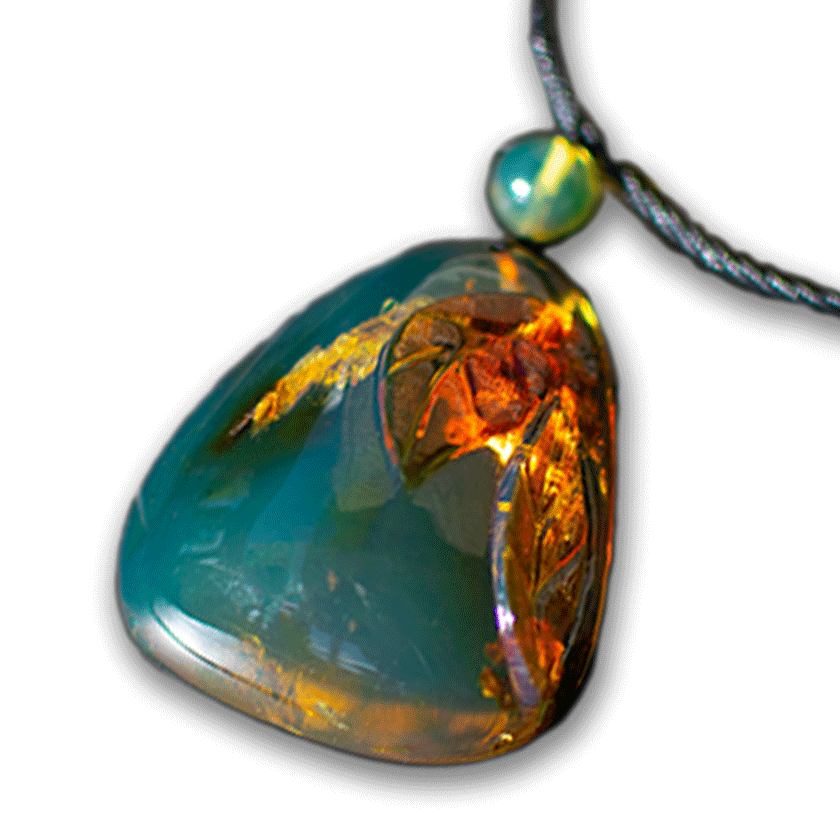
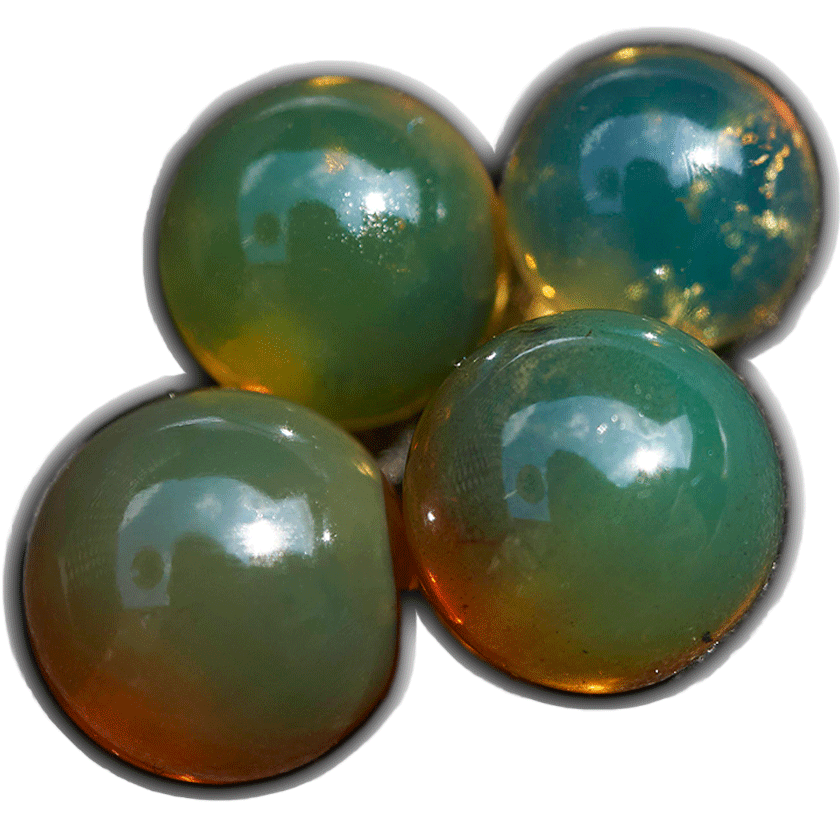
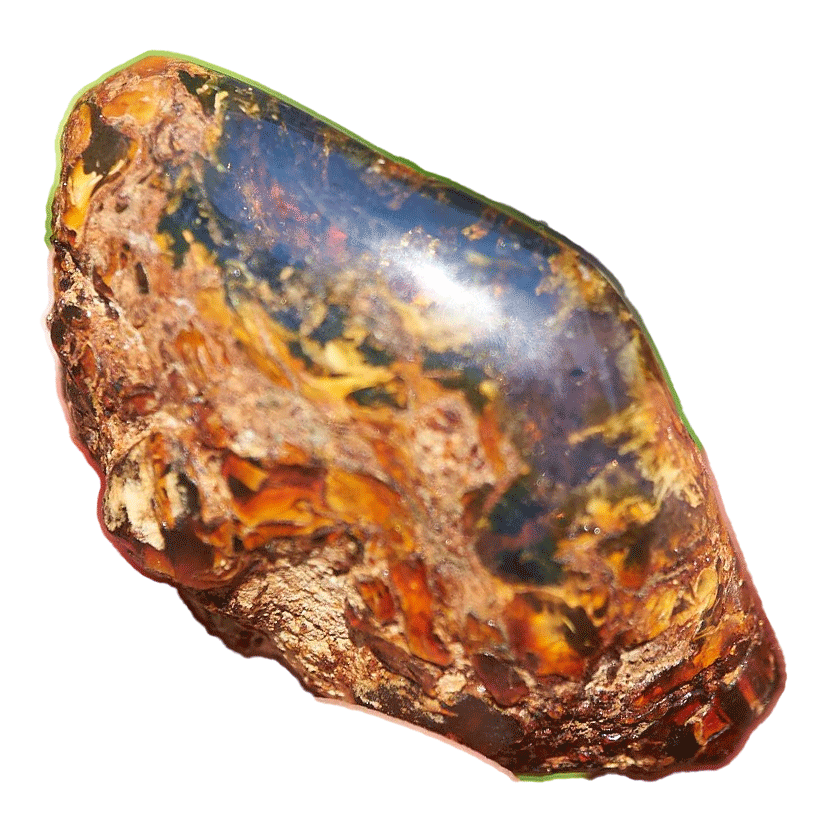
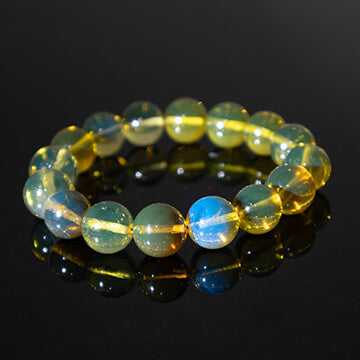
Blue amber does not always appear blue at first glance. In ordinary light, it may look honey-colored, golden, or softly brown. Under sunlight or ultraviolet light, it can reveal an electric blue glow, sometimes shifting toward turquoise or violet depending on the piece and viewing angle. This optical surprise makes blue amber beads particularly captivating in necklaces, bracelets, tasbih, and collector strands.
Natural variation is not a flaw. A bead strand with subtle changes in tone, clarity, or internal texture often feels more alive than a perfectly uniform row of manufactured material. The best choice depends on your preference: some buyers seek a matched, refined sequence for formal jewelry, while others value the organic individuality of every bead.
Authenticity matters because amber is frequently imitated with plastic, glass, pressed amber, copal, and resin composites. An imitation can be attractive, but it does not possess the same geological history, rarity, or collector value as genuine amber. If you are purchasing amber as a meaningful gift, a fine jewelry accent, or a gemstone specimen, clear provenance should be part of the decision.
Real amber is remarkably light for its size and generally feels warmer to the touch than glass. It often has tiny natural details within it, including wisps, cloudiness, minute fractures, plant matter, or occasional inclusions. These characteristics vary widely. A very clear bead can still be authentic, just as a heavily included bead can be genuine and exceptionally beautiful.
Color alone is not proof. Amber can range from pale lemon to deep cherry, and Dominican blue amber may only show its blue phenomenon under the right conditions. Likewise, perfectly round beads are not automatically suspicious, since skilled artisans can shape genuine amber into precise forms. What matters is the whole picture: a trustworthy specialist, disclosed origin, knowledgeable workmanship, and confidence in the material being sold.
Be cautious with dramatic claims that promise a simple at-home test. Scratching, heating, exposing amber to solvents, or using harsh chemicals can permanently damage a bead. Those experiments are especially unwise for finished jewelry. A certified or carefully sourced piece from an amber-focused seller is a more reliable and respectful route to authenticity.
These terms are often confused, yet they describe different materials. Natural amber is ancient fossilized resin. Pressed amber is made by fusing smaller amber fragments under heat and pressure. It still contains amber, but it is a reconstructed material and should be described honestly. Copal is younger tree resin that has not undergone the same long fossilization process as amber.
None of these materials needs to be dismissed outright if its identity and price are clear. However, buyers seeking the rarity, natural formation, and enduring appeal of authentic Dominican amber should look for a direct statement that the beads are genuine natural amber. Transparency is a mark of quality.
The shape of amber beads changes how a piece wears, catches light, and tells its story. Smooth rounds create a classic, balanced look that suits necklaces, bracelets, and prayer beads. Oval beads feel elegant and slightly more sculptural, while irregular nuggets place the emphasis on the raw character of the stone.
Faceted amber beads offer more sparkle, especially in clear golden or cognac material. Their cut surfaces reflect light in small flashes, making them a natural choice for jewelry that feels polished and celebratory. Polished barrel and olive shapes are comfortable in the hand and lend themselves beautifully to tasbih, where the tactile experience is as meaningful as the visual one.
Bead size deserves equal attention. Smaller beads create a delicate, easy-to-layer effect and let the color read as a subtle glow near the skin. Larger beads make a stronger statement and better reveal internal inclusions, clarity, and color shifts. For a gift, consider how the recipient dresses and whether they prefer refined everyday jewelry or distinctive collector pieces.
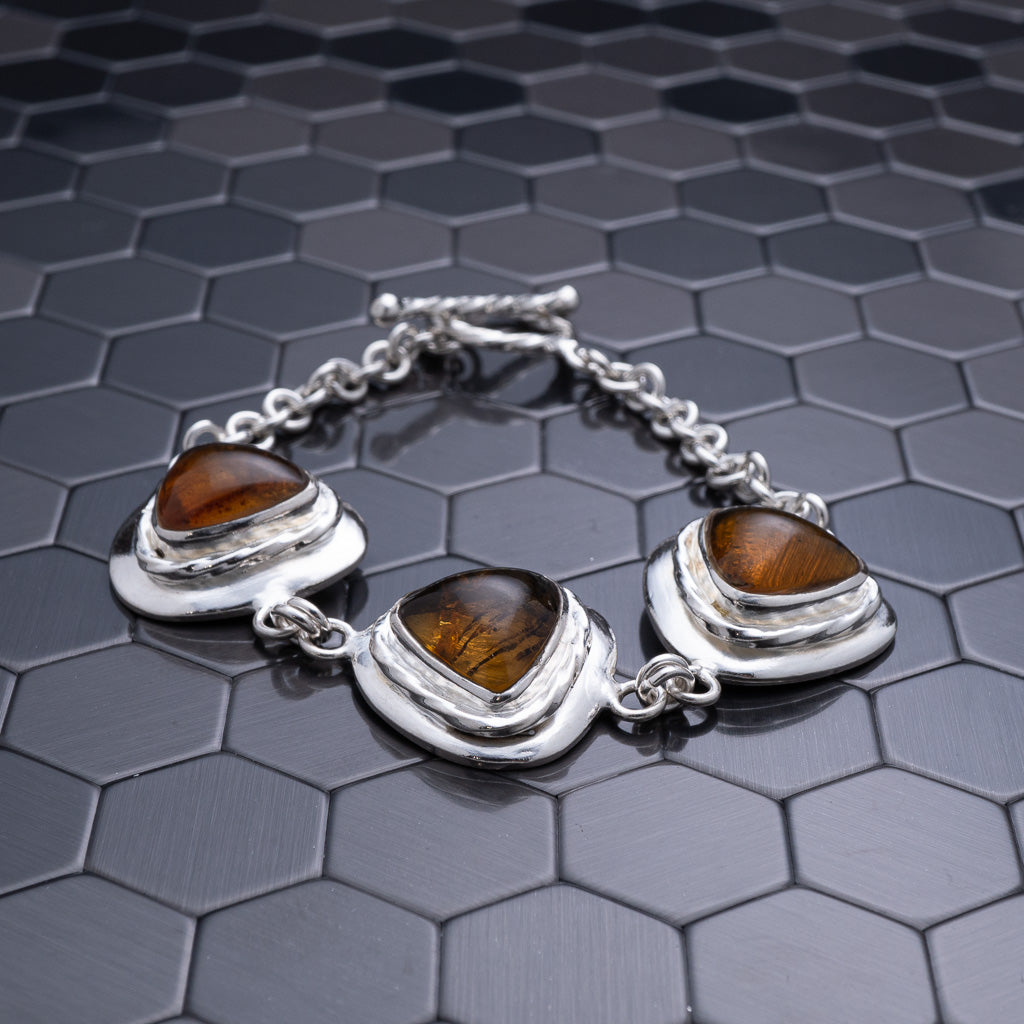
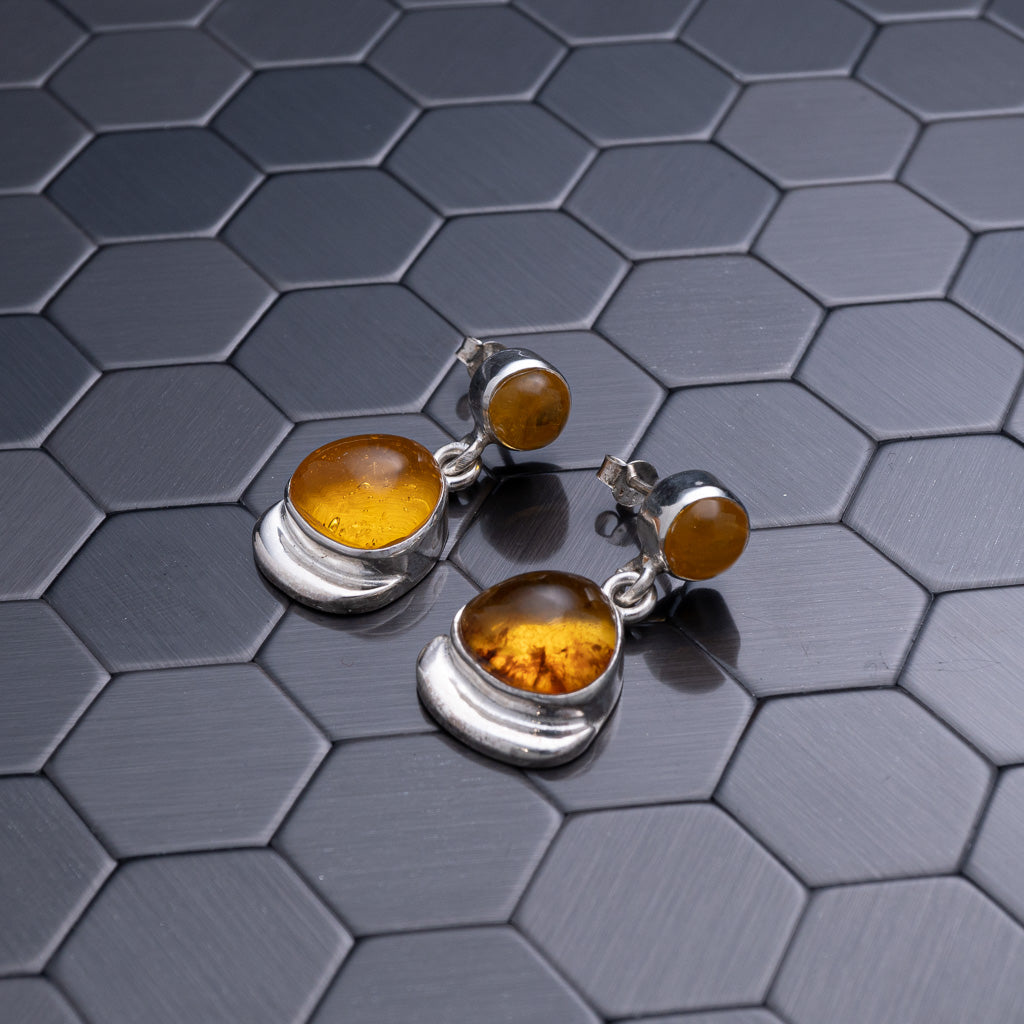
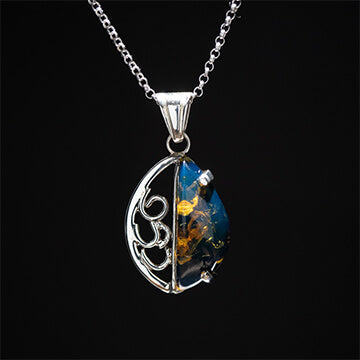
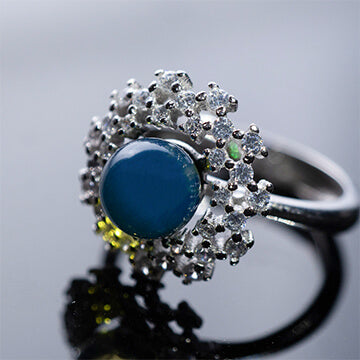
The setting or stringing material also matters. Gold complements honey, butterscotch, and cognac amber with a warm, heirloom-like finish. Sterling silver creates a cooler contrast that can make blue amber’s fluorescence feel even more vivid. Silk or durable jewelry cord can allow the beads themselves to take center stage in a more traditional strand.
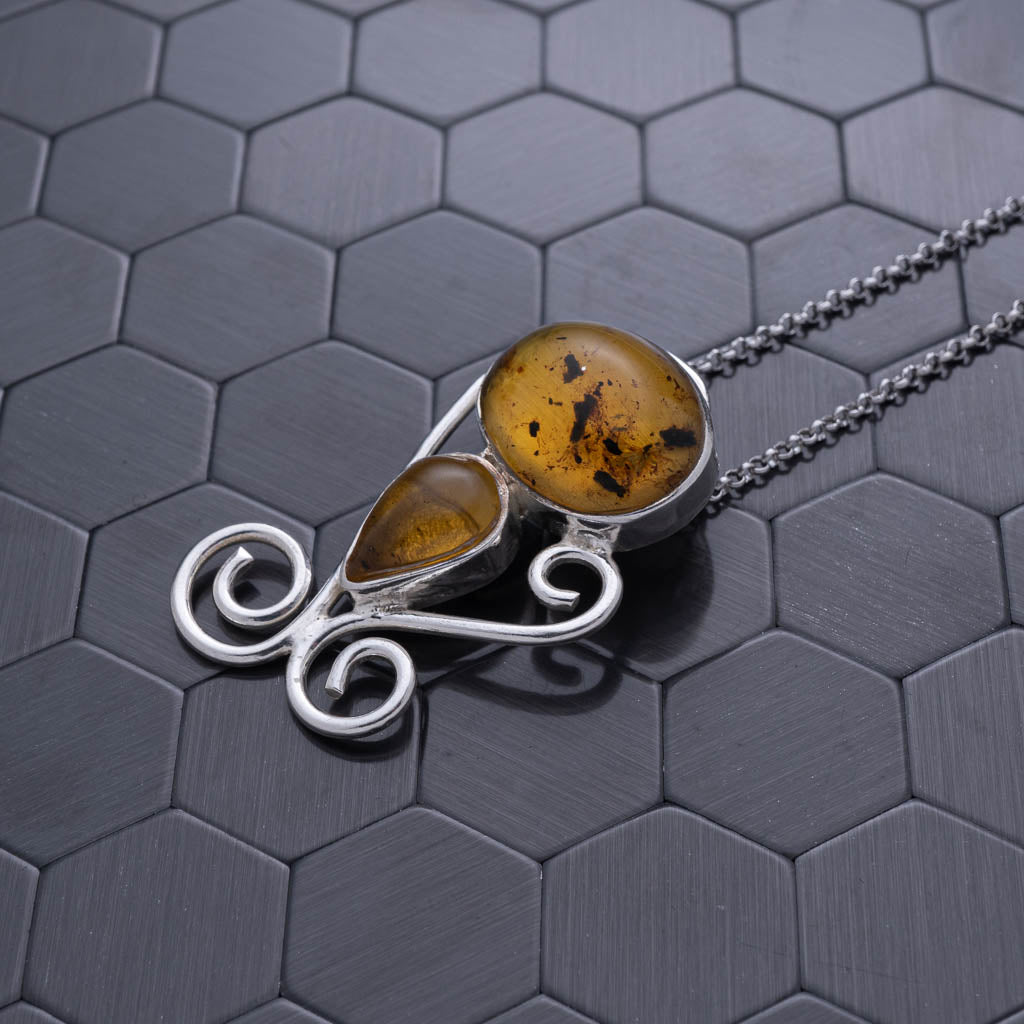
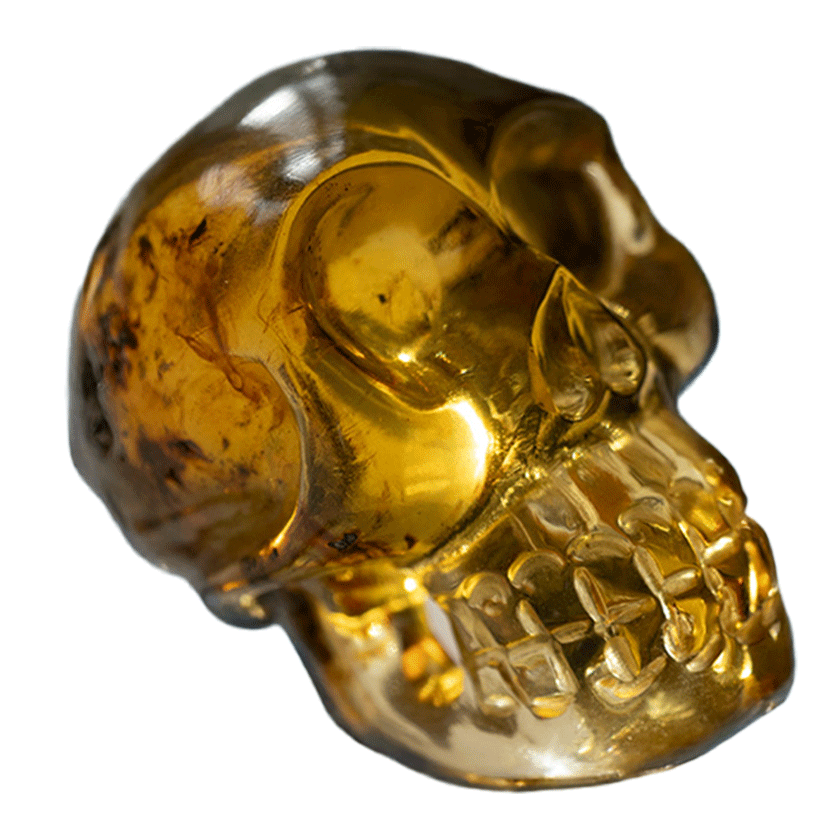
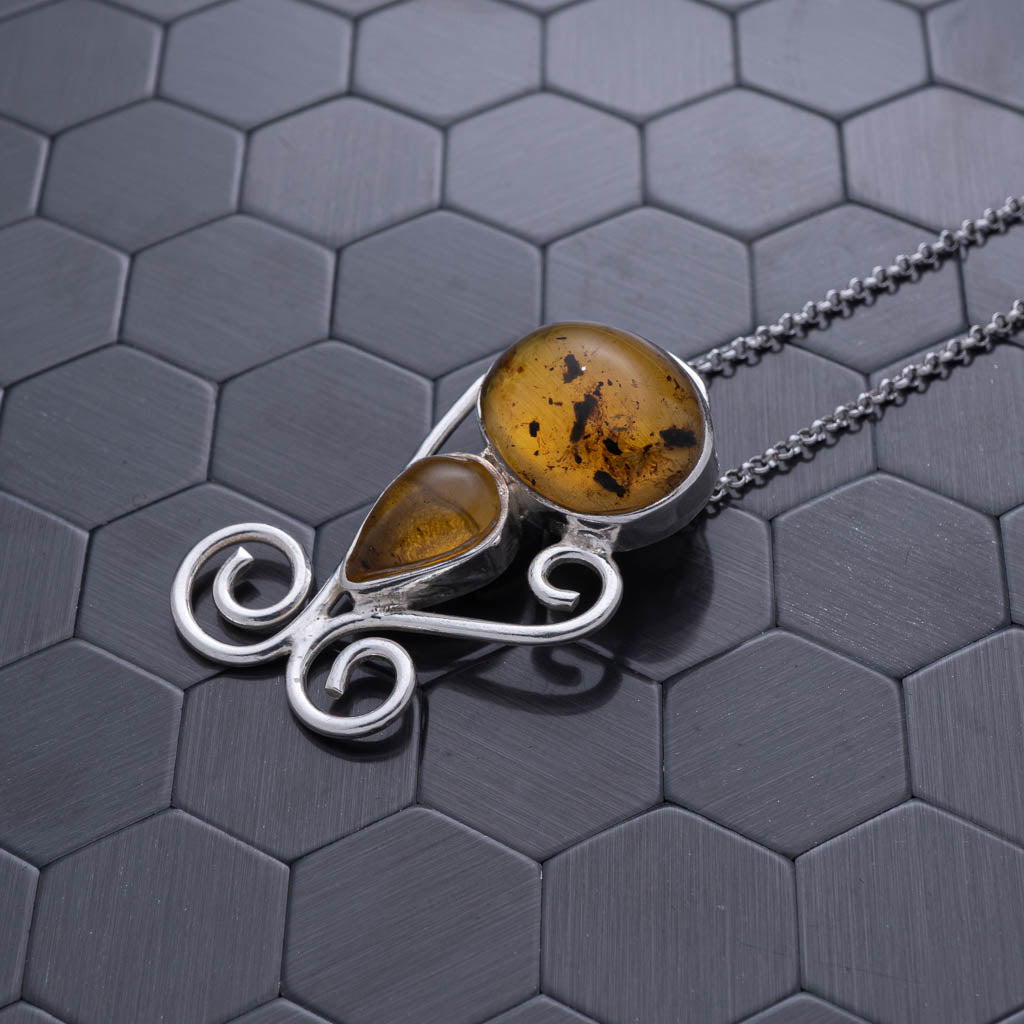
Amber offers a rare opportunity to wear a material that preserves a fragment of prehistoric life. Some beads contain visible botanical matter, tiny air bubbles, or insects. These inclusions are naturally occurring and can make a piece especially interesting to collectors, but they should never be treated as a reason to overlook craftsmanship or condition.
An inclusion does not automatically make a bead more valuable. Its importance depends on clarity, rarity, placement, preservation, size, and the appeal of the overall piece. A bead with no visible inclusion may be just as desirable when its color is exceptional or its blue fluorescence is unusually strong.
Small internal lines, soft clouds, and uneven color are also part of amber’s natural vocabulary. The goal is not sterile perfection. It is to choose beads that feel beautifully finished while honoring the material’s origin. A skilled artisan will place, polish, and string the beads in a way that enhances those natural details rather than hiding them.
Amber is beautiful, but it is softer than many gemstones. It benefits from thoughtful daily care. Remove amber jewelry before showering, swimming, exercising, or applying perfume, hairspray, lotion, and household cleaners. Chemicals and prolonged moisture can dull the surface over time, while knocks against hard stone or metal may leave scratches.
Clean beads gently with a soft, dry cloth after wearing them. If a deeper clean is needed, use only a lightly damp cloth and dry the piece promptly. Avoid ultrasonic cleaners, steam cleaners, commercial jewelry dips, and abrasive polishing products. These methods are too aggressive for amber.
Store amber separately in a soft pouch or a lined jewelry box compartment. Keeping it away from harder gemstones and metal edges helps prevent surface wear. For a treasured strand, occasional inspection of the cord, clasp, and drill holes is also wise. Restringing at the first sign of wear protects both the beads and the memories attached to them.
Many people are drawn to amber for its warm color and ancient origin, while others appreciate the spiritual symbolism long associated with it. Across cultures, amber has been regarded as a material of comfort, protection, and positive energy. These meanings are personal rather than medical claims, but they add emotional depth to a gift or daily piece.
Amber beads can mark a birthday, anniversary, milestone, or a long-awaited trip to the Caribbean. They are equally compelling when chosen simply because no other gemstone carries light in quite the same way. At Larimar Creations, authentic Dominican amber is valued not as a passing trend, but as a rare natural treasure shaped into jewelry with lasting presence.
Choose the strand that makes you pause in the light. Whether it glows in classic honey tones or reveals a flash of Caribbean blue, the right amber will feel less like an accessory and more like a small piece of time made personal.
Sign up to get the latest on sales, new releases and more …
11 min read
6 min read
9 min read