
Larimar
Blue Amber
Green Amber
Amber Carvings
More

by Admin October 03, 2026 6 min read

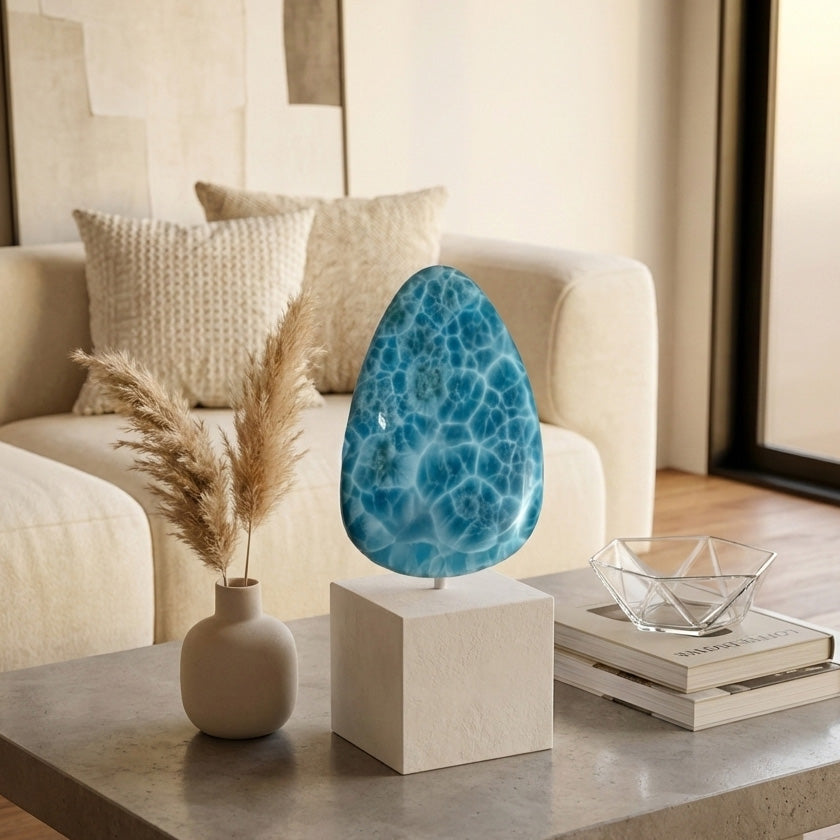
A jewelry craftsmanship review should begin where the eye naturally lingers: at the meeting point of gemstone and metal. A vivid blue Larimar cabochon or a luminous piece of Dominican Blue Amber may be the first thing you notice, but its beauty depends on the work surrounding it. The setting must protect the stone without concealing its character, and the metal must feel as considered as the rare Caribbean gem it holds.

For buyers who want more than a passing accessory, craftsmanship is not an abstract promise. It is visible in the balance of a pendant, the security of a ring, the softness of a polished edge, and the care taken to preserve a natural stone’s one-of-a-kind color and pattern. This is how jewelry becomes personal, lasting, and worthy of being worn for years.

What a Jewelry Craftsmanship Review Should Examine

A well-made piece does not need excessive ornament to prove its quality. It needs thoughtful construction. Fine jewelry and artisan jewelry take different approaches to design, yet both should meet the same essential standard: each component should have a purpose, and nothing should feel rushed, rough, or fragile.

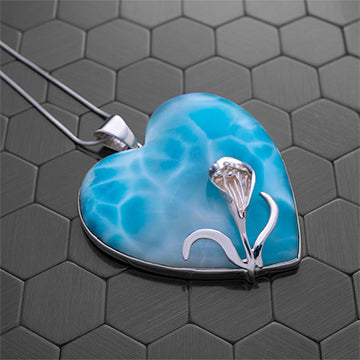
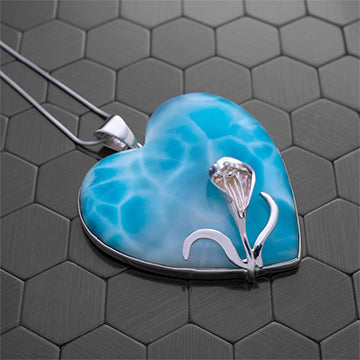
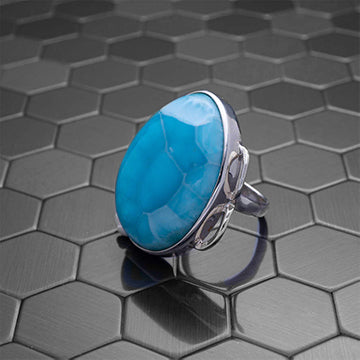
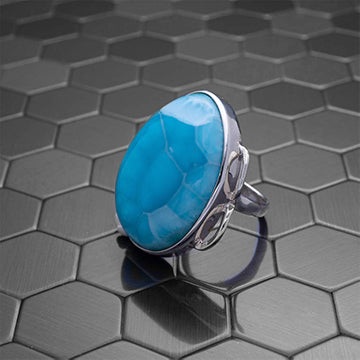
Begin with proportion. A substantial gemstone needs a setting that supports its weight, especially in pendants and statement rings. A large Larimar stone framed in an overly delicate bezel may look beautiful in a photograph but can feel unbalanced when worn. Conversely, heavy metalwork around a smaller stone can overwhelm the gem’s natural presence. The most successful designs create harmony, allowing the Caribbean blue of Larimar or the inner glow of amber to remain the focal point.

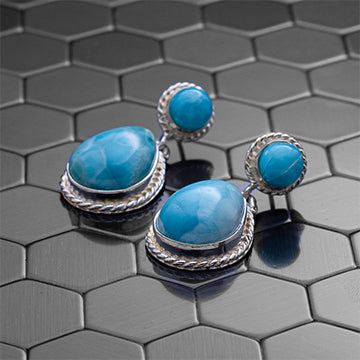
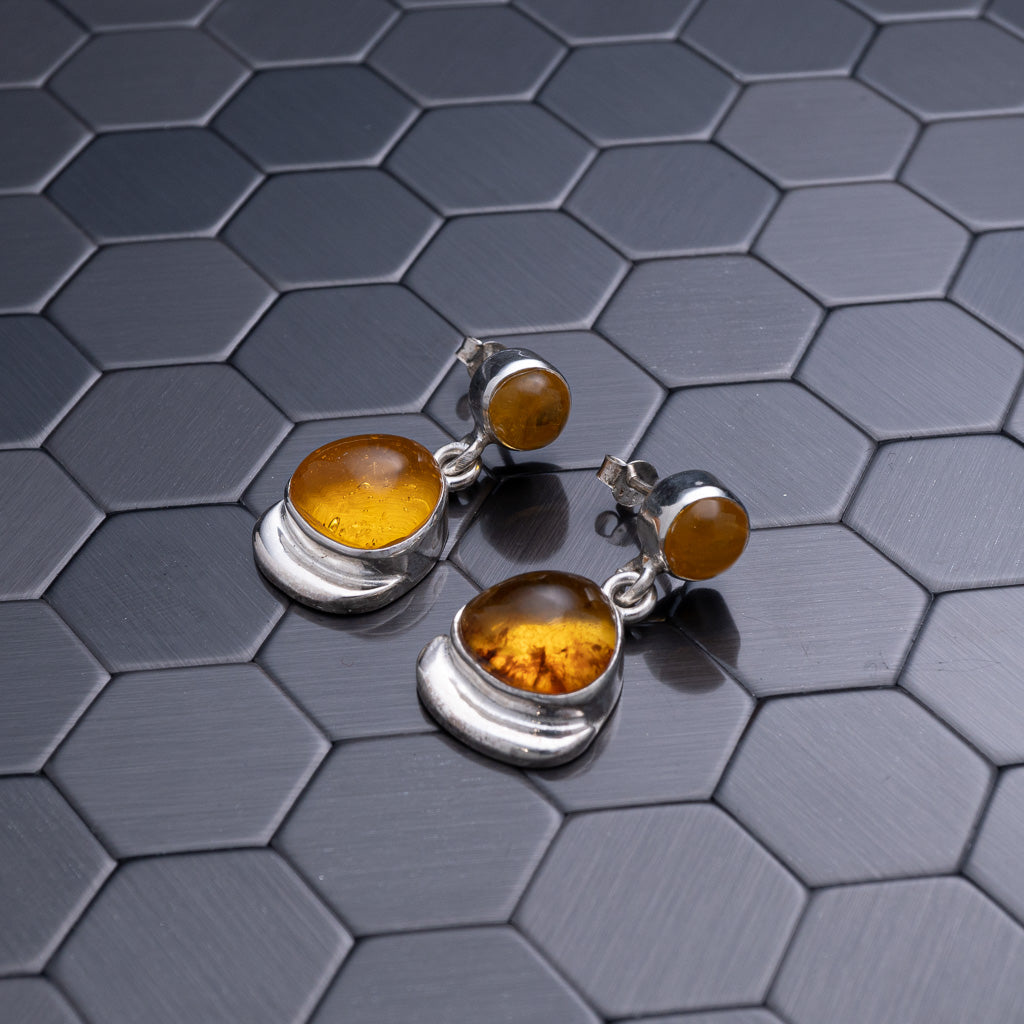
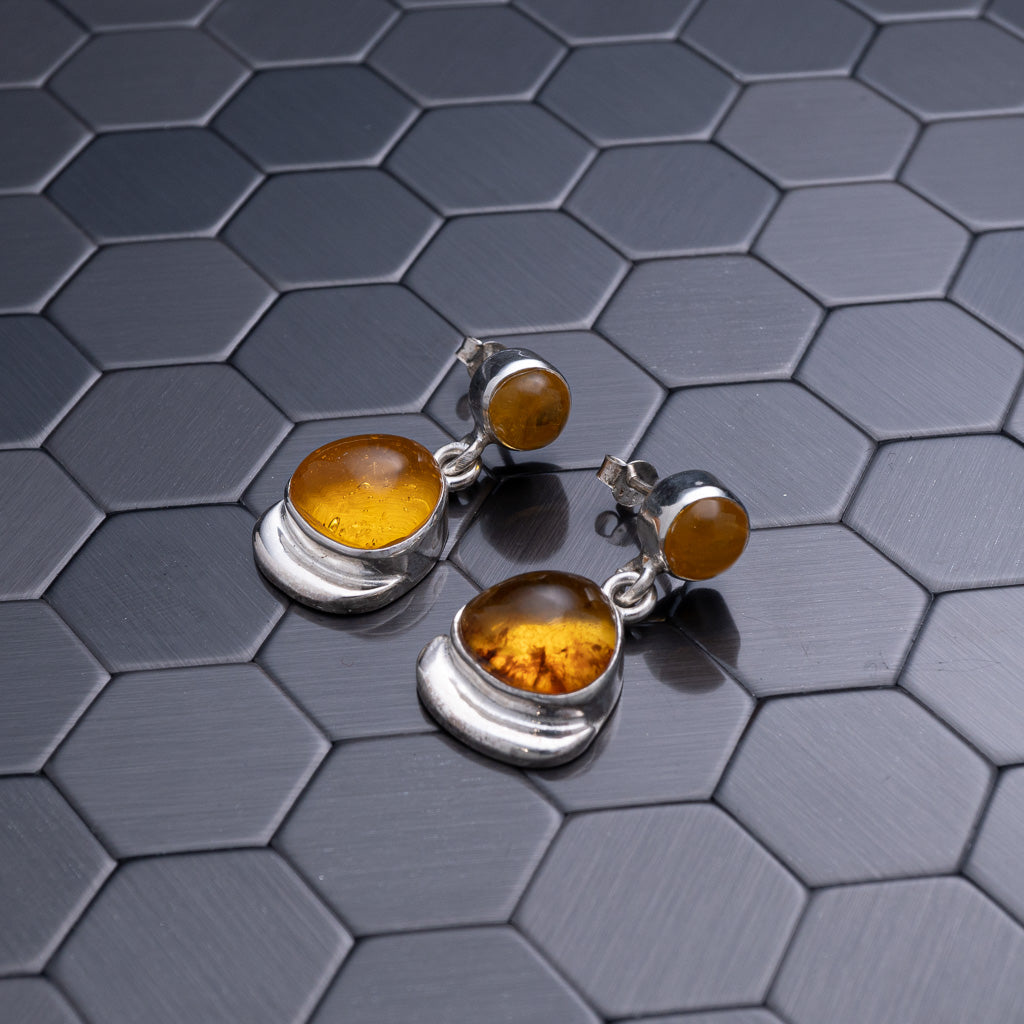
The next consideration is comfort. The back of a pendant should rest smoothly against the skin. Earring posts should sit straight and be firmly joined. Ring shanks should have a comfortable interior and enough thickness to stand up to regular wear. These details are easily overlooked when shopping online, but they are often the difference between jewelry that stays in a box and jewelry that becomes part of someone’s daily life.

The Setting Is Where Beauty Meets Security

Gemstone setting is one of the clearest indicators of jewelry craftsmanship. It is also particularly significant for Larimar and amber, which require a more considerate touch than extremely hard stones such as diamond or sapphire.

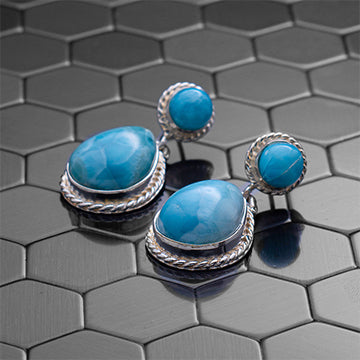
Larimar is prized for its ocean-like blue, white, and sometimes green patterns. Its surface should be presented in a way that protects the polished cabochon from knocks along its edges. A smooth bezel can offer excellent protection while creating a clean, refined outline. Prongs can also be beautiful when properly finished, but they must be even, secure, and shaped so they do not catch on clothing.

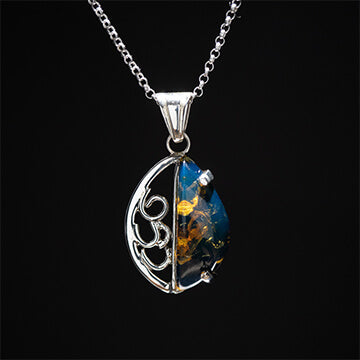
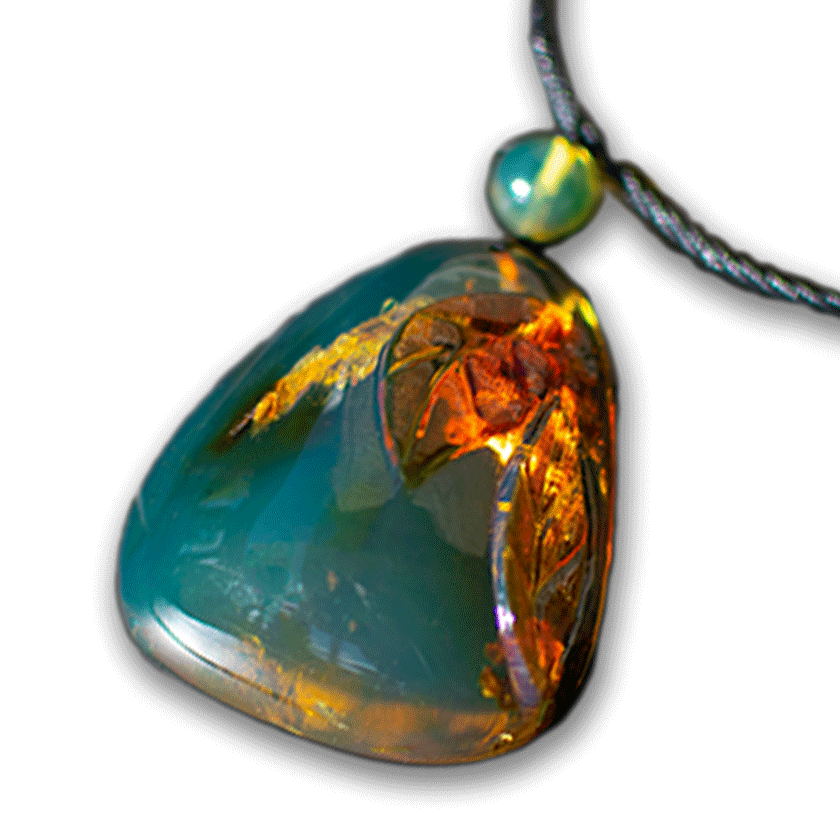
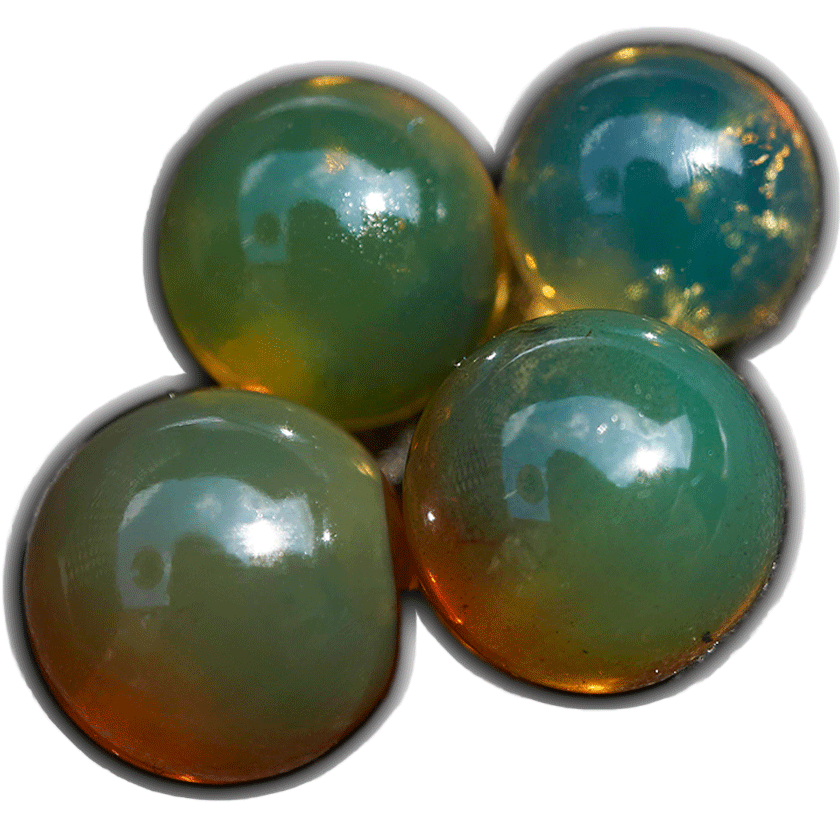
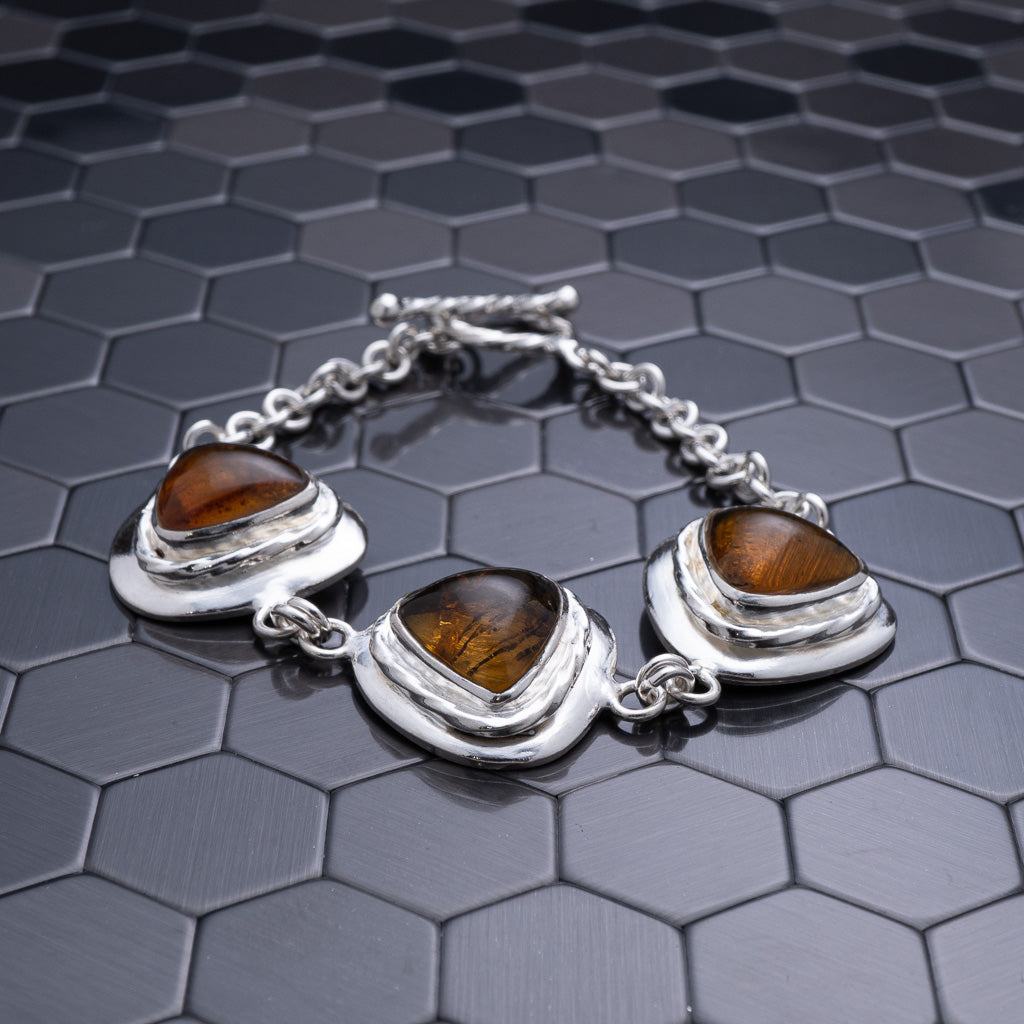
Amber calls for similar care, though for different reasons. This ancient organic gem is light, warm, and remarkably expressive, especially when Dominican Blue Amber reveals its rare blue fluorescence or rich cognac tones. Because amber is softer than many minerals, a setting should hold it securely without pressing aggressively against it. Look for an even fit around the stone, with no visible gaps, glue residue, or awkward pressure points.

A quality setting should not distract from the gem. Metal edges should be polished, prongs should be neat, and the stone should sit level rather than tilted. If a cabochon is intentionally set at an angle as part of the design, that choice should feel deliberate and balanced, not accidental.

Handmade Variation Is Not the Same as Poor Finish

Natural gems are not factory-made, and neither is thoughtfully handcrafted jewelry. A Larimar stone may have cloudlike white markings, deeper blue pools, or a shape guided by the rough material. Amber may contain internal textures, tiny botanical traces, or variations in transparency. These are characteristics of genuine natural material, not defects to be erased.

The same principle applies to artisan metalwork. Small variations can be part of the handmade character of a piece, particularly in organically shaped bezels, sculptural silverwork, and hand-finished details. What matters is whether the work appears intentional. A handmade texture can be beautiful; a sharp edge, loose stone, uneven solder joint, or incomplete polish is not.

Metalwork Tells You How a Piece Will Wear

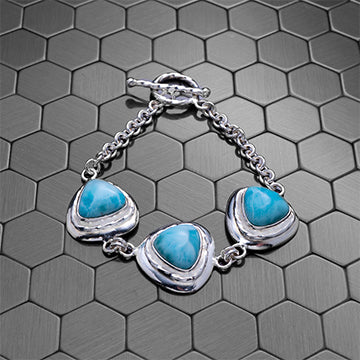
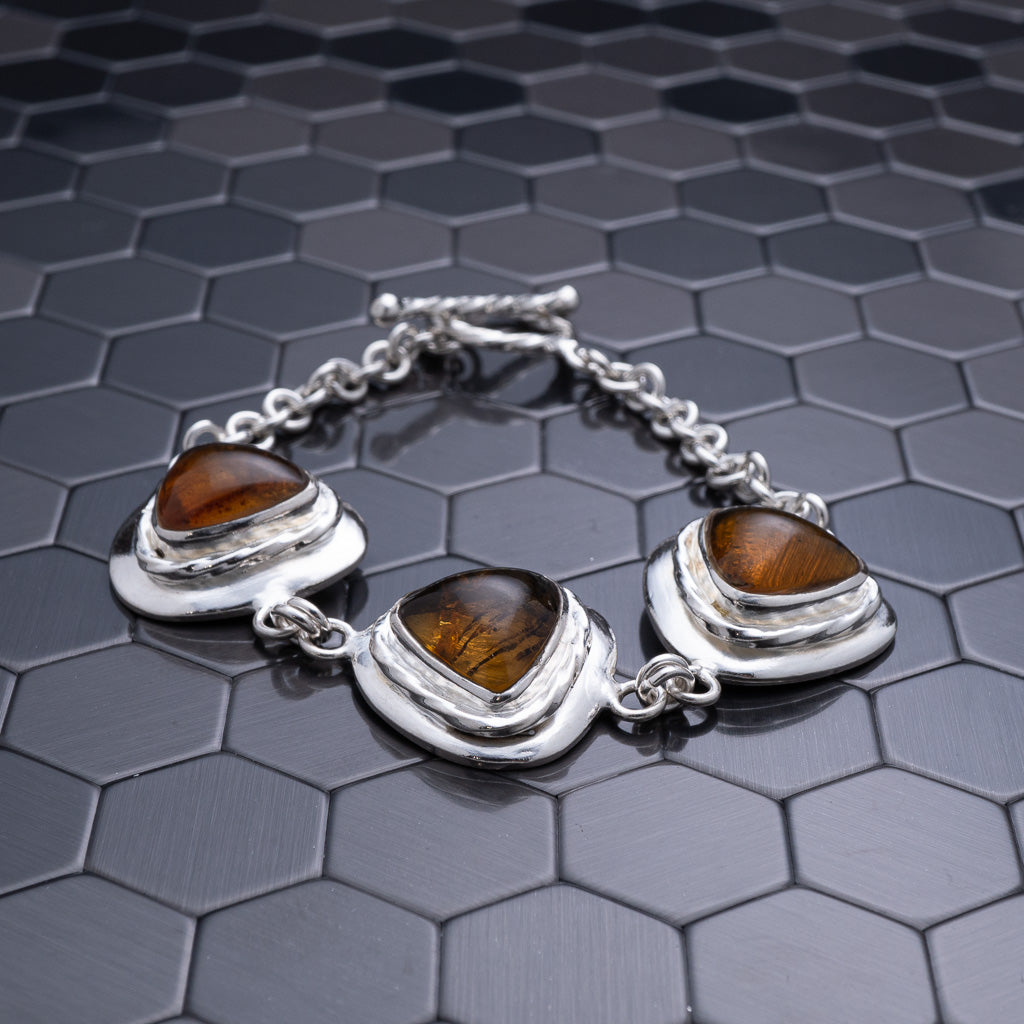
A jewelry review should look beyond the gemstone face and inspect the metalwork from every angle. In a ring, the shank should transition naturally into the setting, with no abrupt weak point where stress can build. In a pendant, the bail should be proportionate to the design and smooth enough to accommodate a chain without excessive rubbing. In bracelets, links and clasps should close cleanly and move with confidence.

Soldering deserves attention as well. Solder joints should be tidy and nearly invisible within the design. A visible seam is not automatically a flaw, particularly on handmade pieces, but it should be clean, secure, and free of dark residue or lumpy buildup. Good construction makes the jewelry feel unified rather than assembled from unrelated parts.

The choice of metal affects both appearance and maintenance. Sterling silver gives Larimar a cool, ocean-inspired frame and develops a soft patina over time if left unpolished. Gold can add warmth and formality, particularly beside honey-colored or blue amber. Neither is universally better. The right choice depends on personal style, frequency of wear, skin sensitivity, and whether the piece is meant for relaxed everyday use or special occasions.

Finish, Polish, and the Details You Feel

Fine finishing is quiet but unmistakable. Run a fingertip along the visible metal edges in your mind when reviewing product images, then confirm it once the piece arrives. Quality jewelry should feel smooth where it touches the skin. There should be no burrs around earring posts, roughness on a pendant bail, or sharp corners beneath a ring setting.

A bright polish is not the only mark of quality. Satin finishes, oxidized details, and hand-textured surfaces can all be beautifully executed. The test is consistency. A polished surface should be clear and intentional, while a textured surface should look designed rather than scratched. Areas near the gemstone, clasp, and underside deserve the same level of attention as the front-facing view.

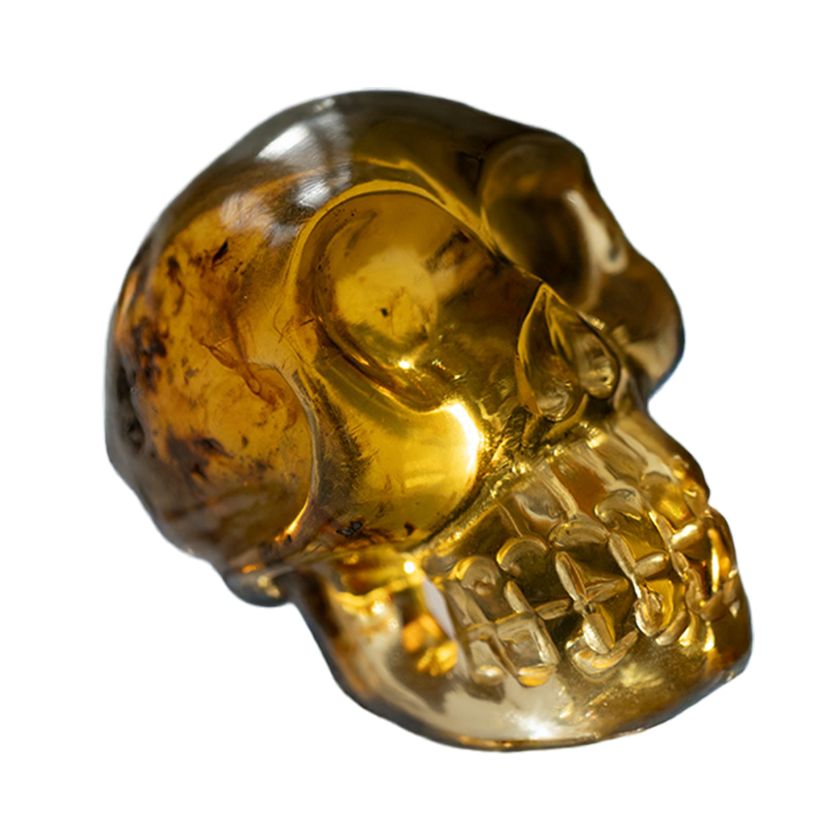
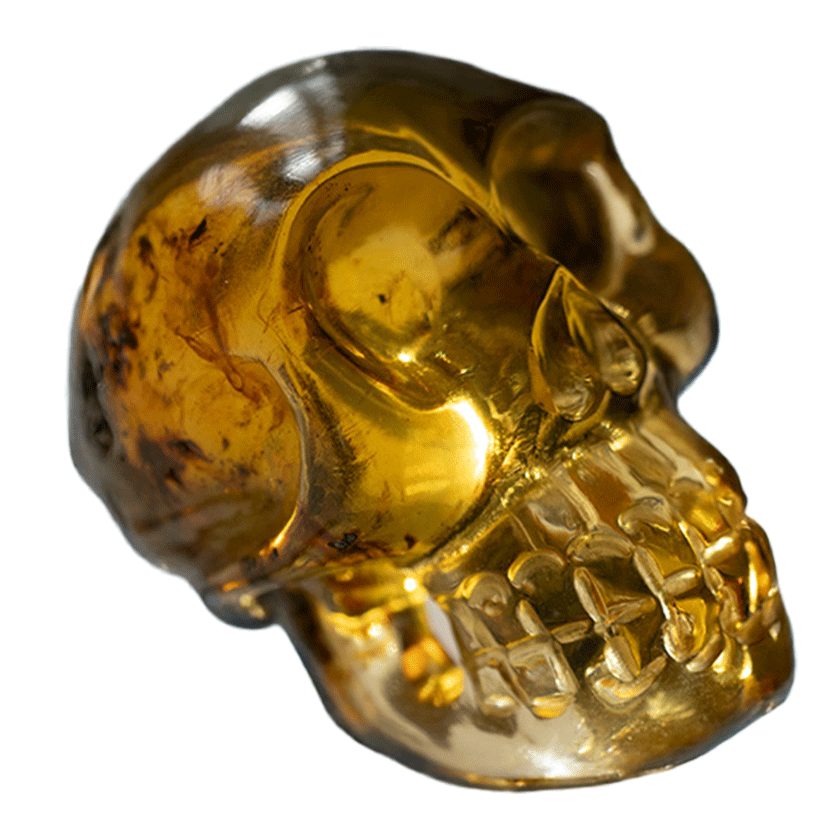
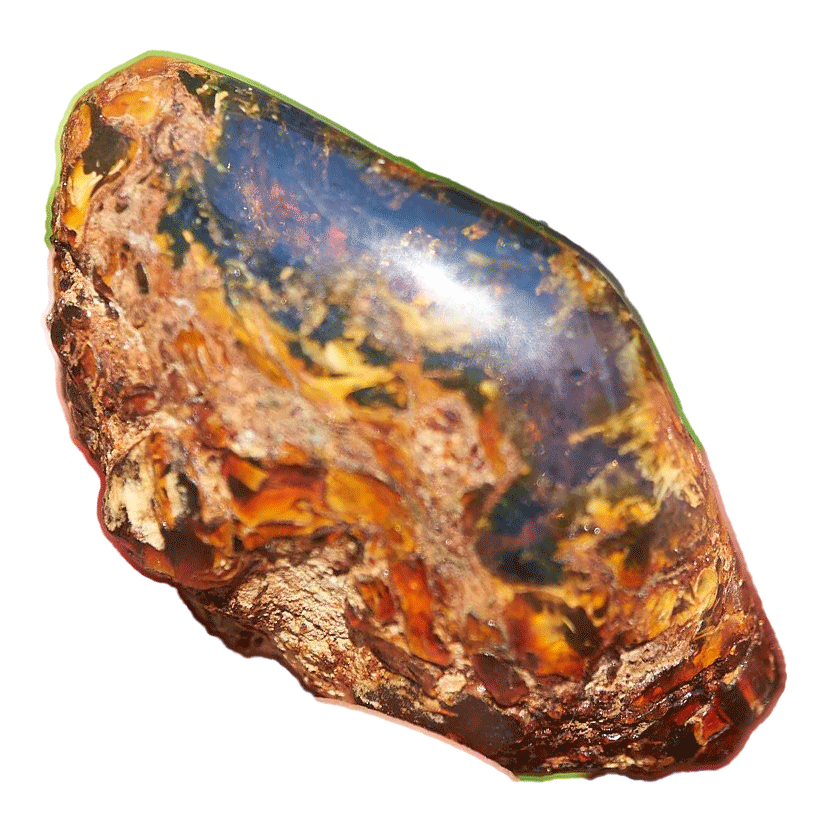
For collector pieces such as carvings, cabochons, beads, or fossil amber, finishing also means respecting the material. Over-polishing can erase delicate natural detail. A skilled lapidary balances smoothness with preservation, keeping the stone’s color, inclusions, and distinctive formation visible.

Provenance Gives Craftsmanship Its Full Meaning

A beautiful setting cannot substitute for genuine material. For rare Caribbean gemstones, authenticity and origin are part of the value of the finished jewelry. Larimar is found only in the Dominican Republic, and Dominican amber is globally recognized for its remarkable clarity, fossil inclusions, and rare blue variety.

That provenance changes how a piece should be evaluated. Buyers deserve a clear understanding of what they are purchasing: natural Larimar or amber, the stated origin, the type of metal used, and any relevant certification or authenticity information. Transparency is especially meaningful when a stone’s rarity is central to its appeal.

At Larimar Creations, the connection between Dominican sourcing and hand-finished jewelry is central to the experience. A piece carries more than color and shine. It carries the story of a Caribbean stone shaped into something wearable, giftable, and distinctly its own.

How to Assess Jewelry Before and After Purchase

When viewing jewelry online, look closely at photographs of the front, side, back, and clasp or bail. Multiple angles reveal whether a stone sits securely and whether the design has depth. Read dimensions rather than relying on images alone, since a pendant or ring can appear much larger in a close-up than it will in person.

Once the jewelry arrives, inspect it in natural light. Check that the gemstone is stable in its setting, that closures work smoothly, and that the metal feels comfortable against your skin. Natural Larimar and amber will vary from one piece to another, so compare what you receive to the stated material and design description rather than expecting identical markings.

Care is part of preserving craftsmanship. Remove gemstone jewelry before strenuous activity, swimming, or household cleaning. Keep amber away from perfume, hairspray, and harsh chemicals, and avoid hard impacts to Larimar. A soft cloth and gentle handling will help preserve the finish without diminishing the stone’s natural glow.

The finest piece is not always the largest stone or the most elaborate design. It is the one in which authenticity, setting, metalwork, and comfort all feel considered. Choose jewelry that invites a closer look, then rewards it with the honest detail of a rare gem made to be worn.

Jewelry Craftsmanship Review: What Quality Looks Like

Jewelry Craftsmanship Review: What Quality Looks Like

6 min read

A jewelry craftsmanship review reveals how stone setting, metalwork, finish, and provenance shape the lasting value of authentic Caribbean gemstone jewelry.
Read More
Larimar Meaning: Spiritual, Healing & Symbolic Power

Larimar Meaning: Spiritual, Healing & Symbolic Power

9 min read

Discover the profound larimar meaning, from its spiritual significance to healing properties. Learn why this rare Caribbean gemstone symbolizes peace.
Read More
Larimar Pendants: The Ultimate Guide for 2026 - Larimar Creations

Larimar Pendants: The Ultimate Guide for 2026

10 min read

Discover everything about larimar pendants, from authenticity and care to styling tips. Expert guide to choosing genuine Caribbean gemstone jewelry.
Read More