
Larimar
Blue Amber
Green Amber
Amber Carvings
More

by Admin September 10, 2026 6 min read

A pale blue stone can look like a piece of sky, a calm sea, or a sunlit tropical bay. That is why the question of larimar versus amazonite stones deserves more than a quick color comparison. Both are beautiful blue-green gems, but they come from very different geological stories and create distinctly different jewelry experiences. One is a rare Caribbean treasure; the other is a widely recognized feldspar with an earthy, mineral-rich character.

For a meaningful gift, a personal pendant, or a collector-worthy cabochon, the right choice often comes down to whether you are drawn to Larimar’s oceanic rarity or amazonite’s cool, serene depth.

Larimar Versus Amazonite Stones at a Glance

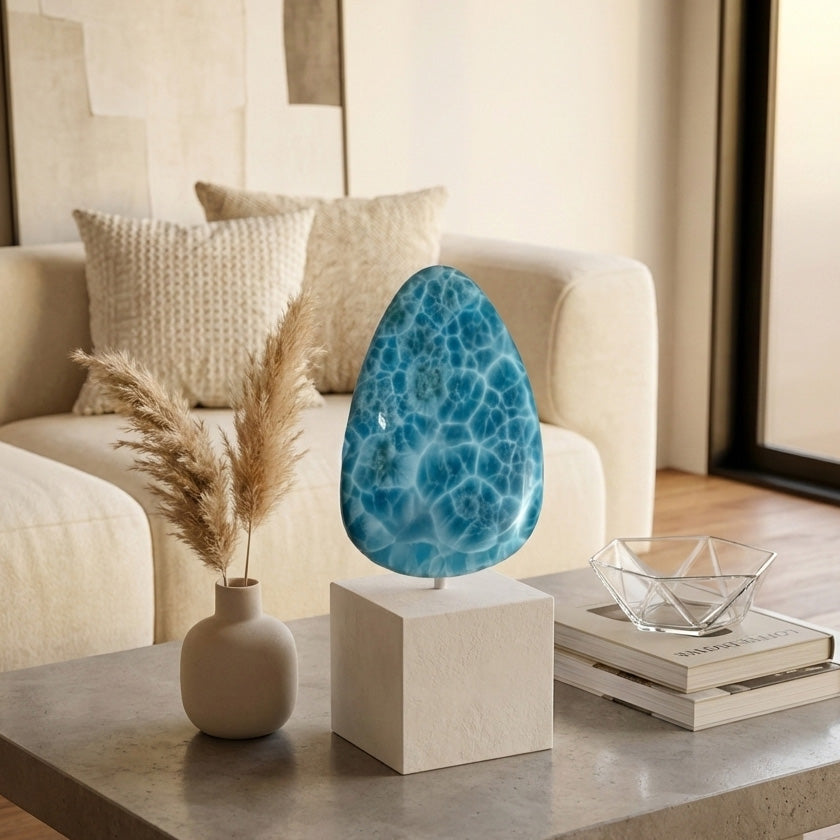
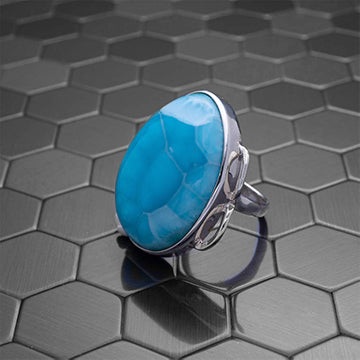
Larimar is a rare blue variety of pectolite found only in the Dominican Republic. Its most admired material displays soft to vivid blue color, often layered with white patterns that resemble foaming waves, drifting clouds, or Caribbean shallows. Each genuine stone is naturally individual, which gives handcrafted Larimar jewelry its unmistakably personal character.

Amazonite is a blue-green to green variety of microcline feldspar. It occurs in several parts of the world, including Brazil, Madagascar, Russia, and the United States. Its appearance tends to be more opaque and structured than Larimar’s, with a greenish turquoise body color and pale streaks, grids, or cloudy inclusions.

The distinction is clear once they are side by side. Larimar often feels fluid and coastal. Amazonite feels cooler, more architectural, and sometimes almost vintage in its blue-green coloring. Neither is simply a substitute for the other.

Color: Caribbean Blue or Blue-Green Mineral Beauty?

Color is the most immediate difference. Fine Larimar is prized for its blue, from gentle powder blue to saturated volcanic blue. White marbling is common and desirable when it creates a balanced, wave-like design. Higher-grade stones typically show stronger blue with less brown, gray, or heavily fractured material, although a natural pattern remains part of Larimar’s charm.

Amazonite usually carries more green. Some pieces lean toward turquoise, while others show a softer mint, aqua, or blue-green shade. White feldspar streaks may run through the stone in lines or patches. This look can be especially appealing in bold silver jewelry, bohemian styles, and pieces designed around an earthy color palette.

If the color you want is unmistakably ocean blue, Larimar is usually the more natural choice. If you prefer a stone that bridges turquoise blue and leafy green, amazonite may suit your wardrobe more easily. Lighting matters for both stones: daylight can reveal a Larimar’s blue saturation and bring out the layered texture within amazonite.

The Pattern Is Part of the Stone’s Identity

Larimar is seldom uniform, and that is precisely the point. Its white-and-blue pattern is not printed, dyed, or repeated from stone to stone. A well-cut cabochon can resemble an aerial view of the Caribbean, with swirls of white moving across a blue field.

Amazonite can also have engaging natural patterning, but its lines generally appear more crystalline or block-like. Buyers who love organized veining and an opaque, grounded look may find it especially compelling. Those looking for movement, softness, and a distinctly tropical impression often return to Larimar.

Origin and Rarity Matter

Larimar’s provenance is central to its value. This gemstone is mined in a small mountainous area of the Dominican Republic, making authentic Larimar a true single-source stone. It is not simply blue pectolite from a range of countries. Its limited origin gives every authentic piece a direct connection to the Caribbean and to the skilled lapidaries and jewelers who bring out its beauty.

Amazonite is still a natural gemstone with real visual appeal, but it is more broadly available. Multiple deposits supply the market, and large pieces, beads, carvings, and cabochons are generally easier to find. Availability does not make amazonite less beautiful; it simply changes the conversation for collectors and gift buyers seeking scarcity.

For someone choosing a stone with a strong sense of place, Larimar carries a rare distinction. Wear a piece of the Caribbean, and the origin is not a marketing detail. It is part of the gemstone itself.

Durability for Rings, Pendants, and Everyday Wear

Both stones require thoughtful care. Larimar measures about 4.5 to 5 on the Mohs hardness scale. Amazonite is harder, generally around 6 to 6.5. In practical terms, amazonite offers somewhat better resistance to everyday surface scratching, though neither stone is ideal for rough, carefree wear.

Larimar is particularly lovely in pendants, earrings, and bracelets, where it is less exposed to repeated impact. It can also be worn in rings, especially when the design includes a protective bezel or setting that keeps the stone’s edges from taking direct knocks. A Larimar ring is best treated as a cherished fine-jewelry piece rather than a stone to wear during gardening, gym sessions, or heavy work.

Amazonite can be a good option for larger statement rings and beads, but it is not invulnerable. It can chip if struck and may be affected by harsh chemicals. The extra hardness is helpful, not a license for neglect.

For either gemstone, clean gently with lukewarm water, mild soap, and a soft cloth. Avoid ultrasonic cleaners, steam cleaning, chlorine, perfumes, and prolonged direct sunlight. Store jewelry separately so harder gems and metals do not scratch the polished surface.

Value: What Are You Paying For?

Larimar pricing reflects color quality, pattern, cut, size, polish, craftsmanship, and verified origin. Richer blue material with an attractive, balanced white pattern is generally more sought after than pale, grayish, brown-marked, or heavily fractured material. A beautifully matched pair of Larimar earrings or a large high-blue cabochon takes careful selection, which can add meaningful value.

Amazonite prices vary with color, clarity of pattern, cut, and the jewelry setting, but the stone is usually more accessible at comparable sizes. This makes it appealing for shoppers who want a substantial blue-green look without paying for the rarity associated with a single-source Caribbean gem.

The important trade-off is not simply expensive versus affordable. Larimar is chosen for its limited origin, its ocean-blue identity, and the individuality of each natural pattern. Amazonite is chosen for its calm blue-green color, broader availability, and versatile presence in many jewelry styles.

Authenticity Should Never Be an Afterthought

Because Larimar is rare and recognizable, buyers may encounter misidentified stones, dyed material, glass, or other blue gems sold under its name. Authentic Larimar should be presented with clear origin information and honest disclosure of the stone’s natural characteristics. A trusted specialist will not promise that every piece looks identical, because genuine Larimar never does.

Amazonite can also be confused with other blue-green materials, particularly when listings rely on vague names such as “aqua stone” or “turquoise-colored gem.” Ask what the stone is, where it comes from when available, and whether it has been dyed or treated. Clear information protects both the beauty of the purchase and the confidence behind it.

At Larimar Creations, authenticity and Dominican origin are at the heart of the Larimar selection, because a stone with such a singular story deserves to be represented with care.

Which Stone Fits Your Jewelry Style?

Choose Larimar when you want jewelry that feels luminous, romantic, and deeply connected to the sea. Its soft blue pairs beautifully with sterling silver, white gold, and warm gold settings, and it has a natural place in heart pendants, polished statement rings, artisan earrings, and collector cabochons. It is an especially memorable choice for birthdays, anniversaries, or gifts that call for a story beyond the usual gemstone names.

Choose amazonite when your style leans toward blue-green color, silver settings, natural textures, and bold casual pieces. It can complement denim, linen, ivory, olive, and black beautifully. Larger amazonite beads and carvings also offer a grounded decorative appeal that is different from Larimar’s more fluid visual movement.

Meaning can be part of the decision as well. Larimar is often associated with peace, the sea, and calm communication, while amazonite is commonly connected with balance, truth, and soothing self-expression. These associations are personal and spiritual rather than scientific claims, but they can make a chosen piece feel even more intimate.

The best gemstone is the one that continues to catch your eye after the first glance. If you see blue water and a rare island story in the stone, choose Larimar. If you see a cool blue-green landscape with mineral character, choose amazonite. Let the piece you wear reflect not only your style, but the place, craftsmanship, and natural beauty you want to carry with you.

Gemstone Rings Unique: Your Guide to Rare & One-of-a-Kind - Larimar Creations

Gemstone Rings Unique: Your Guide to Rare & One-of-a-Kind

10 min read

Discover gemstone rings unique in design and material. Learn about rare stones, custom settings, and how to find truly exceptional rings in 2026.
Read More
Larimar Versus Amazonite Stones Compared - Larimar Creations

Larimar Versus Amazonite Stones Compared

6 min read

Compare larimar versus amazonite stones by color, origin, durability, value, and jewelry style to choose a gemstone with confidence and meaning in jewelry.
Read More
Heart Necklace Large: Style Guide & Buying Tips 2026 - Larimar Creations

Heart Necklace Large: Style Guide & Buying Tips 2026

12 min read

Discover how to choose, style, and care for a heart necklace large enough to make a statement. Expert tips on metals, gemstones, and trends.
Read More