
FREE WORLD WIDE SHIPPING
HANDCRAFTED IN THE DOMINICAN REPUBLIC
30% DISCOUNT APPLIED AT CHECKOUT
FREE WORLD WIDE SHIPPING
HANDCRAFTED IN THE DOMINICAN REPUBLIC
30% DISCOUNT APPLIED AT CHECKOUT
FREE WORLD WIDE SHIPPING
HANDCRAFTED IN THE DOMINICAN REPUBLIC
30% DISCOUNT APPLIED AT CHECKOUT
FREE WORLD WIDE SHIPPING
HANDCRAFTED IN THE DOMINICAN REPUBLIC
30% DISCOUNT APPLIED AT CHECKOUT
FREE WORLD WIDE SHIPPING
HANDCRAFTED IN THE DOMINICAN REPUBLIC
30% DISCOUNT APPLIED AT CHECKOUT
FREE WORLD WIDE SHIPPING
HANDCRAFTED IN THE DOMINICAN REPUBLIC
30% DISCOUNT APPLIED AT CHECKOUT
100% Handcrafted in DR.
by Admin October 22, 2026 6 min read
A piece of amber can look warm honey-gold in ordinary light, then reveal an unexpected blue, green, or milky glow beneath ultraviolet light. So, what causes amber fluorescence? The answer begins millions of years ago, in the chemistry of ancient tree resin, and becomes especially captivating in rare Dominican blue amber. This visible response to UV light is one reason amber feels less like an ordinary gemstone and more like a preserved piece of the Caribbean's living past.
Fluorescence occurs when a material absorbs invisible ultraviolet energy and releases part of that energy as visible light. In amber, naturally occurring organic compounds within the fossilized resin absorb UV wavelengths and emit a glow that may appear blue, greenish-blue, yellow, white, or creamy.
Amber is not a mineral crystal formed deep in the earth. It is fossilized tree resin, transformed over immense spans of time through oxidation, polymerization, pressure, and heat. Its organic origin is central to its fluorescent character. The original resin contained a complex mix of plant compounds, including terpenes and aromatic molecules. As the resin matured into amber, those compounds changed, but traces of their chemistry remained.
Different amber deposits formed from different prehistoric forests, under different conditions, and over different lengths of time. That is why one authentic amber piece may barely react under UV light while another gives off a vivid, almost electric glow. Fluorescence is a natural variation, not a single universal standard for every specimen.
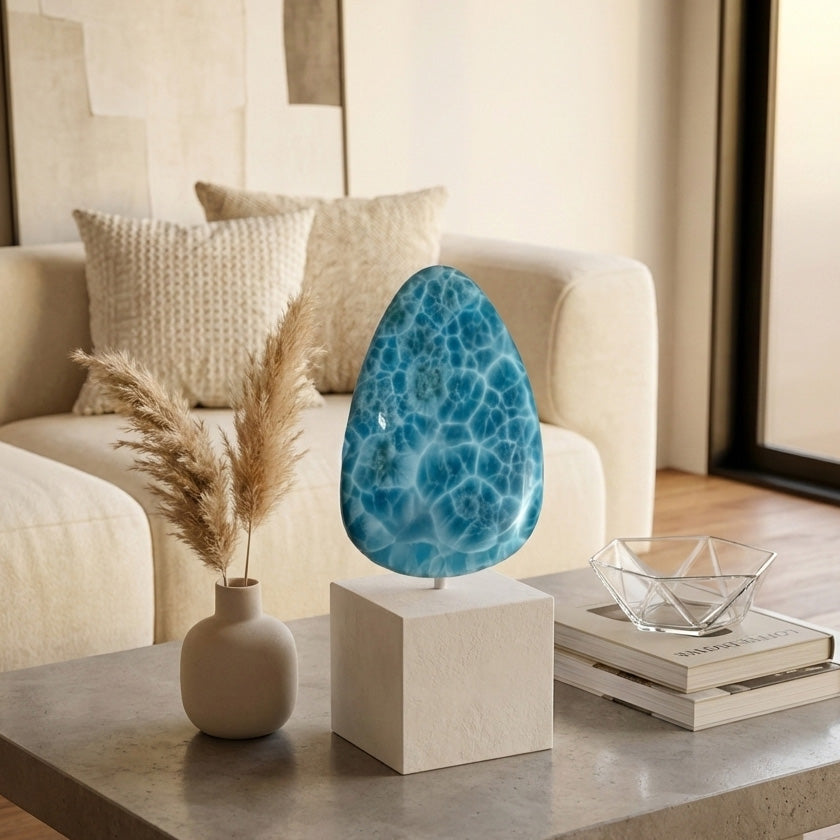
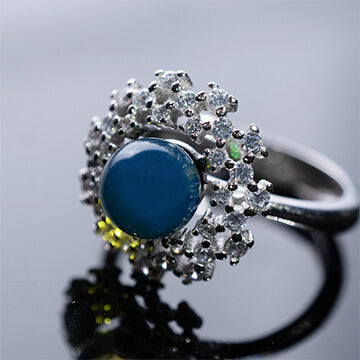
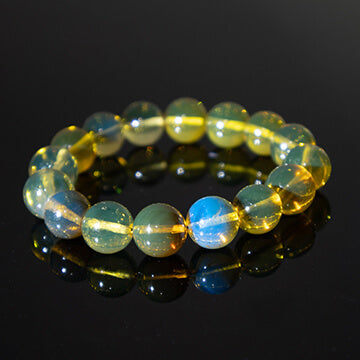
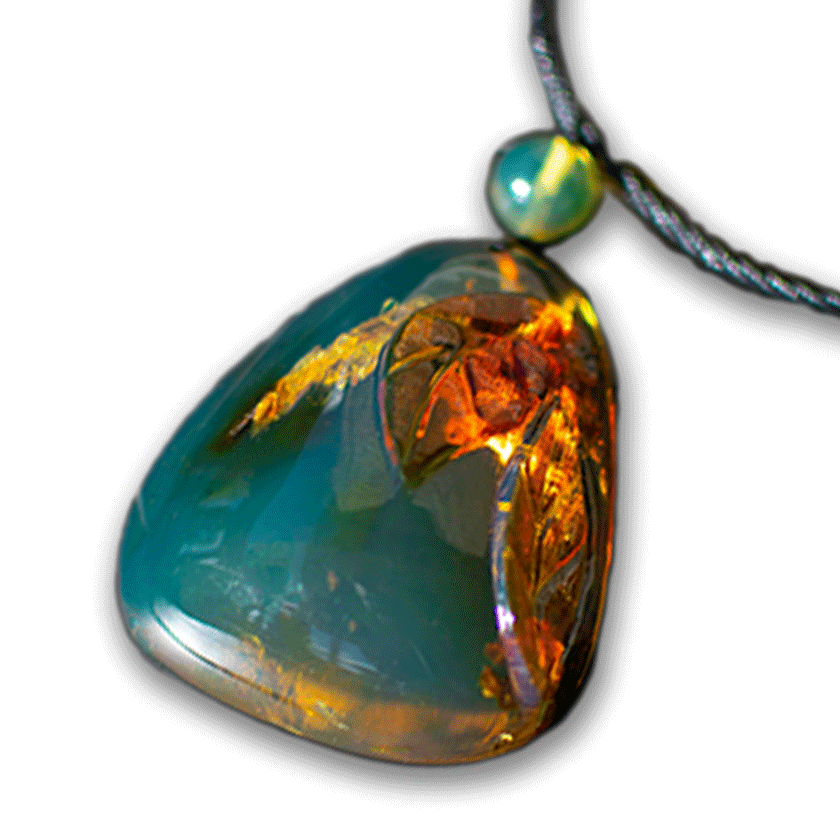
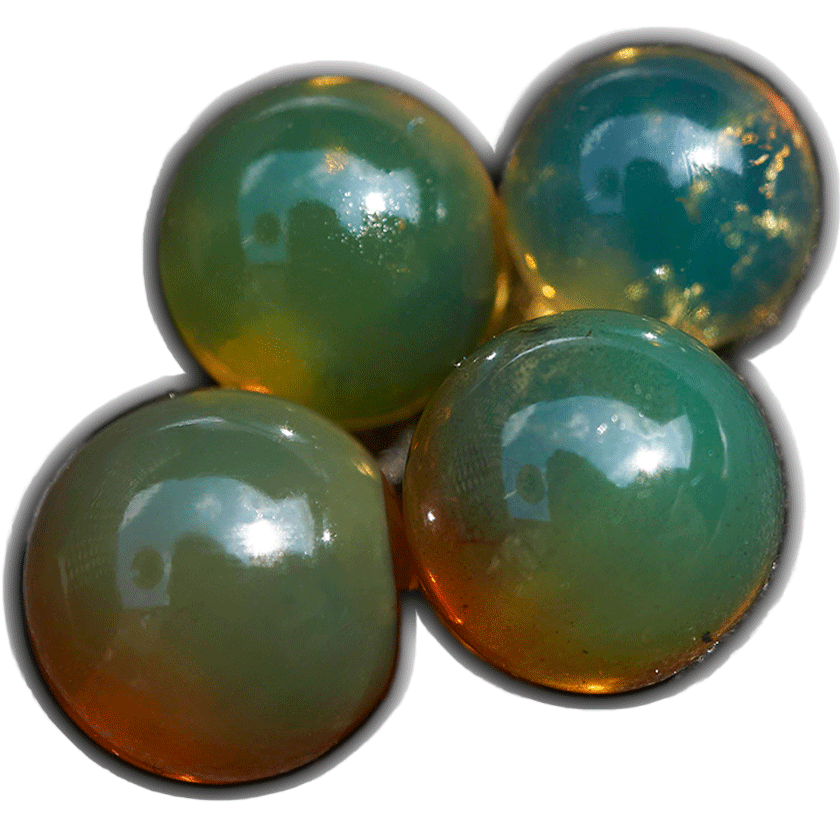
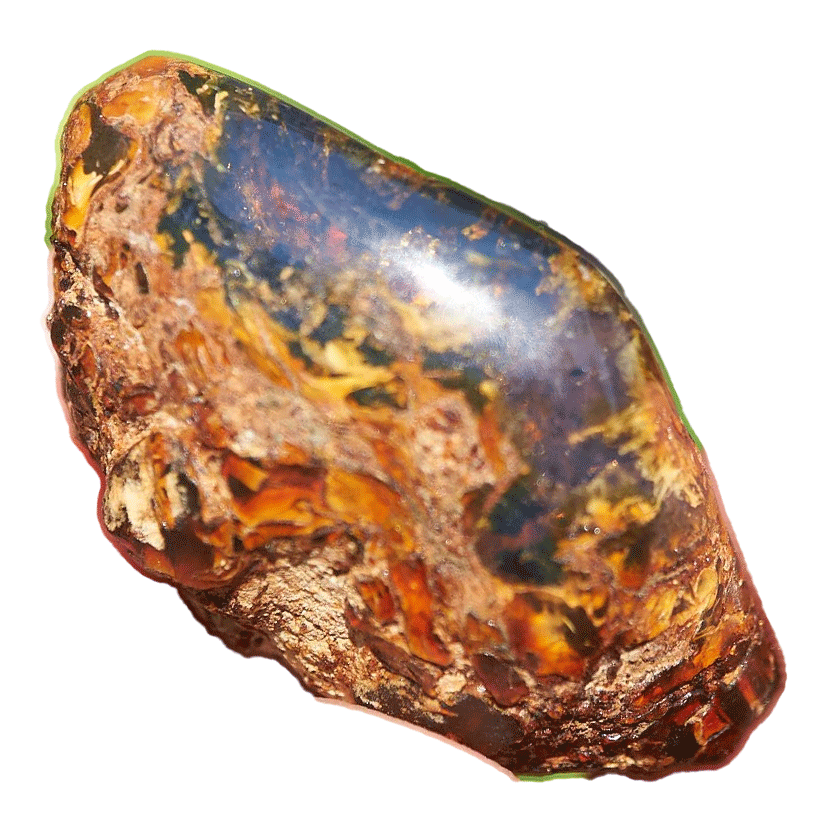
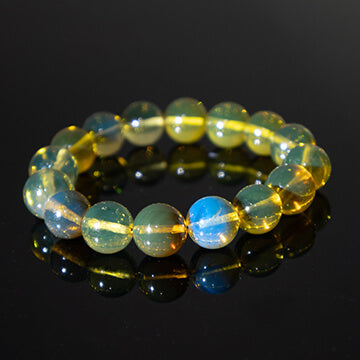
Dominican amber is renowned for its clarity, range of colors, and remarkable fluorescent response. The most sought-after material, Dominican blue amber, can appear pale yellow, champagne, or nearly clear in direct light. Against a dark background or in certain viewing angles, it may show a blue sheen. Under ultraviolet light, its blue fluorescence can become especially pronounced.
This effect is associated with the amber's molecular structure and the particular botanical source of the ancient resin. Dominican amber is generally linked to the extinct tree Hymenaea protera, a relative of modern-day tropical legumes. Over time, resin from these trees developed chemical characteristics that can produce strong blue or bluish-white fluorescence.
The blue appearance is also influenced by light scattering. Fine internal features and the way light moves through highly transparent amber can emphasize shorter blue wavelengths. This is why a blue amber cabochon may look different when held in sunlight, photographed on a dark surface, viewed near a window, or illuminated with UV light.
A bright response does not mean every piece will show the same exact shade. Some Dominican blue amber leans sky blue; some appears icy white with blue edges; others show a soft turquoise or greenish cast. For collectors and jewelry lovers, that individuality is part of the appeal. Each stone has its own relationship with light.
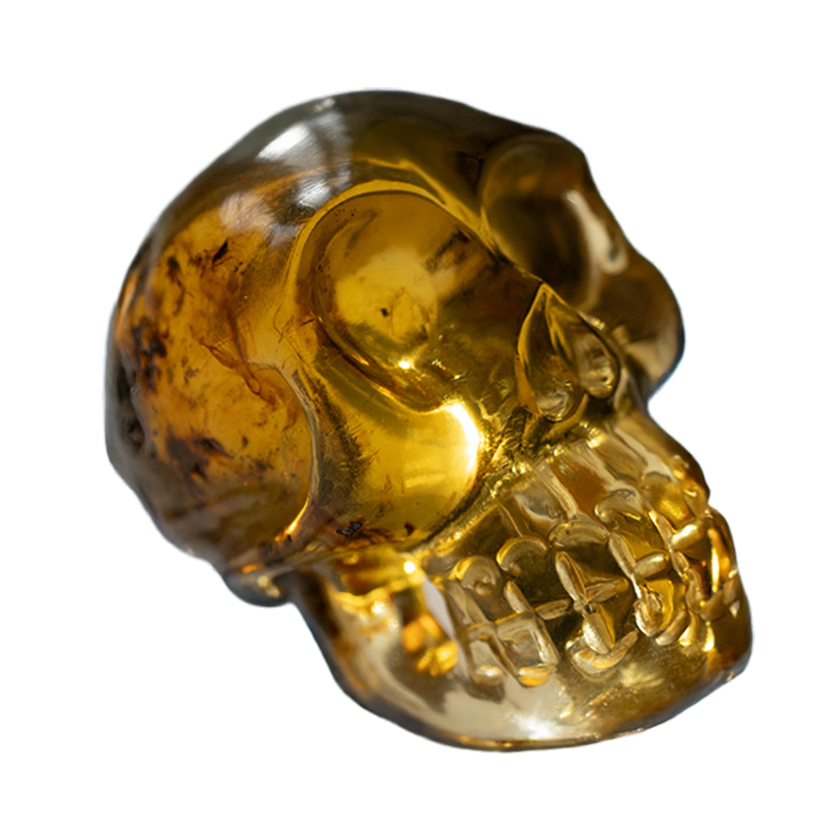
A common point of confusion is the difference between amber's body color and its fluorescence. Body color is what you see in normal ambient light: cognac, honey, lemon, red, green, or nearly transparent golden amber. Fluorescence is the visible light emitted after UV exposure.
A yellow amber bead can fluoresce blue. A clear cabochon can produce a milky white glow. A piece sold as blue amber may show a subtle blue effect in daylight but a far stronger one under a UV lamp. Neither observation cancels out the other.
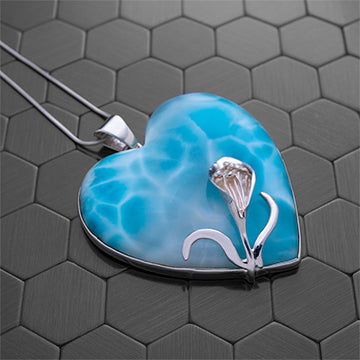
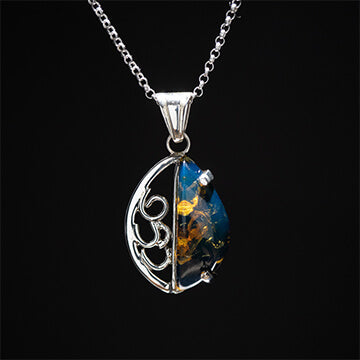
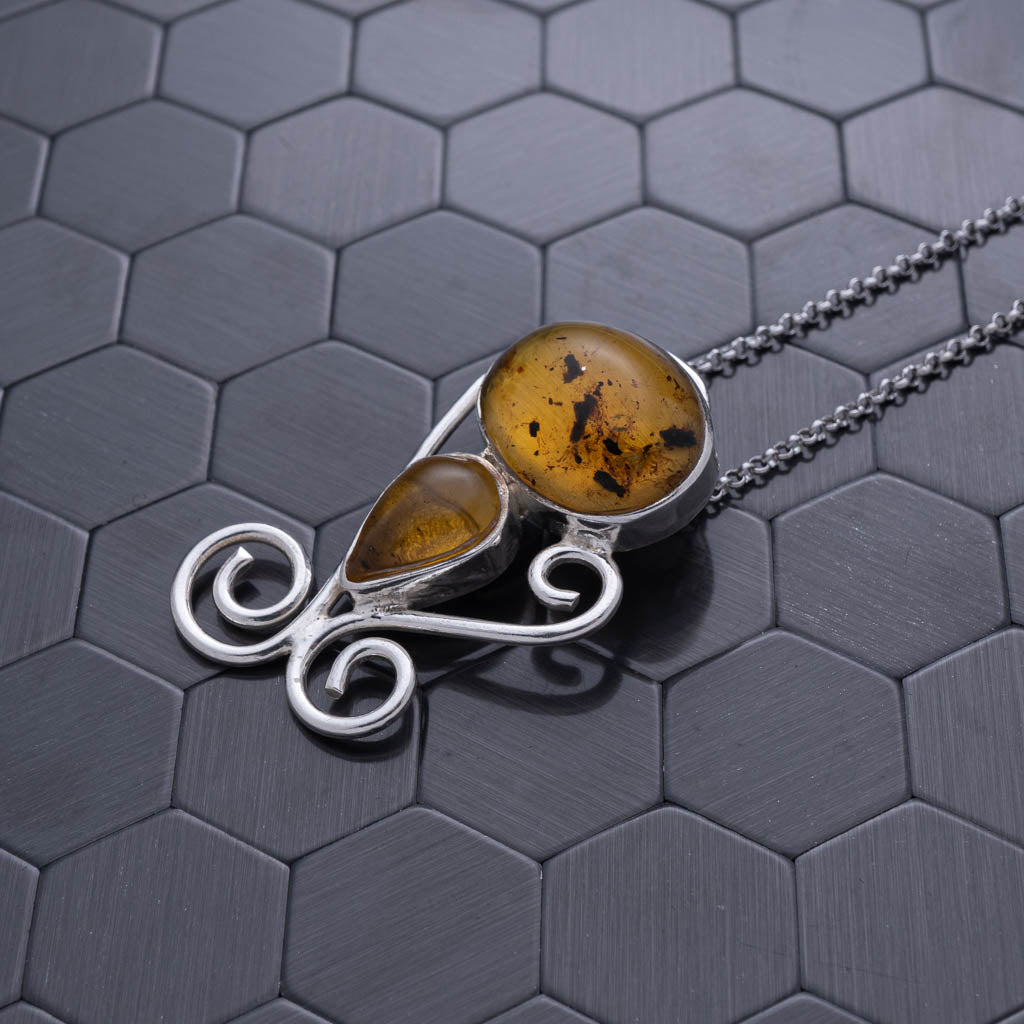
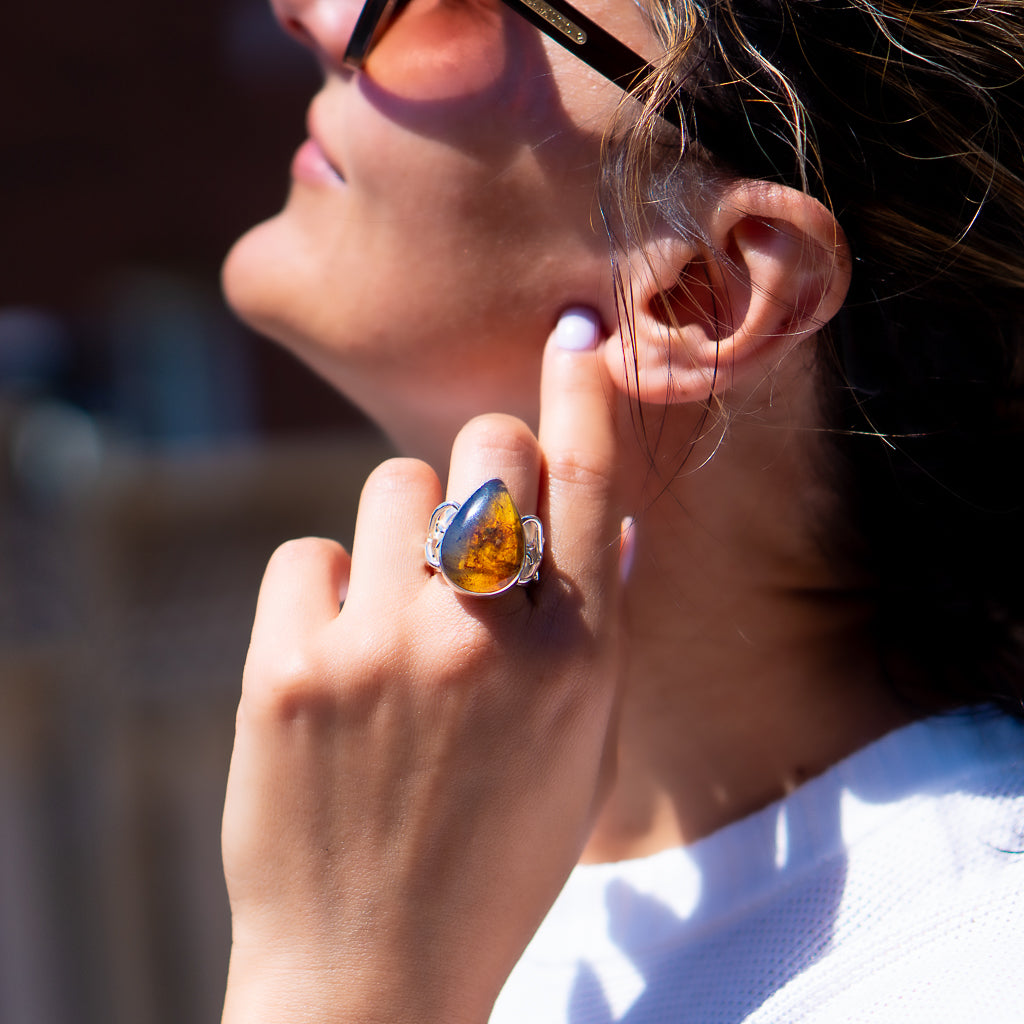
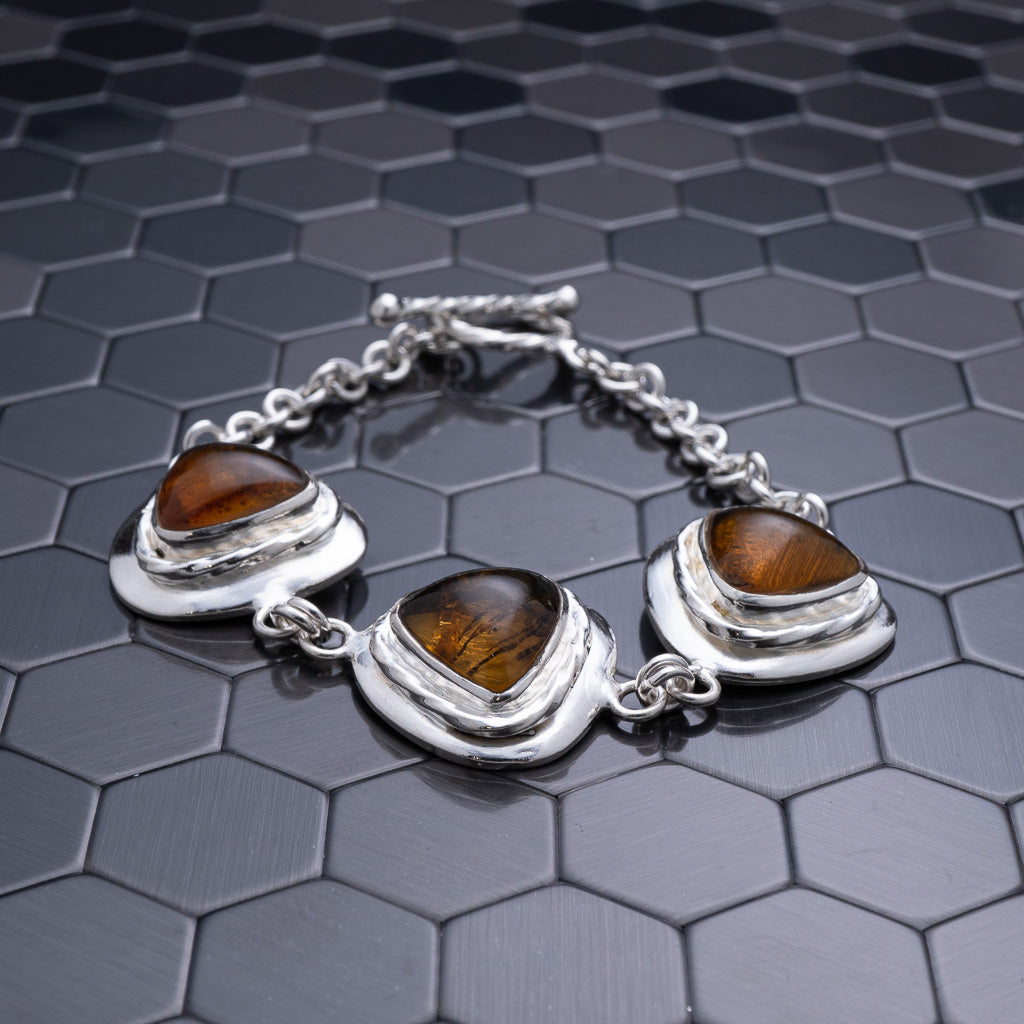
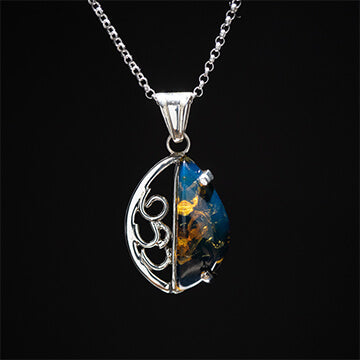
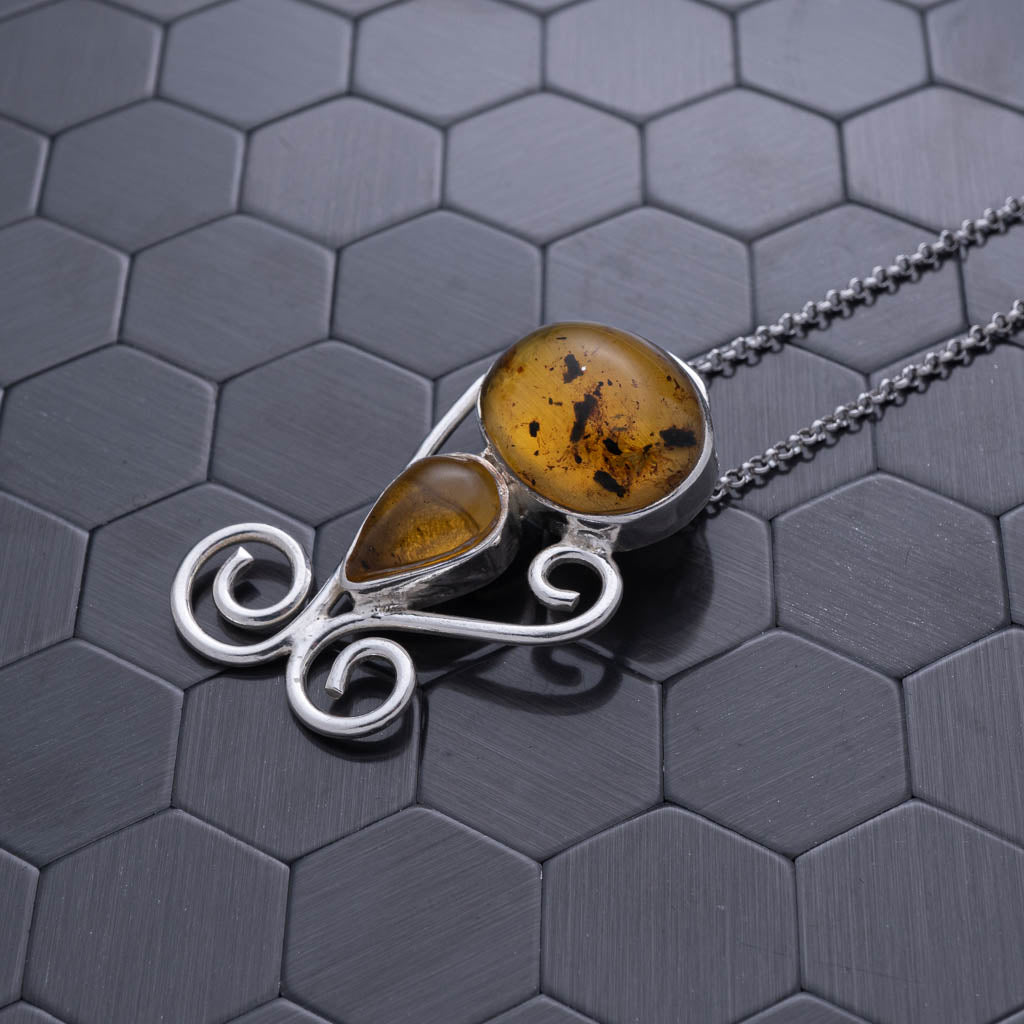
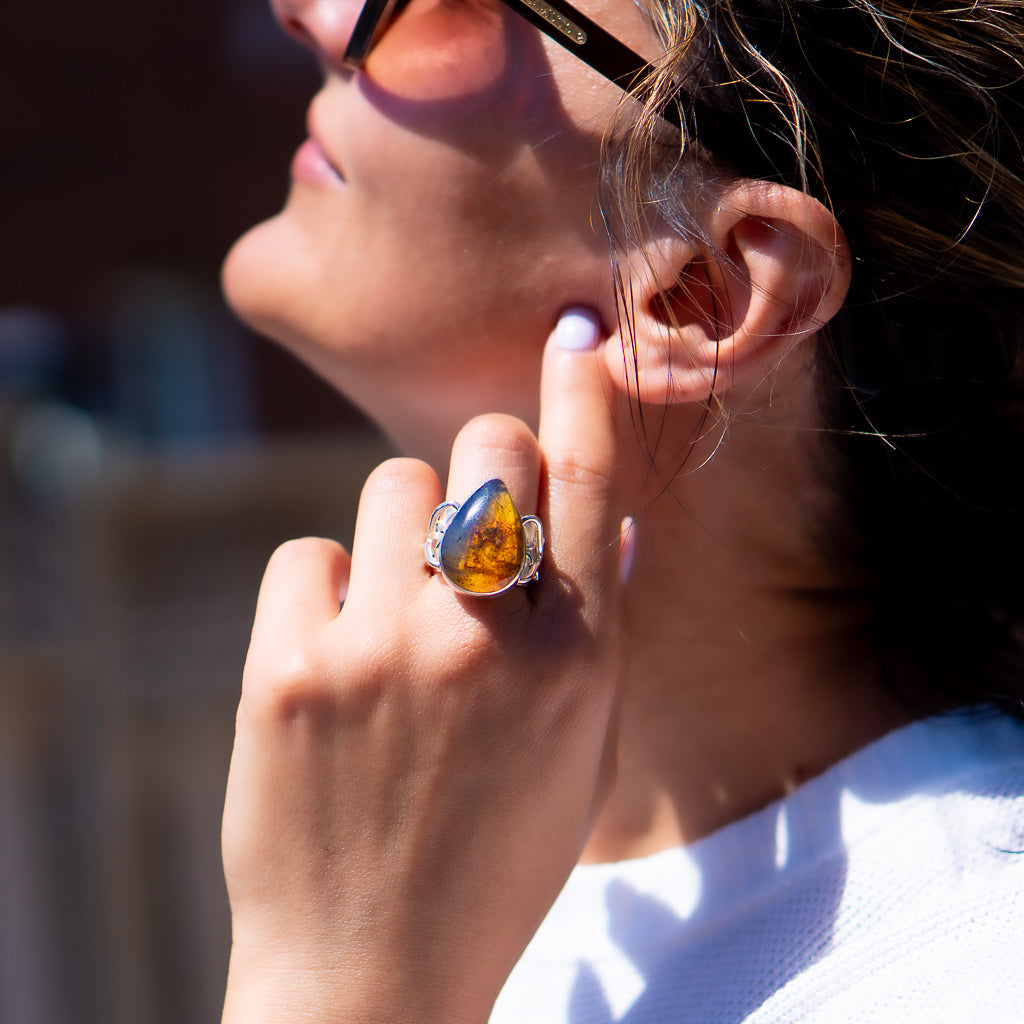
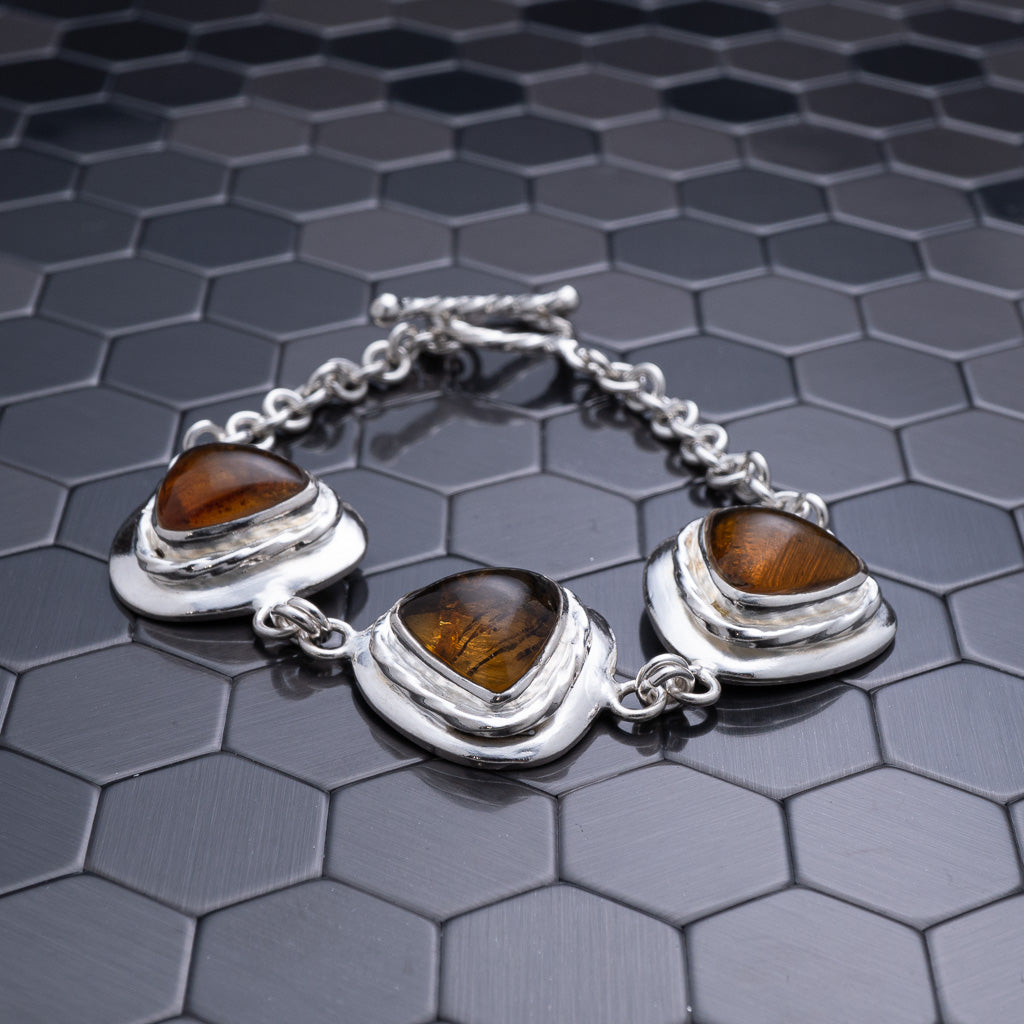
The setting also changes what the eye sees. An open-backed pendant allows more light to pass through the stone, often enhancing its luminous quality. A darker backdrop can make blue surface reflections more visible, while a bright white display may soften the effect. This is one reason handcrafted amber jewelry is best appreciated from more than one angle.
Fluorescence depends on more than geographic origin. Several natural and practical factors shape its intensity and color.
First, chemical composition matters. The specific organic molecules preserved in the amber determine which wavelengths are absorbed and emitted. Even pieces from the same mine can vary because resin was not chemically identical from one tree or flow to another.
Second, age and maturation play a role. True amber has undergone long-term fossilization, while younger resin, often called copal, has not fully developed the same stability or chemistry. Copal may react to UV light, but its response and physical properties can differ from mature amber. Distinguishing the two requires careful examination rather than relying on fluorescence alone.
Third, clarity and internal inclusions affect the visual result. Clear amber can display a clean, radiant glow, while cloudiness, plant matter, bubbles, or fractures may diffuse the light. Inclusions are not flaws by default. A fossil inclusion can make a specimen more historically compelling, though it may alter how evenly the amber fluoresces.
Finally, the UV source itself matters. A stronger UV lamp can reveal fluorescence more dramatically than a small keychain light. The wavelength, distance from the stone, room brightness, and background all influence what is visible. For the clearest view, examine amber in a dim setting with a quality UV light, then compare it under ordinary daylight.
Fluorescence is a helpful observation, but it is not proof of authenticity on its own. Natural amber can fluoresce in many ways, and some imitation materials can also respond under UV light. Plastic, glass coatings, resin composites, and treated materials may produce a glow that looks convincing to an untrained eye.
Authenticity should be evaluated through a combination of factors: origin documentation, visual inspection, craftsmanship, weight, surface character, internal features, and professional testing when needed. A trustworthy seller should be clear about whether a piece is natural amber, pressed amber, copal, reconstructed material, or imitation.
Pressed amber deserves particular clarity. It is made by fusing smaller pieces of genuine amber under heat and pressure. It may still be amber, but it is not the same as a single natural nugget or a naturally formed transparent cabochon. The distinction affects rarity, appearance, and collector value.
For fine jewelry and collector pieces, certification and transparent sourcing provide far more confidence than any single home test. A UV lamp can heighten appreciation for a stone's beauty, but it should never be the only basis for a purchase decision.
Some amber is heated or clarified to improve transparency, deepen color, or create decorative sun-spangle inclusions. These treatments can influence appearance and, in some cases, how light travels through the material. They do not automatically make a piece undesirable, but they should be disclosed because untreated and treated amber may carry different collector interest.
Surface coatings can be more concerning. A coating may alter shine, color, or apparent fluorescence while concealing the true character of the material beneath it. Natural Dominican blue amber is prized precisely because its visual magic comes from the gem itself, not from an artificial finish.
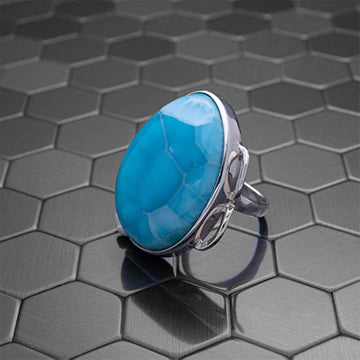
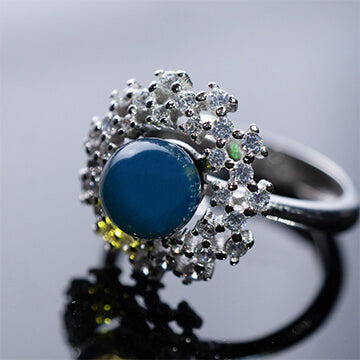
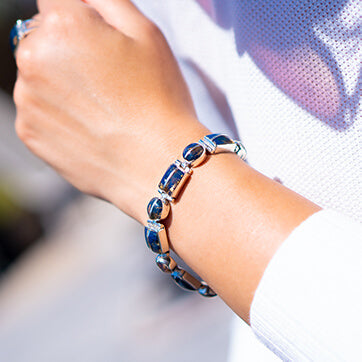
When choosing an amber ring, pendant, earrings, or a loose collector cabochon, look for honest descriptions that distinguish natural color effects from enhanced presentation. The most meaningful pieces let the stone's authentic origin remain the center of attention.
Viewing amber under UV light can be a beautiful ritual, especially with Dominican blue amber. Use a UV flashlight in a darkened room, hold the stone a few inches from the light, and rotate it slowly. Notice whether the glow appears within the body of the gem, across the surface, or around transparent edges.
Avoid prolonged exposure to intense UV light or heat. Amber is an organic gem and is softer than many traditional jewelry stones. Keep it away from harsh chemicals, ultrasonic cleaners, extreme heat, and direct sun for extended periods. A soft cloth and gentle care will preserve its polish and luminous character.
The finest amber does not need to perform identically under every light source. Its value lies in its natural story: ancient resin, rare origin, skilled cutting, and the quiet surprise of color that appears when light finds its way through. Whether chosen as a meaningful gift or a personal Caribbean treasure, an authentic fluorescent amber piece invites you to look closer, then look again.
Sign up to get the latest on sales, new releases and more …
7 min read
6 min read
6 min read