
Larimar
Blue Amber
Green Amber
Amber Carvings
More

by Admin September 17, 2026 6 min read

A strand of amber beads can hold light like captured sunshine, especially when the material carries the warm honey, cognac, or rare blue tones associated with the Caribbean. But are amber beads natural gemstones? The honest answer is yes in the jewelry world, with one meaningful distinction: amber is an organic gem material rather than a mineral crystal formed deep within the earth.

That difference is part of amber’s romance. Each genuine bead began as tree resin, released by ancient forests and transformed over immense spans of time. When selected for its color, clarity, and natural character, then shaped by a skilled artisan, amber becomes a wearable piece of natural history.

Are Amber Beads Natural Gemstones in the Strict Sense?

Gemstones are often grouped into three broad families: minerals, rocks, and organic materials. Diamond, sapphire, and quartz are mineral gemstones. Lapis lazuli is a rock composed of several minerals. Amber belongs with organic gem materials such as pearl, coral, and jet.

So, amber is not a mineral. It does not have the crystalline structure of a sapphire or an emerald. Yet it has been treasured as a gemstone for thousands of years, cut into cabochons, carved into talismans, and polished into luminous beads. Jewelers, collectors, and gemological references commonly recognize natural amber as a gem material because of its beauty, rarity, durability for adornment, and natural origin.

For a buyer, the more useful question is not whether amber fits one narrow scientific label. It is whether the beads are genuinely natural amber, how they were formed, and whether their quality supports their value.

From Ancient Resin to a Finished Amber Bead

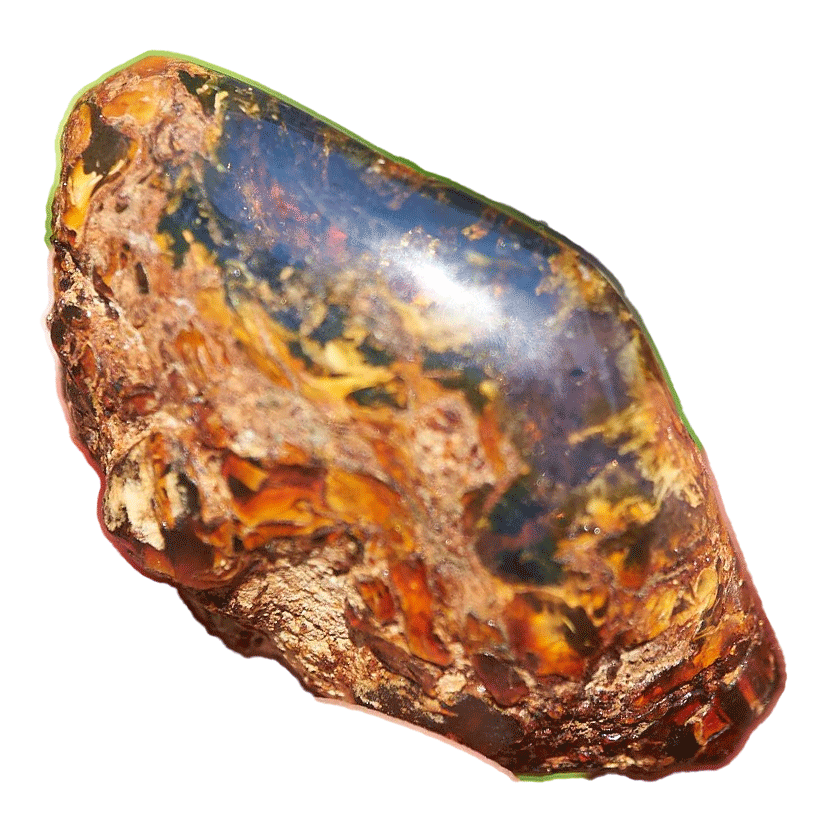
Amber begins as resin, not sap. Resin is the sticky protective substance produced by certain trees. If it becomes buried in the right conditions, it can gradually polymerize and harden. Over millions of years, the volatile components diminish and the resin becomes amber.

Natural inclusions may be preserved during this process: tiny bubbles, plant fragments, mineral traces, or, on rare occasions, insects. An inclusion is fascinating, but it is not required for amber to be authentic. In fact, clear, inclusion-free material can be highly desirable for jewelry because it allows the color and inner glow of the stone to take center stage.

Once rough amber is recovered, artisans cut it with care because the material is softer than most mineral gemstones. A bead may be rounded, faceted, olive-shaped, barrel-shaped, or hand-carved. Drilling, polishing, and stringing transform the rough material into jewelry, but they do not make it less natural. Natural amber beads are still natural even when they have been shaped and finished by hand.

Dominican Amber Has a Character of Its Own

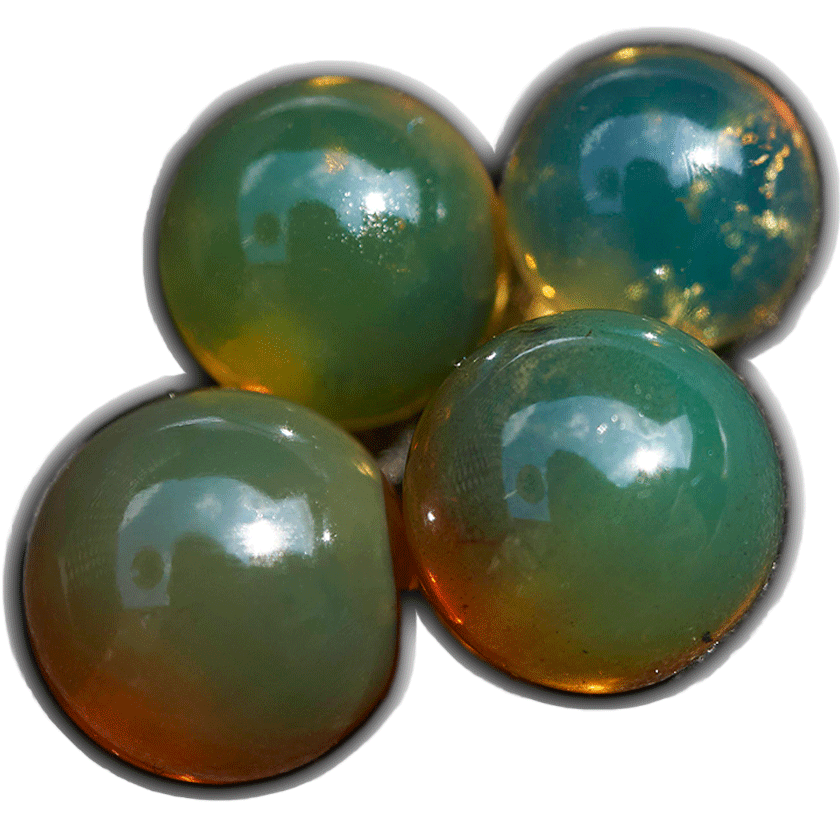
The Dominican Republic is celebrated for amber with exceptional transparency and a vivid range of colors. Golden yellow, deep cognac, greenish amber, and red-toned material all appear, while Dominican Blue Amber is among the world’s most coveted varieties.

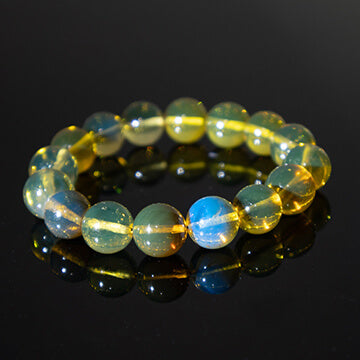
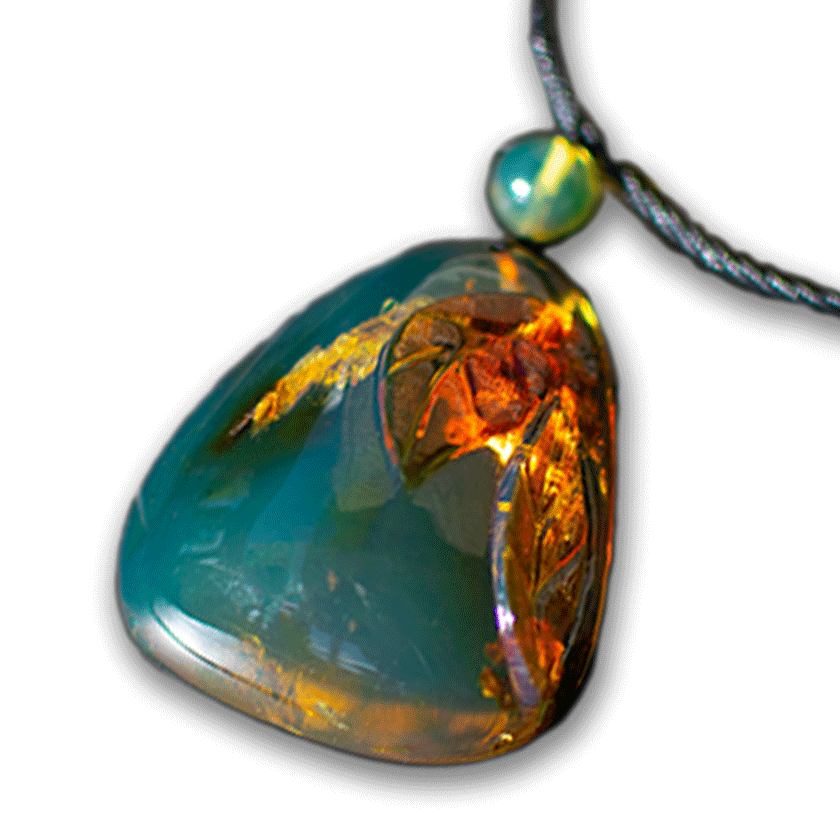
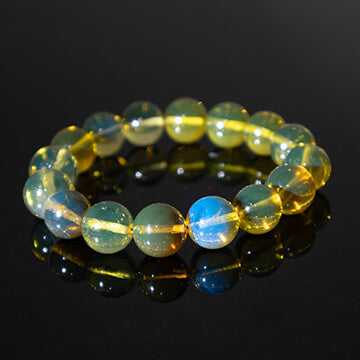
Blue Amber may look honey-colored or pale in ordinary daylight, then reveal an electric blue fluorescence under ultraviolet light or in certain lighting conditions. This optical phenomenon is one reason it has become a treasured Caribbean gem for collectors and jewelry lovers alike. The finest examples feel almost oceanic, carrying an elusive blue glow within an ancient organic material.

Origin matters because different amber deposits vary in age, appearance, and character. Dominican amber is generally younger than Baltic amber, yet it is renowned for its clarity and remarkable inclusions. A seller who identifies an amber bead as Dominican should be able to stand behind that origin rather than using Caribbean imagery as a vague marketing flourish.

Natural Amber, Pressed Amber, Copal, and Imitations

Not every amber-colored bead is a bead of natural amber. This is where careful language protects both the collector and the gift buyer.

Natural amber is fossilized resin formed by nature over geological time. It may be polished and shaped, but the bead originates from a single piece of amber.

Pressed amber, also called reconstructed amber, is made by fusing smaller amber fragments or amber dust under heat and pressure. It contains amber, but it is a manufactured composite rather than a single natural piece. It can be attractive and wearable, though it should be clearly disclosed and priced accordingly.

Copal is younger tree resin that has not undergone the full fossilization process of amber. Some copal is beautiful, but it is softer, less stable, and usually less valuable than true amber. Calling copal amber without disclosure is misleading.

Imitations may be plastic, glass, acrylic, or synthetic resin. They can copy amber’s color surprisingly well, particularly in mass-produced strands. Their appearance alone does not establish authenticity.

These categories are not interchangeable. A trustworthy jewelry description should identify whether beads are natural amber, pressed amber, copal, or an imitation. Transparency is part of the beauty when you are choosing a material with such a rich natural story.

How to Assess Genuine Amber Beads

A certificate or documented provenance from a reputable specialist is the strongest starting point, particularly for valuable Dominican Blue Amber or collector-quality beads. Authentication combines material knowledge, source information, visual inspection, and, when appropriate, gemological testing.

Natural amber often displays subtle individuality. Look for gentle variations in color, soft internal clouds, flow lines, tiny bubbles, or organic-looking inclusions. Perfect uniformity is not proof of imitation, since artisans can carefully match quality material, but an entire strand that appears identical in every detail deserves closer scrutiny.

Weight can also offer a clue. Amber is remarkably light for its size and feels warm rather than cold against the skin after a moment. Still, these observations are only clues. Some plastics are lightweight, and glass can be made in very convincing amber shades.

Avoid relying on internet tricks involving hot needles, solvents, or saltwater. A hot needle can permanently damage a valuable bead, solvents may harm its polished surface, and density tests are not definitive. Real amber deserves professional handling. When a purchase matters, choose a seller with specific material descriptions, origin knowledge, and an authenticity commitment.

What Gives Amber Beads Their Value?

Amber value depends on much more than bead size. Color, clarity, origin, craftsmanship, matching, condition, and rarity all influence desirability. A large bead with fractures or heavy cloudiness may be less valuable than a smaller bead with exceptional clarity and color.

Blue Amber commands particular attention because of its scarce occurrence and distinctive fluorescence. Fine blue material is not simply blue-colored resin. Its appeal comes from the light response that makes the color appear to bloom under the right conditions. A well-matched strand of genuine Dominican Blue Amber beads requires both rare rough material and the patience to shape it without sacrificing beauty.

Inclusions can add collector appeal, especially when they are clearly visible and naturally preserved. Yet they should be judged with discernment. A dramatic inclusion may raise value, while a dark spot, crack, or surface-reaching fracture may reduce a bead’s durability. The finest pieces balance natural character with sound craftsmanship.

Caring for a Piece of the Caribbean

Amber is softer than quartz, topaz, and many other familiar jewelry stones, so it benefits from a gentler routine. Put amber beads on after perfume, hairspray, and lotion have dried. Remove them before swimming, exercising, showering, or cleaning. Chemicals, heat, and repeated knocks can dull the polish or weaken a strand over time.

Clean beads with a soft, slightly damp cloth, then dry them immediately. Do not use ultrasonic cleaners, steam cleaners, abrasive cloths, or commercial jewelry dips. Store amber separately in a soft pouch or lined box so harder gems and metal edges do not scratch its surface.

For tasbih, bracelets, and frequently worn necklaces, inspect the cord or elastic periodically. Re-stringing is a small act of care that helps protect a meaningful collection of beads from accidental loss.

Choosing Beads Worth Wearing and Keeping

The best amber beads are not defined only by a label. They carry a clear story: natural material, honestly represented origin, thoughtful workmanship, and a color that speaks to the person who wears them. A golden strand may feel like sunlight against the skin. A deep cognac bead can bring a sense of old-world warmth. A luminous Dominican Blue Amber piece can feel like a private flash of Caribbean water.

Whether you choose beads for a cherished gift, a spiritual practice, or a growing gemstone collection, let authenticity guide the decision. A genuine amber bead asks for little more than thoughtful care, and in return it offers a small, radiant connection to an ancient forest and the living artistry that brought it to your hands.

Larimar Powerful Gemstone: Benefits and Healing Properties - Larimar Creations

Larimar Powerful Gemstone: Benefits and Healing Properties

9 min read

Discover why larimar is a powerful gemstone prized for healing, rare beauty, and spiritual properties. Expert guide to this Dominican treasure.
Read More
Are Amber Beads Natural Gemstones? The Real Answer - Larimar Creations

Are Amber Beads Natural Gemstones? The Real Answer

6 min read

Are amber beads natural gemstones? Learn how genuine Dominican amber differs from copal, pressed amber, and imitations, and how to choose with confidence.
Read More
Crystal Bracelets Blue: A Guide to Gemstones & Jewelry - Larimar Creations

Crystal Bracelets Blue: A Guide to Gemstones & Jewelry

10 min read

Discover the beauty and meaning of crystal bracelets blue. Learn about popular blue gemstones, styling tips, and how to choose authentic pieces.
Read More