
FREE WORLD WIDE SHIPPING
HANDCRAFTED IN THE DOMINICAN REPUBLIC
30% DISCOUNT APPLIED AT CHECKOUT
FREE WORLD WIDE SHIPPING
HANDCRAFTED IN THE DOMINICAN REPUBLIC
30% DISCOUNT APPLIED AT CHECKOUT
FREE WORLD WIDE SHIPPING
HANDCRAFTED IN THE DOMINICAN REPUBLIC
30% DISCOUNT APPLIED AT CHECKOUT
FREE WORLD WIDE SHIPPING
HANDCRAFTED IN THE DOMINICAN REPUBLIC
30% DISCOUNT APPLIED AT CHECKOUT
FREE WORLD WIDE SHIPPING
HANDCRAFTED IN THE DOMINICAN REPUBLIC
30% DISCOUNT APPLIED AT CHECKOUT
FREE WORLD WIDE SHIPPING
HANDCRAFTED IN THE DOMINICAN REPUBLIC
30% DISCOUNT APPLIED AT CHECKOUT
100% Handcrafted in DR.
by Admin August 15, 2026 5 min read
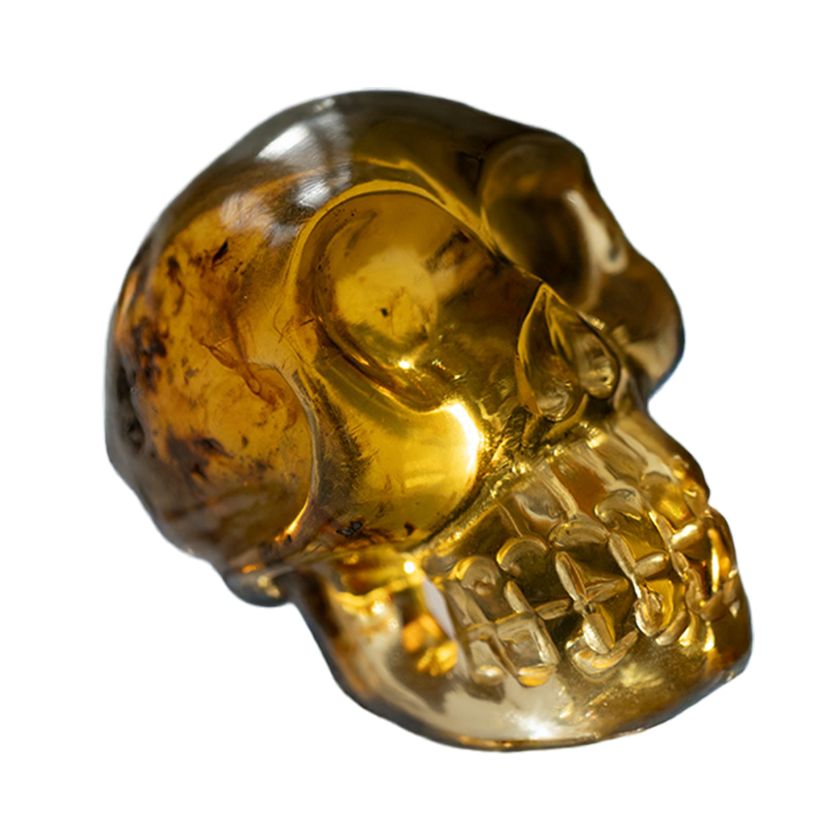
A tiny wing caught in honey-gold transparency can feel almost impossible to believe. So, can amber contain ancient insects? Yes. Genuine amber can preserve insects, plant fragments, pollen, and other traces of prehistoric life with remarkable detail. These inclusions are not placed inside a finished stone for decoration. In exceptional natural specimens, they are fossils held in tree resin that hardened and transformed over millions of years.
For jewelry lovers and collectors, an insect inclusion offers more than visual intrigue. It is a direct connection to an ancient Caribbean forest, preserved in a gem whose warmth, color, and natural character make every piece singular.
Amber begins as resin, a sticky substance produced by certain trees as protection from injury, insects, and disease. Fresh resin can trap a small fly, ant, beetle, spider, feather, leaf fragment, or bubble of air. If that resin is buried in the right conditions, protected from oxygen and excessive heat, it gradually undergoes chemical changes. Over vast spans of time, it hardens into amber.
The animal or plant inside is called an inclusion. It is not always perfectly preserved in the way a museum display might suggest. Soft tissues usually change or deteriorate, while the outline, cuticle, wings, legs, or body structure may remain visible. Even so, amber inclusions can preserve delicate features that are rarely retained in rock fossils.
There is an essential distinction here: not every clear golden material with a bug inside is ancient amber. Copal is younger, partly hardened tree resin. It may also contain insects, but it has not completed amber's long geological transformation. Modern resin can also be used to imitate both amber and inclusions. Age, origin, and honest identification matter greatly, especially when purchasing a collector piece or fine jewelry.
Dominican amber is among the world's most admired sources of fossil inclusions. It originated from resin produced by an extinct relative of the modern legume tree, Hymenaea protera, in forests that existed roughly 15 to 20 million years ago. Those lush tropical environments supported extraordinary biodiversity, which helps explain the range of insects and botanical material found in Dominican specimens.
A clear piece may reveal a mosquito, termite, beetle, ant, or tiny gnat. More unusual finds can include spiders, small flowers, seeds, fungi, lizards, or multiple organisms captured in the same piece. These rarities are prized not merely because they are dramatic, but because they offer a brief record of an ecosystem no longer present.
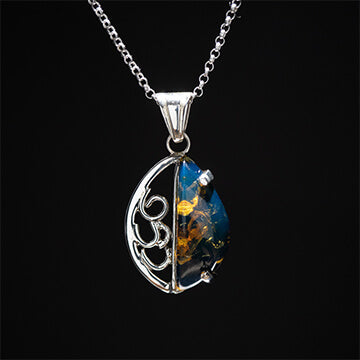
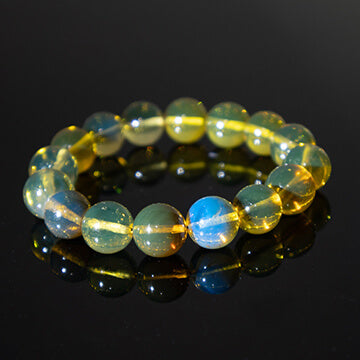
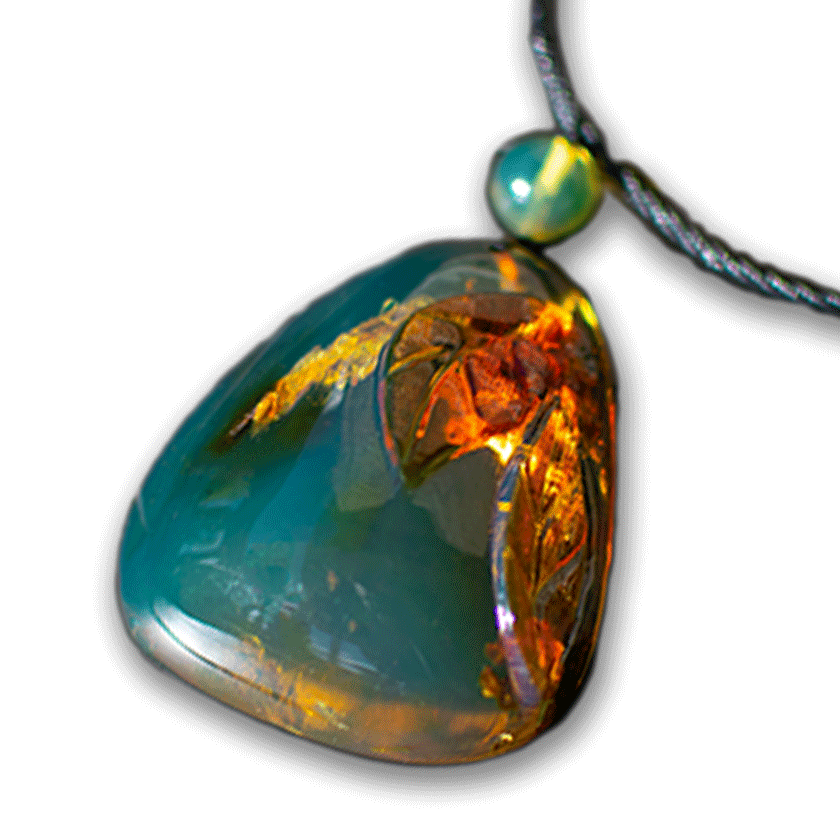
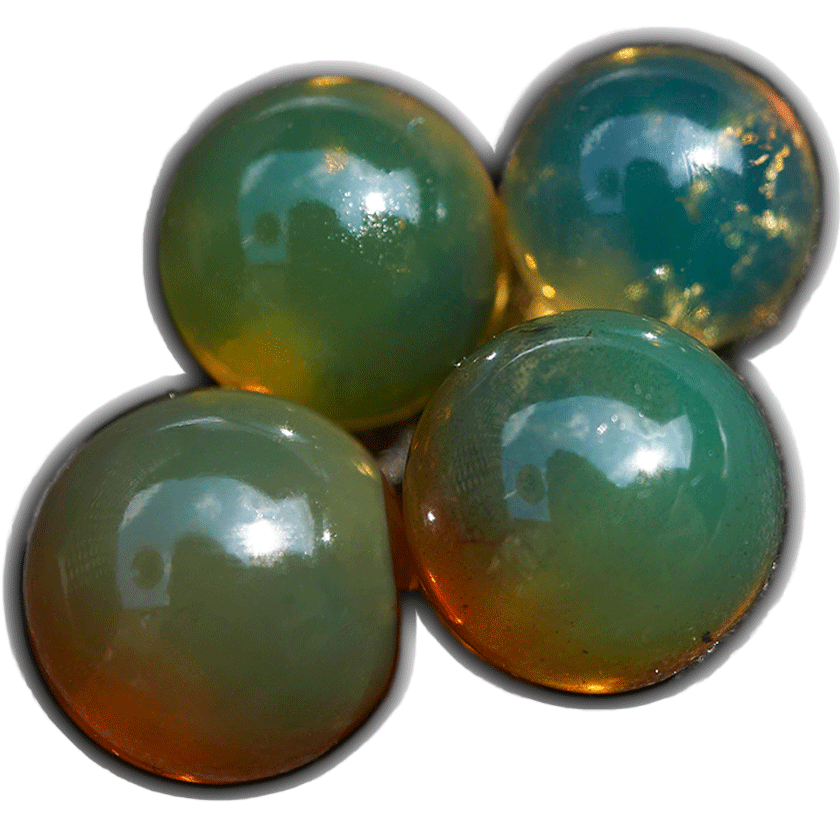
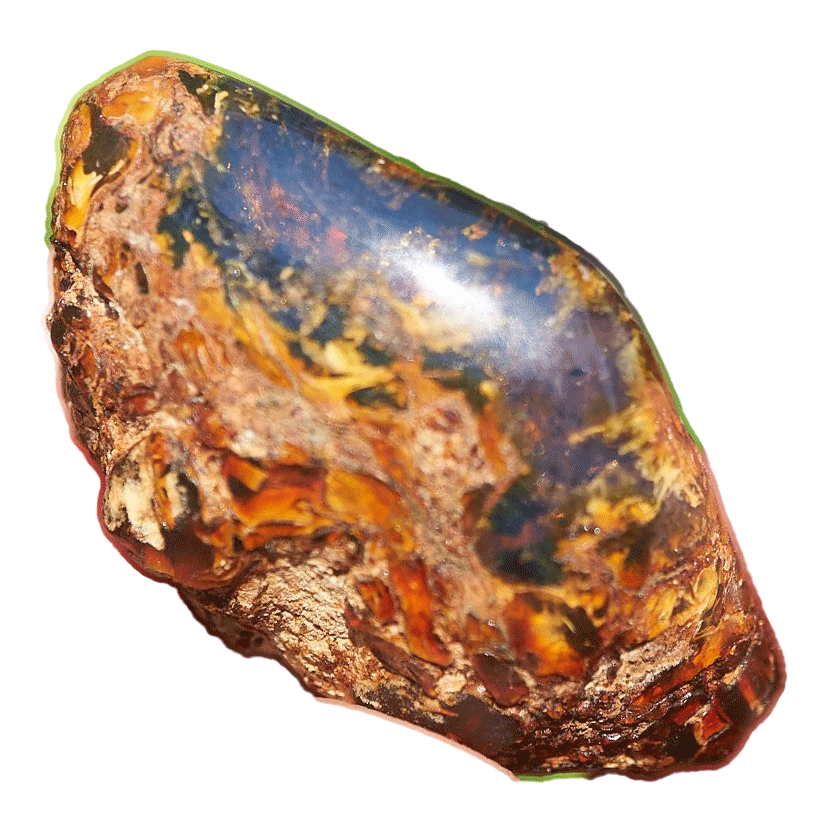
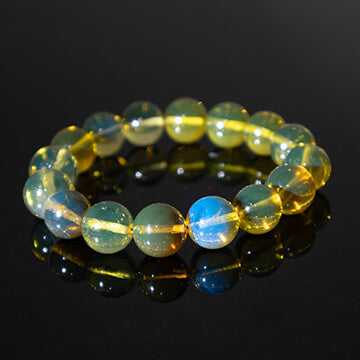
Dominican amber is also known for its luminous variety of colors. Warm cognac, golden yellow, honey, greenish tones, and red shades all occur. The rarest and most sought-after variety is Dominican Blue Amber, which may appear honey-colored or pale in ordinary light yet show an electric blue fluorescence under sunlight or ultraviolet light. A visible insect inclusion and blue fluorescence in one natural stone can be especially compelling, though such combinations are uncommon and should be evaluated individually.
An inclusion is a window into the stone's history, but it is not automatically proof of a particular origin. Baltic, Mexican, Burmese, and Dominican amber can all contain inclusions, and each source has its own geological age, species mix, colors, and resin characteristics. Professional identification may involve close visual examination, microscopy, ultraviolet response, and other gemological methods.
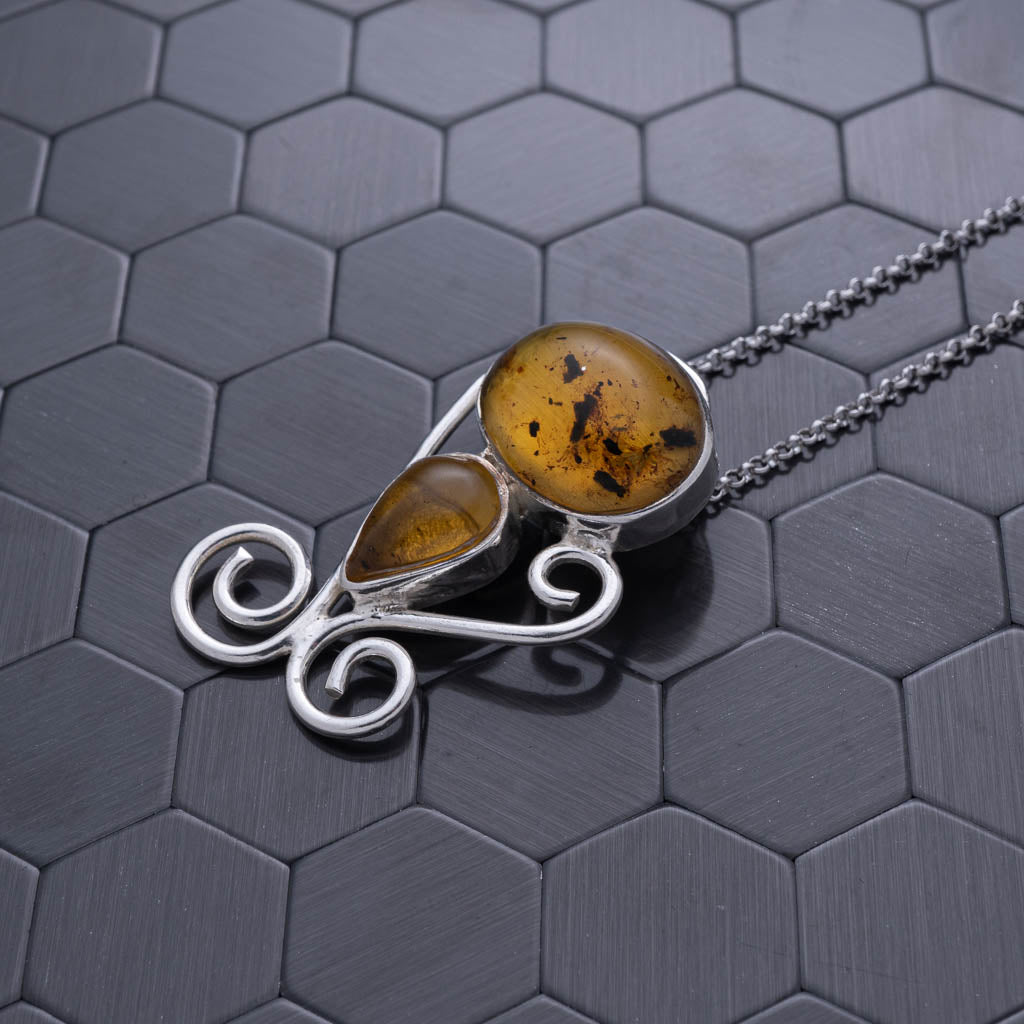
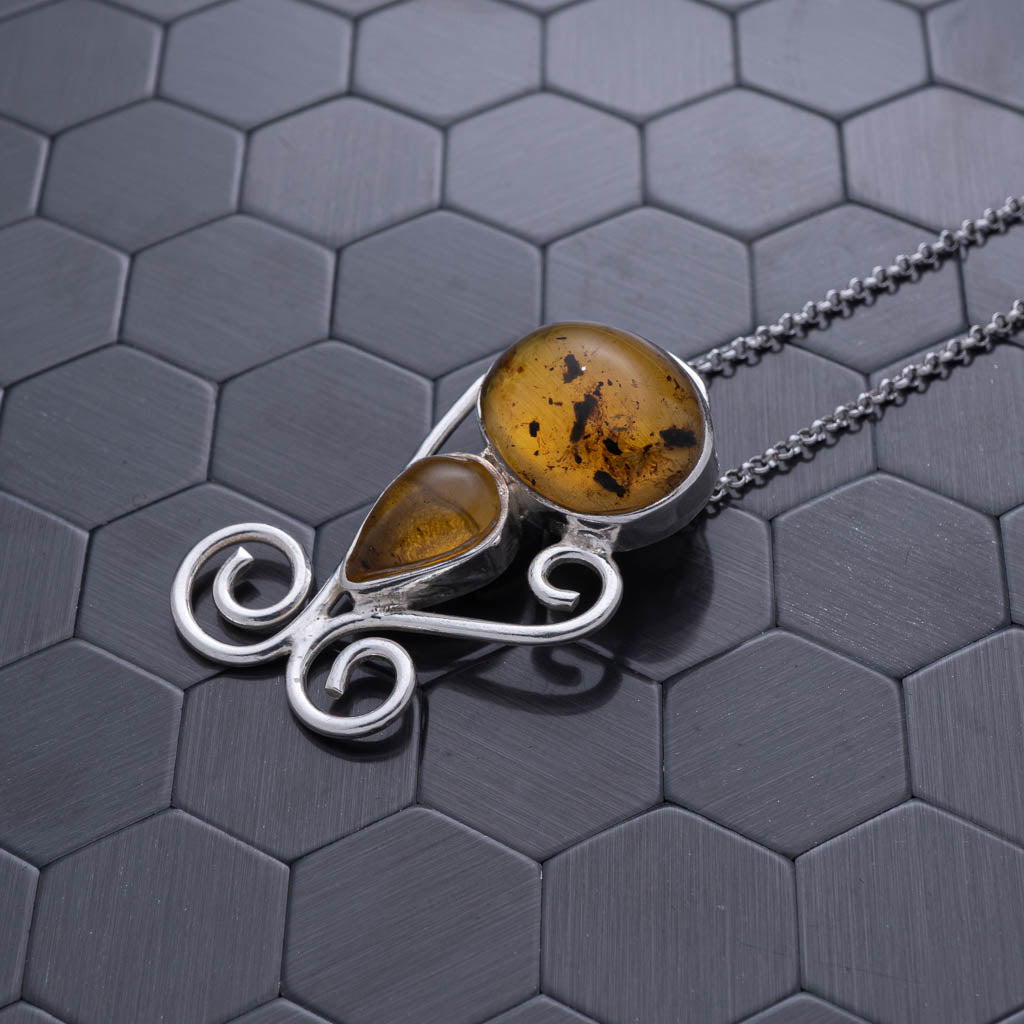
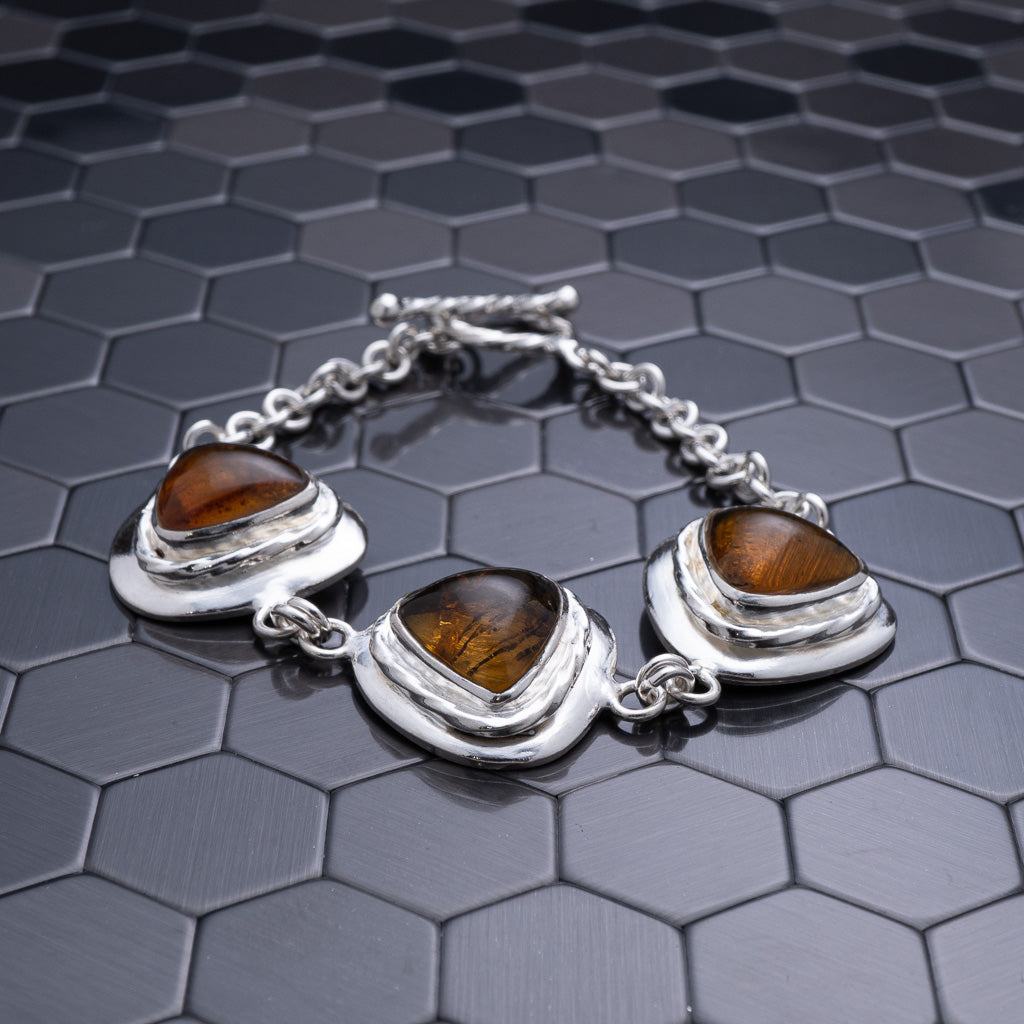
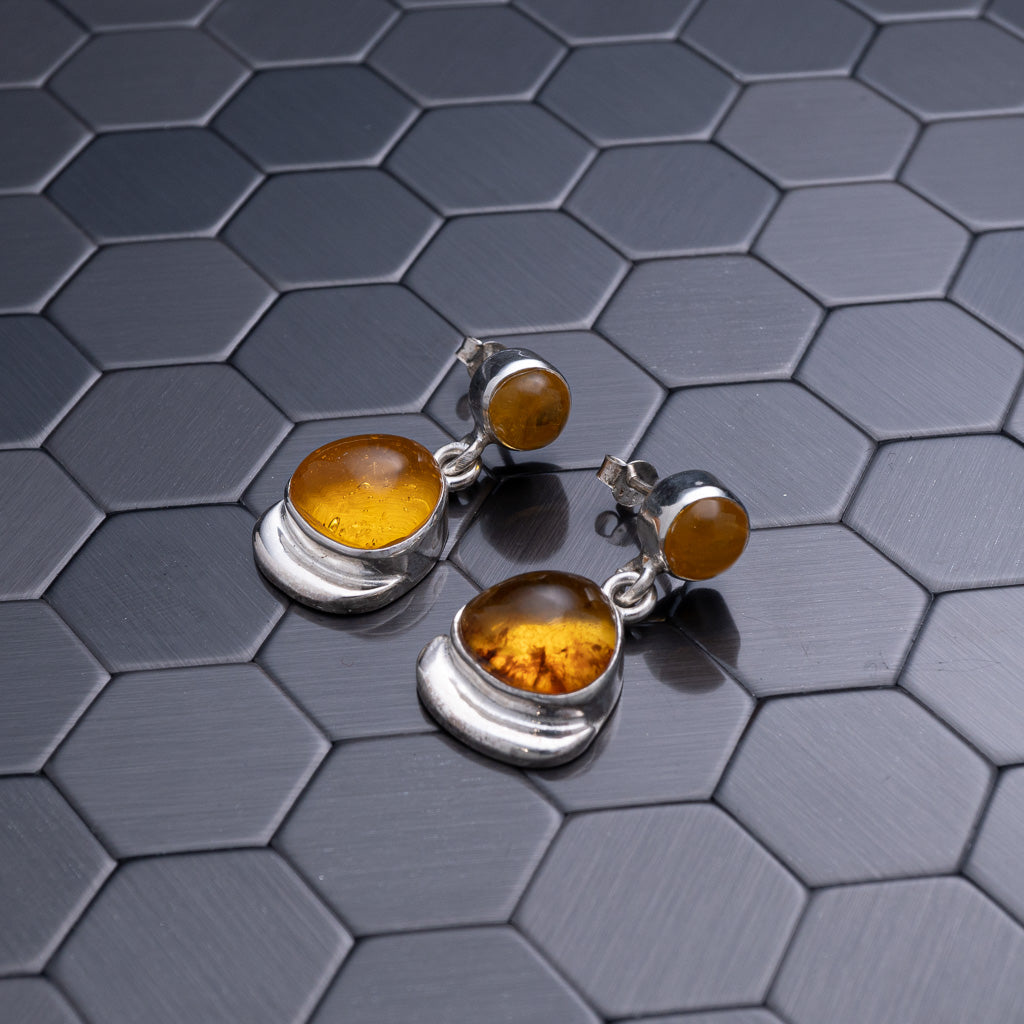
Within a piece of Dominican amber, the setting around an insect is often as captivating as the insect itself. Natural flow lines may curve around the body. Minute bubbles can create depth. A leaf fragment or speck of organic material may make the scene feel like a suspended moment in time. These features should not be dismissed as imperfections. In natural amber, they are part of the gem's individual story.
Collectors often favor inclusions that are clearly visible, well positioned, and identifiable without overwhelming magnification. A complete insect with open wings can command more interest than an indistinct fragment, but rarity does not follow a single rule. An ordinary insect in a beautifully transparent, well-polished stone may be more desirable for wearable jewelry than a rare inclusion hidden in cloudy material.
Because insect amber is so visually compelling, it has long attracted imitations. Some are made from plastic or glass. Others use modern resin with recently trapped insects. These pieces may be decorative, but they should never be represented as ancient fossil amber.
A manufactured inclusion can look too perfect: centered like a display specimen, free of surrounding flow marks, or paired with a large modern insect that would have struggled to become naturally sealed in resin. That said, visual judgment alone is not enough. Genuine amber can also contain strikingly clear inclusions, and some authentic pieces have been cut or polished to present their contents beautifully.
Avoid relying on risky home tests such as heating, scratching, or applying solvents. Amber is relatively soft and can be damaged by heat, chemicals, or abrasion. A seller's documented origin, gemological knowledge, and transparent description are more useful than a dramatic test performed at home. For a high-value piece, independent expert evaluation is a wise choice.
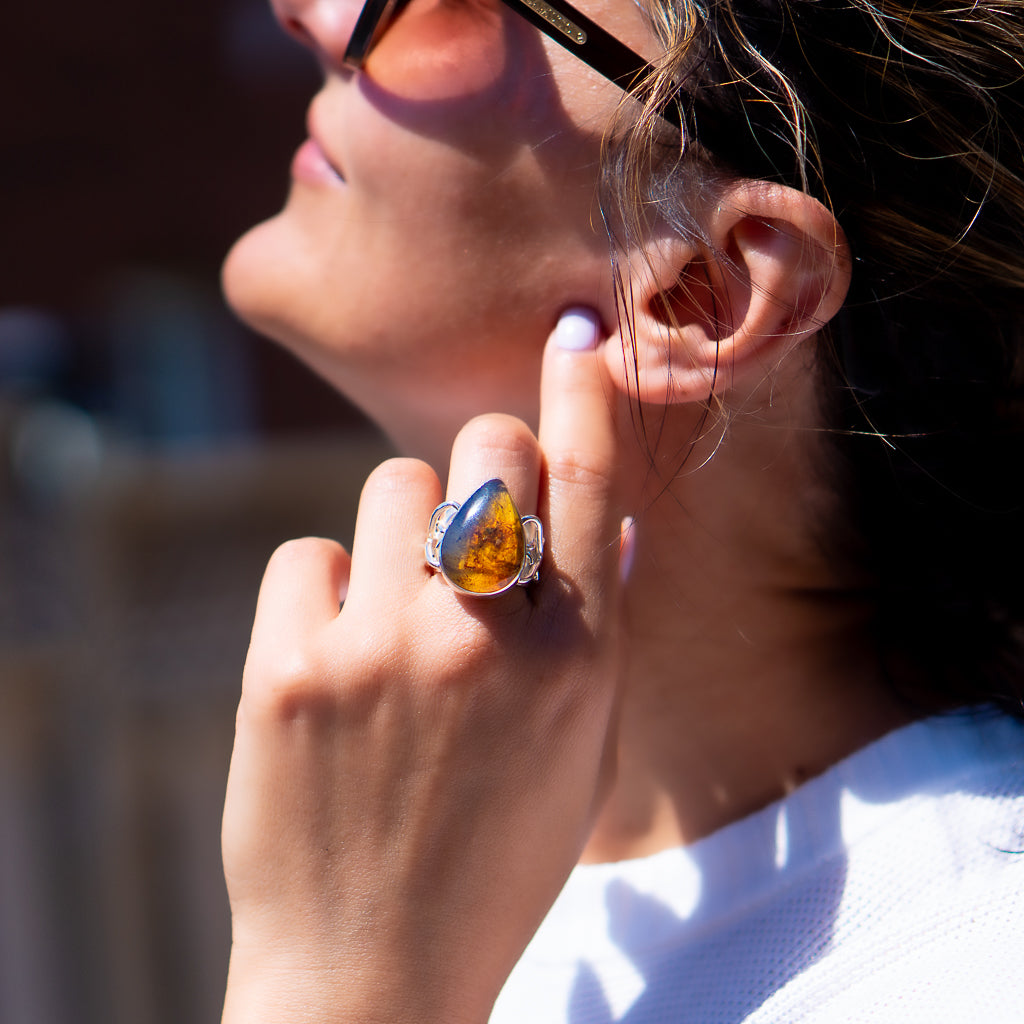
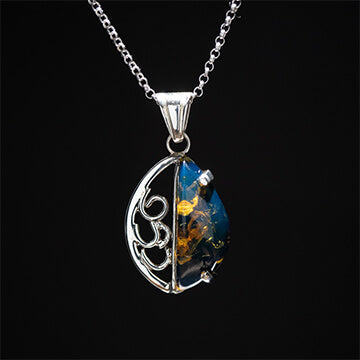
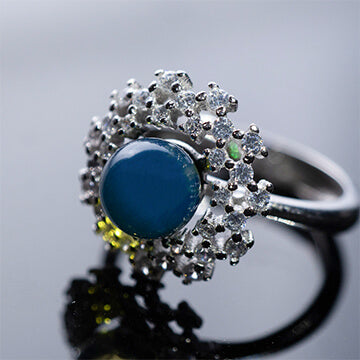
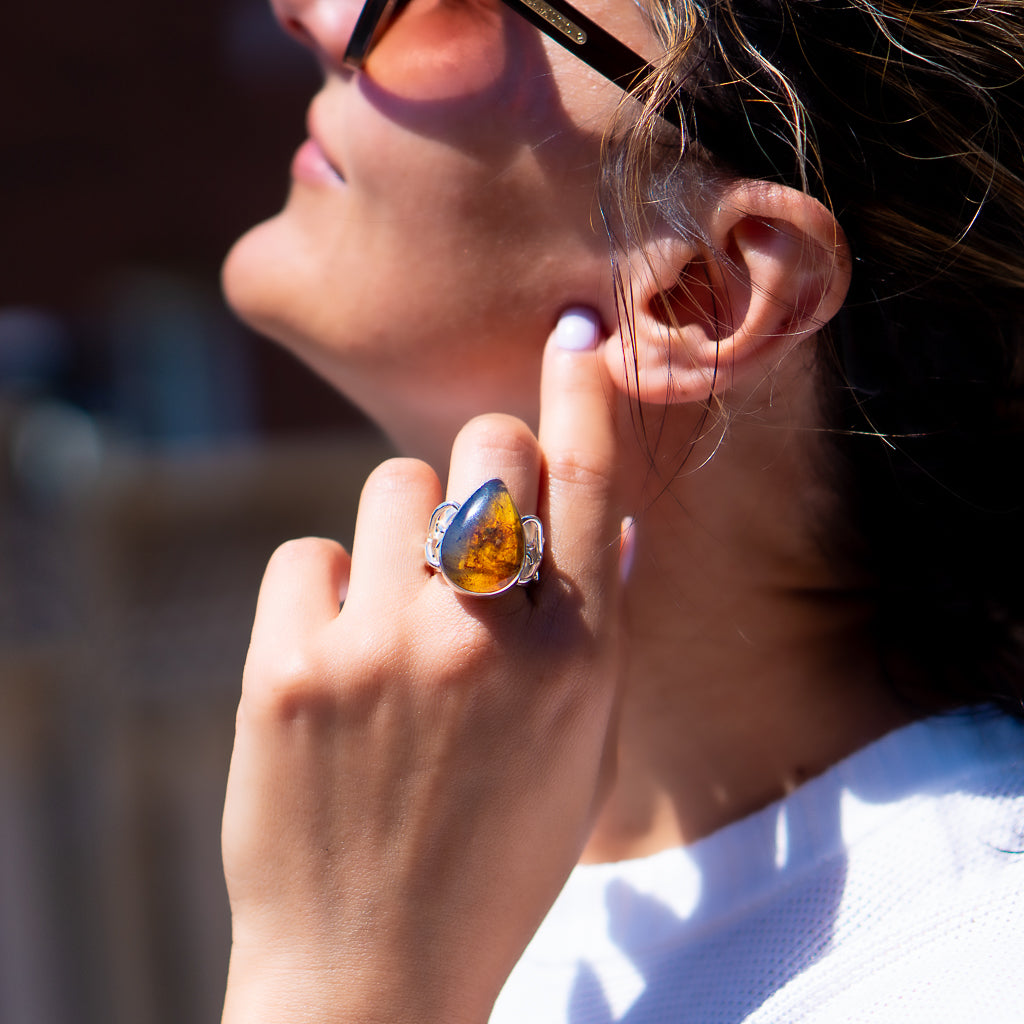
The best choice depends on whether you want a wearable treasure, a collector specimen, or a meaningful gift. In jewelry, the stone should be polished to show the inclusion while still allowing enough material around it for security. A pendant is often ideal because it lets light pass through the amber and keeps the piece away from the harder knocks a ring may receive.
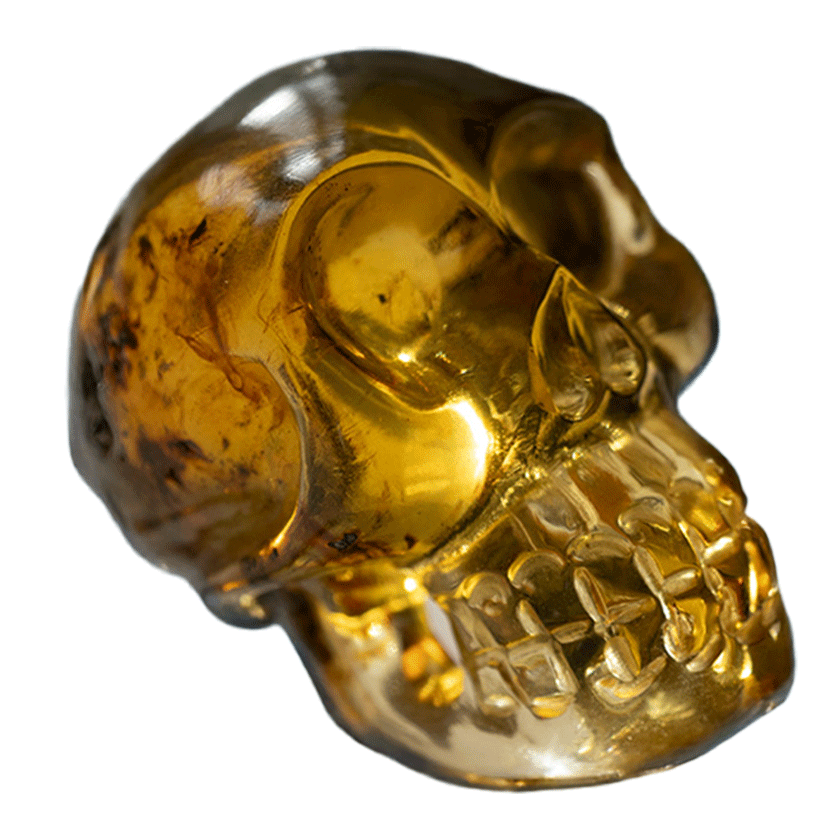
For a collector, clarity and scientific interest may take priority over a conventional jewelry shape. A cabochon, freeform carving, or polished specimen can offer a larger viewing area and make fine details easier to appreciate. Examine the inclusion from different angles when possible. A stone that looks clear face-on may reveal fascinating depth, bubbles, and resin flow when turned in the light.
Consider these qualities together rather than treating any one as decisive:
Amber deserves gentler care than diamond, sapphire, or many other gemstones. Store it separately from harder jewelry to prevent scratches. Clean it with a soft cloth and, if needed, a small amount of mild soapy water, then dry it promptly. Keep it away from perfume, hairspray, household cleaners, high heat, and prolonged direct sun.
Do not use ultrasonic or steam cleaners. Their vibration and heat can stress amber, particularly a specimen with internal fractures, bubbles, or delicate inclusions. A thoughtful setting and careful wear help preserve both the polish on the surface and the ancient scene within.
At Larimar Creations, the appeal of Dominican amber lies in this union of natural rarity and wearable art. Whether a stone glows with the elusive blue light of Caribbean amber or carries a quiet fossil inclusion, it asks to be viewed closely rather than rushed past.
Choose a piece that gives you that pause. In the warm light of genuine amber, a tiny prehistoric visitor can turn an elegant gemstone into a personal fragment of the Caribbean's ancient past.
Sign up to get the latest on sales, new releases and more …
9 min read
6 min read
9 min read