
FREE WORLD WIDE SHIPPING
HANDCRAFTED IN THE DOMINICAN REPUBLIC
BEST QUALITY LARIMAR
FREE WORLD WIDE SHIPPING
HANDCRAFTED IN THE DOMINICAN REPUBLIC
BEST QUALITY LARIMAR
FREE WORLD WIDE SHIPPING
HANDCRAFTED IN THE DOMINICAN REPUBLIC
BEST QUALITY LARIMAR
FREE WORLD WIDE SHIPPING
HANDCRAFTED IN THE DOMINICAN REPUBLIC
BEST QUALITY LARIMAR
FREE WORLD WIDE SHIPPING
HANDCRAFTED IN THE DOMINICAN REPUBLIC
BEST QUALITY LARIMAR
FREE WORLD WIDE SHIPPING
HANDCRAFTED IN THE DOMINICAN REPUBLIC
BEST QUALITY LARIMAR
100% Handcrafted in DR.
by Admin November 01, 2026 6 min read
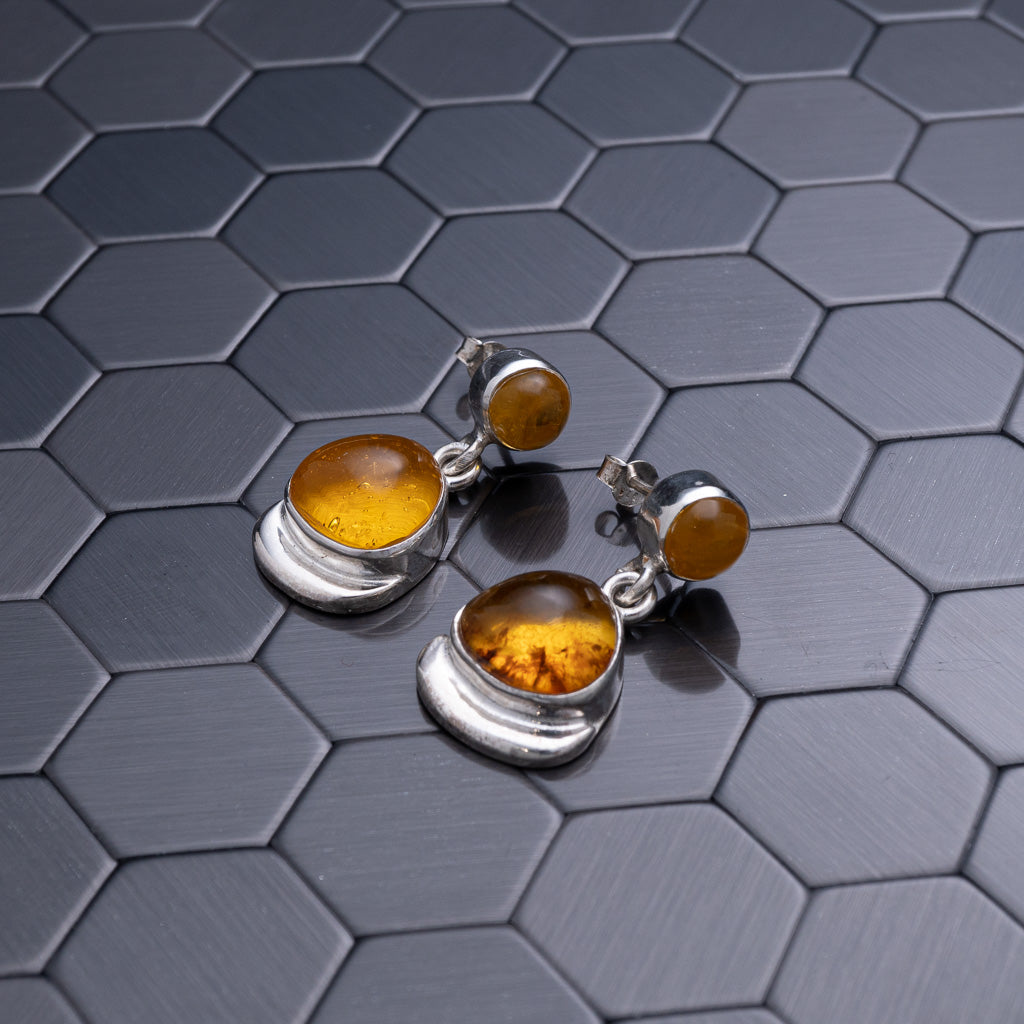
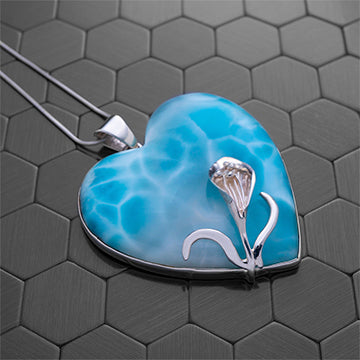
A Larimar pendant can carry the quiet blue of a Caribbean lagoon, while Dominican Blue Amber can appear honey-gold in one moment and glow with an electric blue flash in another. That visual magic is not accidental. Gemstone color grading gives collectors and jewelry buyers a way to describe what the eye sees, compare one stone with another, and understand why certain pieces feel exceptionally rare.
For natural gemstones, color is more than a preference. It can influence desirability, rarity, price, and the character a stone brings to a handcrafted ring, pendant, or pair of earrings. Yet color should never be judged by a single photograph or a simple label. The finest stones reveal their beauty through a balance of hue, tone, saturation, pattern, clarity, cut, and light.
Unlike diamond color, which is commonly evaluated on a widely recognized letter scale, colored gemstone grading is less uniform. There is no single universal chart that can capture every blue, green, golden, and ocean-patterned stone. Instead, experienced graders assess three central qualities: hue, tone, and saturation.
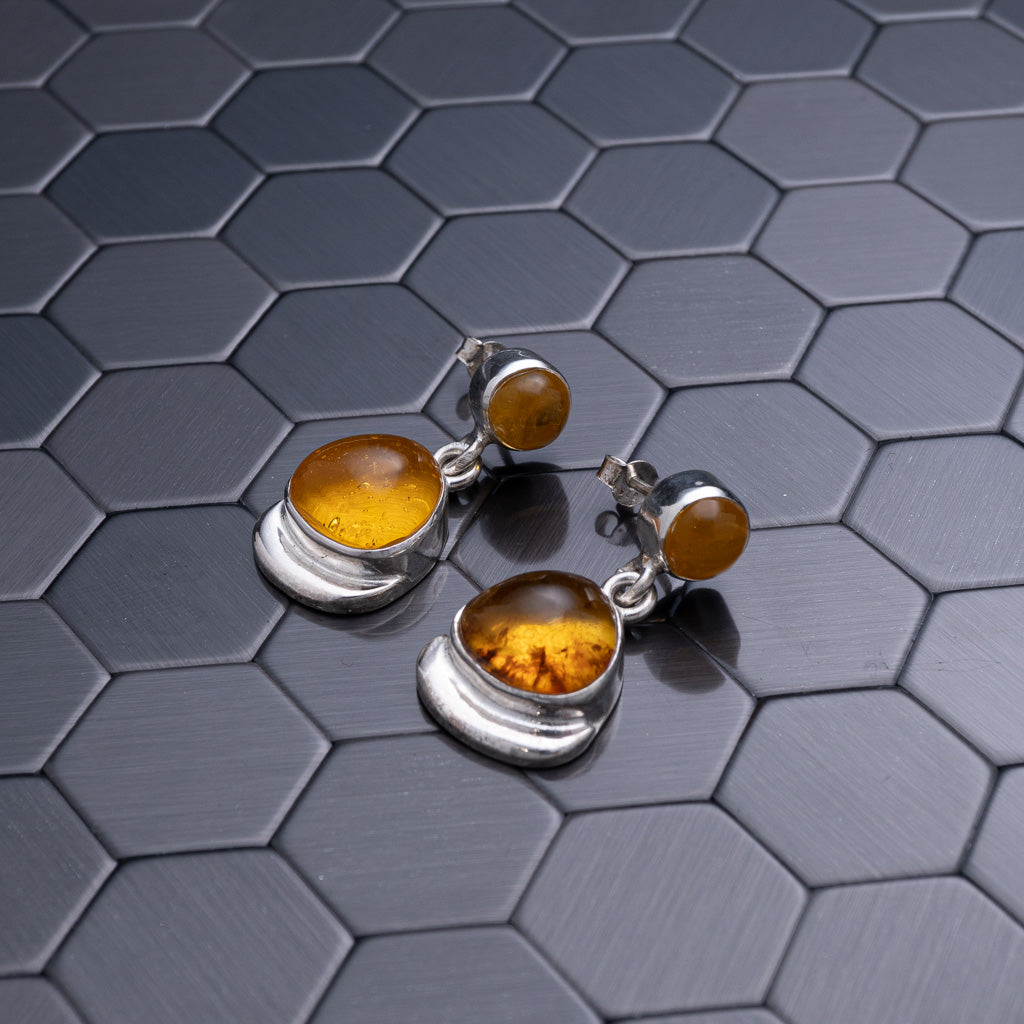
Hue is the stone's dominant color family. A Larimar cabochon may be blue, blue-green, or carry a soft white-and-blue combination. Dominican amber may range from warm cognac and golden yellow to deep red, greenish tones, or the celebrated blue effect associated with rare Blue Amber.
Tone describes how light or dark the color appears. A stone with an overly pale tone may look washed out, while one that is too dark can lose its inner detail. The most desirable tone depends on the material. In Larimar, a vivid medium blue often draws attention because it recalls clear Caribbean water. In amber, a richer golden or cognac tone can create depth and warmth, while Blue Amber is valued for the distinctive optical effect it displays under the right light.
Saturation refers to the strength or intensity of color. High saturation usually means the color looks pure and lively rather than grayish, brownish, or muted. This is why a bright, clean blue Larimar is often more prized than a stone with a duller blue cast, even when both are natural and beautifully cut.
These three elements work together. A highly saturated stone may still be less appealing if its tone is too dark. A very light stone may have an attractive hue but lack enough saturation to make an impact. The most compelling gemstones find a visual balance that suits their individual nature.
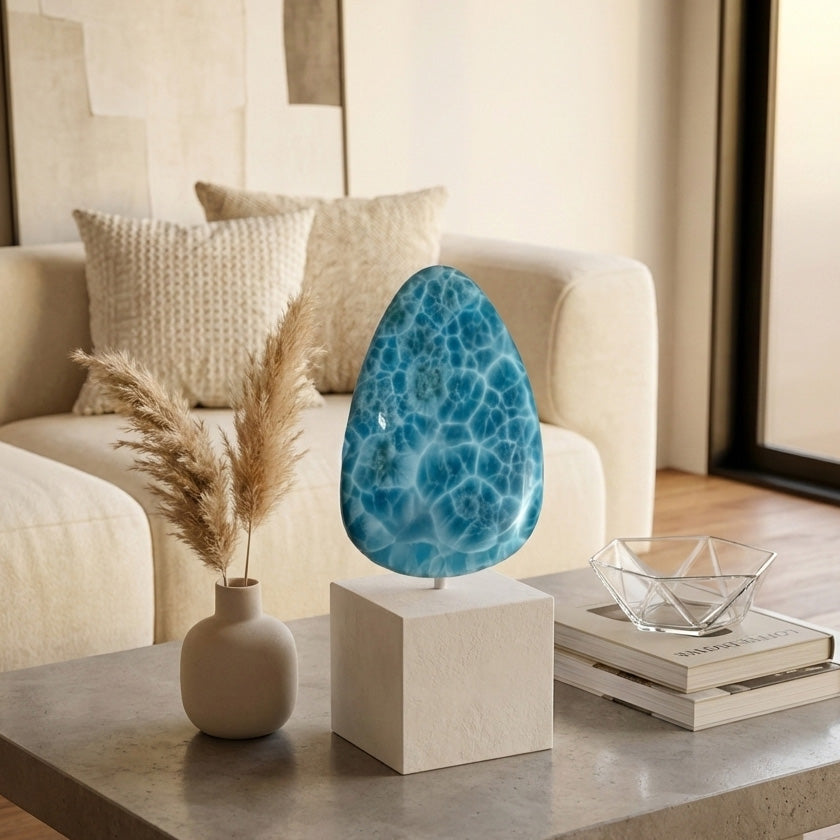
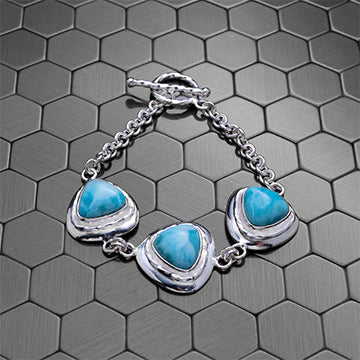
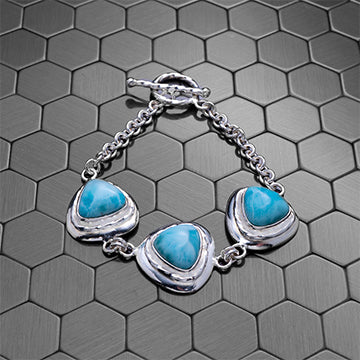
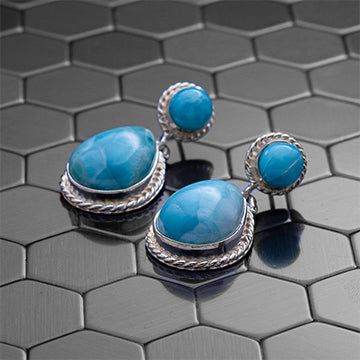
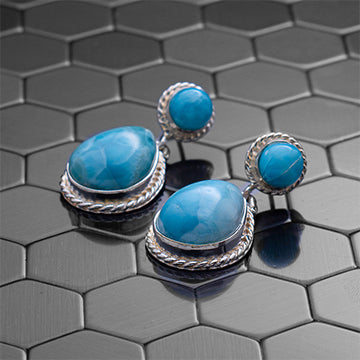
Larimar is an opaque to translucent blue variety of pectolite found only in the Dominican Republic. Its color is inseparable from its identity. The stone's appeal lies not in absolute uniformity, but in the way blue pools, white waves, and occasional mineral markings create a one-of-a-kind Caribbean landscape.
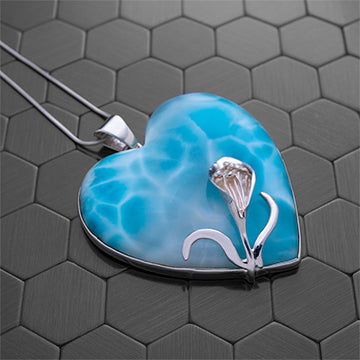
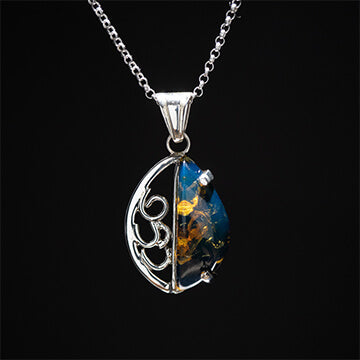
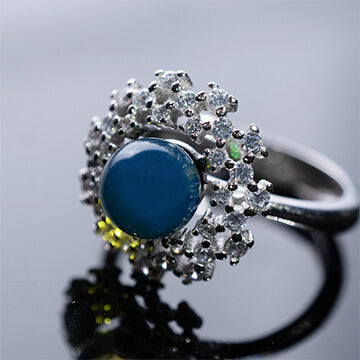
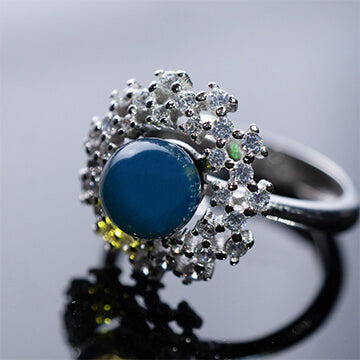
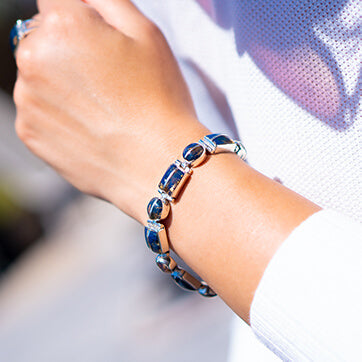
The most sought-after Larimar is commonly associated with a strong, clear blue that feels fresh rather than gray. Many collectors favor medium to medium-dark blue material with good saturation, especially when the blue is broadly distributed across the face of the cabochon. A vivid stone can feel remarkably alive when polished into a pendant or ring.
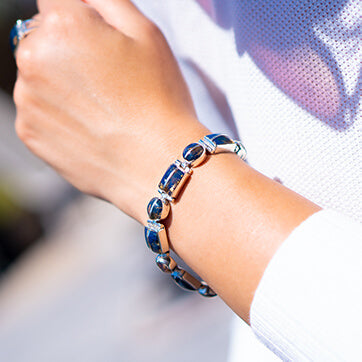
That said, grading Larimar is not simply a contest for the bluest stone. White marbling is natural and can be especially beautiful when it creates a wave-like pattern. Some pieces feature cloud-soft blue and white movement that suits romantic, artisan jewelry. Others show bolder blue fields with dramatic contrast. Personal preference matters, particularly when choosing a piece meant to be worn close to the heart.
Natural inclusions, dark matrix, and brownish areas can affect value depending on their visibility and placement. A small, well-placed natural marking may add character. Heavy discoloration across the face of a cabochon can reduce the sense of clean blue color that many buyers seek. Skilled cutting matters here: an artisan can orient rough material to showcase its strongest color and most graceful pattern.
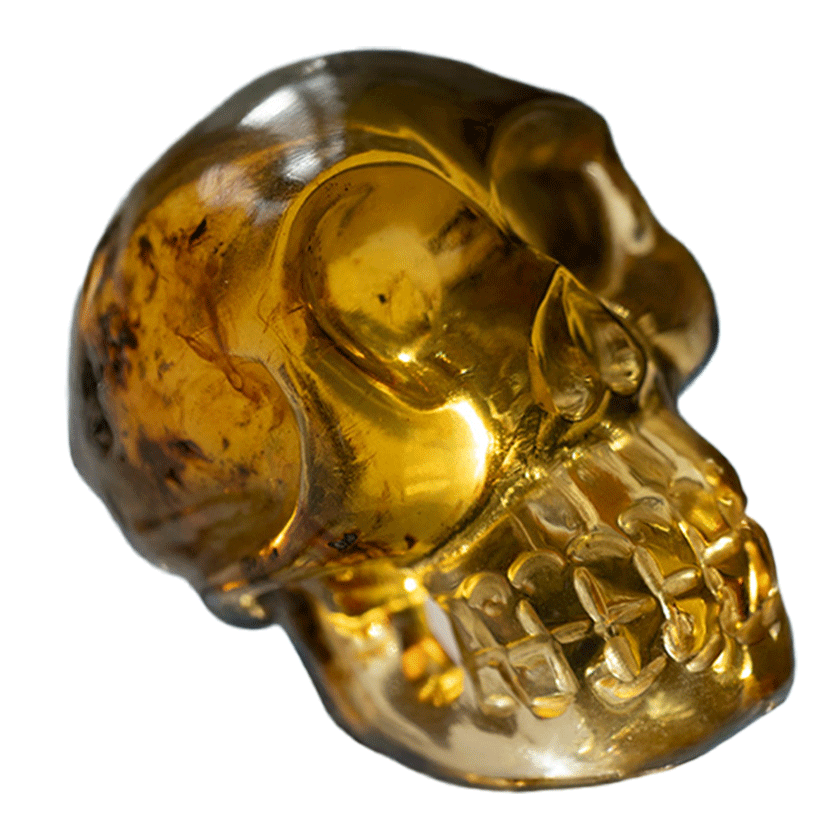
Amber is fossilized tree resin, so its color story is different from mineral gemstones. It may be transparent, translucent, or opaque, and its value often comes from both body color and optical behavior. A clear golden amber bead and a richly colored red amber carving can each be beautiful for entirely different reasons.
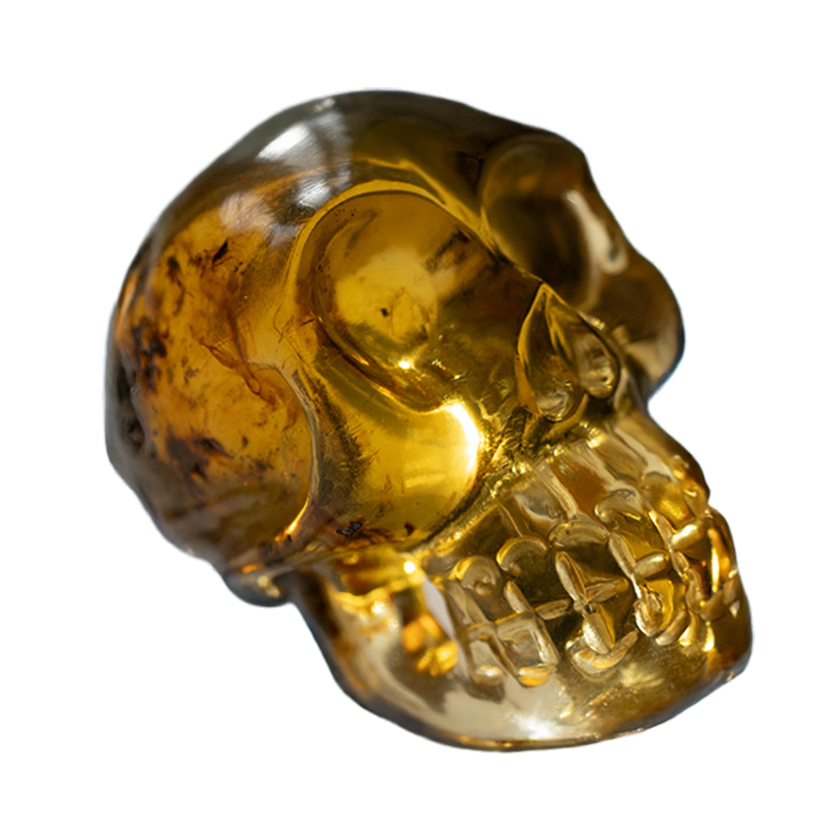
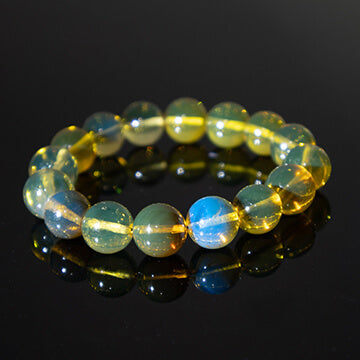
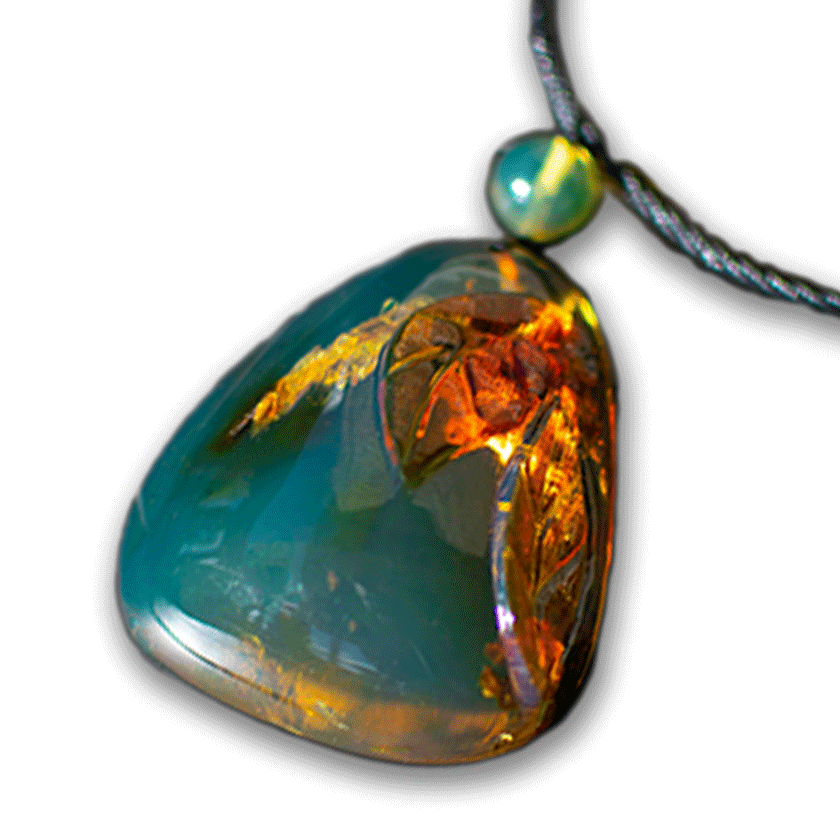
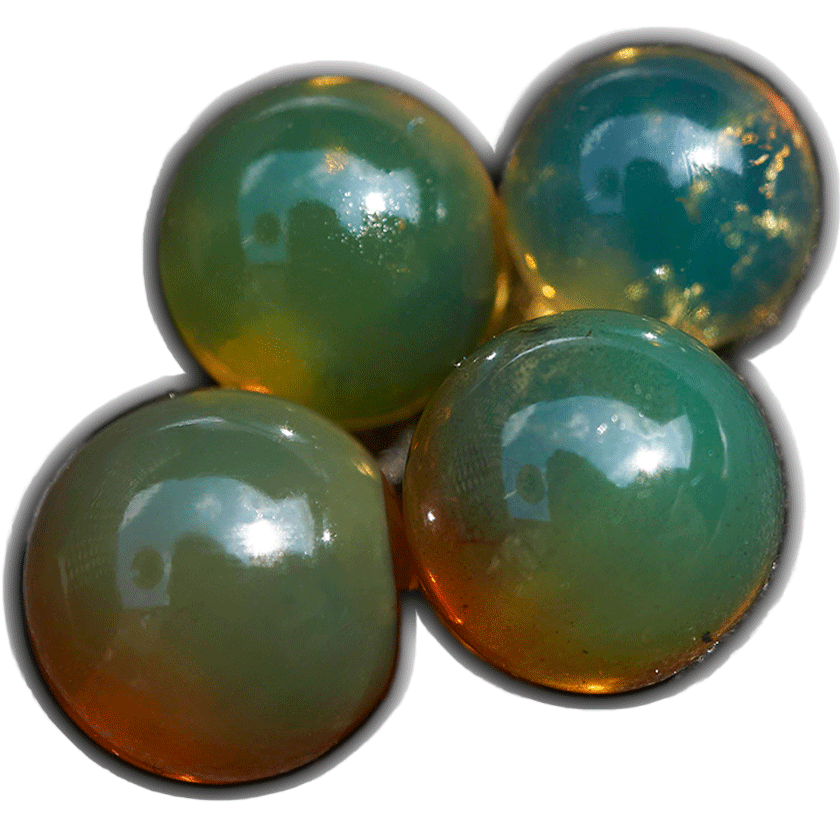
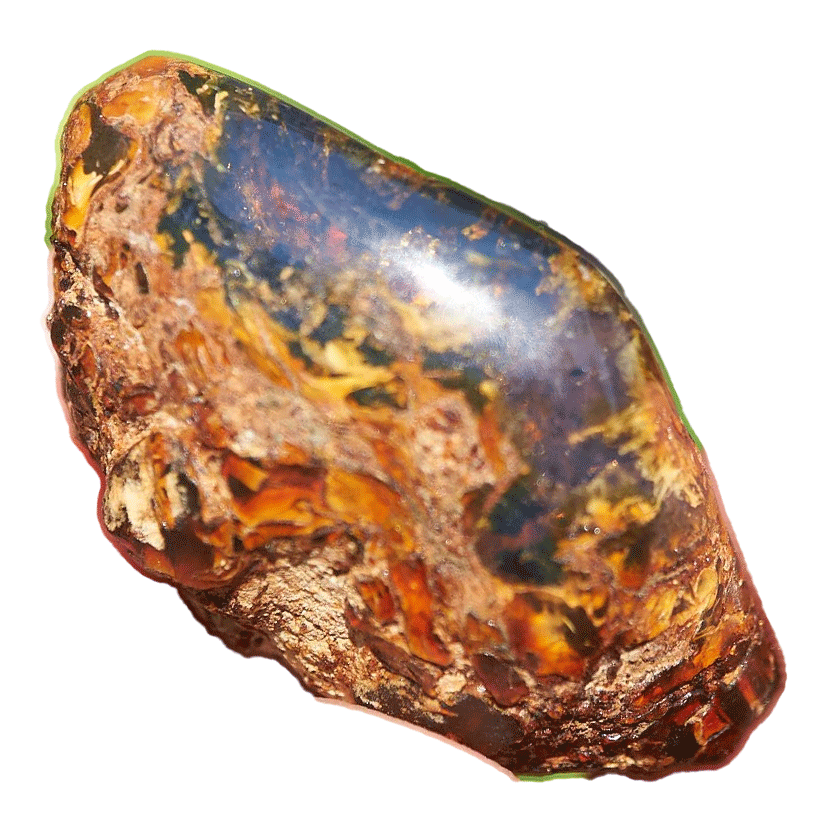
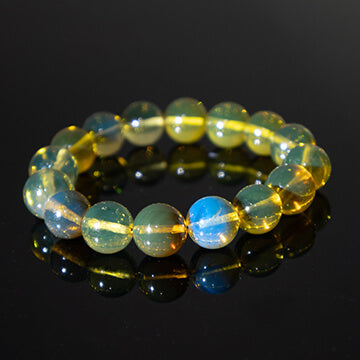
For Dominican Blue Amber, grading requires particular care because its blue appearance is often a fluorescence effect. In ordinary light, a piece may look pale yellow, honey-colored, or cognac. Under sunlight or ultraviolet light, it can reveal a remarkable blue glow, ranging from soft blue haze to deeper, more visible color.
The strength of that blue fluorescence is a meaningful consideration, but it should be described honestly. Light source, background, thickness, polish, and the viewer's angle all change the effect. A reputable seller should not imply that every Blue Amber piece will look intensely blue in every room. Its changing appearance is part of its rarity and charm.
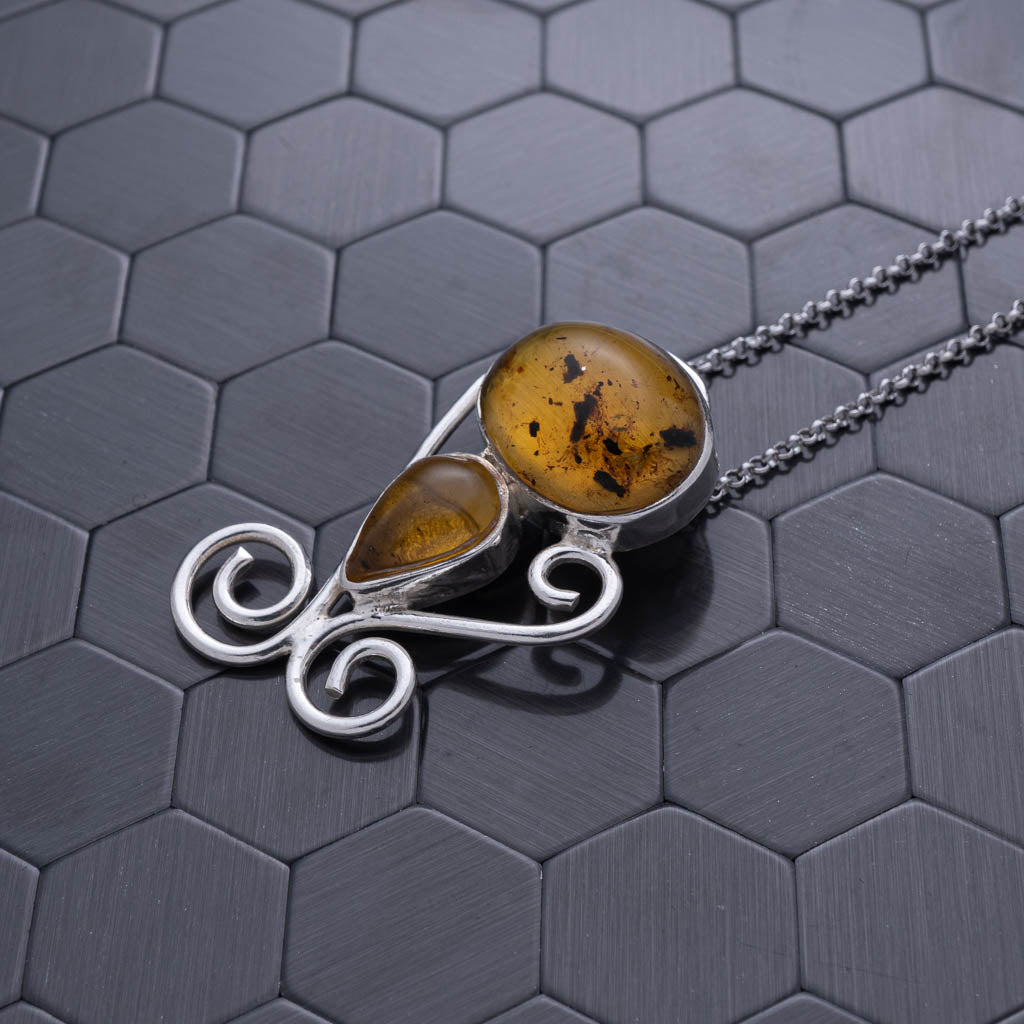
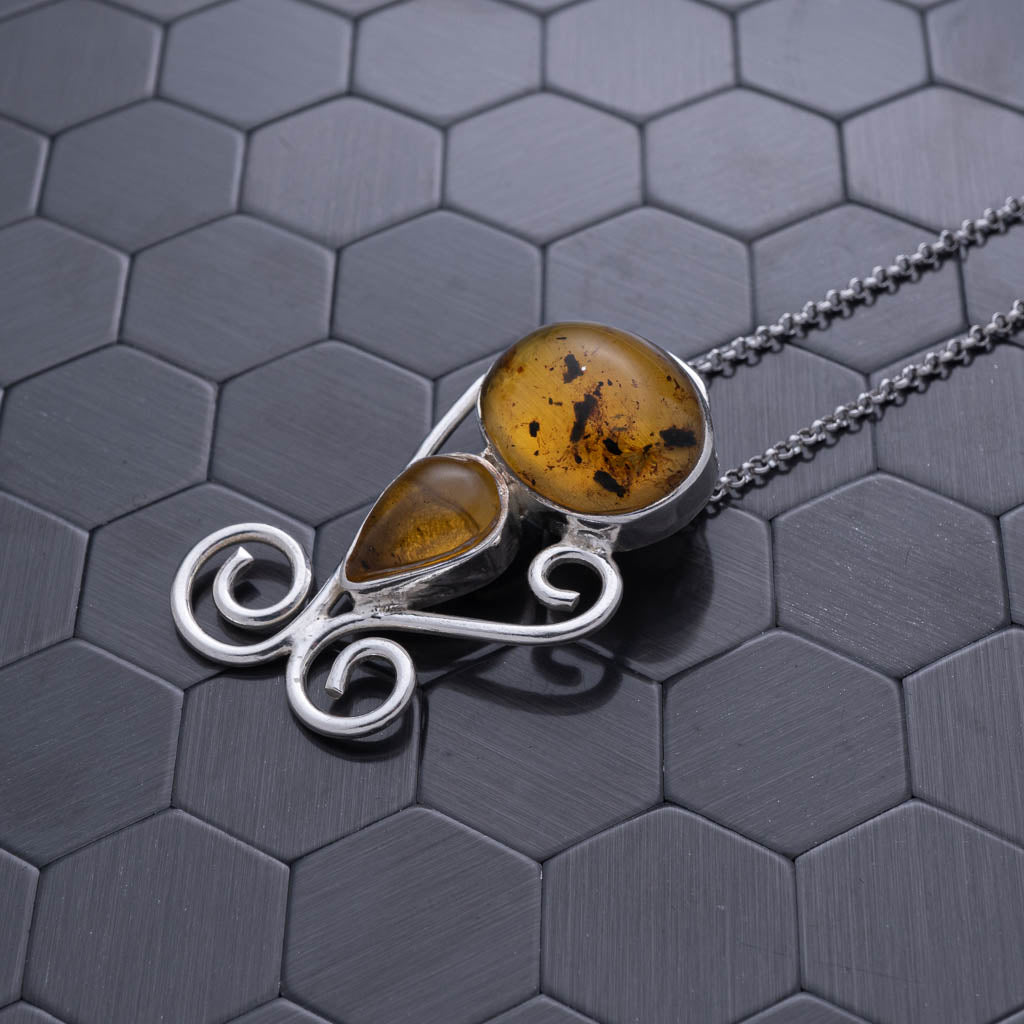
Clarity also plays a role in amber color grading. Transparent material can offer luminous depth, while cloudy or opaque amber has a softer, more ancient presence. Inclusions such as plant matter, bubbles, or insects may add collector appeal, but they do not automatically make a piece more valuable. Size, preservation, visibility, rarity, and authenticity all matter.
A gemstone is never viewed as a loose color sample. It is viewed as a finished object. This is especially true for cabochons, beads, carvings, and other artisan cuts used for Larimar and amber jewelry.
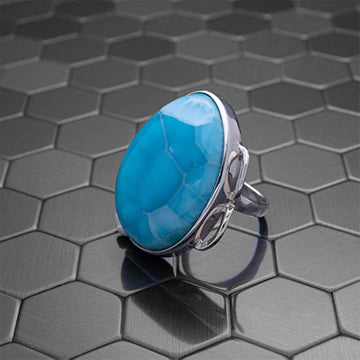
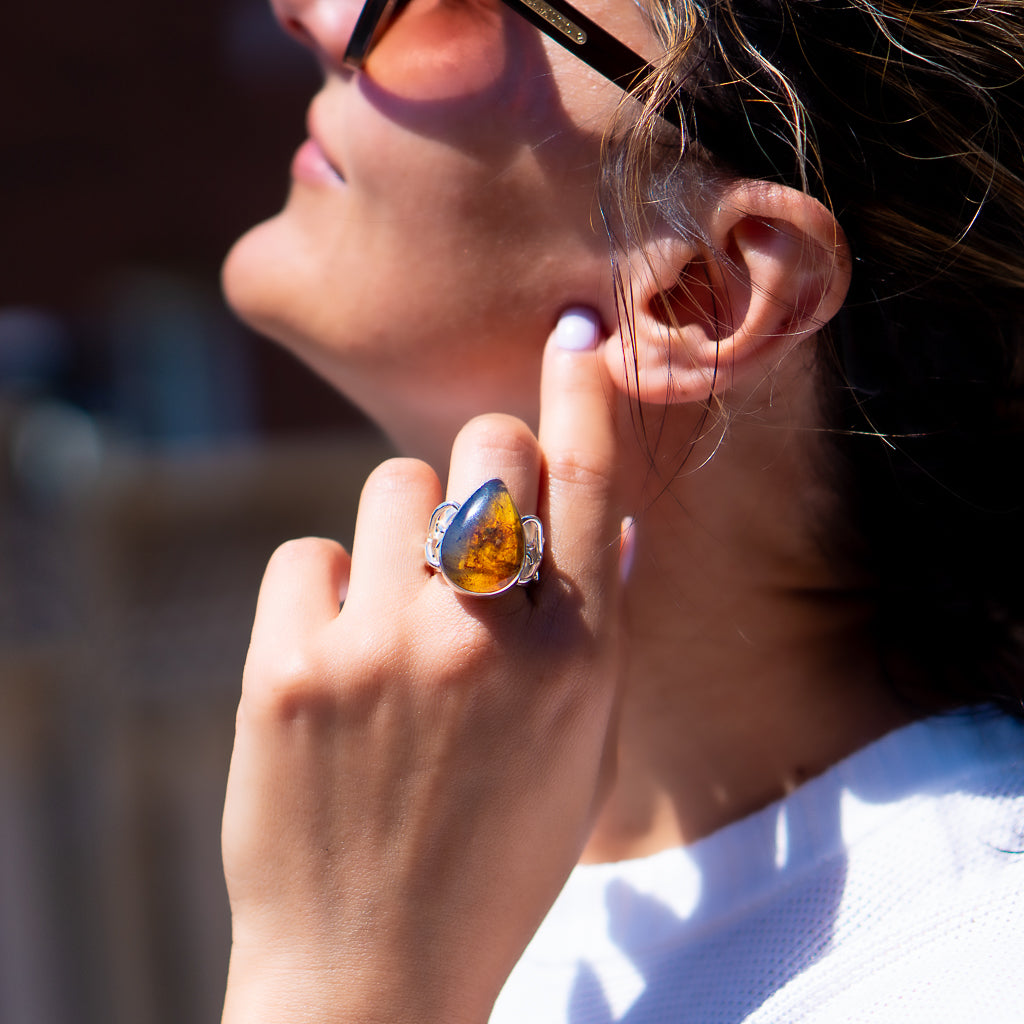
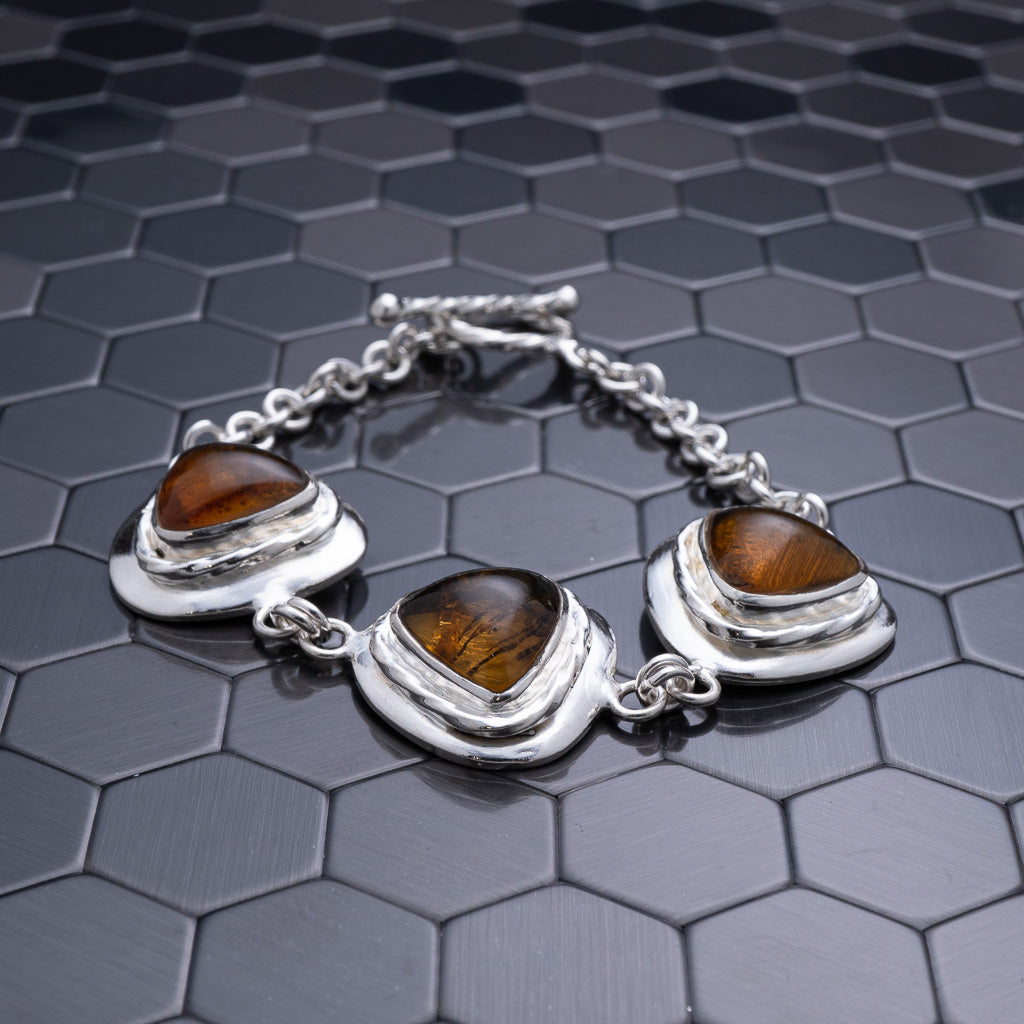
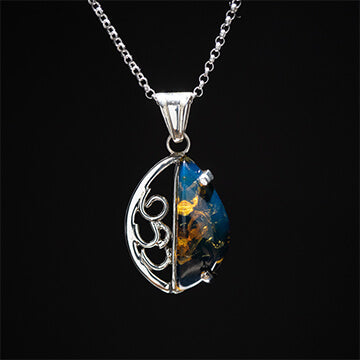
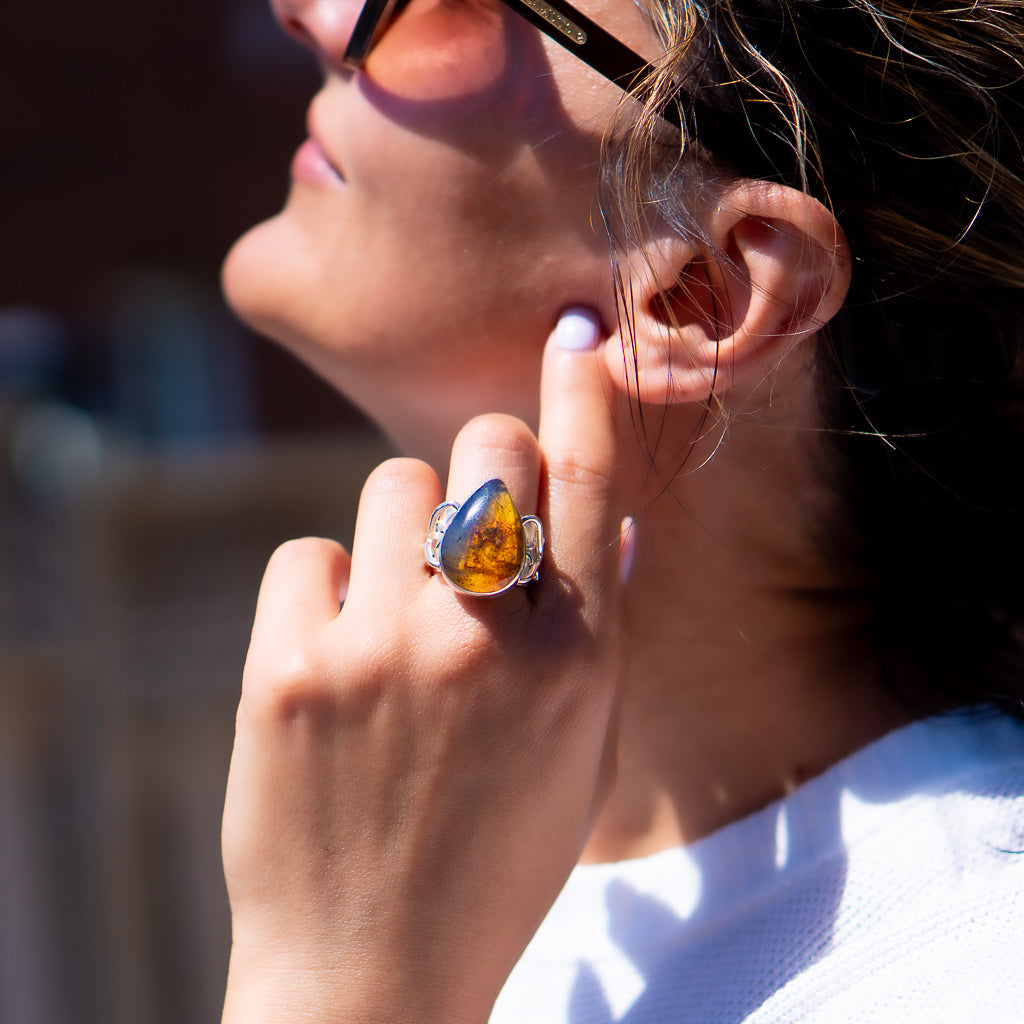
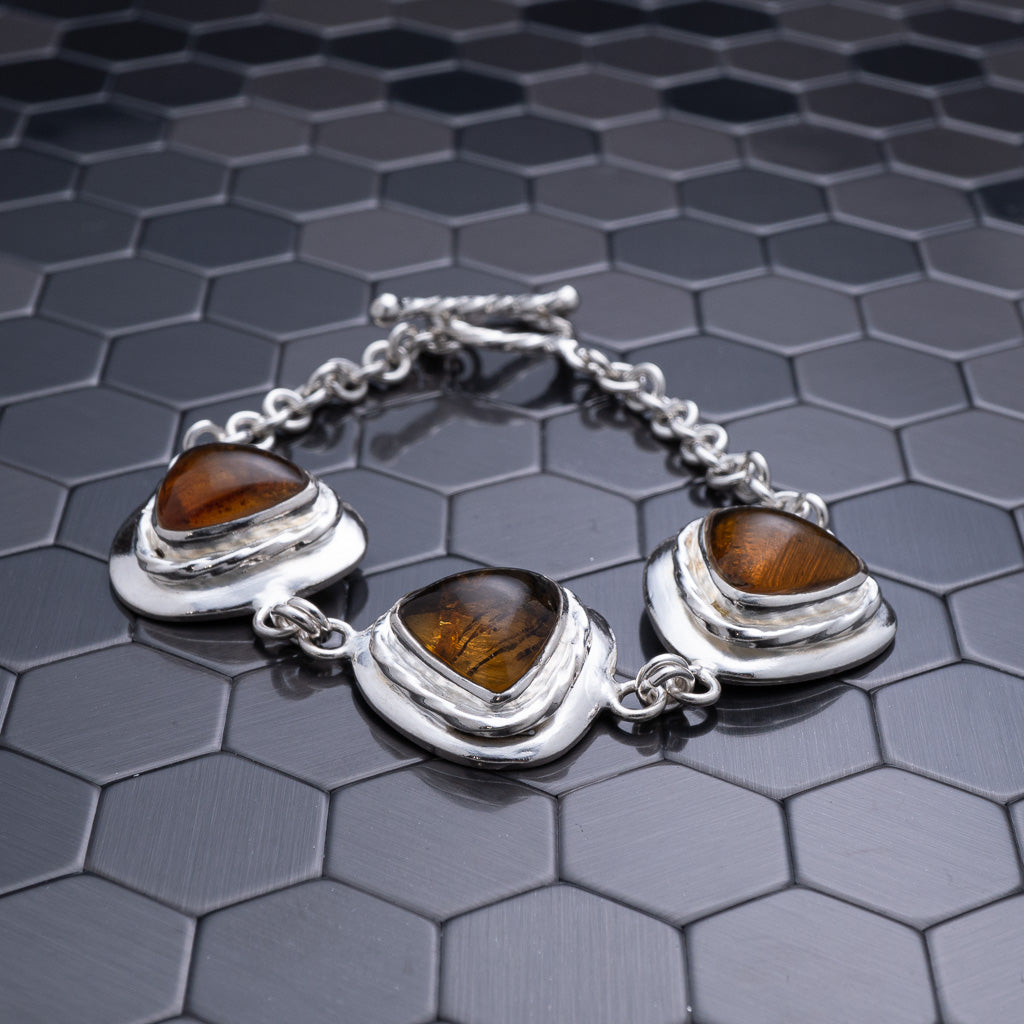
Color distribution asks whether the desired color is spread attractively through the stone. A Larimar cabochon with a strong blue center may look exceptional in a ring, while an elongated pendant might benefit from color that flows evenly from top to bottom. In amber, an even golden glow can be elegant, but a natural shift from cognac to honey may also make a carving feel rich and dimensional.
Polish affects color perception, too. A fine polish allows light to move across the surface cleanly, helping the stone appear brighter and more refined. Scratches, dull spots, or uneven finishing can interrupt that visual experience. For softer organic gems such as amber, thoughtful care helps preserve the polish and the warmth that makes the color so captivating.
Photography deserves a thoughtful mention. Natural gemstones can look different under studio lighting, daylight, warm indoor lamps, and a phone screen. Product images should show the true personality of a stone as faithfully as possible, but slight variation is normal. When purchasing a rare Caribbean gemstone, look for clear descriptions that explain the stone's natural color, pattern, transparency, and special optical effects.
A vivid color can be exciting, but it is not a substitute for authenticity. Origin, natural formation, treatment disclosure, craftsmanship, and condition belong beside color in any meaningful evaluation. A certified Dominican gemstone with honest color information offers far more confidence than a dramatic label with no supporting details.
Treatments can influence color in many gem materials. Heat, dye, coating, fracture filling, and other processes may alter appearance, sometimes appropriately when disclosed and sometimes deceptively when hidden. Larimar and amber should be represented with care because their natural beauty and cultural connection to the Dominican Republic are central to their appeal.
For collectors, the best choice depends on purpose. A bold, saturated Larimar cabochon may be the right addition to a gemstone collection. A softer blue pendant with graceful white marbling may be the more meaningful gift. A Blue Amber piece with a subtle but genuine fluorescence may be more desirable than an artificially dramatic-looking alternative whose origin is uncertain.
Start with the feeling you want the gemstone to create. Bright Caribbean blue makes a confident statement against silver or gold. Soft blue-and-white Larimar can feel serene and romantic. Golden amber brings warmth to everyday jewelry, while Blue Amber offers a rare conversation piece that changes with the light.
Then consider where and how you will wear it. A collector may prefer a larger cabochon with unusual patterning, while a daily-wear pendant benefits from a color that remains beautiful across many settings. No two natural stones are identical, and that is precisely what makes them personal.
The finest gemstone color is not always the deepest, bluest, clearest, or most intense. It is the color that is genuinely natural, beautifully presented, and impossible to mistake for mass-produced jewelry. Choose the stone that makes you pause, look again, and feel as though you are holding a small, authentic piece of the Caribbean.
Sign up to get the latest on sales, new releases and more …
6 min read
6 min read
9 min read