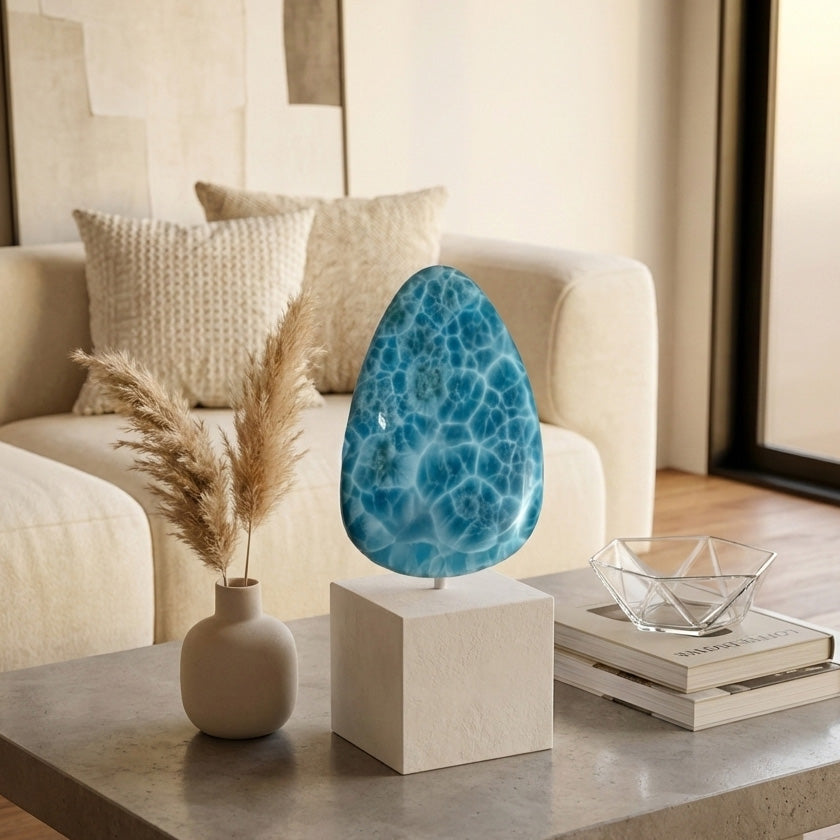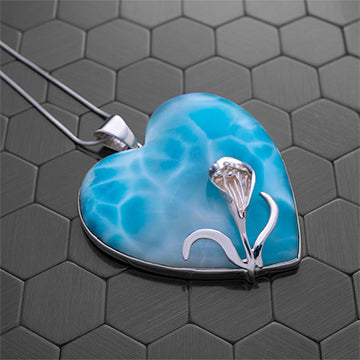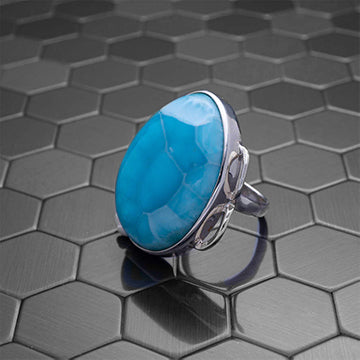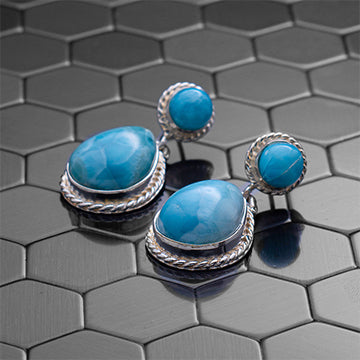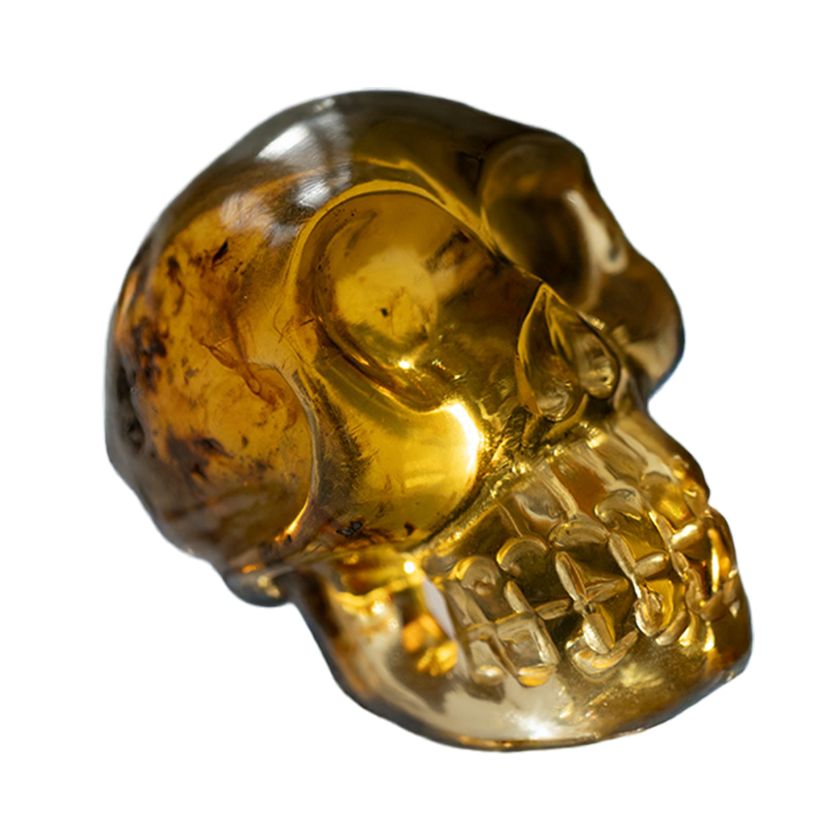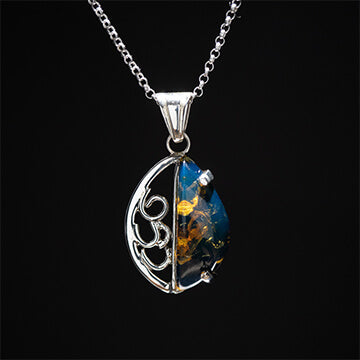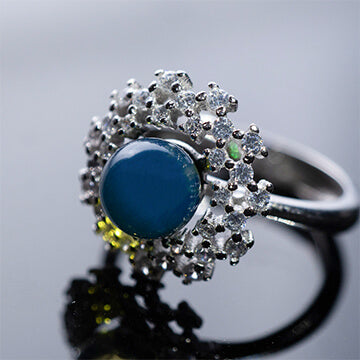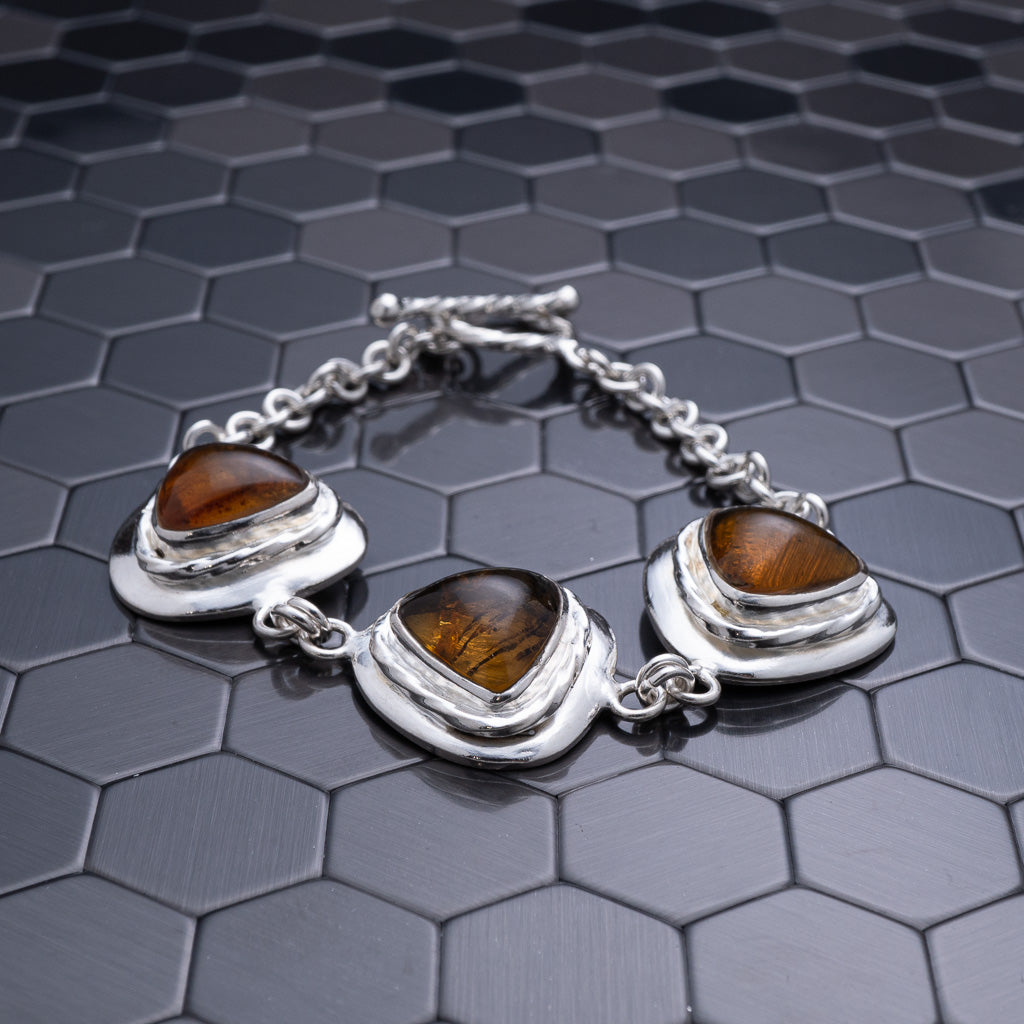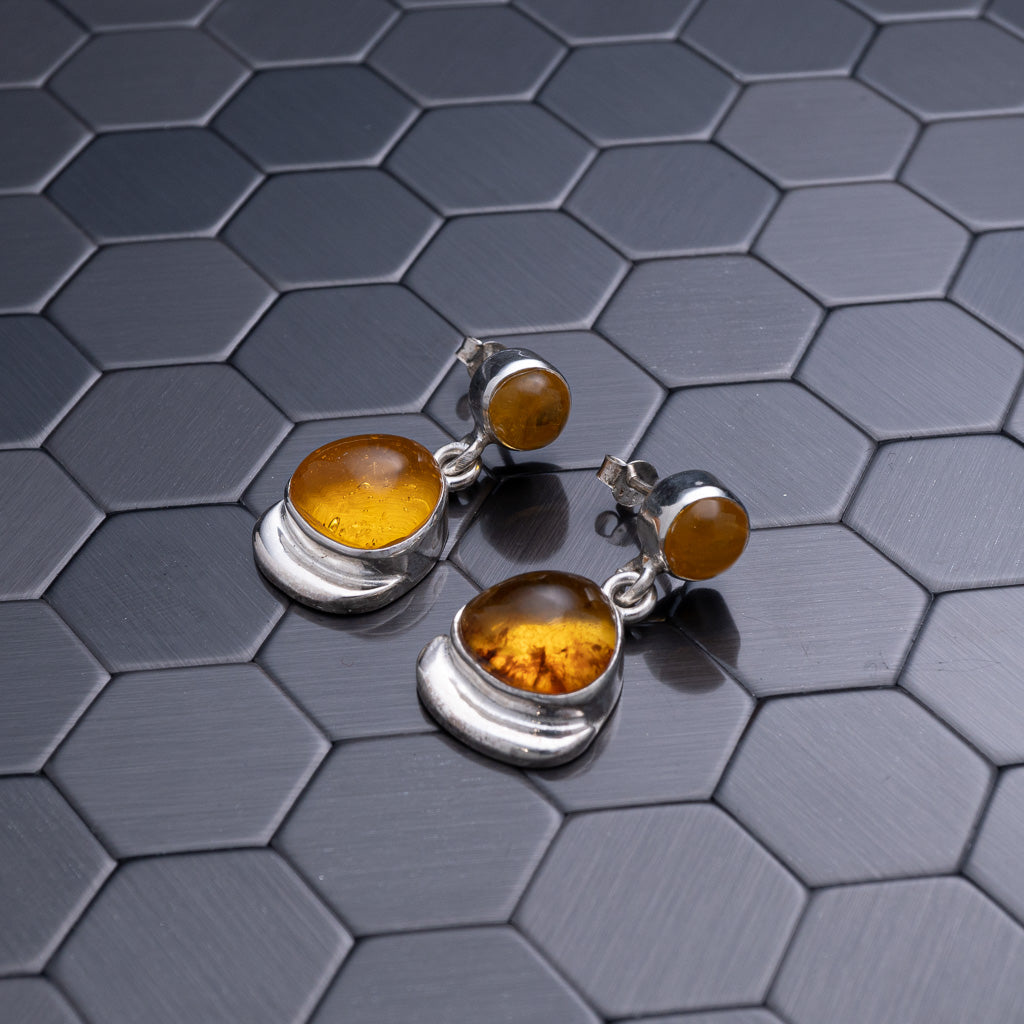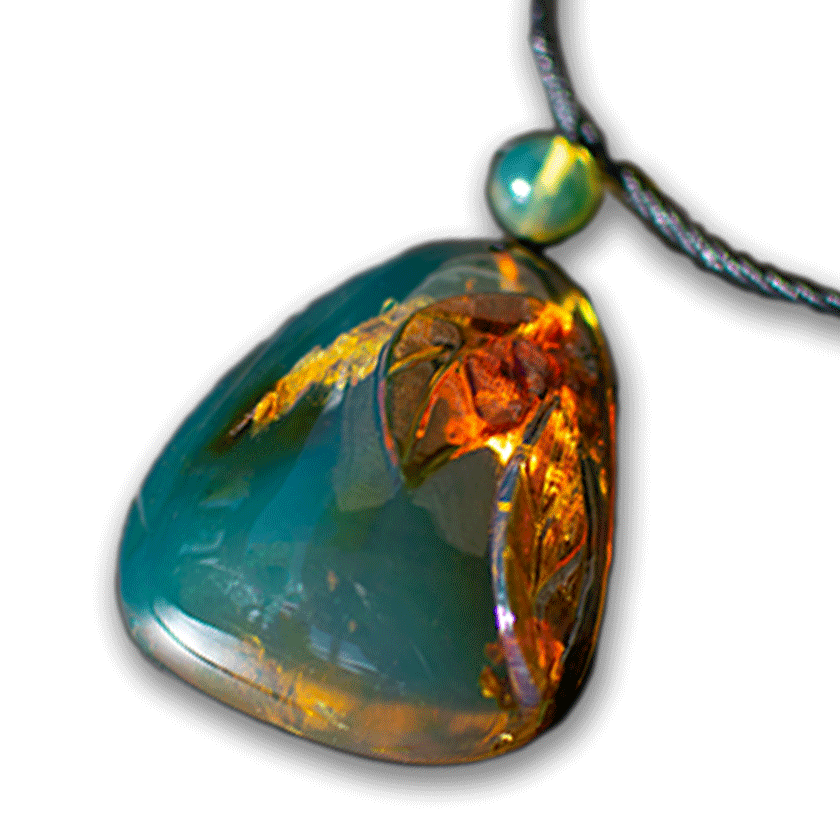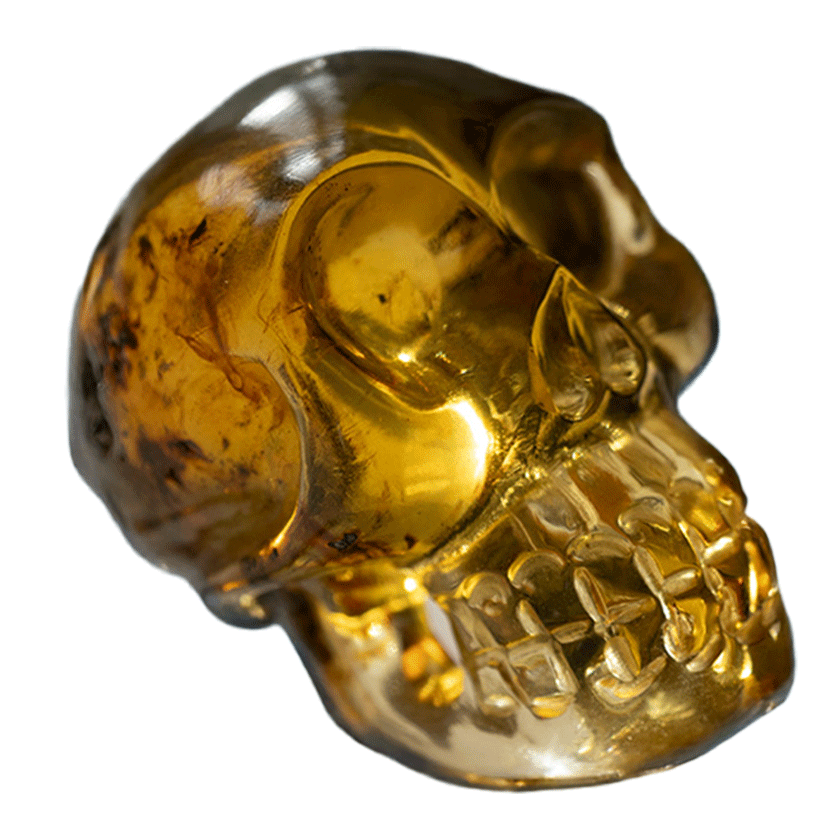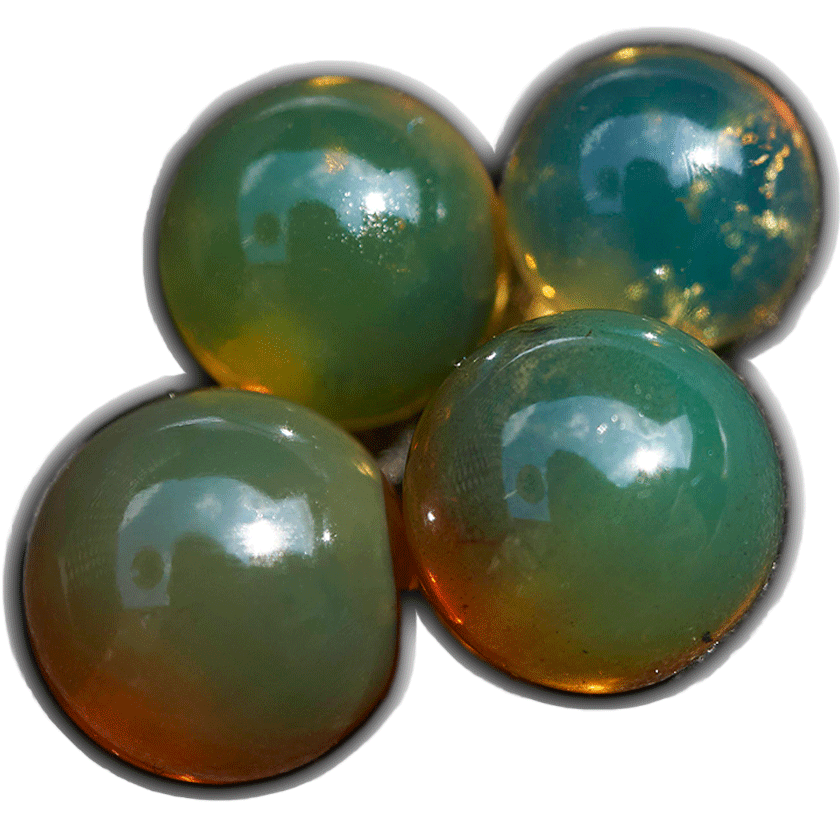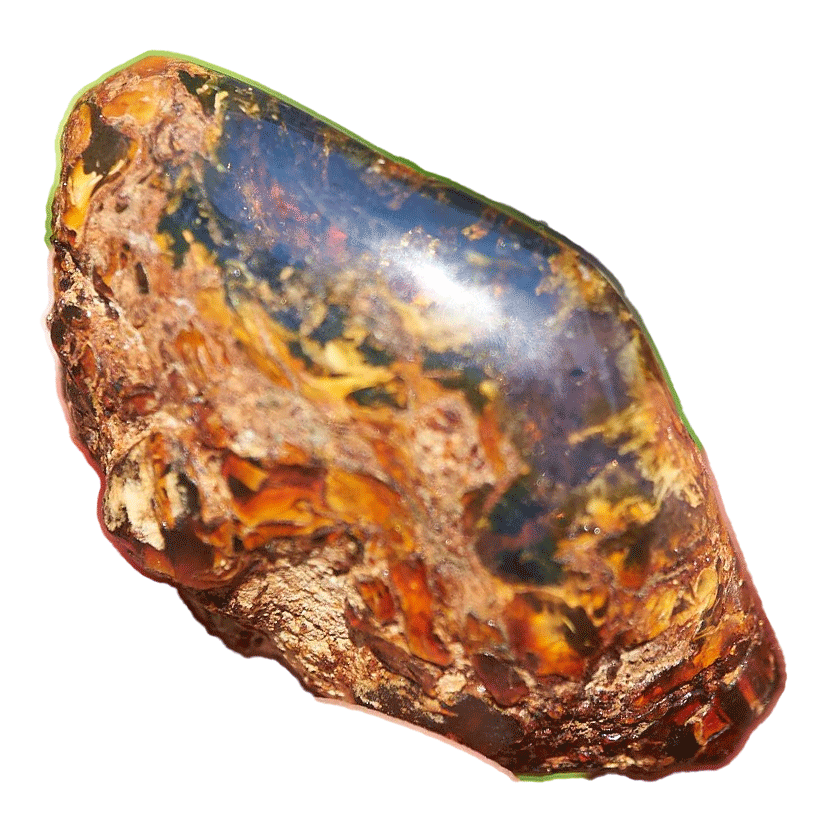

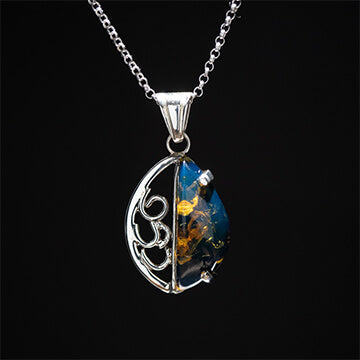
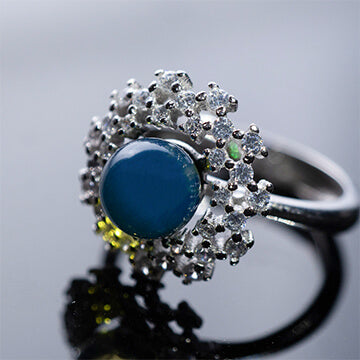
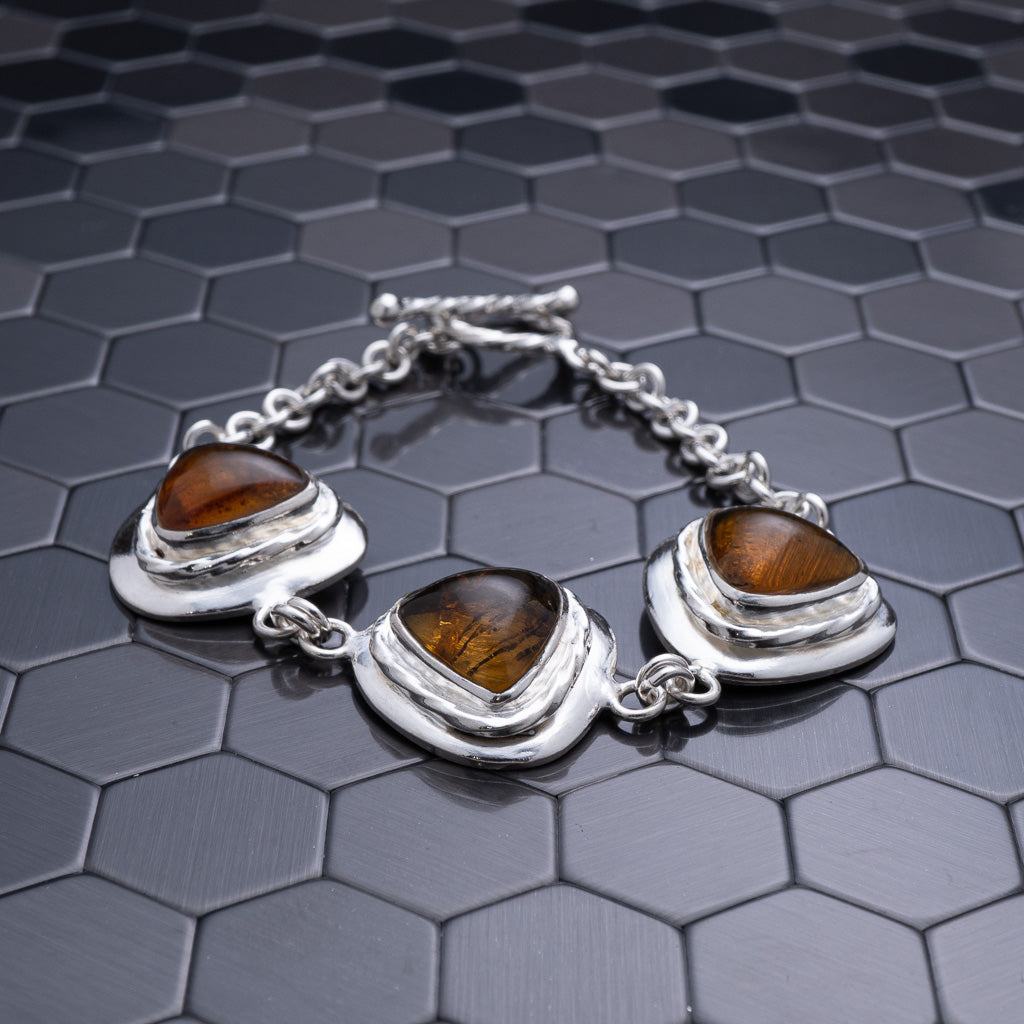
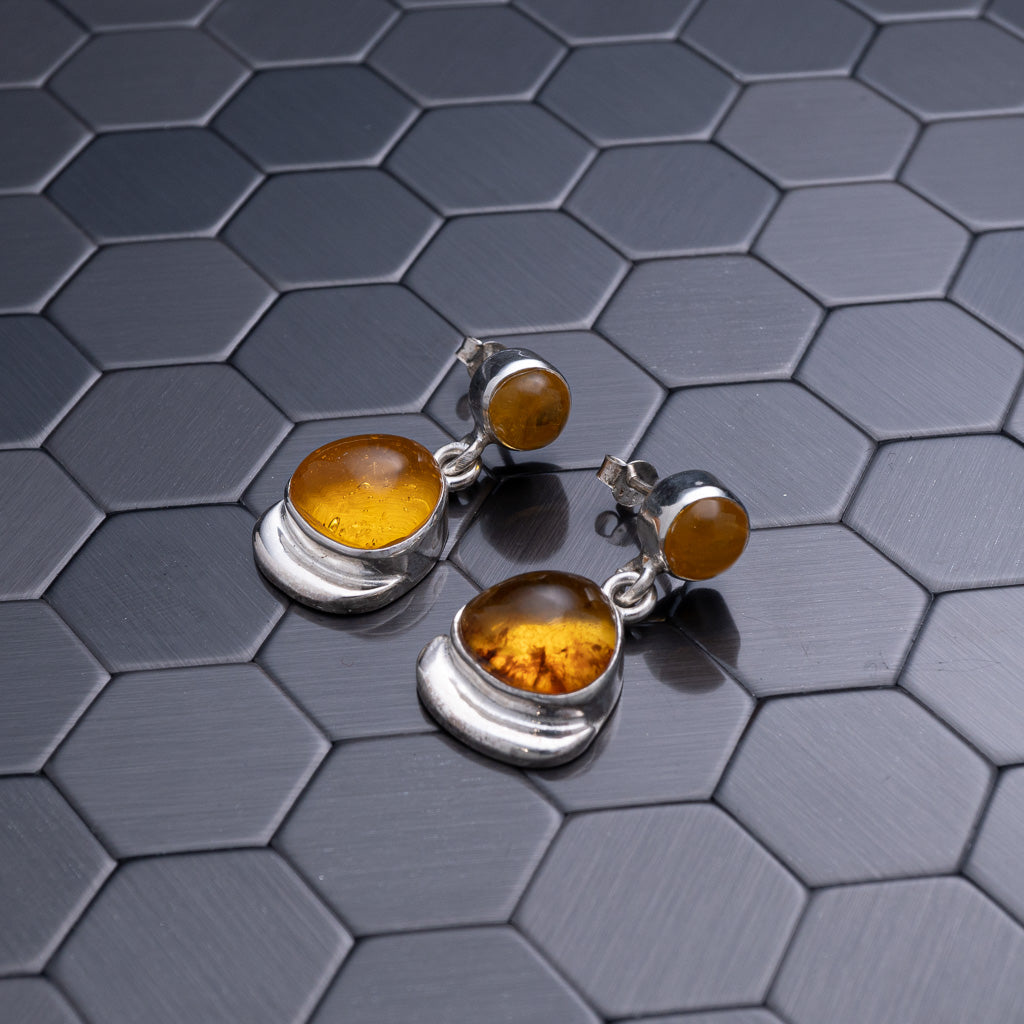
A finely carved piece of Dominican amber holds more than beautiful color. Its warm honey tones, rare blue flashes, and ancient inclusions preserve a small, luminous piece of the Caribbean's natural history. Knowing how to care for amber carvings helps protect that beauty from the quiet hazards of everyday life: heat, perfume, hard surfaces, and overly enthusiastic cleaning.
Amber is not a mineral crystal in the way quartz or sapphire is. It is fossilized tree resin, formed over millions of years, and its organic nature gives it a distinctive warmth and lightness. It also means amber deserves a gentler approach than harder gemstones. With mindful handling and simple care, a carving can remain radiant enough to be treasured, worn, or displayed for generations.
On the Mohs scale of hardness, amber typically measures about 2 to 2.5. That makes it softer than many familiar jewelry materials, including quartz dust, which can be present in ordinary household dirt. A carving can pick up fine scratches when it is stored beside harder gemstones, tossed into a handbag, or wiped with a rough cloth.
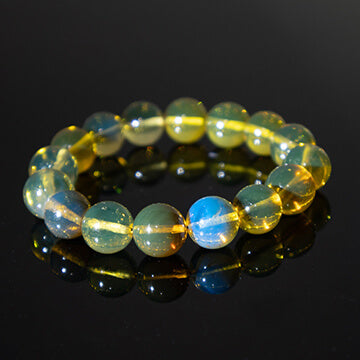
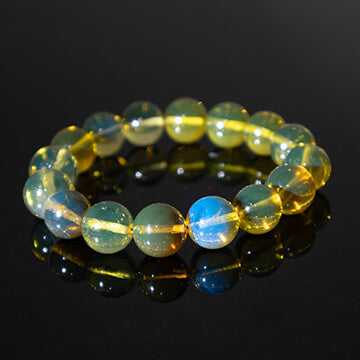
Carvings deserve extra attention because their sculpted details can be delicate. Fine edges, raised features, openwork, and polished curves may be more vulnerable than the smooth surface of a simple cabochon. Dominican Blue Amber can be especially captivating in sunlight or ultraviolet light, but its rare glow should never tempt owners to leave it in prolonged direct sun.
Amber also reacts poorly to excessive heat and harsh chemicals. Alcohol, perfume, hairspray, cleaning sprays, nail polish remover, and some lotions can dull the surface or affect its polish. The goal is not to make amber look artificially new. It is to preserve the clear, warm finish created by nature and refined by skilled craftsmanship.
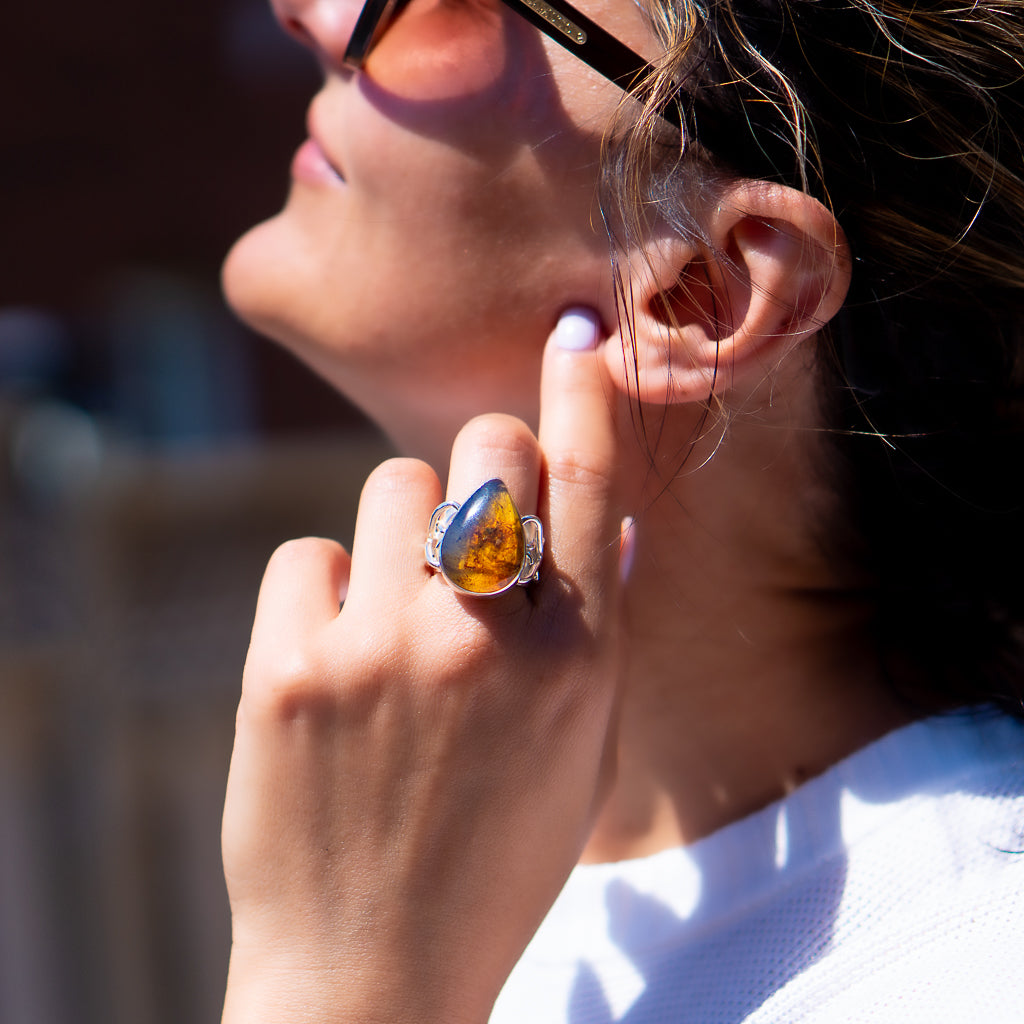
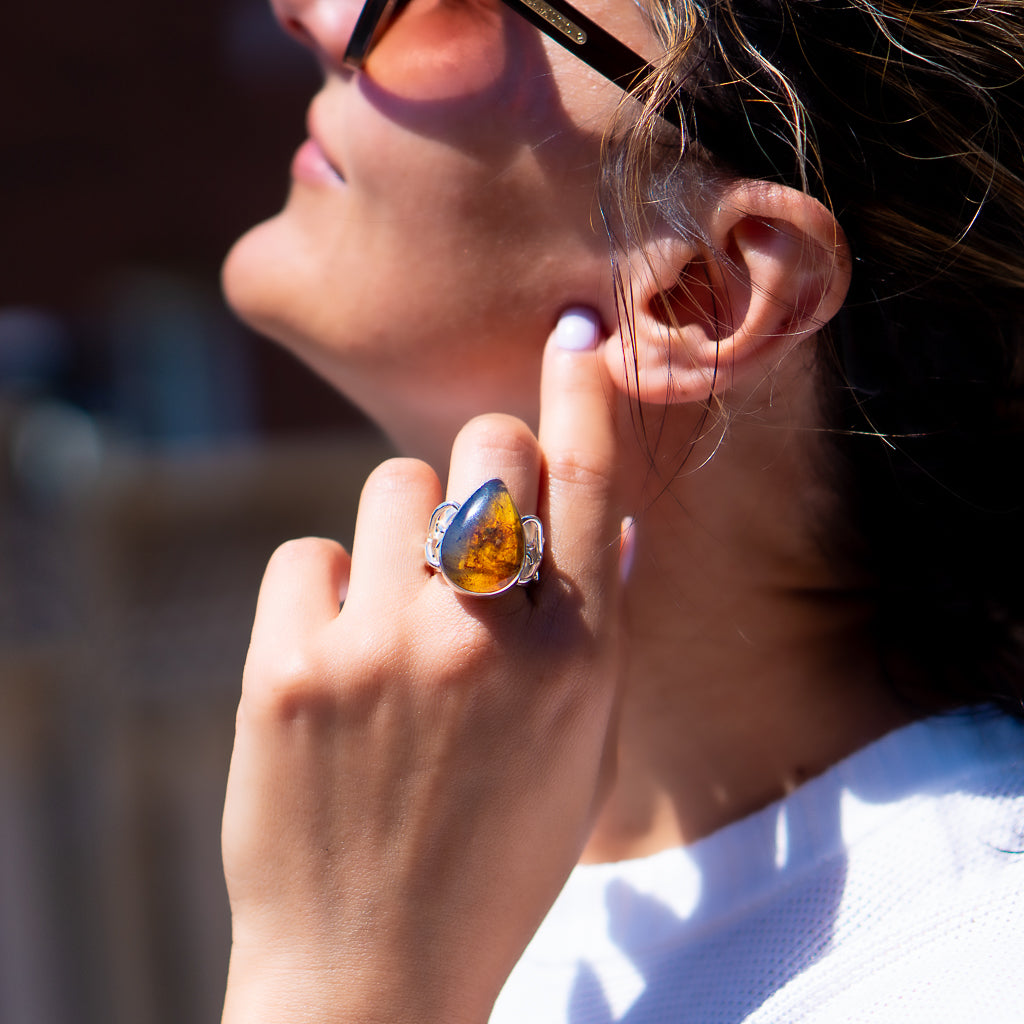
The easiest care routine begins before you wear or handle your amber. Make amber jewelry one of the last things you put on after makeup, perfume, hair products, and body lotion have had time to settle. Remove a pendant, ring, bracelet, or earrings before bathing, swimming, exercising, cooking over intense heat, or cleaning the house.
For collector carvings, pick up the piece with clean, dry hands and hold it over a soft surface whenever possible. A folded towel on a table provides a little insurance while you admire a new carving, photograph it, or inspect a fossil inclusion. Avoid gripping small carved details, loops, or narrow extensions. Support the carving from its strongest, broadest area instead.
After wearing amber, a quick wipe with a clean, soft microfiber or flannel cloth is usually enough. This removes skin oils and surface dust without abrading the polish. Do not use paper towels, tissue, rough cotton, or polishing cloths made for metal. Materials designed to brighten silver or gold often contain compounds that are unsuitable for amber.
When a carving needs more than a dry wipe, use the mildest possible method. Dampen a soft cloth with lukewarm water, wring it out thoroughly, and gently wipe the surface. Follow with a second dry cloth, taking care around recessed carved areas where moisture can linger.
If there is stubborn residue, a tiny amount of mild soap diluted in water may be used on the cloth. Do not soak the carving. Do not run it under a faucet. Immersion can be risky for pieces with natural fissures, drilled sections, glued components, or metal settings. Once cleaned, wipe away any soap residue with a cloth lightly dampened in plain water, then dry immediately.
Avoid ultrasonic cleaners and steam cleaners completely. Their vibration, pressure, and heat are too aggressive for an organic gem. Jewelry dips, commercial polishing liquids, alcohol wipes, acetone, ammonia, and abrasive pastes are equally poor choices. A brilliant blue flash or golden transparency is not improved by stronger cleaning products. Gentle care is the safer luxury.
A soft, clean makeup brush or an artist's brush can lift loose dust from grooves and sculpted areas. Use almost no pressure and brush outward rather than forcing debris farther into the design. A dry method is best for most carvings.
For an older piece with deep crevices, visible cracking, loose material, or a fragile insect inclusion, do not attempt detailed cleaning at home. A jeweler or conservator experienced with amber can assess the piece without risking the features that make it unique.
Proper storage prevents more damage than any cleaning routine can repair. Keep each amber carving in its own soft pouch, lined jewelry box compartment, or wrapped in a soft untreated cloth. Separation matters. Diamonds, sapphires, topaz, quartz, and even metal findings can scratch amber during storage.
Choose a location that is cool, dry, and protected from strong light. A dresser drawer or jewelry box away from a radiator, sunny windowsill, car interior, or bathroom is ideal. High heat can affect amber's surface over time, while direct sunlight may alter its appearance. Humidity extremes are also best avoided, particularly for antique or highly included pieces.
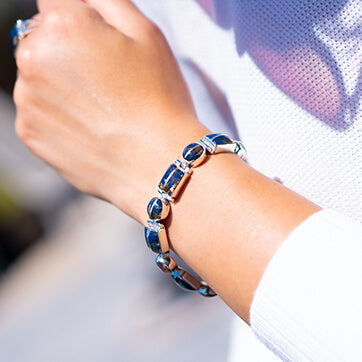
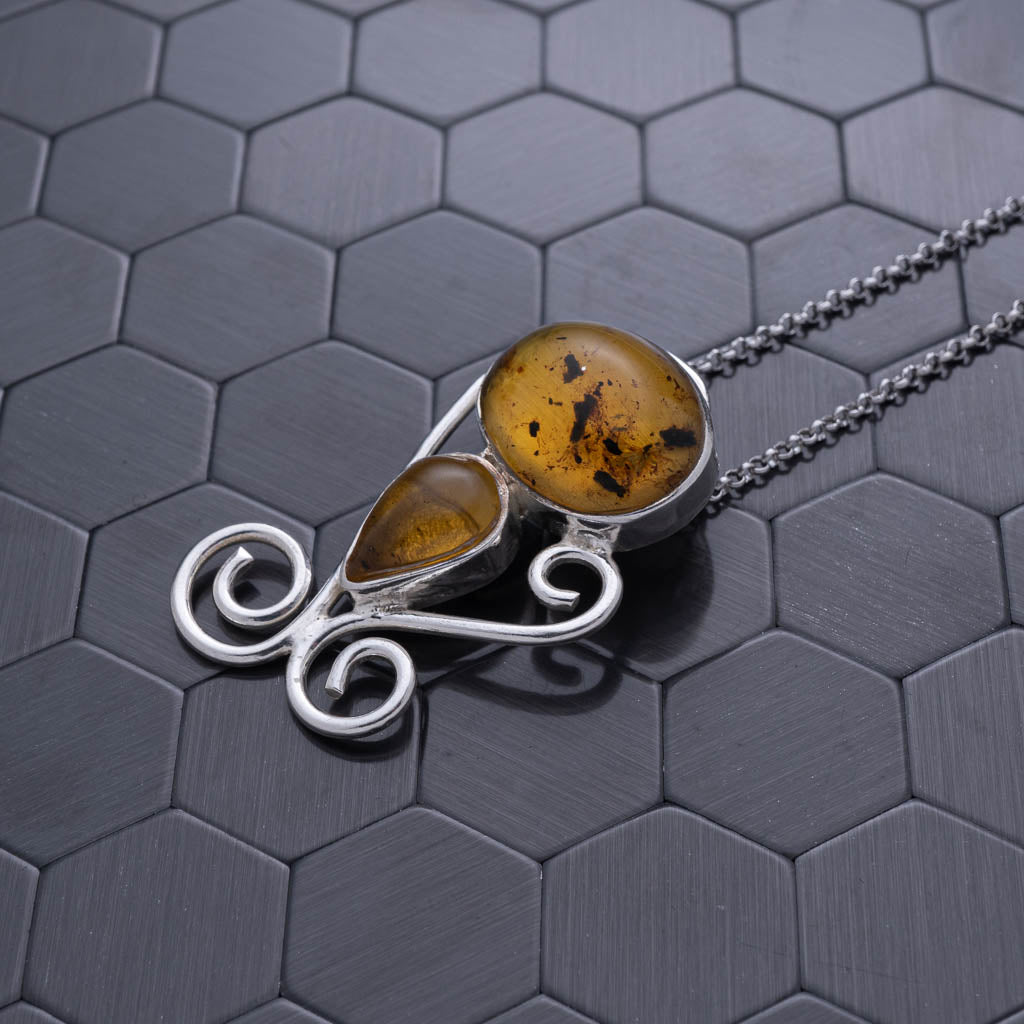
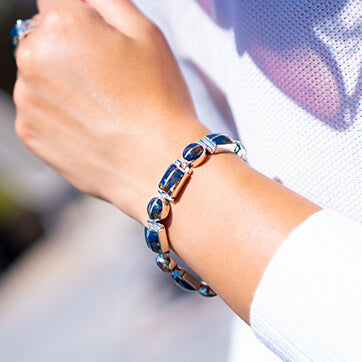
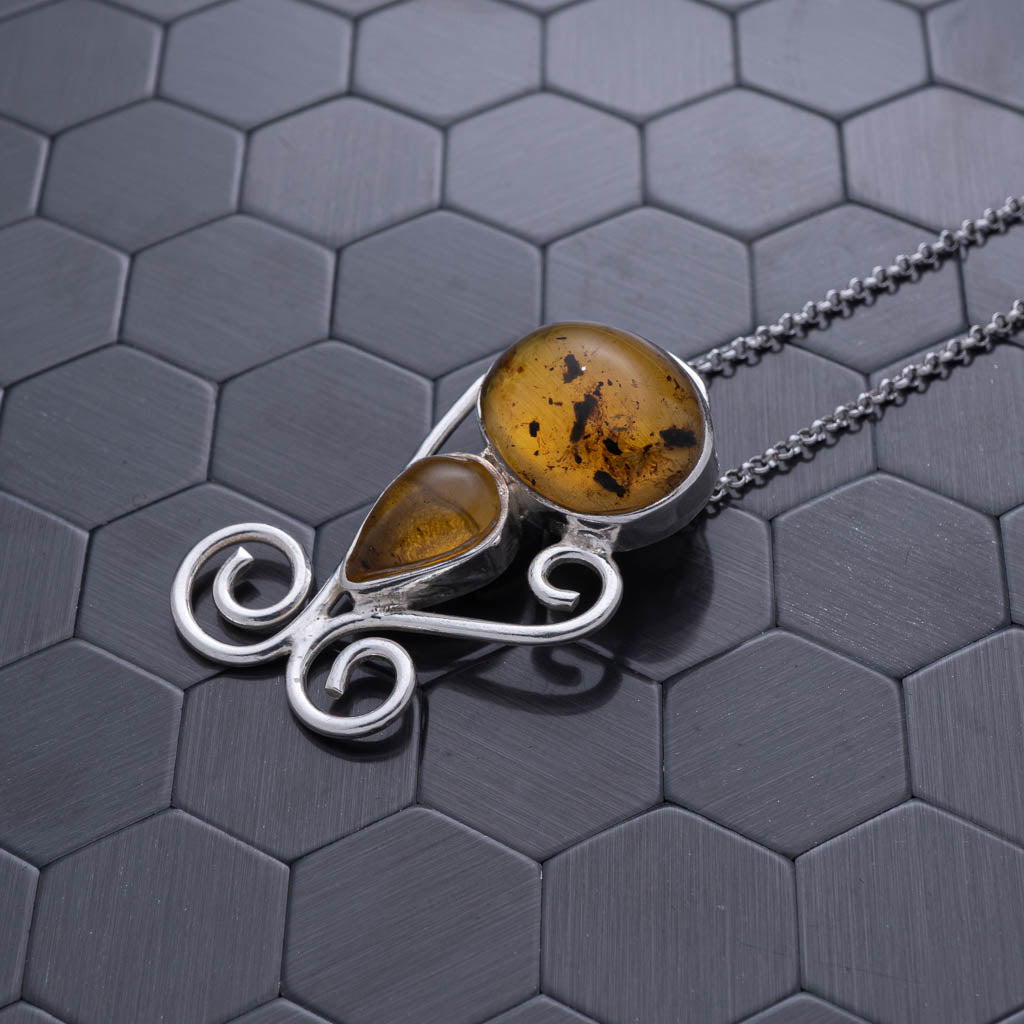
If your carving is mounted in jewelry, consider the entire construction. A sterling silver bezel, gold bail, silk cord, or beaded strand may have care needs of its own. Never store a heavy pendant so that it presses against the amber carving, and do not hang delicate pieces where they can knock against a wall or other jewelry.
For meaningful heirlooms and collector specimens, keep a small note with the piece recording its origin, purchase details, or any known inclusion. Authentic Dominican amber is a material with a story. Good documentation can add to the pleasure of ownership and support future appraisal or collection records.
Most amber damage is gradual, not dramatic. A little care around common routines makes a visible difference over time. Keep carvings away from the following:
A slightly dull surface does not always mean a carving is permanently damaged. It may simply have a film of oils, cosmetics, or dust. Start with the gentle damp-cloth method, then dry and inspect it in natural light. Do not rush to polish it yourself, especially if the carving has blue fluorescence, intricate detail, or a visible inclusion.
Fine scratches and surface cloudiness can sometimes be improved by a professional who understands amber. However, polishing removes a minute layer of material, so it should be approached conservatively. On antique pieces and collector carvings, original surface character can be part of the value. The best choice depends on whether the piece is primarily wearable jewelry, a display specimen, or a rare fossil-bearing work of art.
If amber cracks, chips, or loosens from its setting, stop wearing it and keep all fragments together in a small padded container. Avoid household glue. Adhesives can discolor, seep into fractures, or complicate a proper repair. A qualified jewelry repair specialist can determine whether stabilization, resetting, or conservation is appropriate.
Every authentic amber carving has its own personality. Some are crystal clear, some glow in deep cognac tones, and some carry clouds, bubbles, plant matter, or ancient insect inclusions. These natural features are not imperfections to scrub away. They are part of the material's identity and a reminder that amber began its journey long before it became a finished jewel.
At Larimar Creations, the appeal of Dominican amber lies in that meeting of natural rarity and handcrafted detail. Treat your carving with the same patience that shaped it: keep it cool, clean it softly, store it separately, and let its Caribbean light speak for itself whenever you wear or display it.