
FREE WORLD WIDE SHIPPING
HANDCRAFTED IN THE DOMINICAN REPUBLIC
30% DISCOUNT APPLIED AT CHECKOUT
FREE WORLD WIDE SHIPPING
HANDCRAFTED IN THE DOMINICAN REPUBLIC
30% DISCOUNT APPLIED AT CHECKOUT
FREE WORLD WIDE SHIPPING
HANDCRAFTED IN THE DOMINICAN REPUBLIC
30% DISCOUNT APPLIED AT CHECKOUT
FREE WORLD WIDE SHIPPING
HANDCRAFTED IN THE DOMINICAN REPUBLIC
30% DISCOUNT APPLIED AT CHECKOUT
FREE WORLD WIDE SHIPPING
HANDCRAFTED IN THE DOMINICAN REPUBLIC
30% DISCOUNT APPLIED AT CHECKOUT
FREE WORLD WIDE SHIPPING
HANDCRAFTED IN THE DOMINICAN REPUBLIC
30% DISCOUNT APPLIED AT CHECKOUT
100% Handcrafted in DR.
by Admin August 19, 2026 5 min read
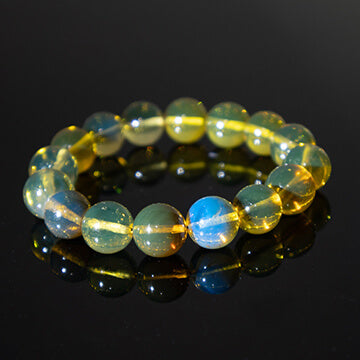
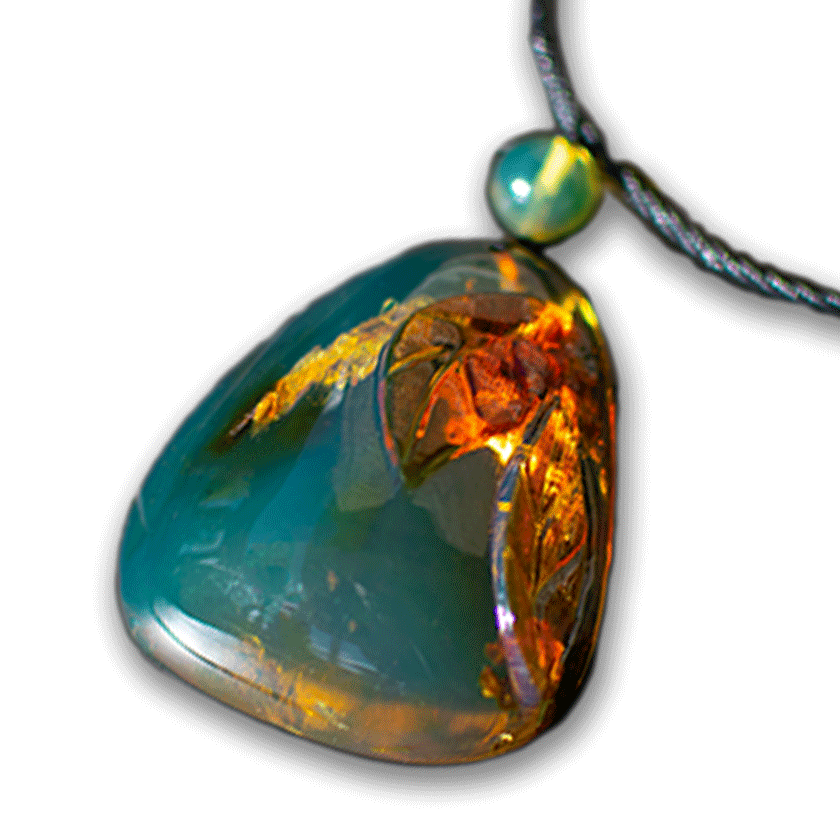
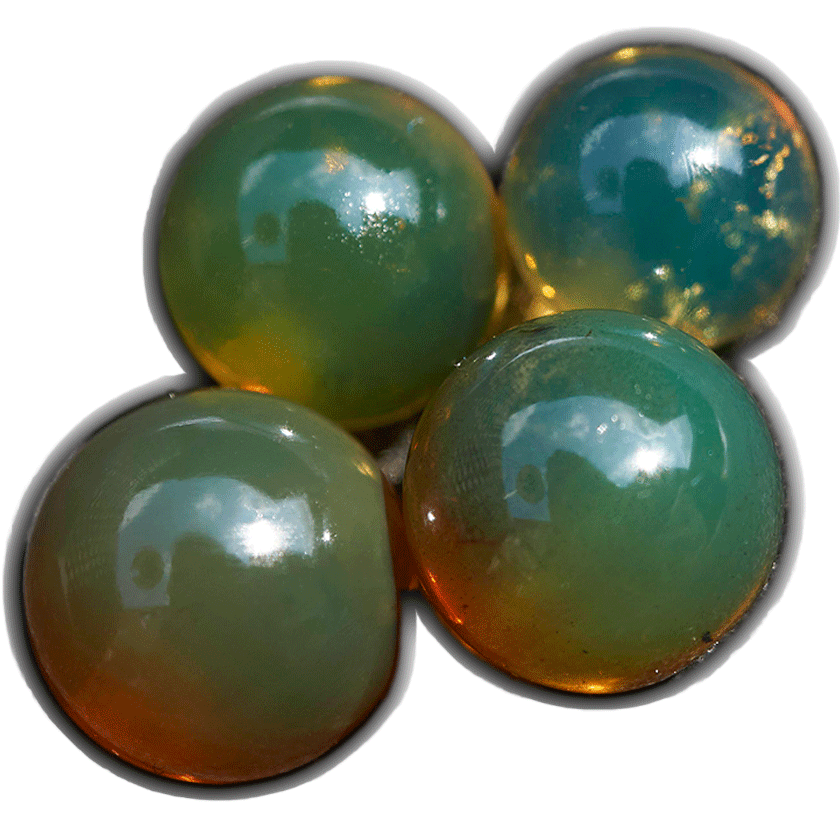
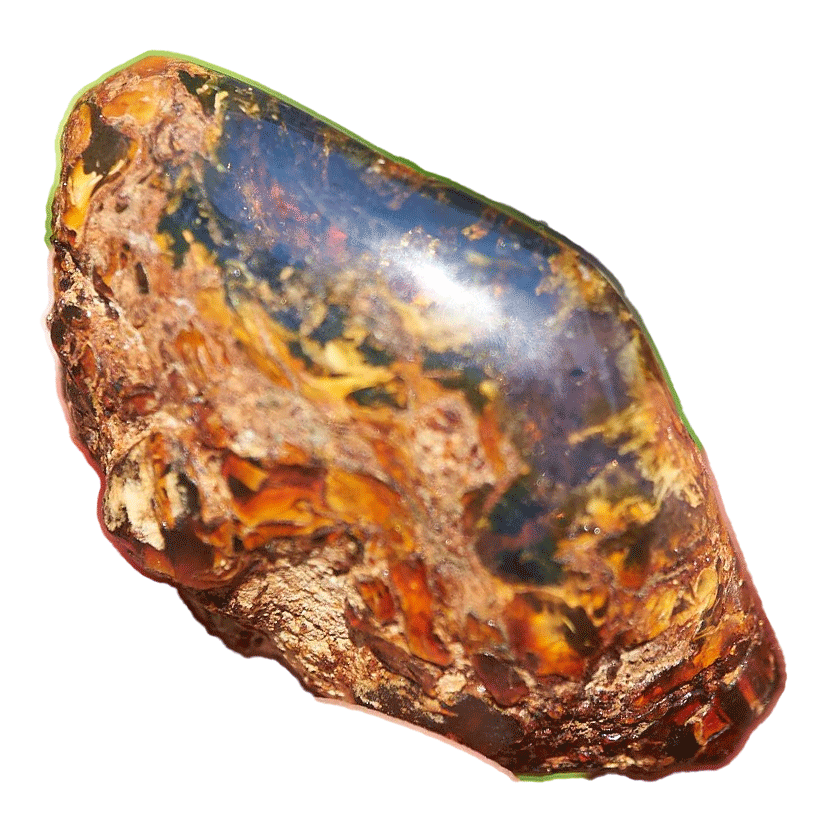
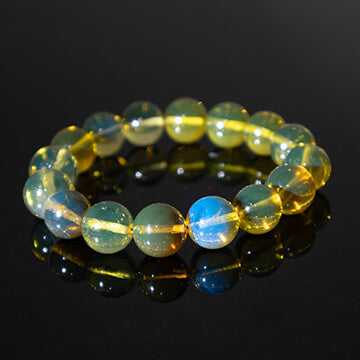
Amber asks for a different kind of craftsmanship. Learning how to set amber cabochons is less about applying force and more about creating protection around a gemstone formed from ancient tree resin. Its warm honey glow, botanical inclusions, and, in exceptional Dominican Blue Amber, flashes of electric blue deserve a setting method that preserves every natural detail.
Unlike hard faceted gems, amber can scratch, chip, craze, or dull under pressure and heat. A well-made setting should feel secure without crowding the stone, allowing its organic color and luminous depth to remain the focal point. For most amber cabochons, a closed-back bezel made with hand tools is the safest and most elegant choice.
Before reaching for a bezel pusher, study the cabochon itself. Amber varies considerably in hardness, thickness, shape, and internal structure. A thick oval with a smooth, even girdle is more forgiving than a thin freeform cabochon with a sloping edge or a dramatic fossil inclusion close to the surface.
Amber ranks only about 2 to 2.5 on the Mohs scale. That places it well below quartz, metal tools, and everyday dust. It also has a relatively low softening point, which means soldering should be completed before the stone ever approaches the jewelry setting. Never solder, pickle, torch-fire, or use a heat-intensive finishing process with amber in place.
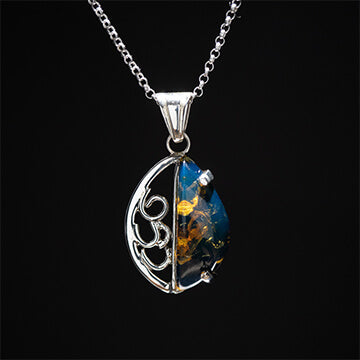
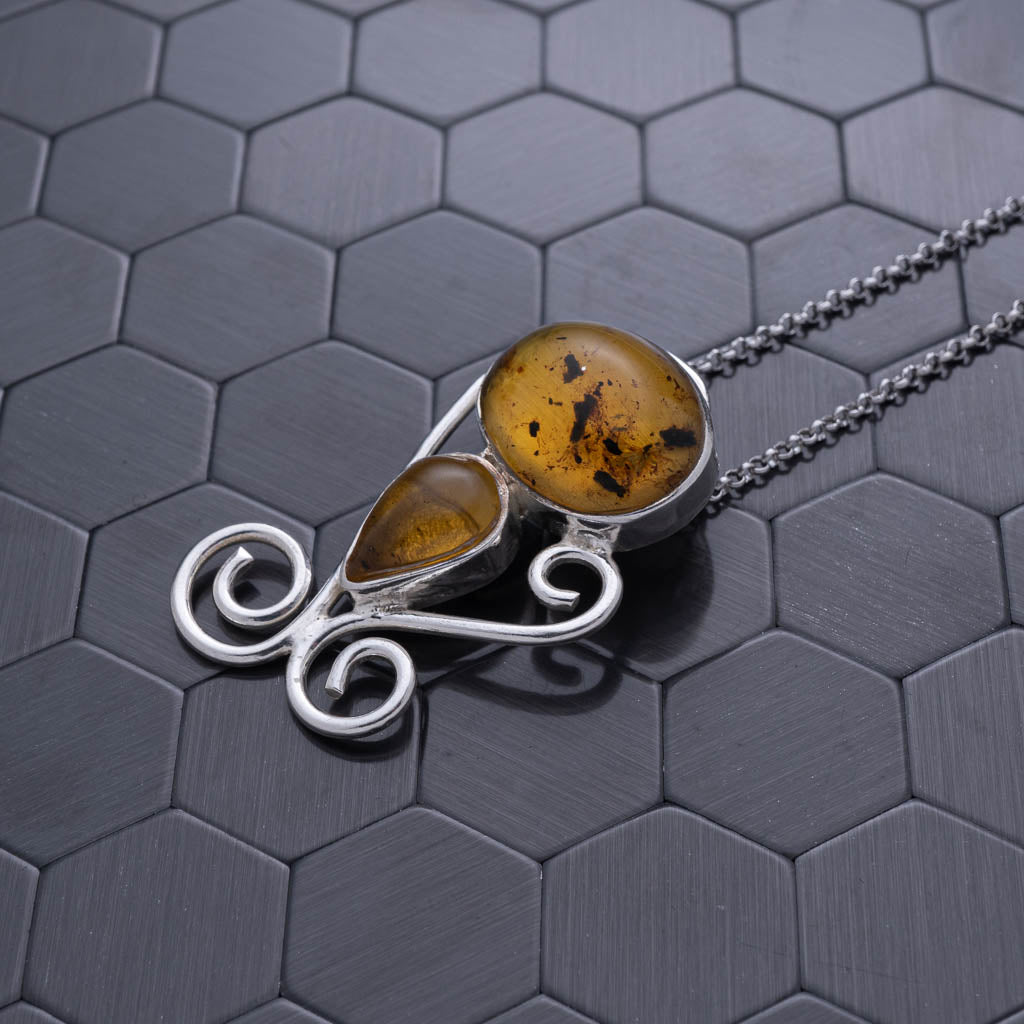
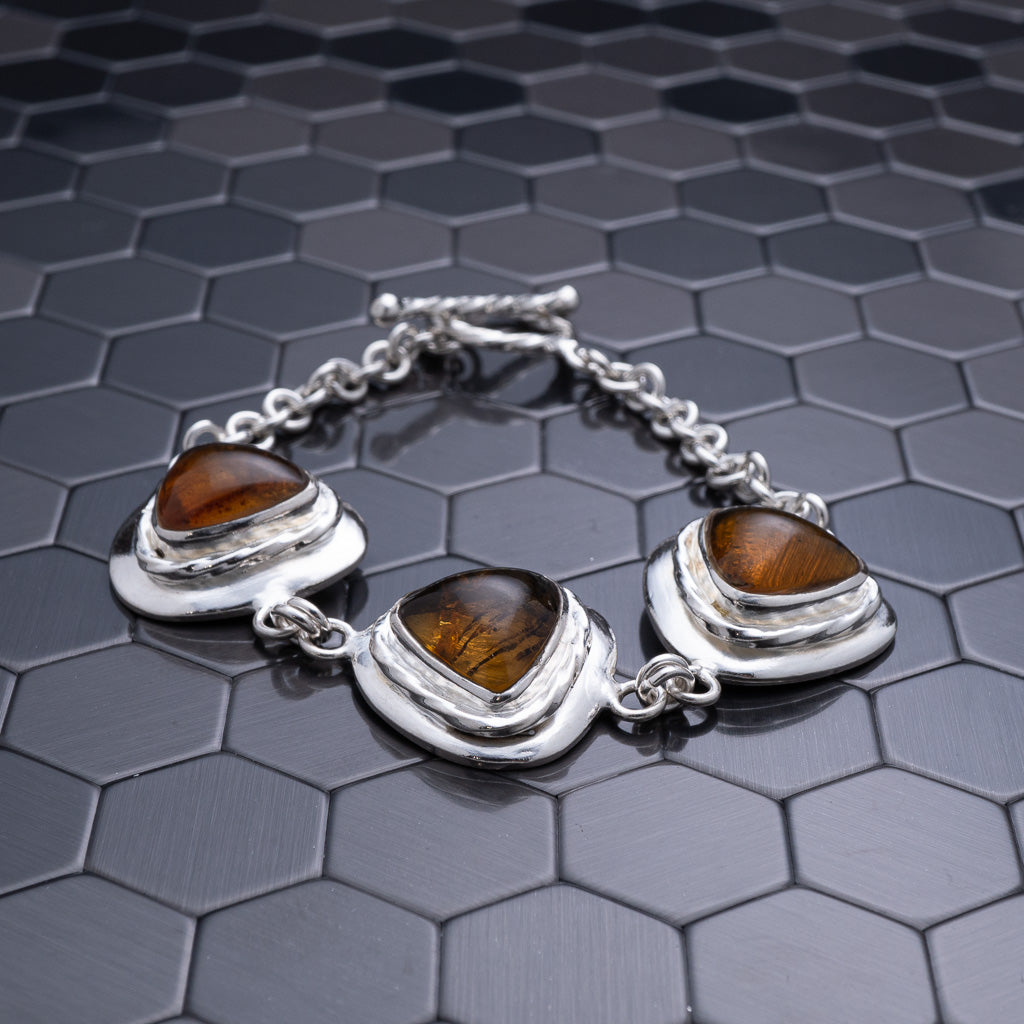
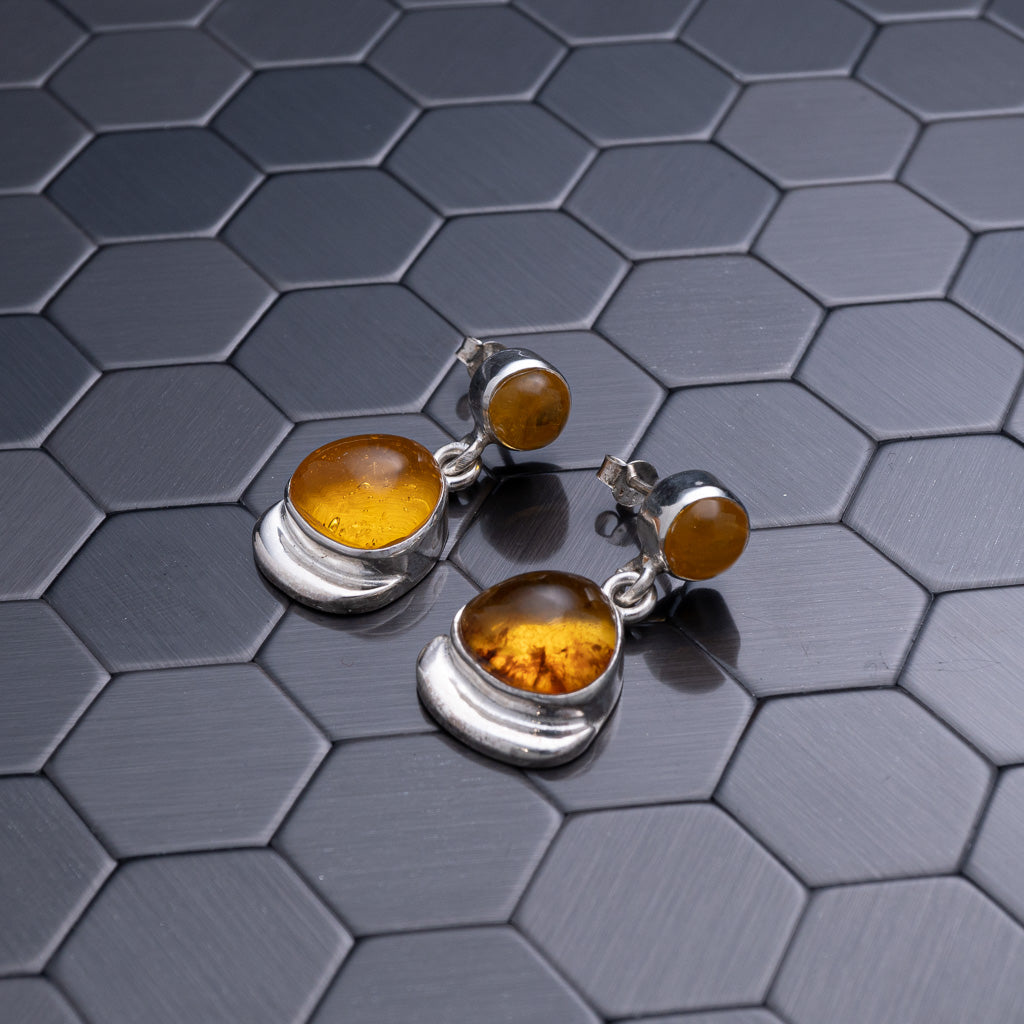
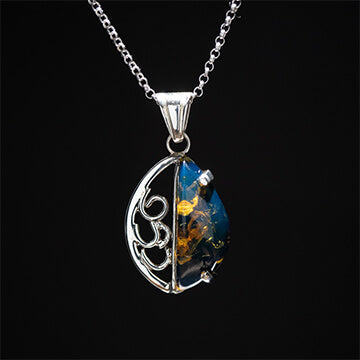
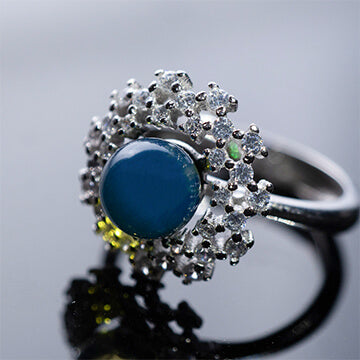
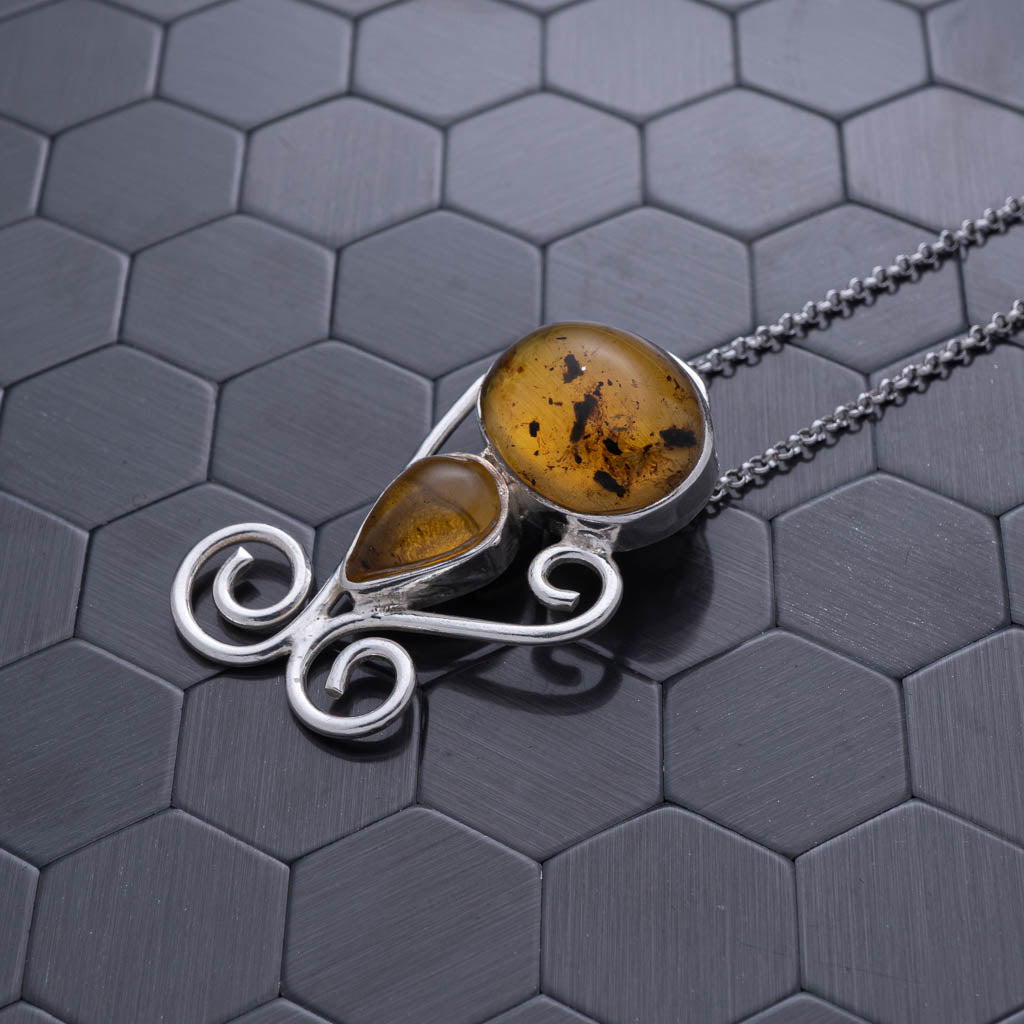
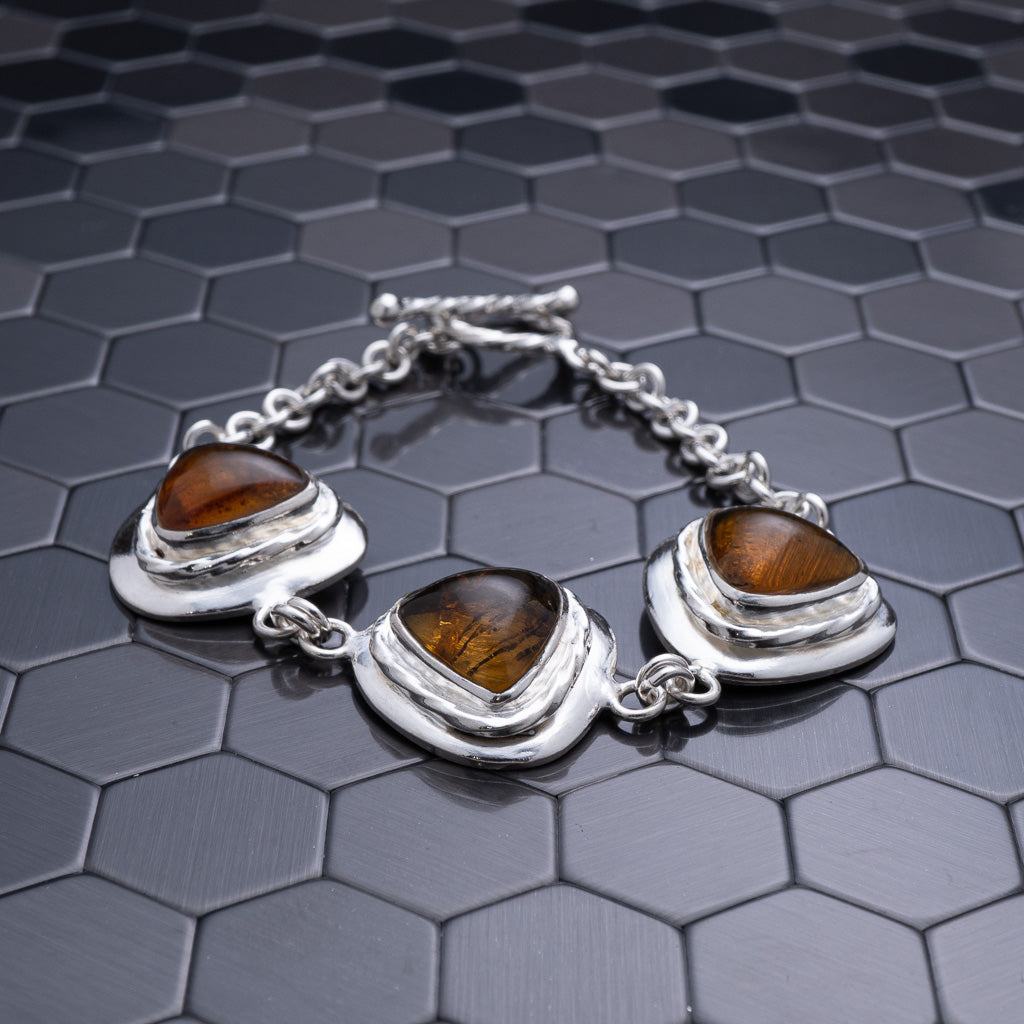
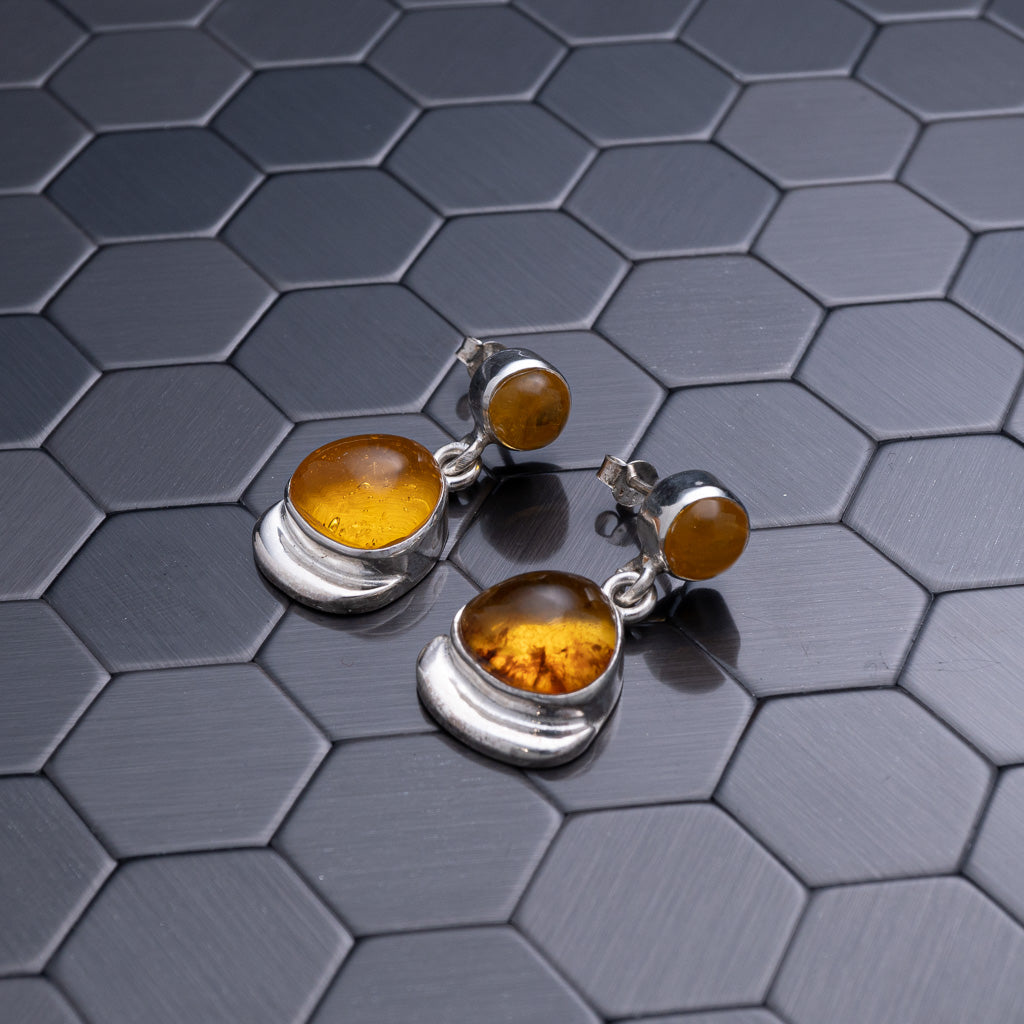
A smooth bezel is the traditional choice for pendants, rings, and earrings because it distributes pressure around the stone rather than concentrating it at a few points. It also protects the cabochon edge from knocks. A partial bezel can show more of the amber's profile, but it requires a precisely fitted stone and is better reserved for experienced makers.
Prong settings are possible, especially for very thick cabochons, but they are not the first choice for most amber. A prong can exert intense pressure in a small area, and it leaves more of the vulnerable edge exposed. If a prong design is essential, use rounded, well-finished prongs and secure them with the lightest pressure necessary.
The setting must be finished before the amber goes in. That means soldering the bezel to its backplate, attaching a bail or ring shank, filing seams, sanding surfaces, and completing as much polishing as possible. The less finishing required after setting, the lower the risk to the stone.
Choose bezel strip that is tall enough to cover the cabochon's girdle and reach slightly above it before setting. For many cabochons, the wall should rise roughly one-third to one-half of the way up the stone's curved side. A bezel that is too low can release the amber; one that is too tall may obscure its color and make the finished piece look heavy.
Fit matters more than force. The cabochon should sit flat on the backplate with no rocking, gaps, or pressure points. If it moves from side to side, the bezel is too large. If it must be pressed into place, it is too tight. Either problem should be corrected before setting.
For a closed-back pendant, a clean, bright interior helps amber reflect light beautifully. Some artisans add a subtle texture or a carefully selected backing material, but this should complement rather than compete with the stone. With transparent or highly luminous blue amber, keep in mind that the backing can influence the color seen through the cabochon.
Use a bezel pusher, a smooth burnisher, a nylon or wooden pusher, and a soft polishing cloth. A ring clamp or a padded bench pin can stabilize the piece while you work. Avoid serrated pliers, sharp steel edges, and powered tools near the cabochon.
Many jewelers place a small piece of low-tack protective tape over the face of amber during the initial pushing stage. This is optional, but it can help prevent accidental tool marks. Test any tape first and remove it slowly. Amber should never be exposed to strong solvents, adhesive removers, or harsh chemicals.
Place the clean cabochon into the finished setting and inspect it from every angle. The stone should rest evenly, with its best color, inclusions, or blue fluorescence facing forward. Once the bezel begins to move, repositioning the stone becomes more difficult.
Start by gently pushing the bezel at four opposing points: top, bottom, left, and right on an oval, or evenly spaced points around a round or freeform stone. Work in small increments. The goal is to bring the metal inward gradually and evenly, never to fold one entire side down at once.
Continue around the perimeter in short sections, alternating sides as you go. With a freeform cabochon, begin at the widest areas and then work toward the curves. Watch the stone carefully. If it shifts, stop and correct the fit rather than pushing harder.
Once the bezel is seated, use a polished burnisher to smooth and compact the metal edge. The burnisher should glide over the bezel, not scrape across the amber. A properly burnished bezel has a crisp, continuous line that holds the cabochon securely while still appearing light and refined.
Test the setting with gentle fingertip pressure only. Do not shake the piece aggressively or tap it against the bench. If the amber moves, assess whether the bezel needs a little more burnishing or whether a fit issue remains beneath the stone. For valuable Dominican amber, especially a cabochon with rare color play or inclusions, it is wiser to reset the stone carefully than to risk cracking it through repeated force.
After setting, keep final cleanup restrained. A soft cloth is usually enough to remove fingerprints. If a small area of metal needs additional brightening, shield the stone fully and work by hand with a very fine abrasive. Do not let abrasive compounds touch amber, as they can leave a haze or fine scratches that interrupt its clarity.
Ultrasonic cleaners and steam cleaners do not belong in amber care. Heat, vibration, and sudden temperature changes can damage the material or affect its surface. Likewise, avoid commercial jewelry dips, alcohol-heavy cleaners, perfume, hairspray, and household chemicals.
For routine care, wipe amber jewelry with a soft, dry or barely damp cloth, then dry it immediately. Store each piece separately in a soft pouch or lined compartment, away from harder gemstones and metal edges. This is especially important for rings, which meet more daily wear than pendants or earrings.
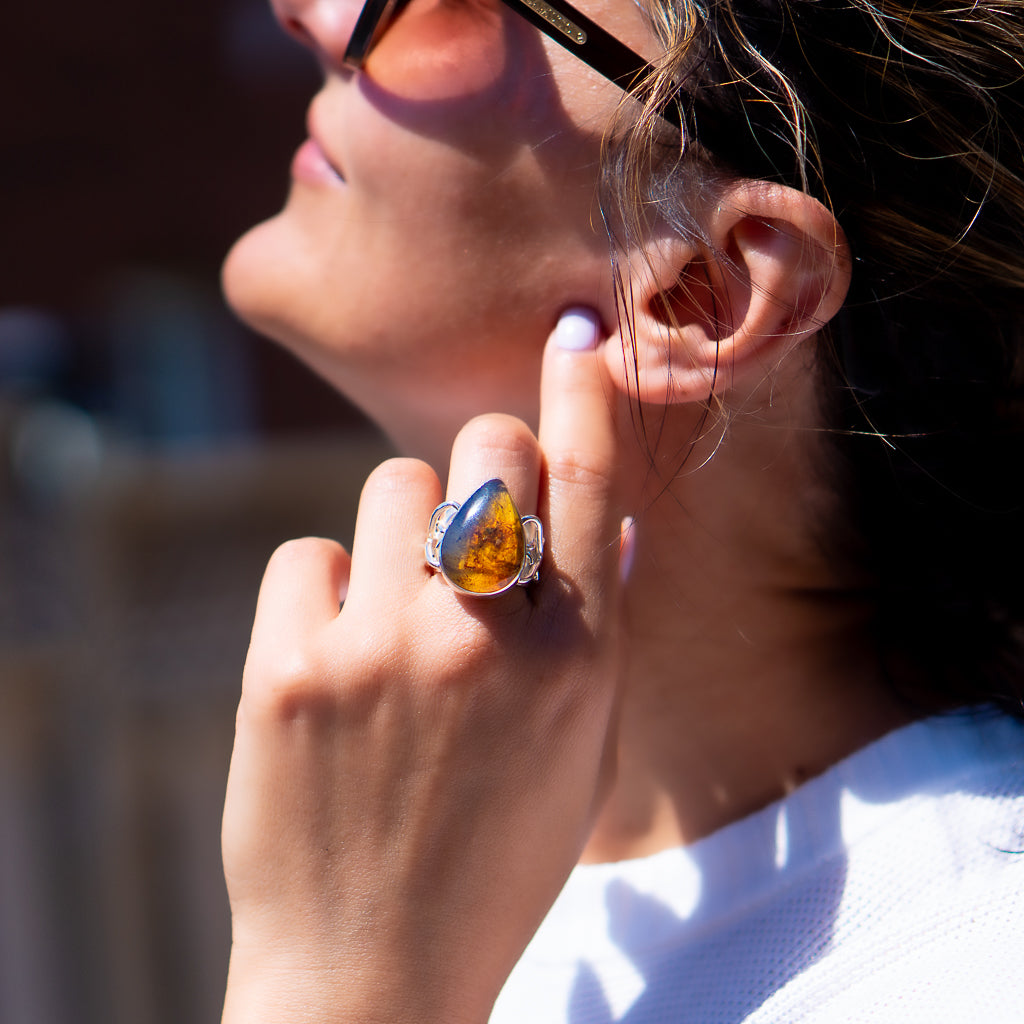
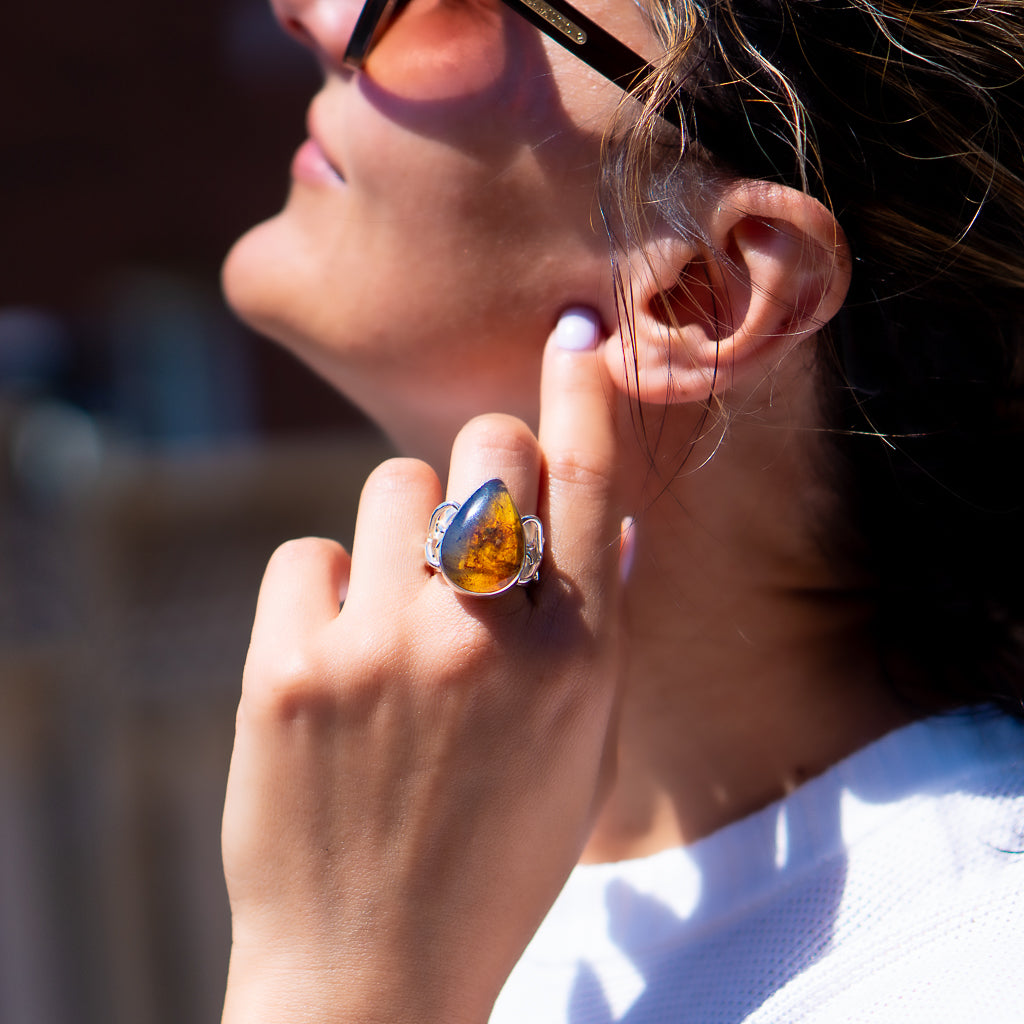
A simple, well-fitted bezel is accessible to a skilled beginner, but some amber cabochons should be entrusted to an experienced jeweler. This includes unusually thin stones, high-value blue amber, fragile pieces with visible internal fractures, large collector cabochons, and stones intended for a ring that will receive frequent wear.
Professional setting is also worthwhile when the design calls for a gallery, decorative wirework, multiple stones, or a partial bezel. The appeal of authentic Caribbean amber lies in its individuality. A setting that is technically secure but visually clumsy can hide the very glow that makes the gem special.
At Larimar Creations, the character of Dominican amber is part of the design story, from golden sunlit tones to the rare blue radiance collectors seek. Give each cabochon the same consideration: set it slowly, protect it from heat and pressure, and let its ancient light remain beautifully visible for years to come.
Sign up to get the latest on sales, new releases and more …
9 min read
6 min read
9 min read