
Larimar
Blue Amber
Green Amber
Amber Carvings
More

by Admin July 23, 2026 6 min read

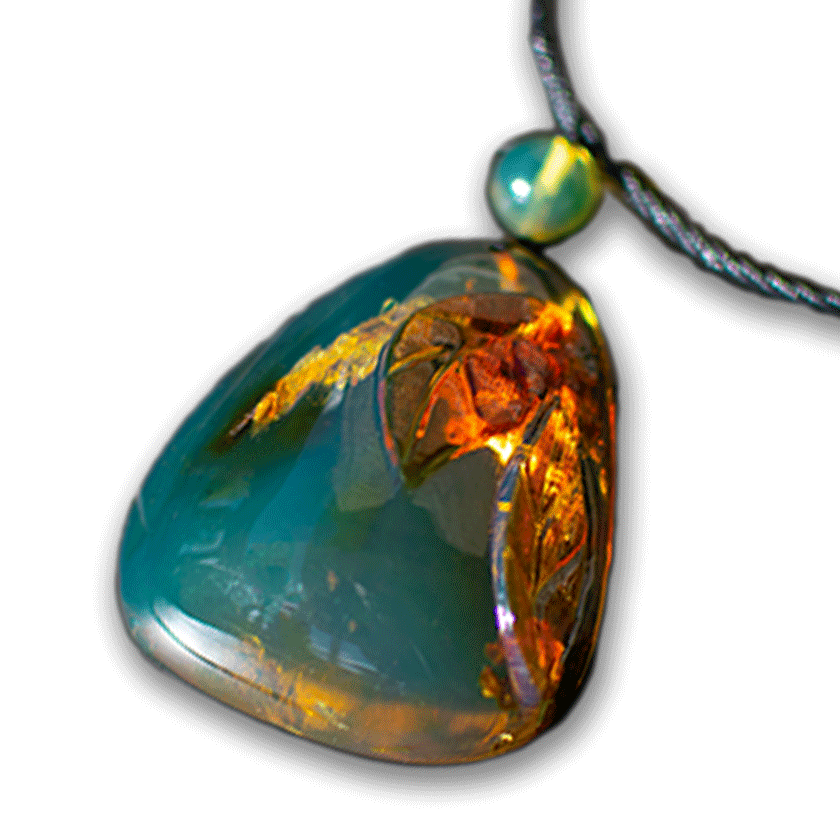
A fine blue amber pendant can appear warm and honey-toned in one setting, then reveal a cool, electric blue veil when it meets sunlight or a dark backdrop. What makes blue amber glow is not a surface coating or a jeweler’s trick. It is an extraordinary optical effect created by ancient Dominican resin, natural compounds within it, and the way light travels through the stone.

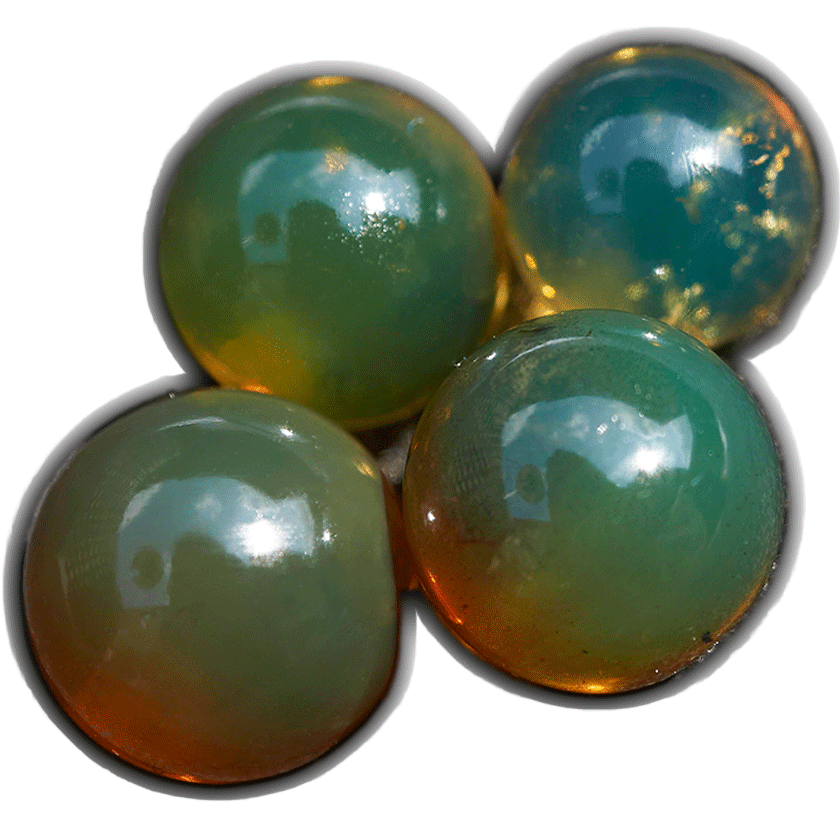
For collectors and jewelry lovers, that shift is part of blue amber’s enduring allure. No two pieces respond to light in precisely the same way. A deeply saturated cabochon may show a dramatic cobalt flash, while a clearer bead may offer a soft blue haze that seems to float beneath its polished surface. This is Caribbean rarity at its most captivating.

What Makes Blue Amber Glow in Natural Light?

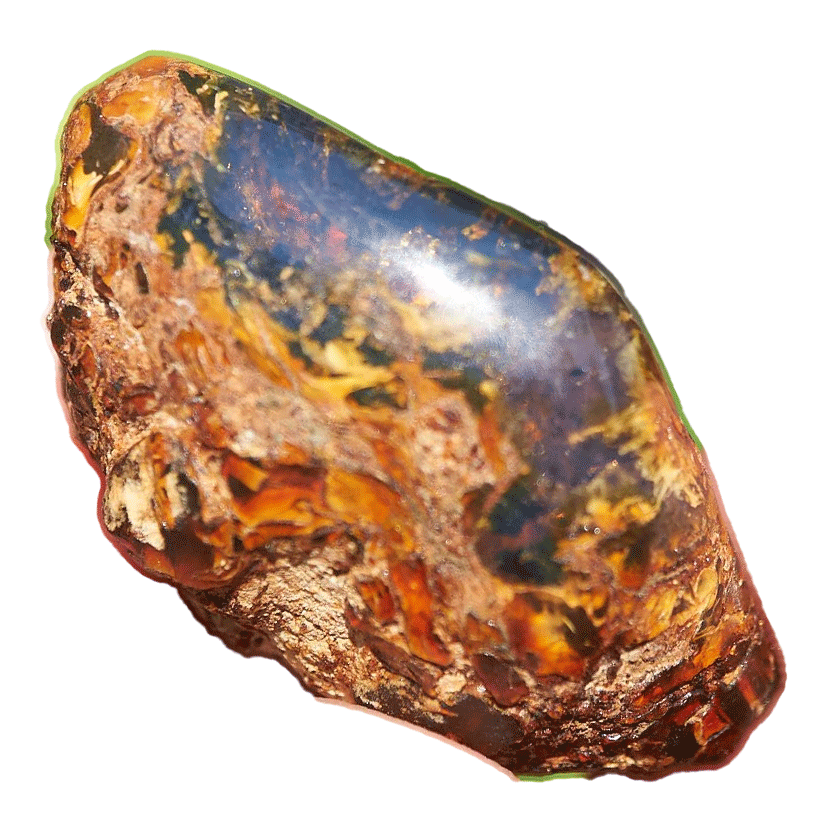
Blue amber is fossilized tree resin, not a mineral crystal. Much of the world’s most prized material comes from the Dominican Republic, where resin from the extinct Hymenaea protera tree was preserved over millions of years. As the resin fossilized, its chemistry changed, forming amber with unusual clarity, warmth, and in rare cases, a remarkable blue appearance.

The visible blue effect is largely caused by fluorescence and light scattering. Certain naturally occurring organic compounds in Dominican blue amber absorb shorter wavelengths of light, especially ultraviolet light, and emit visible blue light. At the same time, the stone’s internal structure can scatter light in ways that heighten the cool blue appearance.

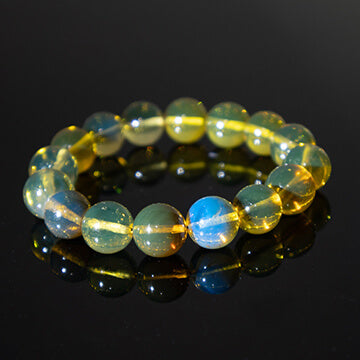
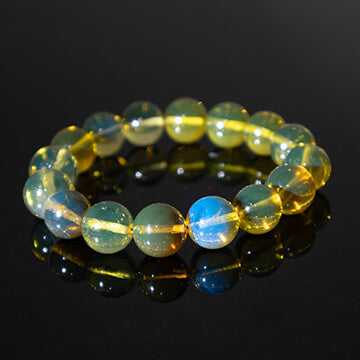
This is why lighting matters so much. In direct sunlight, blue amber can reveal an intense blue, blue-green, or indigo fire. Against a dark surface, the color often appears stronger because there is less reflected background light competing with the stone’s fluorescence. In a softly lit room, the same piece may look golden, cognac, or nearly clear until it catches the right angle.

Blue amber does not contain blue pigment in the way a sapphire contains color-producing trace elements. Its blue is an optical response. That distinction gives each genuine piece a living, changeable character rather than a flat, fixed color.

Fluorescence Is the Heart of the Effect

Fluorescence occurs when a material absorbs invisible ultraviolet energy and releases part of that energy as visible light. With Dominican blue amber, daylight provides enough ultraviolet radiation to make this response noticeable. Under a UV lamp, many authentic pieces can glow blue or blue-green more clearly.

Scientists have identified aromatic organic compounds in blue amber that are associated with this fluorescence. Perylene is often discussed in connection with the phenomenon, although amber is a complex natural material and the exact look of any specimen depends on more than one compound. Age, oxidation, inclusions, clarity, thickness, and the original resin’s composition all influence the final result.

That nuance matters when evaluating a stone. A vivid blue glow is desirable, but it is not the only measure of quality. Some exceptional pieces have a gentler fluorescent response yet offer remarkable transparency, beautiful natural inclusions, or a refined honey-blue transition that is especially elegant in jewelry.

Why Dominican Blue Amber Is So Rare

Amber exists in many regions of the world, but the dramatic blue variety is closely associated with the Dominican Republic. Dominican deposits are celebrated for their clarity and their rich range of golden, red, green, and blue tones. Blue amber represents only a small portion of this already limited natural material.

The conditions required to create it were highly specific. Ancient resin had to be released by trees, protected from complete decay, buried in suitable sediment, and transformed under pressure and time. The resulting amber then had to retain the chemical and physical characteristics that allow its blue fluorescence to appear today.

For this reason, blue amber should be viewed as more than a color category. It is a rare expression of fossilized Caribbean resin. A well-cut pendant, ring, or pair of earrings preserves that geological story while making it wearable.

The Role of Cut, Polish, and Setting

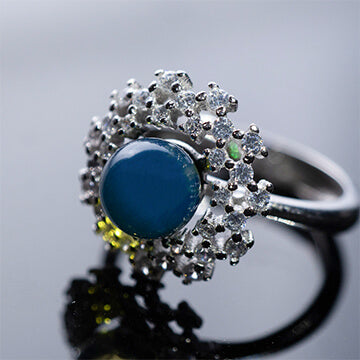
A skilled cut does not create blue fluorescence, but it can reveal it beautifully. Smooth cabochons are especially popular because their curved surfaces allow light to move across the amber and show its shifting depth. Faceted blue amber can also be striking, though the material’s natural character and relative softness require careful workmanship.

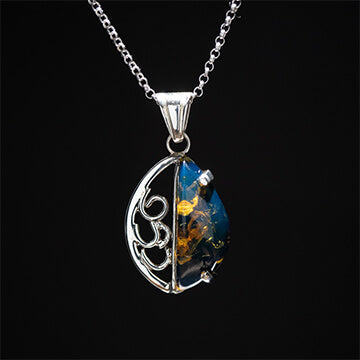
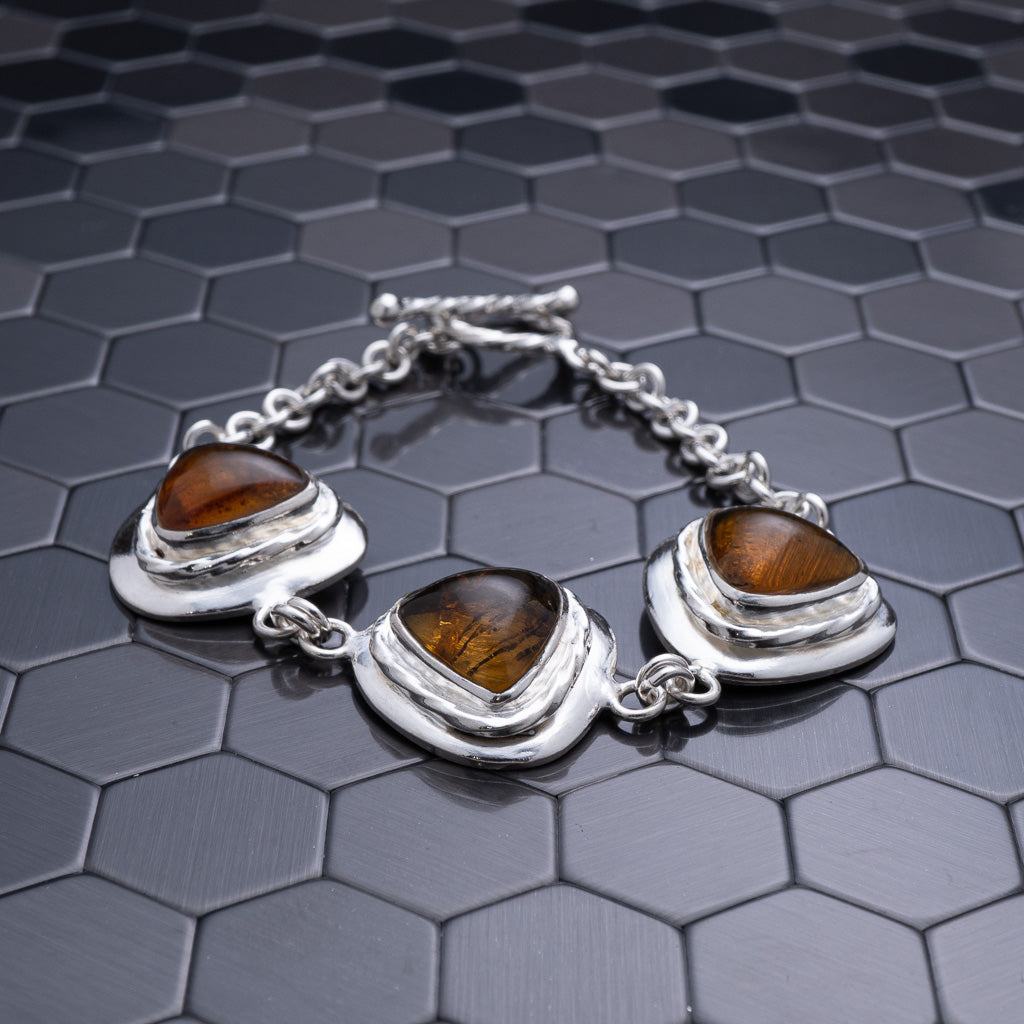
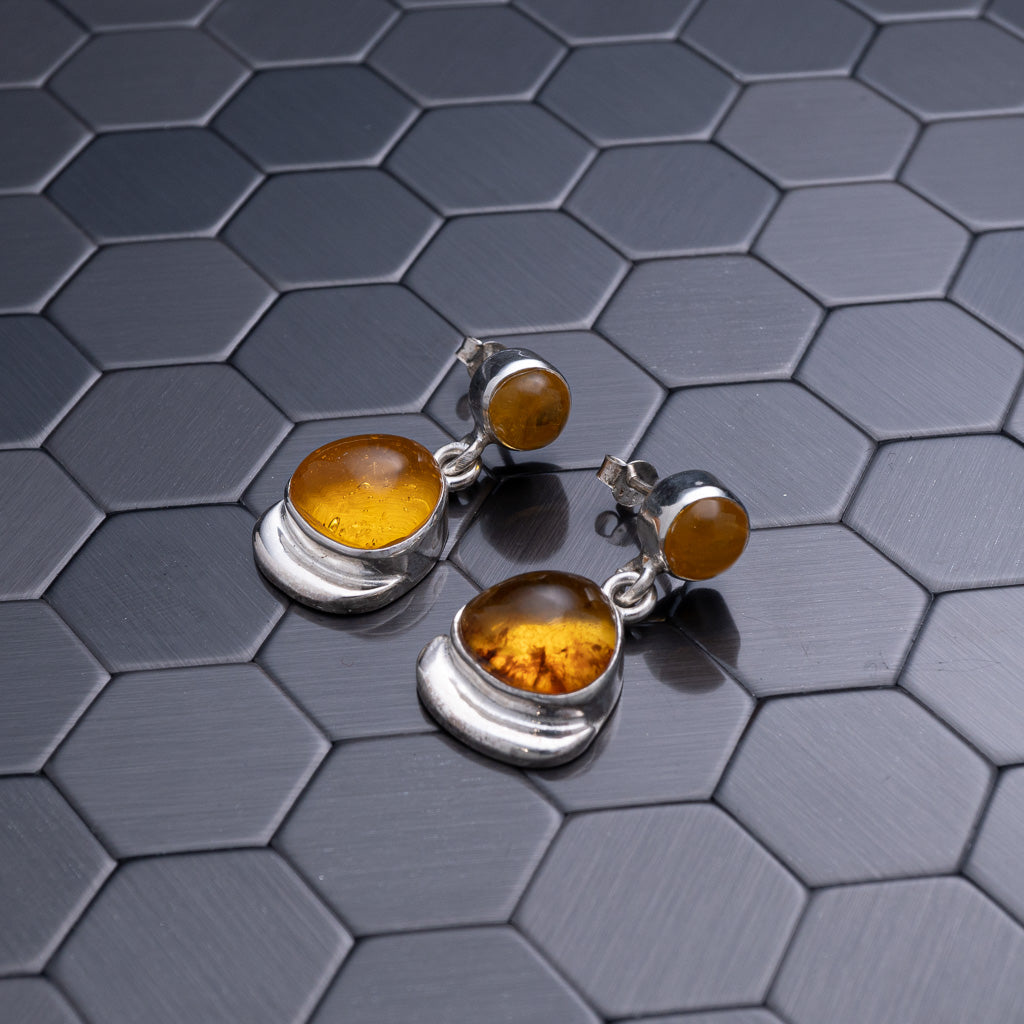
A darker setting or an open-backed design may make the blue effect easier to see, depending on the stone. Silver, white gold, and darkened metal can create a crisp contrast with a blue-glowing cabochon. Yellow gold brings out the warm golden side of the amber, producing a richer Caribbean palette. Neither approach is inherently better. It depends on whether you prefer the stone’s cool blue fire or its golden warmth to lead the design.

Thickness also changes the experience. A thinner, clearer piece may look luminous and airy. A thicker specimen can offer deeper color, stronger internal dimension, and a more dramatic transition between honey and blue. For collectors, a polished cabochon with a strong response in sunlight can be a remarkable display piece. For everyday jewelry, a balanced stone with good clarity and a secure protective setting is often the wiser choice.

Blue Amber Glow vs. Phosphorescence

Fluorescence and phosphorescence are sometimes confused. Fluorescence is immediate: the amber glows while it is exposed to ultraviolet-rich light. When the light source is removed, the visible effect usually stops quickly.

Phosphorescence, by contrast, continues after the light source has been removed. Blue amber is most admired for fluorescence, not for a long-lasting afterglow. If a seller describes a stone as glowing for an extended time in darkness, ask for clear details about the observation and testing conditions.

This distinction is useful because it keeps the conversation centered on blue amber’s true beauty: a natural interaction with light, not a novelty effect.

Can You Confirm Authentic Blue Amber at Home?

Sunlight and UV light can be helpful first observations, but neither is a complete authentication method. Other materials, including some resins, plastics, coatings, and treated stones, can fluoresce. A bright blue reaction alone does not prove Dominican origin or natural formation.

Instead, look for a combination of signs: a believable shift between warm amber and blue under changing light, natural variation rather than perfectly uniform color, thoughtful disclosure of origin, and a seller with expertise in genuine Dominican amber. Inclusions may add character, but their presence alone is not proof either. Modern imitations can be made with bubbles or embedded material intended to resemble natural fossil inclusions.

Be cautious with harsh home tests. Scratching, heating, solvents, and saltwater experiments can damage jewelry or provide misleading results. Amber is an organic gem and is softer than many traditional jewelry stones. Professional assessment, documented provenance, and transparent sourcing are far more valuable than a risky DIY test.

At Larimar Creations, the appeal of blue amber begins with that respect for authenticity. A genuine piece deserves to be appreciated for its natural origin, individual light response, and artisan finish, not reduced to an overly simple color claim.

How to See the Blue Fire at Its Best

To enjoy blue amber’s most dramatic appearance, take it into natural daylight and place it against a dark fabric, dark paper, or shaded background. Rotate the piece slowly rather than viewing it from only one angle. The blue may emerge around the edges, across the face of the stone, or from within a transparent golden body.

Avoid expecting the same intensity in every environment. Indoor LEDs vary widely in ultraviolet output, and a bright white background can mute the effect. This variability is not a flaw. It is part of what makes blue amber feel personal and alive, responding differently as you move from sunlit coastlines to candlelit evenings.

Care is simple but essential. Store blue amber separately from harder gems, avoid prolonged heat and direct exposure to perfumes or household chemicals, and clean it gently with a soft cloth. With considerate wear, its polished surface and luminous character can remain beautiful for years.

A blue amber jewel is not merely blue. It is ancient Dominican resin holding light in a way few natural materials can. Wear it near a window, carry it into the sun, and let its quiet blue fire offer a small, unmistakable piece of the Caribbean.

Natural Stone Jewelry: Your 2026 Guide to Gemstone Quality - Larimar Creations

Natural Stone Jewelry: Your 2026 Guide to Gemstone Quality

9 min read

Discover how to choose, care for, and style natural stone jewelry in 2026. Expert guidance on quality, authenticity, and the beauty of gemstones.
Read More
A Guide to Amber Fluorescence and Blue Amber - Larimar Creations

A Guide to Amber Fluorescence and Blue Amber

6 min read

Our guide to amber fluorescence explains blue amber's glow, UV testing, authenticity limits, and how to choose a rare Caribbean gemstone with confidence.
Read More
Large Pendant Necklace: Style Guide & Buying Tips - Larimar Creations

Large Pendant Necklace: Style Guide & Buying Tips

11 min read

Discover how to choose, style, and care for a large pendant necklace. Expert tips on materials, proportions, and making statement jewelry work.
Read More