
Larimar
Blue Amber
Green Amber
Amber Carvings
More

by Admin September 01, 2026 6 min read

A piece of Dominican Blue Amber can look quietly golden in the hand, then reveal an electric blue presence when sunlight catches its surface or ultraviolet light is introduced. That unexpected change is the reason collectors return to this ancient Caribbean treasure again and again. This guide to amber fluorescence explains what you are seeing, why it happens, and why a visible glow is compelling but never the only measure of genuine amber.

What Amber Fluorescence Really Means

Fluorescence is the visible light a material emits after absorbing ultraviolet, or UV, energy. In amber, naturally occurring organic compounds within the fossilized tree resin can react to UV light and release a glow that may appear blue, greenish, yellow, cream, or milky white. The precise color and strength vary from one specimen to another.

Amber is not a single uniform substance. It began as resin from ancient trees, then changed through immense spans of time, pressure, and burial conditions. Its botanical source, geological setting, oxidation, internal inclusions, clarity, and cut all influence how it responds to light. Two authentic pieces from the same region may fluoresce differently, and that individuality is part of their natural character.

Fluorescence should not be confused with phosphorescence. Fluorescent amber glows while it is exposed to a UV source, then generally stops when that source is removed. Phosphorescence continues briefly after the light is switched off. Some amber may show a faint afterglow, but the terms describe different effects.

Why Dominican Blue Amber Is So Coveted

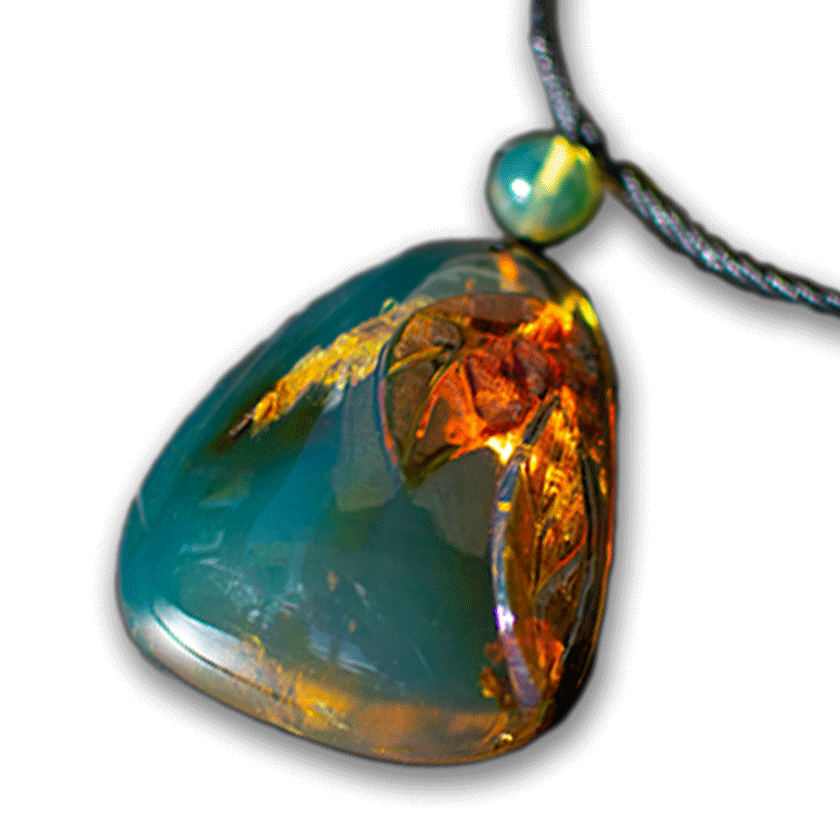
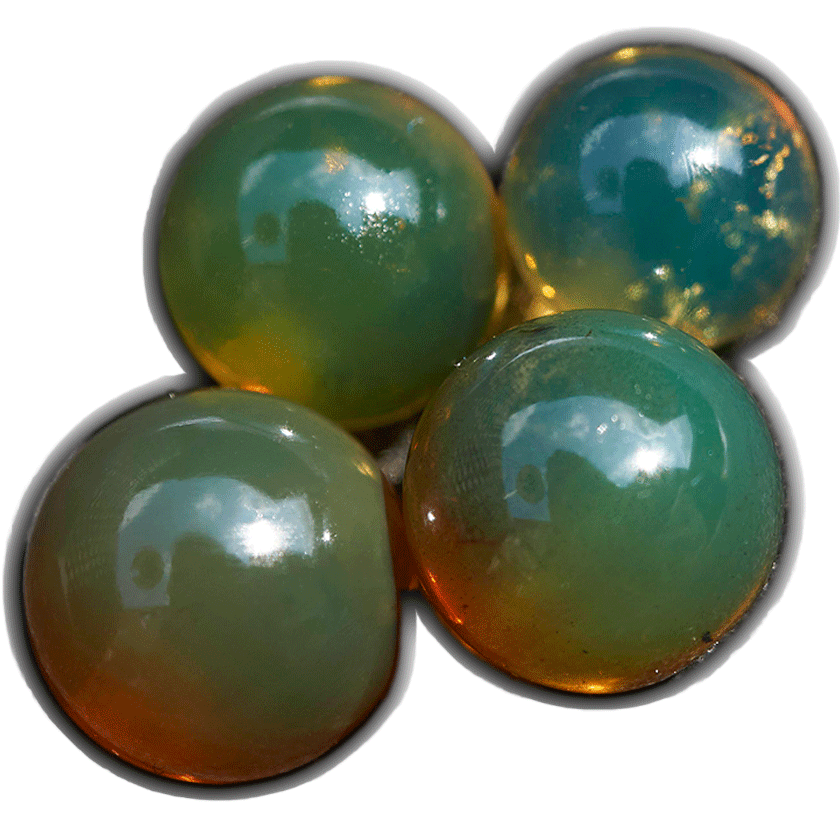
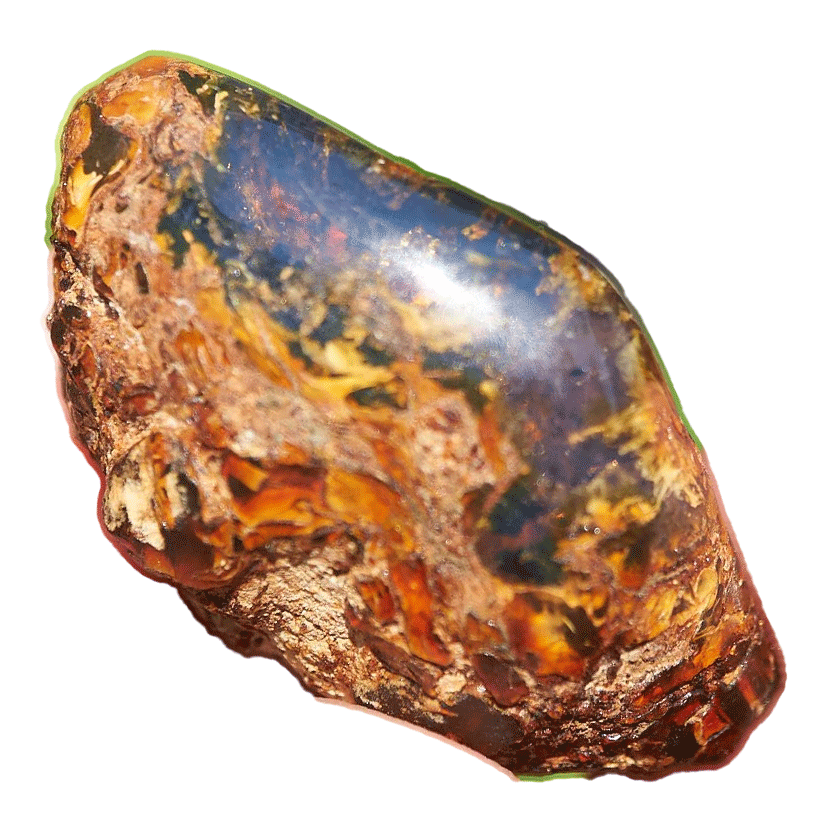
Dominican amber is celebrated for exceptional clarity, warm honey color, and extraordinary fossils. Within this remarkable material, Blue Amber stands apart. It is known for a distinctive bluish sheen or apparent color that can emerge against darker backgrounds or in direct sunlight. Under UV illumination, many pieces also produce a vivid blue fluorescence.

This visual phenomenon is often associated with the unique chemical composition of Dominican amber, including aromatic compounds preserved within the resin. The blue can seem to float beneath a golden surface, creating depth that photographs rarely capture completely. A transparent stone may appear soft yellow indoors, show a cool blue halo in sunlight, and glow more brightly under a proper UV lamp.

That does not mean every piece marketed as Blue Amber will look identical. Some stones show a dramatic blue flash, while others offer a gentler misty blue effect. The background matters, too. Blue is often easier to see over black, navy, or another dark surface because it contrasts with the amber's golden body color. A pale background can make the same stone appear warmer or less intense.

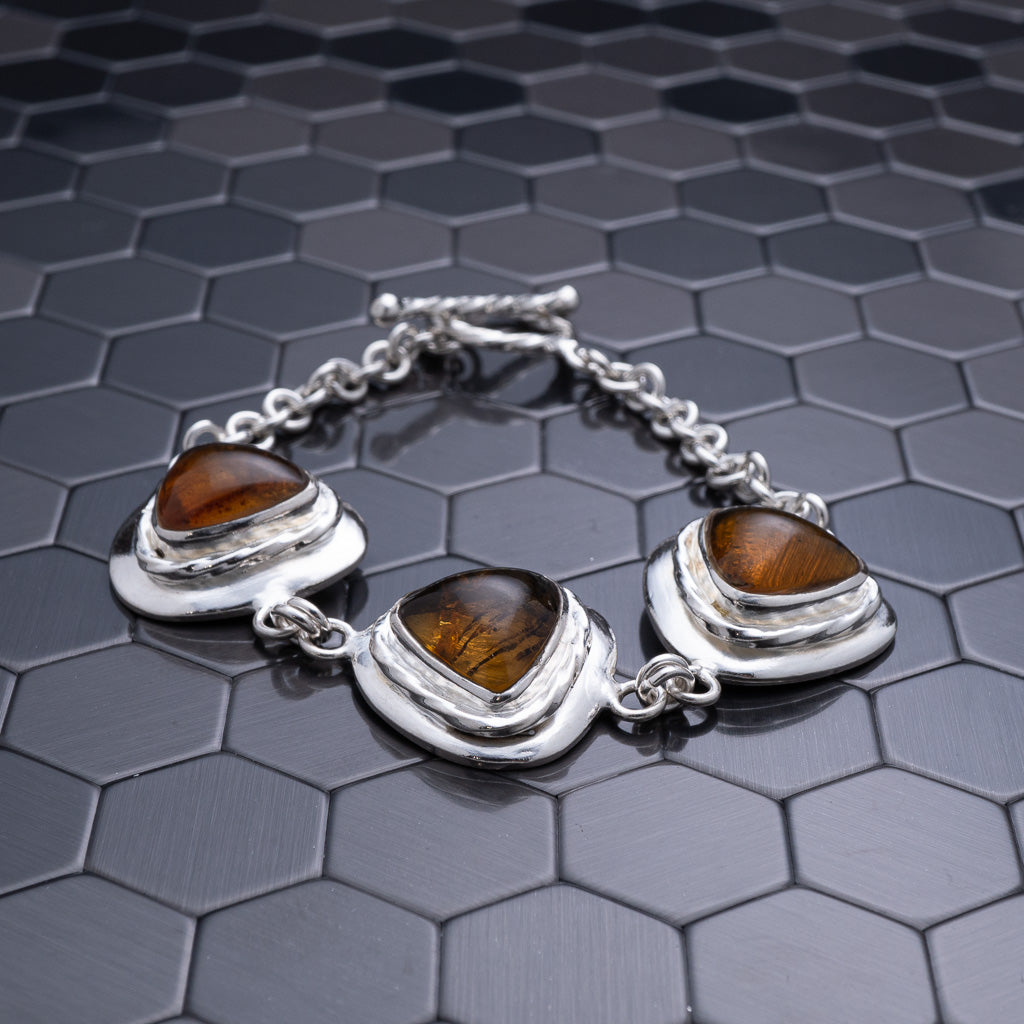
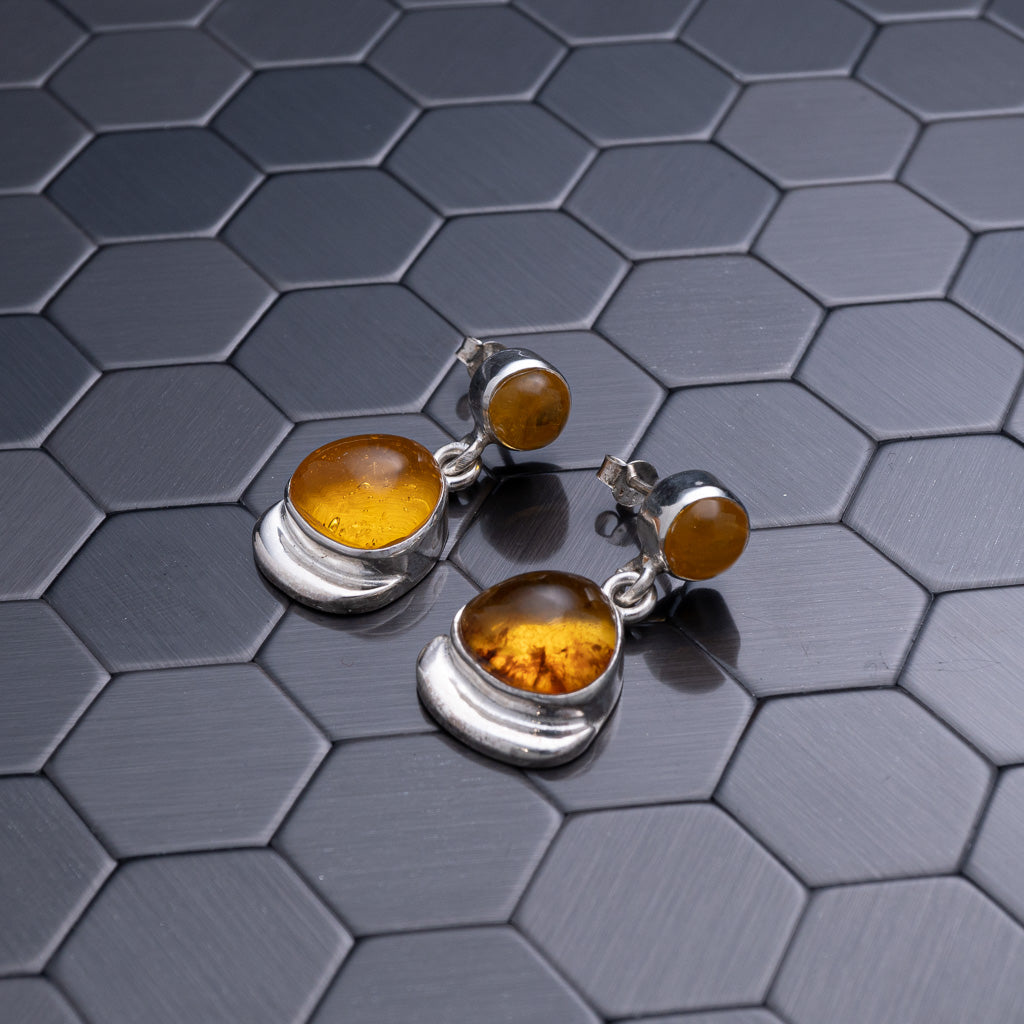
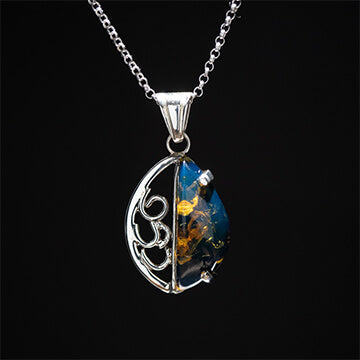
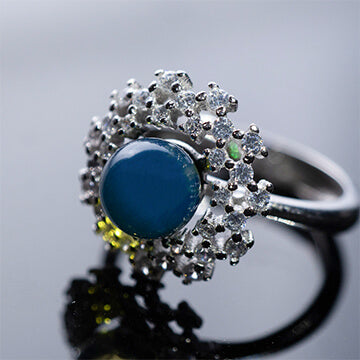
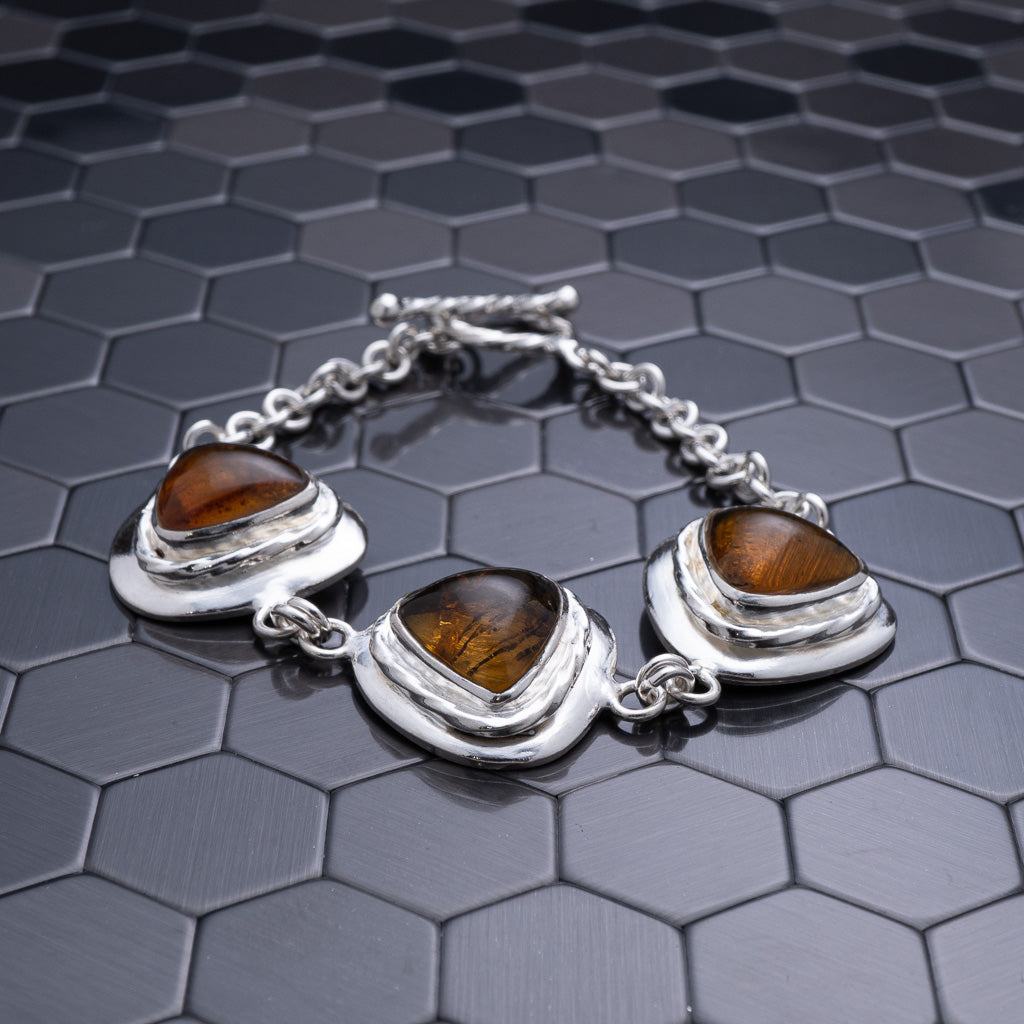
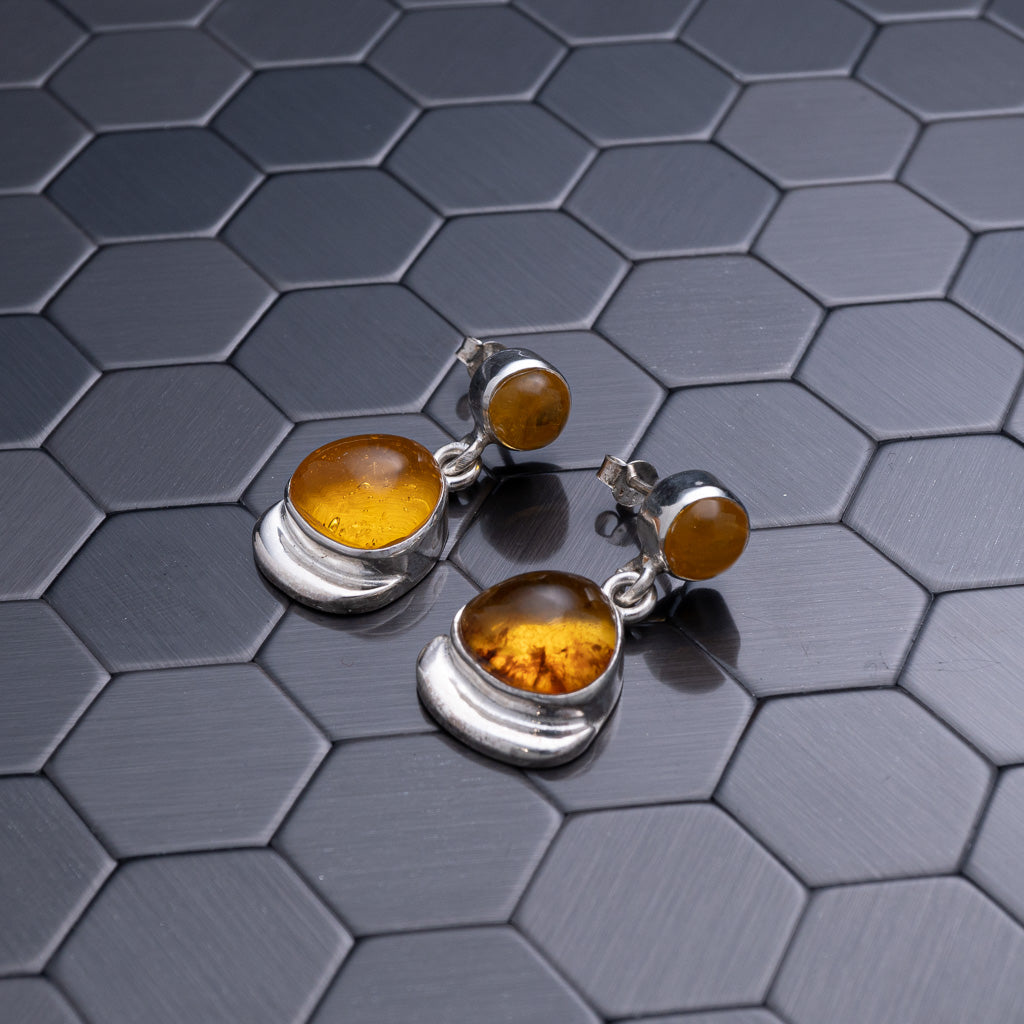
For jewelry lovers, this changing character is the appeal. A polished pendant, ring, or pair of earrings becomes more than a static accessory. It carries a small, shifting expression of the Caribbean - ancient resin shaped by nature and brought into a wearable form by hand.

A Guide to Amber Fluorescence Under UV Light

A UV flashlight can be a useful way to appreciate amber, provided expectations are realistic. A 365 nm UV light is generally more useful for observing fluorescence than a 395 nm light. The 365 nm wavelength produces less visible purple spill, making the amber's own emitted glow easier to distinguish. A 395 nm light can still create an attractive effect, but it may make subtle fluorescence harder to judge.

For the clearest view, use a dim room and place the stone on a matte dark surface. Hold the light a short distance from the amber rather than pressing it against the piece. Turn and tilt the stone slowly. Observe the color, whether the glow seems concentrated near the surface or throughout the material, and how internal inclusions react.

If you are examining jewelry, remember that metal settings, polish, residue, backing materials, and nearby gemstones can affect what you see. A cabochon tested loose may look different after it is set in silver or gold. This is not a flaw. It is simply an example of how presentation influences a stone's visible personality.

Avoid making a verdict based on one quick test. UV light is best used as one observation among several, especially when considering a valuable collector piece or a meaningful gift.

What a Blue Glow Can and Cannot Prove

A strong response to UV light can be exciting, but fluorescence alone does not certify authenticity. Some plastics, resins, coatings, adhesives, and treated materials can also fluoresce. Conversely, genuine amber may produce a soft or uneven reaction because of its age, origin, clarity, surface condition, or the wavelength of the lamp used.

Authenticity is better evaluated through a complete picture: known provenance, reputable sourcing, careful visual examination, material knowledge, and certification where available. Inclusions may add interest, but an insect or plant fragment alone is not proof either, since imitations can contain inserted material.

Be cautious with popular home tests. Rubbing amber to generate static, smelling it after warming it, or placing it in saltwater may be discussed often, but these methods can be inconclusive or inappropriate for finished jewelry. Heating, scratching, solvents, needles, and harsh chemicals can permanently damage a treasured stone. They are particularly poor choices for polished Blue Amber, where the surface and finish are part of its beauty.

The most reassuring purchase begins with a seller specializing in authentic amber and willing to describe origin, material, and craftsmanship clearly. For a rare Caribbean gemstone, transparency has lasting value.

Reading Fluorescence in Different Amber Forms

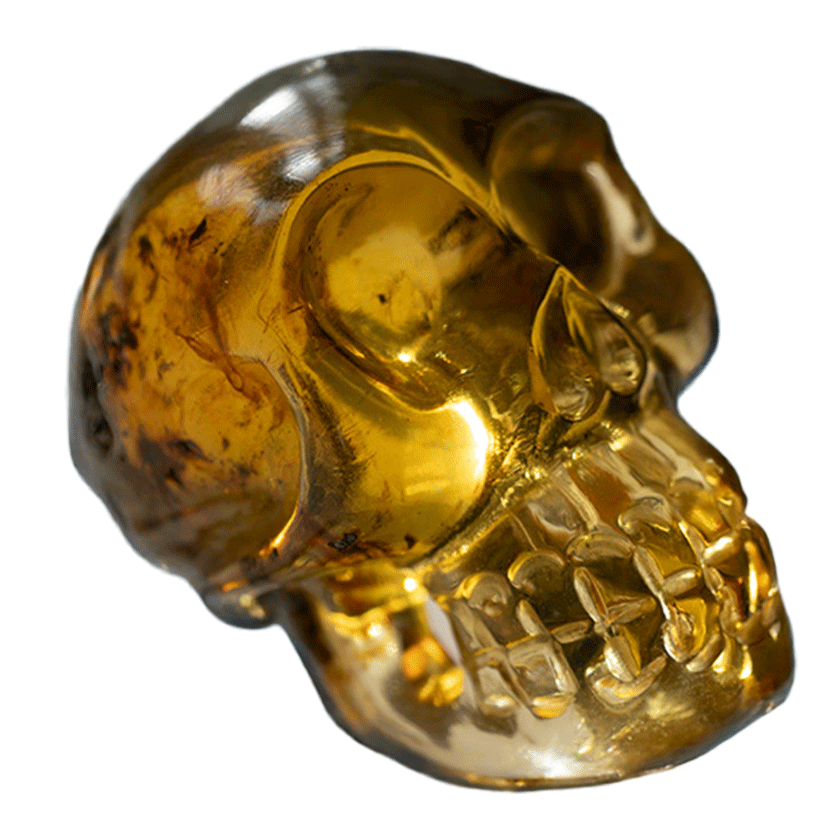
The form of the amber changes the experience of fluorescence. A thick, dark cabochon may hold a concentrated blue glow that seems deep and mysterious. A thin, highly polished pendant may look brighter around its edges as UV light passes through it. Amber beads can create a rhythmic sequence of flashes, while a carving may reveal subtle pools of light along its contours.

Clarity also matters. Clear amber often offers the cleanest visible light play, yet cloudier material can have its own charm. Internal bubbles, wisps, botanical fragments, or ancient inclusions may scatter light and create a softer, more atmospheric glow. Collectors may prefer a transparent specimen for optical drama, while others are drawn to the story preserved within an inclusion-rich stone.

A stone with modest fluorescence is not lesser by default. Rarity, craftsmanship, color, clarity, condition, size, fossil content, and personal connection all contribute to value. The right choice depends on whether you want a dramatic conversation piece, a refined everyday jewel, or a specimen that rewards closer inspection.

Choosing Blue Amber Jewelry With Confidence

When selecting a Blue Amber piece, begin in ordinary light. Look for a cut and setting that let the stone remain the focus. A well-made design should protect amber without hiding the areas where its color and glow can be enjoyed. Because amber is softer than many gemstones, rings require more care than pendants or earrings and are best suited to mindful wear.

Then consider the stone in changing conditions. Ask how it appears in daylight, near a window, against a dark fabric, and under UV light if images or demonstrations are available. This gives a more honest sense of its range than relying on a single intensely lit photograph.

For gifts, the symbolism is as meaningful as the spectacle. Amber carries the warmth of the sun and the memory of an ancient forest. Dominican Blue Amber adds a distinct Caribbean identity, making it especially fitting for anniversaries, birthdays, milestones, or anyone who values natural objects with an uncommon story.

Caring for a Fluorescent Amber Treasure

Fluorescence does not require special maintenance, but amber itself benefits from gentle care. Clean it with a soft cloth and lukewarm water if needed, then dry it thoroughly. Avoid ultrasonic cleaners, steam, perfume, hairspray, household chemicals, and prolonged high heat. Store amber separately from harder gemstones and metal pieces that could scratch its polished surface.

Brief UV viewing is generally enough to admire the phenomenon. There is no need to leave jewelry under a high-powered UV lamp for extended periods. Treat the piece as you would any fine organic gem: with attention, restraint, and appreciation for the fact that it was formed by nature rather than manufactured for perfect uniformity.

The finest Blue Amber does not need to perform the same way in every light. Let its golden warmth, cool blue fire, and ancient individuality reveal themselves gradually - a small, luminous piece of the Caribbean made personal through wear.

Natural Stone Jewelry: Your 2026 Guide to Gemstone Quality - Larimar Creations

Natural Stone Jewelry: Your 2026 Guide to Gemstone Quality

9 min read

Discover how to choose, care for, and style natural stone jewelry in 2026. Expert guidance on quality, authenticity, and the beauty of gemstones.
Read More
A Guide to Amber Fluorescence and Blue Amber - Larimar Creations

A Guide to Amber Fluorescence and Blue Amber

6 min read

Our guide to amber fluorescence explains blue amber's glow, UV testing, authenticity limits, and how to choose a rare Caribbean gemstone with confidence.
Read More
Large Pendant Necklace: Style Guide & Buying Tips - Larimar Creations

Large Pendant Necklace: Style Guide & Buying Tips

11 min read

Discover how to choose, style, and care for a large pendant necklace. Expert tips on materials, proportions, and making statement jewelry work.
Read More