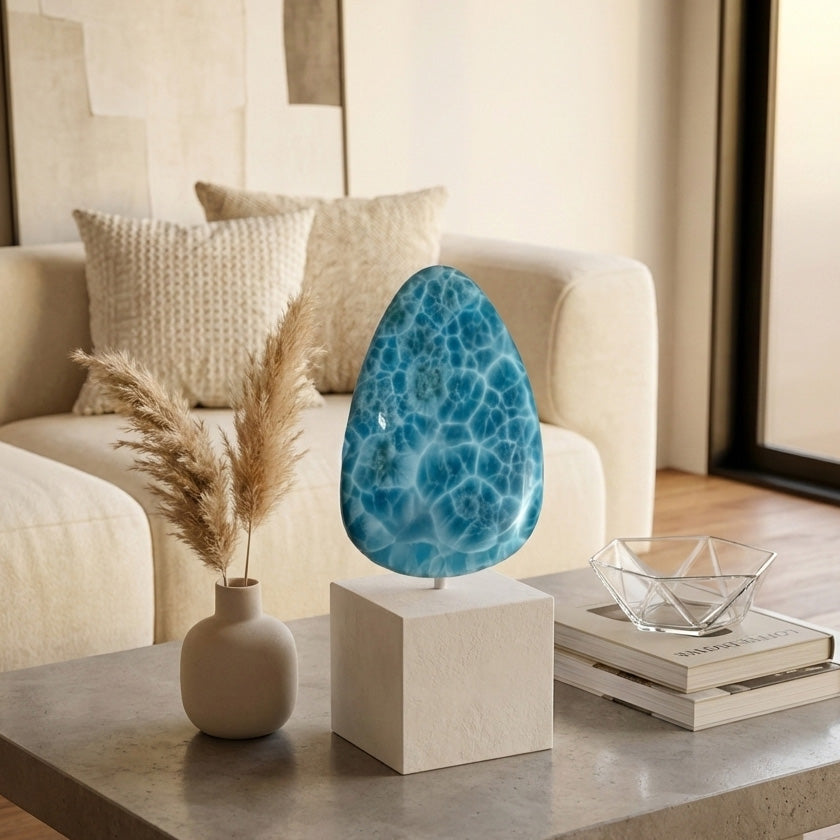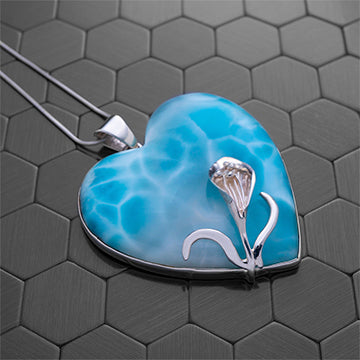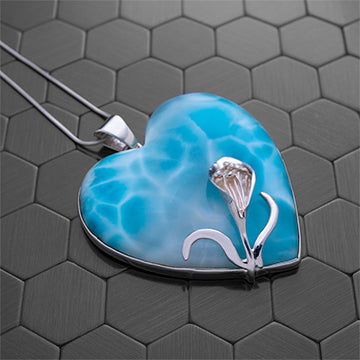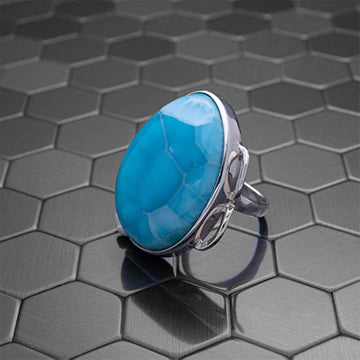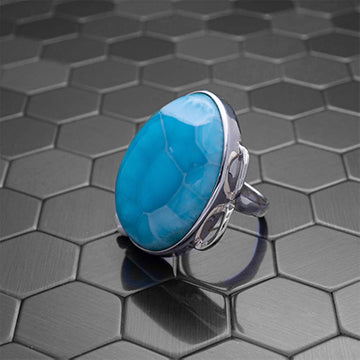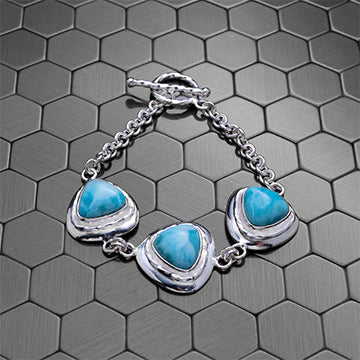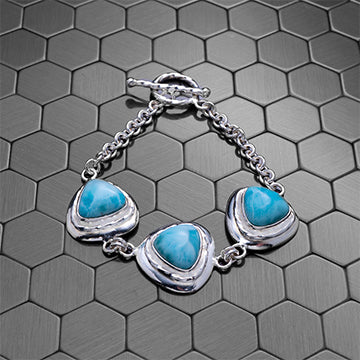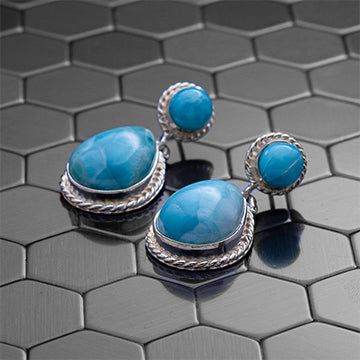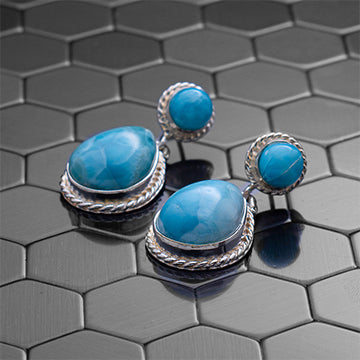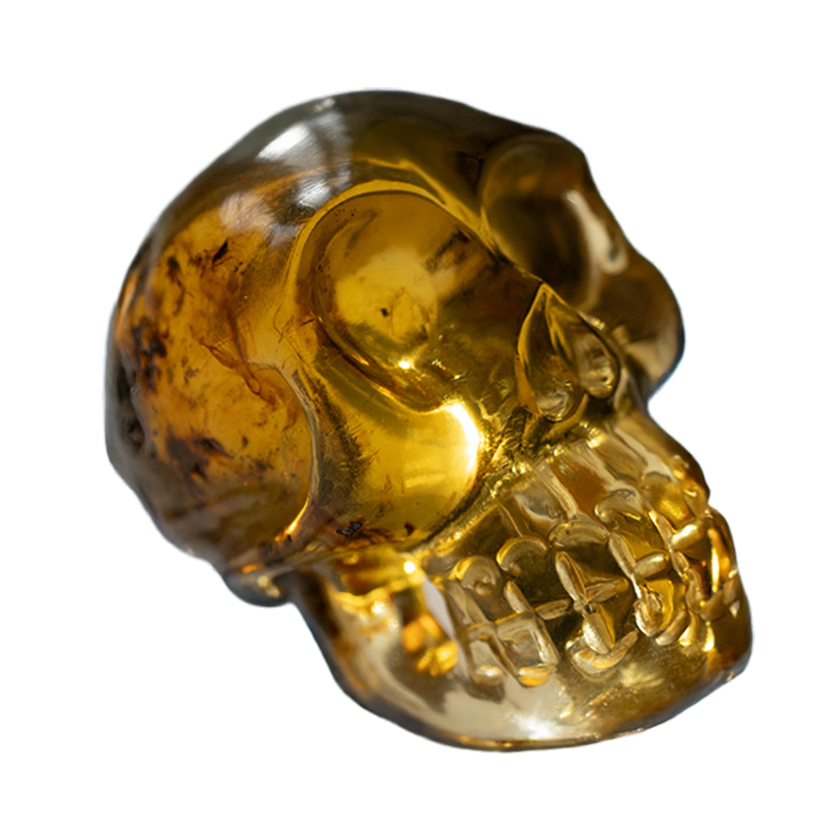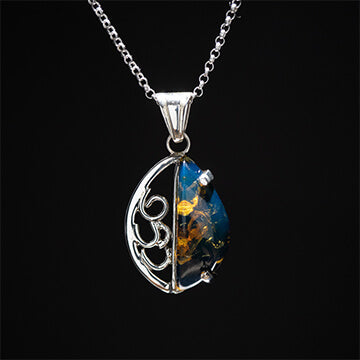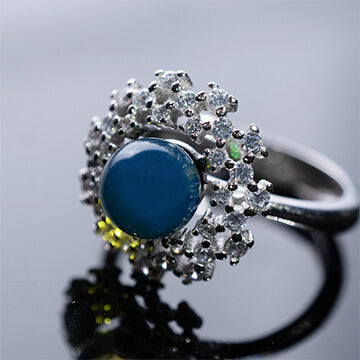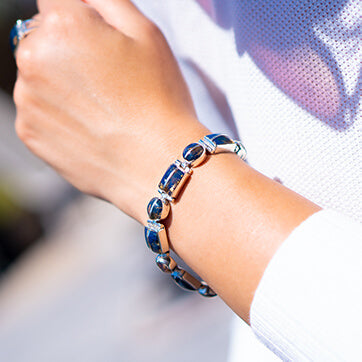


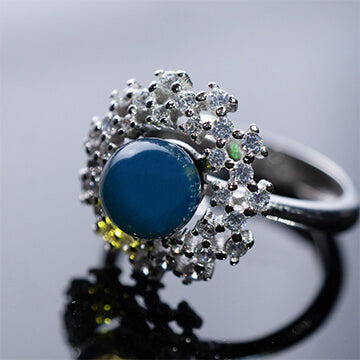
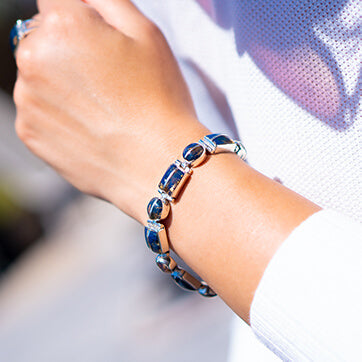
Handcrafted in DR.

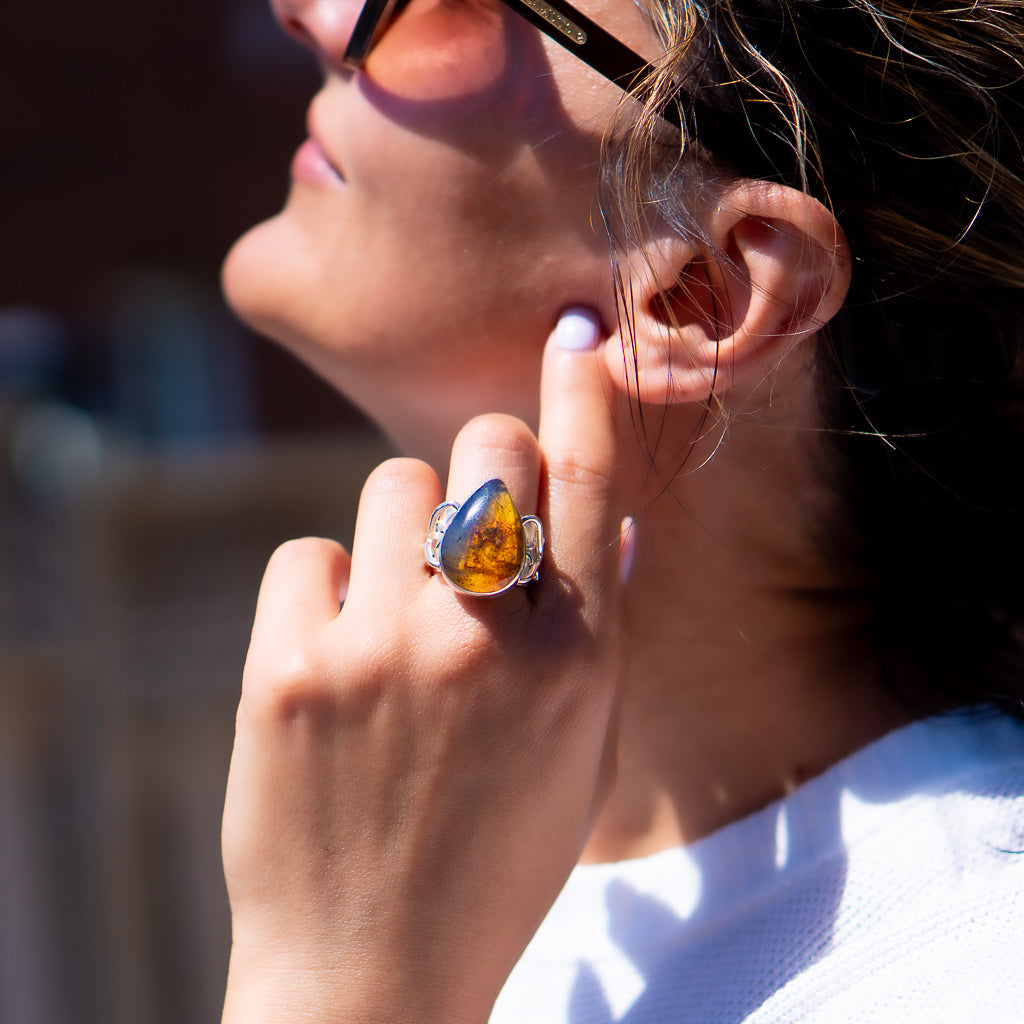
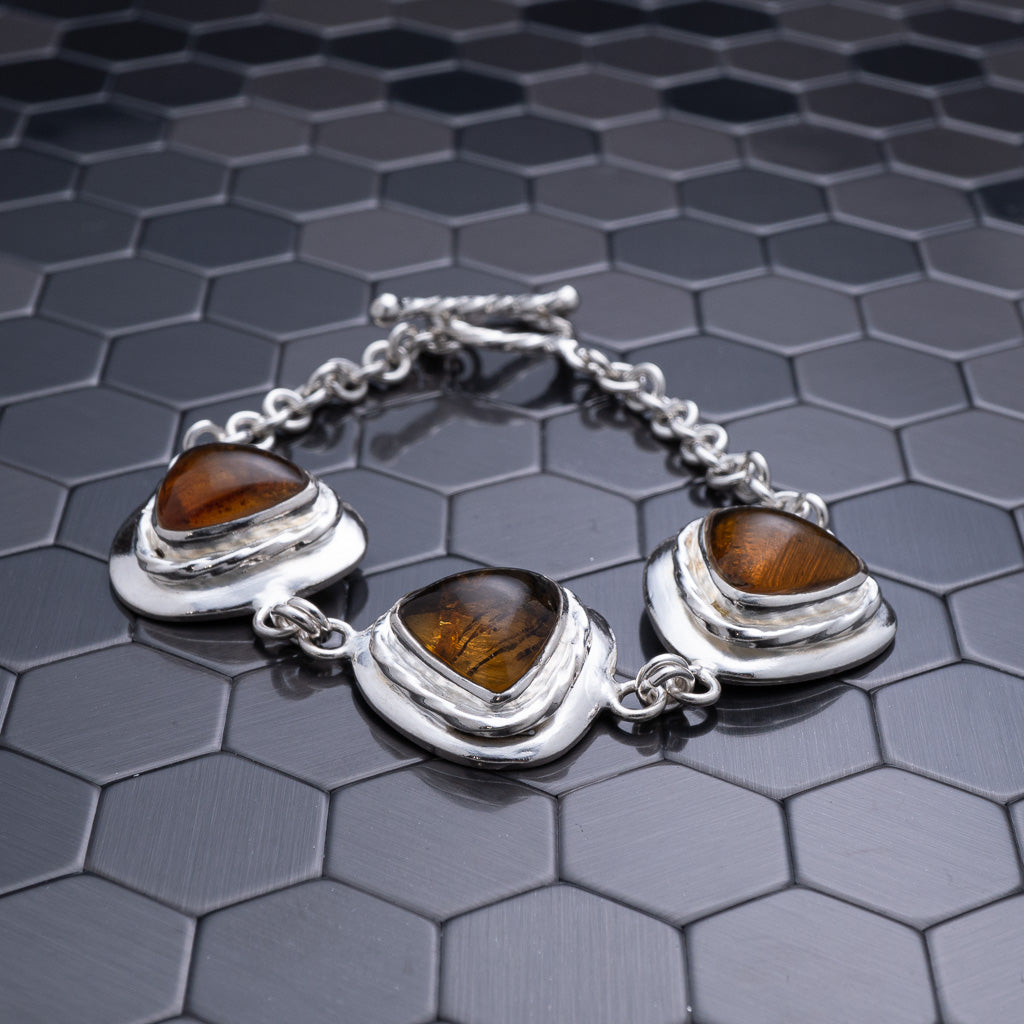
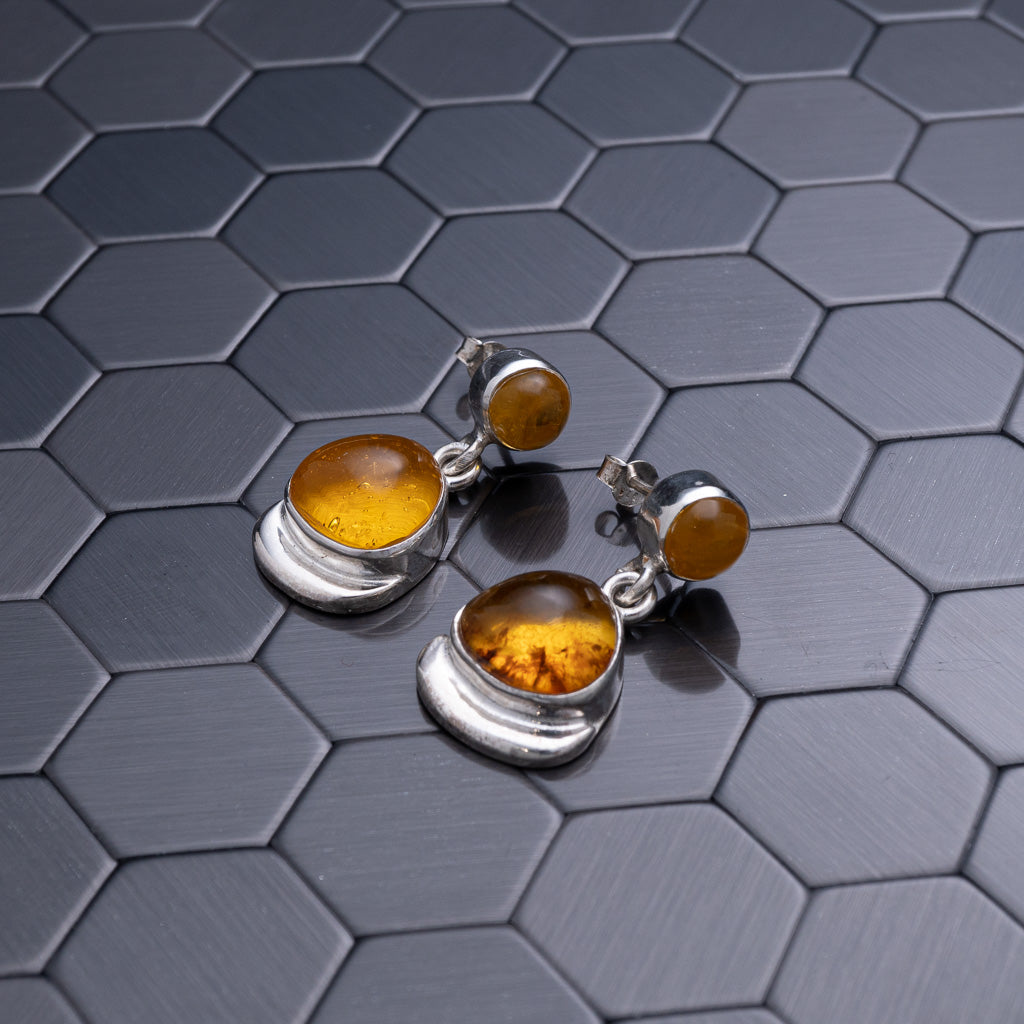


100% Handcrafted in DR.

Natural amber is fossilized tree resin that has hardened over millions of years into a lightweight, warm-toned organic gemstone. It is not a mineral and not a rock: amber is an organic material, which sets it apart from stones such as quartz or larimar and explains its low weight, soft feel and distinctive behavior under heat.
This article covers how natural amber forms, what it looks like, the main types and colors, where it is found, what drives its price, and the practical tests that separate genuine amber from copal, pressed amber and plastic.
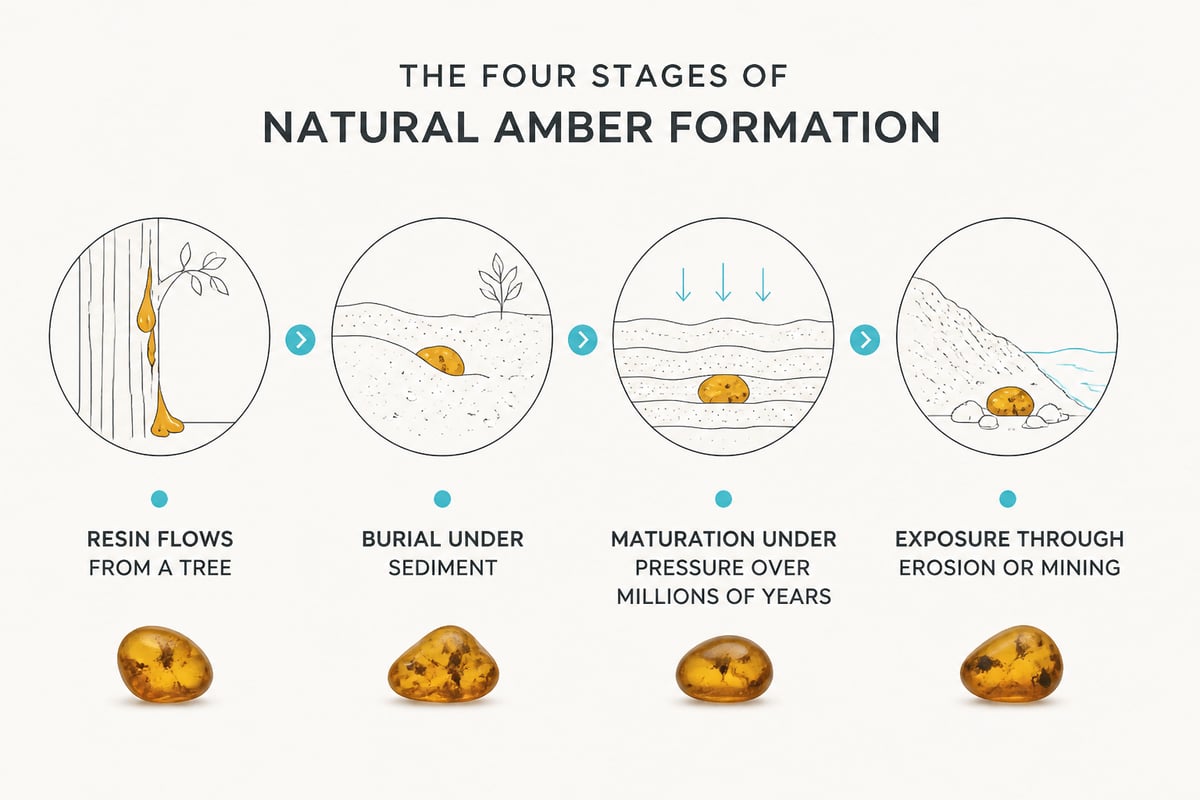
Natural amber is an organic gem made from fossilized tree resin rather than a mineral, according to GIA's amber overview. Trees produce resin to seal wounds and defend against insects and fungi. When that resin is buried in sediment, it slowly loses its volatile compounds, polymerizes and hardens.
This is the answer to a common question: is amber a rock? No. Rocks are aggregates of minerals, and amber has no crystal structure at all. Gemologists classify it as an amorphous organic material, in the same family as pearl and coral.
The timescale is considerable. GIA reports that the oldest known amber dates to approximately 320 million years ago, in the Upper Carboniferous Period. Most amber used in jewelry is far younger than that oldest material.
Amber's softness is a practical consideration. It is a soft material, so it scratches more easily than harder gemstones and is best stored apart from them.
Natural amber forms in three broad stages: resin production, burial, and fossilization through heat, pressure and time.
Resin that has only partly matured is called copal. Copal is younger than true amber and remains softer and more reactive to solvents. The line between copal and true amber is a matter of degree, which is one reason identification can be difficult.
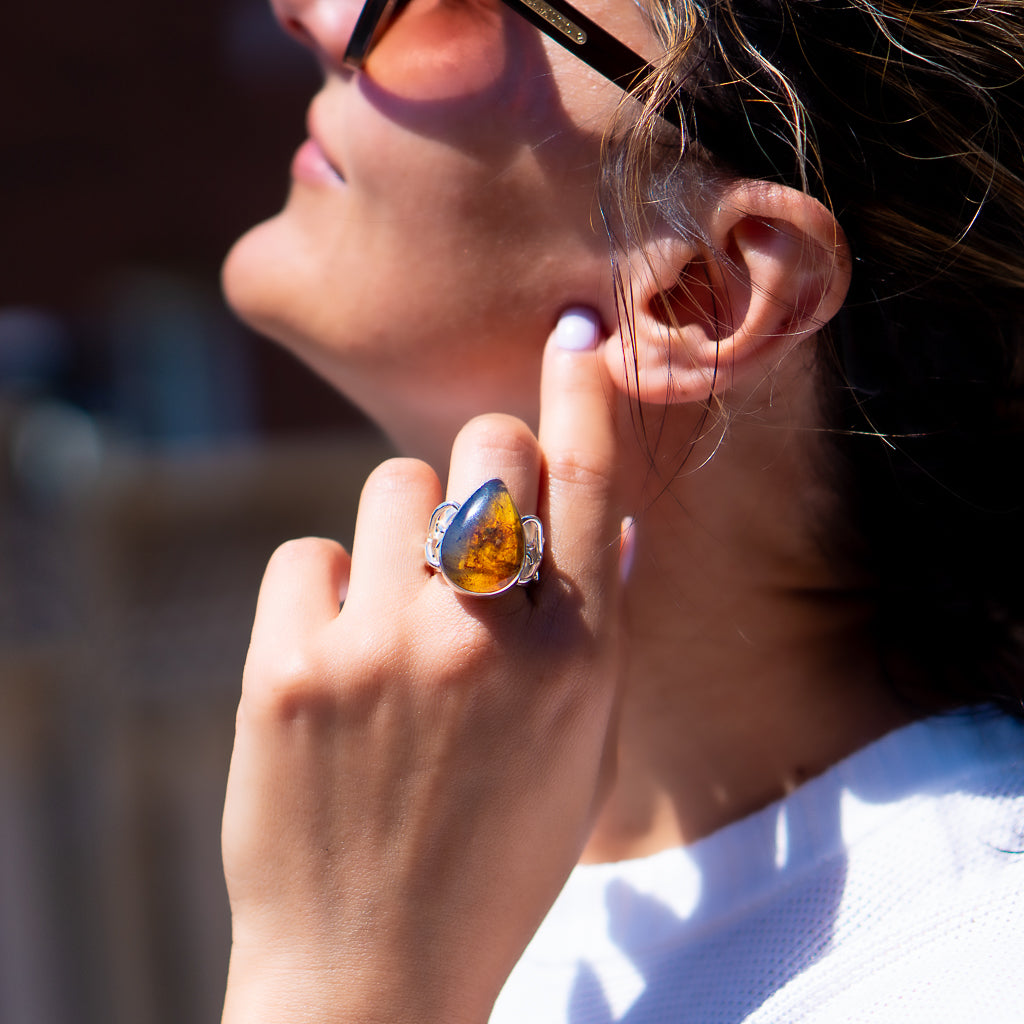
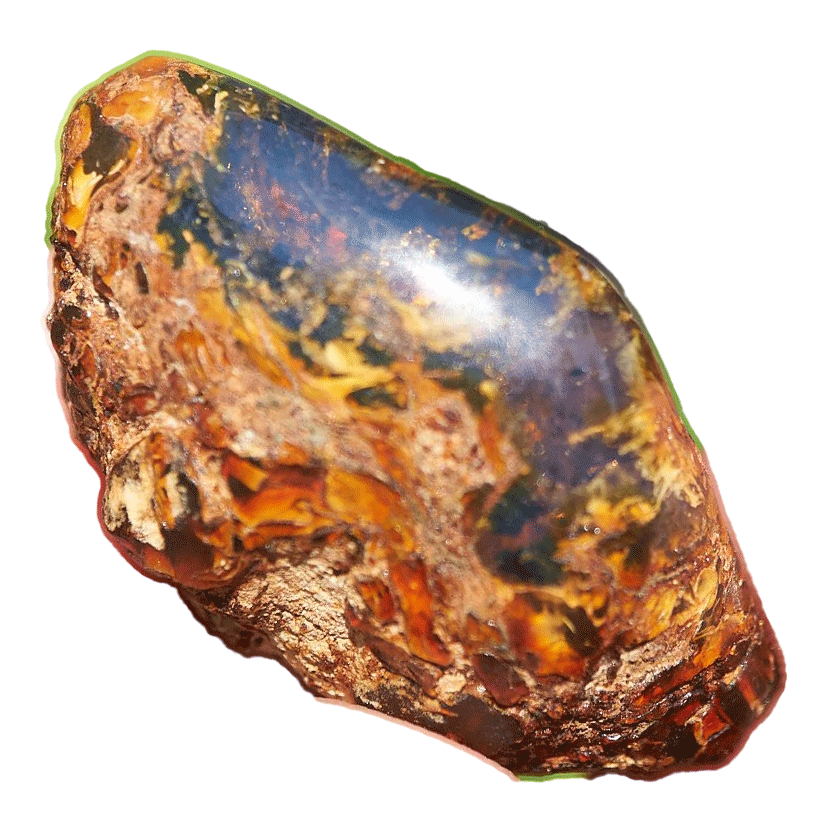
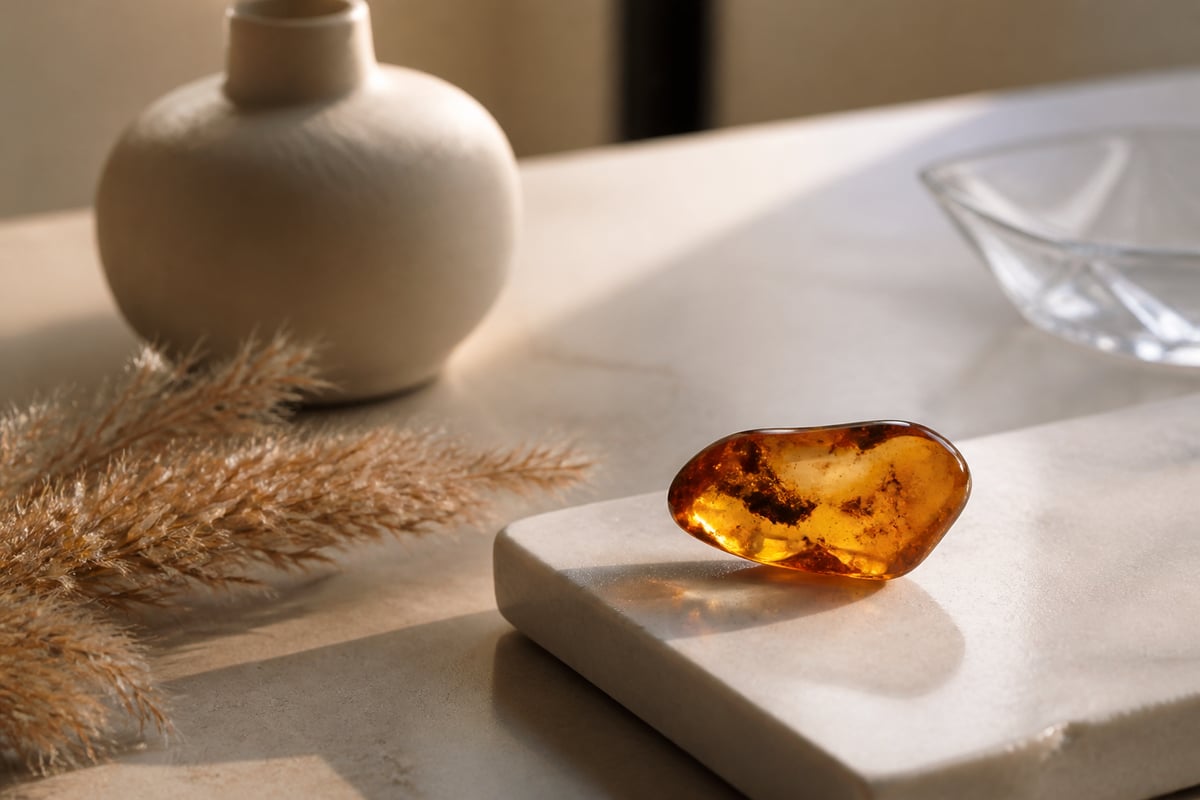
Natural amber ranges from pale yellow to reddish brown, with a warm resinous glow, and is light in the hand. GIA's amber buyer's guide reports that amber occurs in colors from white and yellow through orange to reddish brown, and that transparent material is generally more valuable than cloudy material.
Typical visual traits include:
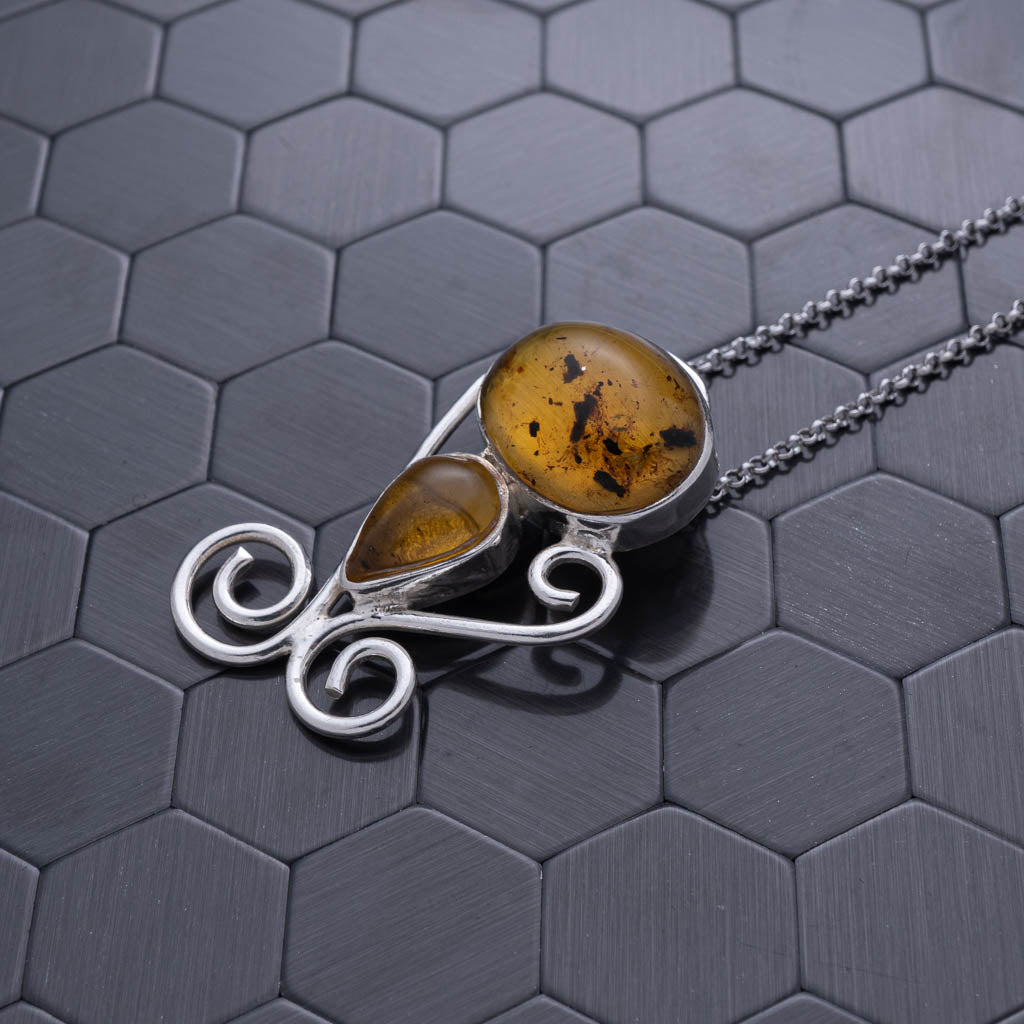
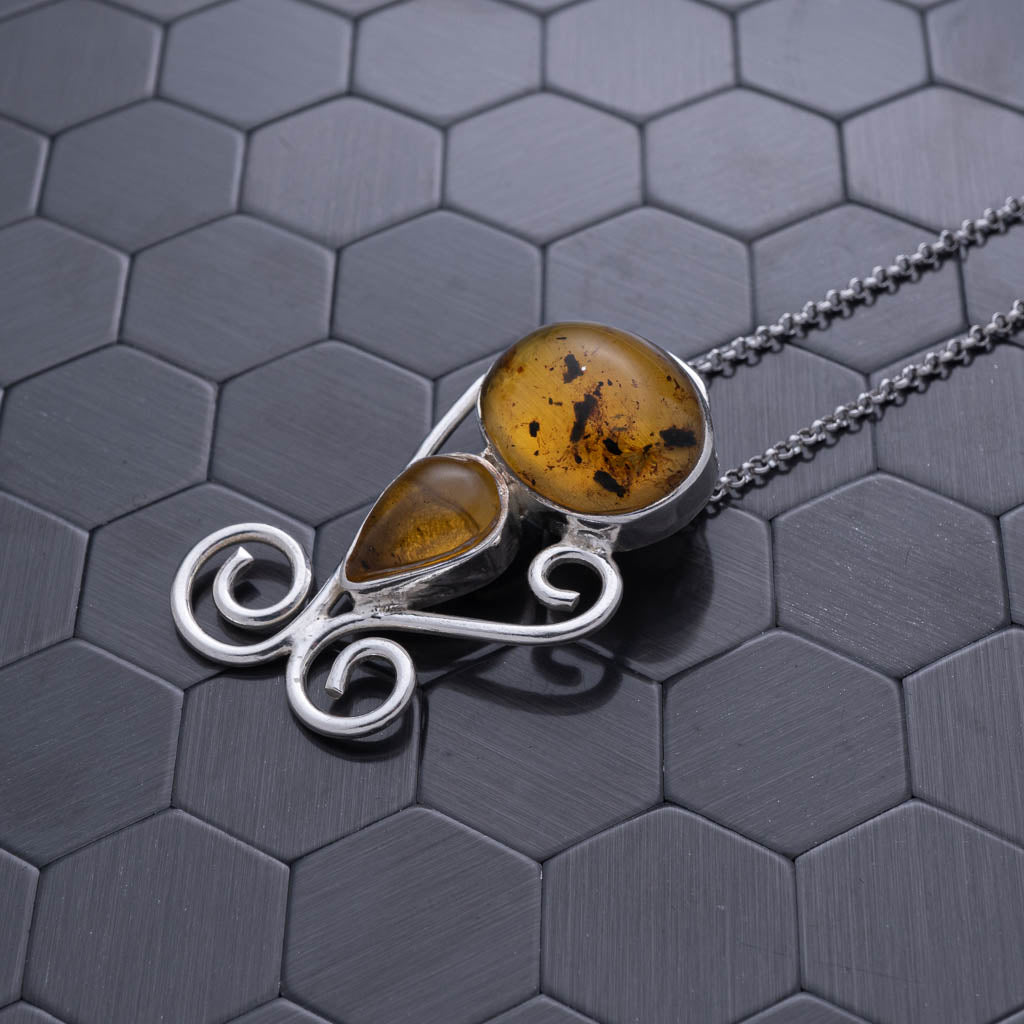
Inclusions are a major part of amber's appeal. Insects and plant material were sometimes trapped in the resin while it was still sticky, creating a miniature record of an ancient forest. Larimar Creations' article on natural amber inclusions explains how to read these features.
Amber types are distinguished largely by origin and color: Baltic amber is typically yellow to cognac, and Dominican amber includes rare blue and green varieties. Origin matters because different tree species and burial conditions create different appearances.
| Type | Typical color | Notes |
|---|---|---|
| Baltic amber | Yellow, honey, cognac, sometimes white ("royal") | Most widely traded; the largest known deposits are along the Baltic coast |
| Dominican amber | Yellow to orange, plus rare blue and green | Often clear, with frequent inclusions; blue shows when light hits it at an angle |
| Newer sources | Varies | GIA reports a Phu Quoc, Vietnam source discovered in 2020 |
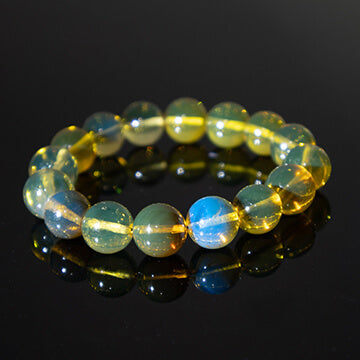
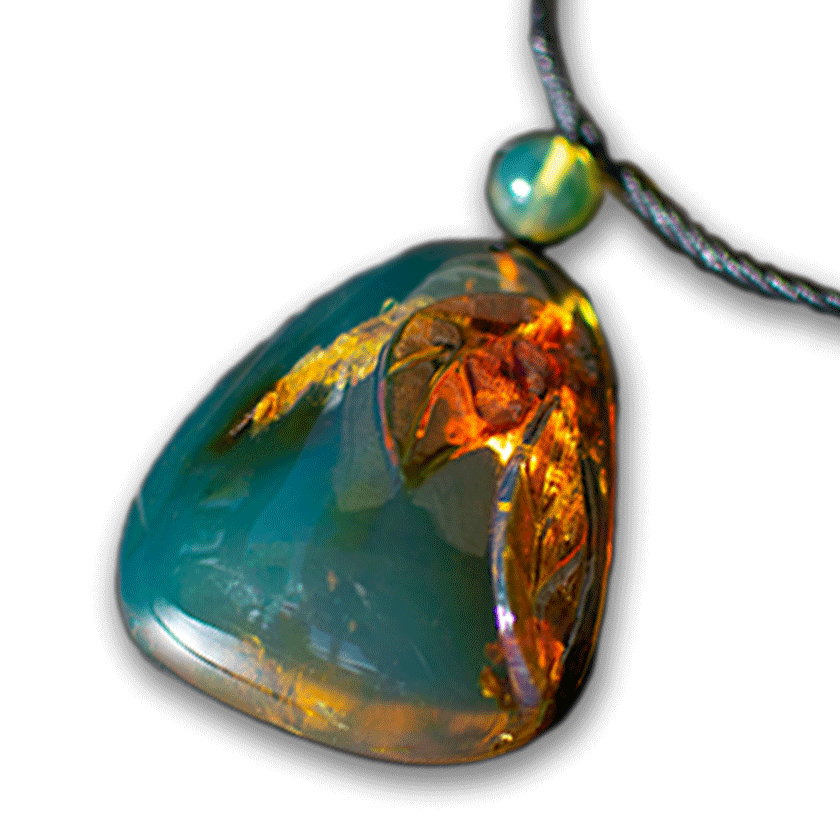
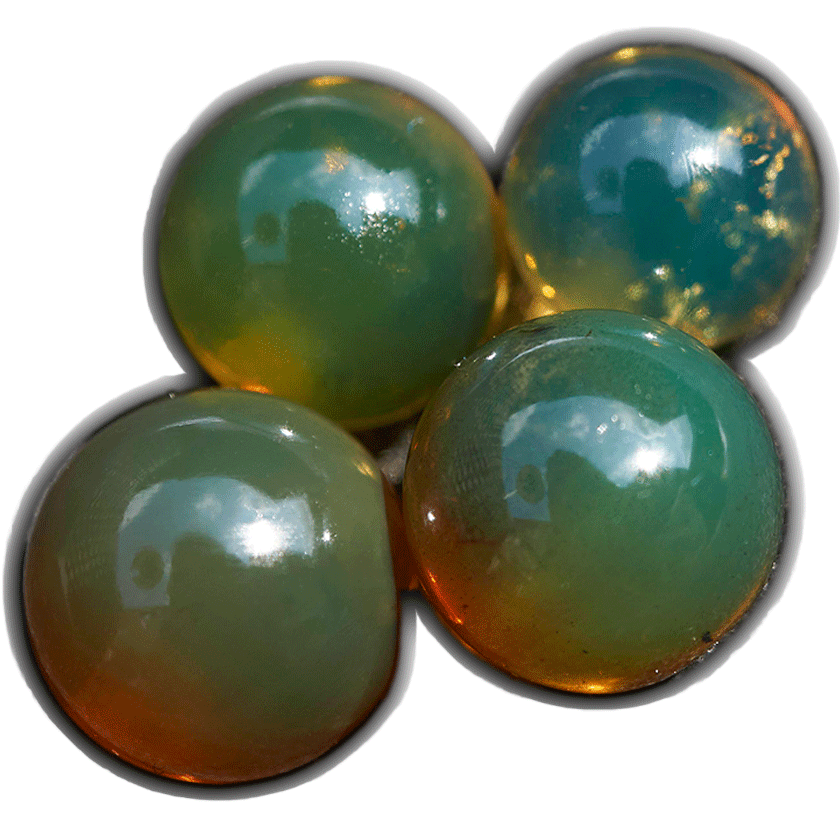
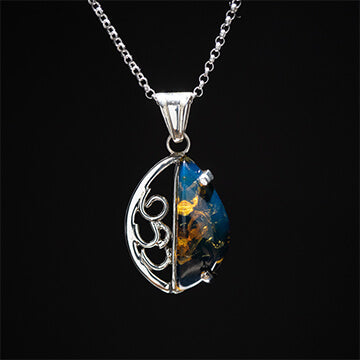
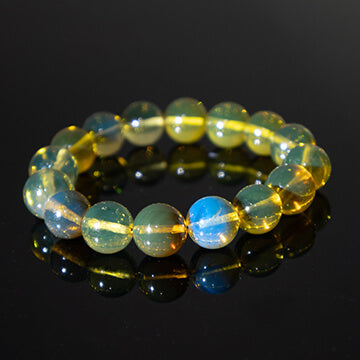
Dominican blue amber is the variety most associated with the Caribbean. Its blue color is typically a fluorescence effect: in daylight or under ultraviolet light, the resin shifts from honey or brown tones to blue or green. Pieces with strong, even blue are less common, which keeps them in demand among collectors.
Green amber from the Dominican Republic offers a different palette, from olive to a bright lime-leaf tone. Examples can be seen in Dominican blue amber pendants and in natural green amber pendants.
Not everything sold as amber is a single natural piece. GIA's buyer's guide notes that pressed or reconstructed amber is made by bonding small amber pieces under heat and pressure, so it is a composite rather than one natural piece. It is made from real amber, but it is not the same as a solid natural stone and should be priced and described accordingly.
Natural amber is found on every continent except Antarctica, with the largest and best-known deposits along the Baltic coast of northern Europe and in the Dominican Republic. GIA's description of amber covers its formation, color range, inclusions and sources, including the Baltic coastal deposits.
Key sources include:
For buyers interested in Caribbean material, the origin matters for both character and rarity. Larimar Creations sources its amber directly from the mines, keeping prices fair for authentic stones.
Natural amber ranges from inexpensive polished beads to high-priced collector pieces, and the price depends on color, clarity, size, origin, inclusions and craftsmanship. There is no single price per gram that applies across the market.
Factors that raise value:
A low price is a signal worth taking seriously. Plastic and treated copal are cheap to produce, so an unusually low price for a large inclusion piece is worth questioning. Small and affordable does not mean fake, however: at Larimar Creations, smaller or less expensive pieces are held to the same quality standard as the rest.
Natural amber can be separated from most imitations with a combination of simple home checks, but no single test is conclusive. Used together, they raise or lower your confidence.
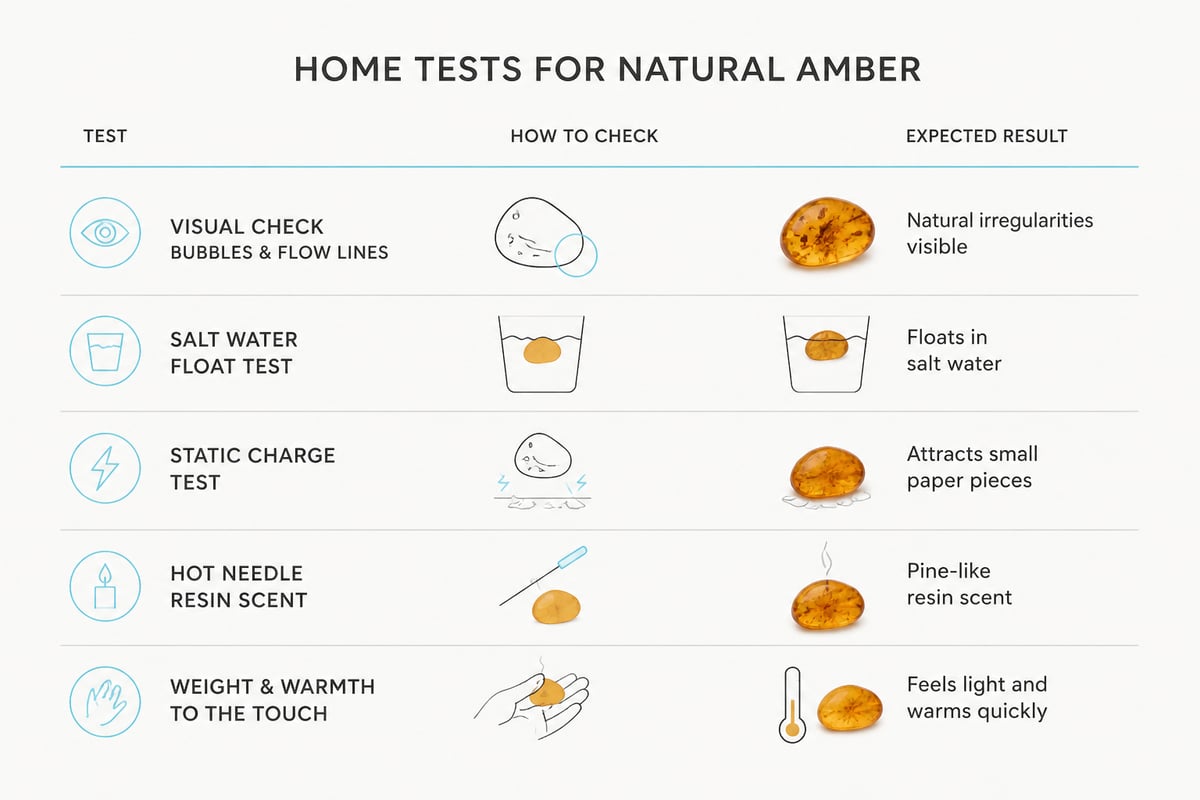
The hardest cases involve materials that are partly or wholly amber. Copal can look nearly identical, but it is softer and may become tacky when touched with a drop of solvent, while amber resists. Pressed amber often shows stretched, parallel bubbles and visible boundaries between fused fragments under magnification.
Gem-laboratory comparisons of natural, reconstructed and imitation amber show that spectroscopic methods can tell these materials apart when the eye cannot. For expensive or important pieces, laboratory testing is the dependable route.
If you are weighing whether beads or polished pieces are genuine, Larimar Creations' guide on whether amber beads are natural gemstones offers further practical checks.
Natural amber suits jewelry that is worn with some care: pendants, earrings, bracelets and carvings that are protected from knocks and chemicals. Its softness and low density make it comfortable to wear and well suited to pieces that would be heavy in denser stones.
Common forms include:
Collectors often look for pieces with strong color play or well-defined inclusions, while gift buyers tend to favor pendants for their versatility. Because larimar and Dominican amber both come from the Dominican Republic, many buyers pair them. For a gift that combines amber's warmth with larimar's sea-blue tones, Larimar Pendants are a natural companion; they are handcrafted in the Dominican Republic, the only place on Earth where larimar is found.
To keep natural amber looking its best, wipe it with a soft, damp cloth, avoid perfume, hairspray and household cleaners, and keep it away from prolonged heat and direct sun, which can darken or craze the surface over time.
In plain fresh water, amber usually sinks slowly because its density is close to that of water. In a strong salt solution it floats, which is why the salt water test is used. Float behavior helps rule out heavy imitations like glass but does not confirm amber, since some plastics, copal and pressed amber behave similarly.
No. Copal is younger resin that has not fully hardened or polymerized, while amber has matured over millions of years. Copal is softer and can react to solvents, though the two can look very similar to the eye.
Yes. Insects and plant fragments can be trapped in sticky resin and preserved as it hardens, and genuine inclusions are among amber's most sought-after features. Fake inclusions do exist, and GIA notes that a laboratory report can help confirm whether an inclusion was added later.
Before you buy, run two or three of the home tests above on any piece you are considering, and ask the seller for details on origin and treatment. If you want handcrafted Dominican blue and green amber from a family-owned business that has worked directly with the mines since 1982, the Larimar Pendants collection is a good place to start. Larimar Creations ships worldwide and holds a 4.6 rating from over 946 customers, so you can Shop Larimar and amber pieces made with careful attention to detail.